Short, Calm Walk Loops in Old Town Alexandria (10–20 Minute Routes)
Sometimes you don’t need a long walk in Old Town.
You need something short that your dog can actually move through comfortably.
A quick loop before heading out.
A reset after something that felt like a lot.
Or just a way to get outside without adding more for your dog to process.
Not every part of Old Town feels the same to a dog. Some areas ask for more awareness, more adjustment, more decision-making with every step. You can see how that plays out in Why Dogs Freeze or Refuse to Walk in New Places — What They’re Noticing.
These short loops work differently.
They give your dog space to move, pause, or settle without needing to push through.
If your dog has ever slowed down, started scanning more, or had a harder time settling on a walk, these are the kinds of routes that tend to work better. I break that down more in Why Is My Dog So Tired After Travel? (When It’s Normal — and When to Worry).
Quick Guide: 3 Short, Calm Walk Loops in Old Town Alexandria
Wide, low-pressure path (Buchanan → Braddock)
Best for: when you want a walk that stays simple from start to finish
Feel: open, wide, easy forward movement with room to step off
Contained reset loop (Carlyle Square)
Best for: when you want to keep movement predictable and stay along the edges
Feel: structured, defined space with flexible routing
Open, easy loop (Windmill Hill Park)
Best for: when you want space without added pressure
Feel: open but calm, with room to move without being funneled
Buchanan → Braddock (Wide, Low-Pressure Path)
What it feels like
This is one of the easiest walks in Old Town when you want to keep things simple.
The path is wide, paved, and bordered by grass on both sides, which gives your dog options without forcing constant decisions. There’s space to move forward, space to slow down, and space to step off when they need to.
It doesn’t feel tight.
It doesn’t feel busy.
And nothing about it asks for a specific pace.
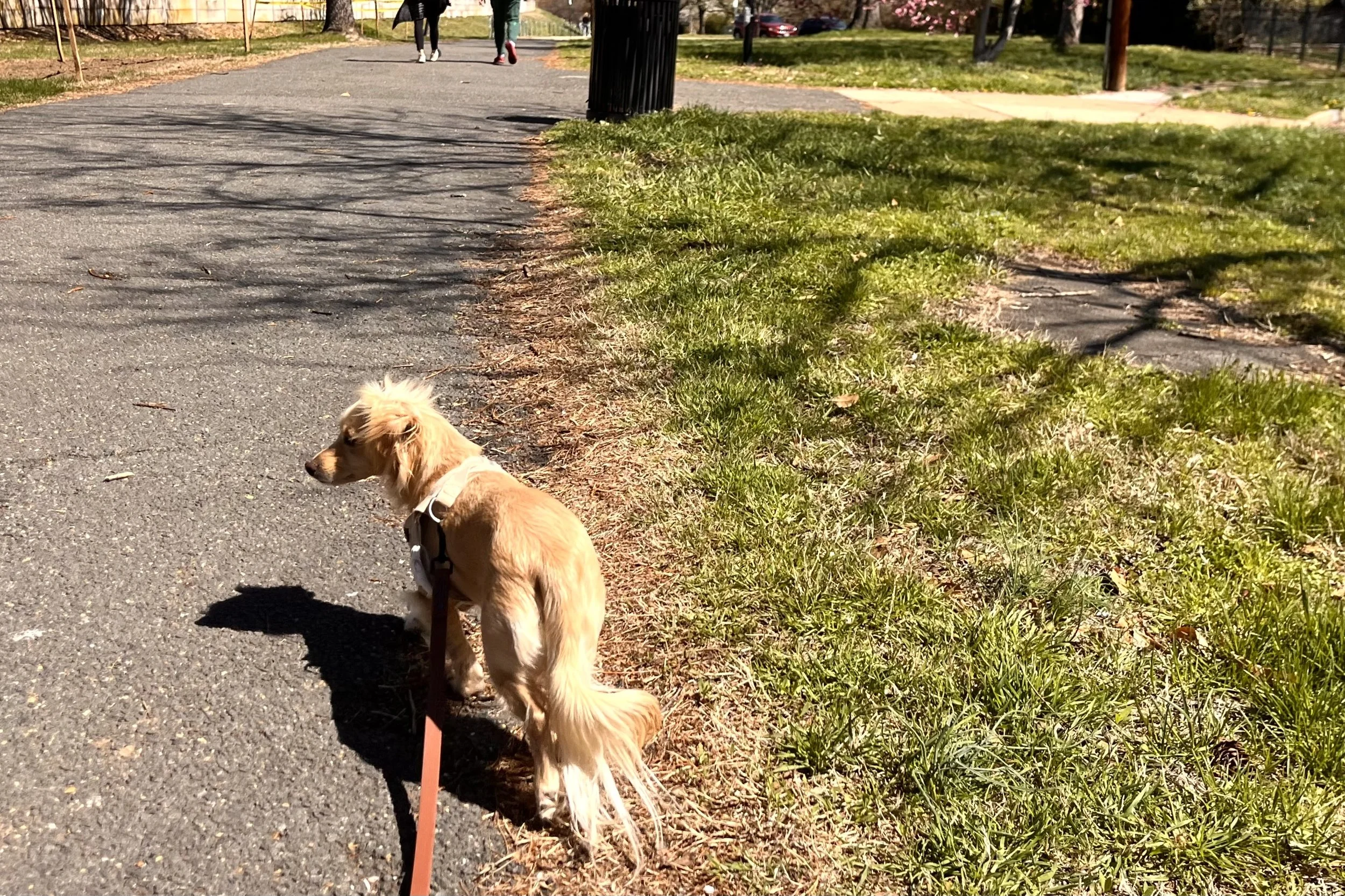
Pausing mid-walk to take in what’s ahead.
What to watch for
You’ll often notice small shifts here:
slowing slightly
pausing mid-walk
drifting toward the grass
Those aren’t problems.
They’re part of how your dog uses the space.
This is often where early signs show up, like the ones I walk through in When to Leave Old Town Alexandria With a Small Dog (Early Signs of Overwhelm).
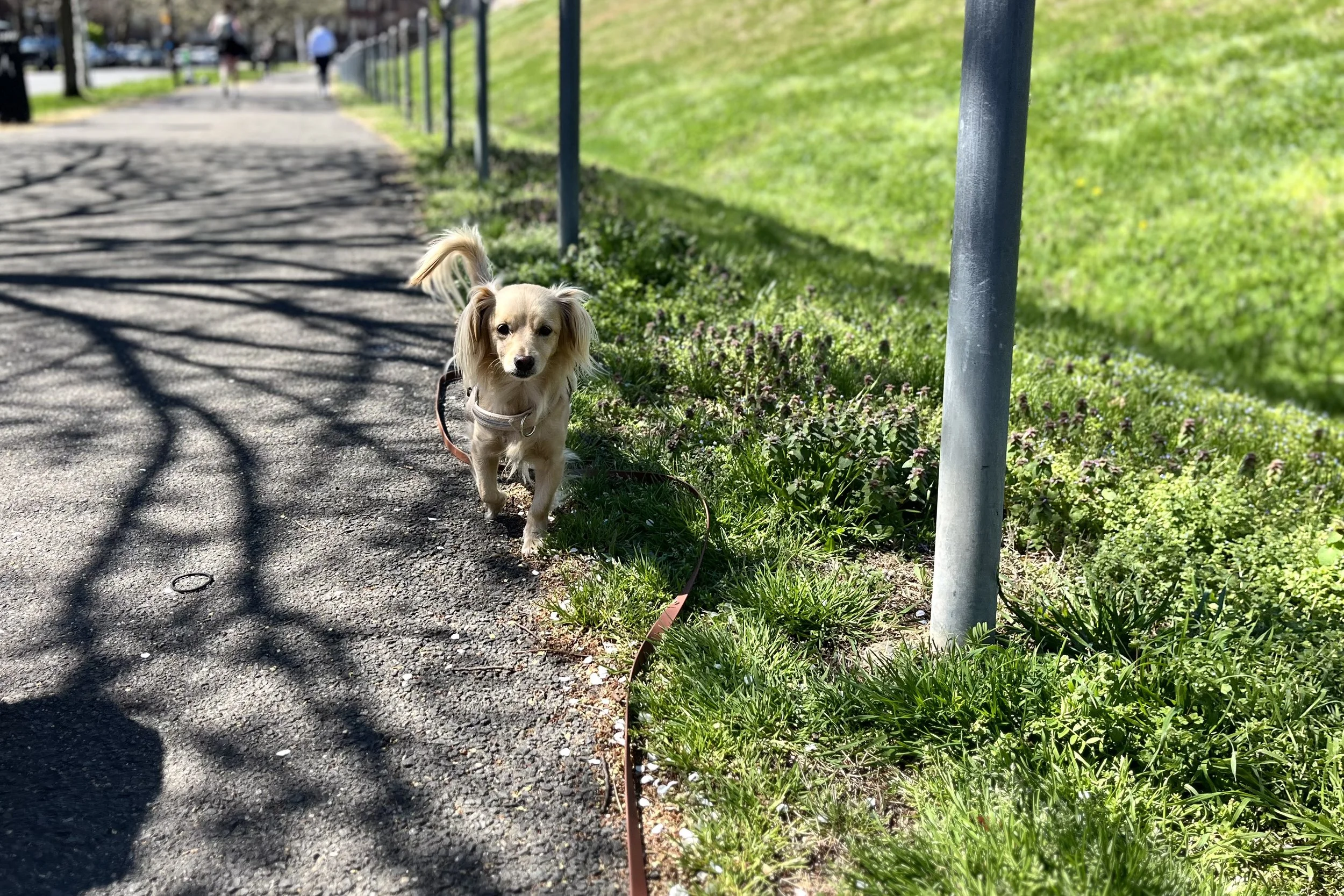
Moving forward through a defined path with clear edges and direction.
Why this works
This is a good choice when:
you want a walk that stays easy from start to finish
your dog is moving, but adjusting more than usual
you’re looking for something that doesn’t require constant input
Some walks feel easy because they’re quiet.
This one works because nothing is being asked of the dog.
There are no tight sidewalks.
No constant passing.
No need to stay on a narrow line.
Just enough structure to move forward, and enough flexibility to adjust along the way.
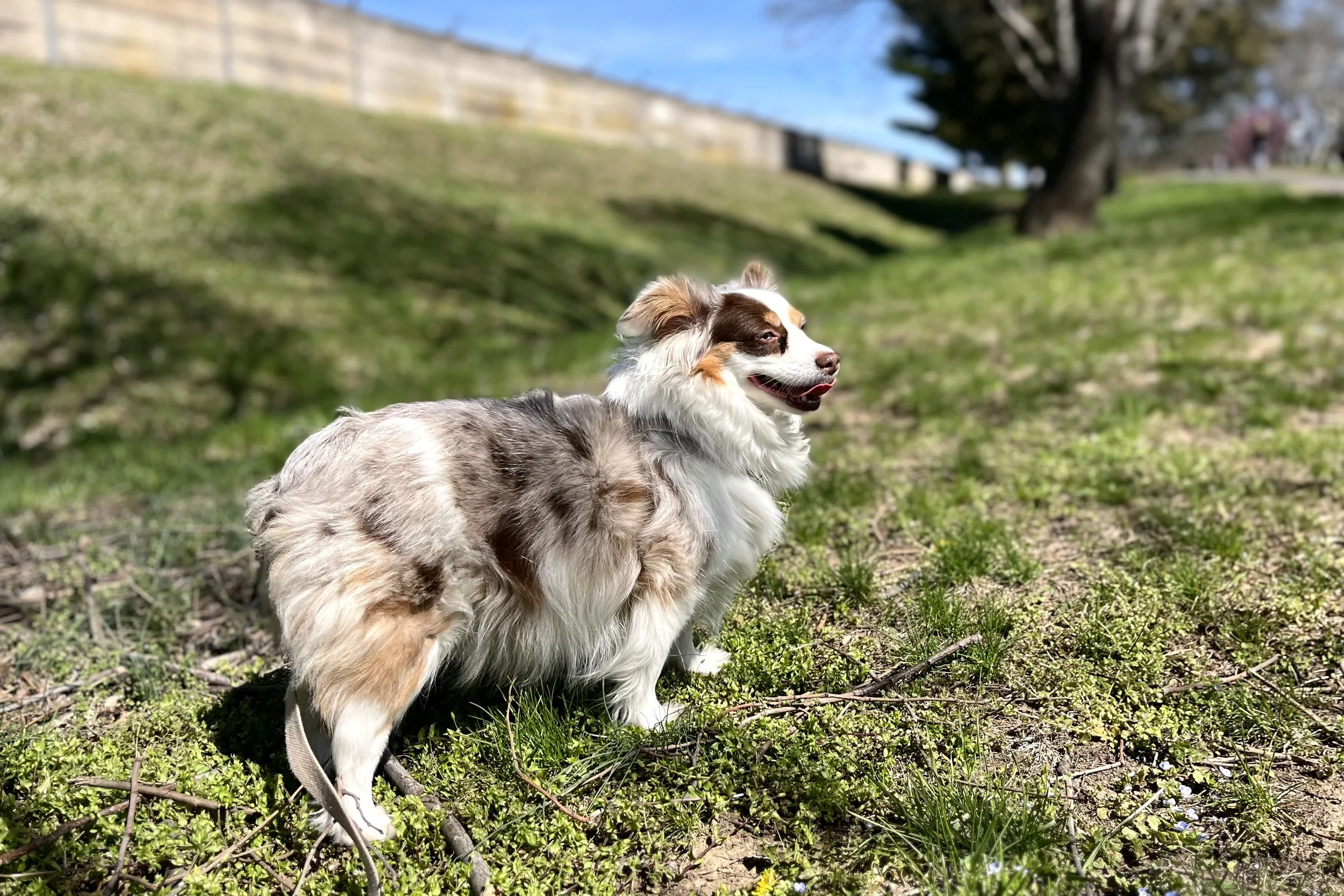
Pausing to take in the surroundings before deciding where to go next.
Carlyle Square (Contained Reset Loop)
What it feels like
Carlyle Square looks open at first, but it doesn’t feel loose in the same way Buchanan does.
The space is defined.
There are clear edges, visible buildings, and consistent movement through and around it.
For some dogs, that structure helps.
For others, the openness in the center combined with movement around the edges can feel like a lot at once.
This is less about wandering, and more about choosing how you move through the space.
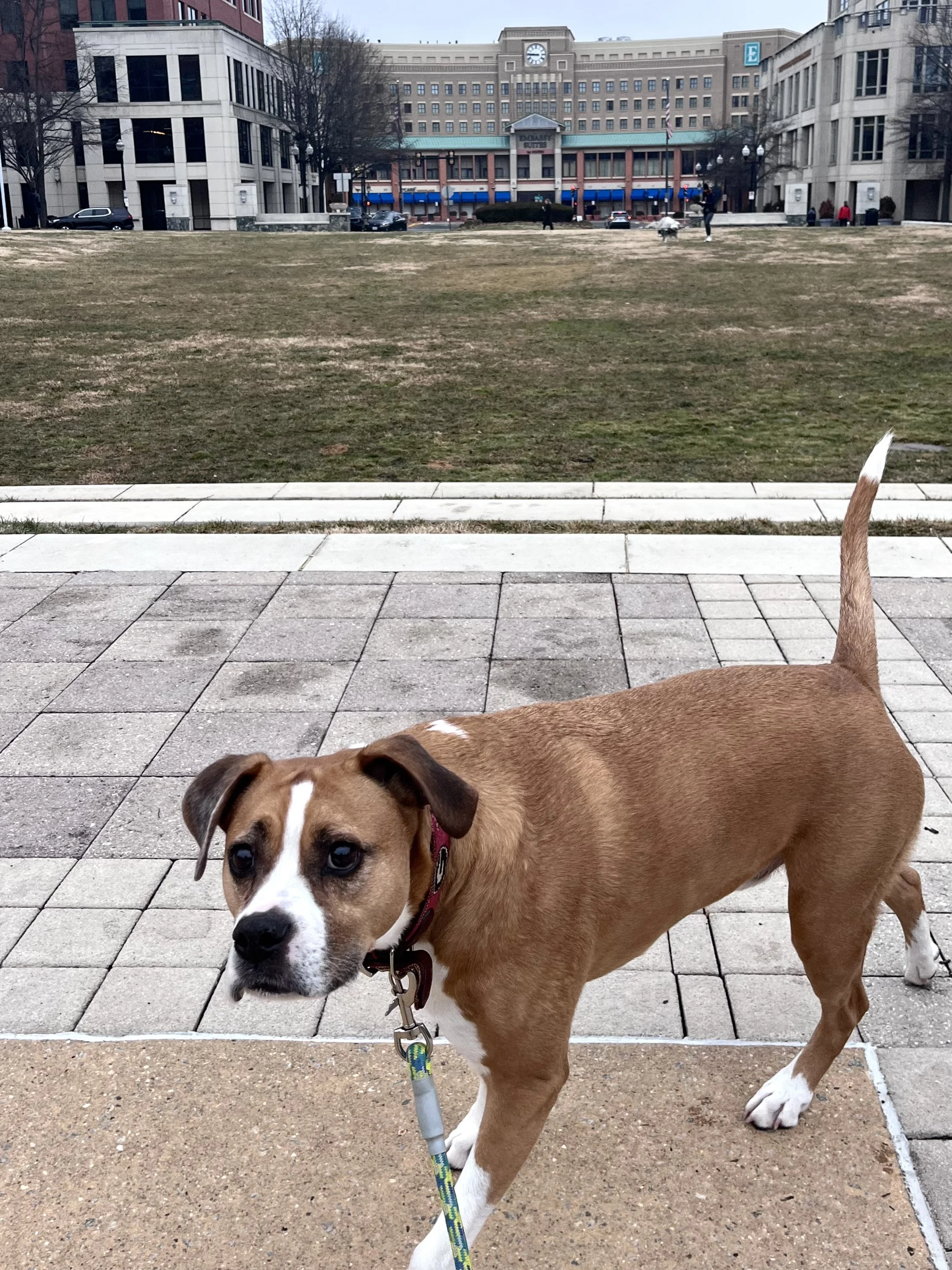
Noticing and scanning the environment before moving forward.
How to walk it
Instead of cutting through the middle, stay along the outer paths.
Follow the perimeter where the edges are consistent and predictable.
That gives you:
a clear direction
fewer surprises from all sides
more control over how close you get to activity
You can shorten or extend the loop easily without committing to the full square.
If you want to extend it slightly, you can step off the square and follow the surrounding brick sidewalks for a few blocks before looping back. That keeps the same edge-based feel while giving you a little more room without changing the structure of the walk.
What to watch for
In this kind of space, you may notice:
a slower pace
more frequent checking of surroundings
brief pauses before continuing
Not because anything is wrong, but because there’s more to take in.
If you see that, staying on the outer edge usually helps.
It keeps movement steady and avoids the busiest part of the space.
This is similar to what I talk about in How to Walk Old Town Alexandria With a Small Dog (Without Overwhelm), where the route itself changes how the walk feels.
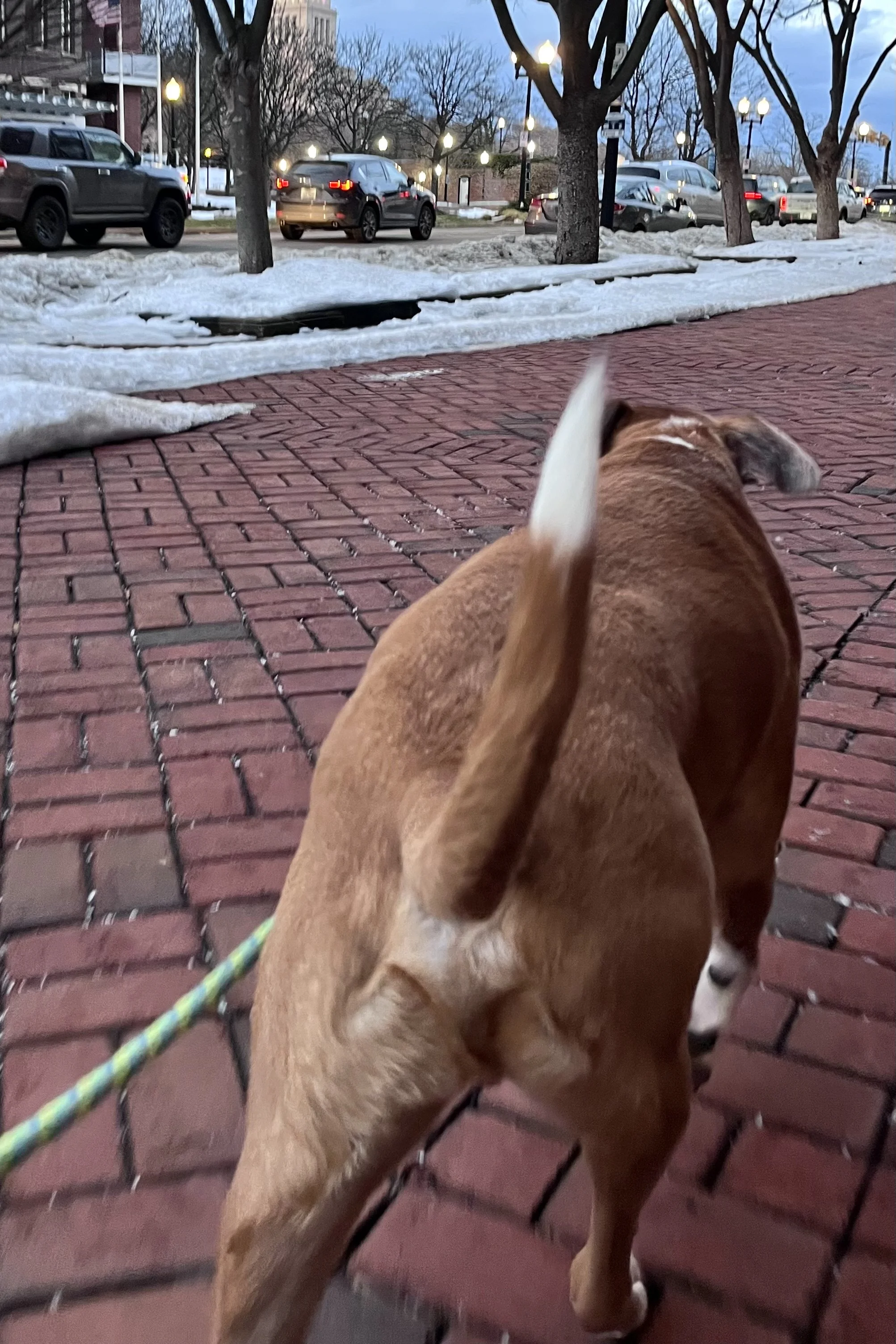
Moving forward through a more structured, busier environment.
Why this works
This is a good option when you want:
a short, contained walk
the ability to adjust distance quickly
a space where you can stay near the edge instead of in the middle
It’s especially useful when you’re not sure how the walk will feel once you’re out.
You can keep it short, or extend it slightly without changing the overall experience.
Windmill Hill Park (Open, Easy Loop)
What it feels like
Windmill Hill feels different right away.
The space is open, but not busy.
There’s room to move without needing to navigate around constant activity, and the paths are wide enough that you’re not being funneled in one direction.
Nothing is pushing you forward.
It’s a place where movement can slow down without becoming stuck.
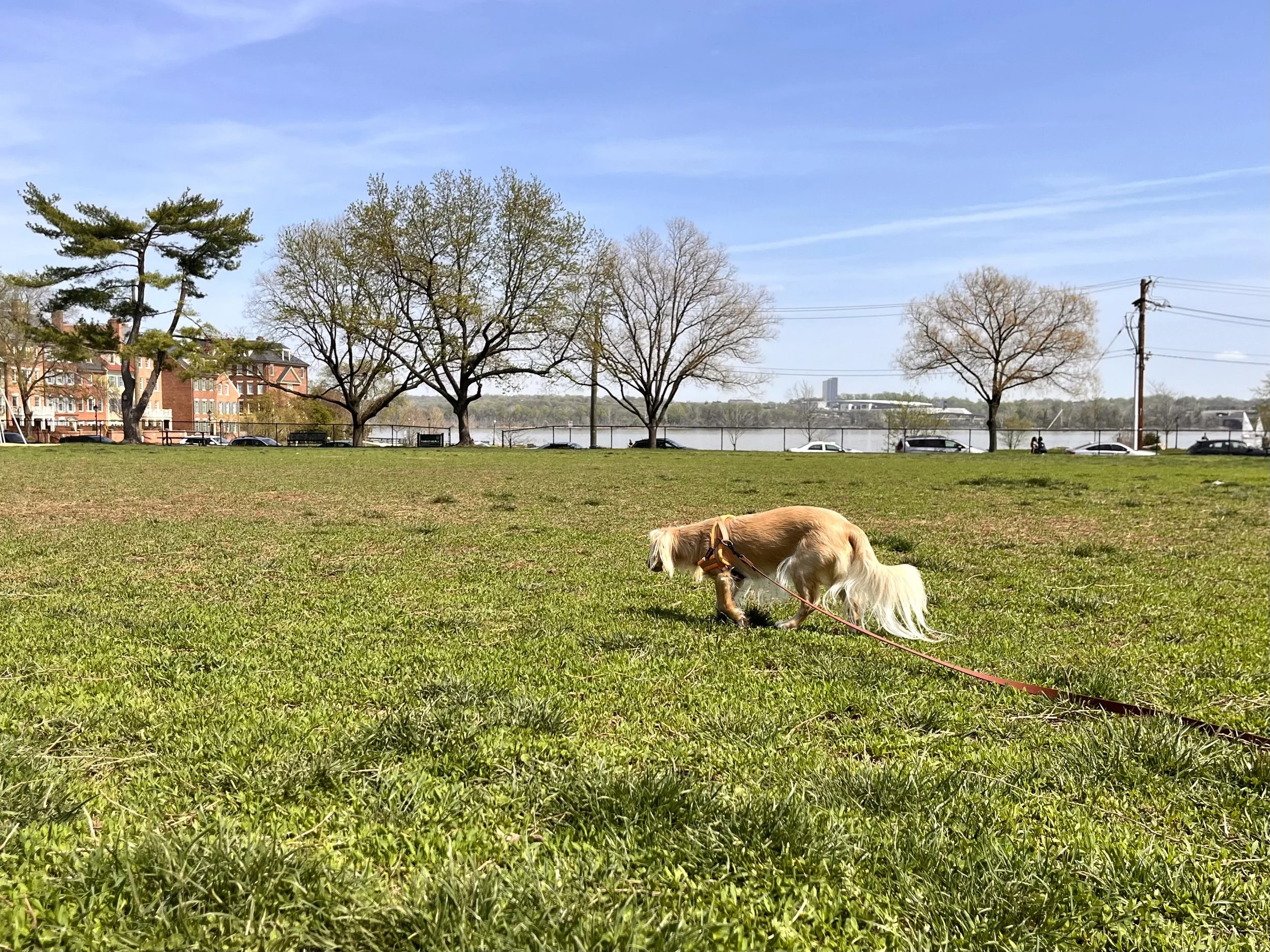
Open space at Windmill Hill Park where small dogs can move, pause, and adjust.
How to walk it
You can follow the perimeter loop, or move more loosely between the open lawn and the path.
There’s no single right way to walk here.
You can:
stay on the paved loop for consistency
step off briefly into the grass
shorten or extend without changing the feel
You can also enter from the Wilkes Street Tunnel, which brings you in underneath the park and avoids the busier surrounding streets. For some dogs, that quieter entry makes it easier to settle into the walk right away.
What to watch for
This is where things often start to feel easier.
You may notice:
a more consistent pace
fewer pauses
smoother transitions between moving and stopping
Not because the walk is easier physically, but because the environment isn’t asking as much.
Why this works
This is one of the easiest places in Old Town to use when you want a low-demand walk.
It works well when you’re coming off something busier, or when you want to keep the walk simple without needing to manage the environment closely.
You can move through it without needing to manage much.
How to choose the right loop
If you want to keep things simple and easy to move through, start with Buchanan
If you want more structure and a clearer way to move, use the edges at Carlyle
If you want space without added pressure, go to Windmill Hill
If you’re trying to understand why some walks feel easier than others, I break that down more in Why Familiar Walks Matter for Dogs.
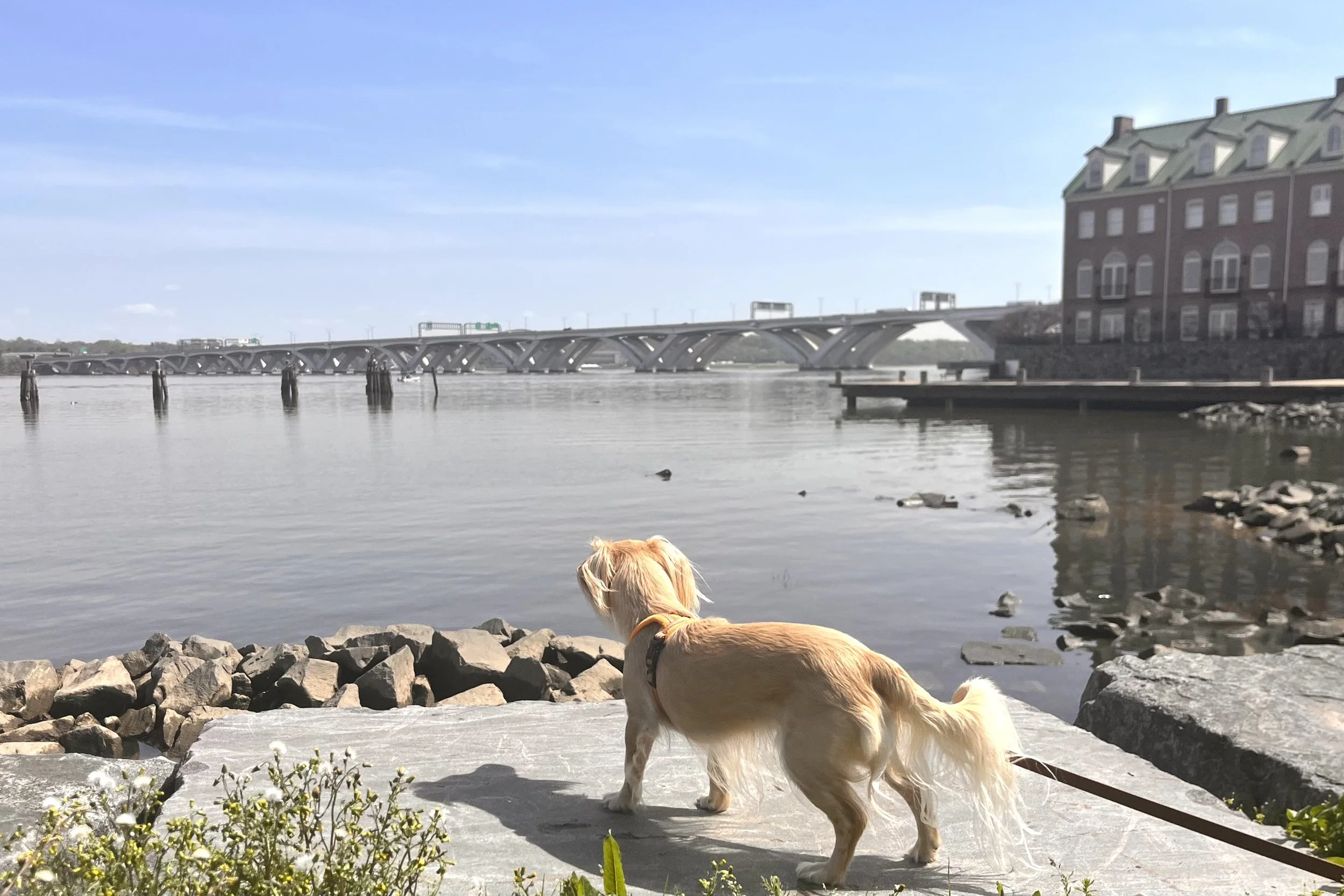
Along the waterfront, the environment shifts with different footing and edges.
