When to Leave Old Town Alexandria With a Small Dog (Early Signs of Overwhelm)
Old Town Alexandria doesn’t usually become overwhelming all at once.
More often, it builds gradually—through tighter sidewalks, faster movement, and small changes in how a dog is responding.
Knowing when to leave isn’t about reacting late.
It’s about noticing the early signs and adjusting before the pressure builds.
If you’re planning your route ahead of time, it helps to understand how to move through Old Town more comfortably in in How to Walk Old Town Alexandria With a Small Dog (Without Overwhelm).
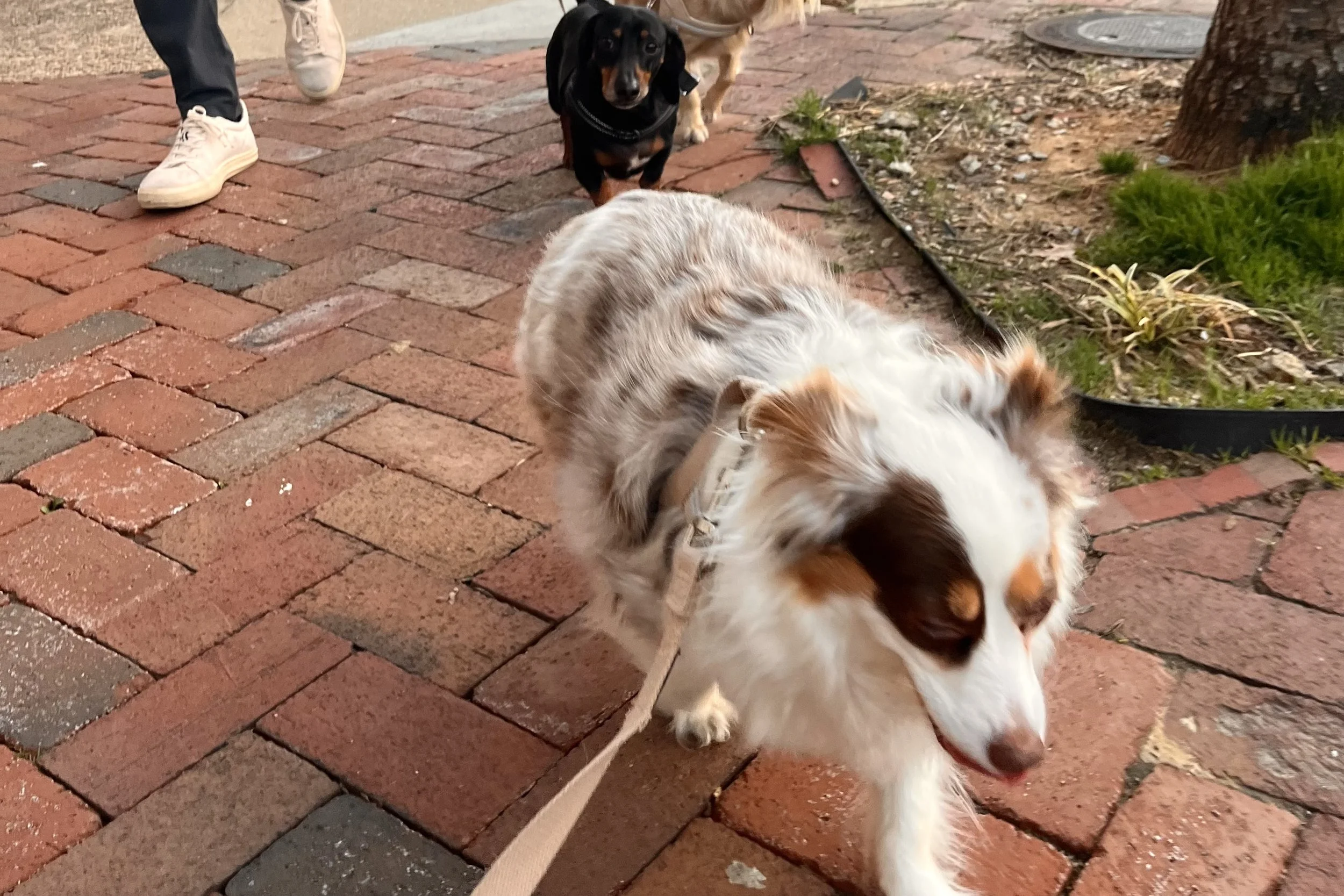
Walking through a busier stretch of sidewalk—alert, moving, but still comfortable.
The Early Signs Most People Miss
It usually doesn’t start with obvious stress.
More often, it looks subtle:
slowing down slightly
pausing more often
scanning the environment more frequently
tighter movement or shorter strides
looking back more often than usual
These are easy to miss—but they’re often the first sign your dog is working harder to process what’s around them.
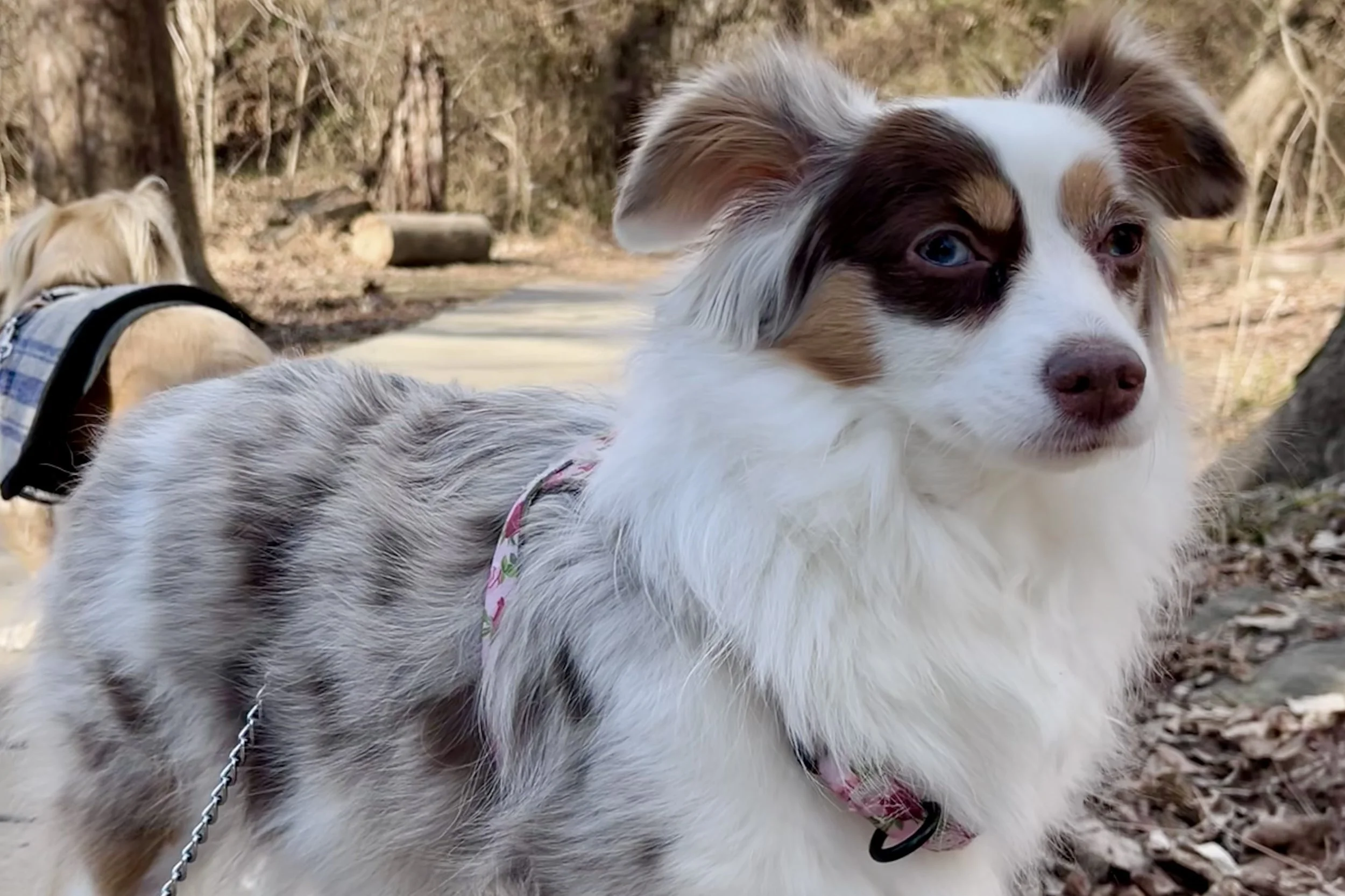
A brief pause to take things in—watching, noticing, deciding what comes next.
What It Looks Like When It’s Already Too Much
excessive panting
trembling
hiding
lip licking
pacing
uncharacteristic barking
turning their head away
trying to leave the area
These aren’t early signs—they’re what it looks like once a dog is already overwhelmed.
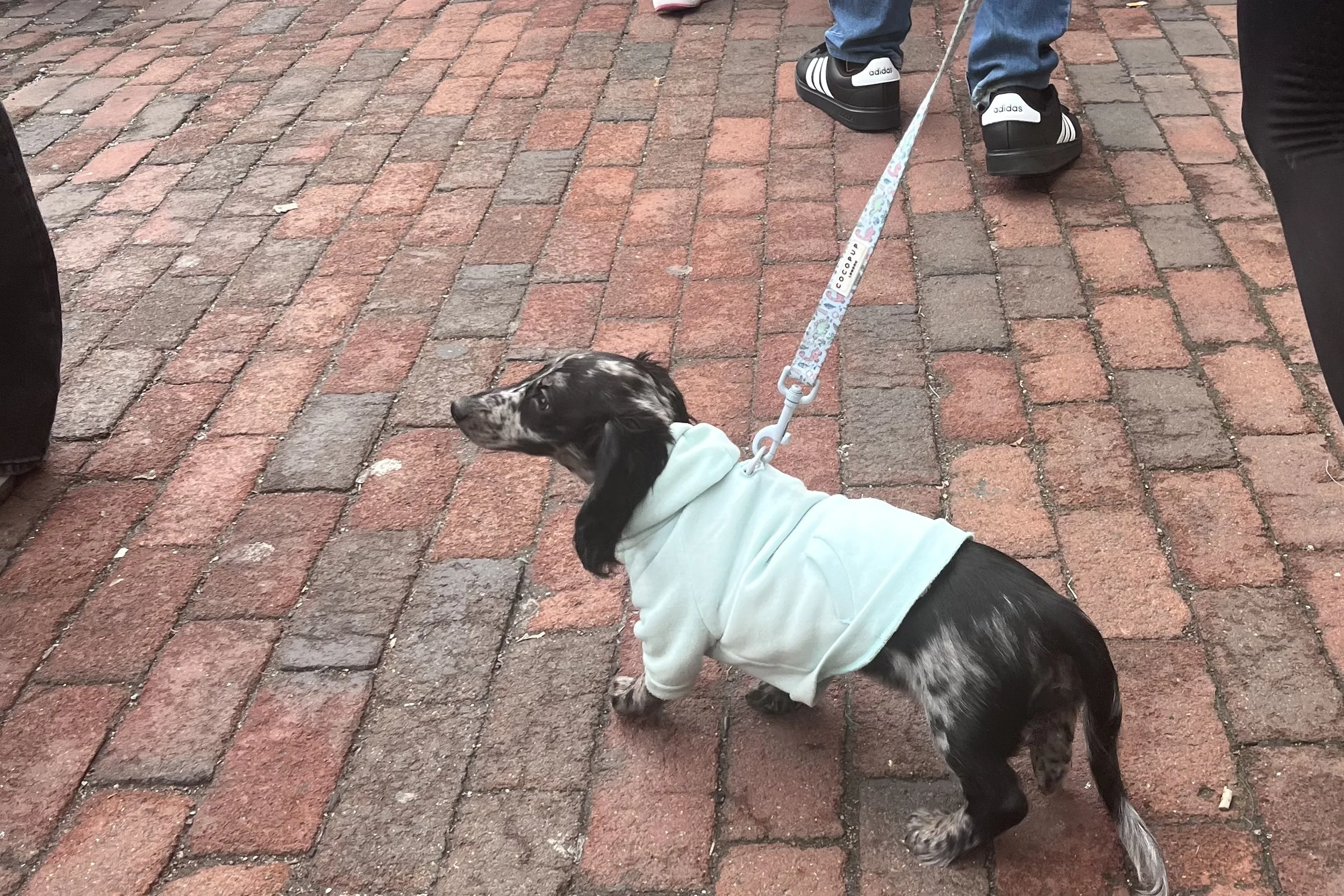
Turning away and slowing down—small signs the environment is becoming too much.
When to Pivot (Before It Escalates)
The goal isn’t to wait until something goes wrong.
It’s to notice the shift early—and change direction before the pressure builds.
That might mean:
turning down a quieter street
stepping into a park or open space
pausing in a lower-stimulation area
or ending the walk earlier than planned
If you need a place to reset quickly, these are some of the easiest spots to step into in in Best Dog-Friendly Parks and Green Spaces in Old Town Alexandria..
Small changes early make a bigger difference than trying to fix things later.
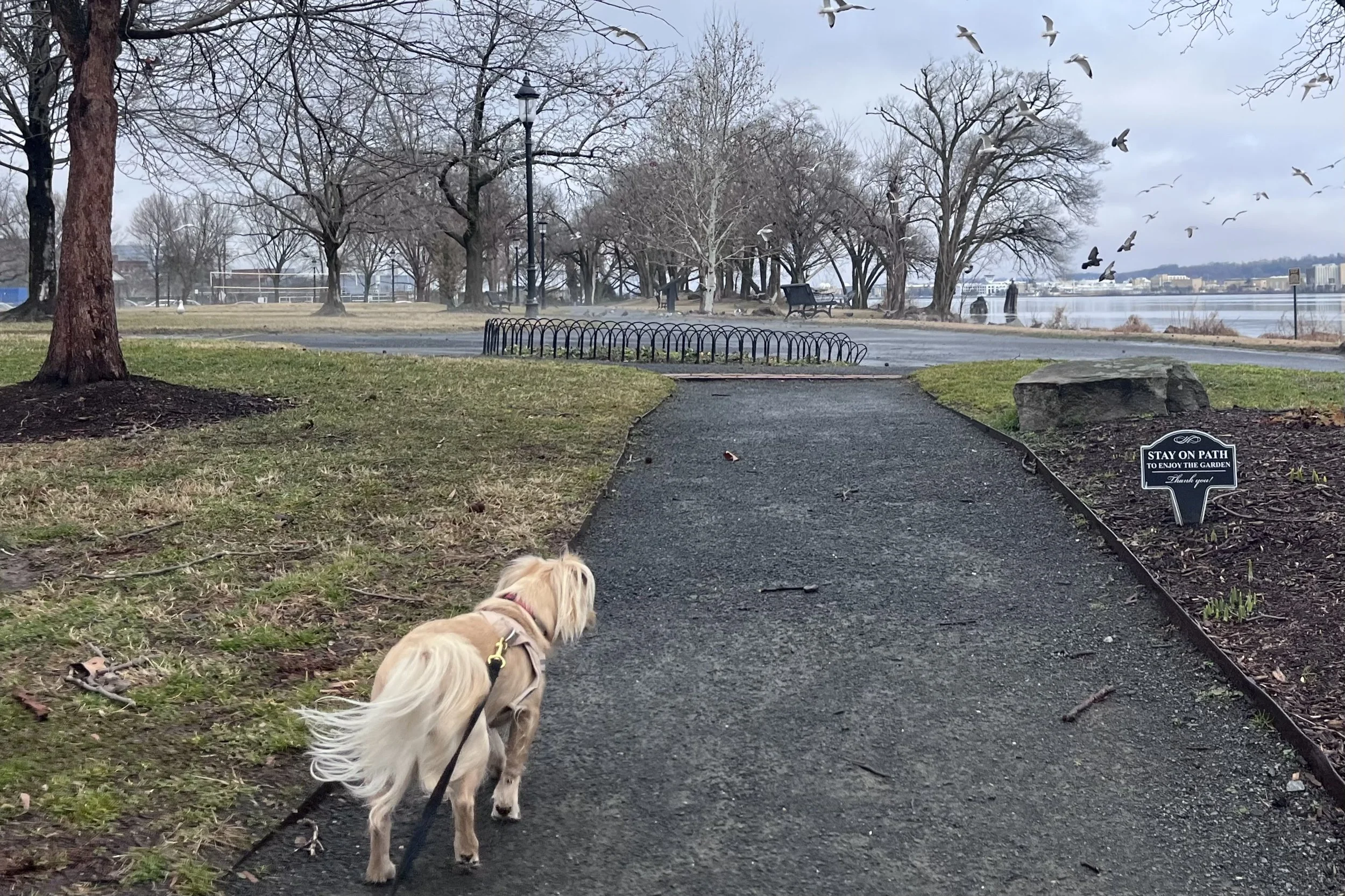
Moving into quieter space makes it easier for dogs to reset and settle.
What Leaving Early Actually Looks Like
Leaving doesn’t mean something failed.
It usually just means your dog has had enough for that moment.
In Old Town, that might look like:
crossing off King Street before it gets crowded
using the residential grid as a reset
stepping into Christ Church grounds or a quieter space nearby
choosing a shorter loop instead of pushing through
You’re not cutting the walk short—you’re keeping it manageable.
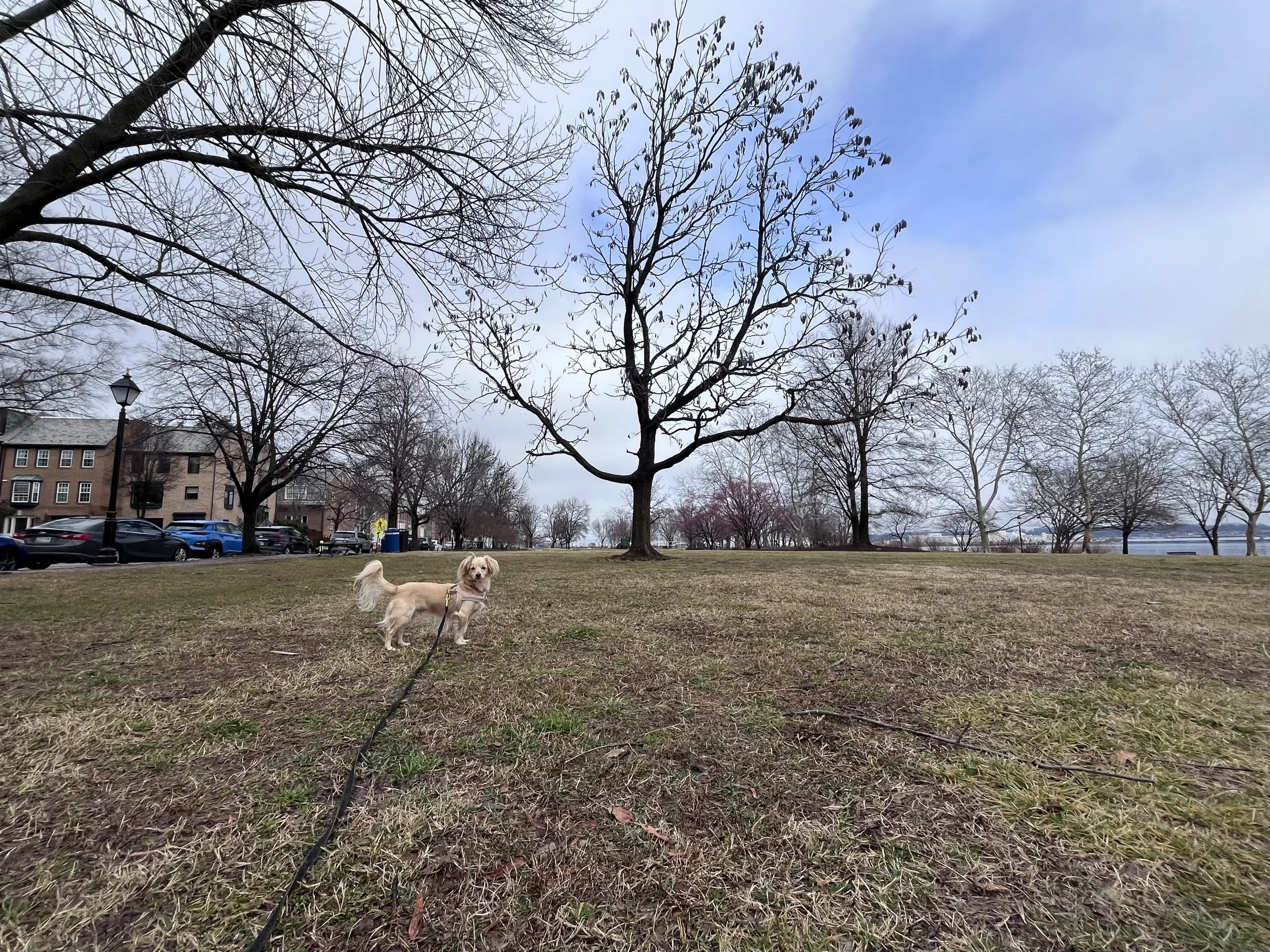
In open space, dogs often settle back into a calm, neutral rhythm on their own.
Why Timing Matters More Than Route
You can choose a “good” route and still run into problems if the timing is off.
Crowds build quickly. Sidewalks compress. Movement speeds up.
What matters more is:
when you go
how long you stay
and how quickly you adjust when things start to shift
A shorter, well-timed walk is often easier than a longer, perfectly planned one.
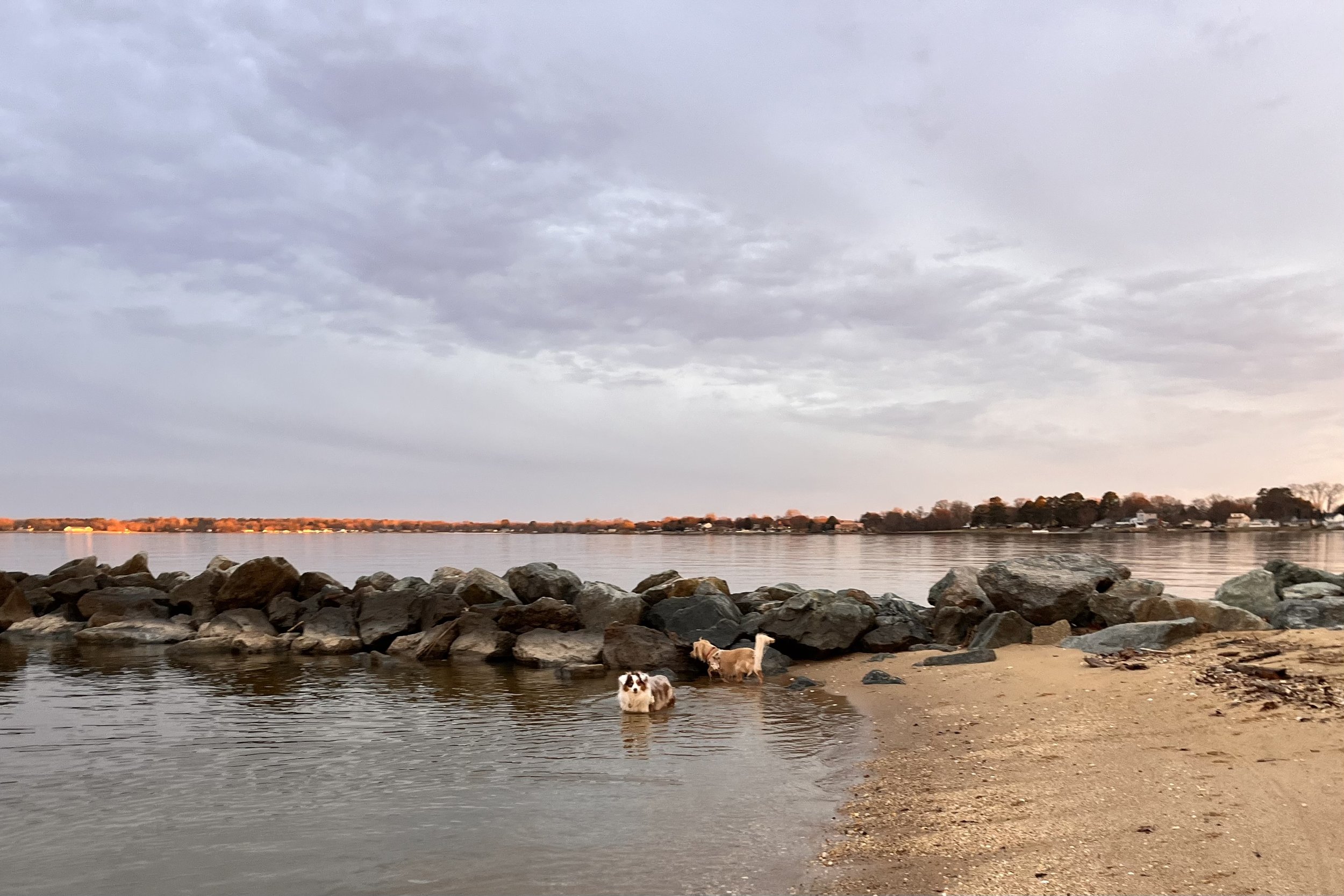
When space opens up, everything slows down—movement becomes easier and dogs settle naturally.
The Honest Take
Old Town doesn’t have to be overwhelming.
But it does require paying attention to how your dog is responding in real time.
If you notice the early signs and adjust before things build, most walks stay manageable.
And over time, those small decisions make the biggest difference.

Calm, comfortable, and settled.
