How to Walk Old Town Alexandria With a Small Dog (Without Overwhelm)
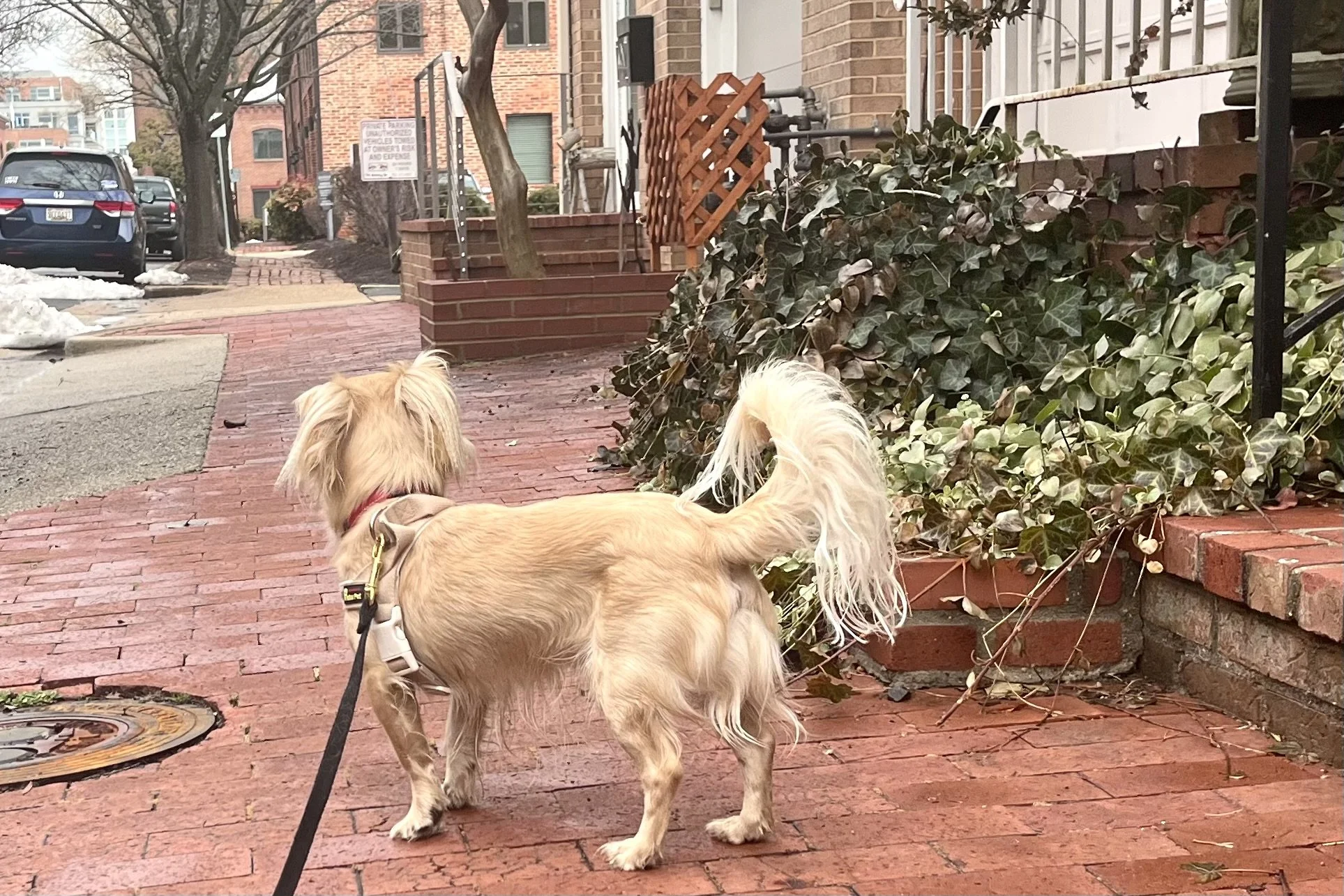
One block off King Street — where the pace softens and sightlines open.
Old Town Alexandria can feel completely different from one block to the next.
On King Street, sidewalks tighten, patio tables fill, and foot traffic compresses quickly. One street over, the pace slows, sightlines open, and walking with a small dog becomes much easier.
The difference isn’t luck. It’s pattern.
In my Old Town Alexandria comfort breakdown, I looked at whether Old Town is generally manageable.
This guide focuses on how to walk Old Town itself—where density builds, how to move through it, and what to do when sidewalks start to compress.
This is the same pattern I measure in my Small Dog Comfort Index.
Once you understand where stimulation concentrates, the experience changes completely.
If you’re looking for easier, low-pressure places to walk beyond the busiest streets, I’ve grouped together calm local walks and nearby options here Dog-Friendly Walks & Easy Trips Near Old Town Alexandria.
At a Glance: How to Walk Old Town With a Small Dog
If you're planning a walk in Old Town with a small or space-sensitive dog, these simple adjustments make the experience much easier:
• Avoid King Street east of Washington Street during peak hours
• Use the residential grid west of Washington as your walking base
• Reset in quiet spaces like Christ Church grounds or the Lee-Fendall garden
• Expect the most sidewalk compression between 3–7 pm
• Check Old Town event schedules before visiting
King Street and the Tourist Spine in Old Town Alexandria
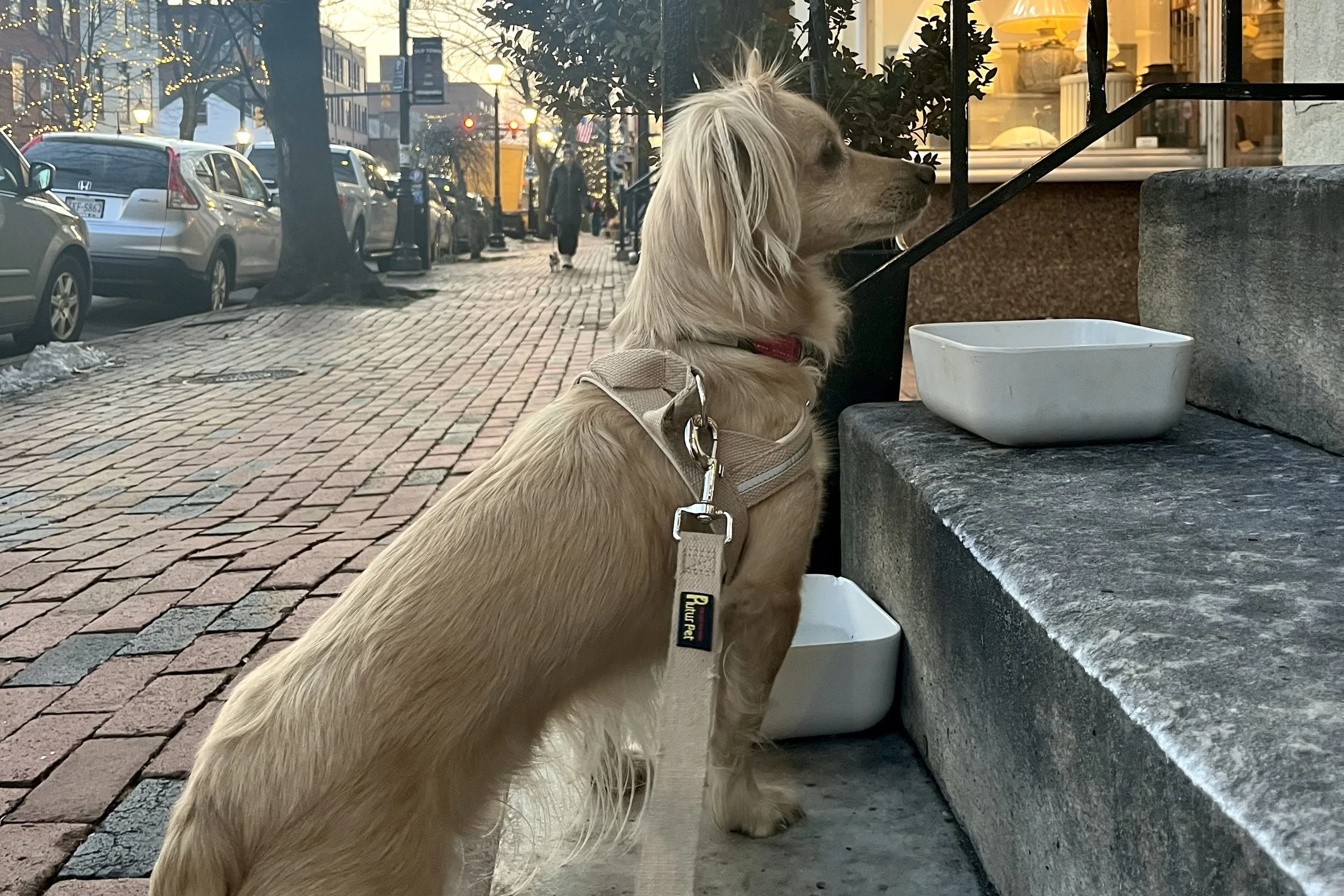
King Street at dusk — storefront lights glow, foot traffic builds, and the pace shifts from residential calm to steady stimulation.
The highest stimulation zone in Old Town runs along King Street — especially east of Washington Street toward the waterfront.
Between Washington and the river, several factors combine quickly:
• Sidewalks narrow
• Patio seating fills early
• Foot traffic stays dense throughout the day
• People approach dogs at close range
The effect compounds as the afternoon progresses.
3–7 pm is typically the most compressed window of the day, and warm Saturdays or Sundays amplify the density even further.
For confident, highly social dogs, this stretch can be lively and enjoyable.
For space-sensitive or mildly reactive small dogs, it’s usually the hardest corridor in Old Town.
Quieter Residential Streets in Old Town Alexandria
Move one block off King Street and the pace shifts noticeably.
Most east–west streets west of Washington Street feel:
• More predictable
• Less compressed by foot traffic
• Slower moving overall
• Easier to scan ahead for approaching pedestrians or dogs
Cars move slowly, foot traffic spreads out, and the sidewalks feel less pressured.
For small dogs that are sensitive to sudden movement or tight pass-bys, this residential grid often makes Old Town far more manageable.
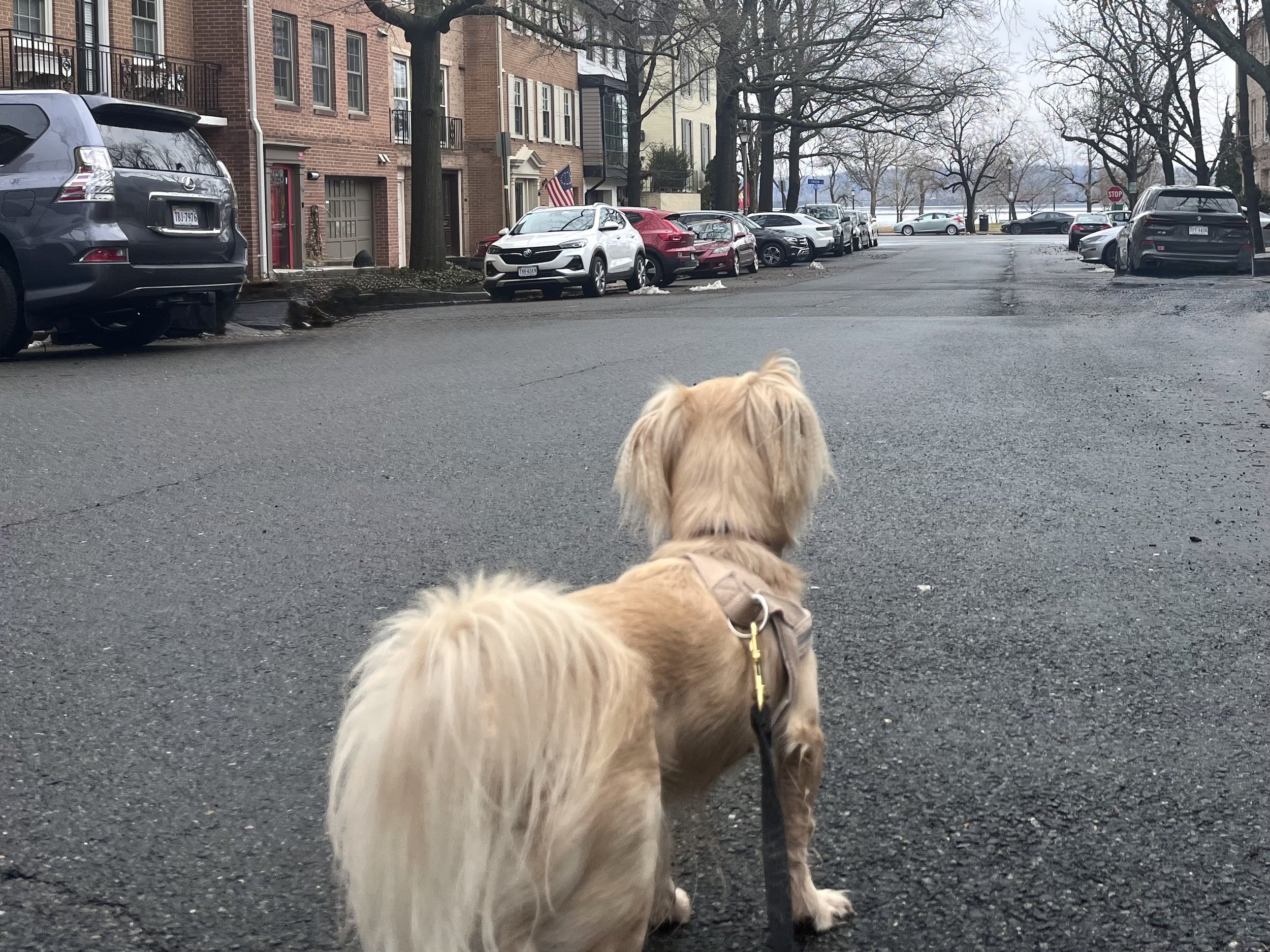
Long sightlines on quieter residential streets in Old Town Alexandria make it easier to scan ahead and avoid tight sidewalk pass-bys.
Cars move slowly. Foot traffic spreads out. Sidewalk widths still vary, but overall density drops noticeably.
If you’re unsure where to begin, enter Old Town from the west and use the residential grid as your foundation.
Busy Doesn’t Always Mean Overwhelming
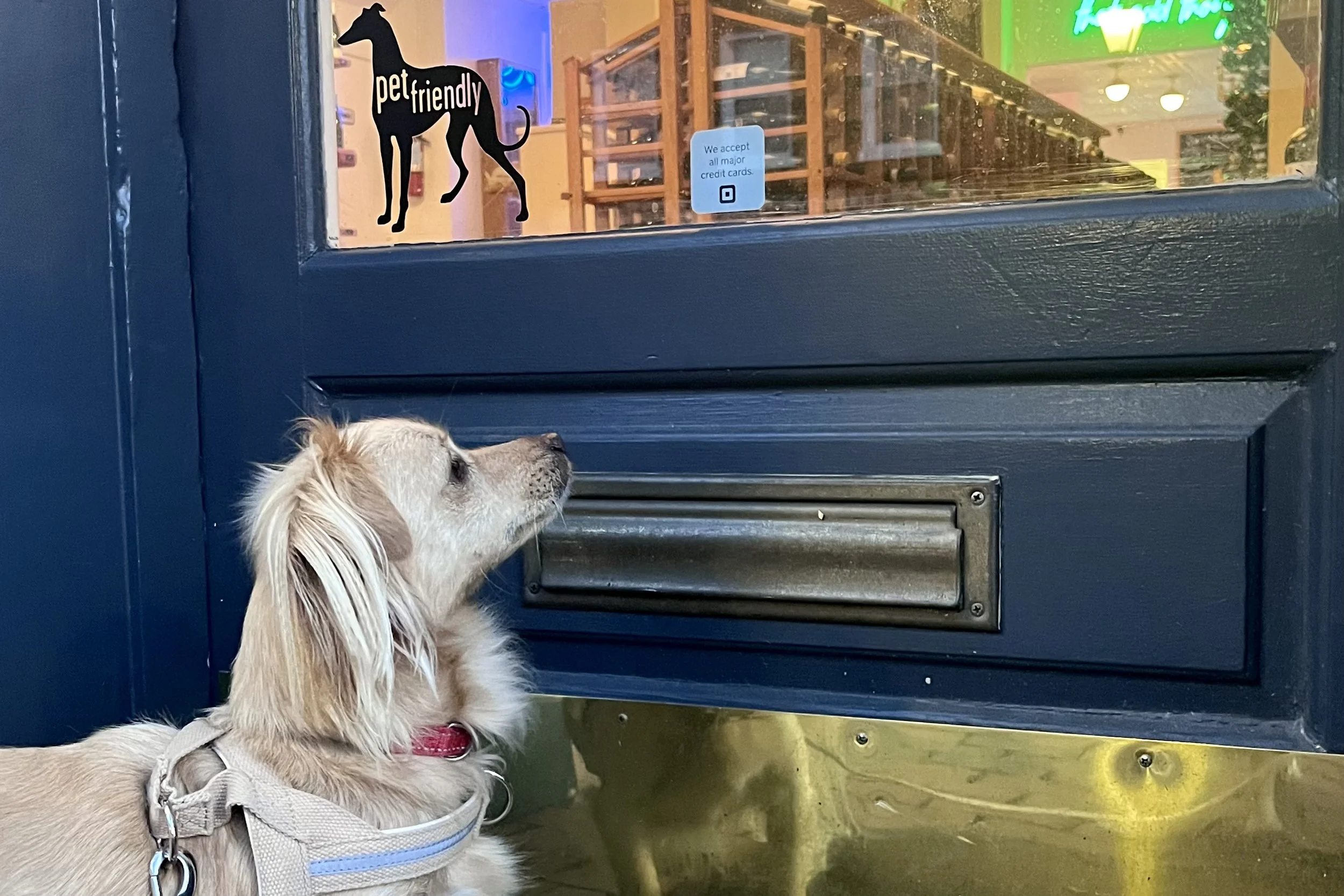
Charming, walkable, and layered — King Street brings dogs closer to doors, windows, and passing foot traffic.
There’s an important distinction when walking Old Town with small dogs:
Open space relief isn’t the same as a secluded reset.
Some areas remain lively but provide enough physical room that the experience feels manageable.
Open Space Relief
If you’d rather start in places that feel easier from the beginning, I’ve grouped those together here:
offer space to move even when people are present.
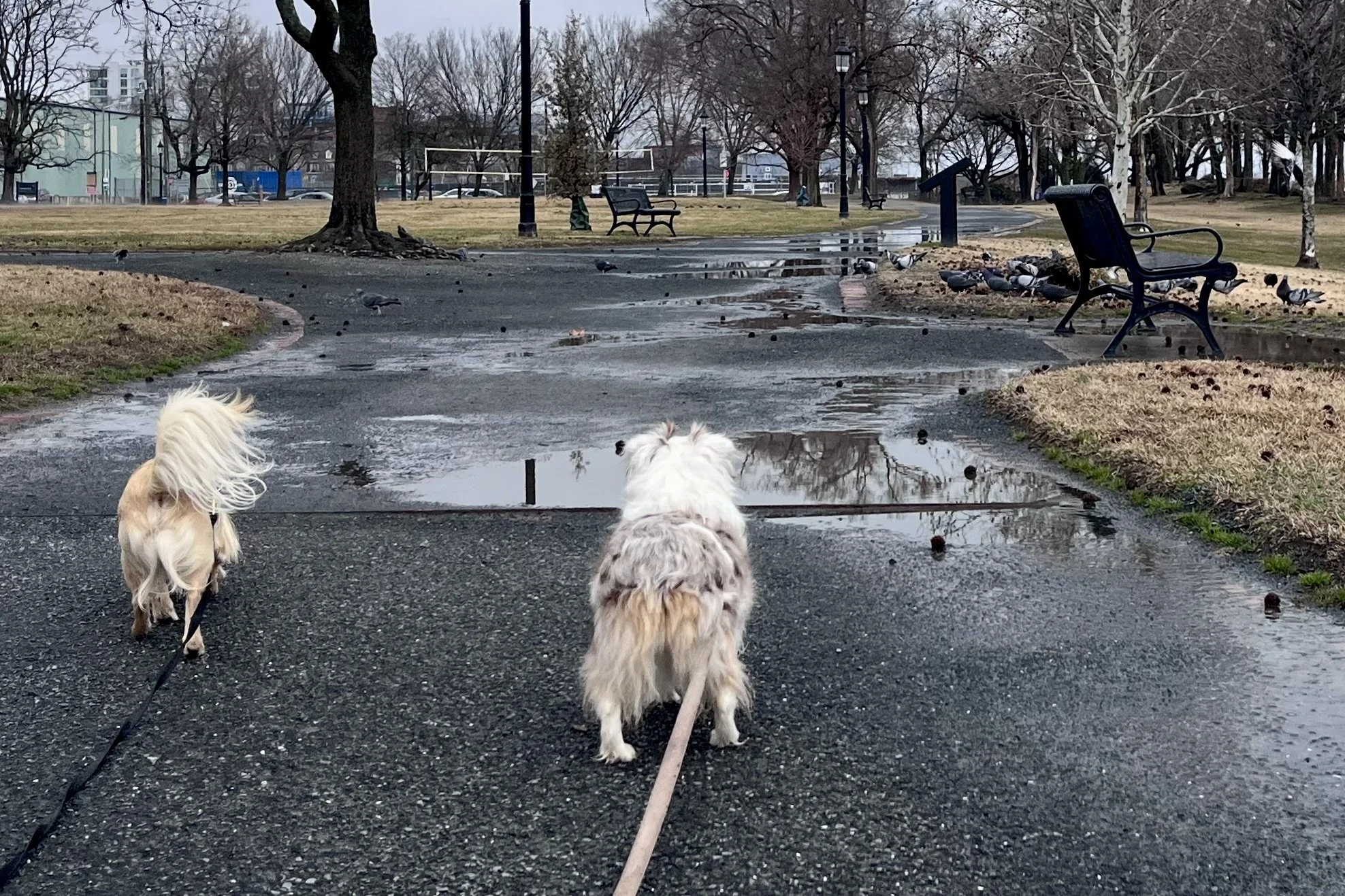
Defined waterfront paths create structure without compression — space to move, with clear edges and room to scan ahead.
I’ve outlined some of the best waterfront paths and green spaces in Old Town- each with its own personality and type of experience.
These areas can still be active, but lawns and open sightlines create breathing room.
For many small dogs, that space alone is enough to keep the walk comfortable.
Secluded Micro-Refuges (When You Need a True Reset)
When sidewalks start to compress, pivot to places that provide both visual and sound buffering.
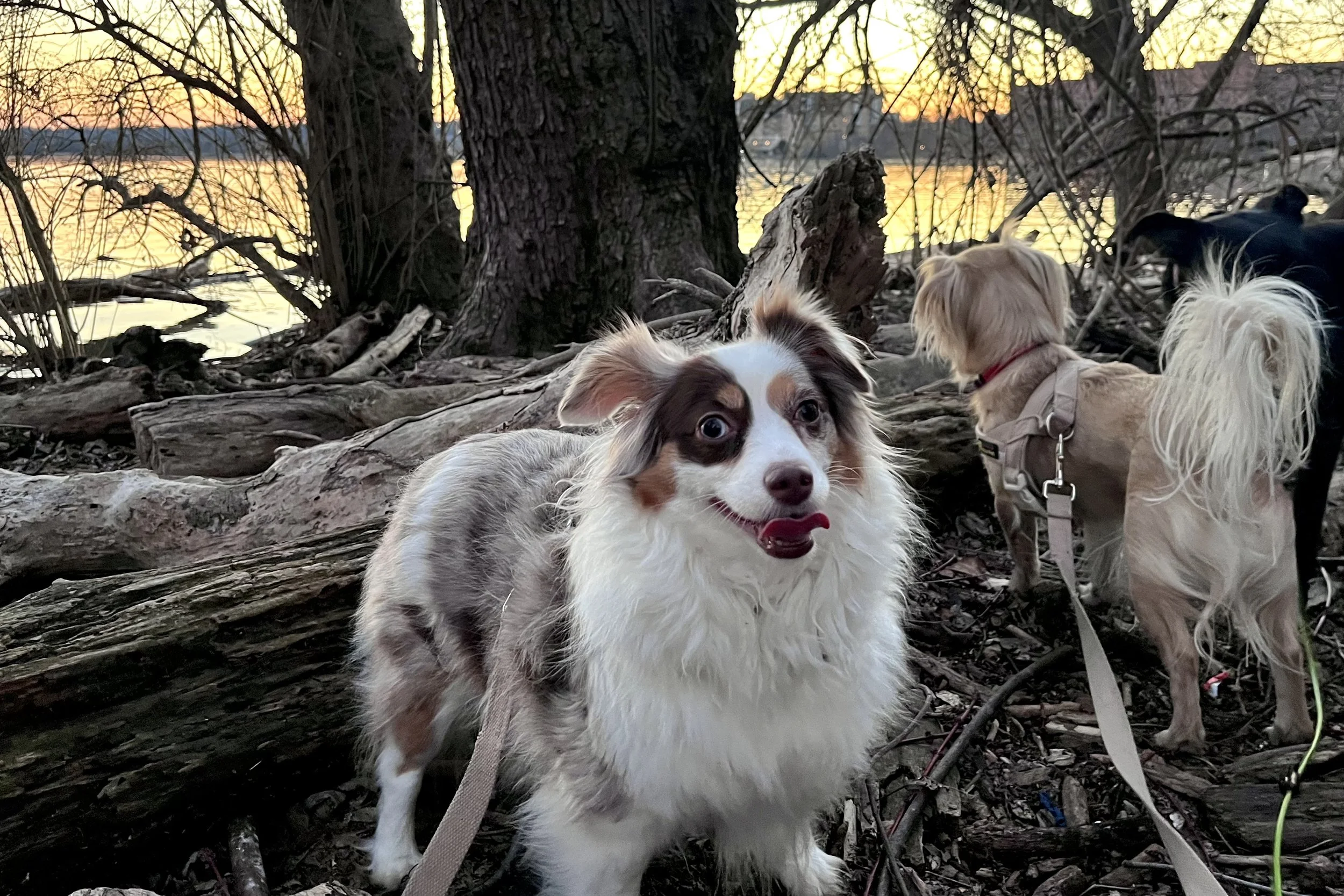
Even on busy evenings, riverbank pockets like this create visual buffering and a noticeable drop in stimulation.
Christ Church Grounds
A few minutes from King Street, the cemetery grounds feel like a different world:
• Shaded paths in summer
• Stone benches and alcoves
• Landscaping that softens surrounding noise
• An immediate drop in stimulation
Even on busy days, the space stays remarkably quiet.
Lee-Fendall House Museum & Garden
Just off Washington Street — one of Old Town’s busiest corridors — the gated garden offers:
• Curved walking paths
• Dense tree cover
• Visual enclosure from surrounding streets
• Separation from street noise
Step through the gate and the entire energy shifts. The space feels contained and calm.
These places offer more than open lawn. They offer seclusion.
Use the Alleys as Pressure Valves
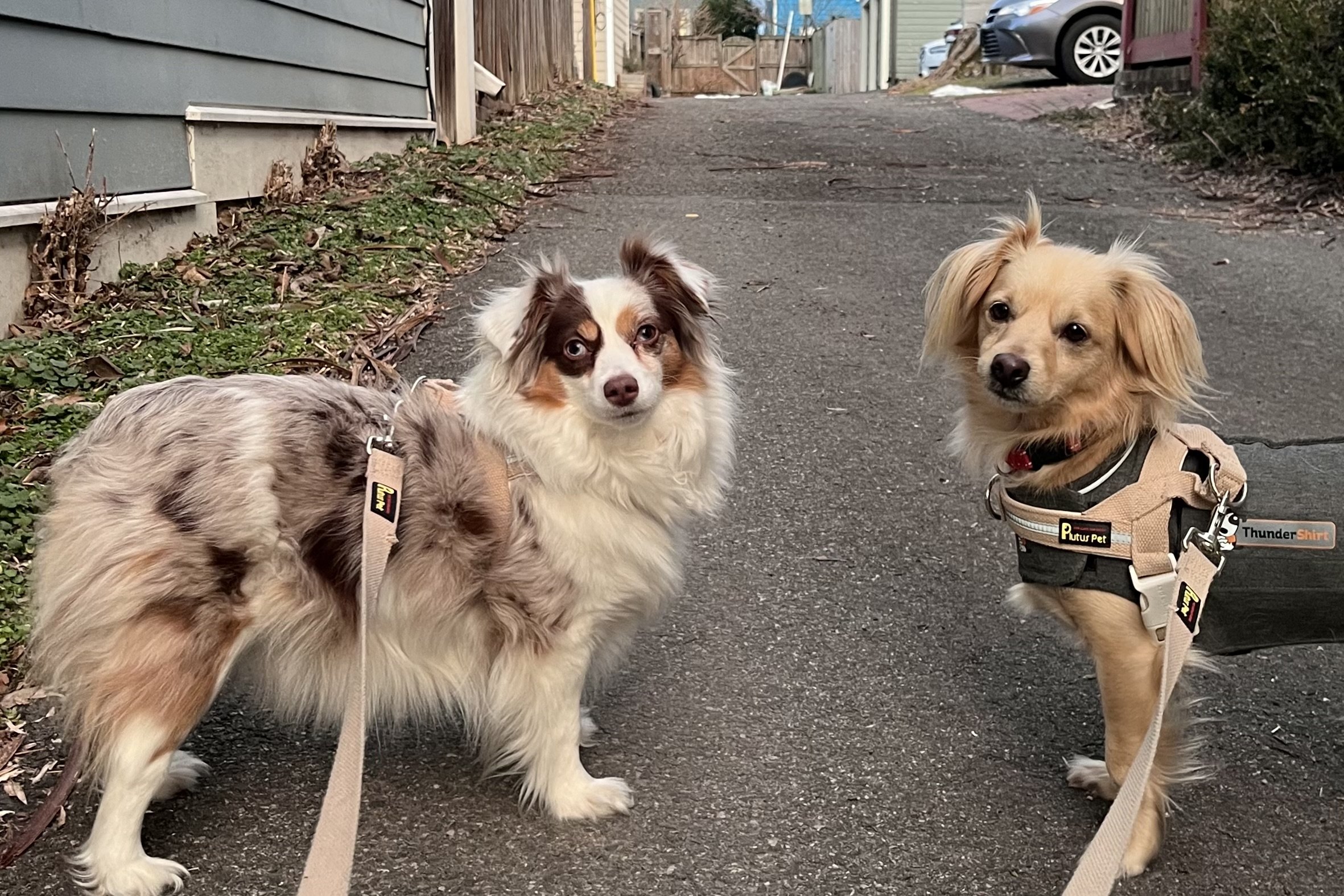
A quick reset in one of Old Town’s alleys — quieter footing, fewer moving pieces, and space to decide what comes next.
Most blocks in Old Town have named alleys running between the main streets.
They’re typically clean, quiet, and low-traffic — and they create easy escape routes when sidewalks start to feel tight.
The key isn’t reacting late. It’s shifting early.
If leash tension increases or sniffing suddenly drops off, that’s usually a cue to change direction before compression builds.
Old Town gives you options. Use them.
How to Do Old Town on a Busy Day
You don’t have to skip it entirely.
On high-density days:
• Order food ahead from a King Street spot like Falafel Inc. or Tatte Bakery & Café
• Use the pickup counter to minimize time on the tourist spine
• Leave the busy corridor immediately
• Walk to a quieter refuge space
• Eat in Christ Church grounds or the Lee-Fendall garden
You still get Old Town — just structured differently.
When Old Town Alexandria Feels Most Crowded

Even when the waterfront gets lively, open space changes the feel. They can watch the movement without tightening up.
Old Town is highly weather dependent.
Certain conditions reliably increase foot traffic:
• The first warm spring weekend
• A sunny 60° fall afternoon
• Summer Saturdays when patio seating fills quickly
Cloudy weekdays, by contrast, are often surprisingly manageable.
Parking pressure is usually the earliest signal. If parking feels tight, expect sidewalk compression.
The Honest Take
Should you avoid Old Town with a mildly reactive small dog?
No.
Instead, structure the walk intentionally:
• Avoid the tourist spine during peak hours
• Use the residential grid west of Washington as your base
• Use open lawns when you need space
• Pivot to micro-refuges when you need seclusion
• Skip summer weekends if possible
• Visit early morning or after 8 pm if you want to walk King Street itself
Old Town works — when you move intentionally.
If your dog does better starting in quieter, more open areas, I break down those spaces here Best Dog-Friendly Parks and Green Spaces in Old Town Alexandria.
