Why Dogs Freeze or Refuse to Walk in New Places
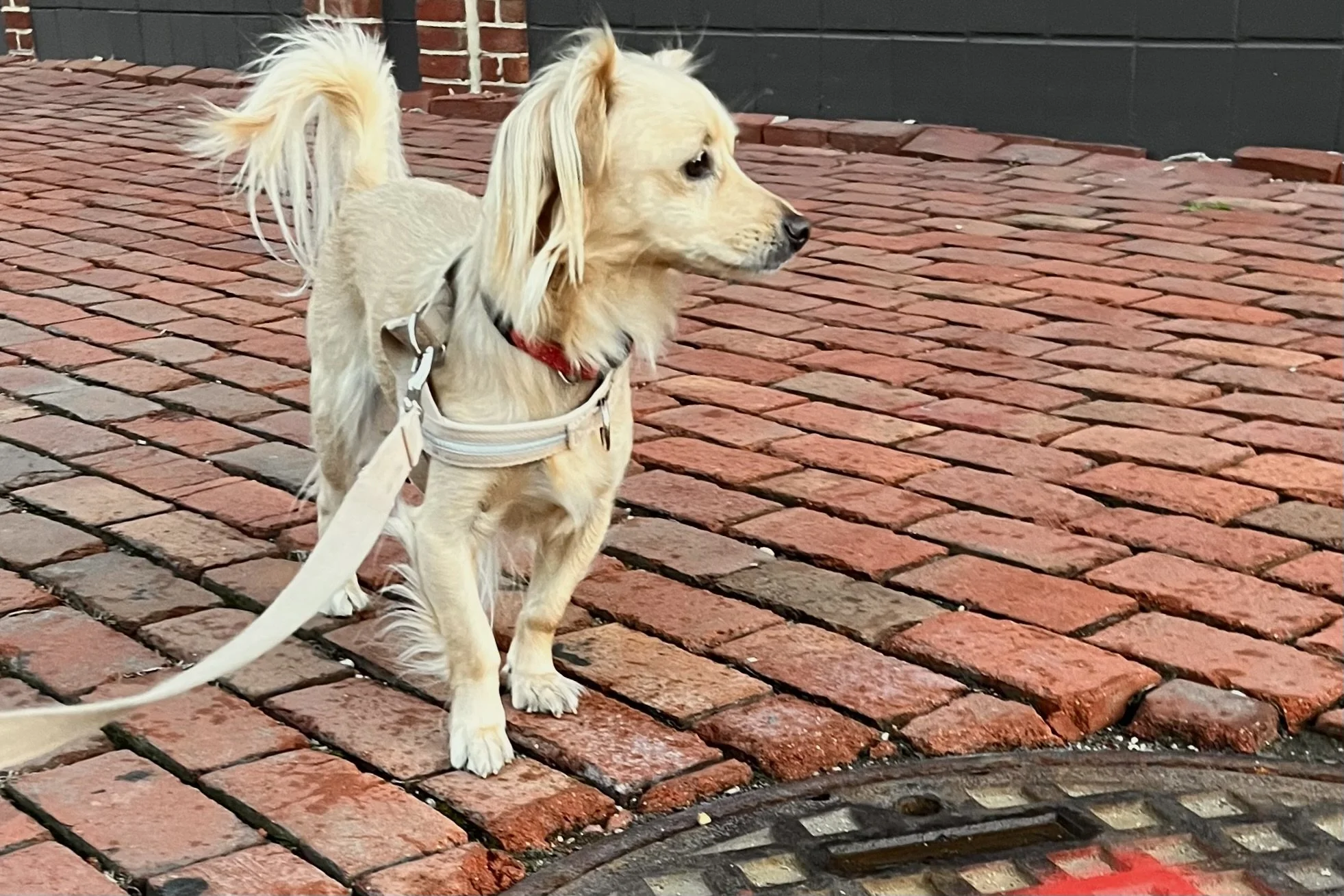
When a dog suddenly freezes or refuses to walk during an otherwise normal outing, it can be surprising.
A dog who normally enjoys walks may suddenly stop moving — planting their feet on the sidewalk, hesitating at a doorway, or refusing to cross something in the street.
Sometimes the dogs don’t want to move at all at first. When we step outside, they occasionally stand still for a minute or two just looking around, quietly taking in what’s happening before deciding to start the walk.
At first glance, this can look like stubbornness.
But most of the time, dogs stop walking because something in the environment feels uncertain or uncomfortable.
Dogs experience far more information than we notice. They move through the world using scent, sound, surface texture, and movement patterns. When several of those things change at once, many dogs pause while they sort out what they’re encountering.
Once you start noticing what dogs are reacting to in those moments, the pauses begin to make much more sense — something I began noticing more clearly during our regular neighborhood walks, which I wrote about in Why Familiar Walks Matter for Dogs.
Understanding why dogs freeze during walks helps explain many of the small hesitations owners notice but often misinterpret.
Why does a dog suddenly freeze or refuse to walk?
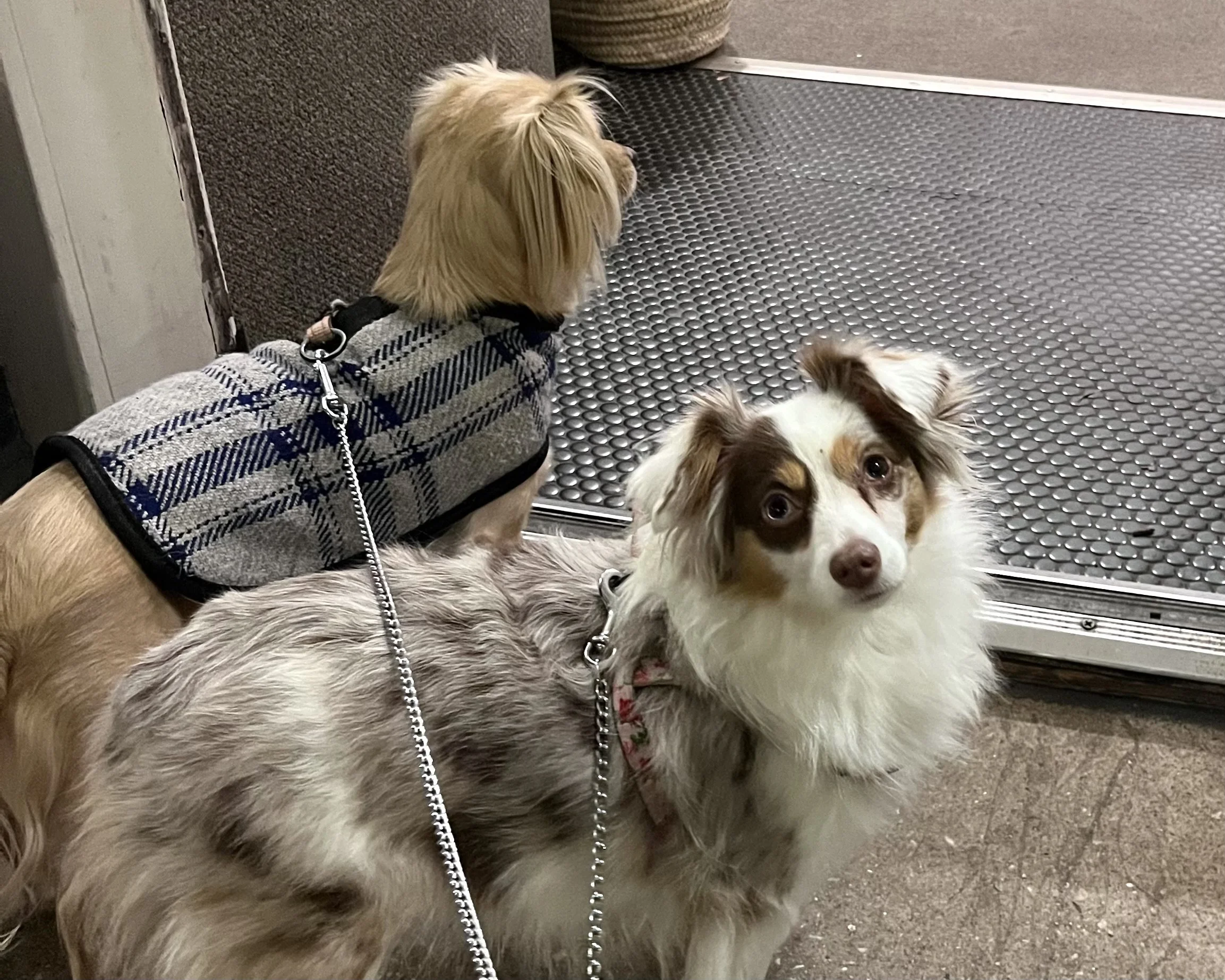
Dogs often pause briefly at doorways or new floor surfaces while deciding whether the footing feels safe.
In many cases, dogs stop walking because something in the environment has changed. Surfaces under their paws, crowded sidewalks, sudden sounds, or unfamiliar surroundings can all cause a dog to pause while they process what’s happening around them.
Does your dog do any of these things on walks?
Some dogs suddenly stop walking in ways that puzzle their owners.
They might:
• stop suddenly in the middle of the sidewalk
• refuse to cross metal grates or manhole covers
• freeze when sidewalks become crowded
• hesitate when something unfamiliar appears on the ground
• stand still and quietly look around before starting a walk
These moments often look like stubbornness.
But most of the time, the dog is simply reacting to something in the environment that we may not have noticed yet.
Why Dogs Freeze or Refuse to Walk — Quick Reasons
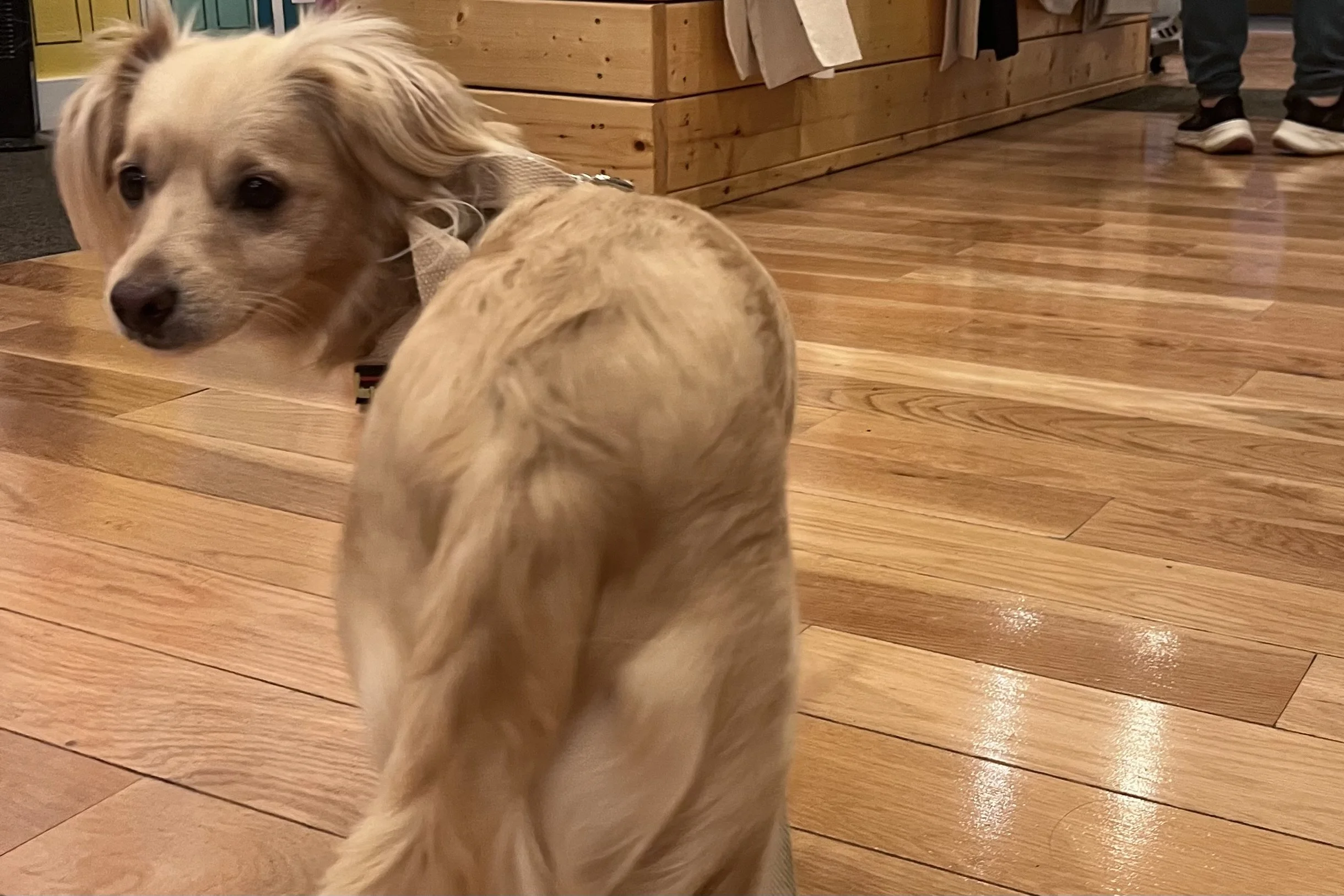
Dogs often pause when entering unfamiliar indoor spaces while they take in new sounds, surfaces, and movement around them.
Several different things can trigger this hesitation:
• unfamiliar surfaces such as metal grates or manhole covers
• crowded sidewalks where people and dogs pass closely
• sudden sounds or movement that increase alertness
• environmental overload when too many new sights and smells appear at once
• footing that feels unstable under their paws
Some dogs pause briefly to process what’s happening around them. Others avoid certain surfaces or situations entirely.
Once a dog becomes familiar with an environment, many of these hesitations disappear.
Why Do Some Dogs Refuse to Walk Over Metal Grates or Manhole Covers?
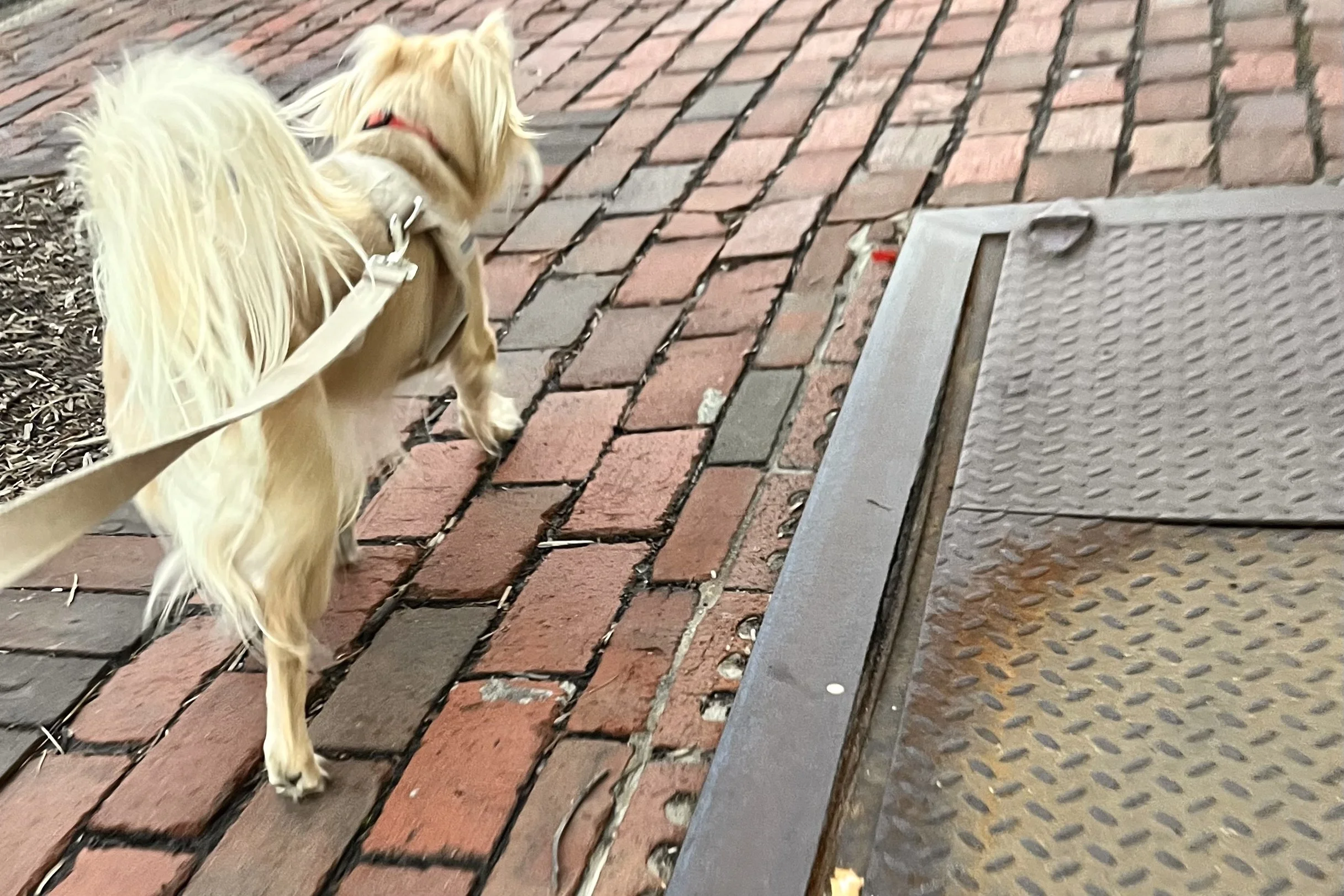
Some dogs hesitate or choose to walk around metal surfaces like grates or manhole covers during a walk.
One of the most common walking hesitations happens around metal street surfaces.
Manhole covers, drainage grates, and metal strips across sidewalks often cause dogs to stop suddenly during a walk.
To humans, these surfaces look like small details in the street.
To dogs, they can feel very different underfoot.
Metal surfaces can:
• shift slightly when stepped on
• produce hollow or vibrating sounds
• feel slick or unstable
• smell different from surrounding pavement
Because dogs rely heavily on footing and traction, some become cautious when they encounter these surfaces.
My dog Archie reacts strongly to certain metal surfaces in Old Town Alexandria. If we approach a manhole cover or metal strip in the sidewalk, he stops immediately. It isn’t a moment of evaluation — he simply refuses to step on them.
Usually this happens when I’m not thinking about the surface ahead. We’ll be walking normally, and suddenly he comes to a complete stop. Once I look down, it becomes obvious why. From his perspective the metal surface isn’t an option, and he waits until we can route around it.
For dogs that dislike these surfaces, the hesitation isn’t stubbornness. It’s a decision about stability.
Many dogs simply prefer to walk around the object rather than step on it.
Why Do Dogs Freeze When Sidewalks Get Crowded?
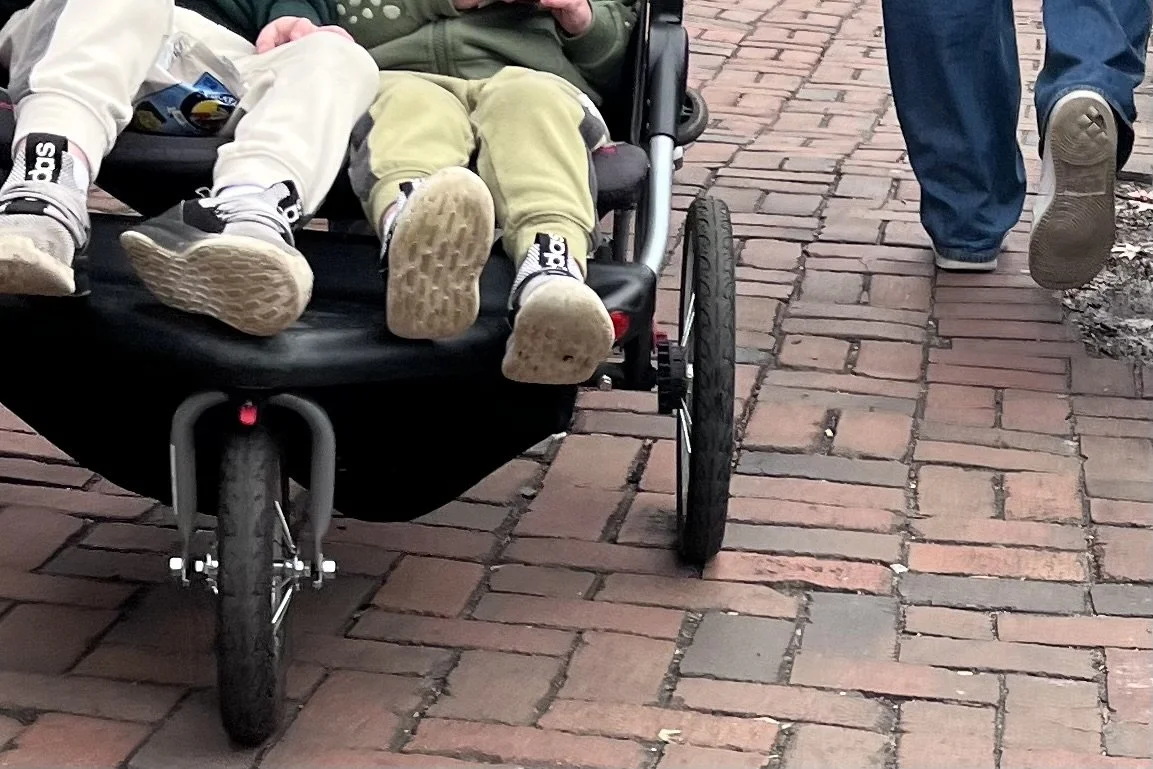
Busy sidewalks introduce wheels, feet, and movement from several directions — things dogs must interpret while navigating a walk.
Sidewalks in busy towns often become narrow corridors where movement flows from several directions at once.
A dog may suddenly need to interpret:
people approaching from ahead
someone stepping behind them
another dog passing nearby
a stroller rolling toward them
traffic moving beside the curb
For humans, these moments are routine.
For a dog — especially a small dog — they require quick interpretation of several moving things at once.
Busy tourist streets can make this even harder. People sometimes reach down suddenly to pet a dog or step into their path without realizing how little room there is on the sidewalk.
In dense areas like historic downtown districts, sidewalks can compress quickly during busy hours. Choosing quieter streets can make a noticeable difference for sensitive dogs, which I explain more in How to Walk Old Town Alexandria With a Small Dog.
When sidewalks compress like this, many dogs pause simply because they need time to interpret what’s happening around them.
Why Do Some Dogs Pause While Others Completely Refuse to Walk?
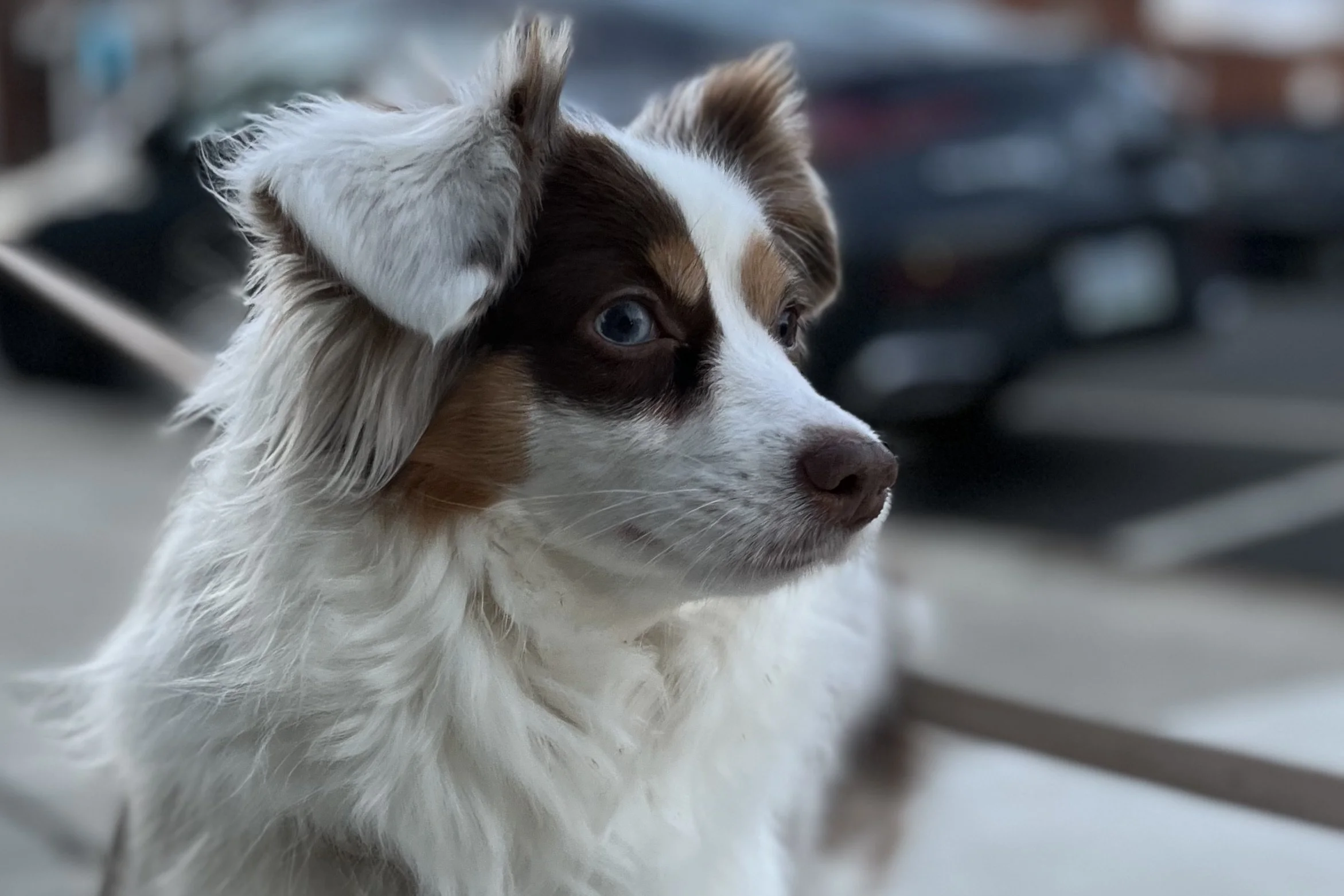
A brief pause during a walk can be a dog’s way of scanning their surroundings before deciding how to move forward.
Not all pauses mean the same thing.
Dogs often show two different types of freezing behavior during walks.
The first is a processing pause.
In this case, the dog’s body remains relaxed. Their head moves slightly as they scan their surroundings, ears turning toward sounds and movement. After a few seconds, they usually continue walking once they understand what they’re seeing.
My dog Saydie does this frequently. She’s a toy Australian Shepherd, a small herding breed that tends to stay highly alert to movement.
When we walk through town she usually stays directly behind me, almost using me as a moving shield. If we stop, she often peeks around my legs to check what’s happening on the street before deciding whether to move again.
Every so often something catches her attention — birds or a squirrel across the street — and her posture changes instantly. She wiggles forward with sudden confidence and hustles ahead next to Archie for a few steps before settling back into her usual position behind me.
The only thing that reliably makes her bark is another dog. When she reacts, Archie immediately joins in.
The second type is a threshold freeze.
This happens when a dog encounters something that feels uncertain or physically uncomfortable. Their body stiffens, their weight shifts backward, and they stop moving completely.
Archie shows this when approaching certain metal street surfaces. Instead of hesitating briefly, he simply refuses to step on them at all.
This type of freeze isn’t about stubbornness. It’s about certainty — the dog has already decided the surface isn’t safe.
Why New Places Can Be Harder for Dogs
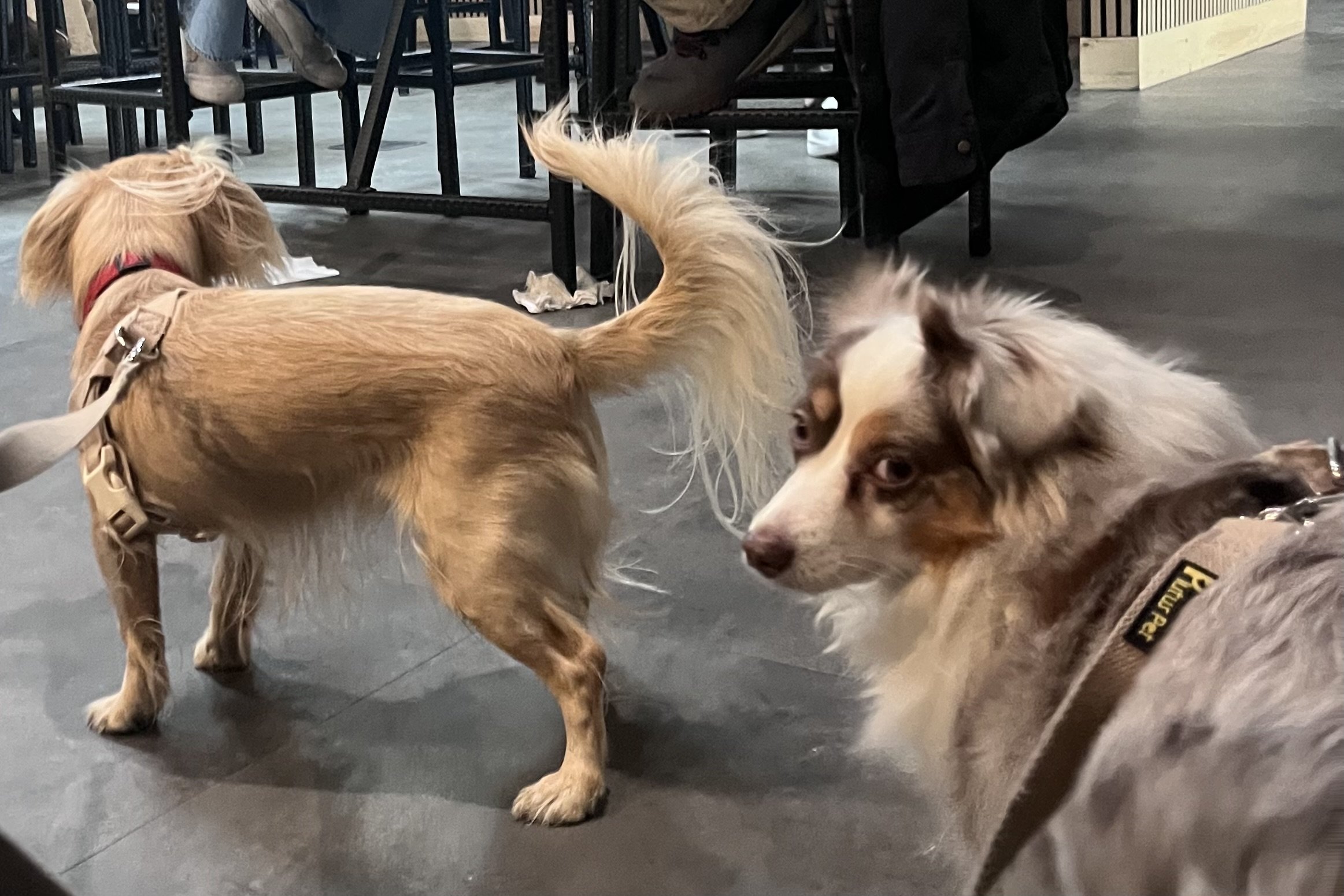
Dogs may hesitate briefly when entering unfamiliar indoor spaces while they adjust to new sounds, movement, and floor surfaces.
Dogs rely heavily on prediction.
In familiar neighborhoods, they already understand the rhythm of the environment. They know where sidewalks narrow, where traffic passes, and where people typically appear.
In a new place, none of those patterns exist yet.
Everything becomes new information.
New smells
New sounds
New surfaces
New movement patterns
Until a dog builds a mental map of the environment, they may pause more frequently while trying to interpret what they’re encountering.
On familiar routes, my dogs slow down in certain places for a different reason — the scents are familiar. They recognize the corners where they usually stop to sniff or the spots where other dogs have passed recently.
On unfamiliar walks, though, everything smells new, and they move more slowly while investigating those changes.
Over time, dogs begin recognizing patterns in the places they visit regularly. They learn where certain routes lead and even remember which storefronts are worth stopping at. I see this clearly during walks through Old Town Alexandria’s small-dog treat stops described in The Cookie Circuit in Old Town Alexandria.
Once a dog understands the environment, walking often becomes much easier.
Dogs Experience Walks Differently Than Humans
When we arrive somewhere new, we usually notice scenery.
Dogs notice different things. They pay attention to the surface under their paws, how closely people pass, and where movement is coming from around them.
A busy historic street might look charming to us but feel very different to a dog navigating wheels, feet, doorways opening, and other dogs approaching at close range.
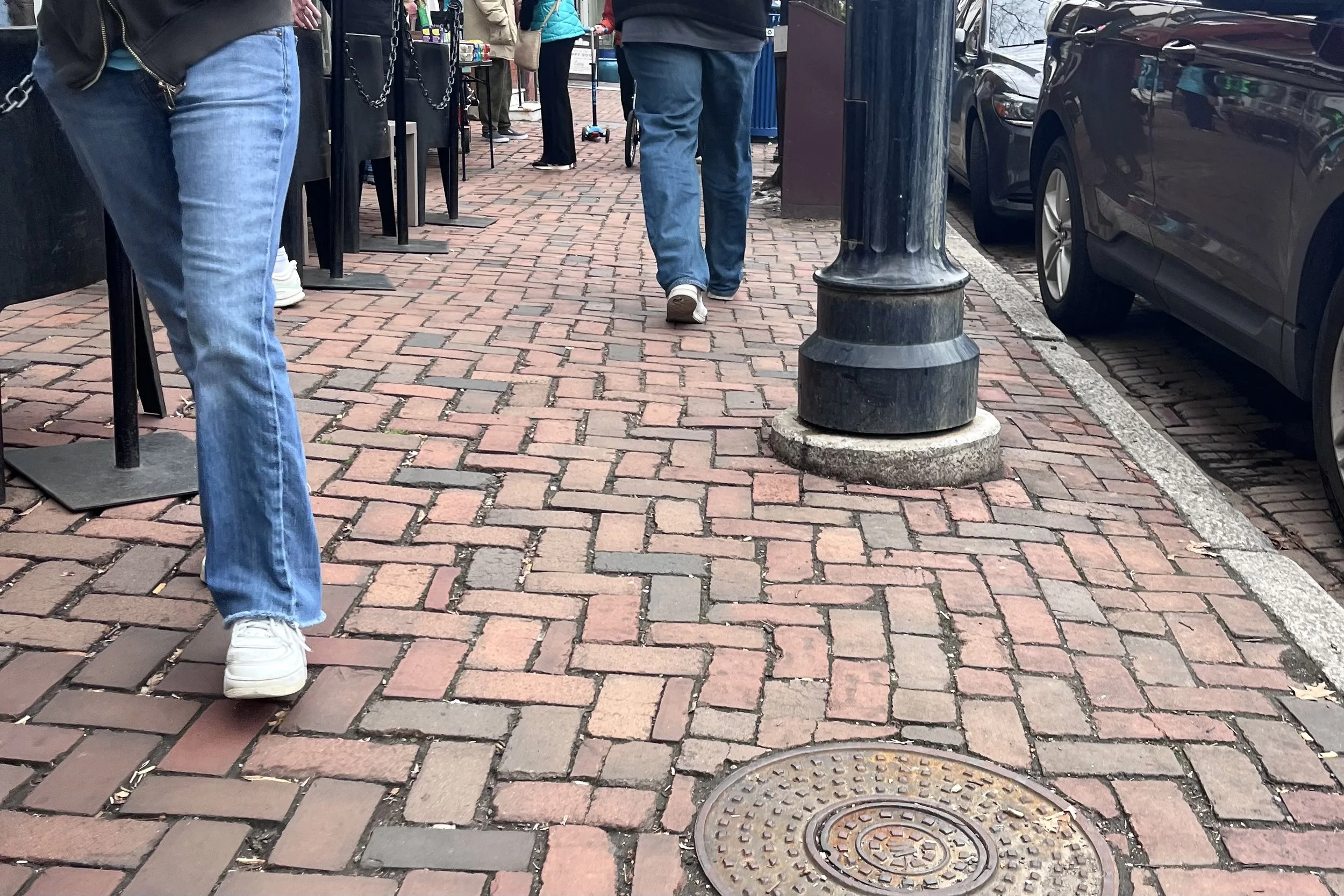
From a dog’s perspective, a simple walk can involve feet, wheels, narrow space, and changing surfaces all at once.
Historic tourist districts often concentrate stimulation along a few central streets while quieter residential blocks nearby feel very different for dogs. I noticed this same pattern while walking in Florida’s historic district, which I describe in Walking Old Town St. Augustine With Dogs.
That’s one reason dogs often move differently from place to place.
In quieter environments with more space and predictable movement, many dogs walk comfortably. In dense areas where information builds quickly, they may pause more often while deciding how to move forward.
For owners looking for calmer places to explore with a dog, several quieter destinations within a few hours of Northern Virginia tend to work better than dense tourist streets. Some of those are included in Dog-Friendly Weekend Trips Near Washington DC and Alexandria.
What Looks Like Refusal Is Often Careful Observation
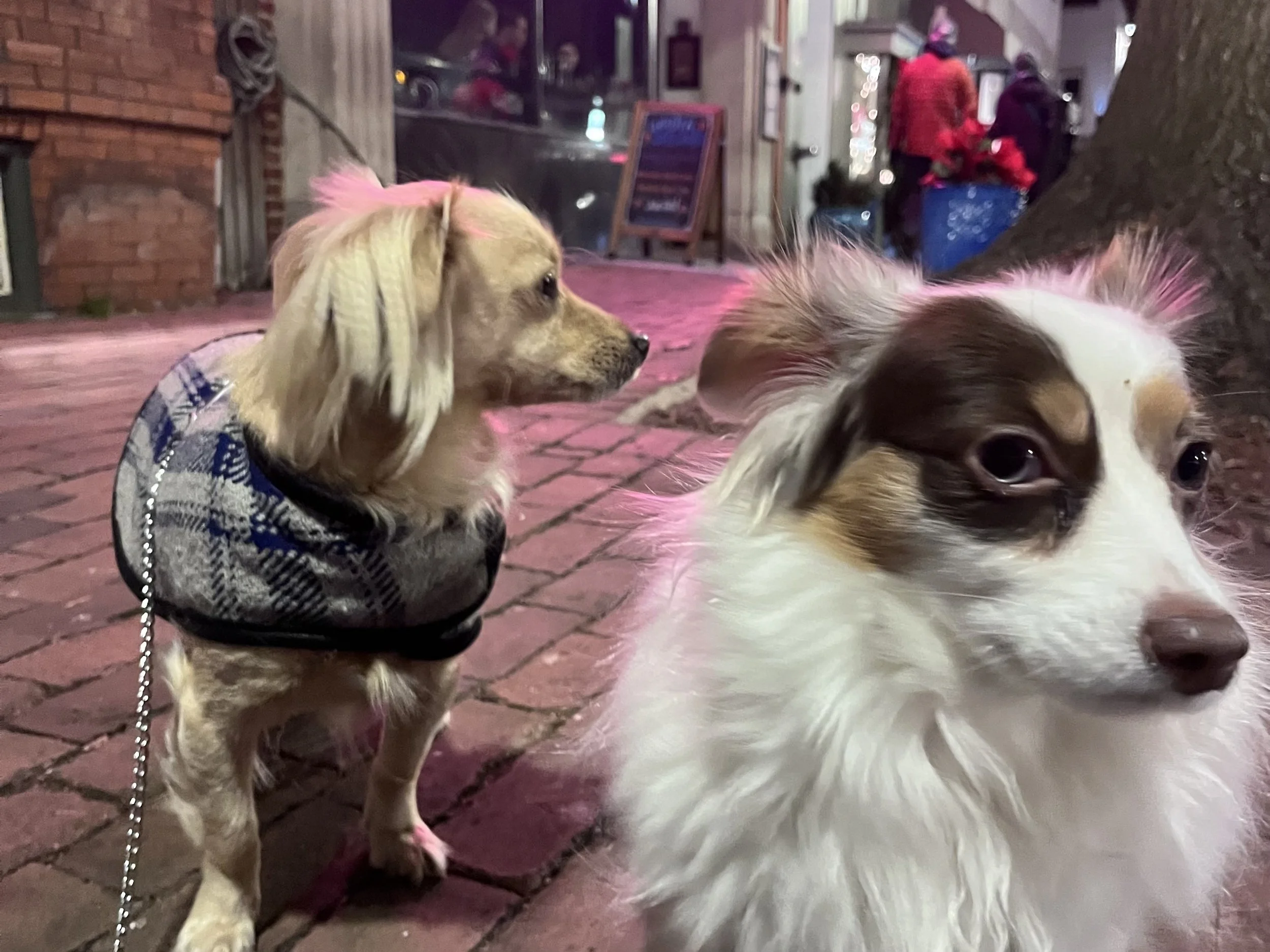
Sometimes when a dog pauses during a walk, they are simply watching and interpreting what’s happening around them.
When a dog stops walking, it can feel frustrating.
But in many cases, that pause is simply the dog doing what they are designed to do — gathering information about their surroundings.
They may be noticing surfaces that feel unfamiliar.
They may be evaluating movement patterns in crowded spaces.
Or they may simply need a few seconds to understand a new environment.
Dogs aren’t refusing the walk. They’re reading the environment before deciding how to move through it.
And often, once they understand what’s happening around them, they’re ready to keep moving again.
Giving dogs a moment to observe their surroundings often helps them regain confidence before continuing the walk.
