How to Tell If a Place Will Overwhelm Your Dog (Before You’re There)
If you’ve ever arrived somewhere that should have worked—but didn’t—this is usually why.
Dog-friendly usually tells you what’s allowed.
It doesn’t tell you how a place is set up—or how it will feel for your dog once you’re inside.
That’s where overwhelm starts.
Not from one big thing—but from small pressures stacking up.
The difference is: you can usually spot those pressures before you go.
This comes up most in places like patios, shops, and walkable areas—but the same patterns show up anywhere.
What Overwhelm Actually Looks Like (Early Signs)
Before getting into how to evaluate a place, it helps to know what you’re trying to prevent.
Overwhelm doesn’t usually show up as a big reaction first.
It often starts as small shifts:
slowing down slightly
pausing mid-walk
scanning more than usual
shorter strides
checking back with you more often
These are early signs the environment is asking more from your dog than it appears to.
You can see how this builds in Why Dogs Freeze or Refuse to Walk in New Places — What They’re Noticing.
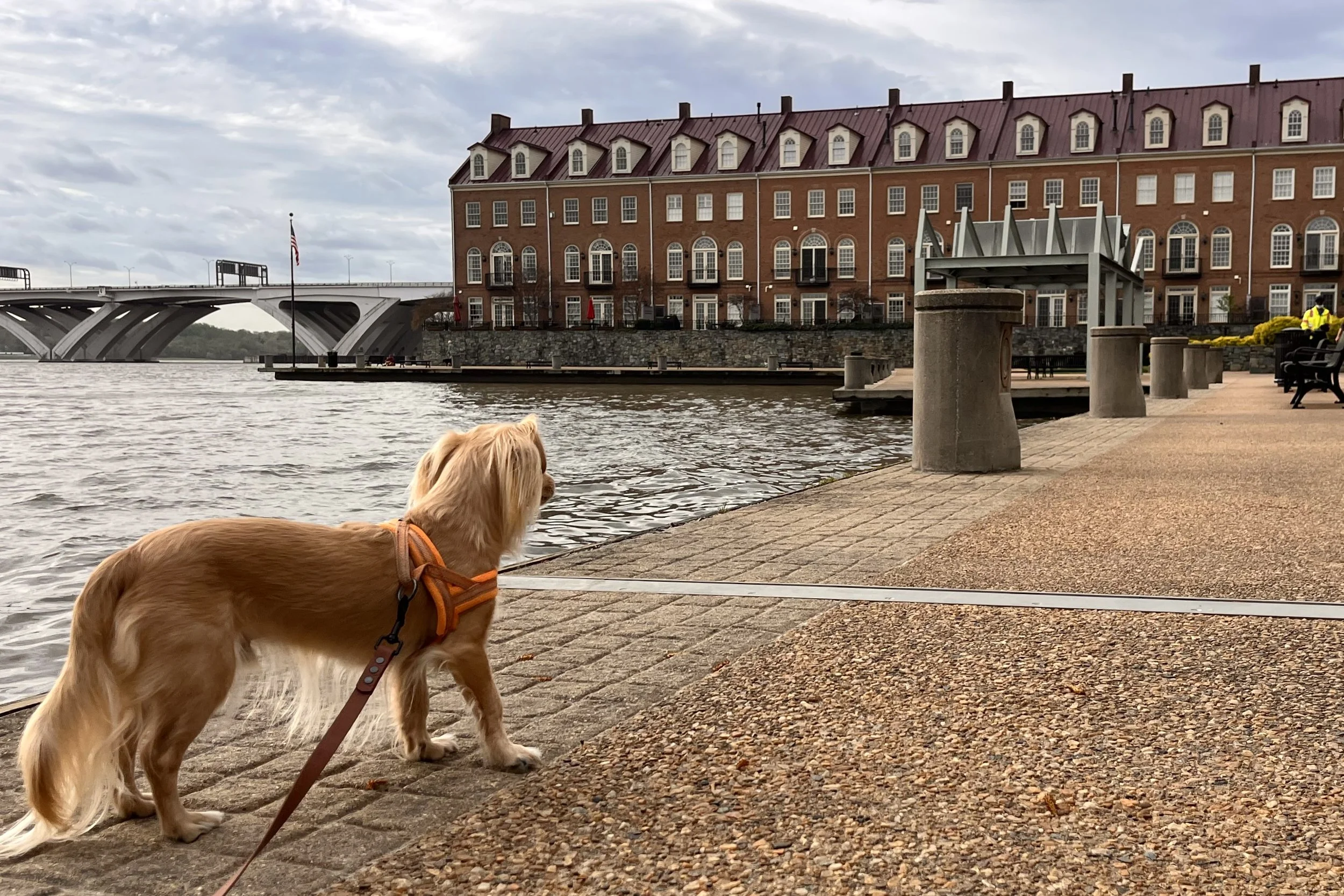
Small shifts—like pausing and scanning—often show up before anything escalates.
Read a Place Before You Go (The 5 Checks That Matter)
Instead of asking “Is this dog-friendly?”
use this:
“What will this feel like for my dog to move through?”
These are the five things I check every time.
1. Entry Pressure
Can your dog arrive without immediate intensity?
Look for:
tight entrances
crowds right at the door
no space to pause
If your dog steps straight into noise, movement, or proximity, they’re already working before they’ve adjusted.
What works better:
A place where you can stop, observe, and enter gradually.
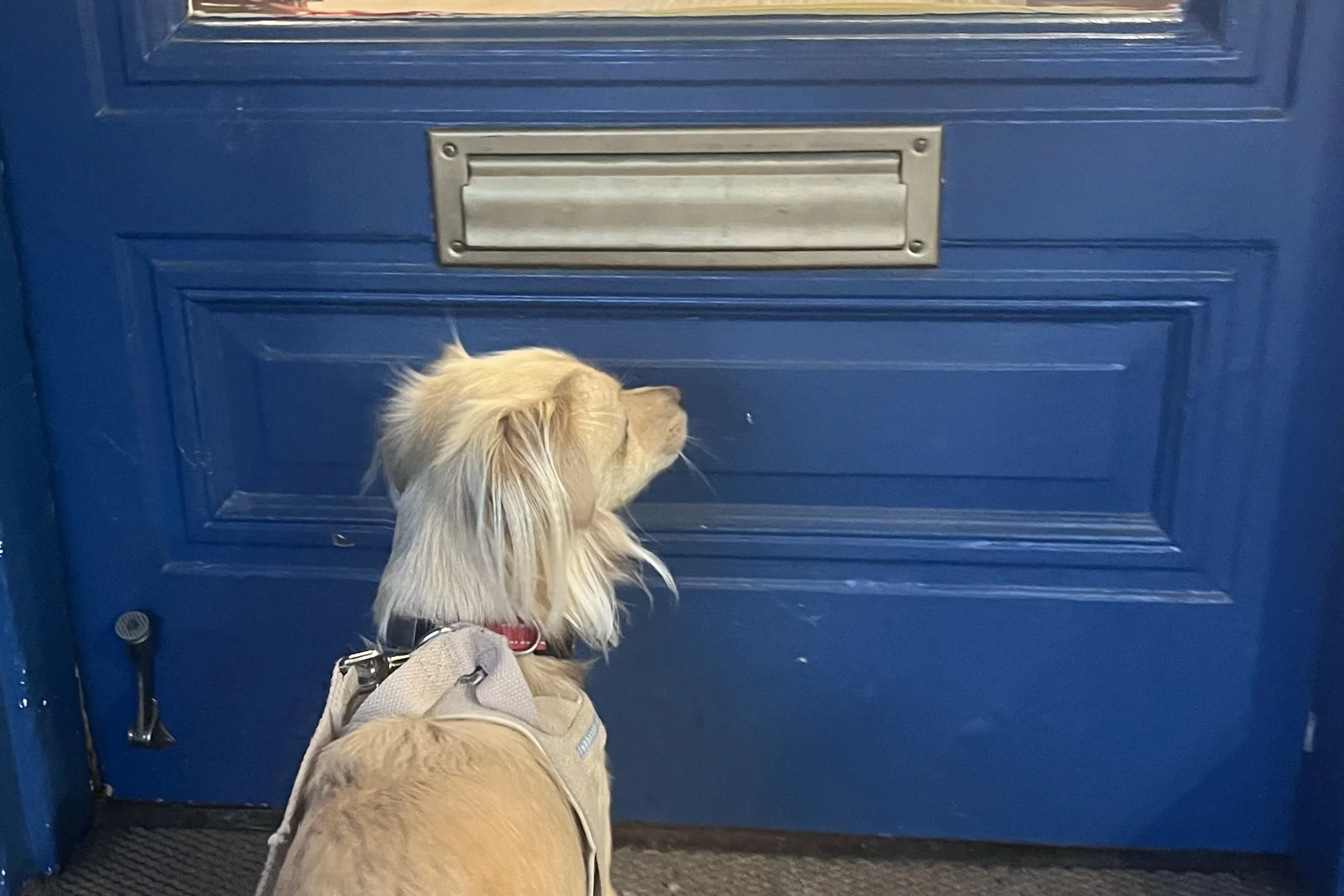
Entry pressure starts before you even step inside.
2. Movement Options
Can you control your path—or are you carried through it?
Look for:
narrow walkways
one-direction flow
bottlenecks or lines
If you can’t slow down, step aside, or change direction, your dog has no way to adjust.
What works better:
Multiple paths, wider spacing, and room to move at your own pace.
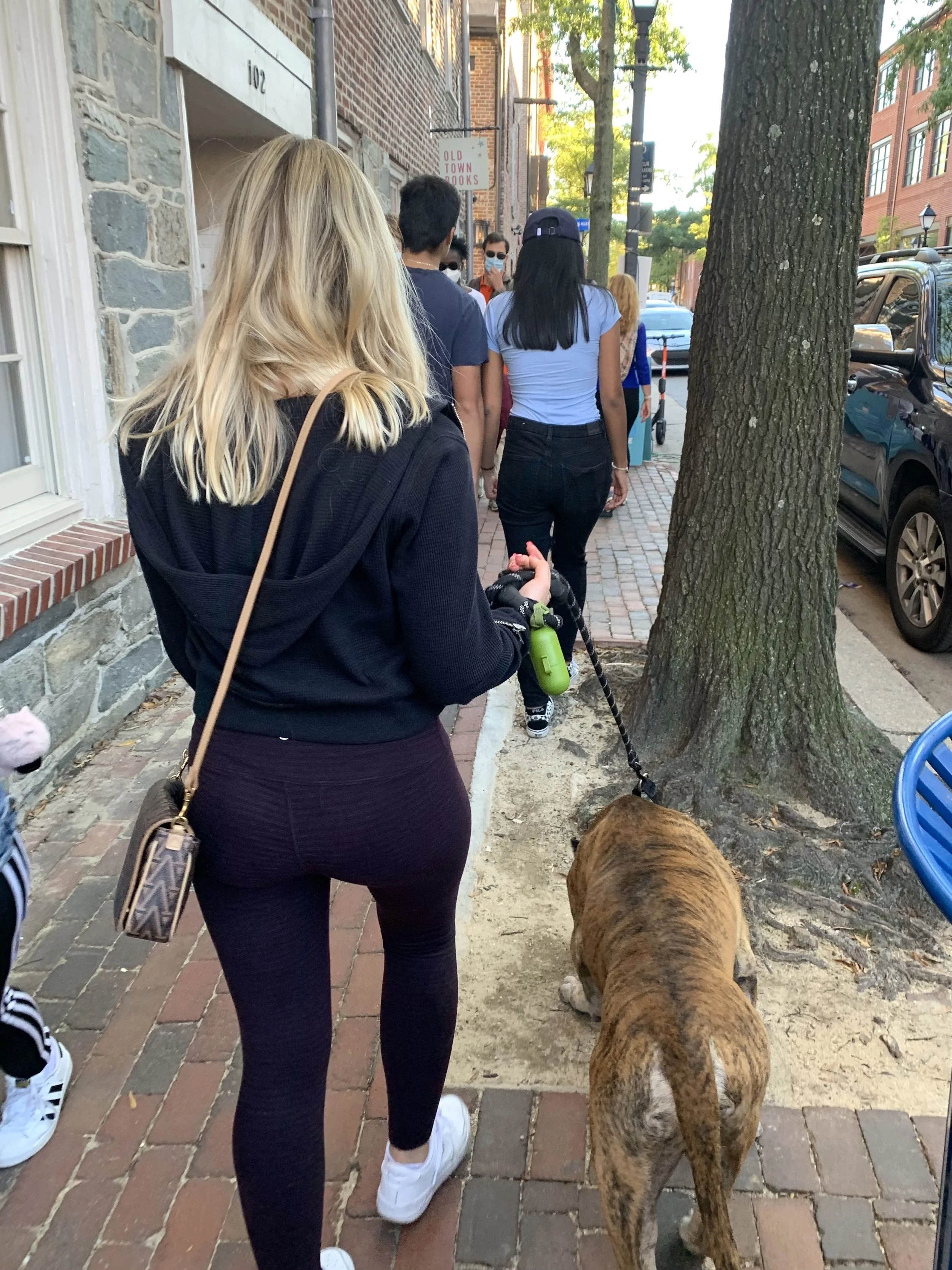
When movement is constrained, your dog has fewer options for how to move through.
3. Exit Ease
If you needed to leave quickly, could you?
Look for:
single exit points
long, enclosed layouts
no visible way out
If pressure builds, you need a way to reduce it immediately.
What works better:
Open layouts and more than one way out.
4. Sensory Load
How much is happening at once?
Look for:
overlapping noise (music + voices + traffic)
fast or unpredictable movement
visual clutter
It’s not just volume—it’s density.
How much is happening at once—and how close it all is.
Small dogs are taking in a lot, often at a lower vantage point and closer to everything around them.
What works better:
Predictable movement, fewer layers of stimulation, and space between activity.
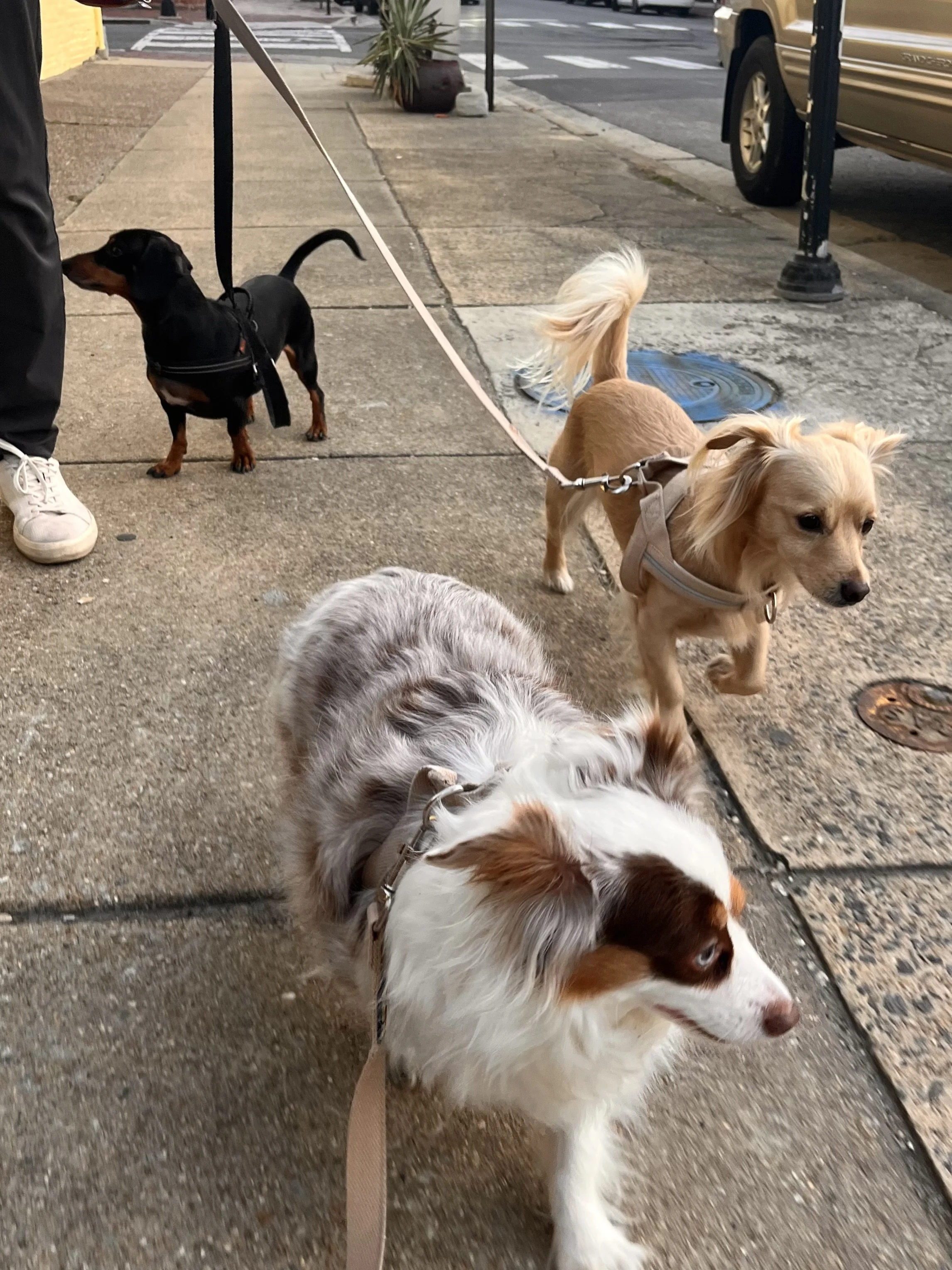
Movement becomes more complex when paths aren’t clearly defined.
5. Recovery Space
Where does your dog reset?
Look for:
nearby green space
quiet side streets
open areas within a short walk
Even easier environments still require places to step away.
Without a place to step away, stimulation keeps stacking.
What works better:
A clear, easy option to move into a lower-pressure space.
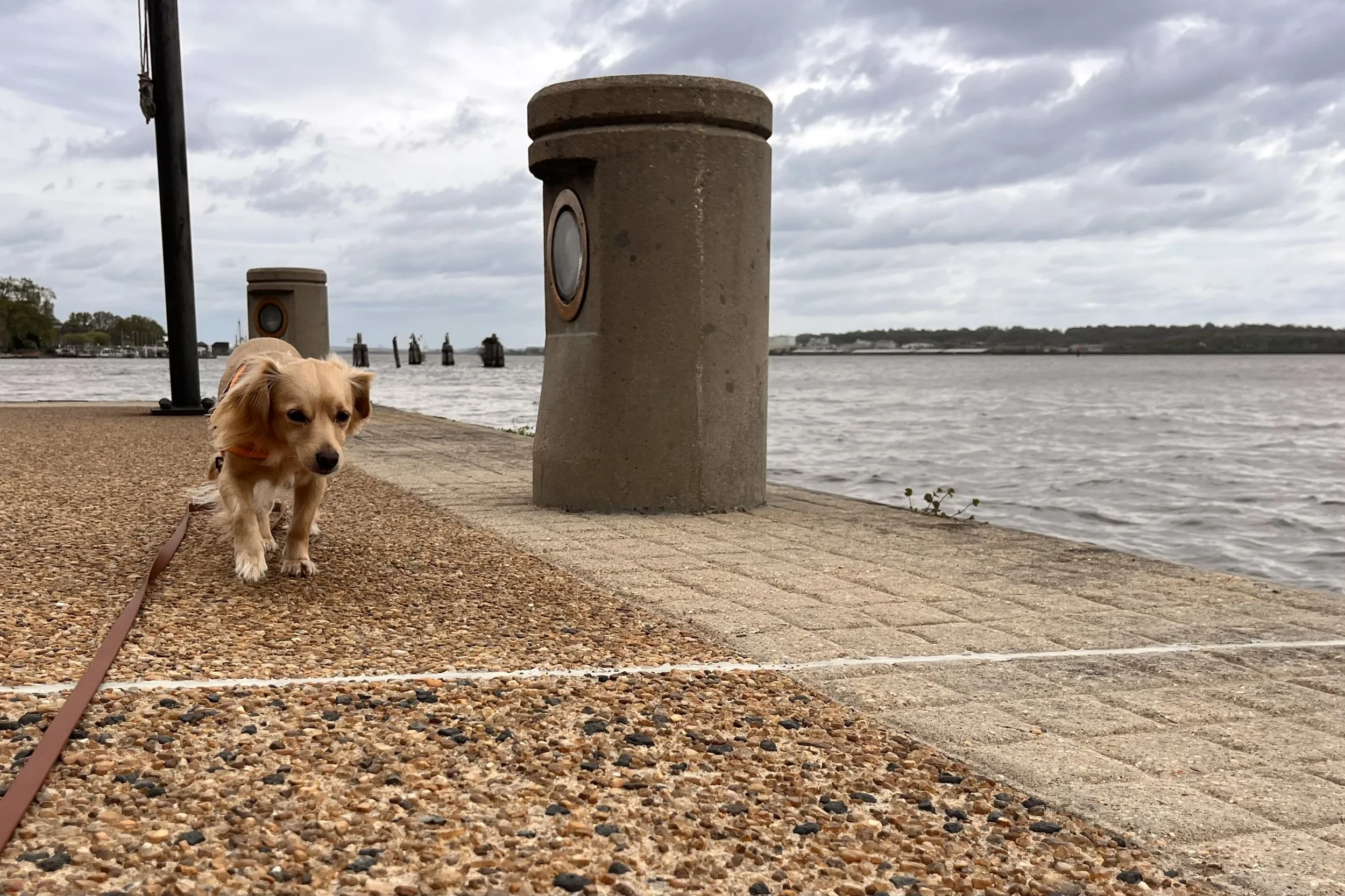
Open space gives your dog room to move without pressure.
Quick Scan (Use This Before You Commit)
If you only have a minute, check this:
Can I pause at the entrance?
Can I step off the main path?
Is there more than one way out?
Is movement predictable?
Is there somewhere quiet nearby?
If most answers are no, expect the space to feel heavier than it looks.
What This Changes (In Practice)
This doesn’t mean you have to avoid places.
It changes how you approach them:
choosing better timing
staying for shorter periods
building in real breaks
This is also part of why dogs often seem more tired during travel than expected—because the environment is asking more of them than it looks like on the surface.
I break that down more in Why Is My Dog So Tired After Travel? (When It’s Normal — and When to Worry).
A Better Way to Read “Dog-Friendly”
Dog-friendly tells you what’s allowed.
What actually matters is how a place is set up—and what it asks from your dog once you’re in it.
If you’ve ever been somewhere that looked like it should work but didn’t, I break that down here:
Why Some Dog-Friendly Places Don’t Feel Good for Small Dogs.
Once you start looking at places this way, it becomes easier to predict how they’ll feel.
You’ll notice it earlier—before you’re already inside trying to adjust.
And over time, you’ll start choosing places your dog can move through more easily—and stay in longer without pressure building.
