When a Dog Walk Starts Falling Apart: What to Do Before It Gets Worse
A dog walk can feel fine—and then suddenly not.
Your dog slows down.
Pauses more.
Starts looking around instead of moving forward—or has trouble continuing.
Nothing obvious happened.
But the walk isn’t flowing the same way anymore.
That shift is the moment that matters.
What you do there often determines whether the walk settles back into a rhythm—or keeps getting harder.
A walk isn’t something you push through.
It’s something you adjust as it’s happening.
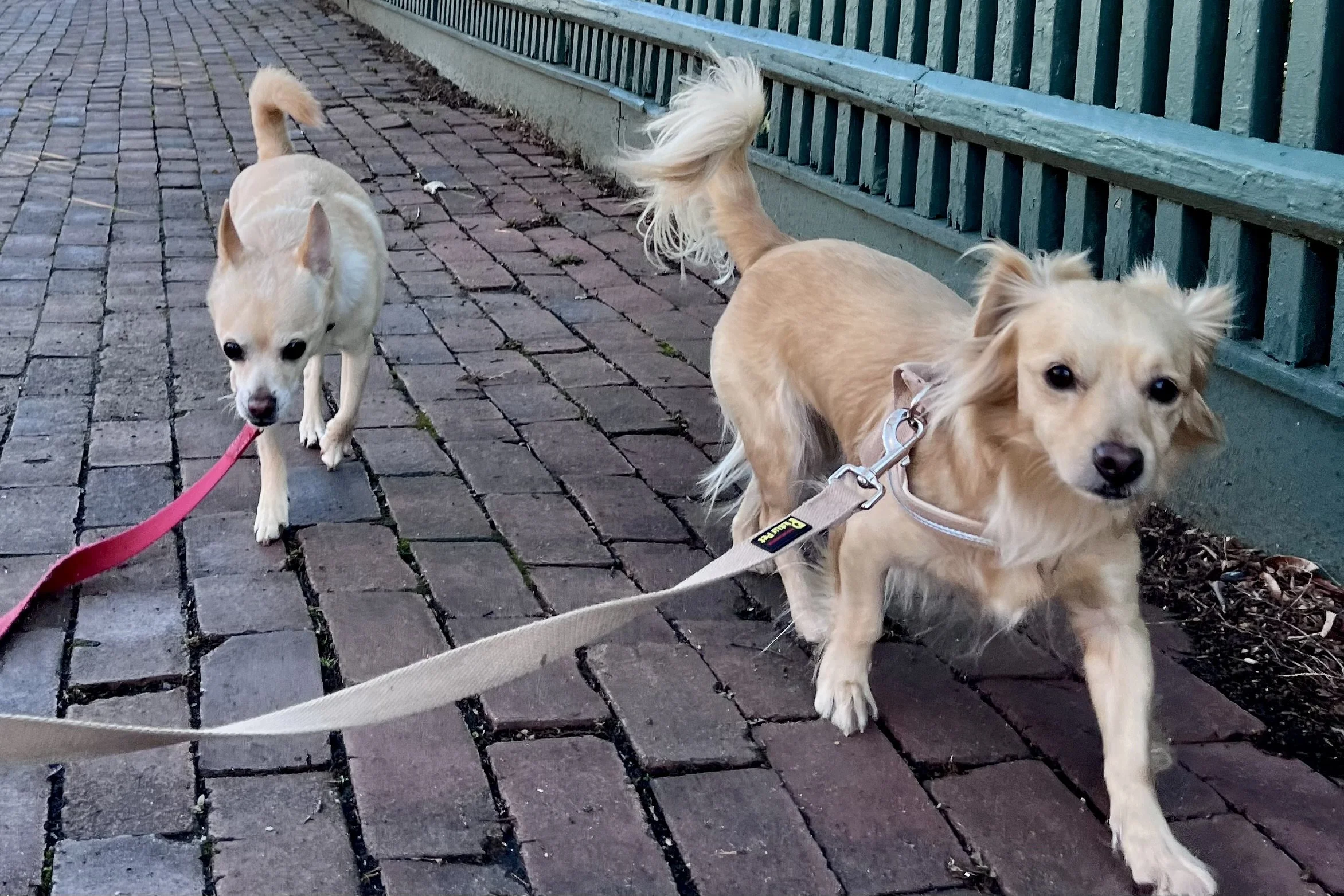
A typical walk—moving forward, but not always in sync.
The Two Ways Walks Start to Break Down
Not all dogs respond the same way when something feels off.
But most walks tend to break down in one of two ways—and you’ll usually recognize your dog right away.
1. Speeding Up and Pulling Forward
Your dog might:
pull forward
rush toward what’s ahead
move quickly from one thing to the next
It can feel like they’re trying to get to everything at once.
2. Slowing Down or Stopping
Your dog might:
pause more often
stop and look around
hesitate or refuse to keep going
It can feel like you’re stopping every few steps—or can’t get them to keep moving.
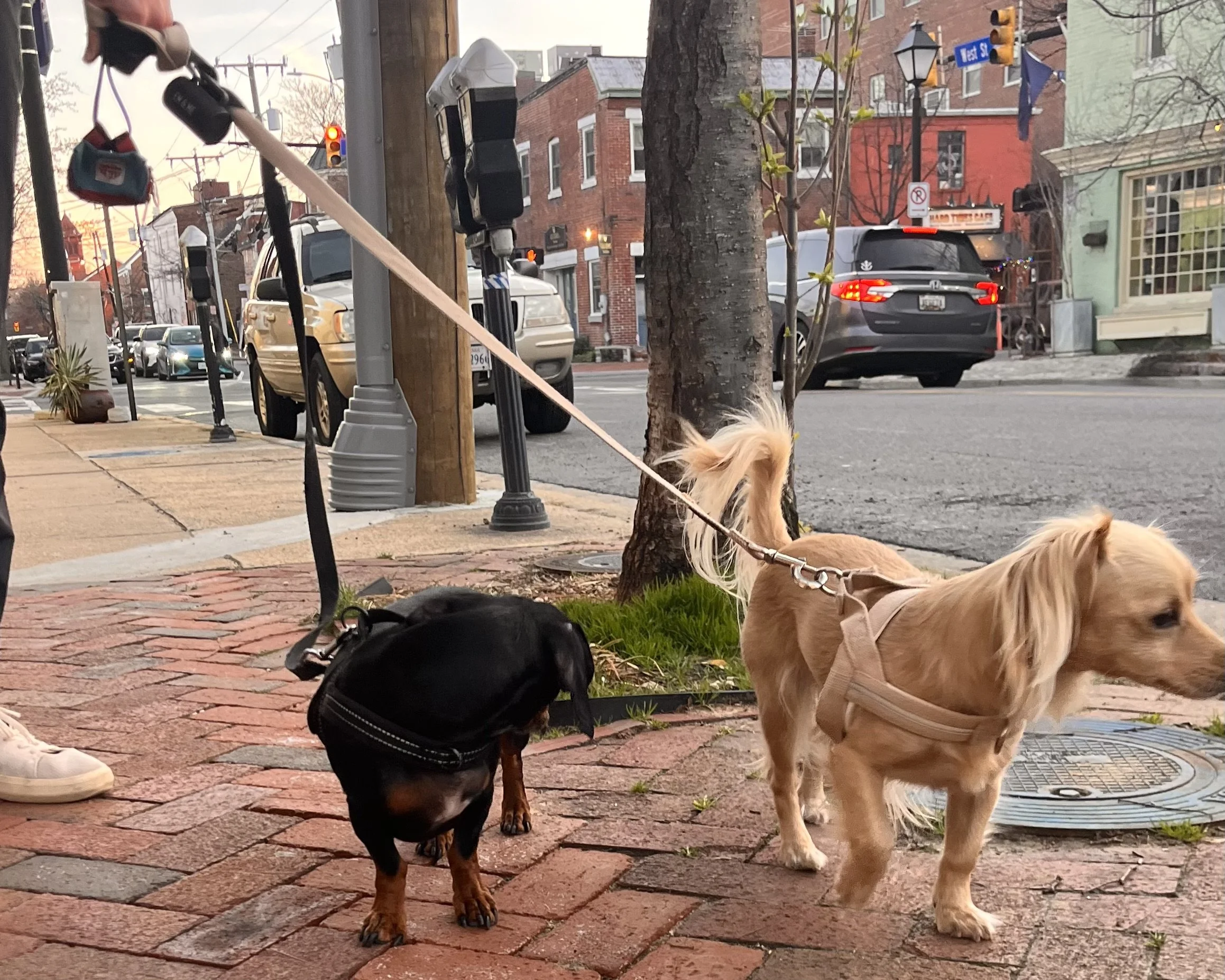
Two patterns in the same moment—one pulling forward, the other slowing down.
Some dogs push into the environment.
Others pull back from it.
But both are responding to the same thing: how much the environment is asking of them.
You can see how that builds in real time in:
Why Dogs Freeze or Refuse to Walk in New Places — What They’re Noticing
Once you recognize which pattern you’re seeing, the next step is noticing what’s coming up ahead.
Scan Ahead So You Don’t Have to React Late
Most of the time, you can see it coming before anything actually happens.
On a walk, this looks like:
looking down the block before choosing a direction
checking corners before you reach them
noticing movement early (dogs, strollers, joggers)
choosing a side of the street before you’re too close to what’s coming
If you’re crossing, you’re not just crossing—you’re checking what’s on the other side first.
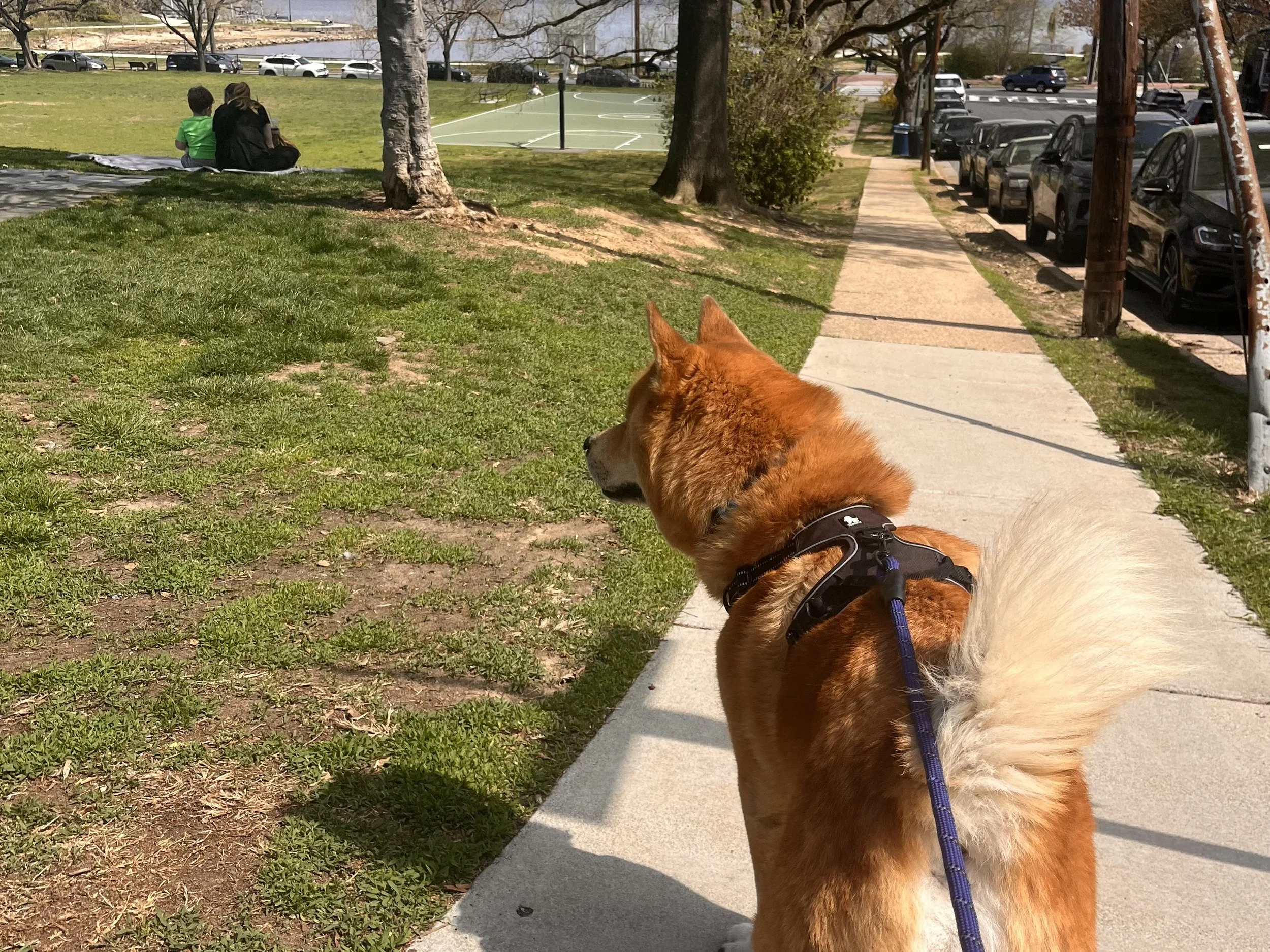
Pausing to take in what’s ahead.
Change Direction Early (Before You’re Too Close to What’s Coming)
A lot of difficult moments come from staying on a path too long.
Another dog is coming.
A stroller is approaching.
Someone is moving toward you on the same line.
Even with plenty of space, staying on that path often turns into a direct pass.
Instead of waiting to see how it plays out:
cross the street
turn earlier than you think you need to
choose a different line while you still have space
You start noticing things before your dog does—and adjusting because of it.
You might cross the street even when there’s space—just to avoid a direct pass.
This keeps the walk moving instead of interrupting it.
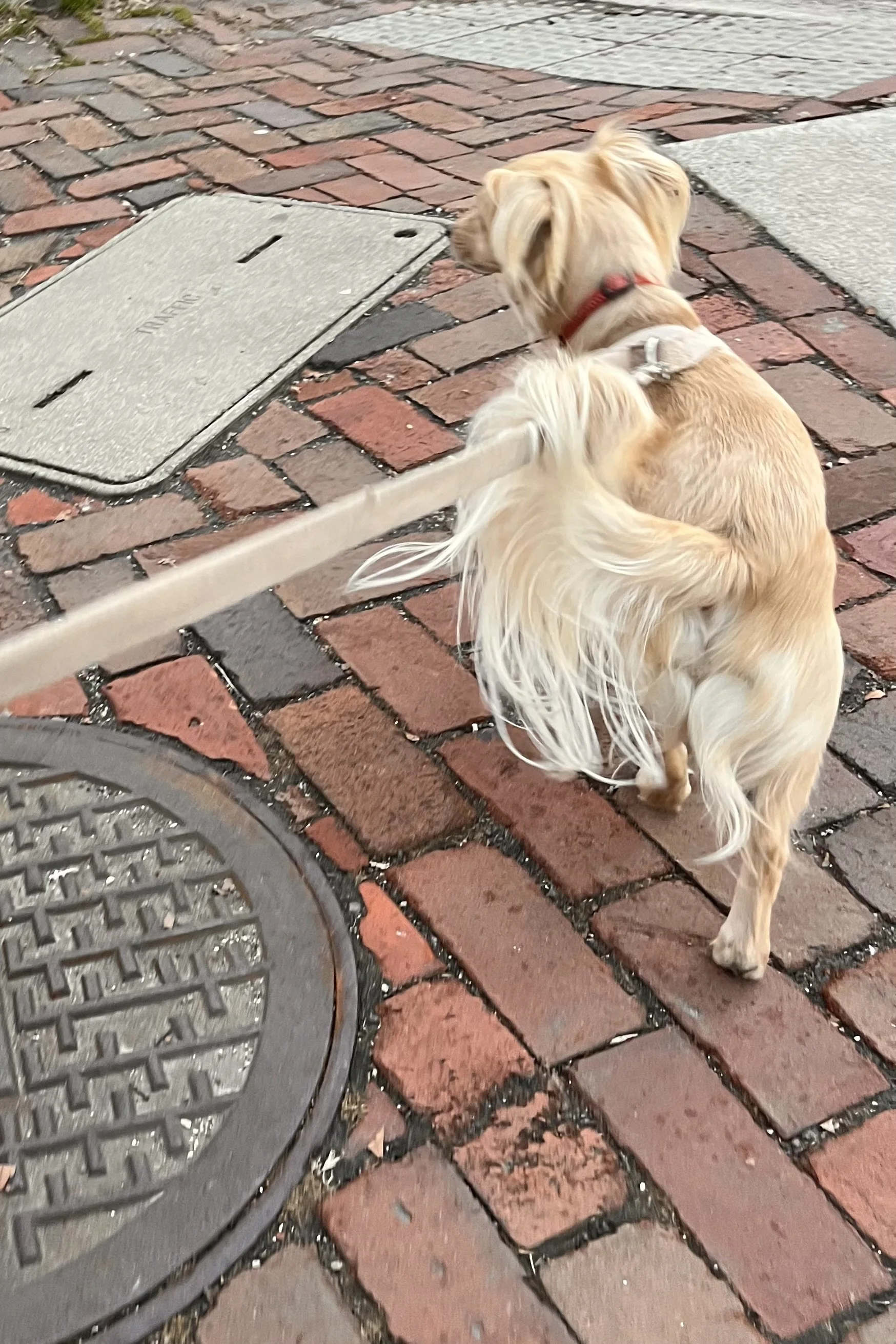
Tight footing and constant transitions can make movement feel less steady, even on a short walk.
Don’t Stay in Sections That Limit Your Options
Some parts of a walk are just harder.
• narrow sidewalks
• tight corridors
• areas with no space to step off
These sections don’t give you flexibility.
There’s nowhere to go if something comes toward you.
Instead of pushing through, shift out of it:
• turn onto a side street
• move toward a more open stretch
• avoid sections where you don’t have an exit
You’re not just choosing where to walk.
You’re choosing how much room you’ll have to adjust.
This ties closely to Why Small Dogs Struggle on Busy Sidewalks.
If you’re looking for routes that already give you that kind of flexibility, I’ve mapped a few here:
Short, Calm Walk Loops in Old Town Alexandria (10–20 Minutes)
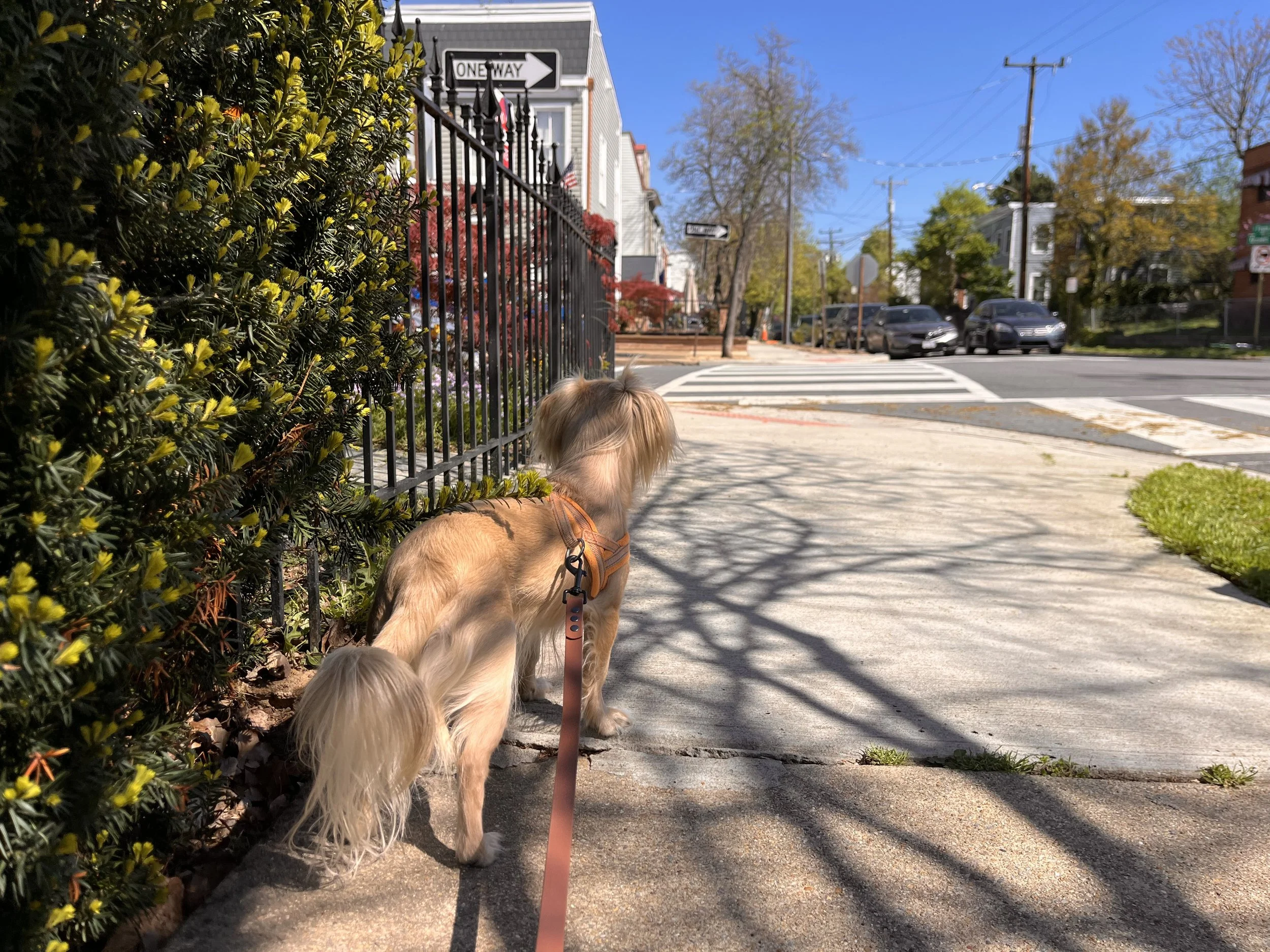
Moving out of a tight stretch into a section with more options.
Step Off the Main Path to Create Space
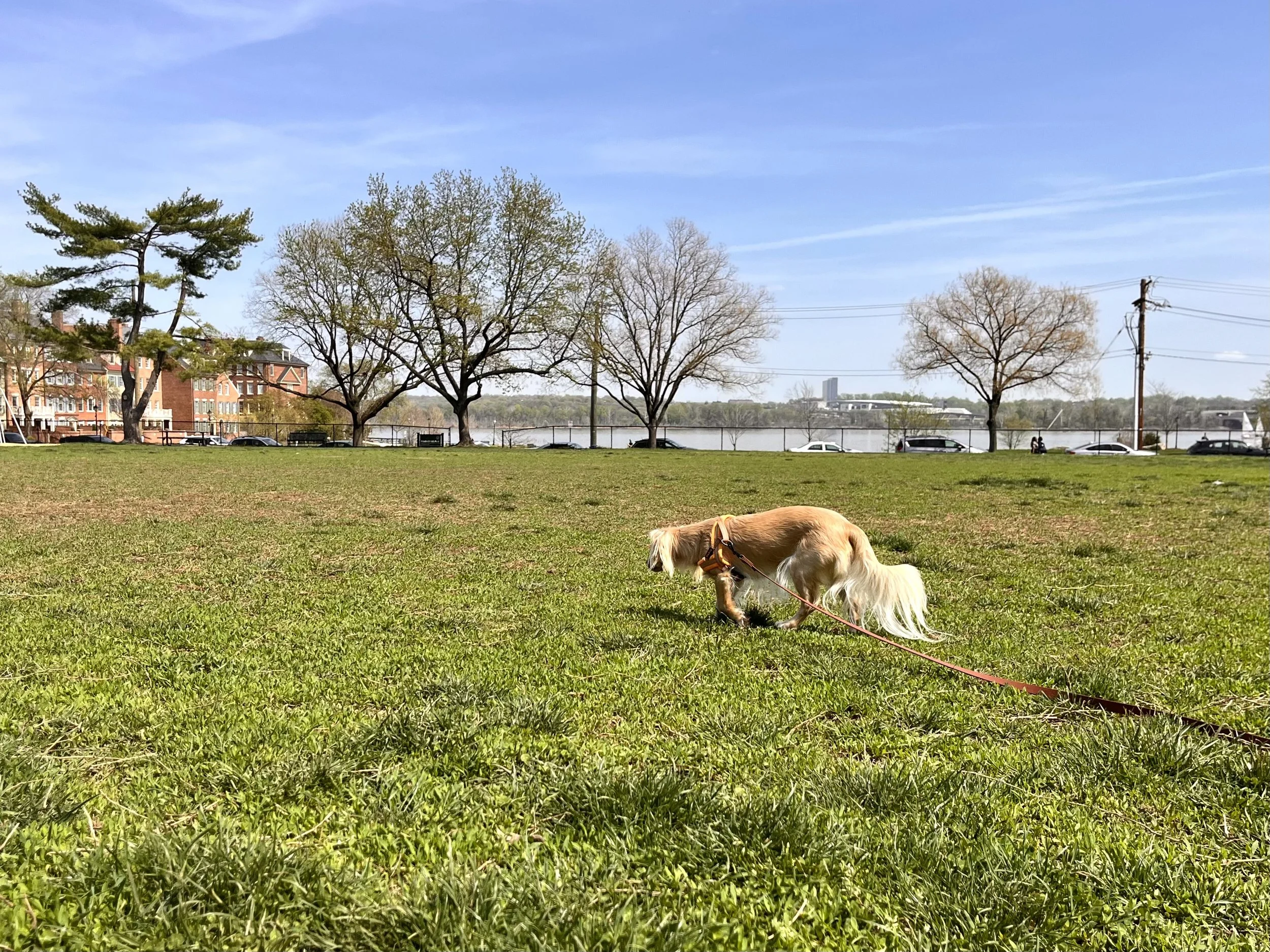
After tighter sections, space like this makes a difference.
Even on a good route, situations come up.
When they do, having space matters. Stepping off the main path:
• gives your dog more room
• reduces direct pressure
• keeps the situation from building
This might look like:
• moving to the edge of a path
• stepping into a park border
• shifting onto a quieter stretch
The walk doesn’t have to stay on a straight line to stay successful.
It just needs enough space to keep moving.
Let Them Stop and Process
Not every pause is a problem.
Some dogs need time to take in what’s around them.
They stop.
They look.
They process.
Sometimes, that’s the walk.
Part of it is simply letting them take things in.
Trying to keep them moving usually adds pressure instead of resolving it.
Some walks are mostly movement.
Others are mostly processing.
Both count.
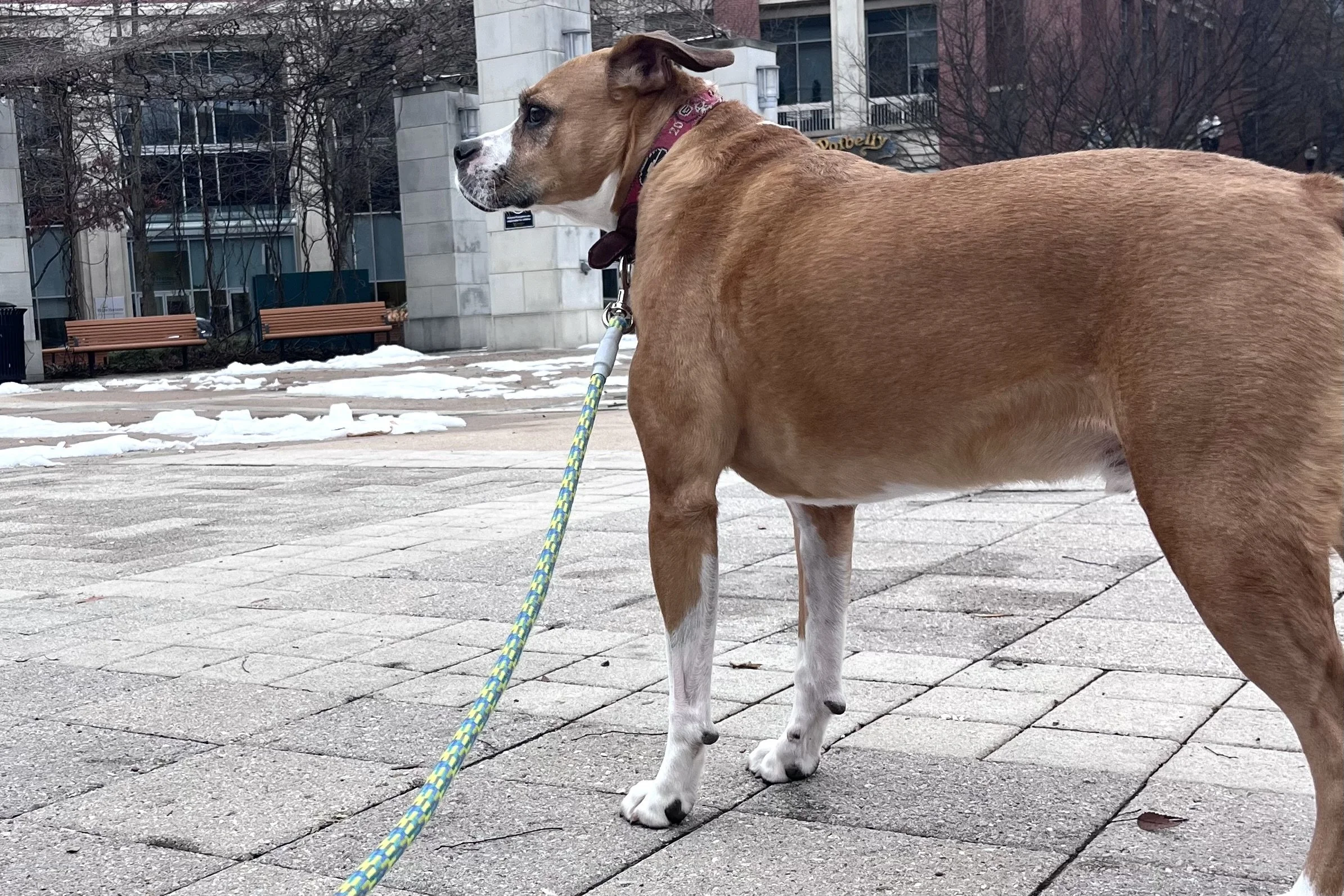
A quick pause to take in the space before moving forward.
When Slowing Down Helps — and When It Doesn’t
You’ll often hear that slowing down helps on walks.
Sometimes, it does.
For dogs that move quickly into situations—pulling forward or rushing encounters—slowing the pace can reduce how quickly things build.
But for dogs that already:
• move slowly
• pause often
• stop completely
Slowing down doesn’t change the situation.
In those cases, the issue isn’t pace.
It’s how much the environment is asking of them.
When the Route Itself Is the Problem (Why Some Dog Walks Feel Harder)
Sometimes you can adjust everything—and the walk still feels harder anyway.
Sometimes the difference isn’t what you’re doing.
It’s the route.
Often, it’s the difference between a familiar route and a new one.
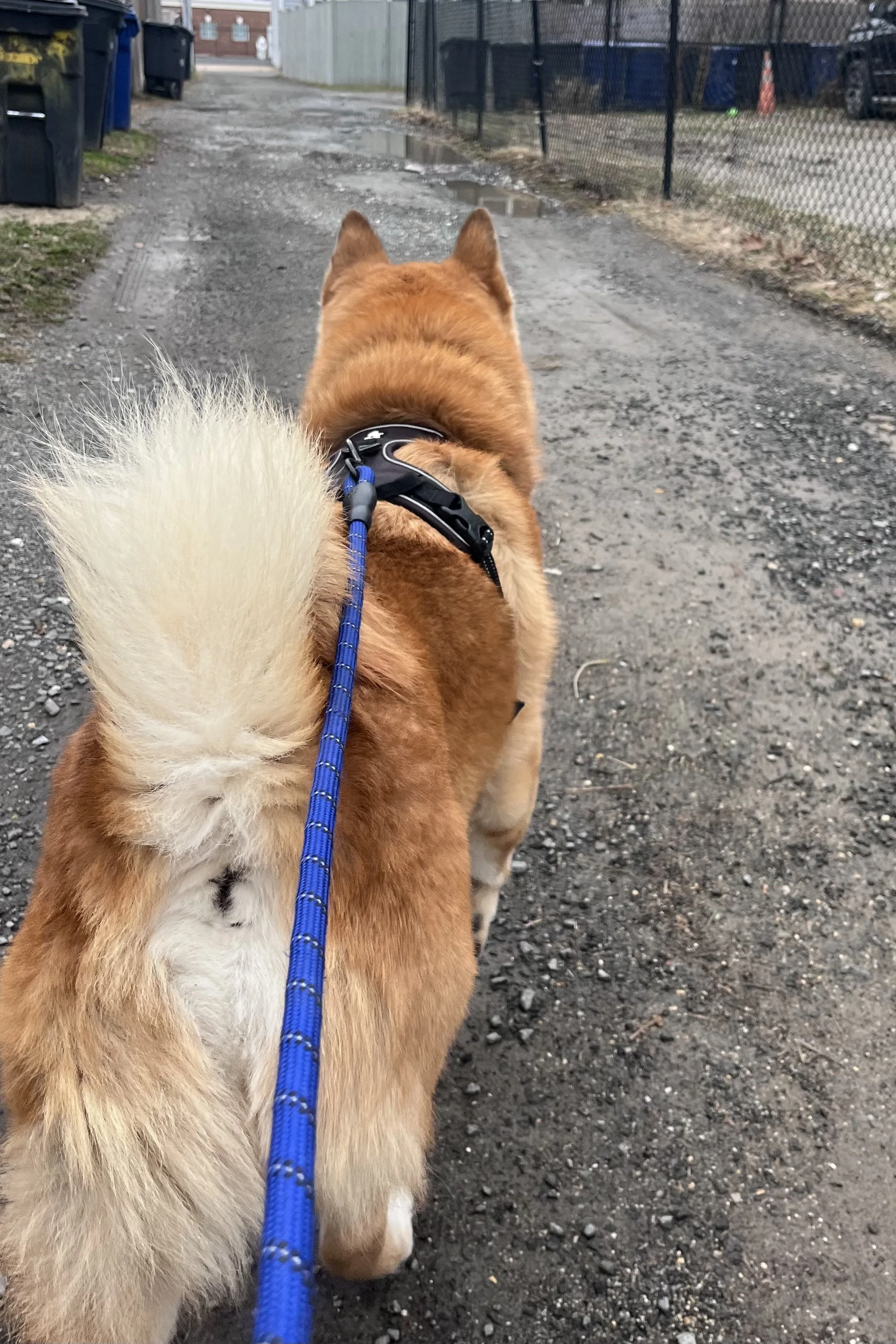
Familiar routes support steady, predictable movement.
A familiar route:
has a known layout
fewer surprises
more predictable movement
A new route:
introduces more input
requires more decisions
asks more from your dog all at once
Familiar routes reduce how much your dog has to process, which makes it easier for them to keep moving.
This is something I’ve noticed consistently, and it’s why
Why Familiar Walks Matter for Dogs becomes so important when you’re trying to build steadier movement.
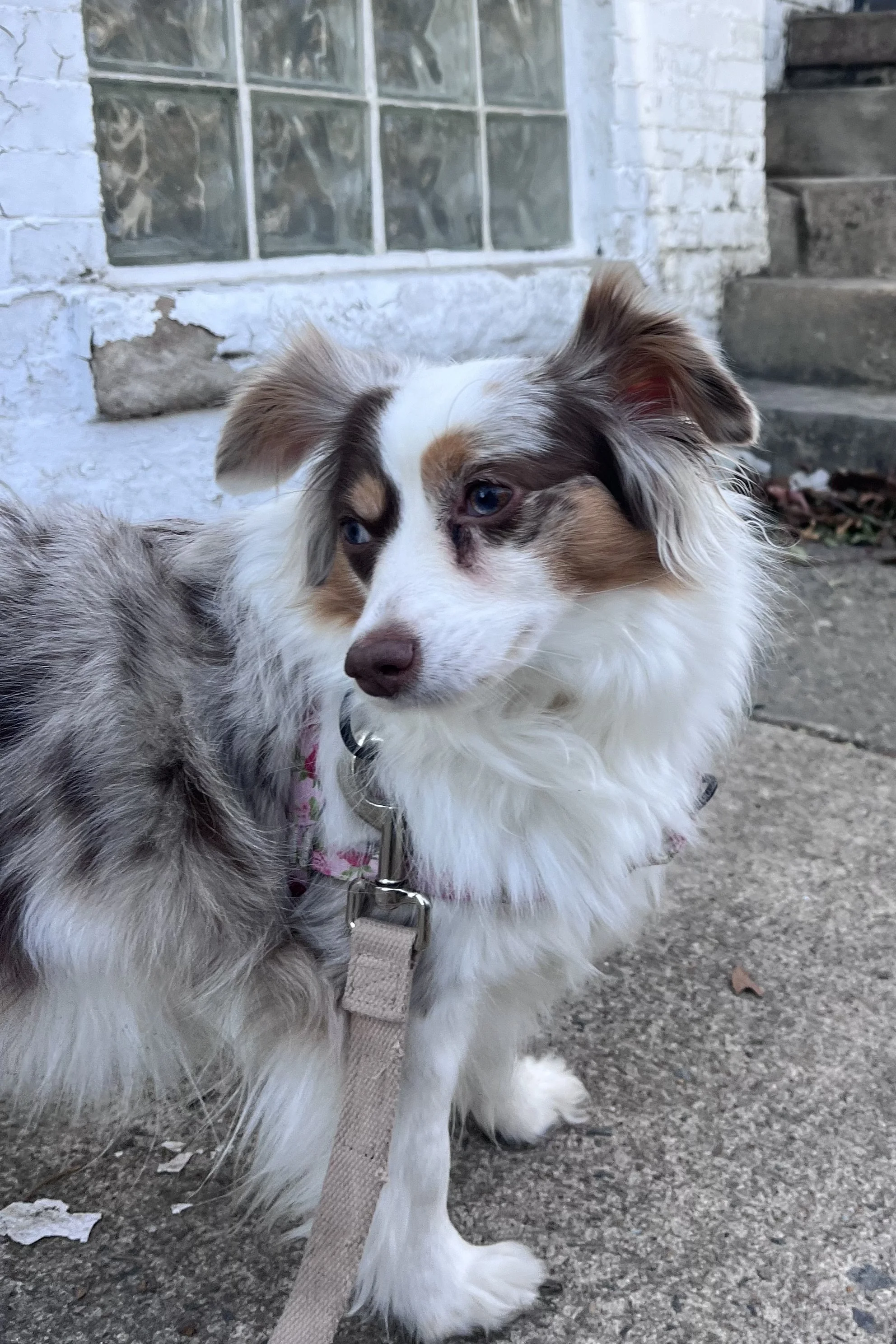
More to process on a new route.
When It’s Time to Stop Trying to Fix It
Sometimes adjustments help.
Other times, the walk keeps getting harder.
Movement breaks down.
Pauses increase.
Nothing really resets it.
At that point, continuing usually doesn’t improve it.
Leaving early often does.
If you’re unsure where that line is, I break it down more in:
When to Leave Old Town Alexandria With a Small Dog (Early Signs of Overwhelm)
A walk doesn’t improve because you push through it.
It improves when you:
• notice early
• adjust the environment
• give your dog space to move at their own pace
Most of the time, you’ve already seen these moments.
Most of the time, you don’t need to fix the walk.
You just need to shift it before it builds.
