Longer Dog Walks in Old Town Alexandria That Feel Easy (30–60 Minutes)
When the route works, a longer walk can actually feel easier.
You can settle into the walk early, and the pace holds without needing to adjust every few minutes.
In Old Town, that usually comes down to how the space is laid out and how easy it is to move through. When a path stays open and predictable, you can keep going without changing direction or managing every few steps.
The three walks below all make that possible. They’re long enough to feel like a real walk, but each one holds a steady rhythm from start to finish.
They just do it in different ways. One follows a wide, predictable path, one opens up into more space, and one moves in a clear, forward direction.
That difference is what makes them useful—you can choose the one that fits how your dog is moving that day and extend the walk without it becoming more work.
These three walks all stay easy—but in different ways.
Quick Guide: Longer, Easy Walks in Old Town Alexandria
Buchanan to Braddock (Potomac Yard Trail)
Best for: a steady walk that stays wide and predictable
Feel: consistent path, easy forward movement, space to step off
Good if your dog: does better when the environment doesn’t change much
Windmill Hill to Jones Point Park
Best for: maximum space without feeling confined to a path
Feel: open, unstructured, gradually more removed from Old Town
Good if your dog: needs room to move, pause, or spread out
Tide Lock Park or Oronoco Bay Park to Mount Vernon Trail (northbound)
Best for: a simple, forward-moving walk with fewer decisions
Feel: directional, continuous, more committed once you start
Good if your dog: settles into a steady pace and keeps moving
Buchanan to Braddock (Potomac Yard Trail)
Best for: when you want a longer walk that stays low-pressure the whole way
Distance: ~30–45+ minutes
Feel: wide, steady, easy to adjust
How it starts
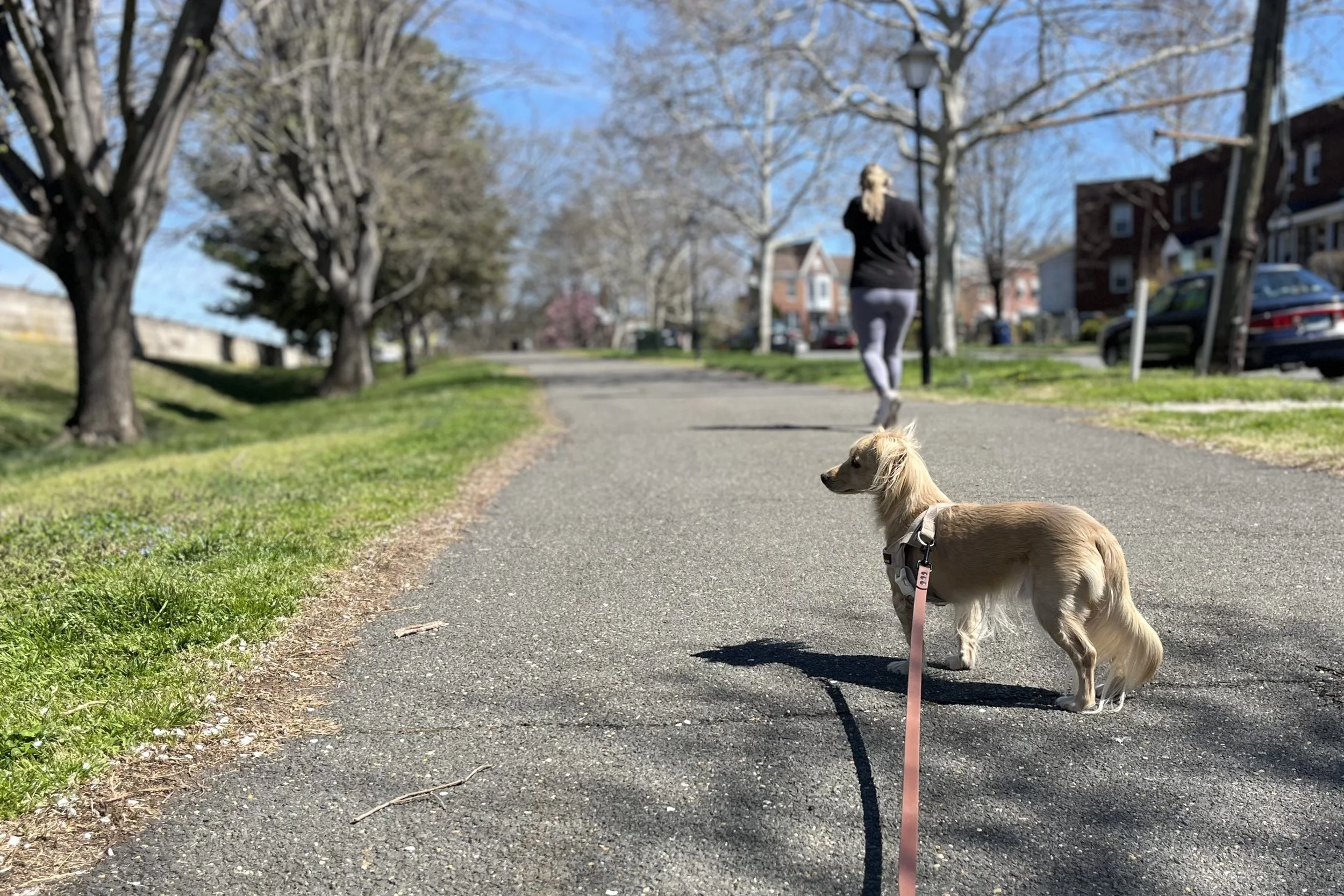
Wide, open paths like this give small dogs space to pause, look, and keep moving at their own pace.
Starting at the end of Princess Street works well if you want a short lead-in before committing to the full walk. You can follow Princess down to Cameron, see how your dog is moving, then decide whether to extend.
If everything feels steady, you can backtrack and continue onto the trail.
You can also start on Cameron Street where it connects with Buchanan—there’s parking here as well, and it’s close to the King Street Metro Station. Since the trail is a straight path, you can pick it up anywhere without changing how the walk feels.
This route stays calm and spacious the entire way. There’s consistent room to move without being pushed along, and plenty of space to step off if you need to slow things down or let your dog pause.
Extending the walk
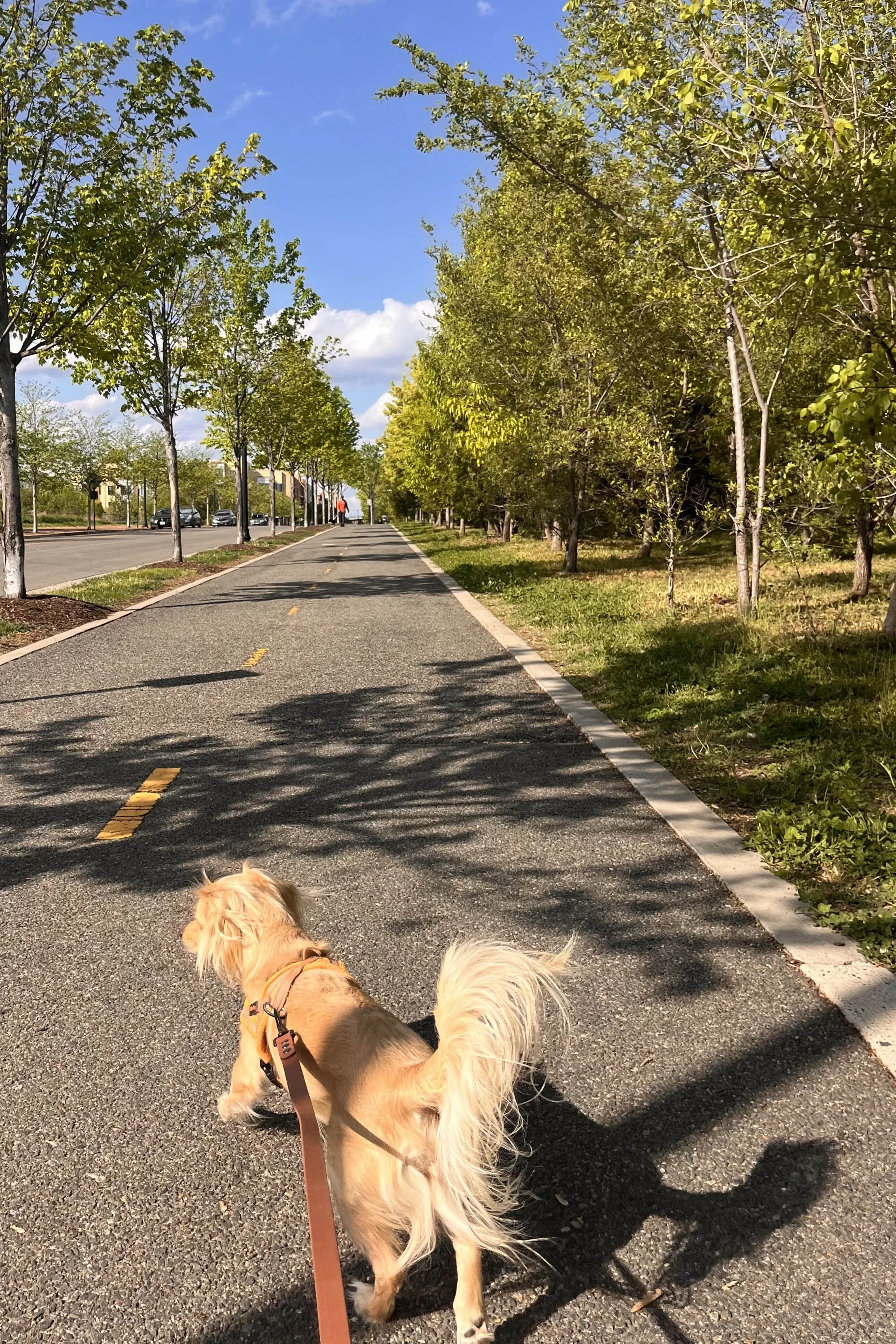
Long, straight section of the Potomac trail with clear forward movement and uninterrupted space ahead
As you continue and cross Braddock Road, the path naturally extends toward the Potomac Yard Trail.
Right around here, you’ll pass the Braddock Road Metro Station, which is an easy point to recognize along the walk.
Movement stays steady:
wide path
consistent forward space
no sudden changes in how the walk feels
What you’ll notice
Bikes on the trail (predictable, but faster movement)
Occasional pass-bys depending on time of day
Why this walk works
Space stays consistent
Movement stays steady
Easy to extend without changing the feel of the walk
The first walk works because the path itself stays wide and predictable.
The next walk shifts away from a defined path and gives you more open space to work with.
Windmill Hill to Jones Point Park
Best for: when you want space that stays open the entire walk
Distance: ~30–60 minutes
Feel: open, unconfined, gradually more removed from Old Town
How it works
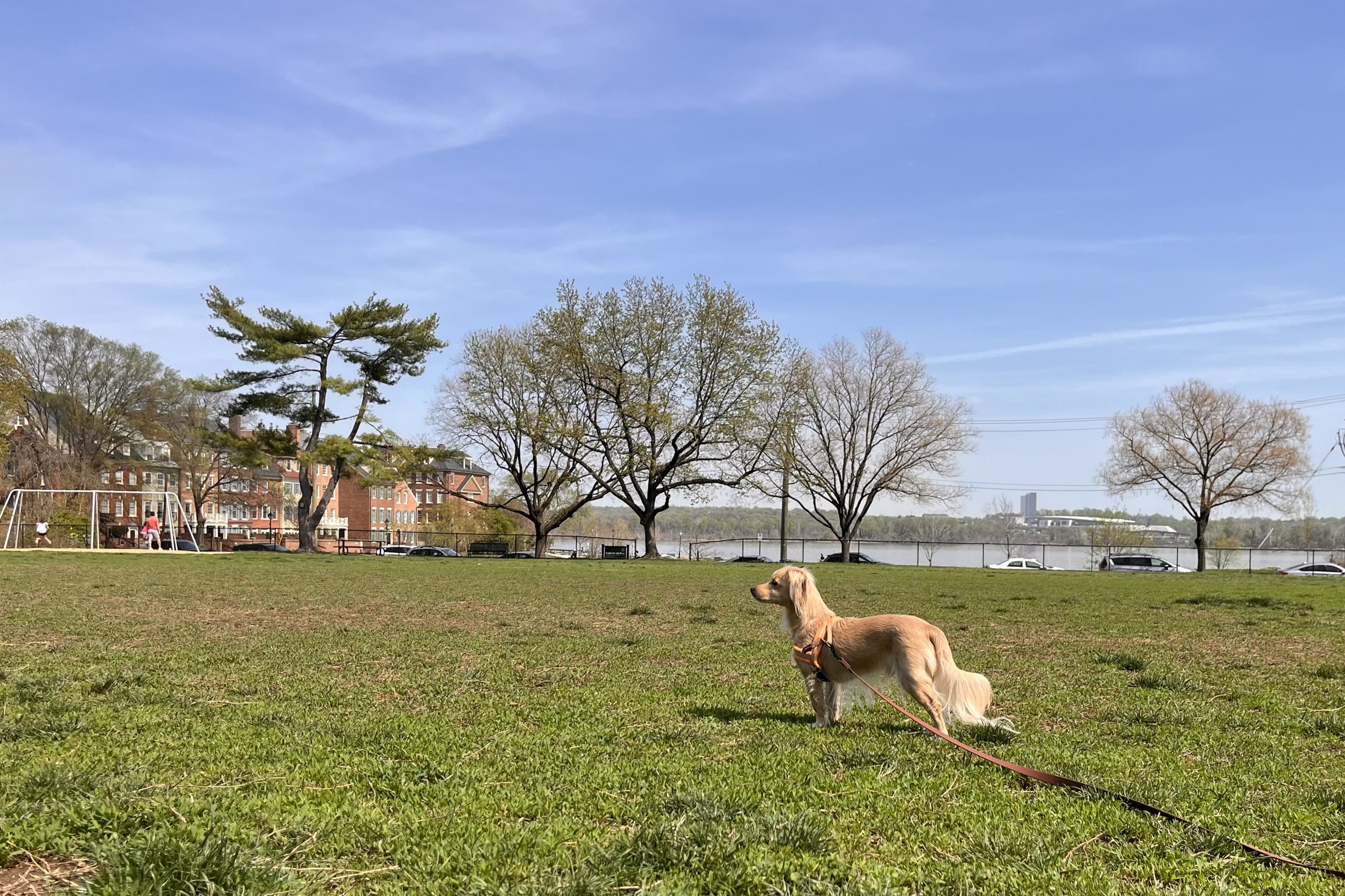
Open space at Jones Point Park where dogs can pause without pressure and take in their surroundings
This walk works as a simple out-and-back.
If you start at Windmill Hill Park, you’ll head south toward Jones Point, then turn around and return the same way.
Where it feels most open
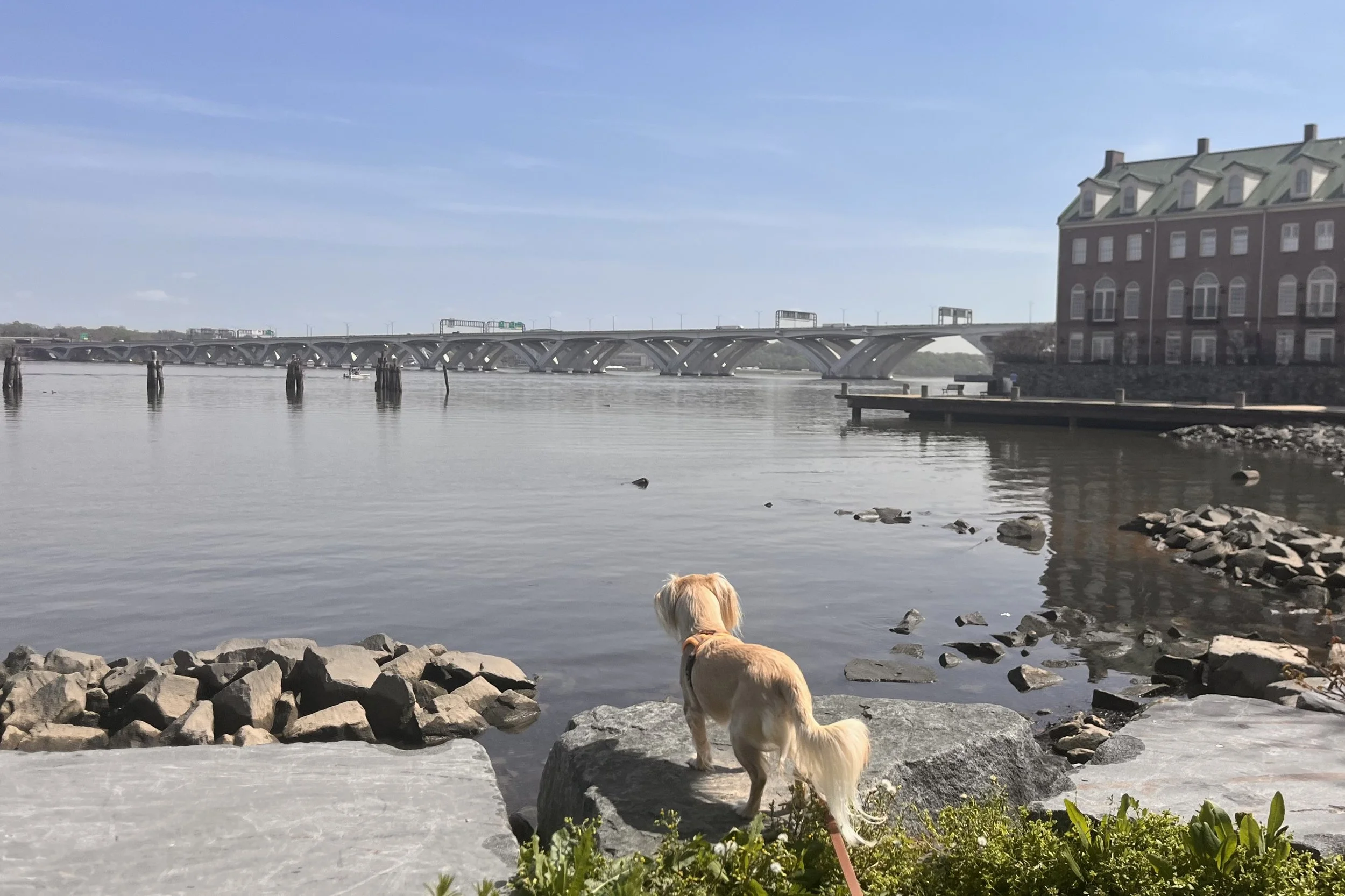
Open river edge near Windmill Hill Park with room to move along the shoreline
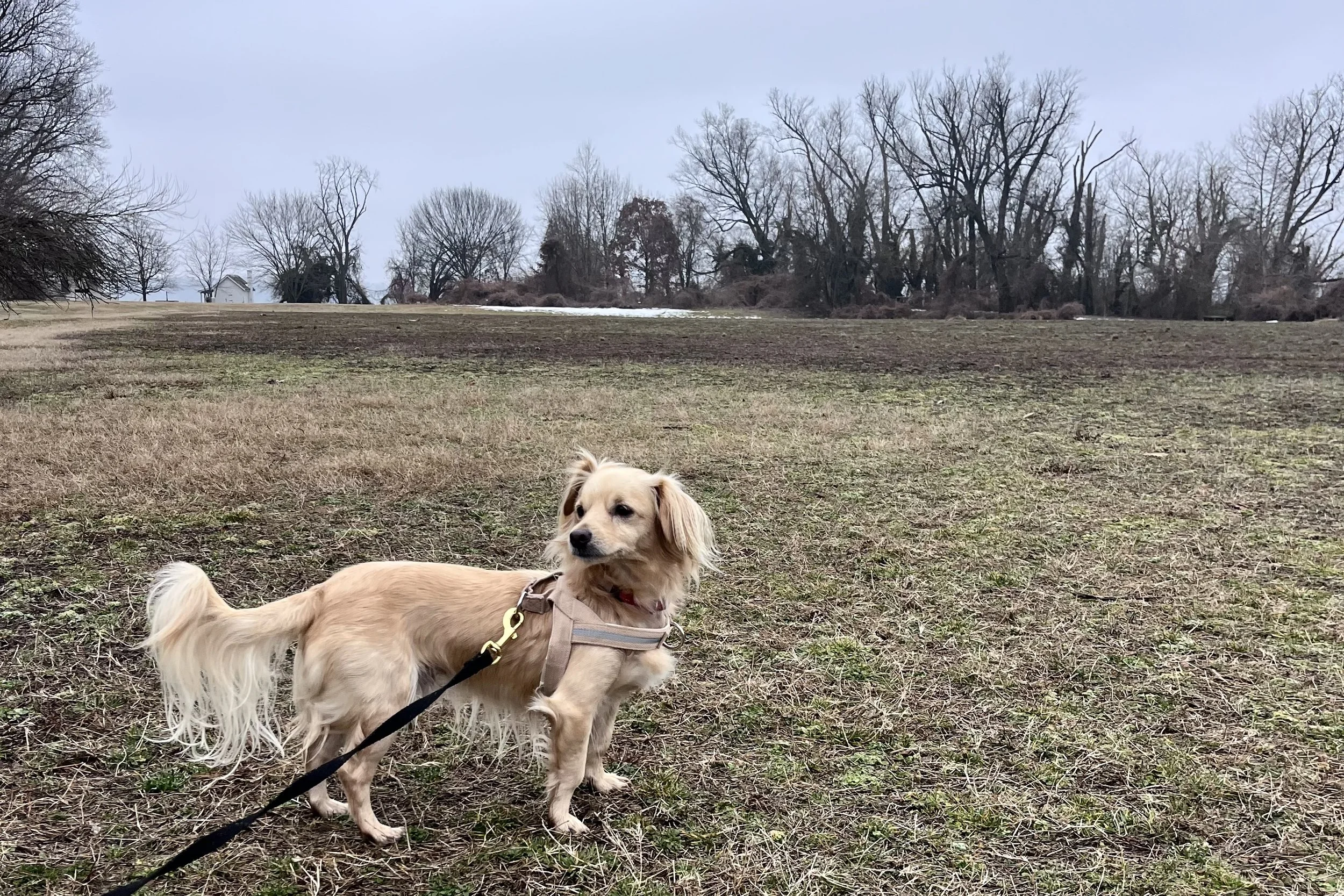
Wide open natural area at Jones Point Park with minimal development and plenty of space to move
Right from the start, there’s a lot of space to work with.
At Windmill Hill:
large open field
room to move without staying on a single path
Along the water:
open edges along the river
fewer tight pass-bys
By the time you reach Jones Point, it feels more like a natural area than part of Old Town.
What you’ll notice
Some foot traffic closer to Windmill Hill
Less structure overall
Why this walk works
Space stays open the entire way
No tight transitions
The environment gradually becomes quieter and more spacious
This kind of open space makes it easier to keep a walk feeling steady. If your dog does better with room to move or pause, this tends to help. For more on how space affects walks, see When a Dog Walk Starts Falling Apart: What to Do Before It Gets Worse.
This walk stays open from start to finish.
The next walk shifts into a more continuous, forward-moving path.
Tide Lock Park or Oronoco Bay Park to Mount Vernon Trail (northbound)
Best for: when you want a steady, forward-moving walk
Distance: ~30–60 minutes
Feel: directional, continuous
How it starts
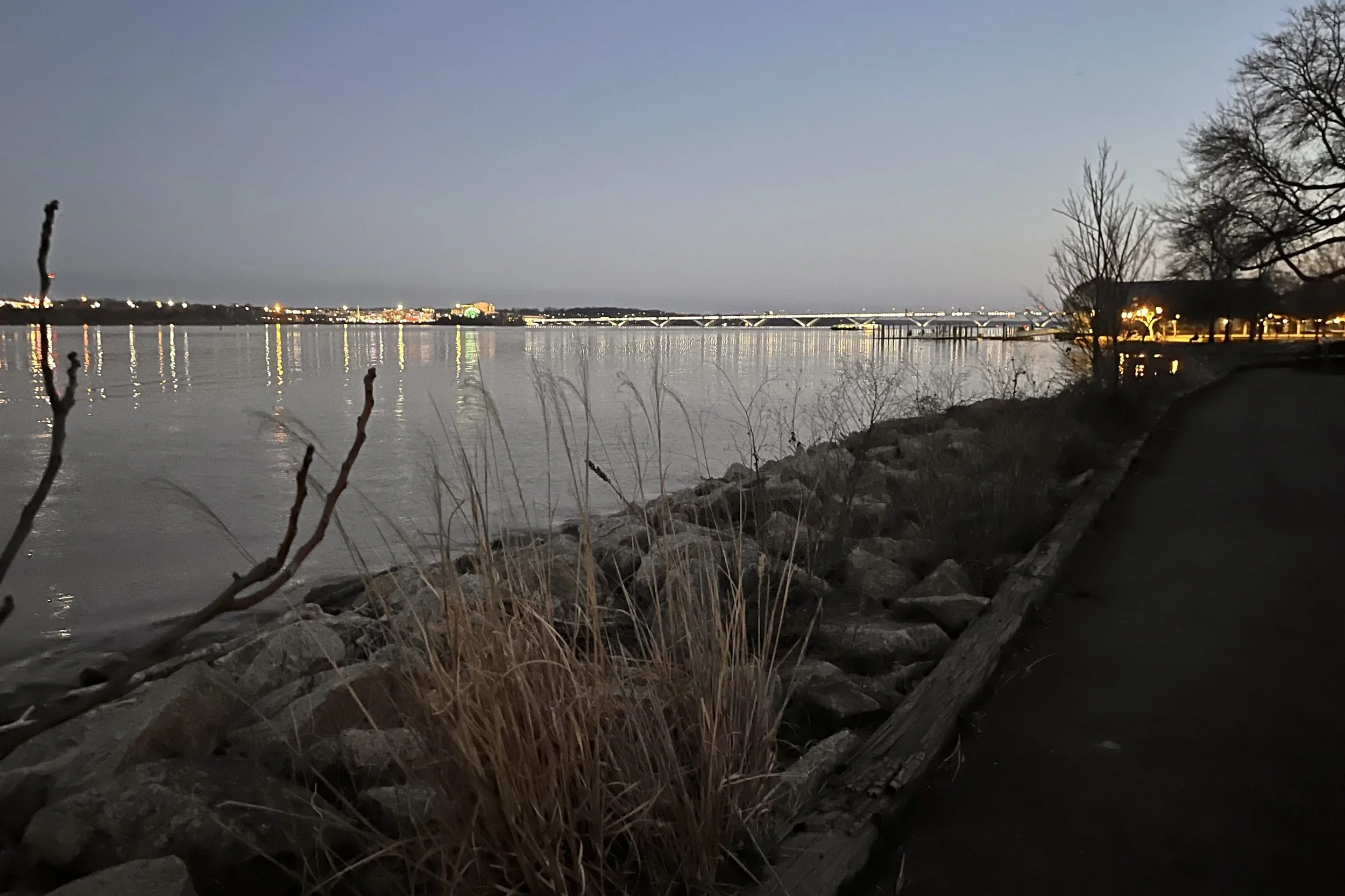
Quiet canal-side path at Tide Lock with minimal foot traffic and a narrow walking line along the water
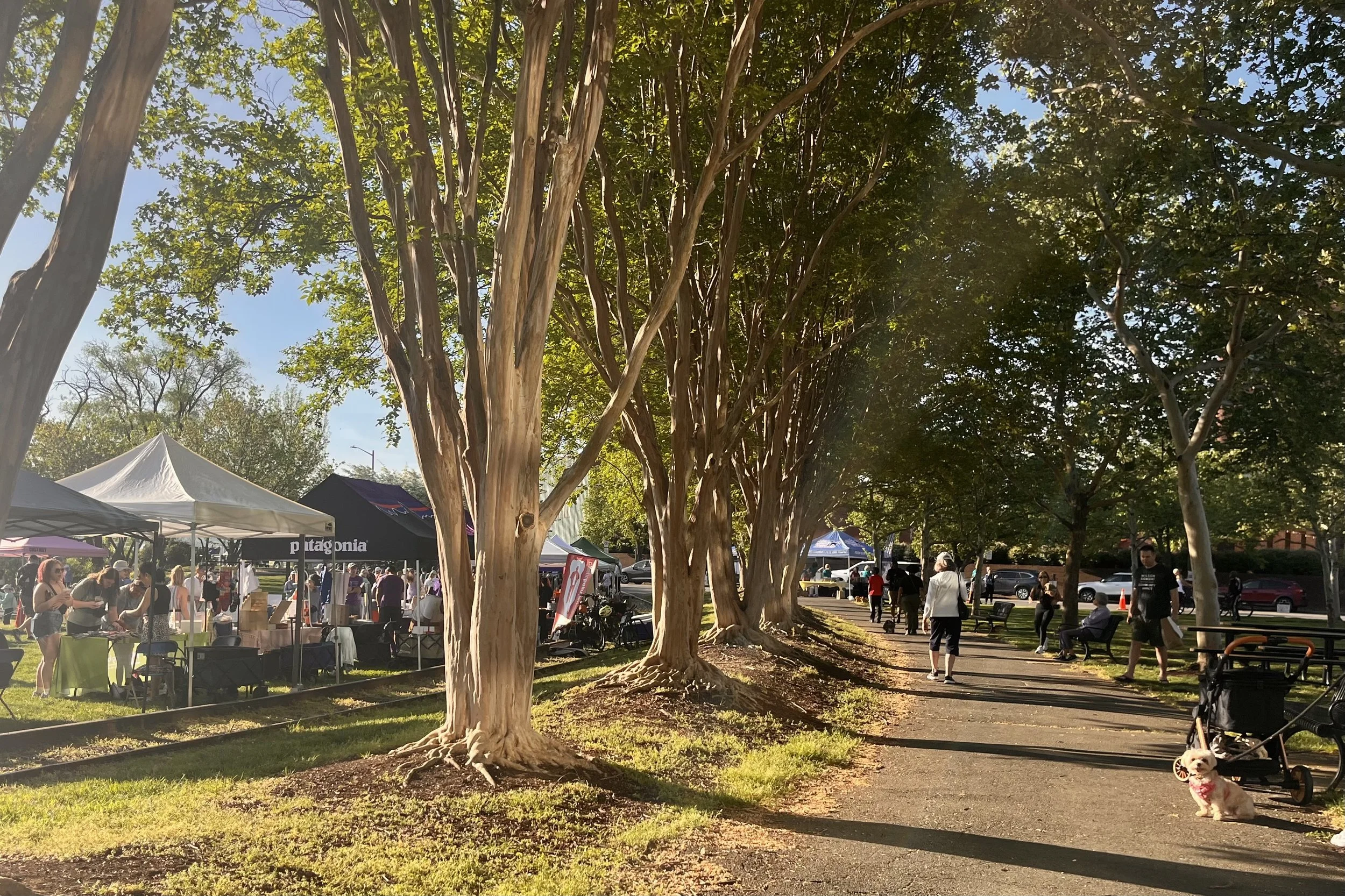
Busier stretch at Oronoco Bay Park during an event, with increased foot traffic and activity along the waterfront
You can start at Tide Lock or Oronoco, depending on what kind of beginning you want.
Tide Lock is usually quieter and more low-key.
Oronoco tends to have more activity right away.
From either one, you’ll head north and pick up the trail.
How the walk feels
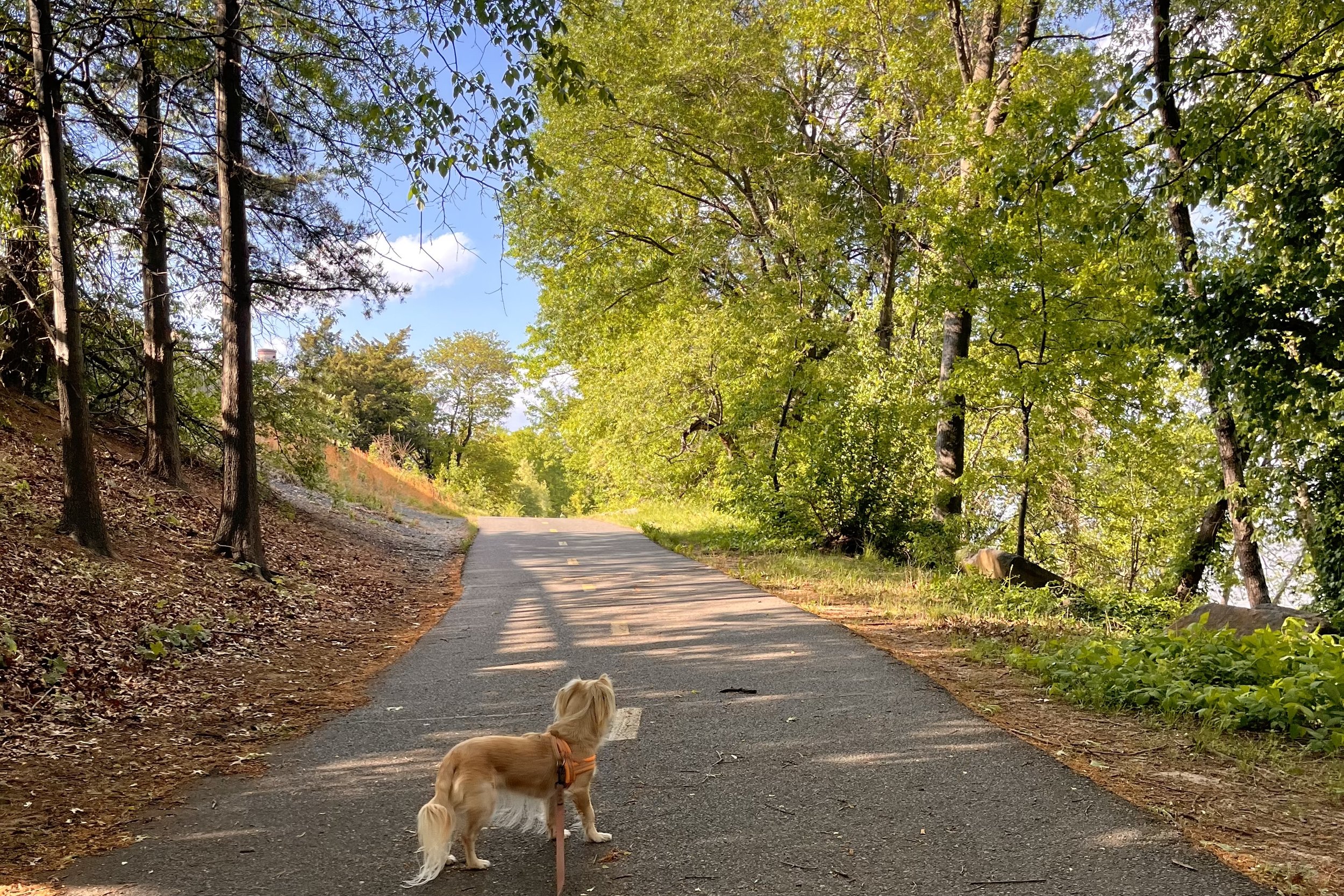
Long, straight section of the Mount Vernon Trail with clear forward space and minimal interruptions
This walk follows a clear, forward path.
Once you’re on the trail, movement becomes steady and continuous. You’re following a consistent direction with fewer natural places to step off compared to the other walks.
How far to go
You can turn around at any point, but heading up toward Slaters Lane Trail Access is a natural extension.
What you’ll notice
Cyclists
Fewer natural break points along the route
Why this walk works
Clear, steady movement
No need to make route decisions
Easy to extend based on how the walk is going
If your dog tends to slow or pause more on this type of path, it’s often because there’s less variation along the way. I break that down more in Why Dogs Freeze or Refuse to Walk in New Places.
Not every longer walk needs to feel like more effort.
When the space stays consistent, it’s easier to settle into the walk and keep going without constant adjustment.
These routes give you a few different ways to do that, depending on what your dog needs that day.
