Why Small Dogs Struggle on Busy Sidewalks
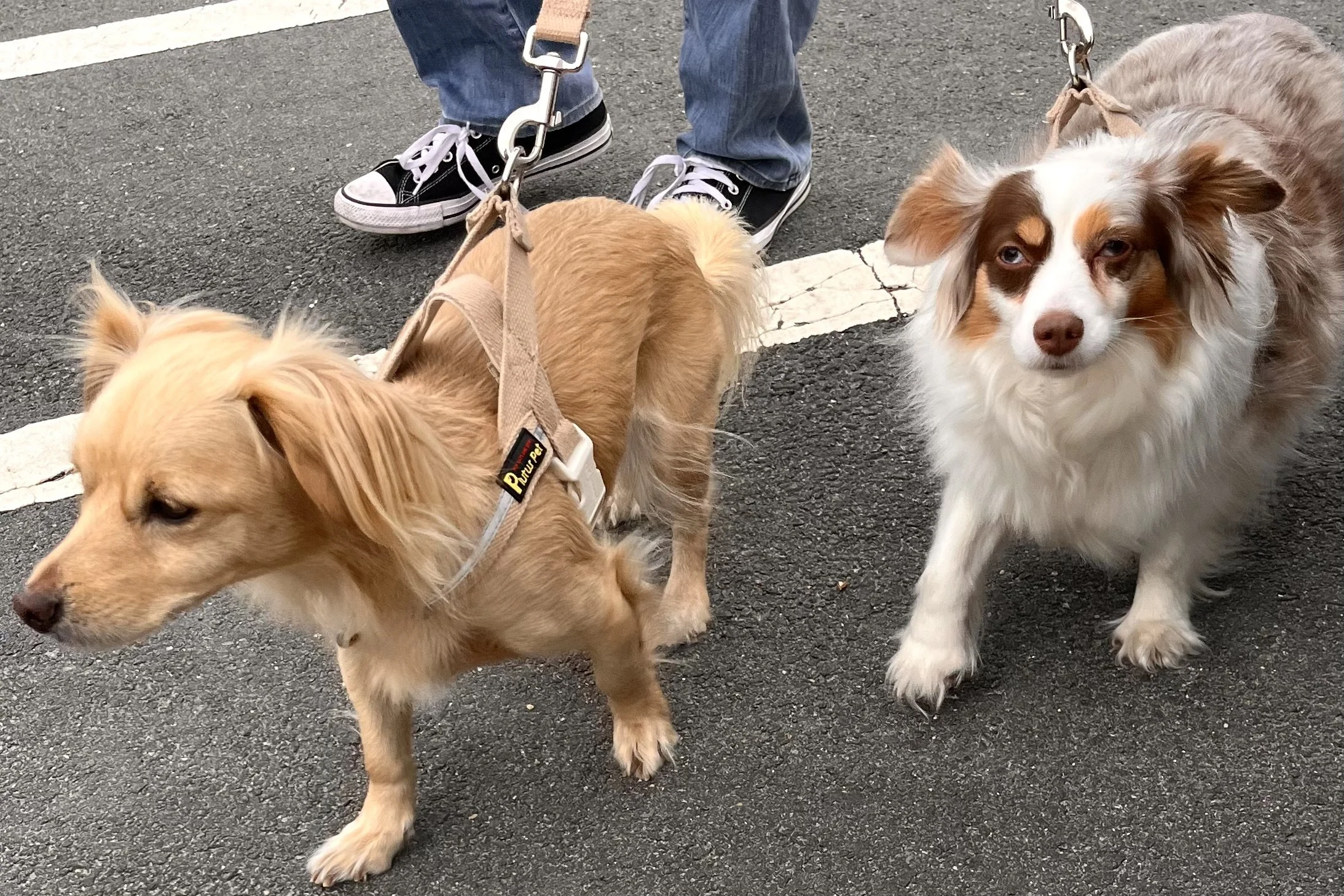
Many small dogs move comfortably through quiet streets but begin to slow down when sidewalks become crowded.
In busy areas, people pass quickly, feet move close to the ground, and the available space narrows. What looks like a simple walk for a person can feel much more complicated from a small dog’s perspective.
When a dog pauses or hesitates in these environments, it can be tempting to interpret the behavior as stubbornness. In many cases, though, what appears to be resistance is often a response to the conditions around them.
Busy sidewalks compress movement into a narrow space. From a small dog’s height, passing feet, strollers, and changing directions can make the path ahead unpredictable, making it harder to maintain a comfortable walking rhythm.
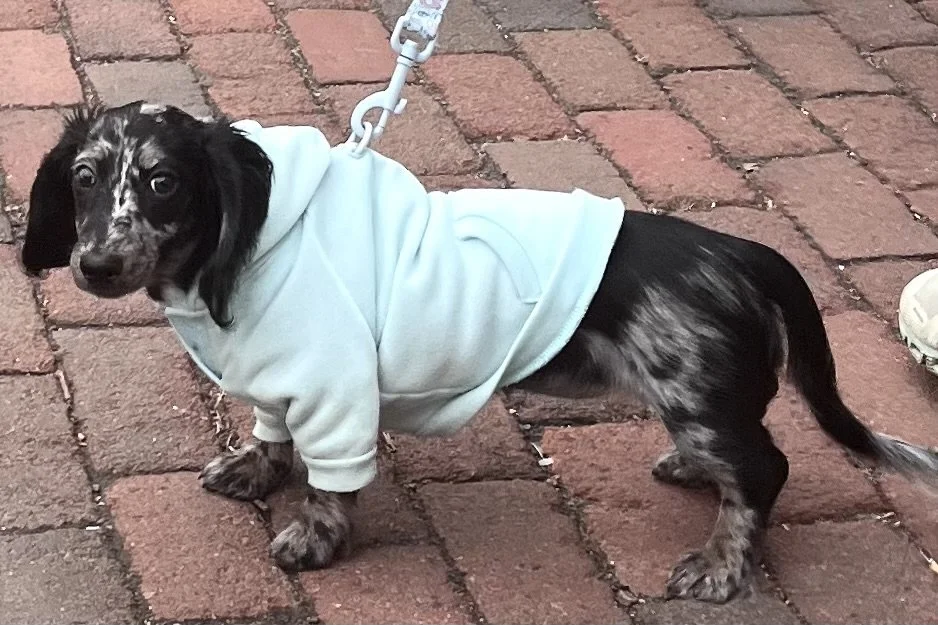
What feels like a normal sidewalk to us can feel crowded and complicated to a small dog navigating at ground level.
Why Busy Sidewalks Can Be Harder for Small Dogs
Sidewalks are designed for people moving in the same direction at a steady pace. Dogs experience those spaces differently.
People step around each other, change direction unexpectedly, and sometimes stop suddenly. Strollers, bags, bicycles, and other dogs all add to the flow of movement.
For a small dog walking near ground level, this activity can make the route feel unpredictable rather than clearly defined.
Even when nothing threatening is happening, the amount of movement nearby can make it harder for a dog to settle into a comfortable walking rhythm.
This is one reason many dogs move more comfortably through routes they already know, a pattern discussed in Why Familiar Walks Matter for Dogs.
Why Height Matters for Small Dogs
Perspective plays a large role in how dogs experience sidewalks.
People move through crowded areas looking ahead and scanning the space around them. Small dogs experience the same environment from much closer to the ground, where most of what they see are legs, shoes, and quickly moving objects.
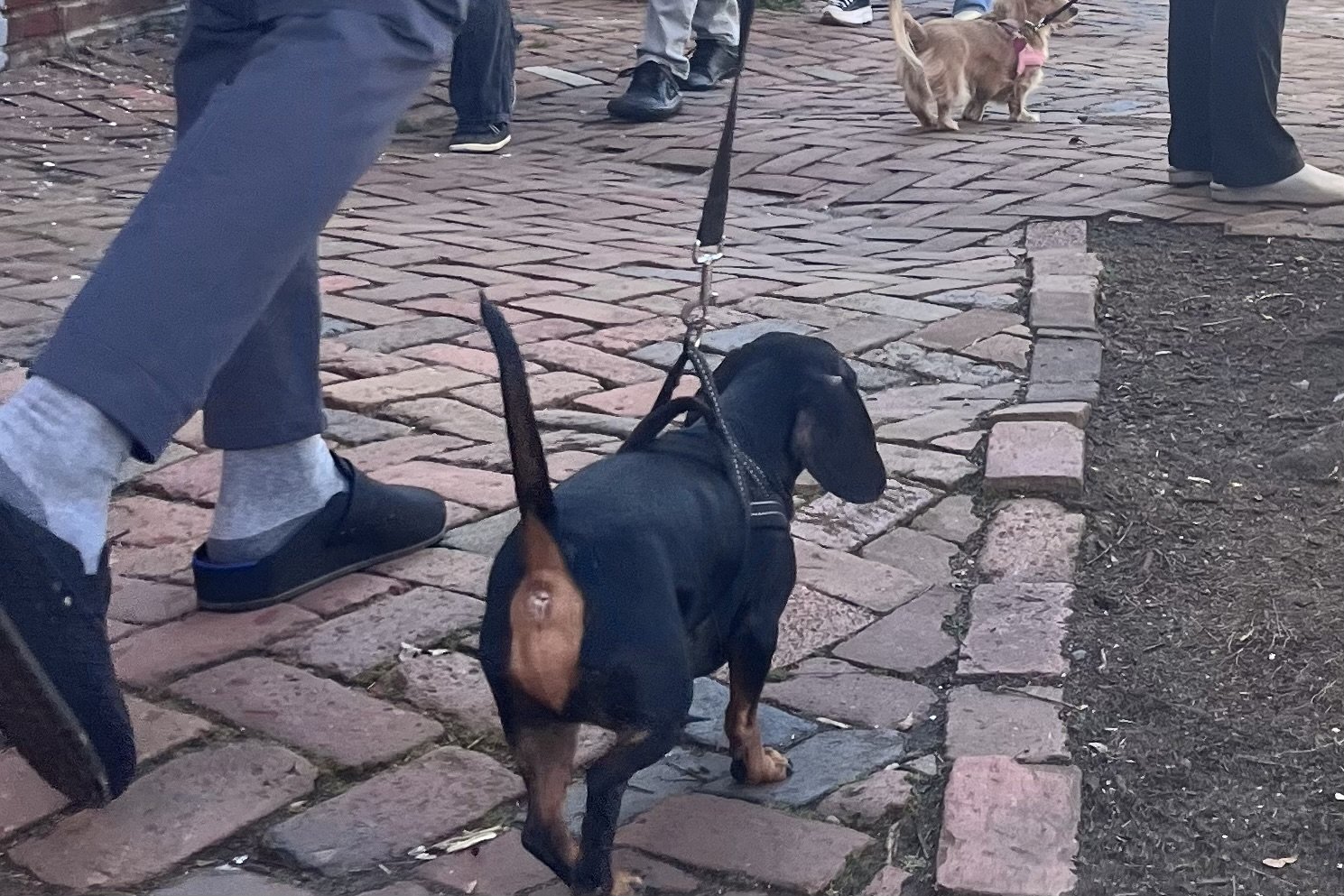
Busy sidewalks often require small dogs to weave through shifting feet and narrow walking space.
Because of that height difference, small dogs often notice motion before they can see where it’s coming from. Passing feet, swinging bags, or a stroller wheel can appear suddenly in their field of view.
The environment may feel predictable to us, but for a small dog it can look much more chaotic.
Narrow Space and Constant Adjustments
Another factor is the structure of busy sidewalks themselves.
In many towns and cities, sidewalks narrow as they pass storefronts, outdoor dining areas, or busy intersections. When space becomes tight, dogs lose the ability to step aside or choose a slower route.
Instead of walking forward comfortably, they may need to adjust their position repeatedly as people pass.
Those small adjustments add up. Over time, the walk can begin to feel crowded rather than relaxing.
Planning Busy Sidewalk Walks Before Leaving Home
When I plan a longer walk with Archie and Saydie, I often think about the environment before we even leave the house. Time of day, the day of the week, the weather, and whether an event might be happening nearby can all change how busy a route feels.
Similar decisions often matter when traveling as well, which I discuss in Traveling Calmly With Small Dogs: The Decisions That Matter Most.
A sidewalk that feels calm on a quiet weekday morning can feel very different on a warm Saturday afternoon when more people are out. Farmers markets, waterfront events, or even a stretch of good weather can shift how crowded a familiar route becomes.
Over time I’ve found that paying attention to those small details often makes the walk more comfortable for the dogs from the start. The route itself may not change, but the conditions around it can.
Many of these decisions come down to how demanding an environment will feel for a small dog. Busy sidewalks combine movement, noise, and narrow space all at once, which can raise the overall pressure of a walk even when nothing specific is wrong.
Thinking about walks this way is closely related to the idea behind the Small Dog Comfort Index, which looks at how different environments affect how easy or demanding a place may feel for small dogs to navigate.
Signs a Dog Is Feeling Crowded
Dogs often show subtle signals when an environment starts to feel busy or overwhelming.
A dog who normally walks steadily may begin to:
• slow down
• pause more frequently
• look around more often
• move closer to the edge of the sidewalk
• hesitate when people approach
These behaviors aren’t necessarily signs of fear. Often they simply indicate that the dog is trying to navigate a crowded environment carefully.
In some cases, the dog may eventually stop walking altogether. If that happens, it can help to pause and allow the dog a moment to reset before continuing.
A Small Observation from Old Town Alexandria
In Old Town Alexandria, Archie and Saydie move comfortably through quieter residential streets where the sidewalks are wide and the pace is slower.
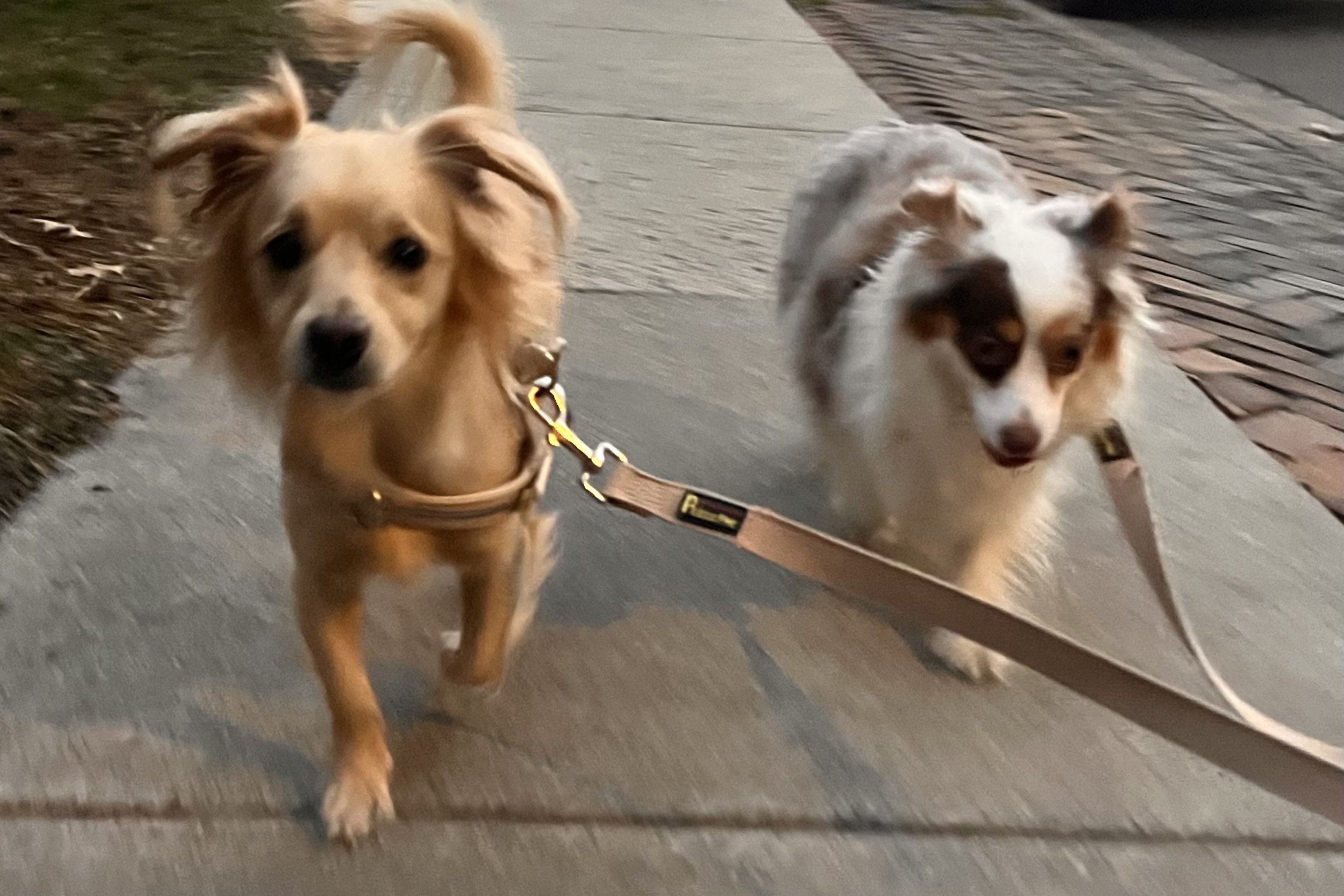
Archie and Saydie walking along a quiet Old Town Alexandria sidewalk during an evening walk.
But along the waterfront and the busier shopping blocks, the environment changes. The sidewalks narrow, more people pass in both directions, and movement becomes less predictable.
In those areas, the dogs often slow their pace and shift closer to the edge of the sidewalk. The distance of the walk hasn’t changed — but the density of movement has.
Choosing Quieter Walking Routes
For many small dogs, the easiest way to make city walks more comfortable is simply to choose calmer routes.
Side streets, park paths, and waterfront trails often provide more space and fewer sudden changes in movement.
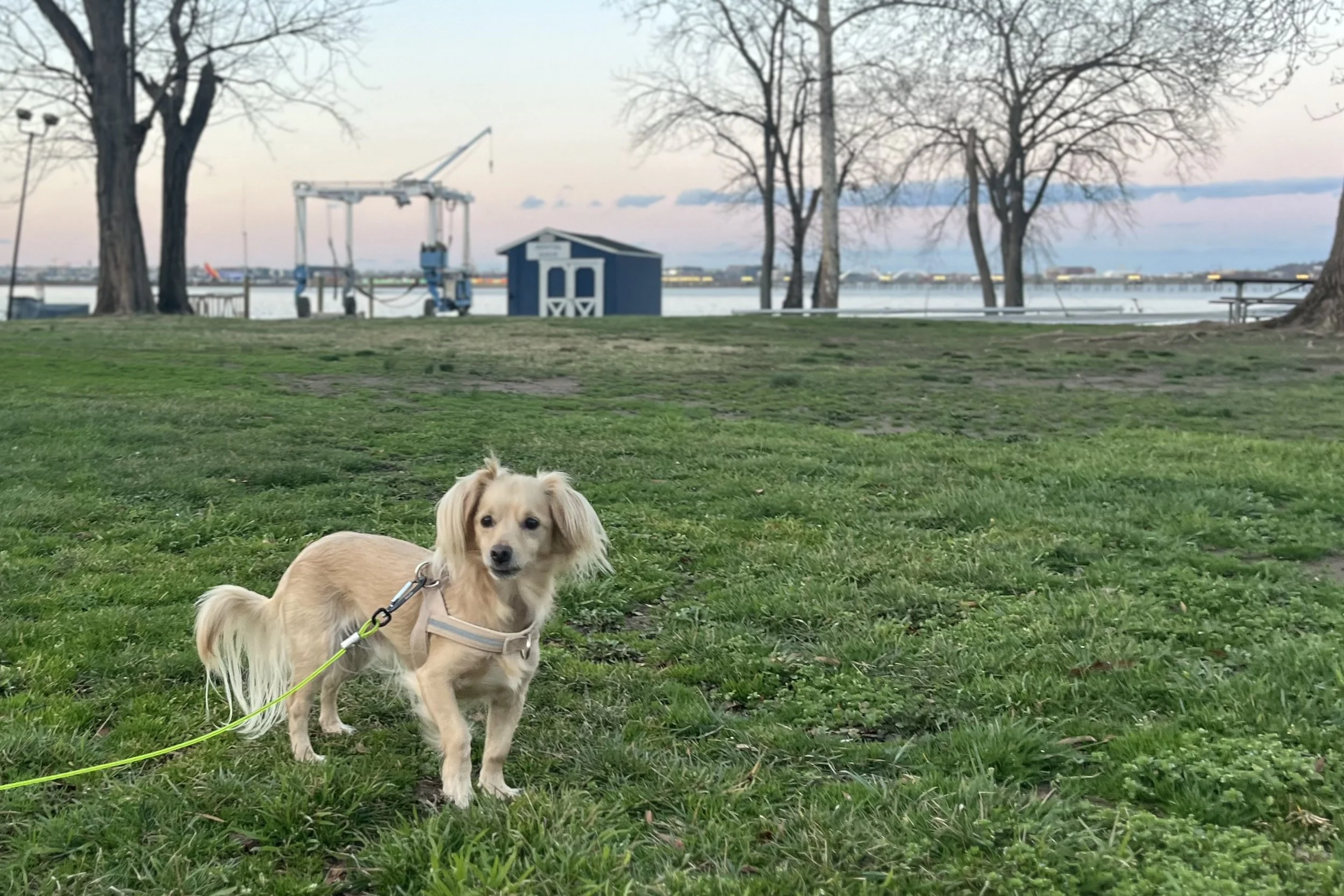
Open green spaces and quiet waterfront paths give small dogs the room they need to settle back into a comfortable walking rhythm.
Walking earlier in the morning or later in the evening can also reduce sidewalk congestion, allowing dogs to move at their natural pace.
Over time, many dogs learn to navigate busier environments more comfortably when those experiences are balanced with quieter walks.
Why Environment Matters for Small Dogs
Dogs experience environments differently from people. Small changes in movement, noise, and available space can affect how comfortable a walk feels.
Busy sidewalks are one example. The combination of narrow space, constant movement, and limited opportunities to pause can raise the overall pressure of a walk, especially for small dogs navigating close to the ground.
Understanding these environmental differences can make it easier to interpret a dog’s behavior and choose routes that allow them to move more confidently.
In many cases, the goal isn’t to push a dog through crowded sidewalks but to recognize which environments help them feel most at ease.
How This Connects to the Small Dog Comfort Index
Busy sidewalks highlight how environmental factors shape a dog’s experience of a place.
Movement density, available space, and opportunities to pause all influence whether an environment feels comfortable or demanding. These are some of the same factors considered in the Small Dog Comfort Index, a framework designed to help evaluate how different environments may feel for small dogs before visiting them.
Thinking about walks this way can make it easier to choose routes, times, and destinations that allow dogs to explore comfortably rather than simply navigating through crowds.
Sometimes the difference between a stressful walk and a comfortable one isn’t distance at all — it’s simply the environment surrounding the path.
