What Actually Makes Travel Easier for Dogs (Beyond the Packing List)
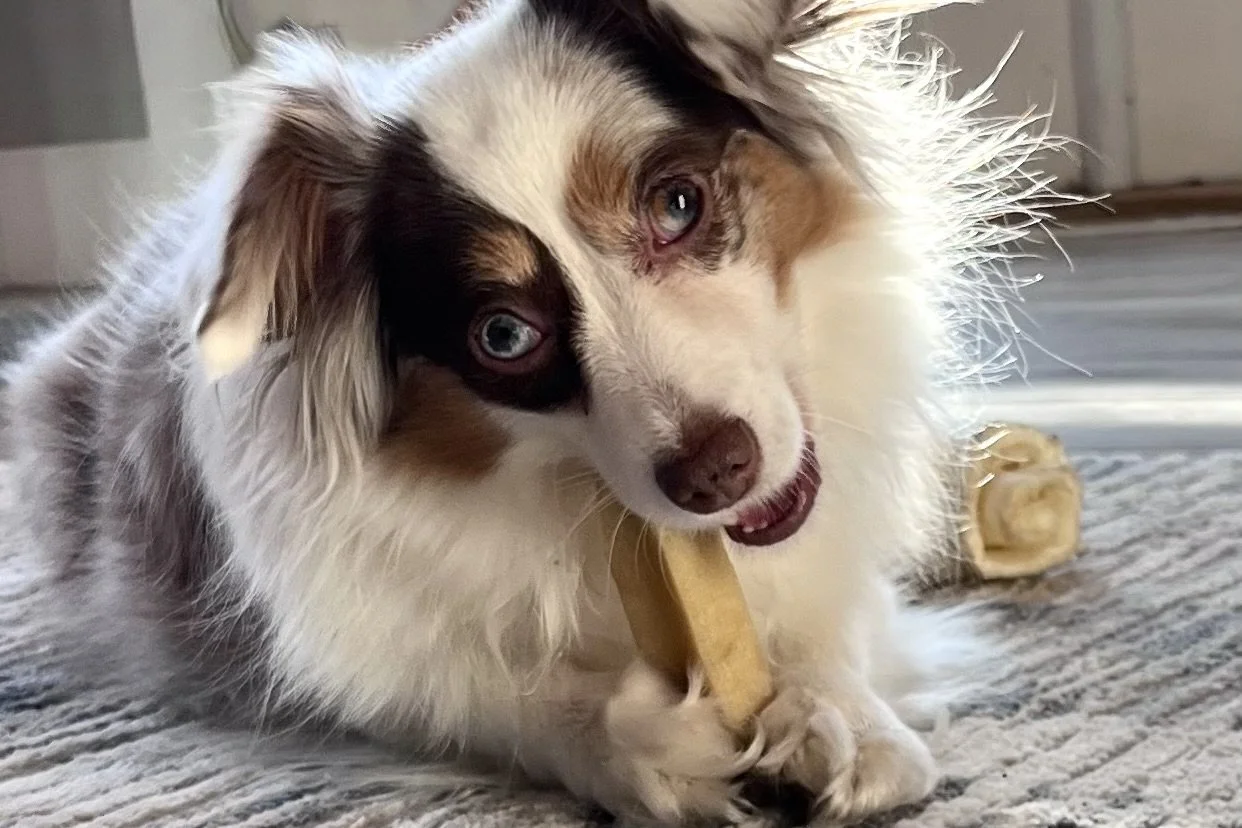
A familiar chew can help dogs settle and release nervous energy in a new environment.
Most packing lists focus on what to bring.
But what actually shapes how your dog experiences travel starts before anything goes in the bag.
What matters during travel isn’t just what you pack, but how those items support your dog’s ability to move, rest, and adjust in a new environment — especially for small dogs, who tend to experience those changes more intensely.
If you’re looking for a simple checklist of what to bring, you can find my full dog travel packing listhere.
What tends to matter more is having the right things — the ones that help your dog move through a new experience and eventually settle.
Over time, I’ve found that a few thoughtful choices can make a noticeable difference in how easily a dog adjusts to a new place.
They’re small details, but they tend to shape the entire trip.
This is exactly why I often think about travel in terms of overall demand — something I break down in the Small Dog Comfort Index.
Familiarity & Sleep Support
Some dogs settle easily in new places. Others take a little longer to relax, especially at night.
Archie does best when he has a defined place to land. Even in a new environment, his bed gives him a sense of structure that helps him settle more quickly.
Without it, he tends to stay slightly unsettled, as if he’s not quite sure where to settle.
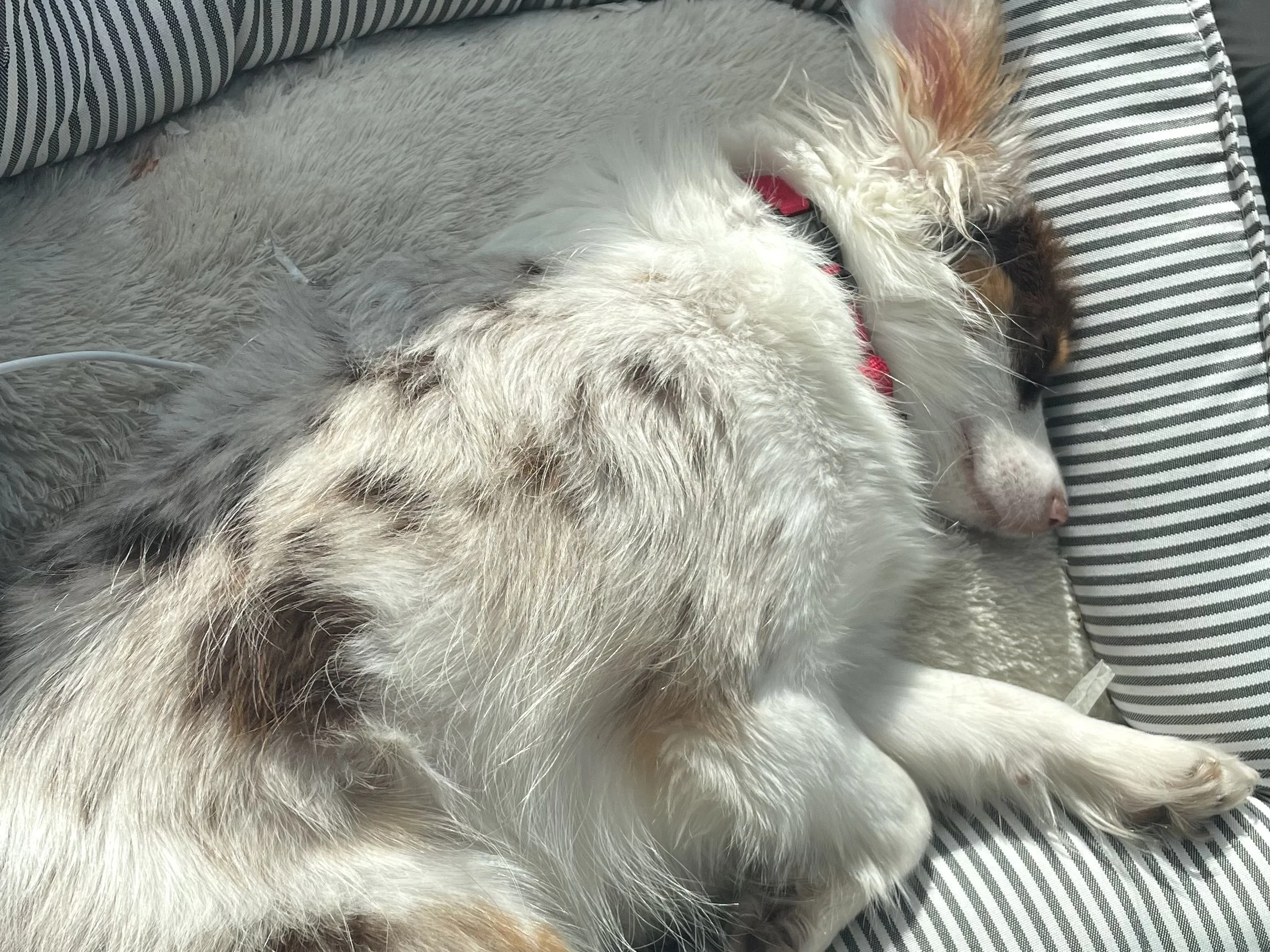
A familiar bed gives dogs a defined place to settle, even in a new environment.
A familiar sleep setup doesn’t need to be elaborate. It just needs to feel consistent.
This kind of consistency often plays a role in how well dogs recover during trips, especially over multiple days — something I talk more about in why dogs get tired after travel.
- a small bed they already use at home
- a familiar blanket
Regulation & Nervous Energy Release
New environments can bring a steady level of alertness, especially for dogs who are naturally more aware of their surroundings.
Saydie is always observant, but in a new place that awareness tends to ramp up. Instead of settling right away, she’ll often stand or sit in the middle of the room, watching, scanning, and taking everything in.
Having something to chew gives her a way to shift out of that state. It gives her something familiar to focus on while she takes in what’s around her.
For her, long-lasting chews—like yak cheese chews—make the biggest difference. Once she starts chewing, you can see her settle more fully instead of staying in that constant watchful mode.
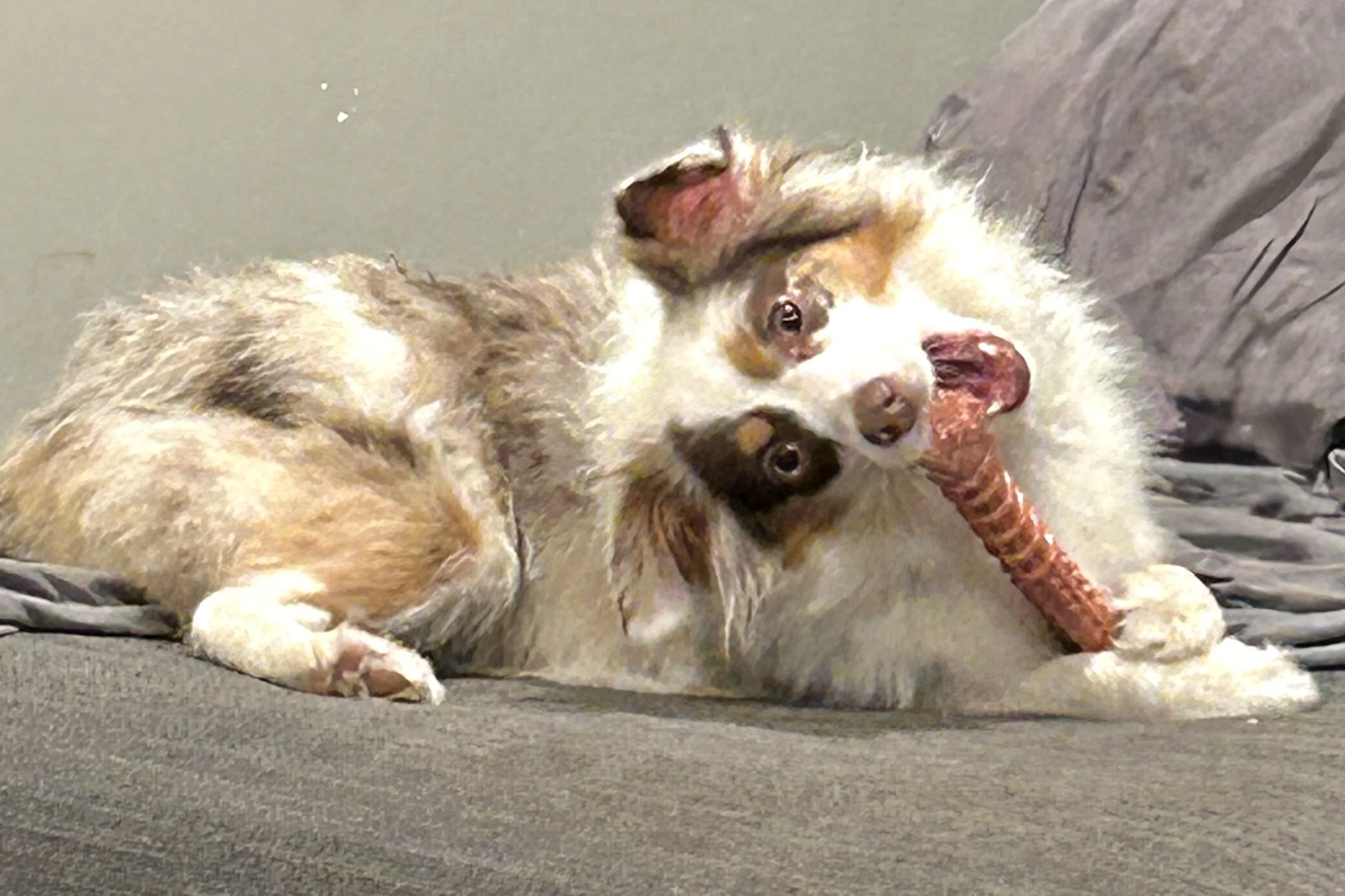
Chewing gives dogs a familiar way to settle and release tension in a new environment.
These small moments of release often make the rest of the day feel easier.
yak cheese chews
beef cheek rolls
antlers (such as elk antlers)
Giving Dogs Space to Move
Some environments naturally allow for more freedom — open beaches, quiet fields, wide stretches of sand or grass.
On those kinds of walks, having more space simply gives dogs room to roam, explore, and move at their own pace instead of staying close at your side.
At the beach, I often use a long leash (20–30 ft) so the dogs can run through the sand and water while still staying connected. They’ll move out, come back, circle, and head off again — a much more natural rhythm than a short, controlled walk.
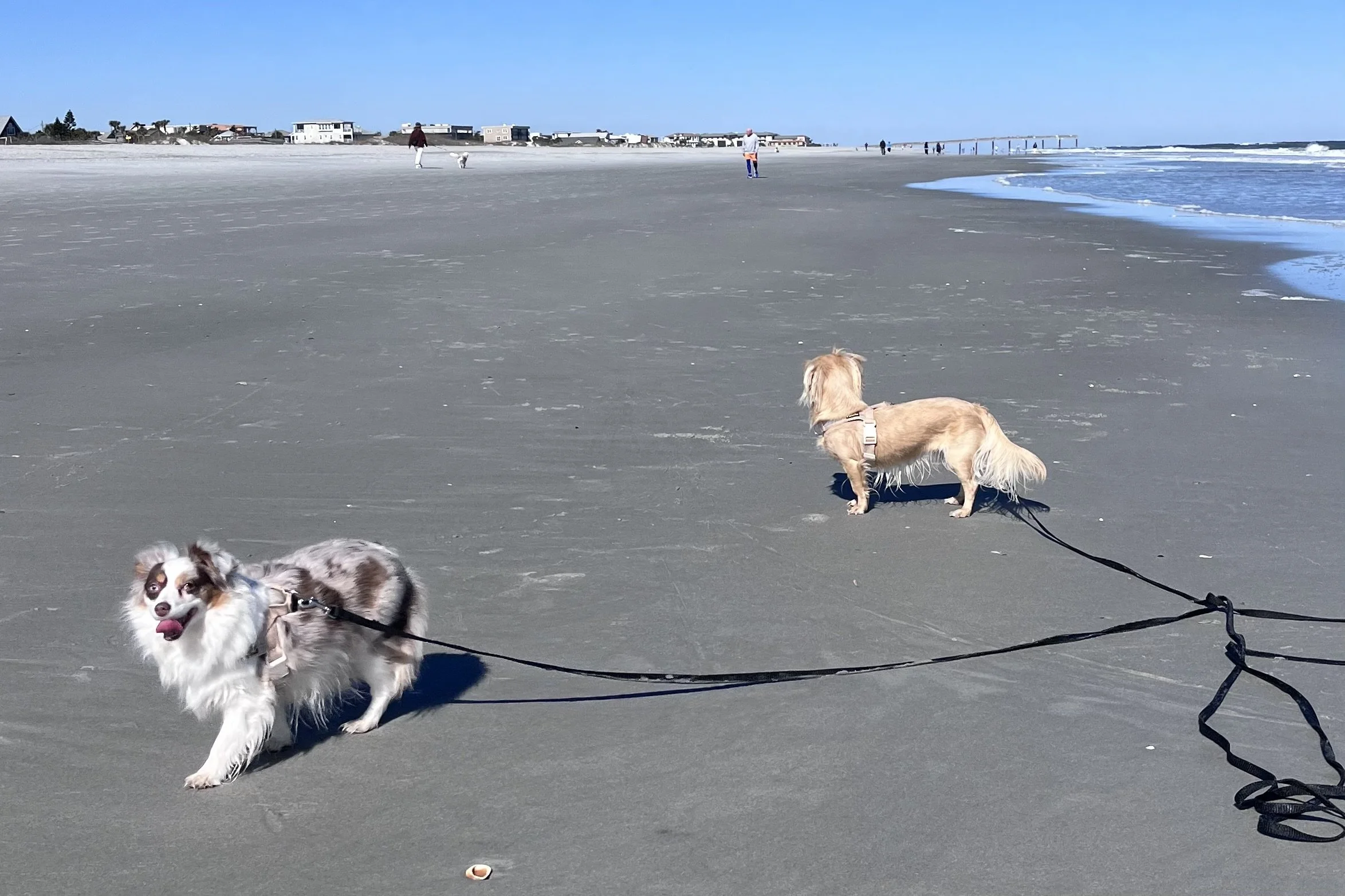
A long leash gives dogs room to roam and explore while staying connected.
That kind of movement helps them release energy more fully and settle more easily afterward.
long leash (20–30 ft)
comfortable harness
Environmental Buffering
Not every part of a trip is easy to move through at your dog’s pace. Busy environments can be especially challenging for some dogs, similar to the hesitation you might notice when a dog freezes or refuses to walk in unfamiliar places.
In those moments, having a way for your dog to stay close without fully engaging can make a noticeable difference.
Saydie is usually more comfortable on the ground, but in busier environments — like a festival — I’ve found that using a dog backpack helps. She can still see what’s happening around her, but being close and slightly elevated helps her settle instead of staying in that constant watchful mode.
For shorter moments, I’ll sometimes just pick her up and hold her close until she settles.
For smaller or lighter-weight dogs — especially those comfortable being carried — options like front carriers, slings, or enclosed strollers can create a similar sense of security.
dog backpack
Routine Stability
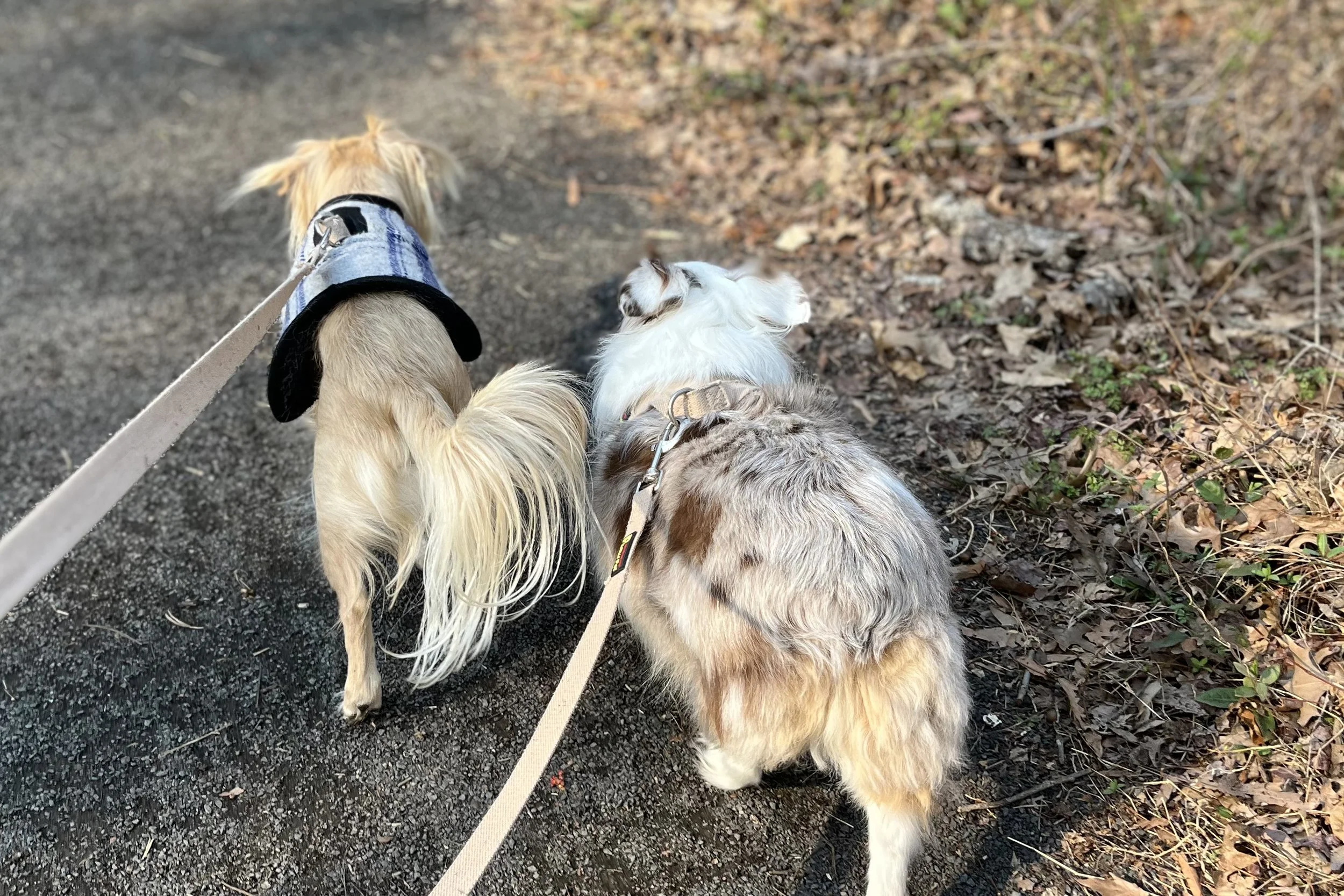
On familiar walks, dogs settle into a steady rhythm, moving forward with more confidence and ease.
During travel, small consistencies can make a bigger difference than expected. Familiar routes often give dogs a steady baseline they can rely on, even when everything else is new.
Keeping food the same is one of the simplest ways to reduce unnecessary stress. Changing food during a trip — even with good intentions — can add an extra layer of adjustment that most dogs don’t need.
I try to keep feeding routines as consistent as possible, including timing and setup. Even using the same bowl can help maintain a sense of familiarity, especially for dogs who notice small changes.
same food from home
consistent feeding schedule
familiar bowl (if practical)
A Simple Travel Day Kit
Transitions tend to be where small disruptions add up — getting out of the car, starting a walk, or arriving somewhere new.
A little preparation before you even leavecan also make these transitions easier, especially during longer drives.
Having a few essentials within easy reach makes those moments feel more manageable and less rushed.
I usually keep a small pouch or tote in the car with just the items I know I’ll need when we stop, so I’m not digging through bags or the trunk.
water + a collapsible travel bowl
a light snack or a few treats
paw wipes
a small towel
a chew
It’s a simple setup, but having everything in one place makes transitions smoother and easier to manage.
Final Thought
Packing well isn’t just about being prepared — it’s about creating a travel experience that feels manageable from your dog’s perspective.
A few familiar items, a way to release energy, and small points of consistency can go a long way in helping dogs adjust to a new place.
Over time, those details tend to shape the entire trip.
