The Small Dog Comfort Index

Calm environments lower demand and support regulation when traveling with small dogs.
Most dog-friendly travel advice measures access.
Are dogs allowed?
How many patios?
Which shops welcome them inside?
But access is not the same as comfort.
When traveling with small dogs, environmental demand matters more than amenities.
Small dogs don’t experience destinations as features.
They experience arrival intensity.
Movement compression.
Recovery space.
Overnight reset potential.
After years of planning travel with small dogs — beach towns, historic districts, rentals, and road trips — I realized I was consistently evaluating the same variables.
Not for permission.
For nervous system load.
I formalized that process into a simple framework:
The Small Dog Comfort Index.
It measures how demanding a destination will feel — before you book.

Environmental scale shapes how a destination feels for small dogs.
Why “Dog-Friendly” Doesn’t Always Mean Comfortable
Many destinations advertise themselves as dog-friendly, but permission alone doesn’t guarantee ease when traveling with small dogs. Comfort depends on how demanding the environment feels — not how many patios allow pets.
Small dogs — especially sensitive ones — don’t always show overwhelm dramatically.
Some bark.
Some freeze.
Some shut down.
Some become hyper-vigilant and look calm… but aren’t.
Comfort in small dog travel isn’t about whether they “handled it.”
It’s about how the environment feels in their body.
That’s what this Index evaluates.
How to Evaluate Destinations When Traveling With Small Dogs
When planning dog-friendly travel with small dogs, environmental demand matters more than amenities. The Small Dog Comfort Index helps you assess arrival, movement compression, recovery space, and flexibility before you book.
This framework assumes a neutral departure baseline. If you’re still working on car comfort or preparing a small dog for a long car ride, I share that process here. If a dog begins travel already elevated, total demand may feel heavier — but the Index itself measures the environment, not the departure routine.

Baseline regulation matters before environmental exposure begins.
The Index scores specific zones and timeframes — not entire cities. Environmental demand shifts block by block, and time of day matters.
1. Arrival Intensity: How Demanding Is Entry?
Arrival is the first layer of stimulation when traveling with small dogs. Parking, elevators, corridors, and delayed outdoor access can raise nervous system load before your dog ever settles.
I consider:
Parking proximity
Elevators or long indoor corridors
Waiting time before outdoor access
Lobby congestion
The first five minutes inside
If arrival includes tight transitions or delayed outdoor access, nervous system load climbs quickly.
Lower arrival intensity looks like:
Easy parking
Immediate outdoor access
Clear path to the room
Minimal waiting
The smoother the arrival, the steadier the start.
2. Movement Compression: How Tight Is the Environment?
Crowded sidewalks, narrow paths, and steady foot traffic increase demand quickly for small dogs. Evaluating movement compression helps you predict how manageable daily outings will feel when traveling with small dogs.
I look at:
Sidewalk width
Foot traffic density
Noise layering
Visual stimulation
Distance between quiet zones
Open spaces allow small dogs to regulate while moving.
Compressed environments require sustained vigilance.

Traffic, open exposure, and hard surfaces increase environmental load.
I’ve seen this play out in indoor dog-friendly spaces that appeared manageable at first glance. At a popular dog-friendly brewery in St. Augustine, the room looked calm — until we realized nearly every table and counter had a dog resting underneath. The layout left no buffer space between them. Once my dogs registered the density, movement compression escalated quickly. We relocated to the patio, where open spacing immediately lowered demand.
I break down how this plays out more broadly in my guide to walking Old Town St. Augustine with dogs.
The space wasn’t chaotic — it was compressed.

Moderate-density environments require steady regulation.
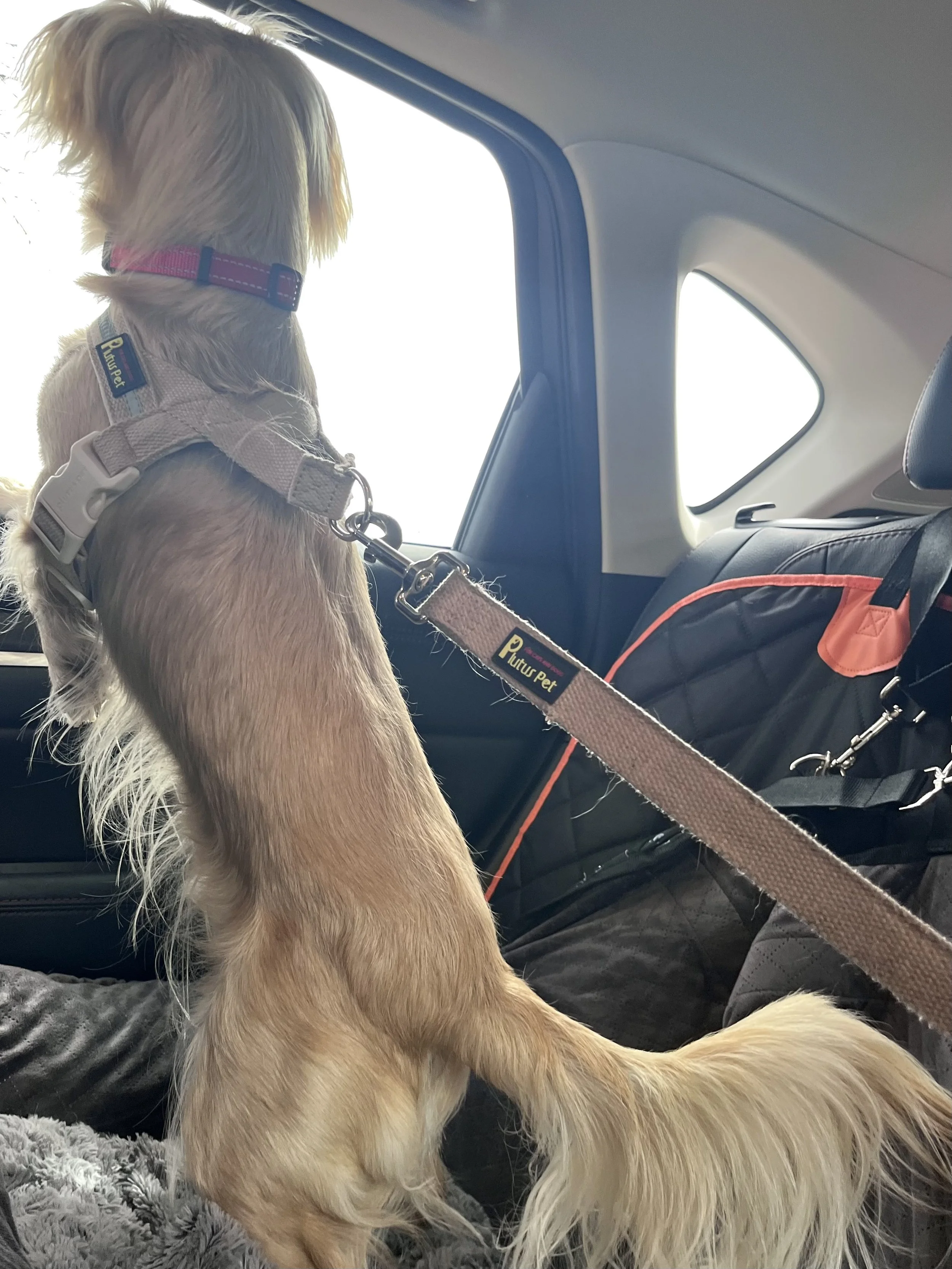
Threshold moments often raise vigilance before movement continues.
3. Recovery Space: Is There Room to Reset?
After stimulation, small dogs need physical and sensory space to decompress. Destinations with accessible green space or quiet lodging support steadier travel.
I consider:
Nearby open grass or beach access
Quiet residential edges
Low-traffic walking routes
Distance from nightlife or heavy traffic
Without recovery space, stimulation stacks.
With it, regulation resets.
I saw the opposite effect in Cape Charles, where open beach access and quiet residential streets lowered overall demand significantly.
4. Overnight Reset Potential: Does Stimulation End at Night?
When traveling with small dogs, true comfort depends on whether the environment settles after dark. Constant noise or late foot traffic can prevent full nervous system recovery.
I evaluate:
Nighttime noise levels
Street activity after dark
Shared walls or hallway traffic
Light exposure
If stimulation never fully stops, reset never fully happens.
5. Exit Flexibility: Can You Pivot if Needed?
Even well-planned dog-friendly trips require adjustment. Exit flexibility measures how easily you can shorten, reroute, or change plans without increasing stress for small dogs.
I ask:
Are there alternative walking routes nearby?
Can we leave an area quickly?
Are there backup quiet spaces?
Is parking close enough for an easy retreat?
Flexibility lowers pressure — for both dog and human.
Small Dog Comfort Index: Quick Scoring Snapshot
Use this simplified table to compare destinations before booking. Rating each category as low, moderate, or high demand makes dog-friendly travel planning more intentional.
Small Dog Comfort Index: Scoring Guide
-
Low: Easy parking, direct outdoor access
Moderate: Short corridor or brief wait
High: Elevators, long indoor entry, delayed outdoor access -
Low: Open sidewalks, wide paths
Moderate: Some crowding at peak times
High: Narrow sidewalks, dense foot traffic -
Low: Quiet lodging, nearby open space
Moderate: Some outdoor space but shared
High: Limited outdoor access, high noise -
Low: Calm after dark
Moderate: Moderate ambient noise
High: Heavy nightlife or urban noise -
Low: Easy to pivot plans
Moderate: Some alternatives nearby
High: Limited backup options
Dog-friendly travel isn’t just about whether dogs are welcome.
It’s about how the environment will feel when traveling with small dogs.
Arrival intensity.
Movement compression.
Recovery space.
Reset potential.
Flexibility.
When you measure those first, you plan differently.
I apply this framework to several nearby destinations in 8 Dog-Friendly Weekend Trips Near Washington DC and Alexandria, where you can see how different environments affect travel comfort for small dogs.
The Small Dog Comfort Index isn’t about finding more places that allow dogs.
It’s about choosing places that support them.
Because “allowed” and “comfortable” are not the same thing.
And small dogs feel the difference.

When the environment matches regulation, travel feels steadier for small dogs.
