Why Does My Dog Get Tired So Fast in New Places?
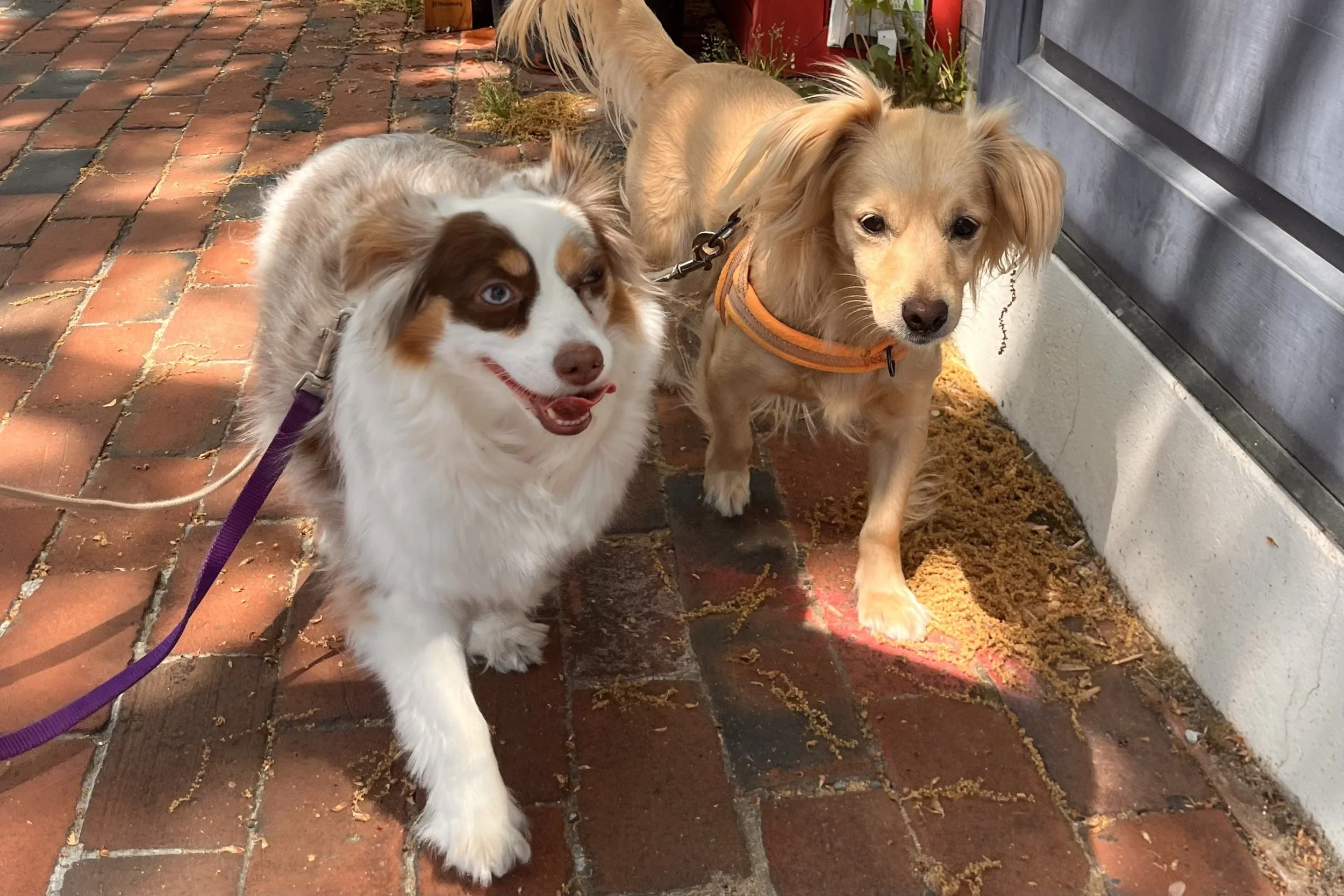
Archie and Saydie take in different parts of the environment during a walk.
If your dog comes home exhausted after what seemed like an easy, short walk, it can be surprising—especially if a longer walk close to home doesn’t affect them the same way.
The difference may be the environment rather than the distance.
In a new park, an unfamiliar neighborhood, or a busier part of town, dogs are processing new smells, sounds, surfaces, people, and movement. Even when the walk looks easy to us, their attention may stay active the entire time.
That steady mental effort can leave a dog ready to sleep after an outing that involved very little physical exercise. They may not have walked farther than usual, but they had much more to take in along the way.
This article focuses on why dogs become tired after short outings in unfamiliar places. If you notice the same pattern during a trip, I explain how travel, disrupted routines, and time away from home can add to that fatigue in why dogs get so tired after travel.
Why New Environments Feel More Demanding
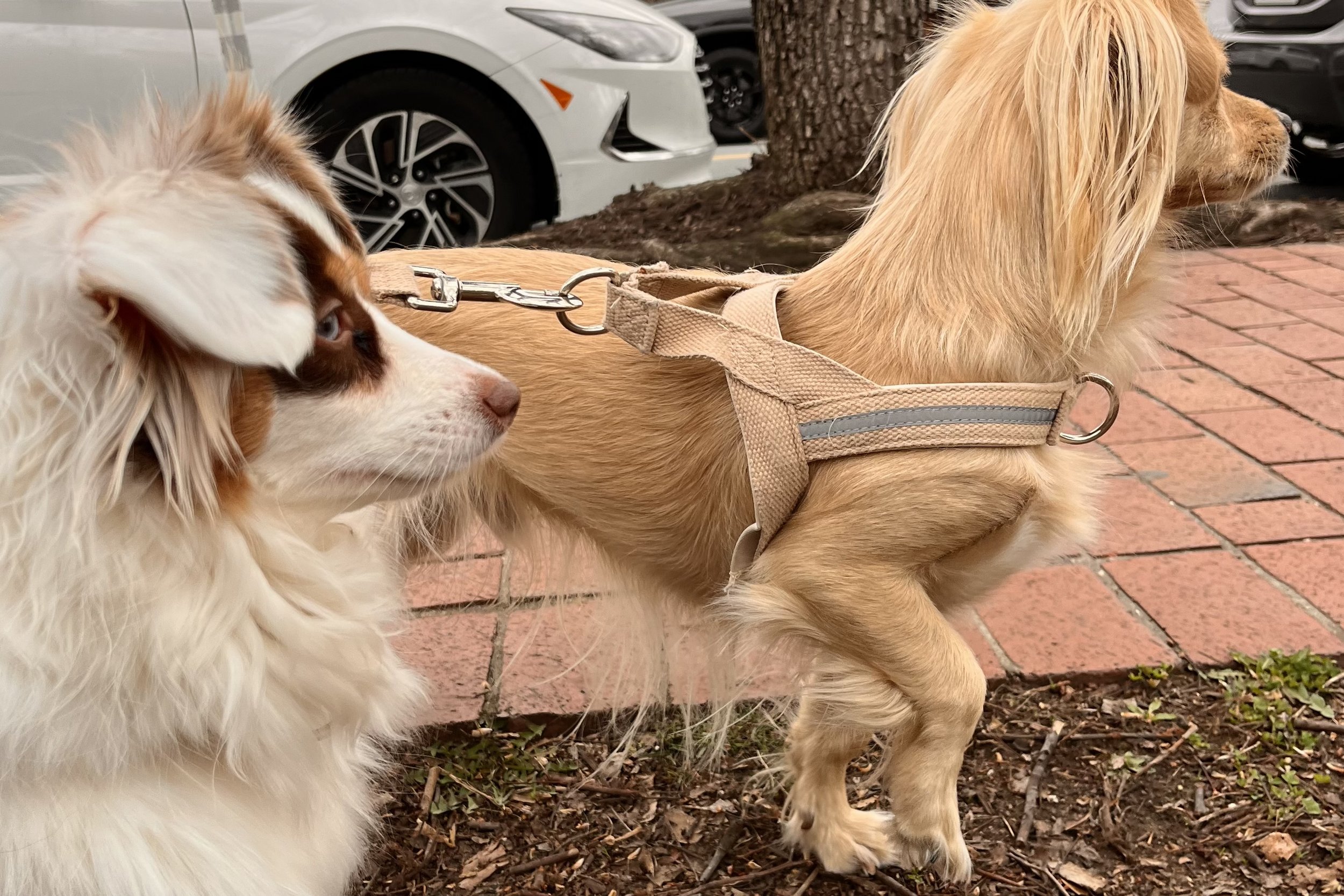
Both dogs pause and observe their surroundings, taking in movement, sound, and unfamiliar details during a walk.
On a familiar route, dogs already know what to expect. The surfaces, sounds, and usual patterns of movement require less interpretation, allowing them to move through the environment more easily.
In a new place, they may watch movement more closely, investigate unfamiliar smells and sounds, and continually adjust to what is happening around them. That attention continues throughout the outing rather than occurring only when they first arrive.
This is why a short walk somewhere new can be more tiring than a longer walk close to home. The distance may be shorter, but the mental effort is greater.
New Experiences That Can Tire Dogs Out Quickly
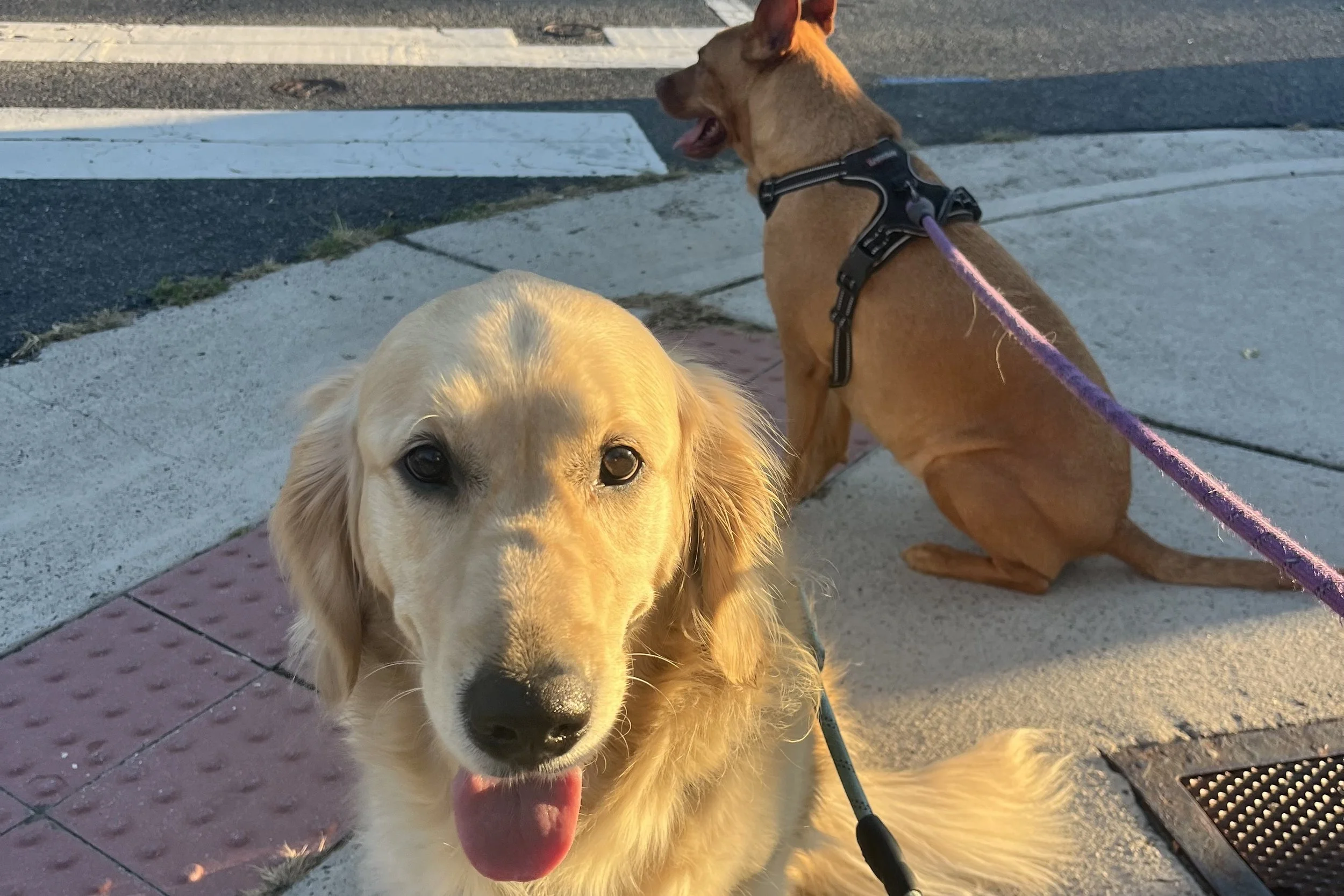
Even a short walk can feel tiring when dogs are taking in an unfamiliar environment.
A new experience does not have to be especially long or active to leave a dog tired. Common examples include:
a short walk through a new park
walking through a busier part of town
stopping inside a pet-friendly store
visiting someone else’s home
spending a few hours at doggy daycare
Each setting asks something different of a dog. Daycare can require constant social awareness, while a busy sidewalk may involve tracking people, dogs, traffic, and movement at close range. Even a quiet home or park can be mentally demanding when its smells, sounds, and layout are unfamiliar.
Signs Your Dog May Be Mentally Tired
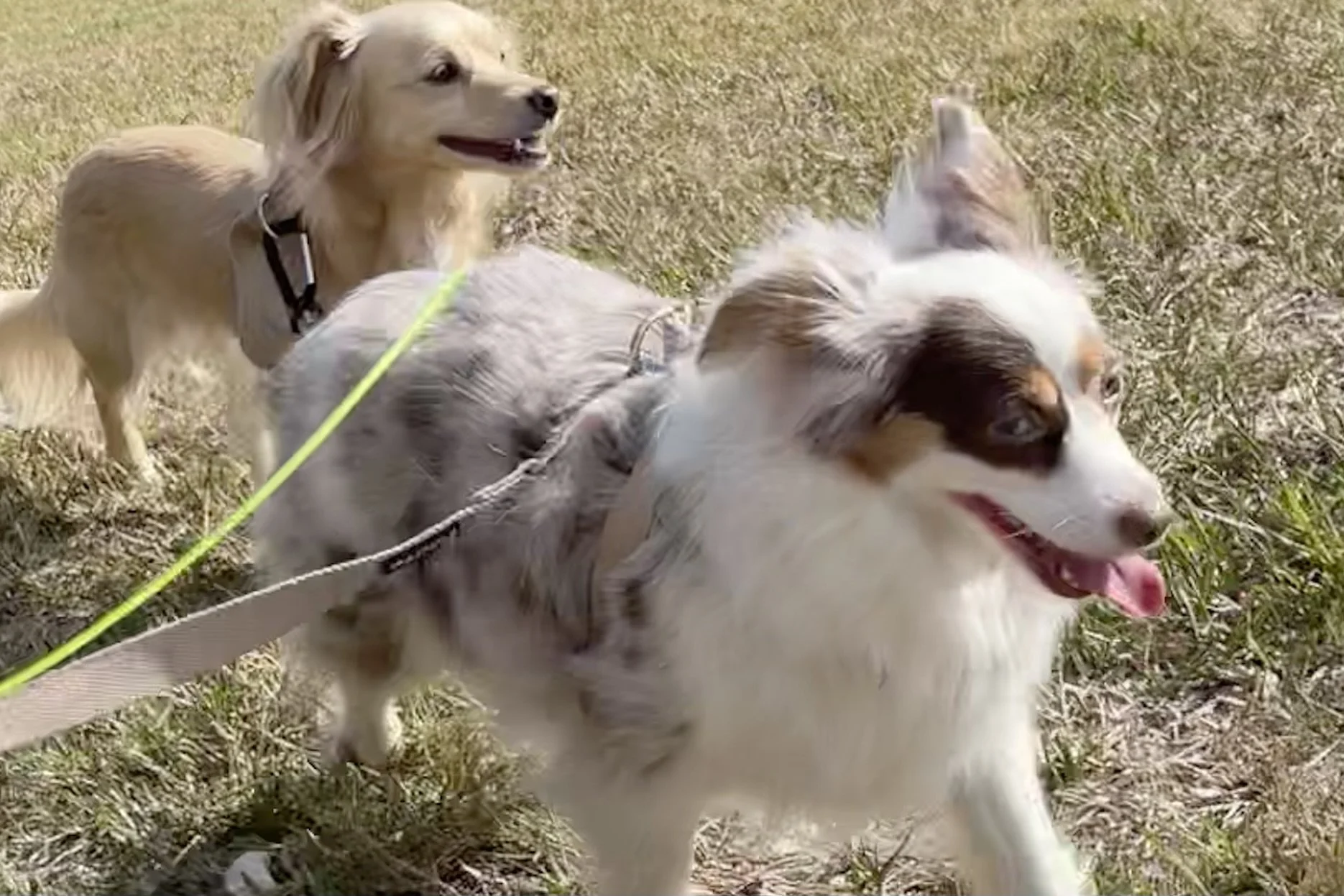
Moving forward through a new environment, where attention stays active even as the walk continues.
Mental fatigue does not always look like sleepiness while a dog is still out. You may first notice small changes in how they move or respond, such as:
slowing down or pausing more often
staying closer to you instead of moving ahead
scanning the surroundings
responding more slowly to familiar cues
hesitating at transitions or unfamiliar surfaces
becoming less interested in exploring or interacting
In a new park, a dog may slow down after the initial exploration. At daycare, they may become less socially engaged. On a busy sidewalk, they may hesitate when people, dogs, and movement become harder to track—something I also notice when small dogs struggle in busy environments.
Some dogs may even stop moving when they need more time to understand what is happening. This can resemble the behavior described in why dogs freeze or refuse to walk in new places, and it is not necessarily stubbornness.
Once home, a mentally tired dog may sleep more deeply, seek out a quiet place, or show less interest in additional activity for a while.
Why New Places Can Feel More Intense for Small Dogs
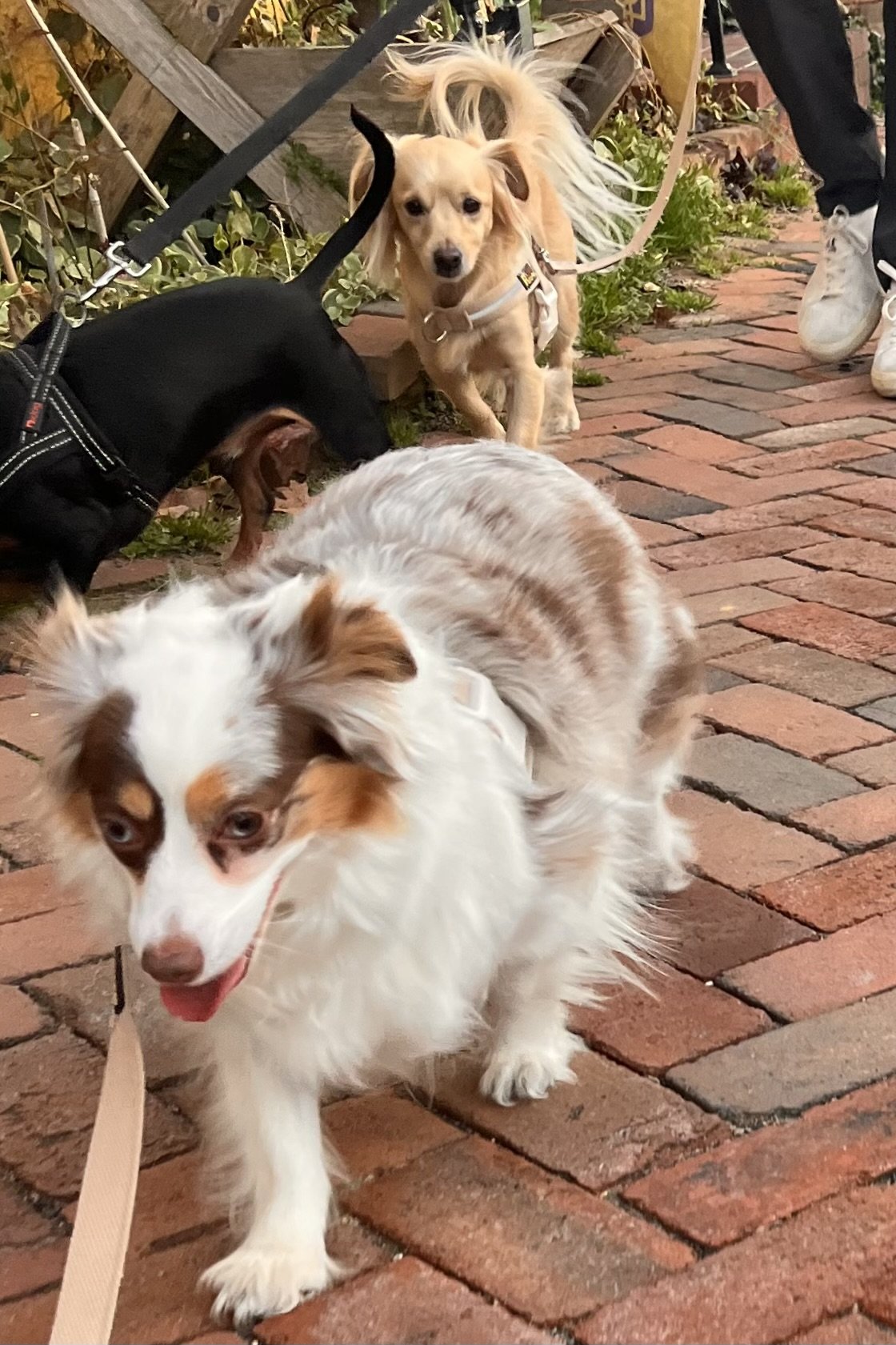
In a new environment, even simple moments require more attention — who’s nearby, what’s moving, and what to focus on next.
Small dogs experience busy environments much closer to the ground, where feet, wheels, unfamiliar surfaces, and larger dogs may all enter their space quickly. A sidewalk that feels open to us can feel much more crowded from their perspective.
I notice this with my own dogs in places where movement happens close around them. They may need to watch more carefully, adjust their path, or stay closer to me as we move through the area.
Not every small dog finds new places difficult, but their size can affect how much space they have and how easily they can move away from something unfamiliar. That added awareness can make a short outing more mentally tiring.
What to Do When Your Dog Is Tired After a Short Walk
If your dog comes home tired after a short outing somewhere new, it does not necessarily mean they need more exercise. They may need time to recover from everything they have just processed.
Afterward, I usually:
provide water and a quiet, comfortable place to rest
keep the remainder of the day relatively calm
avoid adding another busy outing
return to a familiar walking route next time
make the next new experience shorter or choose a quieter time to visit
It also helps to notice how long it takes your dog to return to their usual energy and behavior. That gives you a better sense of what they can comfortably handle and whether the next outing should be shorter, quieter, or more familiar.
As a place becomes familiar, the same outing may require less mental effort and begin to feel easier.
When Tiredness May Be More Than Mental Fatigue
Mental fatigue after a new experience is usually temporary. Your dog may sleep more than usual or prefer a quiet evening, but they should return to their normal energy and behavior after resting.
Tiredness should not automatically be attributed to a new environment if it is sudden, worsening, happens regularly on familiar walks, or continues longer than expected. Contact your veterinarian if you notice an unexplained change in your dog’s stamina or behavior. Difficulty breathing, pale or blue gums, or collapse require urgent veterinary care.
A Different Way to Think About Tiredness

At the end of the day, it’s not about doing more — it’s about having a space where everything can slow down again.
A short walk is not always a small experience for a dog. Distance tells us how far they traveled, but it does not tell us how much attention the outing required.
When your dog comes home tired from somewhere new, consider what they encountered along the way—not only how long they were out. Recognizing that difference can make it easier to choose outings that offer new experiences without asking them to process too much at once.
If you want to evaluate places this way before you go, the Small Dog Comfort Index looks at how space, movement, and the surrounding environment can affect a small dog’s experience.
