Dog Won’t Settle in a New Place? What Helps Them Adjust
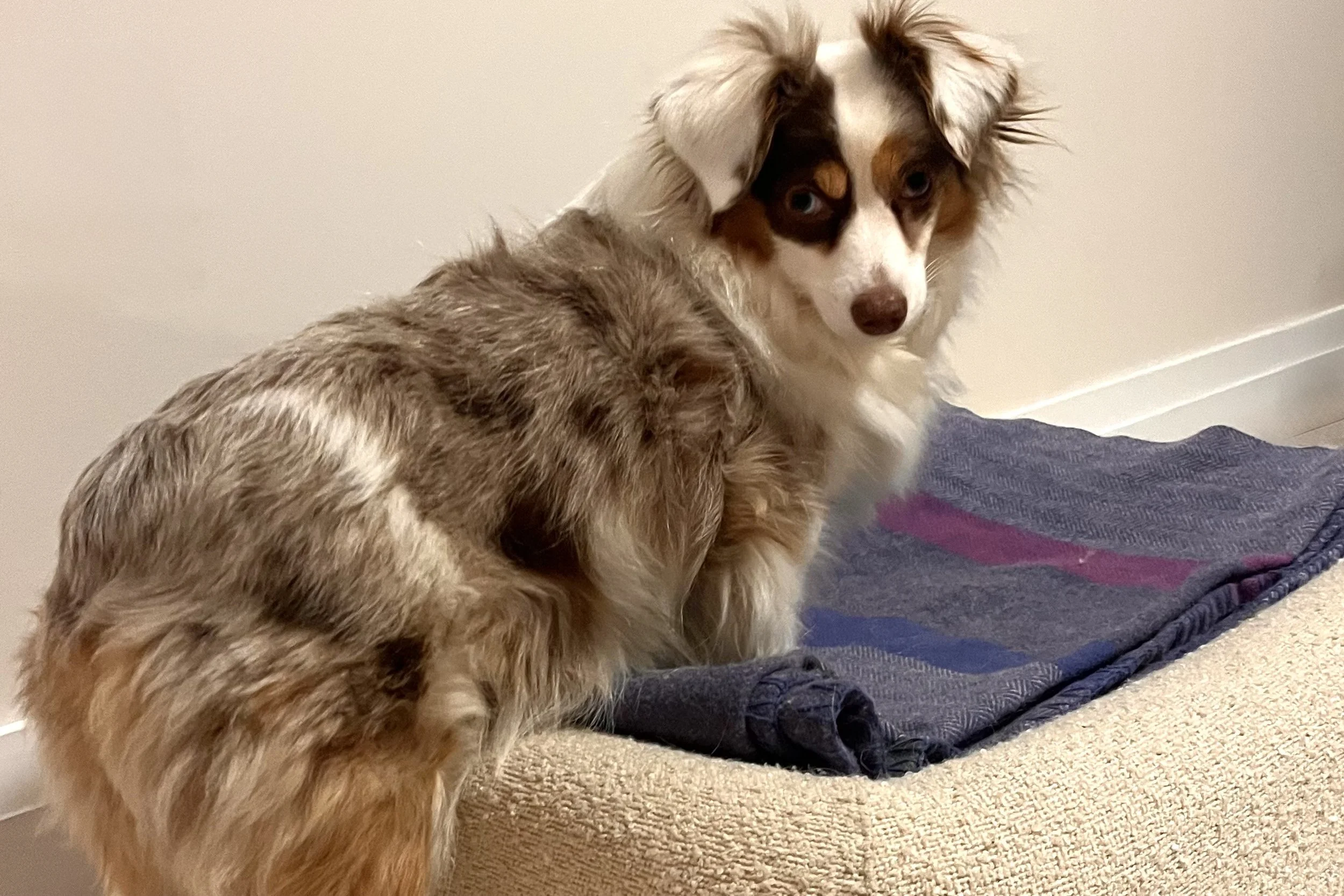
Arriving somewhere new with a dog doesn’t always go the way you expect.
You unpack.
You take a walk.
You sit down, thinking things will start to settle.
But your dog doesn’t.
You’ll often notice it when you arrive somewhere new, even for a short stay.
They keep moving.
Watching.
Staying just a little on edge.
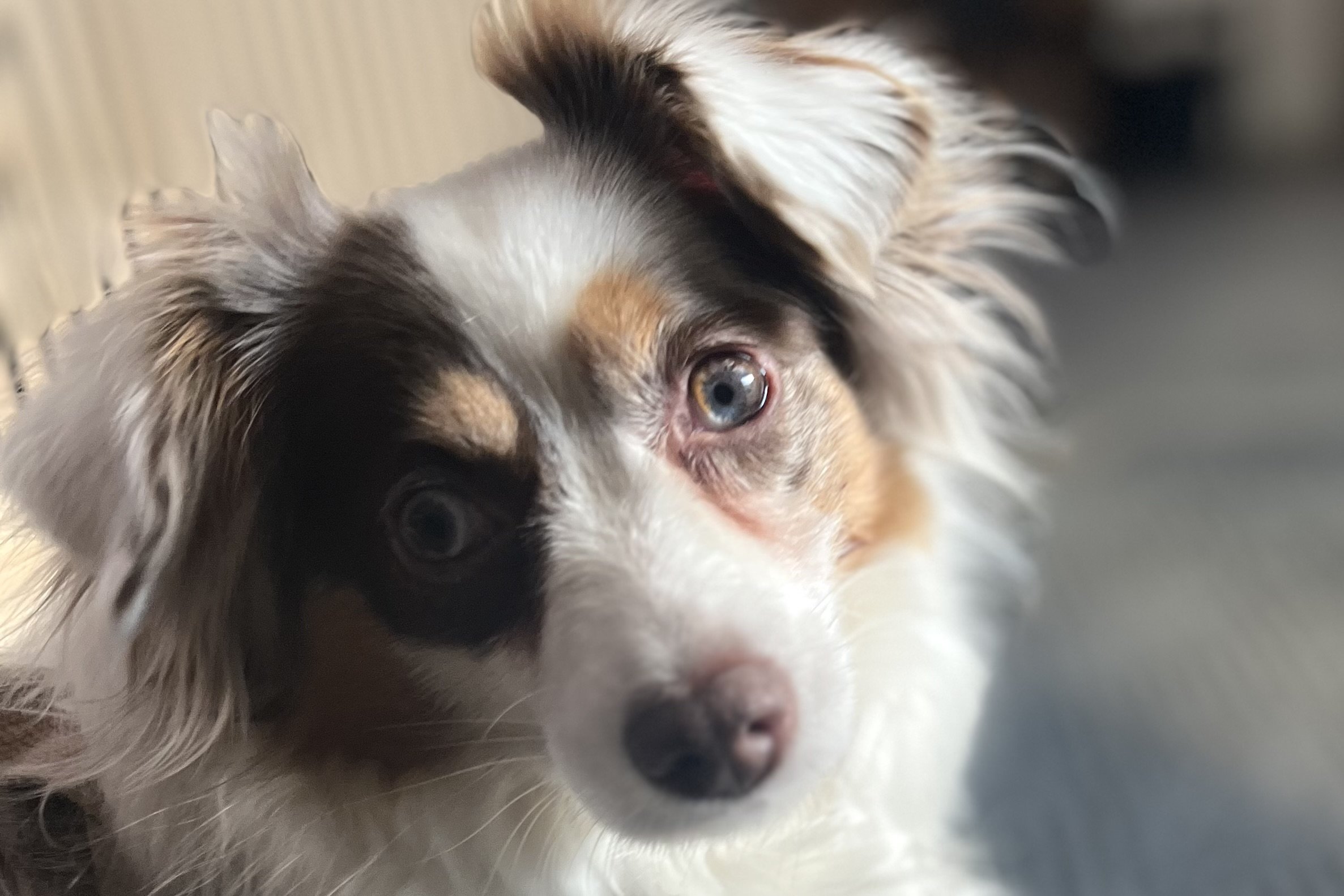
Still watching. Still taking it in.
This is what early settling can look like in a new space.
It can look like extra energy.
But more often, it’s uncertainty.
New places bring unfamiliar sounds, scents, and movement—especially noticeable for small dogs, who experience all of it closer to the ground.
Settling isn’t something you can rush.
It’s something you help them ease into.
What’s Actually Happening When Dogs Don’t Settle
A different space takes time to process.
Even after a walk, many dogs are still taking everything in:
new smells
shifting sounds
unfamiliar layout
It can show up as restlessness, or an inability to fully relax.
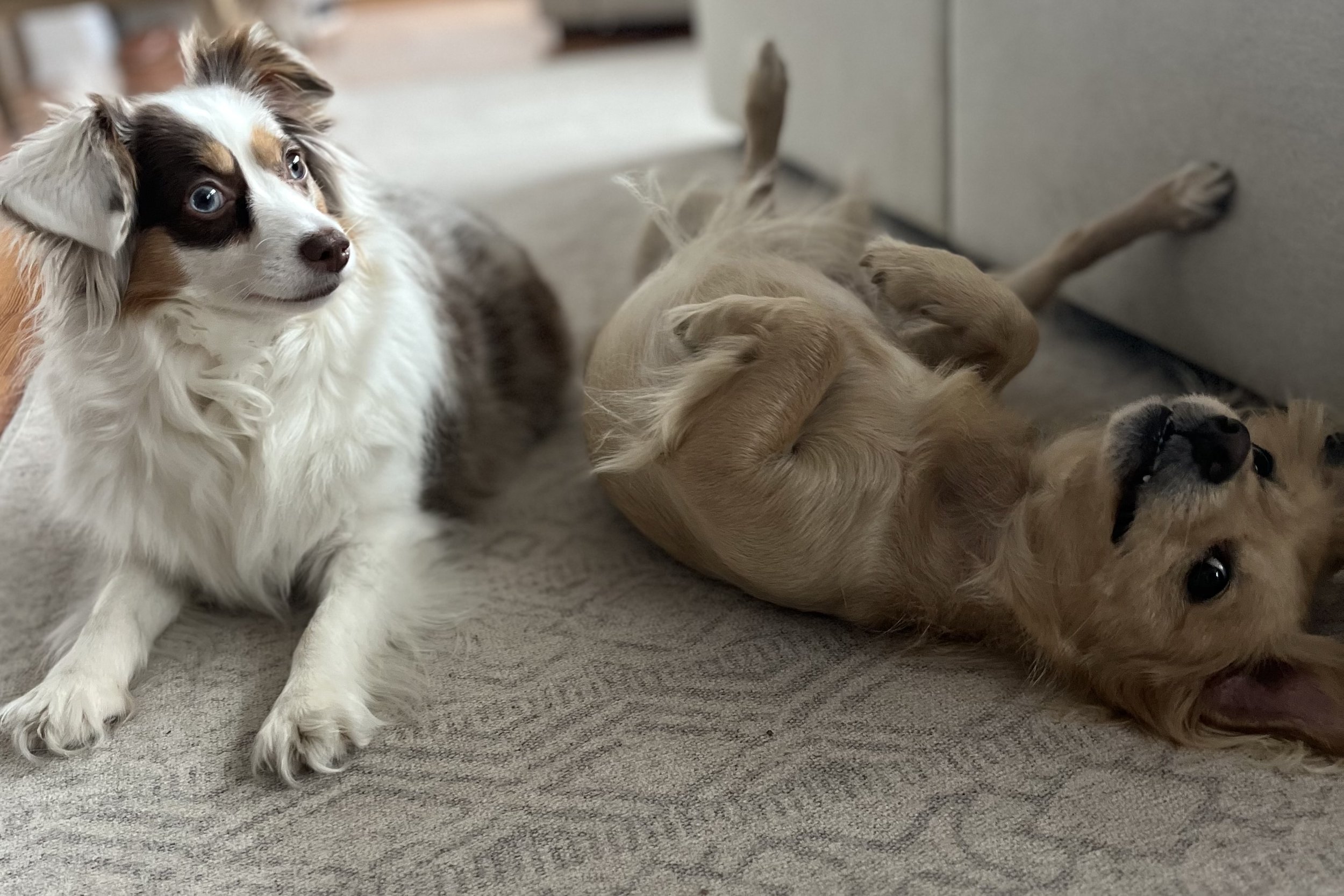
Settling doesn’t happen all at once—sometimes it looks like this.
They’re not refusing to settle.
They’re still adjusting.
For small dogs, that adjustment can take longer.
Everything feels more immediate.
More active.
Less predictable.
This is something I think about often through the lens of the Small Dog Comfort Index—a way of understanding how space, movement, and recovery affect how comfortable a place feels for a dog.
For a deeper look at why new environments can feel overwhelming, I go into more detail in Why Dogs Struggle During Travel.
And for how space and movement affect smaller dogs specifically, see Why Small Dogs Struggle on Busy Sidewalks.
What Settling Looks Like
Settling doesn’t start with sleep.
It starts with small shifts:
choosing a spot
pausing a little longer
checking the room less often
You might see them lie down, then get back up again.
That’s part of the process.
Those early pauses are what eventually lead to rest.
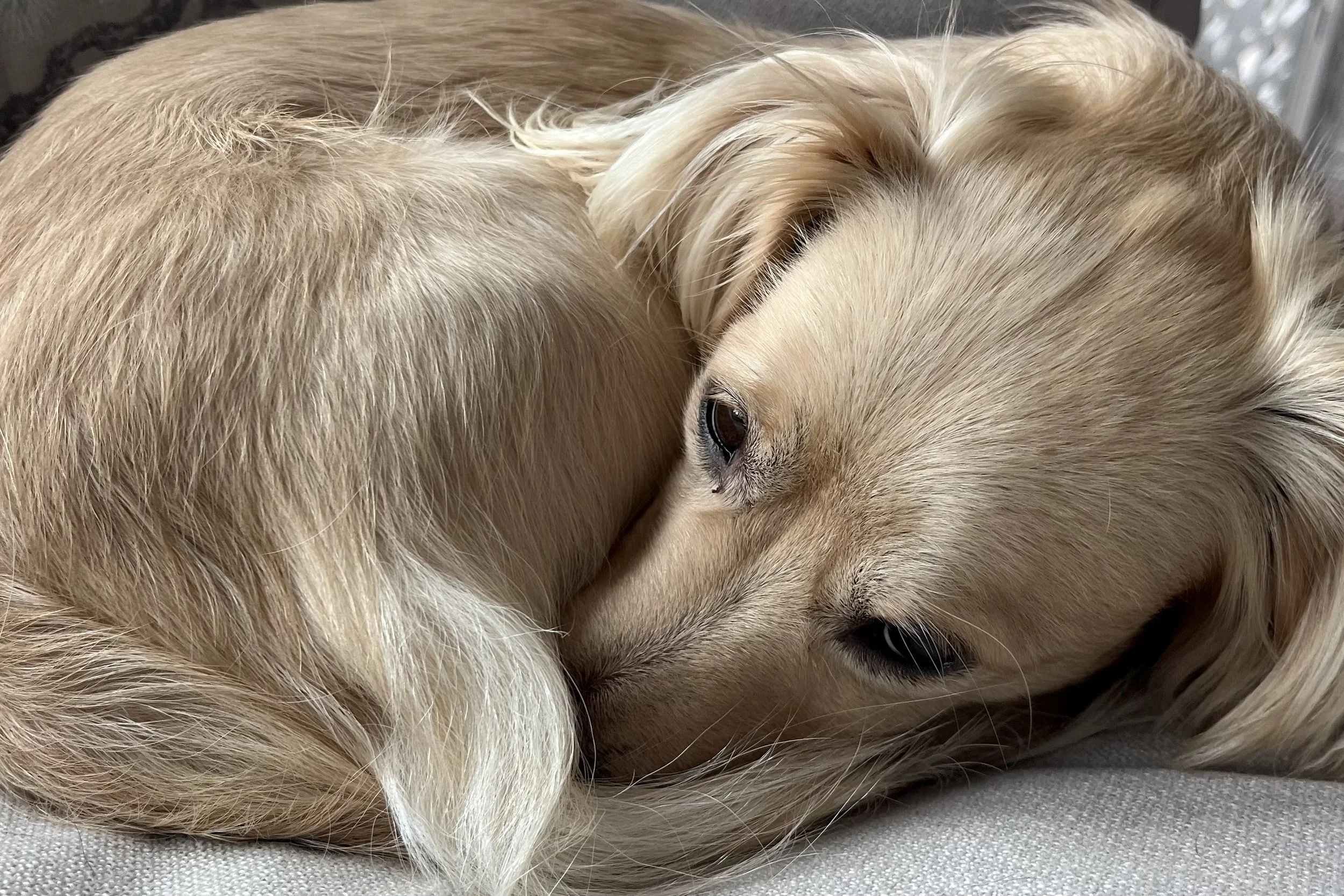
Almost settled.
Something to Focus On
When a dog is unsure, having something to focus on can help.
Not something exciting—
something steady.
Licking and chewing both create a slower rhythm.
A lick mat can help slow things down almost immediately, especially when it’s spread with something soft and frozen.
A fillable toy can work the same way, giving them something to work through at their own pace.
Longer-lasting chews can also help extend that calm, steady focus.
It’s not just distraction.
It’s a way to release that edge while staying in one place.
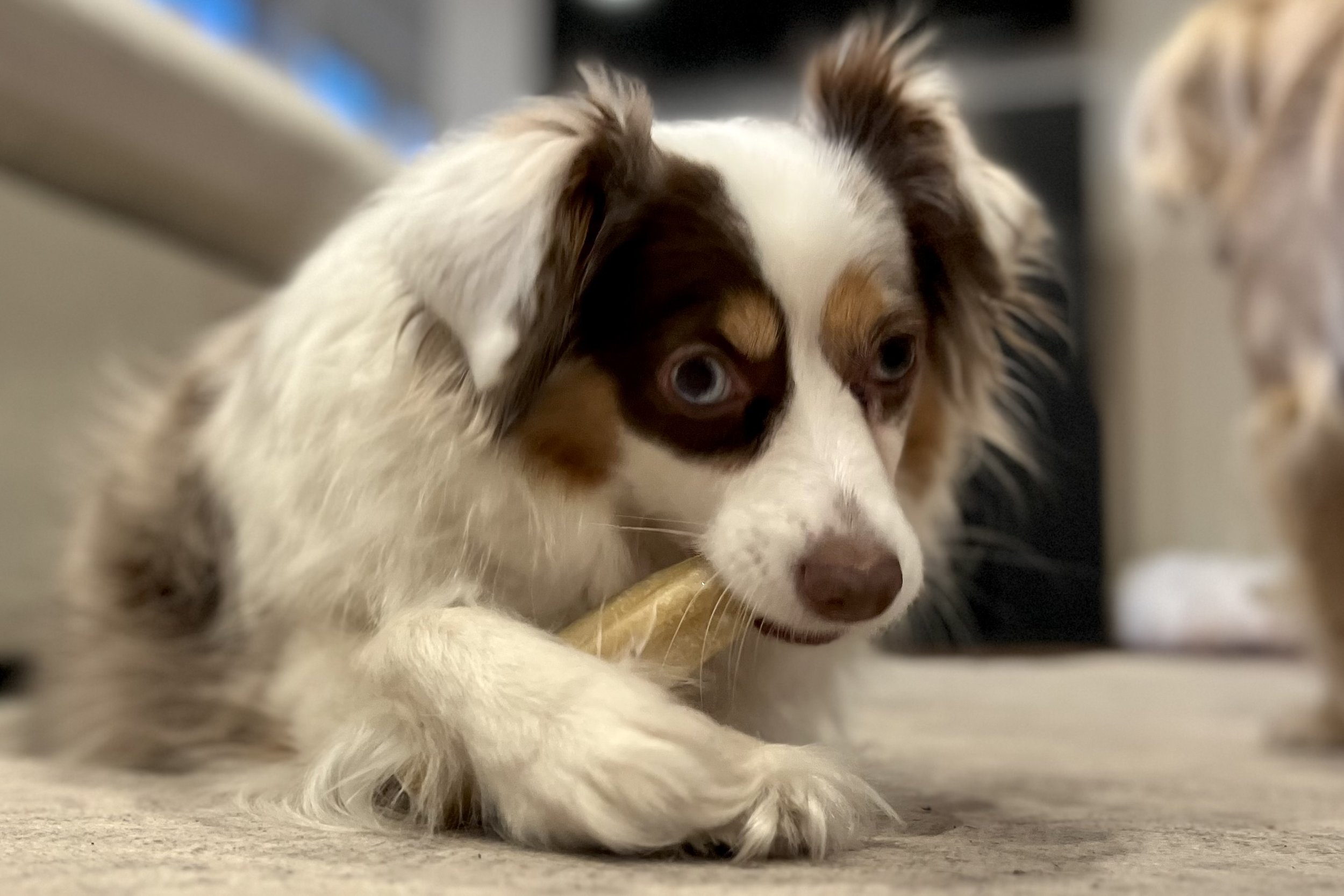
Part of the process.
Warmth and Gentle Pressure
Some dogs settle more easily when they feel physically contained.
A fleece blanket from home can help right away.
It carries a familiar scent and creates a defined space.
Some dogs will naturally curl into it.
Others respond to gentle pressure, like a wrap or a ThunderShirt .
It’s not about restriction.
It’s about reducing that feeling of exposure in a new space.
How Sound Changes the Space
New places can feel quieter—or sharper—than home.
Small sounds stand out more.
A low, steady background sound can soften that.
I’ll often leave on quiet nature sounds in the background—something steady and low—just to take the edge off the silence.
For some dogs, even a simple comfort toy with a heartbeat rhythm can help.
It adds a sense of presence, instead of emptiness.
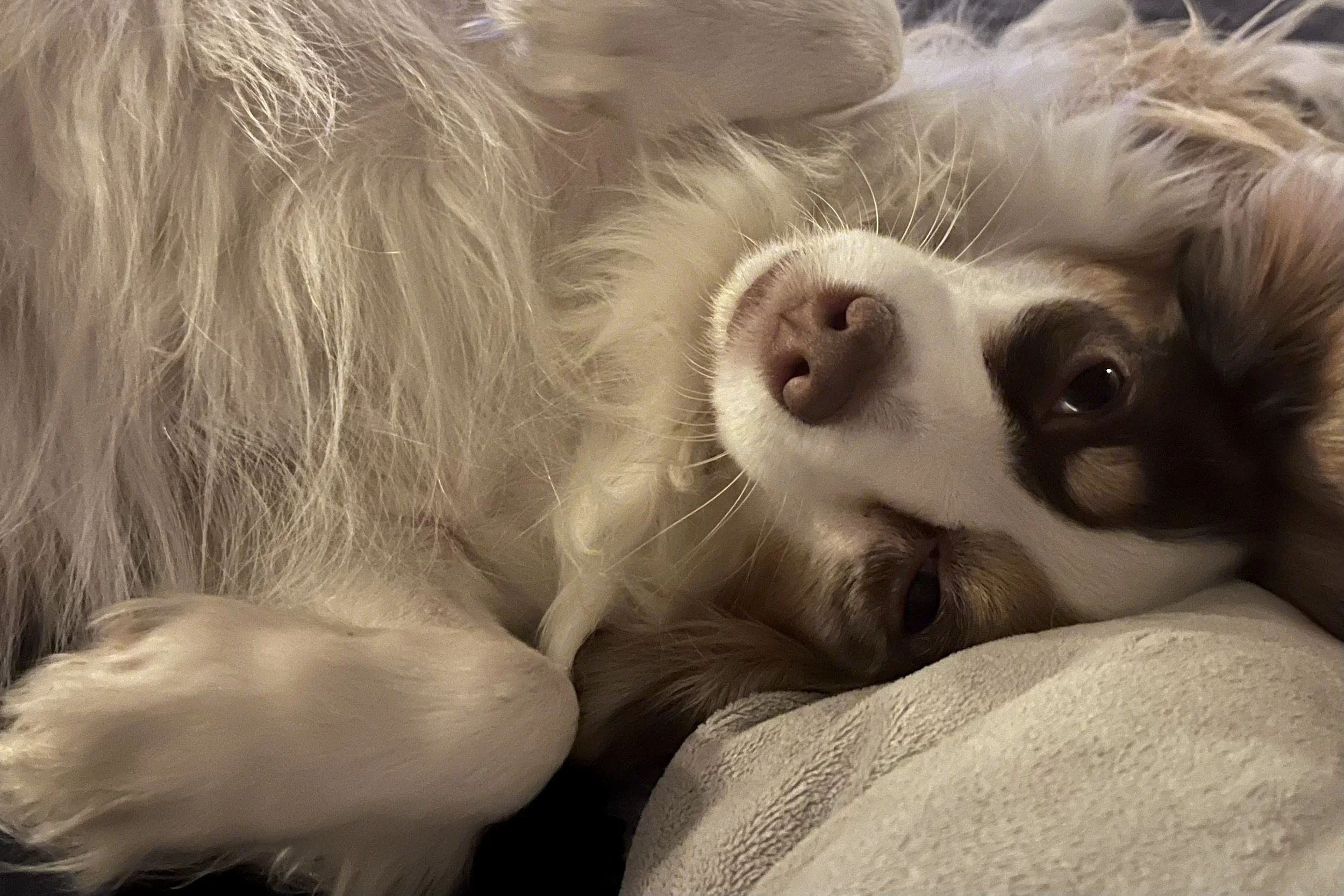
Fully settled.
A Place to Settle
Instead of leaving the whole space open, it helps to define one area.
A bed, a blanket, or even a mat they already use at home.
Placed somewhere slightly quieter.
Over time, they begin to return to that spot on their own.
That becomes their place to settle.
If you’re building out what to bring ahead of time, I’ve included a full list in Dog Travel Packing List for Better Trips.
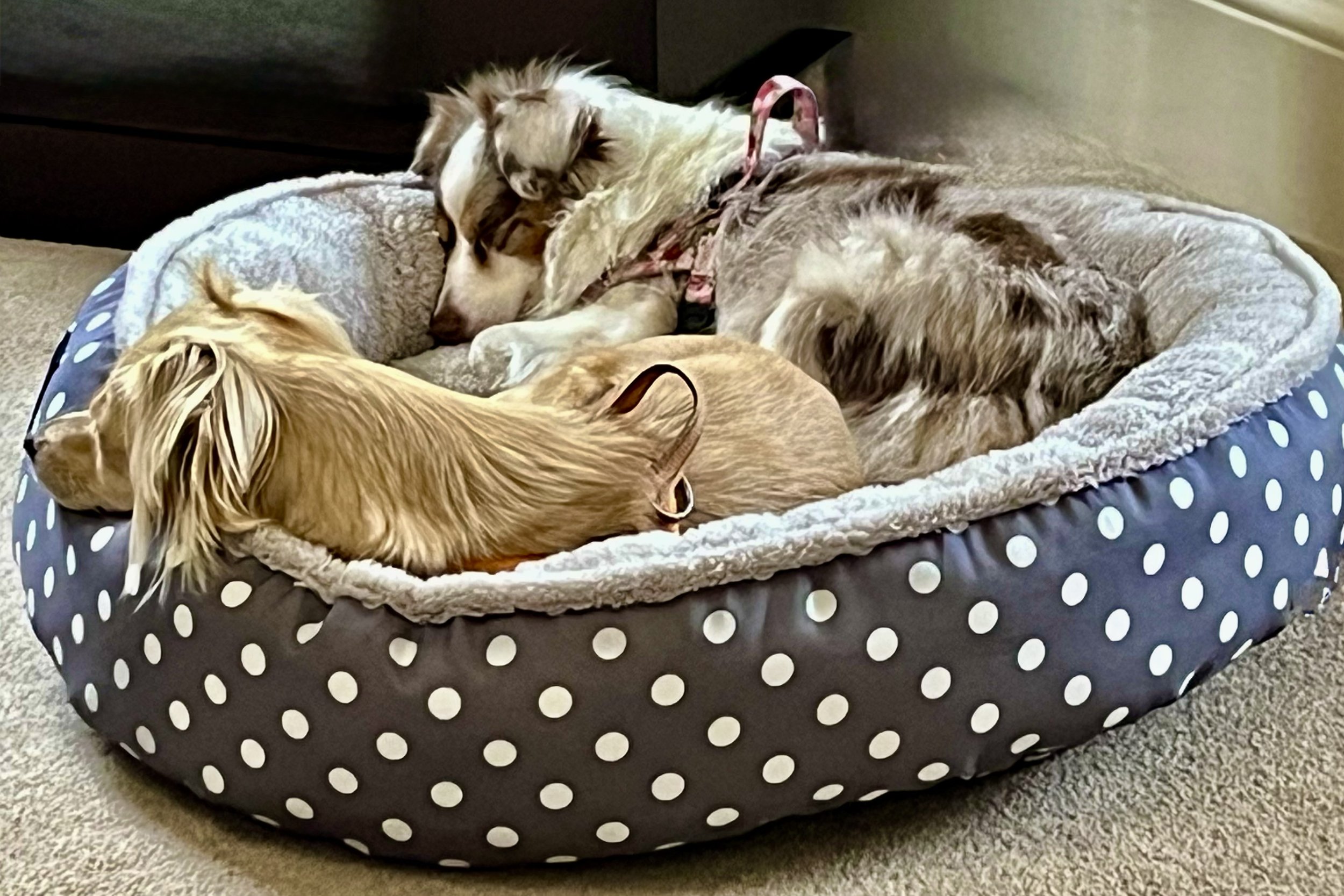
A familiar place makes it easier for them to settle.
The First 30 Minutes After Arrival
The beginning sets the tone.
This is when everything still feels new.
It helps to keep things simple:
a short walk
water
one familiar item
something to focus on
Then pause.
Let them take it in before doing more.
Helping Them Settle
When a dog doesn’t settle right away, it’s easy to assume something isn’t working.
But most of the time, they’re just adjusting.
Taking in a new place the only way they know how.
What helps isn’t doing more.
It’s giving them:
something steady
something familiar
and a little time
Calm doesn’t need to be forced.
It just needs the right conditions to show up.
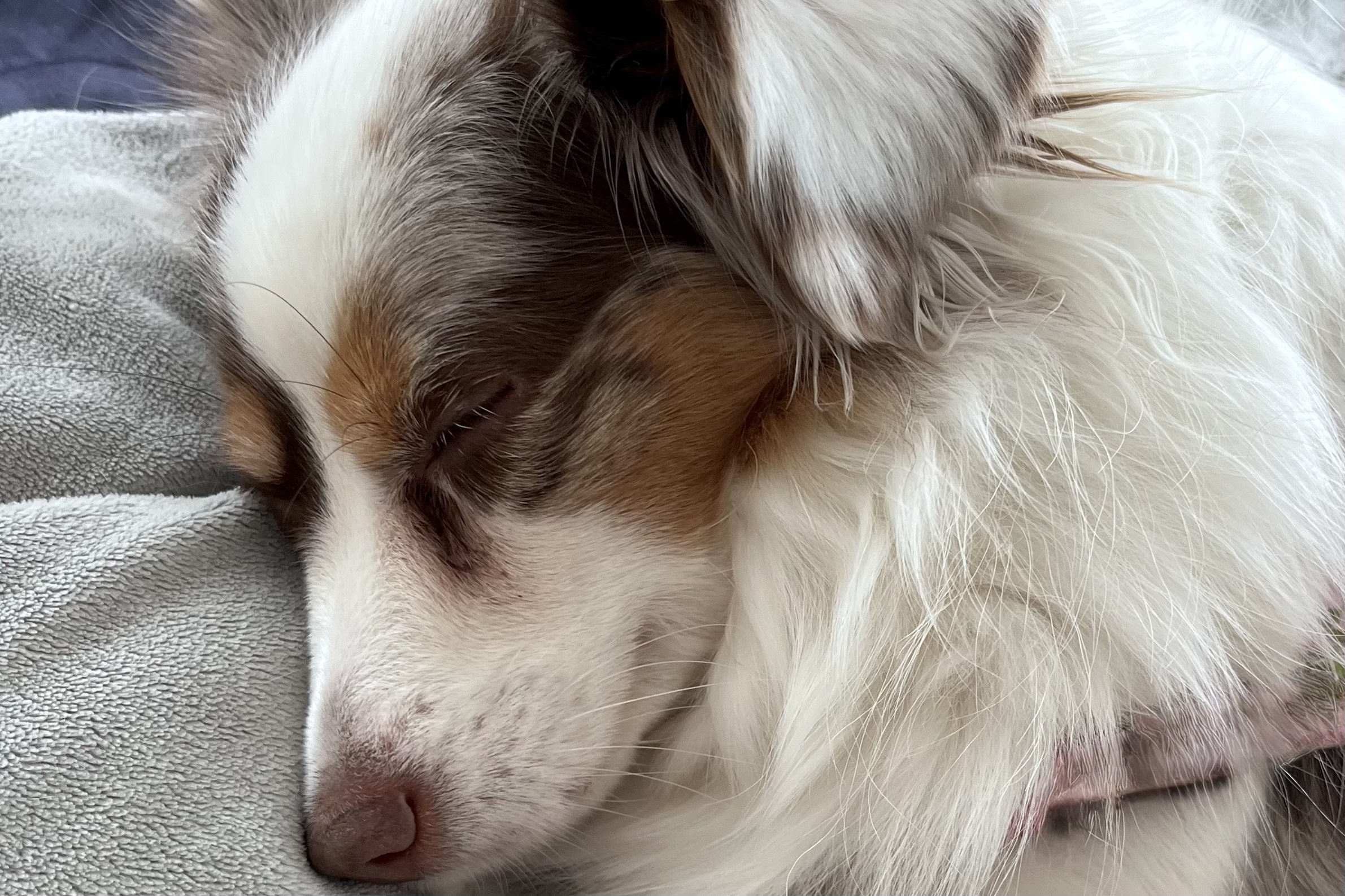
Finally settled.
A Few Things That Make the Biggest Difference
If your dog is having trouble settling in a new place, a few simple things tend to help the most:
A lick mat for calming, repetitive focus
A fillable toy to keep them gently engaged while they adjust
A long-lasting chew (like yak cheese chews) for slower decompression
A familiar blanket or bed that smells like home
A gentle wrap (like a ThunderShirt) for dogs who need extra support
