Why Dogs Can’t Sleep in a New Place (and What Helps at Night)
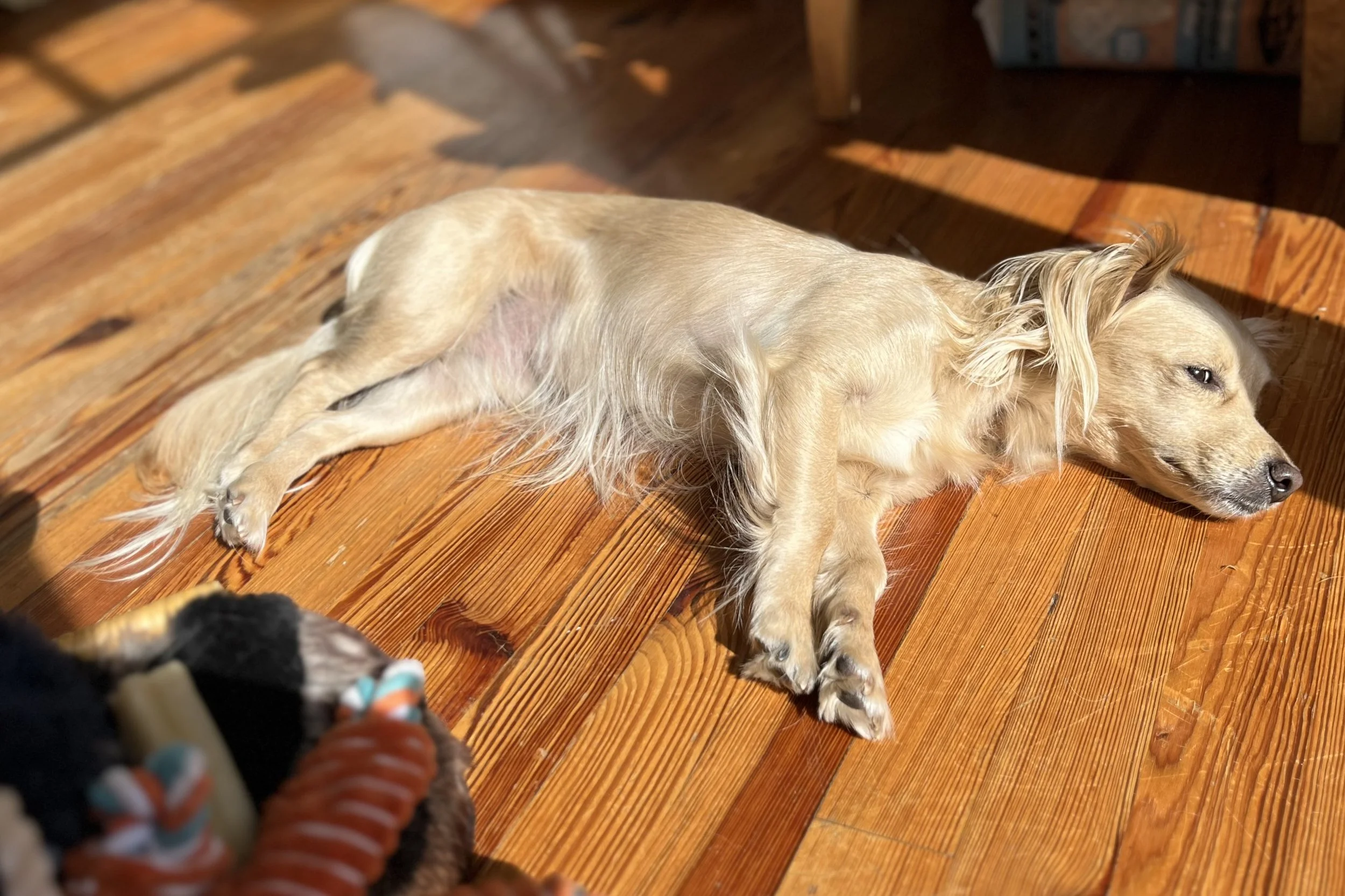
All day, your dog may seem like they’re doing fine.
They walk, explore, pause, and move through a new place without much trouble.
But then night comes — and everything changes.
Even in a place they’ve just spent the entire day moving through.
The pacing starts. Settling doesn’t stick. Every sound seems to matter.
What looked like a smooth adjustment during the day suddenly feels much harder.
This is a pattern that’s easy to miss:
a dog can move through a new place… and still not be able to sleep in it.
Many dogs struggle to sleep in a new place—even after a full day of activity—and it often shows up most clearly at night.
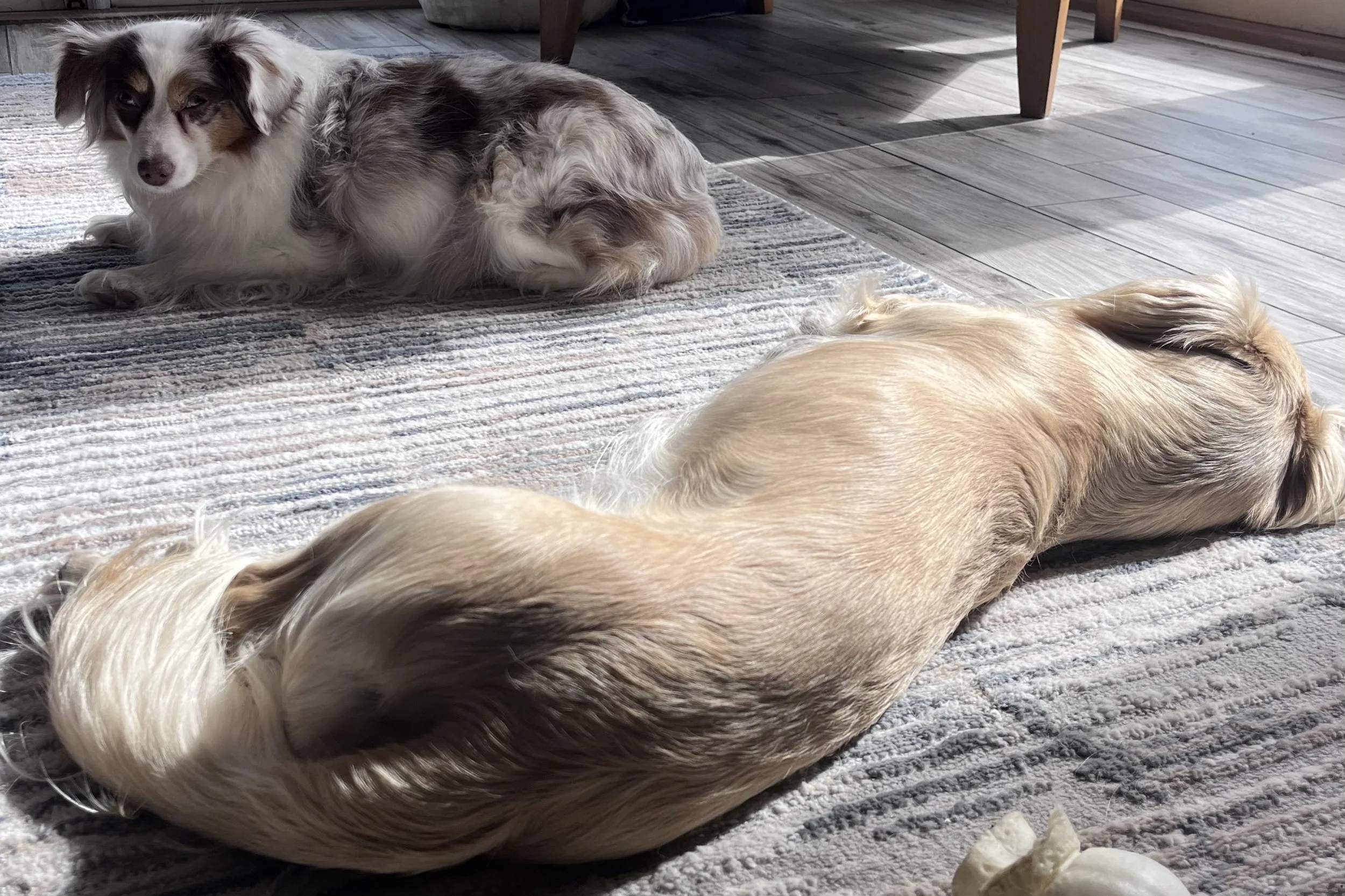
At first, they don’t settle—they keep watching, moving, and taking everything in.
Why Night Feels Different in a New Place
At night in a new place, the conditions change.
During the day, your dog is constantly moving — walking, turning, stopping, and continuing on. That movement gives them a way to process what they’re experiencing as they go.
At night, that stops.
They’re no longer moving through the space. They’re staying in one spot.
And in a new environment, that’s harder.
Instead of passing by sounds, they’re hearing them from a fixed position.
Instead of moving past unfamiliar details, they’re sitting with them.
Sounds that didn’t stand out earlier — an ice machine, a hallway door, unfamiliar mechanical noise — become more noticeable.
There’s less to do—and more to notice.
When a Dog Can Move Through a Place… But Not Sleep in It
This doesn’t always look like obvious anxiety.
Some dogs will lie down, then get back up again.
They may circle, reposition, or pause as if they’re trying to settle — but don’t stay there for long.
You might notice them reacting to small sounds that didn’t seem to matter earlier.
Or shifting locations repeatedly, without committing to one spot.
They’re not refusing to rest.
They’re still trying to figure out where rest actually happens — in a place they don’t fully recognize yet.
This often begins earlier in the day, which I go into more in Why Dogs Struggle During Travel.
And if your dog is having trouble settling even before bedtime, Dog Won’t Settle in a New Place? What Actually Helps Them Adjust breaks that down more fully.
What Actually Helps Dogs Sleep in a New Place
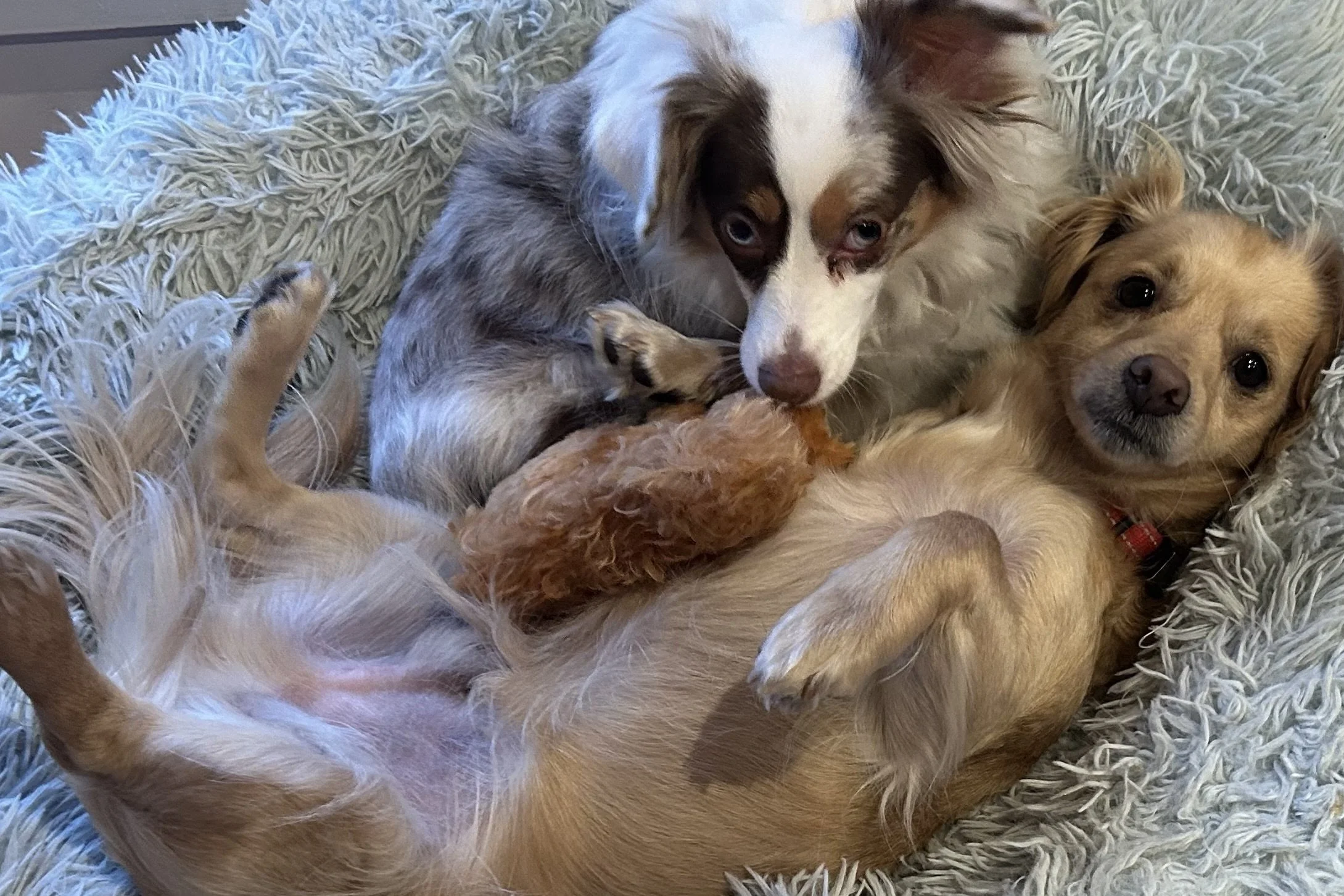
A familiar, comfortable spot can make it easier for a dog to start letting their guard down.
Create a Clear Sleep Space
In a new place, dogs don’t automatically know where sleep is supposed to happen.
Bringing something familiar — like a small travel dog bed or a blanket that smells like home — helps define that space.
It doesn’t have to be elaborate.
What matters is that it feels recognizable and stays consistent from night to night.
Add a Wind-Down Activity
Before sleep, many dogs need a way to release the last layer of alertness.
A long-lasting chew like a yak cheese chew or a lick mat with something spreadable can help shift them out of scanning mode and into a more settled state.
This works less as distraction, and more as a transition into rest.
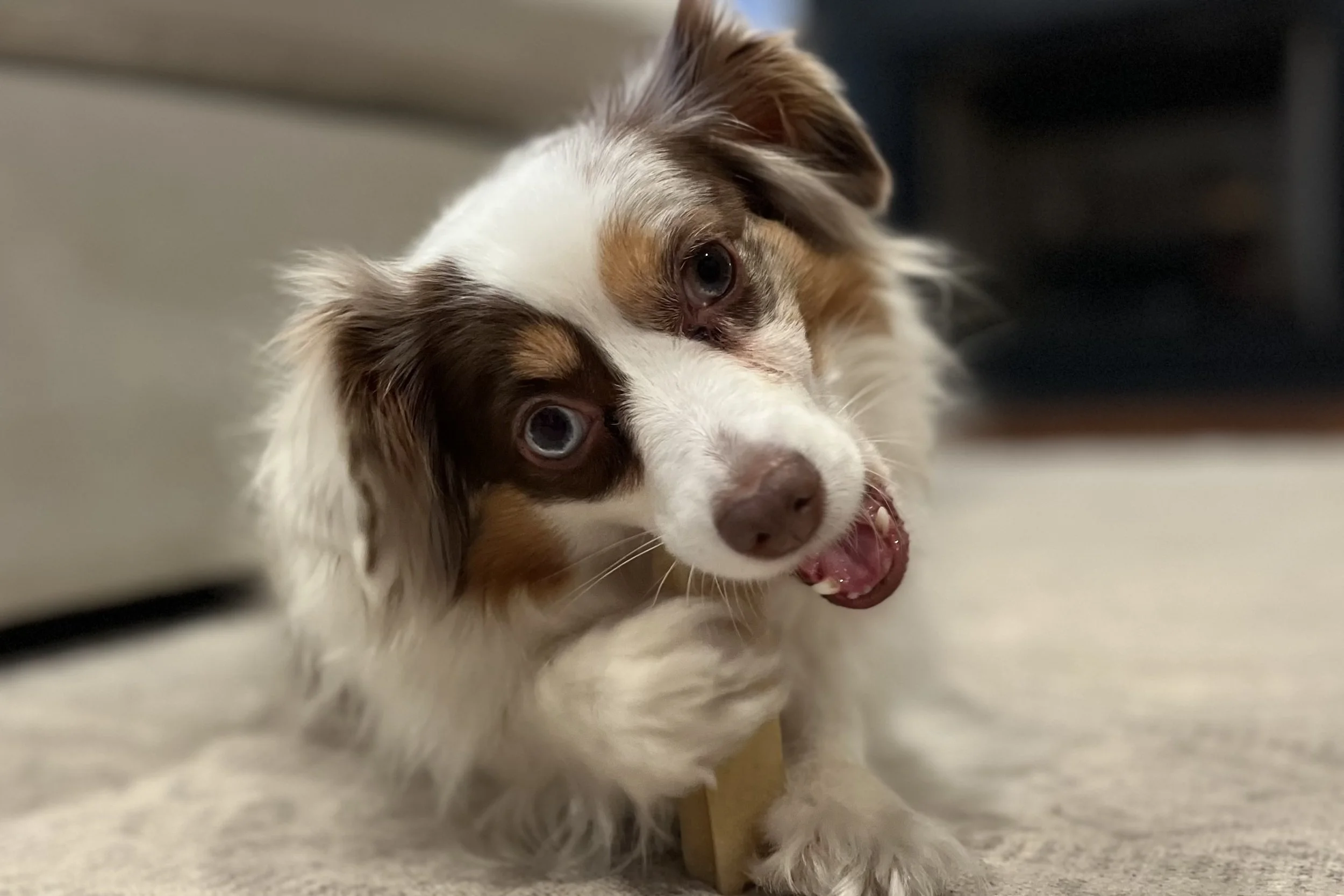
Slow, repetitive actions like chewing can help shift them out of that restless state.
Reduce What They Can React To
At night in a new place, small sounds carry more weight.
Positioning your dog’s sleep space away from doors, hallways, or shared walls can make a noticeable difference.
In some cases, adding consistent background sound — like a fan or portable white noise machine — helps soften unpredictable noise.
Keep the Routine Predictable
Even in a new place, the sequence of events can stay familiar.
The same feeding pattern. The same wind-down activity. The same general flow into the evening.
Dogs often settle more easily when the pattern around sleep feels known — even if the space itself does not.
Add Extra Support When Needed
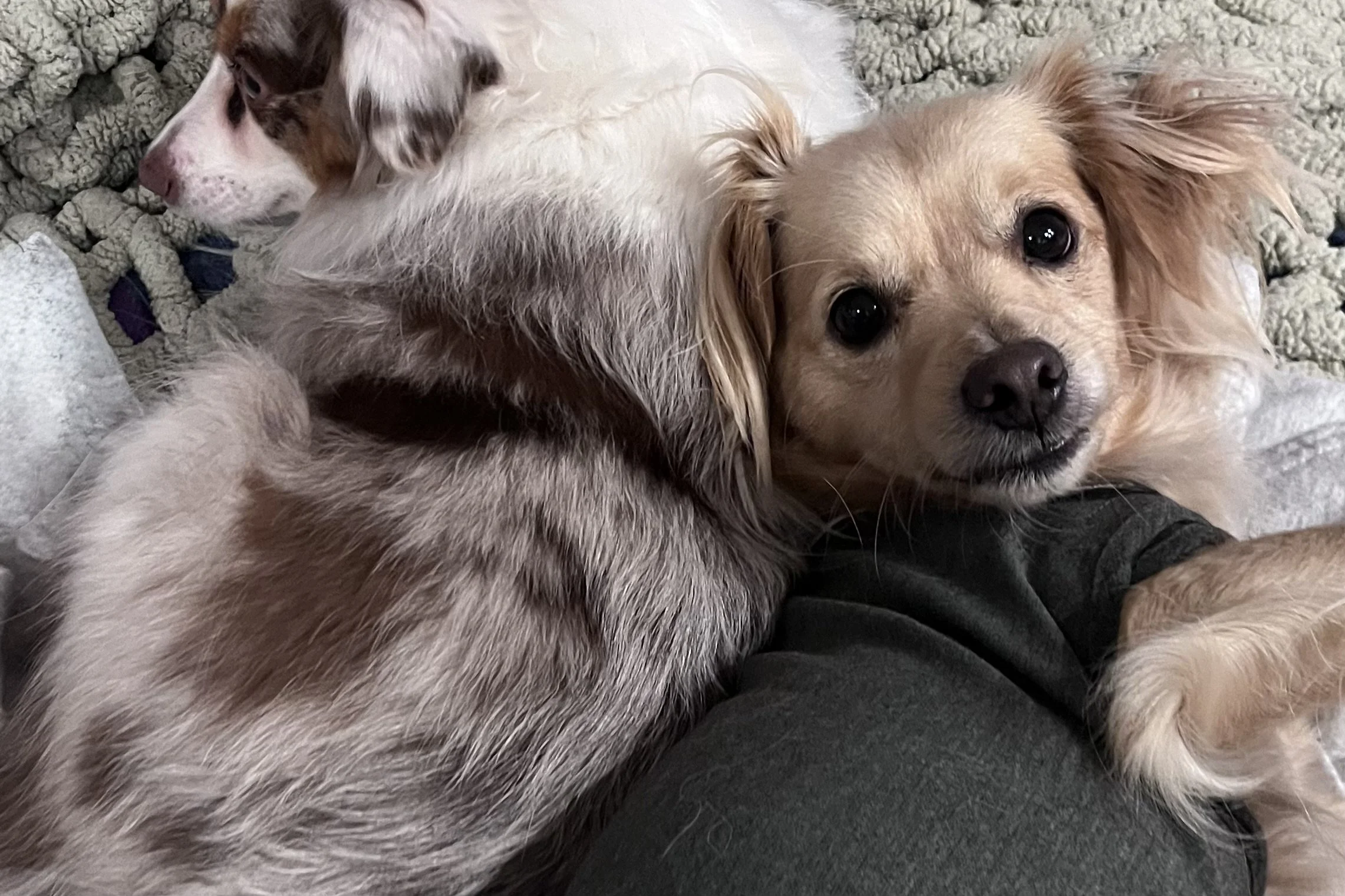
For some dogs, gentle pressure can add an extra layer of reassurance.
Some dogs need a little extra support during that transition.
For my dog Archie, a pressure wrap like a ThunderShirt makes a noticeable difference. It helps take the edge off that heightened awareness, especially in a new place at night.
Other dogs respond well to calming chews, which can help reduce that level of alertness before sleep.
Some may also settle more easily with a heartbeat-style plush toy, which provides a steady, consistent presence and can reduce restlessness in a new place at night.
These tools aren’t always necessary—but for some dogs, they can make it easier to settle while the environment still feels unfamiliar.
Why More Exercise Doesn’t Always Fix It
It’s easy to assume that if a dog is restless at night in a new place, they just need more activity during the day.
But physical tiredness and the ability to settle are not the same thing.
A dog can be fully exercised — and still not feel ready to rest.
Sleep requires a different kind of certainty.
Physical tiredness alone doesn’t always lead to rest — something I explain more in Why Dogs Get Tired After Travel.
Not just movement, but a clear sense of where to stop — even in a place that still feels unfamiliar.
When Sleep Starts to Fall Into Place
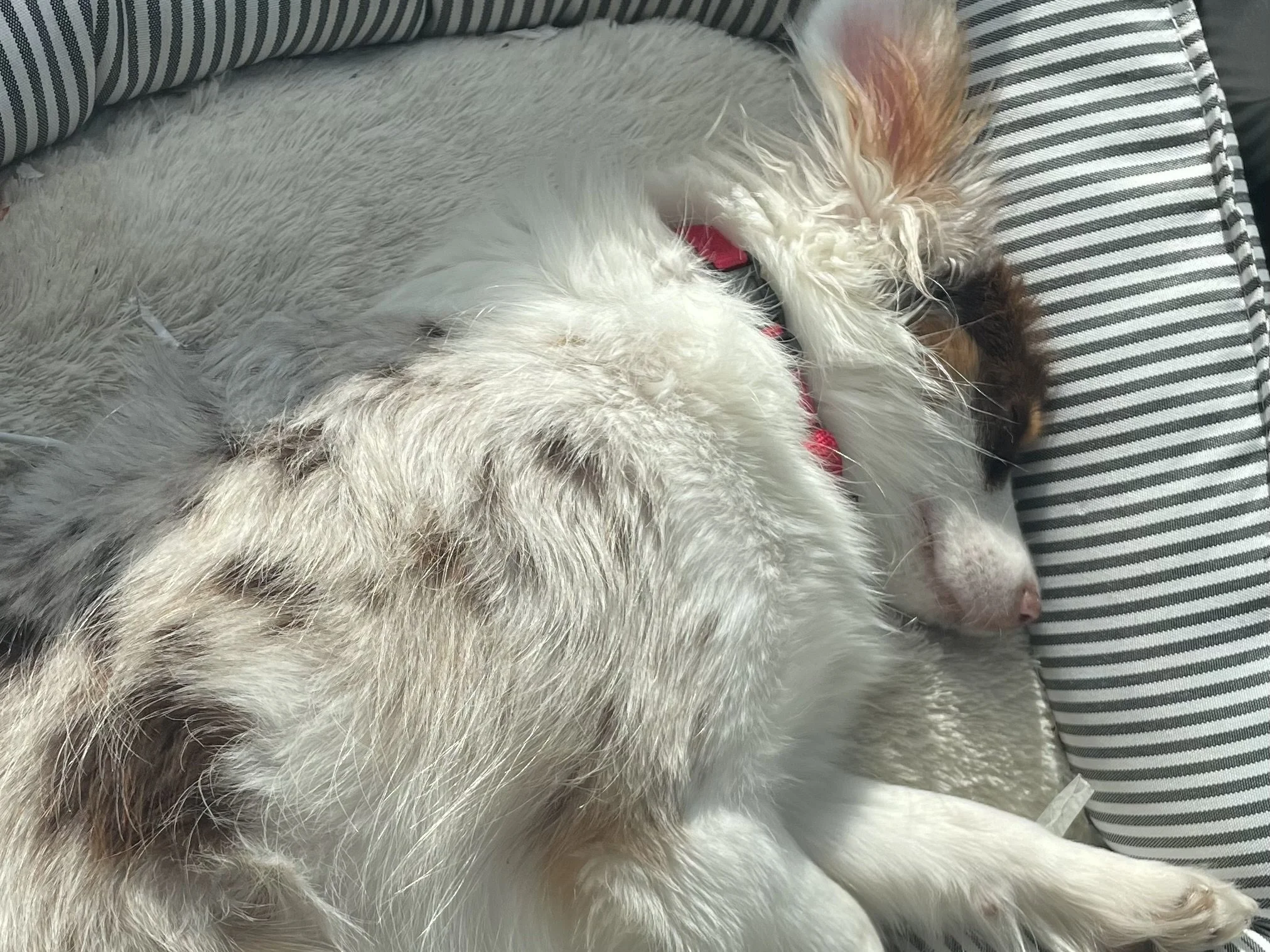
Eventually, the movement slows—and rest finally takes over.
In a new place, everything starts out as unfamiliar — especially at night.
Sounds stand out because they haven’t been heard before, or because the dog doesn’t yet know what they mean.
Over time, that changes.
The same sounds repeat — a hallway door, an ice machine, the rhythm of the building — and nothing follows them.
As the environment becomes more familiar, dogs start to react less to what they’re hearing and noticing.
That’s what makes it possible for them to settle into sleep.
You may notice your dog staying in one spot longer, reacting less, or settling without getting back up.
That’s often when the space starts to feel predictable.
If your dog is having trouble sleeping in a new place, these tend to help the most:
A lick mat for calming, repetitive focus
A fillable toy for quiet engagement
A long-lasting chew (like yak cheese chews)
A white noise machine to soften unfamiliar sounds
A gentle wrap (like a ThunderShirt)
A heartbeat-style plush for added reassurance
