Why Won’t My Dog Lie Down in the Car? (And What Helps)
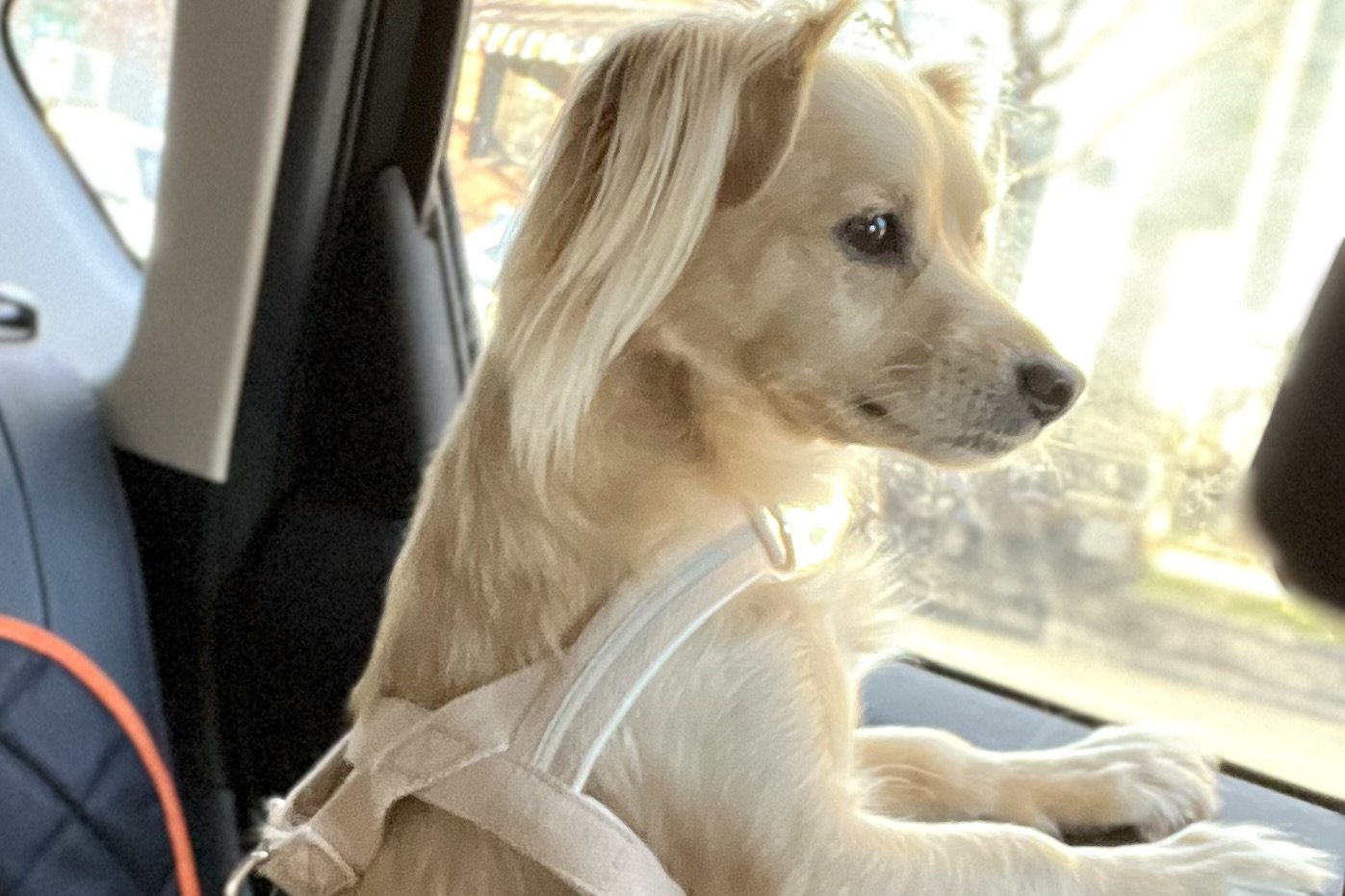
Archie staying upright and watching through the window instead of settling into the ride.
If your dog won’t lie down in the car, stays upright for the entire ride, or keeps shifting positions, they may not feel stable or relaxed enough to rest.
Some dogs remain standing or sitting because they are bracing against the car’s movement. Others stay upright so they can watch everything outside. Anxiety, overstimulation, motion sickness, physical discomfort, or a car setup that doesn’t provide a secure place to rest can all contribute.
A dog can look calm in the car—sitting quietly without barking or pacing—and still not be fully settled.
You may notice your dog:
standing or sitting for most of the drive
lying down briefly and then getting back up
shifting whenever the car turns or stops
panting, watching or remaining unusually alert
trying to move toward the front of the car
With Archie and Saydie, the behavior looks different. Archie is more likely to keep adjusting and can become carsick when he isn’t stable. Saydie tends to remain upright and watchful until she feels secure enough to relax.
Why Won’t My Dog Lie Down in the Car?
A dog may resist lying down when the surface feels unstable, slippery or poorly defined. Lying down can also make it harder to brace against turns or monitor movement outside the windows.
For some dogs, the problem is primarily physical stability. For others, it is alertness, anxiety or nausea. Watching what happens alongside the behavior can help you distinguish between them.
If your dog suddenly stops lying down in the car, seems painful, struggles to change position, or develops symptoms such as heavy drooling, repeated swallowing or vomiting, contact your veterinarian. A sudden change may involve discomfort or motion sickness rather than the car setup alone.
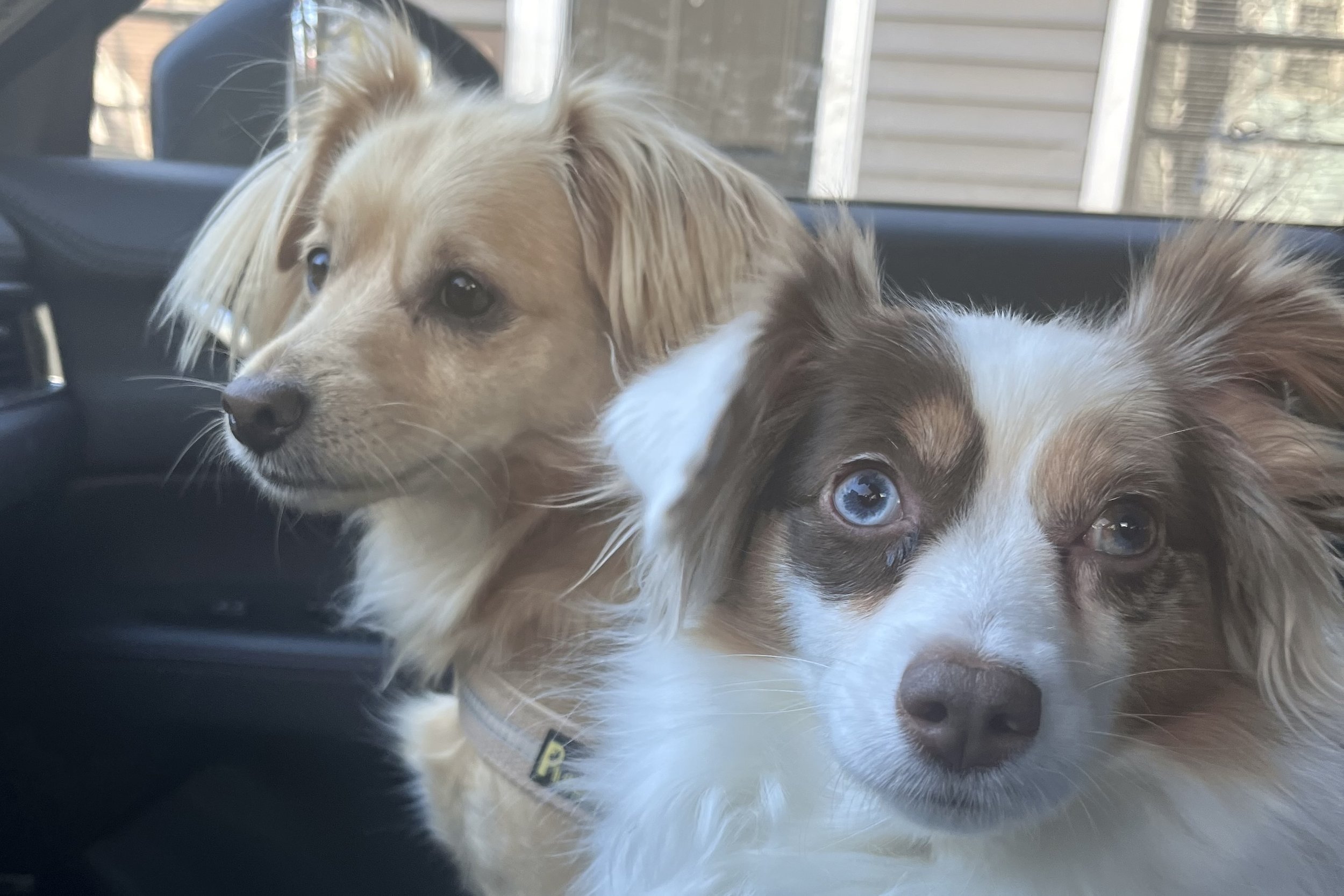
A typical backseat setup — calm on the surface, but not always fully settled.
What Often Gets Missed in Car Setups
Many car setups are built primarily around safety or convenience.
A seat cover.
A harness clip.
A space in the back seat.
All of that matters.
But it doesn’t automatically create a space where a dog can relax.
What’s often missing is a defined place within that setup.
A defined place can be as simple as a structured car seat or a firm bed that gives your dog a clear boundary within the space.
Without that defined space, some dogs continue shifting instead of fully settling.
You’ll often notice it in small ways:
staying upright longer than expected
lying down briefly, then sitting back up
repositioning instead of fully relaxing
These behaviors can be a sign that the space doesn’t support comfortable rest yet—especially when your dog otherwise appears calm and well.
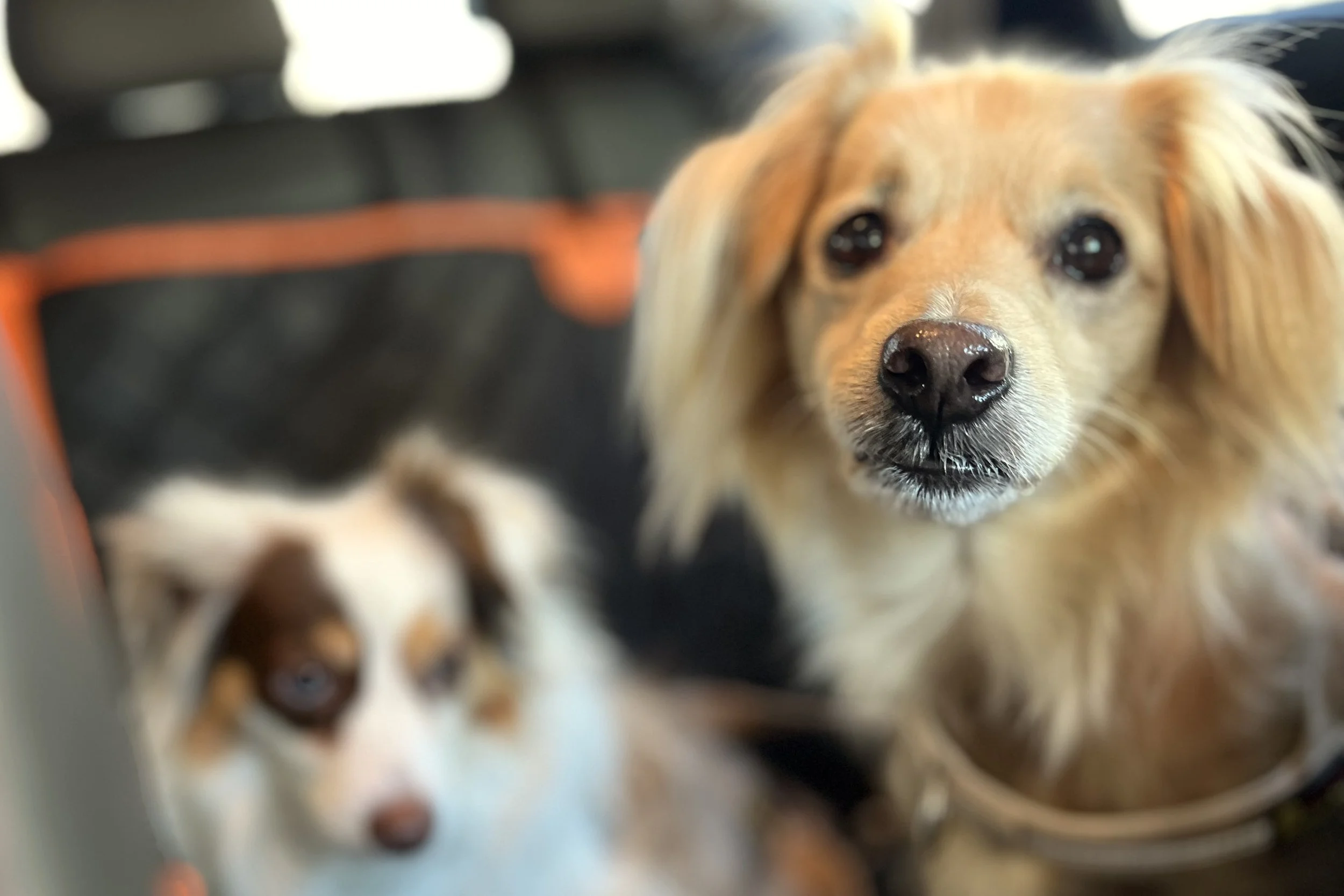
Upright and alert — watching, tracking, and not fully at rest yet.
Dogs can respond very differently to the same car setup. Some are more sensitive to movement and changes in the surface beneath them, while others remain focused on everything happening outside the car.
With Archie, the discomfort appears more physical. He keeps adjusting his position, and rides when he cannot get settled are also the ones when he is more likely to become nauseated.
Saydie shows it through alertness. She stays upright, watches what is happening around her and takes longer to relax.
A setup can look perfectly adequate while a dog continues shifting, watching or getting back up. Those small behaviors can tell you that they have not found a position where they feel stable enough to rest.
Give Your Dog a Stable Place to Lie Down
A dog is more likely to lie down when the car provides a clear, stable place to rest.
For small dogs, this often means a structured car seat or firm bed that holds its shape rather than flattening or sliding beneath them. The sides create a defined boundary, while the stable surface reduces how much the dog needs to brace through turns and stops.
The space should be large enough for your dog to turn around and lie down comfortably, but defined enough that they are not continually searching for another position.
Some dogs move around because they cannot find a place that feels secure. Others lean or try to climb toward the front of the car, where they may feel closer to you or better able to anticipate the car’s movement.
Giving them one consistent place to ride removes some of that uncertainty and makes it easier for them to settle.
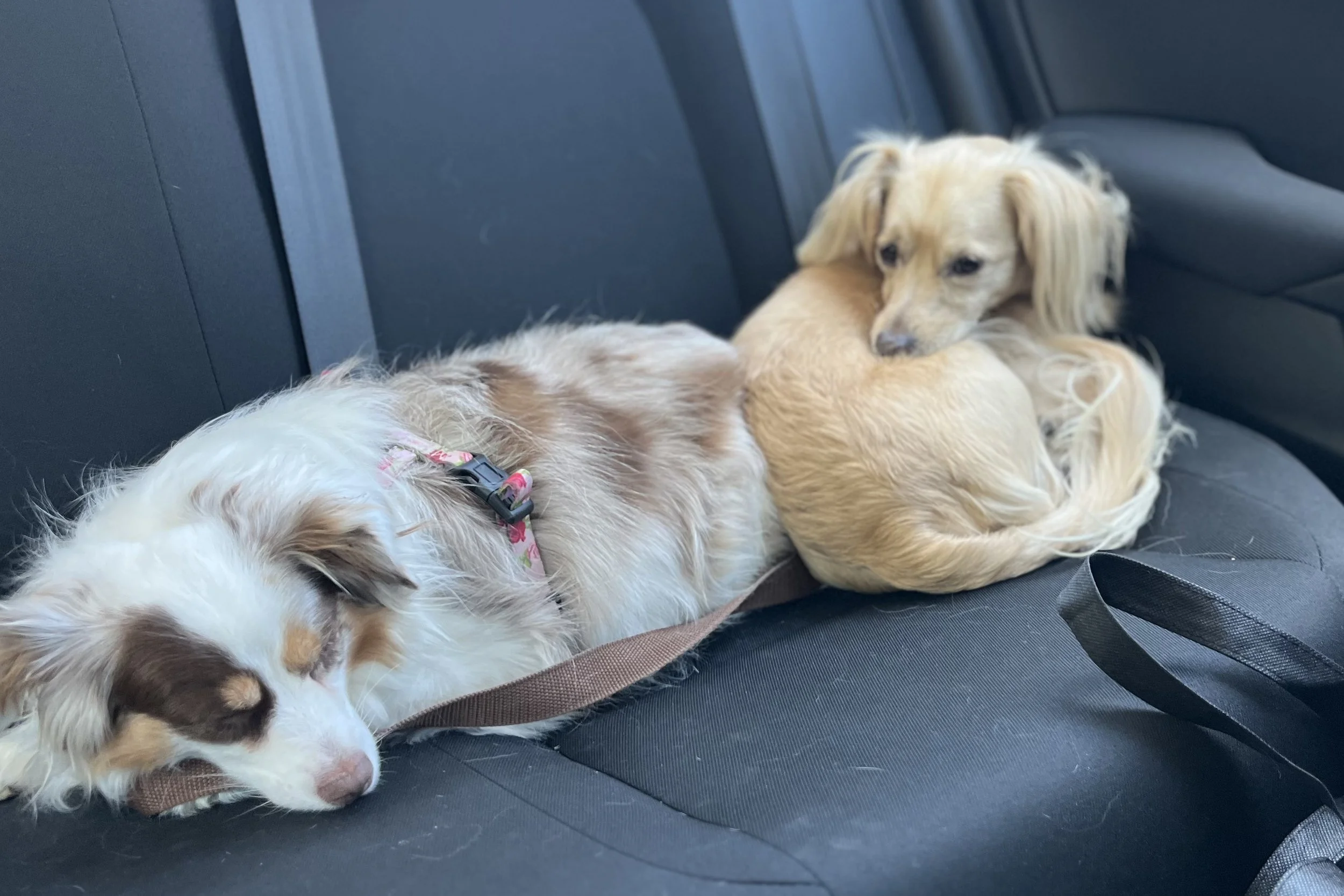
Saydie resting while Archie remains slightly alert in the back seat.
I notice this most on longer drives — even with a consistent setup, if their space isn’t clearly defined, they stay slightly more alert for longer.
If your dog struggles with this, it often connects to what’s happening more broadly during travel — not just in the car, but in transitions overall. I break that down more in Traveling Calmly with Small Dogs — The Decisions That Matter.
Your Dog May Be Bracing Against the Car’s Movement
Even when a dog looks calm, they may still be compensating for movement — shifting their weight, bracing slightly, or adjusting with each turn or stop.
A more stable surface can reduce how much they need to brace and adjust during the drive.
You’ll often see:
bracing through turns
adjusting with acceleration or braking
hesitating to fully lie down
For some dogs, frequent shifting can also accompany motion sickness. Archie is more likely to become carsick on rides when he cannot find a stable position.
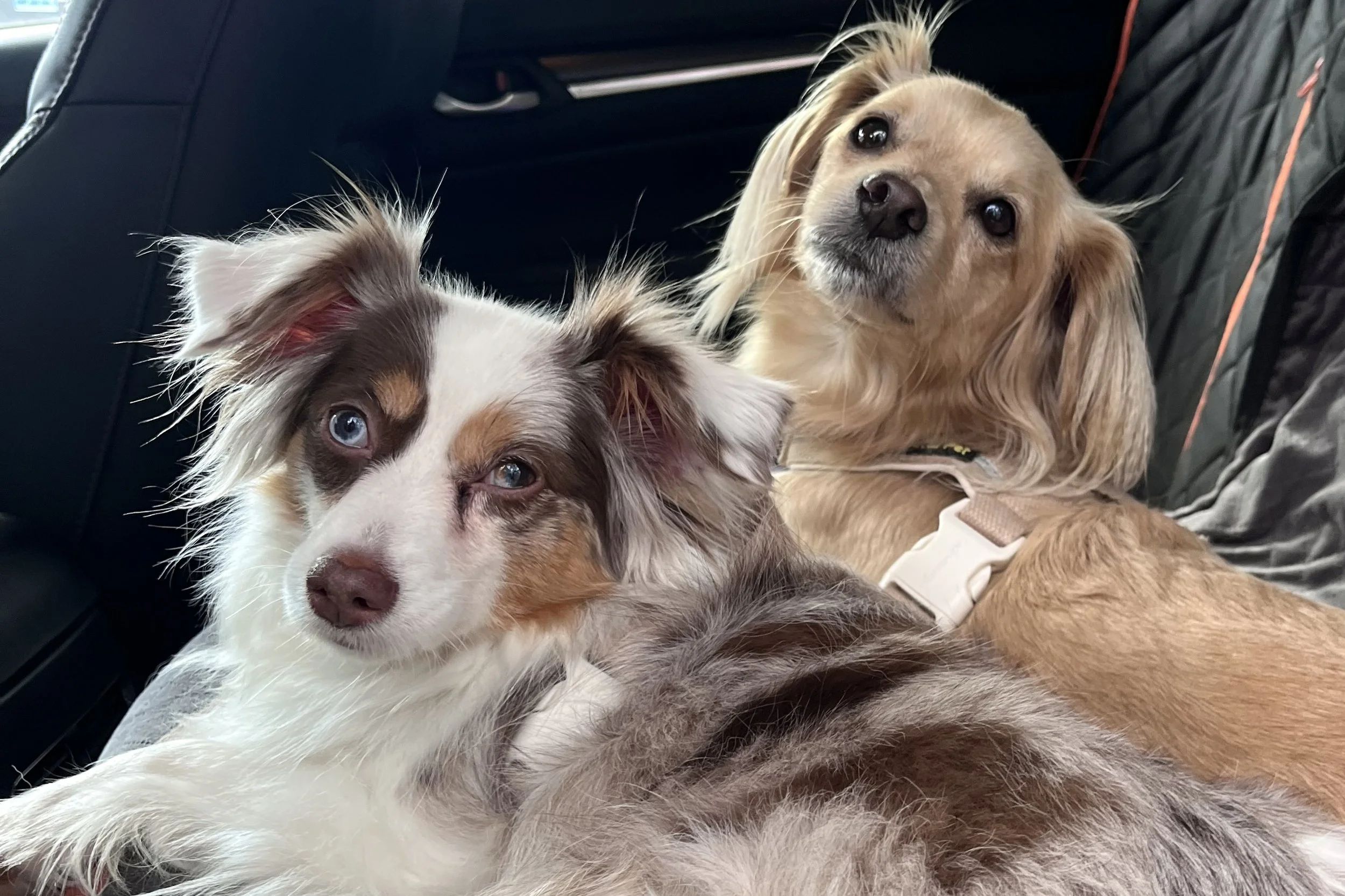
Fully settled — relaxed posture, soft body, and no need to keep adjusting.
Once Saydie settles into her bed, the change is quick. Within the first five or ten minutes—as long as there isn’t additional stimulation—her body softens, her ears relax and she usually sleeps through most of the drive.
Some Dogs Stay Upright to Watch Outside
The view from a moving car is higher, wider and constantly changing. Some dogs tune it out and settle, while others remain focused on everything passing outside the windows.
A dog who wants to monitor the surroundings may resist lying down because doing so would limit what they can see. You might notice their head turning toward movement, ears remaining alert, or their body becoming tense when another vehicle, person or dog passes.
Saydie often does this when she has not fully settled. She stays upright and scans outside the car, especially when there is a lot of activity around us.
Watching through the window does not necessarily mean a dog is distressed. But if they remain rigid, pant continuously, bark at passing triggers or cannot disengage from the view, the stimulation may be preventing them from resting.
A consistent riding space with supportive sides can reduce some of that visual exposure while still giving your dog a comfortable place to lie down.
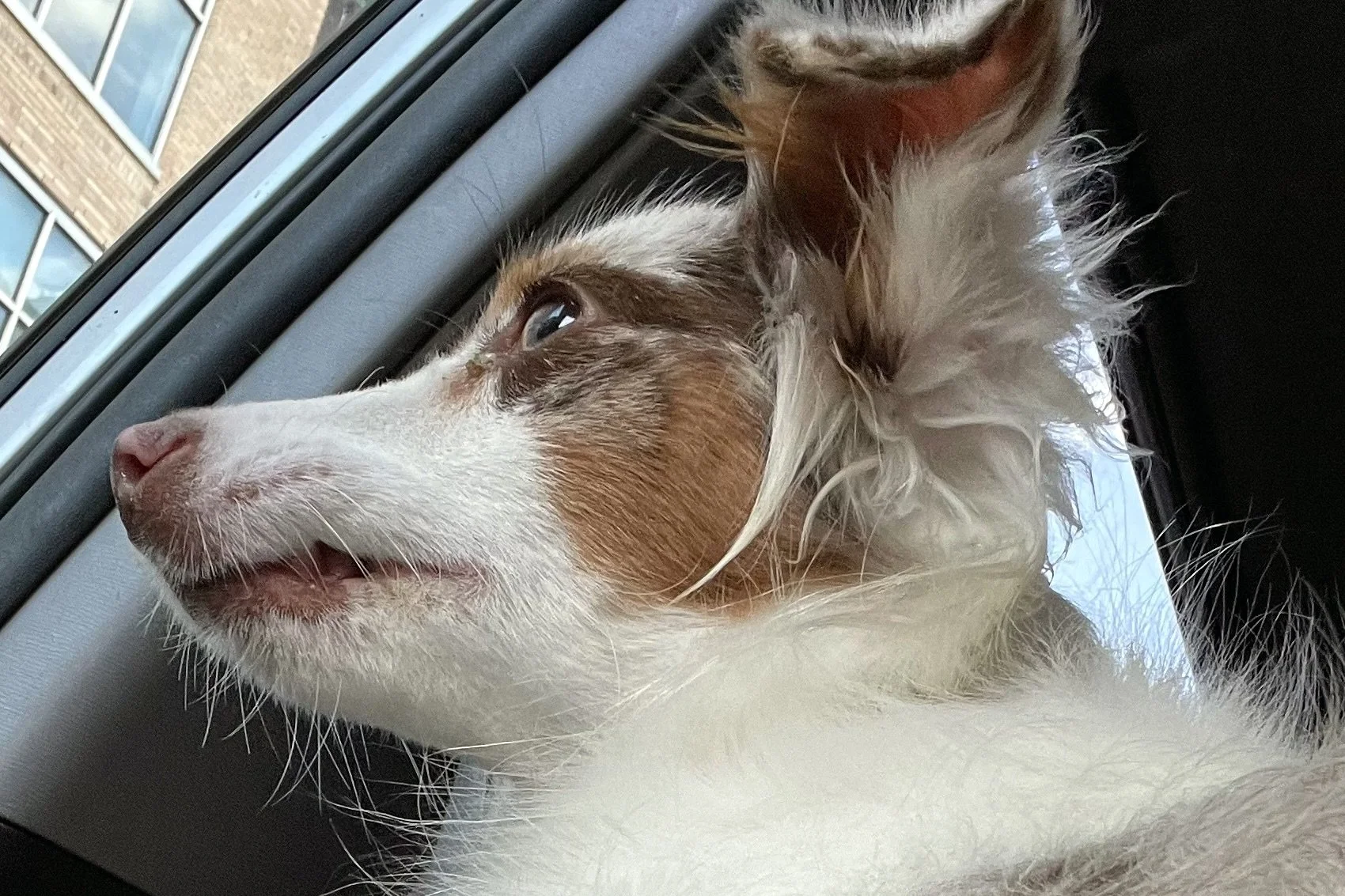
Watching the outside environment — staying engaged instead of resting.
Signs Your Dog Is Settled in the Car
A settled dog in the car doesn’t just look quiet.
They look like they’ve stopped managing the environment.
You’ll usually see:
lying down fully, without moving around
staying in place instead of getting back up
less watching, less tracking, less adjustment
The change isn’t dramatic.
They’re no longer trying to make the space work.
They’re able to rest within it.
And that’s what you’re ideally aiming for — not just a quiet dog, but a dog who doesn’t feel the need to keep adjusting.
What Helps a Dog Lie Down in the Car
The right solution depends on why your dog is staying upright. A dog who is bracing against movement may need more physical stability, while a dog who is watching everything outside may need less visual stimulation.
A few changes can help:
Provide a stable, defined place to rest
Use a properly secured car seat or firm bed that is large enough for your dog to turn around and lie down comfortably.
Add a familiar surface
A blanket or bed your dog already uses at home can make the riding space feel more predictable.
Reduce slipping and shifting
Make sure the bed or car seat remains level and does not slide when the vehicle turns or stops.
Practice during short drives
Give your dog time to become familiar with the setup on brief, low-pressure rides before expecting them to settle during a longer trip.
Pay attention to possible nausea or discomfort
Drooling, repeated swallowing, lip licking, whining or vomiting may point to motion sickness. A sudden change in how your dog sits, stands or lies down can also warrant a conversation with your veterinarian.
Frequently Asked Questions
Why won’t my dog lie down in the car?
Your dog may not feel stable enough to lie down, may be trying to watch the surroundings, or may be experiencing anxiety, motion sickness or physical discomfort. Notice whether the behavior occurs with bracing, scanning, panting, drooling or vomiting to help identify what may be contributing.
Is it normal for a dog to stand for the entire car ride?
Some dogs prefer to stand or sit during short rides, but remaining upright for an entire trip can mean they have not fully relaxed. A secure, nonslip place to rest may make it easier for them to lie down.
Should I make my dog lie down in the car?
No. The goal is not to force a position. Create a secure and comfortable riding area where your dog can choose to settle while remaining properly restrained.
Why does my dog lie down and then immediately get back up?
The surface may shift beneath them, the car’s movement may cause them to brace, or something outside may recapture their attention. Nausea or discomfort can also make it difficult to remain in one position.
More Help With Car Travel
If your dog has difficulty relaxing during travel, these guides may also help:
Want more practical ways to make travel easier for your dog?
Join Wandering Pup Travels to receive my newest travel tips, calm-walk ideas and dog-friendly destinations directly in your inbox.
