Not All Road Trip Stops Feel the Same to Your Dog
When you travel with a dog, stops are part of the trip.
It would be easier to drive straight through.
But on most trips — especially longer ones — that’s not realistic.
At some point, you need to get out.
For a quick bathroom break.
To stretch.
To move a little after being in the same place for hours.
How often you need to stop depends on your dog and the length of the drive.
If they settle and sleep for a few hours, you may not need to stop right away.
But on longer drives — or at times of day when they’re used to being up and moving — stops become necessary.
And not all stops do the same thing for your dog.
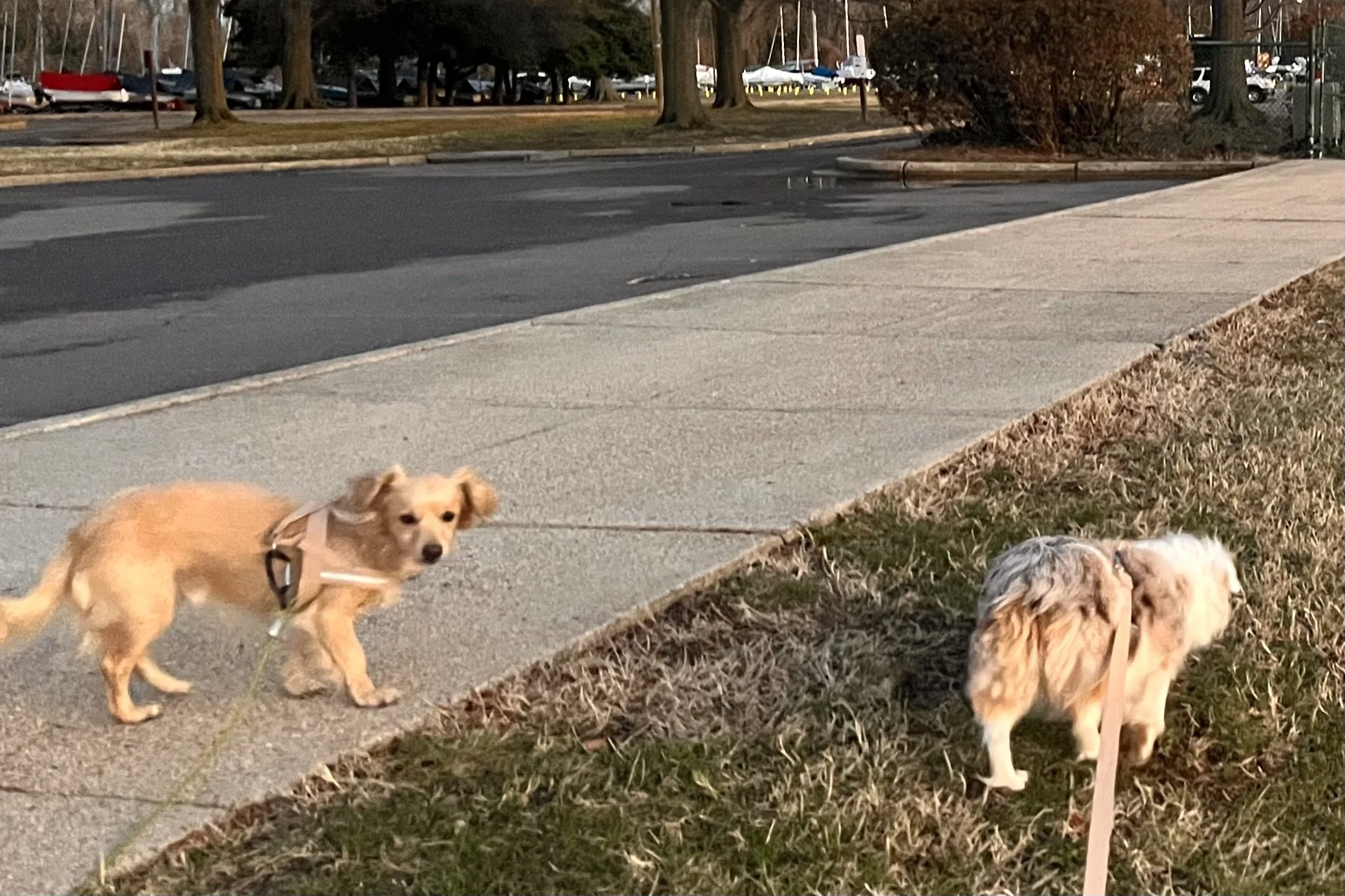
Out of the car, but still taking everything in.
Not All Stops Feel the Same
It’s easy to think of a stop as just a break.
You get out of the car.
Your dog walks around a bit.
Then you get back on the road.
But what happens during that stop isn’t the same everywhere.
Some places are busy and tight — cars moving, people passing close, a lot happening at once.
Others are quieter, with more space to move and pause.
Your dog responds to that difference.
At a busy stop, they often stay alert the whole time.
Moving, but not relaxing.
At a quieter stop, you’ll often see the opposite.
They slow down.
Sniff more.
Move more loosely.
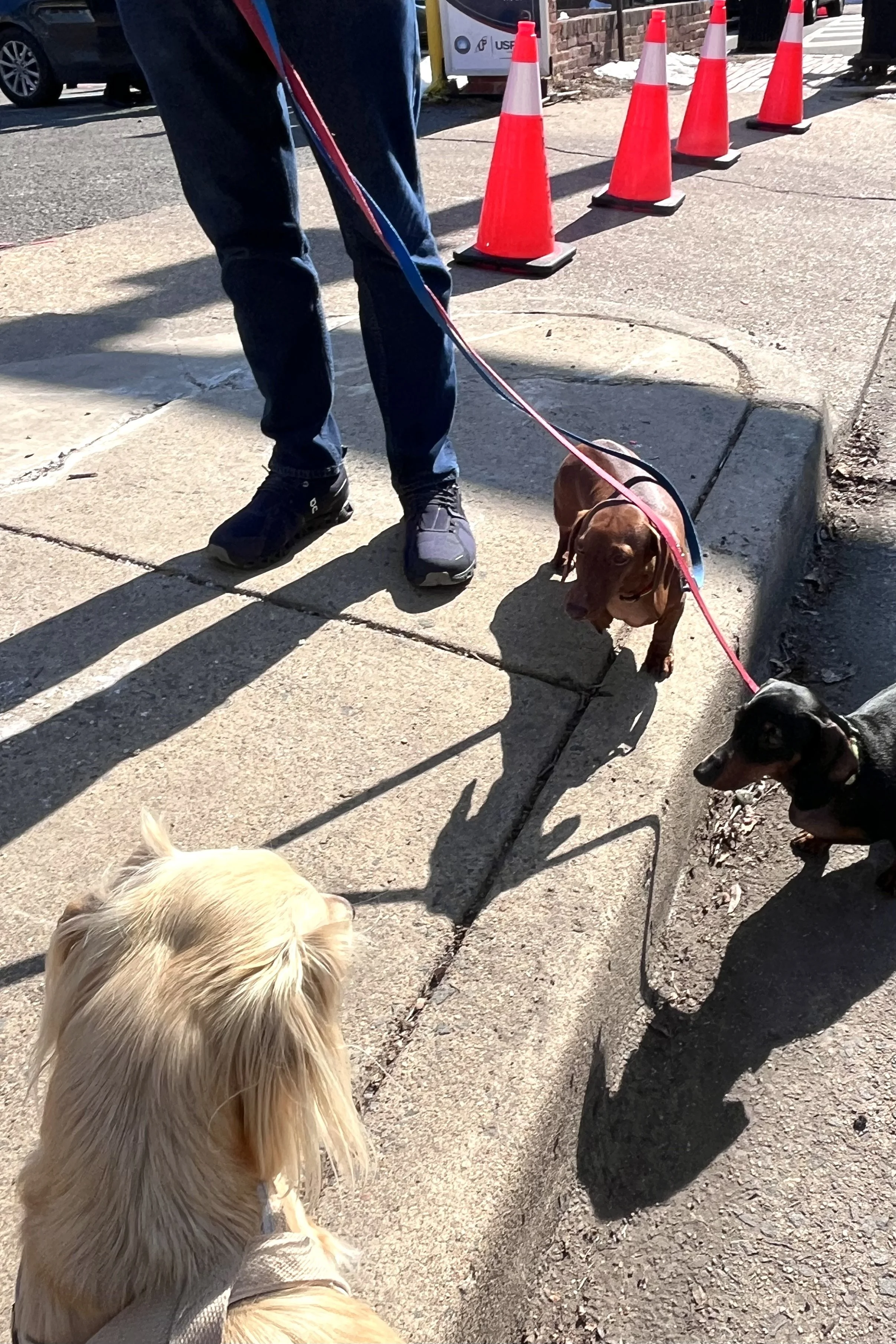
Out of the car, but not able to relax yet.
Some Stops Are Just Functional
Rest stops, gas stations, and parking lots are part of most drives.
They work for what you need in the moment.
A quick bathroom break.
A short walk.
Then back in the car.
But they’re usually not places where your dog fully relaxes.
There’s a lot happening at once.
Cars pulling in and out.
People moving in different directions.
Noise that doesn’t really stop.
Even if your dog handles it well, they often stay alert the whole time.
Moving, but not relaxing.
So while these stops are useful, they’re limited.
They take care of what’s necessary —
but they don’t give your dog much of a break.
For some dogs, these types of stops are harder than they look.
Archie is more scent-driven.
If he finds a spot where other dogs have been, he’ll usually go.
Saydie is different.
She’s much more sensitive to her surroundings, and even with a command, it’s not always easy for her to go in a new place.
Even at home, she’ll sometimes hold it.
We can walk for 20 or 30 minutes, and she won’t go —
then come back, and she’ll pee right in front of our building.
So at a rest stop, where everything is unfamiliar and constantly moving, it becomes much more difficult.
This tends to show up more on longer drives, especially when dogs are already working harder to process new environments — something I break down in Why Dogs Get Tired After Travel.
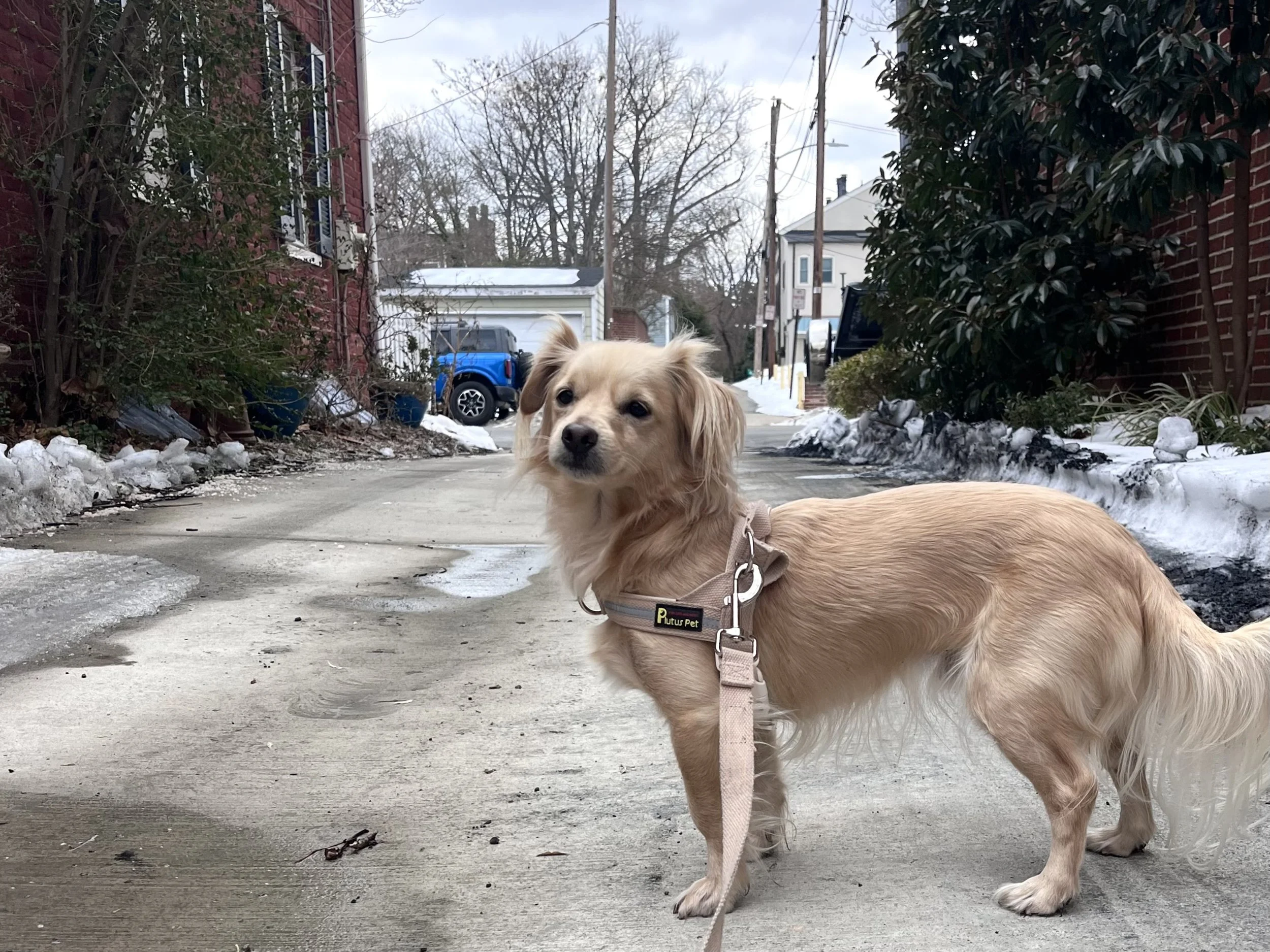
Starting to slow down once there’s a little more space.
Some Stops Actually Help Your Dog Reset
Other stops feel different right away.
A quiet park.
An open stretch of grass.
A calm neighborhood street.
These places give your dog something they don’t get at a rest stop.
Space to move without pressure.
Time to slow down and sniff.
They may not even want to walk very much.
Sometimes they just stand, look around, and take everything in.
That still counts.
On longer drives, we sometimes plan one stop differently.
On a trip up from Florida, we built in a stop at Driftwood Beach on Jekyll Island.
It wasn’t just a quick break.
We stayed for a couple of hours, walked a bit, and let them move around and take everything in.
When we got back in the car, they lay down right away and went to sleep.
That kind of stop also makes it easier when you arrive somewhere new — especially if your dog needs time to adjust, which I talk about in Dogs Won’t Settle in a New Place? What Helps Them Adjust.
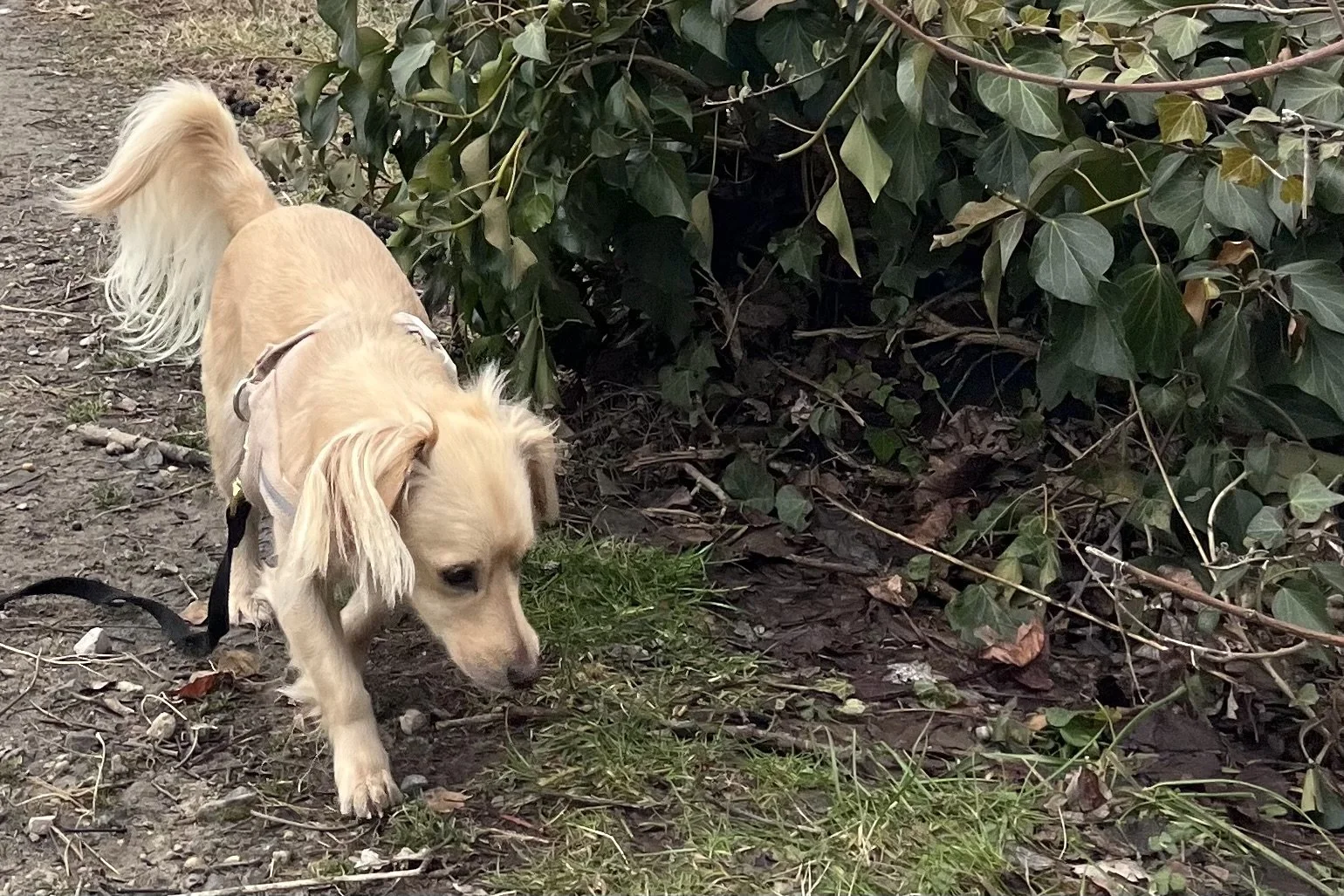
At the edge, things start to shift.
Where Things Usually Go Wrong
Most people don’t think much about the stop itself.
They stop wherever is easiest.
Stay a little longer to make it feel like a real break.
And assume that getting out of the car is enough.
But not all stops work the same way.
A longer stop in a busy environment doesn’t always help.
Your dog is out of the car, but still taking in everything around them —
movement, noise, people passing close.
So instead of relaxing, they stay alert the entire time.
And that carries into the next part of the drive.
This is the same pattern you see in denser environments more generally — something I explain in Why Small Dogs Struggle on Busy Sidewalks.
How to Find Better Stops Without Overplanning
You don’t need to map out every stop ahead of time.
But if you know the drive will be longer — three or four hours or more — it helps to look once before you leave.
Not for exact timing.
Just to see what’s along your route.
A small park.
A green space.
Even a quieter residential area just off the main road.
That way, when you’re ready to stop, you already have an option — instead of defaulting to the nearest rest area.
If you don’t plan ahead, you can still adjust in real time.
When you’re getting close to needing a stop, zoom out slightly on the map instead of just following the next exit.
Look for:
green patches
parks near the road
areas that aren’t directly on a main commercial strip
Even a short detour — five or ten minutes — can make a noticeable difference.
What to Do When You Get There
You don’t need to turn it into a full walk.
Just give your dog a little more space and time than you would at a rest stop.
Let them move at their own pace.
Stop and sniff.
Pause without pressure.
They may not even want to walk very much.
Sometimes they just stand, look around, and take everything in.
That still counts.
What Helps at These Stops
A small setup shift can make these quieter stops feel very different for your dog.
When we’re stopping somewhere quieter, I don’t bring much—but a couple things make it easier for them to actually settle instead of staying alert the whole time.
A longer leash or extra lead
This gives them room to move and sniff without needing constant direction. If we’re near a stream or a more open area, it lets them wander a bit and explore instead of staying close and watching everything.
Something simple to focus on
If they’re having trouble settling, a chew can help shift them out of scanning and into something more steady.
A familiar layer from the car
Sometimes just laying down a blanket they’ve been resting on helps the space feel more familiar.
None of this is complicated, but it helps turn a stop into something that actually feels like a break.
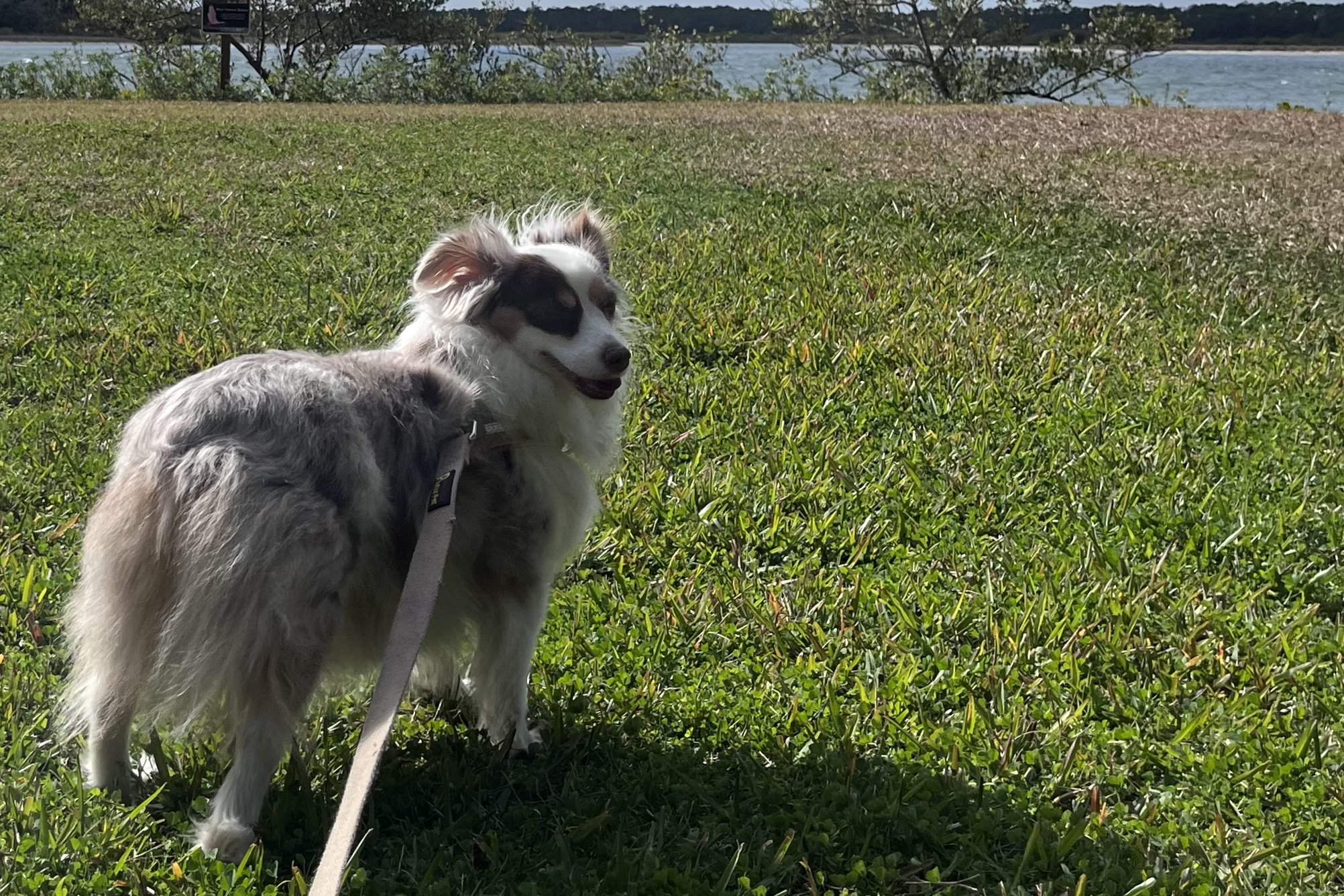
A quieter stop gives your dog space to slow down and reset before getting back on the road.
A Simple Way to Think About It
Some stops are just for convenience.
Quick out.
Quick back in.
Others give your dog a chance to move, slow down, and spend time outside before getting back in the car.
You don’t have to make every stop that kind of stop.
But adding one or two like that along the way can make the next stretch of the drive easier.
Where you stop affects how your dog does for the rest of the drive.
