The Busiest Areas in Old Town Alexandria (and How to Avoid Them With a Small Dog)
If you’ve spent any time in Old Town Alexandria, you already know King Street is busy.
That’s the starting point.
But what makes walking here harder isn’t just avoiding King Street—it’s knowing where to go once you turn off of it.
Because not every nearby street is easier.
Some still feel difficult because of:
narrow or uneven sidewalks
brick or cobblestone that’s hard to walk on
heavier traffic moving close by
crossings that take more effort
And others—sometimes just a block or two away—feel completely different.
This guide breaks down where walking opens up, where it gets tighter, and what that looks like as you move from block to block.
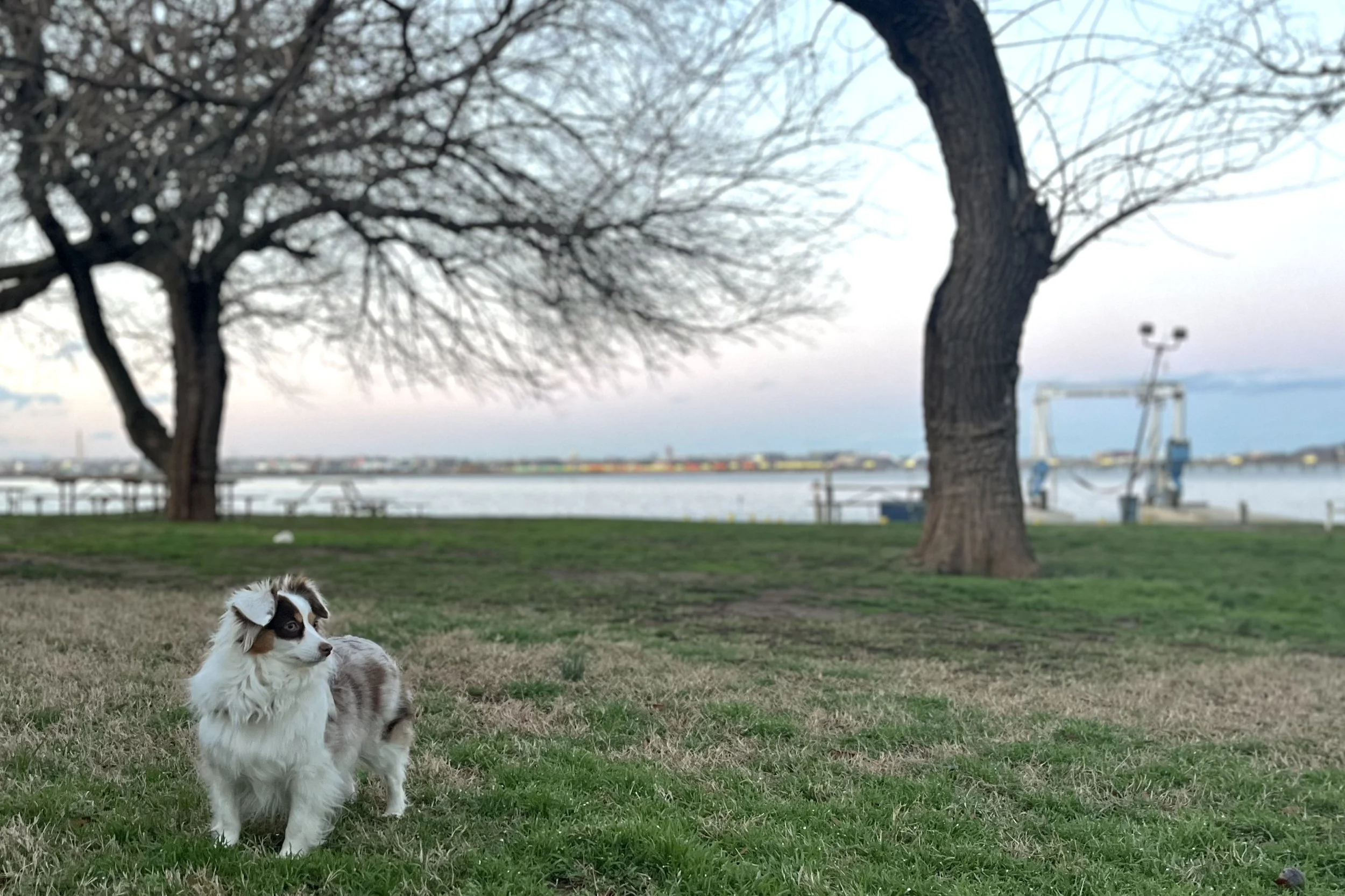
Open waterfront with long sightlines—space to move, pause, and settle.
At a Glance
If you're trying to choose where to walk, this is the quick version:
Most crowded: King Street (especially east of Washington toward the waterfront)
Still busy, but easier: one block off King
Where walking gets easier: west of Washington Street
Quieter residential streets: farther from the waterfront, especially west of Washington
Reliable quiet stretch: Buchanan Street (especially between Oronoco and Cameron)
Most consistently spacious waterfront: Windmill Hill Park area
More space, but still active: Founders & Waterfront parks
Streets that feel heavier from car traffic: Patrick & Henry
King Street
Where walking gets tight quickly
King Street is the busiest part of Old Town when it comes to foot traffic.
This is where sidewalks narrow, people stop and turn often, and the walking line keeps changing.
Outdoor dining fills into the walkway
Foot traffic builds quickly, especially toward the waterfront
Movement slows and becomes stop-and-go
You’re not really walking in a straight line here—you’re adjusting constantly.
This is where pacing and route choices start to matter most. In How to Walk Old Town Alexandria With a Small Dog (Without Overwhelm), I break down how to move through areas like this.
This is where walking tends to feel the most difficult.
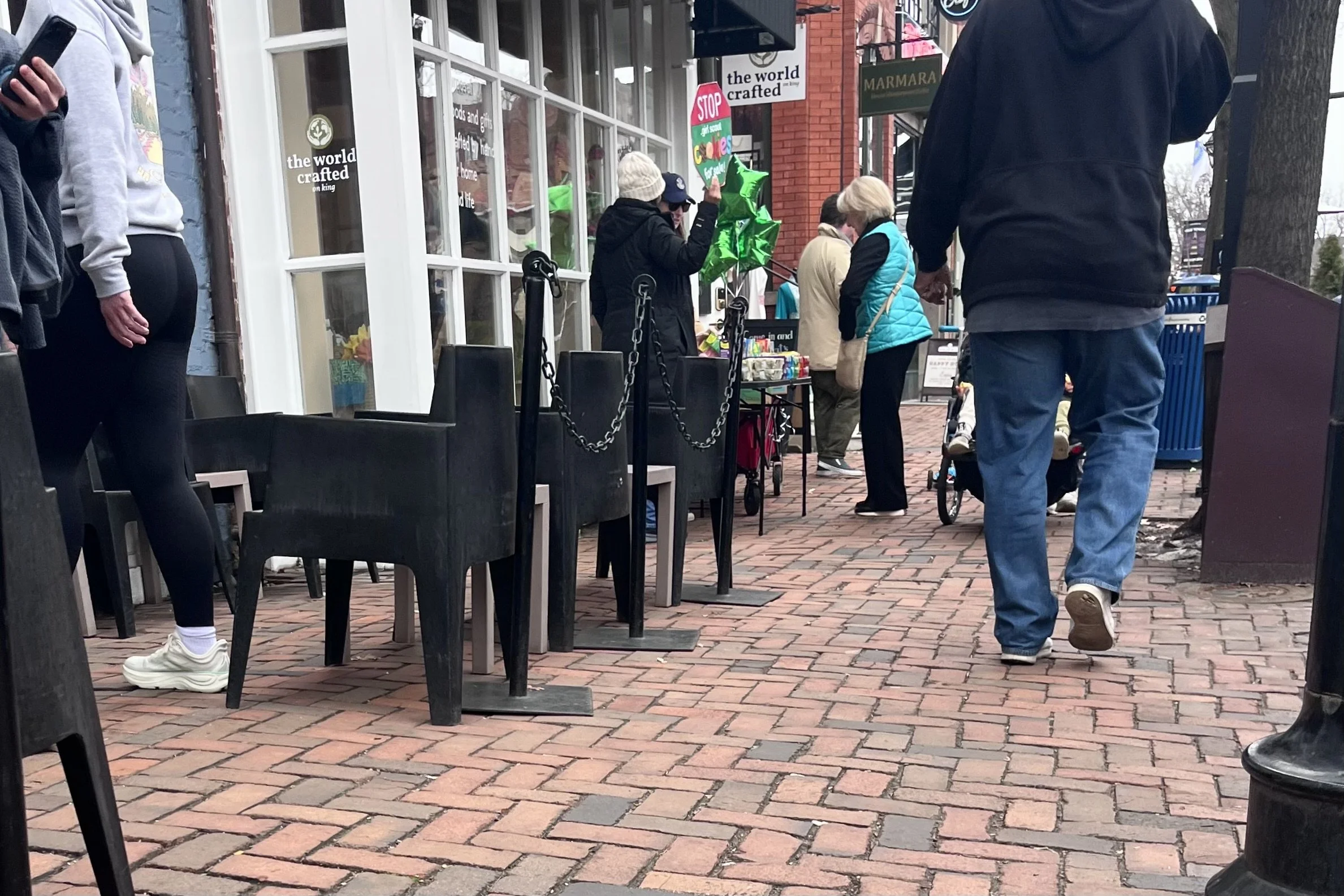
Walking into a tighter stretch of sidewalk—outdoor seating, foot traffic, and less room to adjust.
One Block Off King Street
Where it gets easier to walk
You don’t have to go far.
Just one block off King Street, things change quickly:
Fewer sudden stops
A more consistent pace
Space to see ahead
You’re still close to everything—but no longer moving through the center of it.
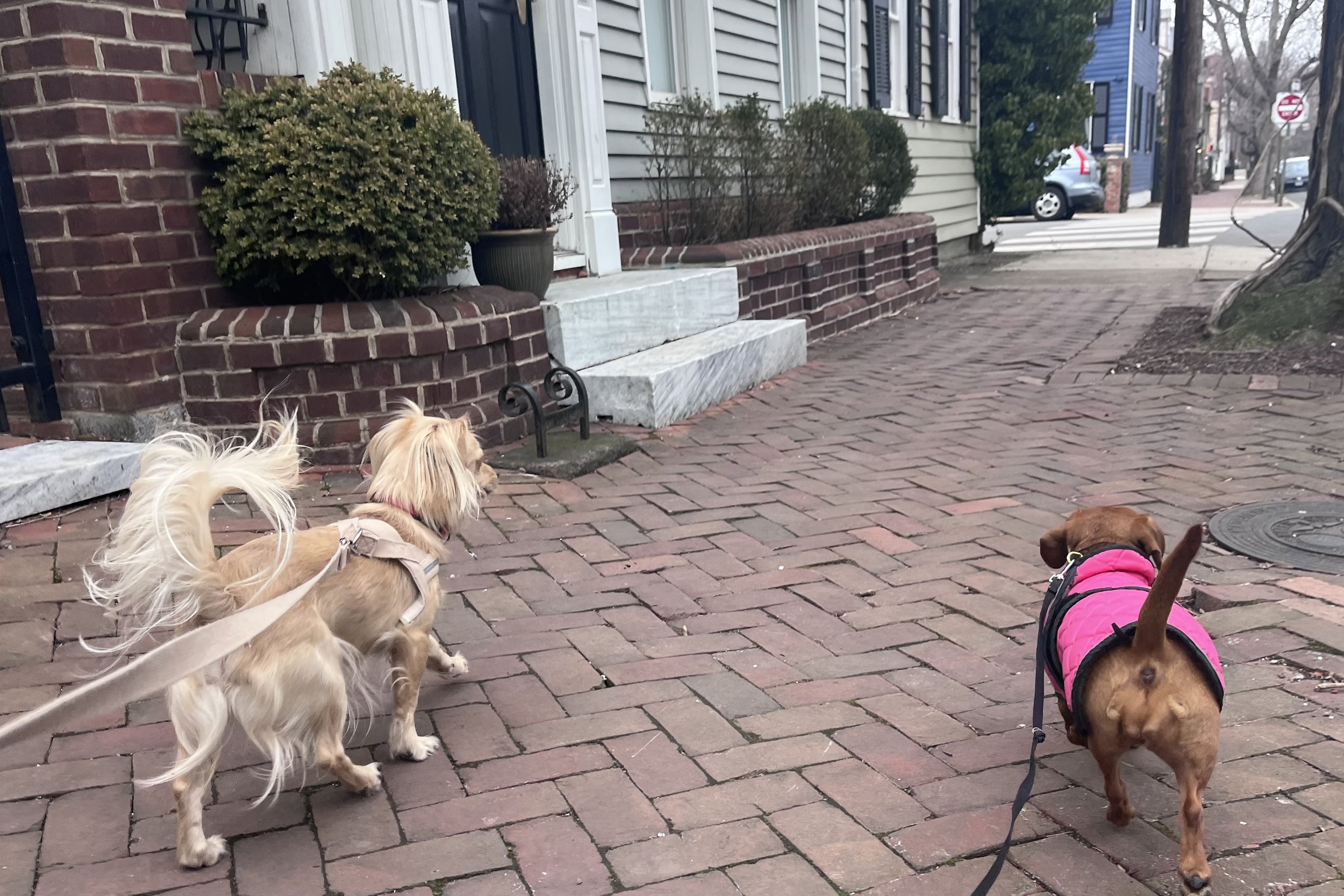
Walking into a tighter stretch of sidewalk—more movement, less space to adjust.
West of Washington Street
Where walking gets easier
As you move farther from the waterfront, the shift becomes more consistent.
Movement steadies
Foot traffic spreads out
Sidewalks feel less crowded
This is where you can keep moving with fewer interruptions.
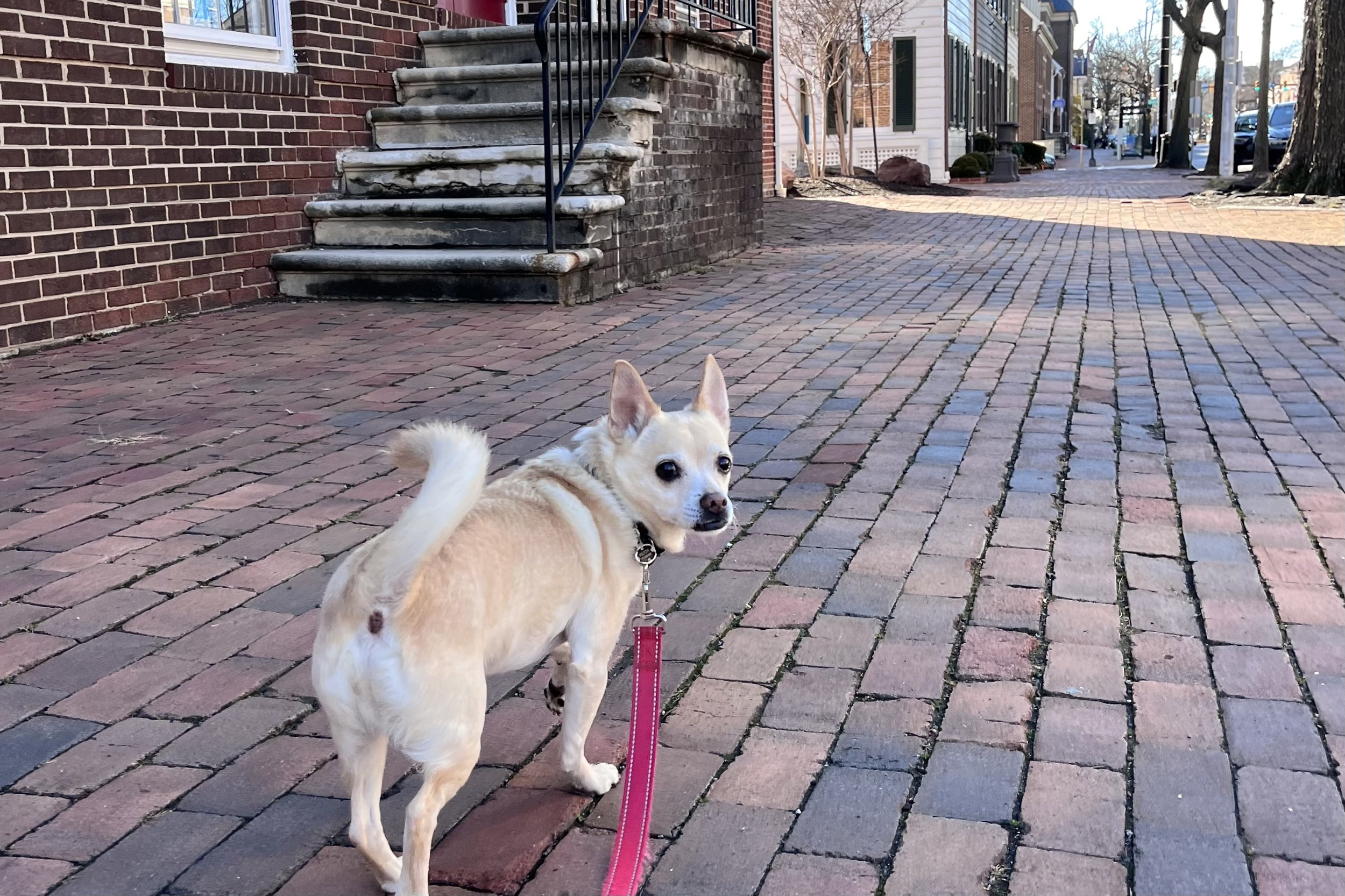
Wider sidewalks and longer sightlines make movement easier and more predictable.
Residential Streets (Farther from the Waterfront)
Consistently calmer
Beyond the main corridors, walking gets much easier.
Longer sightlines
Minimal foot traffic
Fewer interruptions
These streets—especially west of Washington—tend to stay easy to move through from start to finish.
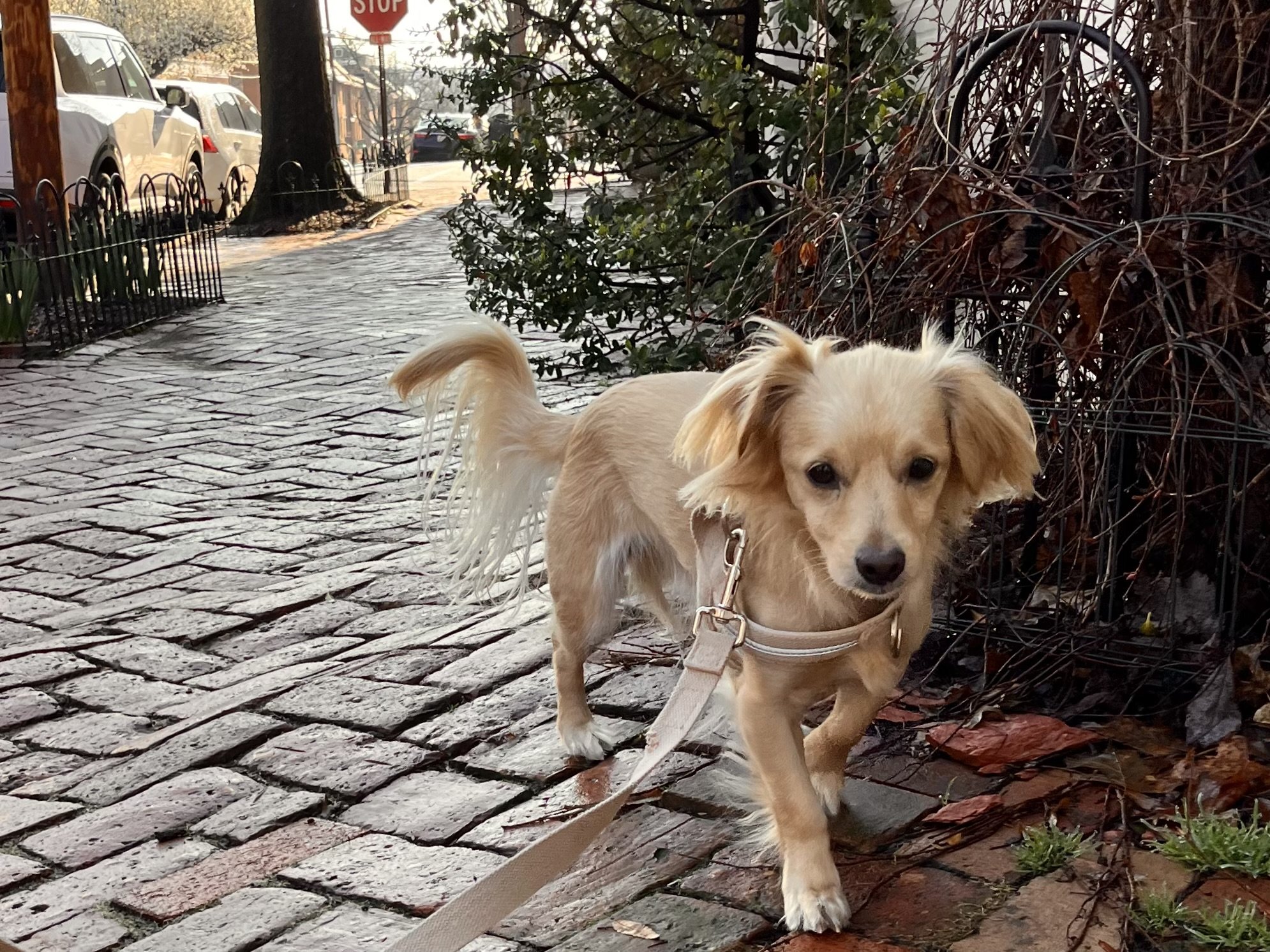
A quieter residential street—less foot traffic, but still uneven underfoot.
Buchanan Street (Between Oronoco and Cameron)
A reliable quiet stretch
Along Buchanan Street—especially between Oronoco and Cameron—the shift is noticeable.
The path opens up
Foot traffic drops off
Movement stays consistent
Another thing that makes this stretch easier: there’s grass on both sides of the path.
If you need to step off for a moment—whether it’s a bike coming through or another dog—you have space to move over without feeling rushed.

Paths with grass on both sides give you options—step off, create space, and keep movement easy.
Founders & Waterfront Parks
More space, but still active
These parks feel different from the streets—not because they’re quiet, but because you’re not confined to a sidewalk.
People spread out across lawns instead of clustering in one path
You can change direction easily without stopping
There’s room to pass without getting close
You’re still around people here, especially on nice days.
But instead of moving through a crowd, you can move around it.
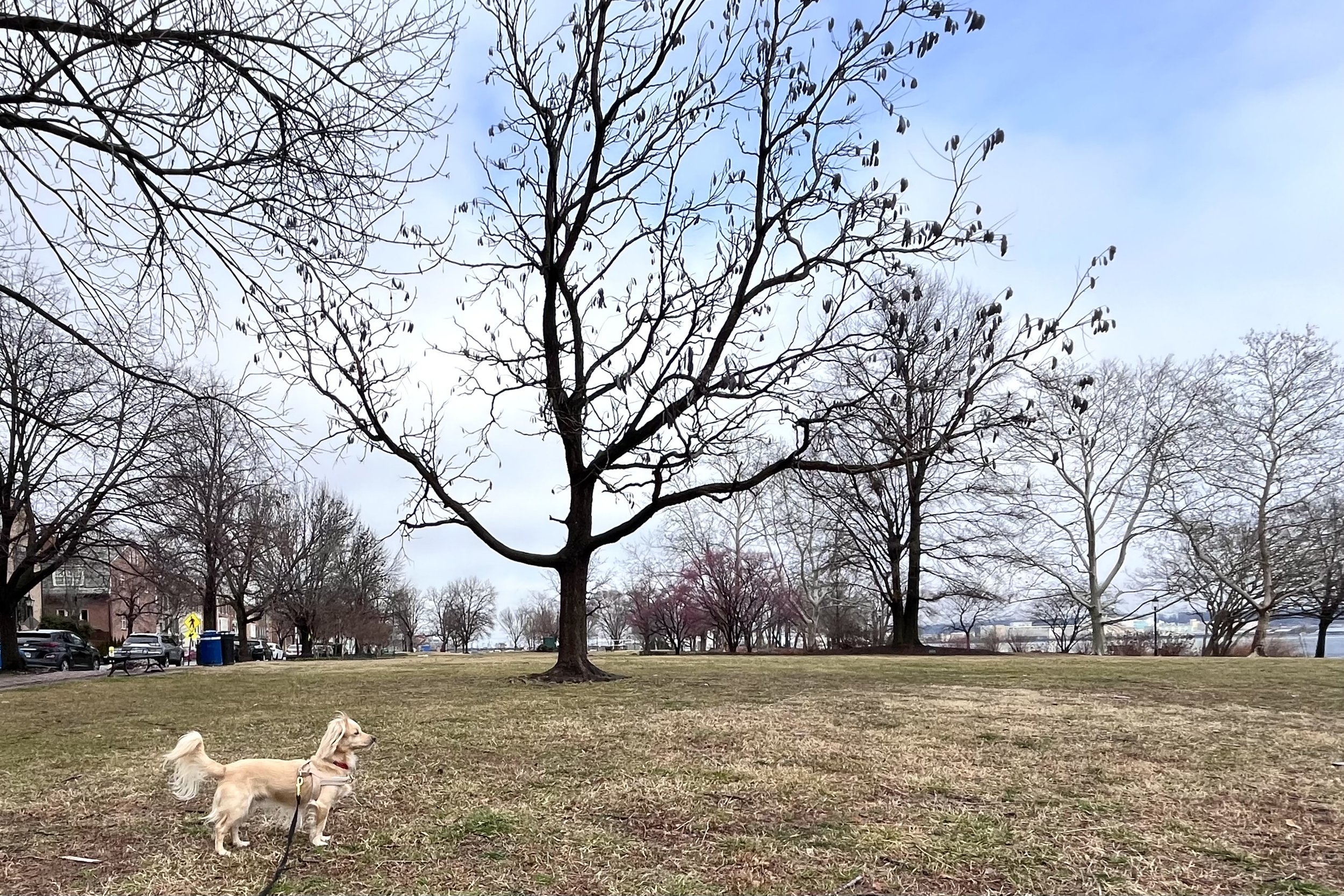
Open waterfront space creates options—room to move around pressure instead of through it.
Windmill Hill Park Area
Quieter and more open overall
Windmill Hill feels different from the rest of the waterfront.
There’s less through-traffic, and the pace is noticeably slower.
Fewer people moving through
More space between groups
Longer stretches without interruption
This is one of the few areas along the waterfront where the walk stays open from start to finish.
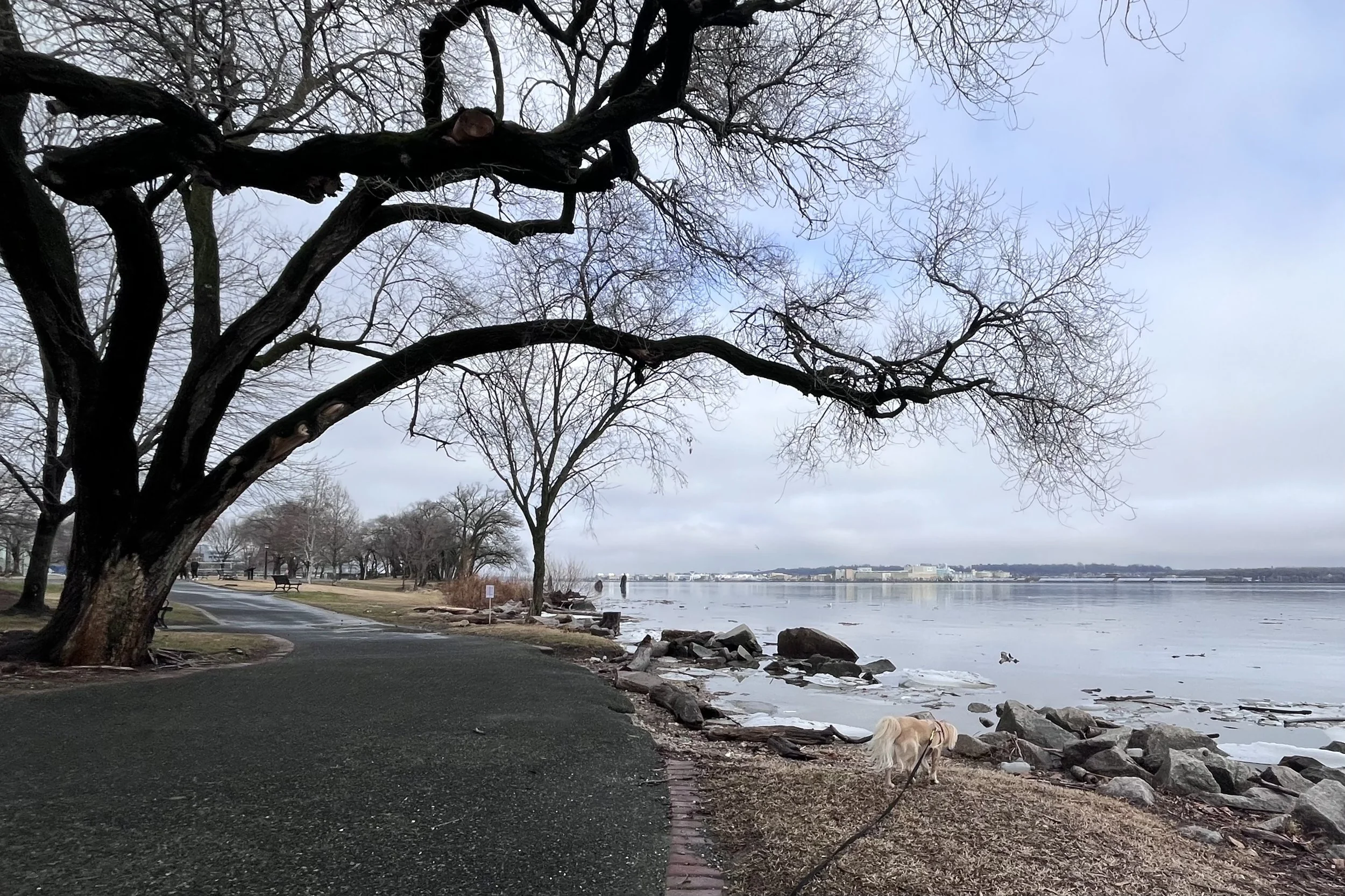
Open waterfront paths with multiple ways to move—space to slow down and choose your direction.
Streets That Feel Busy in a Different Way
Traffic, not crowds
Not all difficulty comes from foot traffic.
Some streets feel heavier because of car traffic.
Patrick Street & Henry Street
Louder
Steady car and truck traffic
Less pedestrian-focused
Washington Street
Similar traffic volume
Much wider sidewalks
More space to walk comfortably
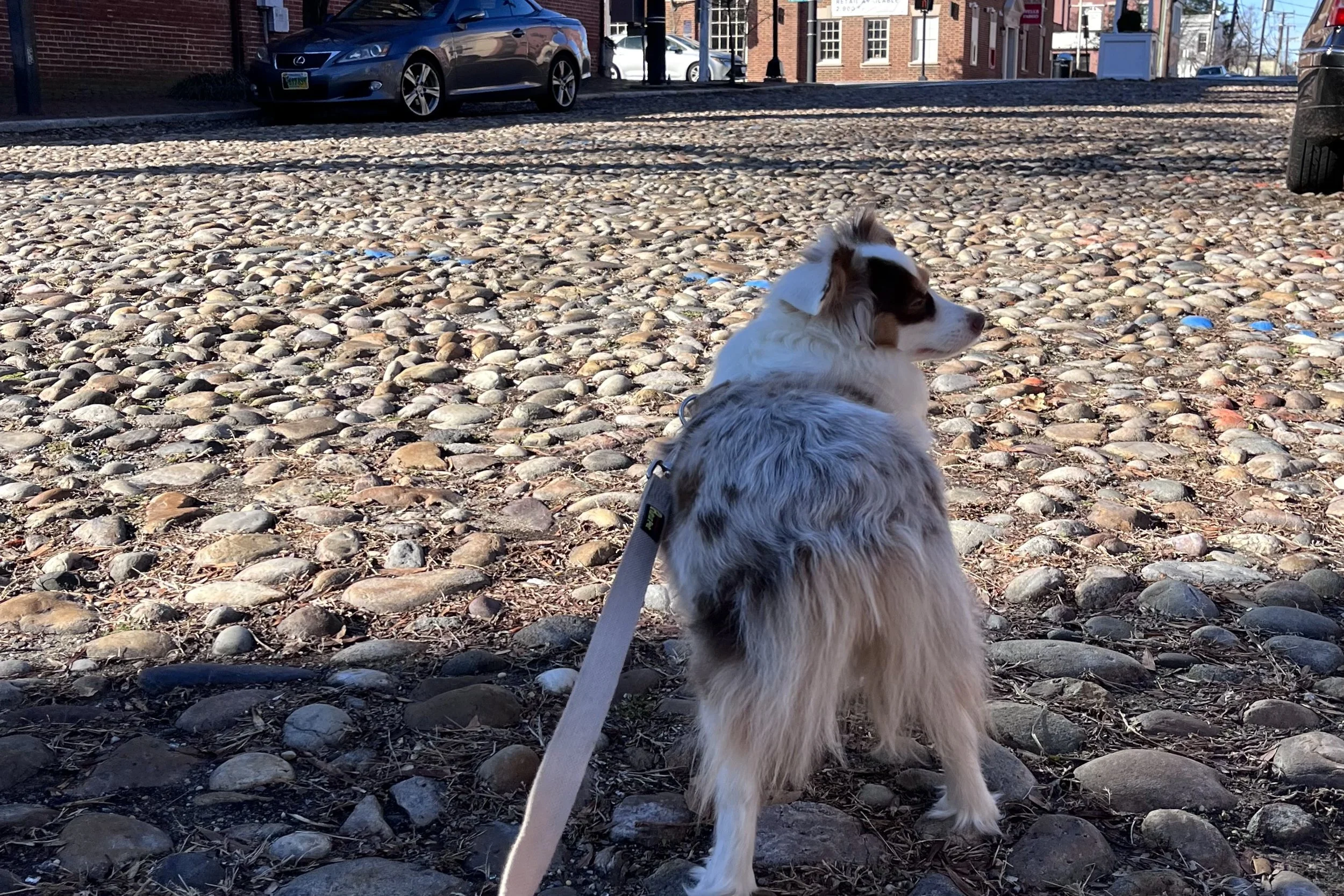
Cobbled streets and traffic add a different kind of pressure—harder footing, more noise, and less room to move.
How to Think About It
Old Town isn’t just busy or quiet.
King Street is crowded and stop-and-go
One block off, there’s usually more space and fewer interruptions
Farther out, streets get quieter and easier to walk
Most of the time, the difference is just a block or two.
If your dog starts to show early signs of overwhelm, it helps to recognize them early. In When to Leave Old Town Alexandria With a Small Dog (Early Signs of Overwhelm), I walk through what to look for and when to leave.
