How to Keep a Dog Calm on a Long Car Ride (What Actually Helps)
A long car ride doesn’t just move your dog from one place to another — it changes how the entire world feels.
The ground is moving.
The sounds are unfamiliar.
The air shifts constantly.
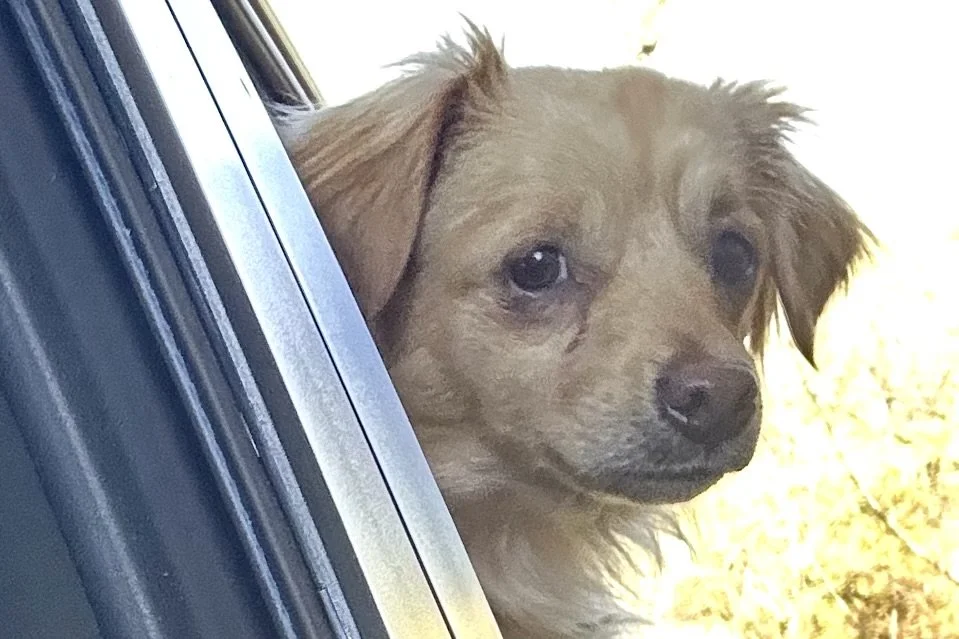
Movement, sound, and airflow all hit at once during a car ride—even when a dog appears calm.
And unlike a walk, they can’t choose where to go or how fast to move.
For many dogs — especially smaller dogs — that lack of control is what makes car rides feel overwhelming.
I see this most clearly with my own dogs — even when everything is “set up right,” there’s always a moment where they’re deciding if they can relax into it.
Why Some Dogs Struggle to Stay Calm in the Car
When a dog can’t settle in the car, it’s rarely about stubbornness.
It’s usually about sensory load.
During a drive, your dog is processing:
continuous motion
changing sound levels
shifting light and shadows
unfamiliar smells passing quickly
acceleration and stopping
All at once.
What looks like “restlessness” is often your dog trying to make sense of an environment that keeps changing faster than they can adapt to it.
This is part of a broader pattern I break down in Why Dogs Struggle During Travel.
What “Not Settling” Actually Looks Like
Before a dog ever lies down and rests, you’ll often see smaller signals:
frequent repositioning
staying upright instead of lying down
scanning or watching constantly
panting even when the temperature is cool
brief attempts to settle, followed by getting back up
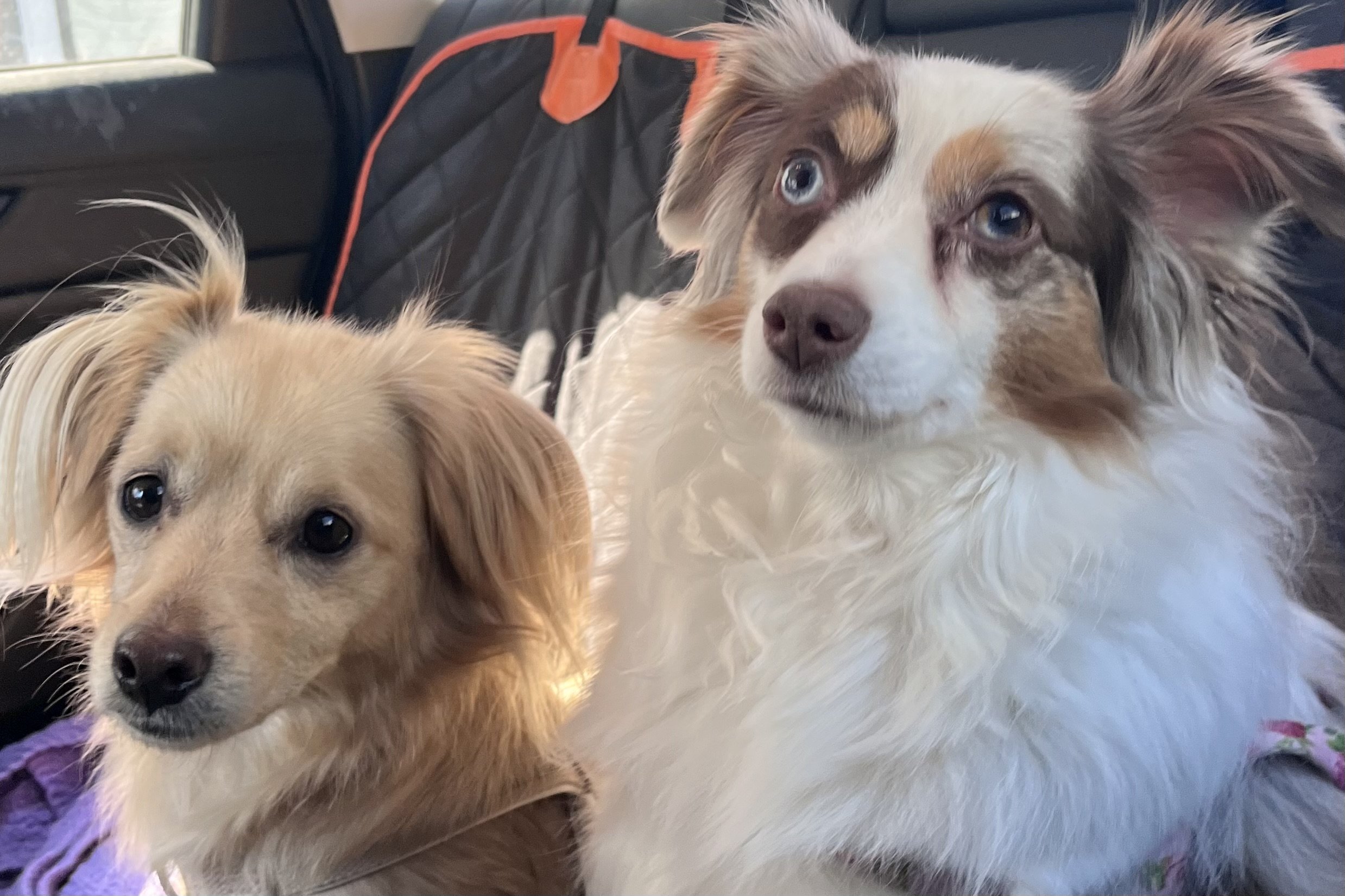
Still, watchful, and taking everything in—this is often the first stage after arrival.
This is the in-between state.
Not fully stressed.
But not able to relax.
If you’ve seen this, you’re not alone — it’s one of the most common patterns during longer drives.
If this sounds familiar, you may also notice a similar pattern after arrival — I talk about that in Dog Won’t Settle in a New Place.
You might see them lie down for a moment… then get right back up again.
Why Predictability Matters More Than Duration
One of the biggest misconceptions about car travel is that dogs just need to “get used to it.”
But tolerance isn’t the same as comfort.
What actually helps dogs settle is predictability.
The same position.
The same setup.
The same sequence of events.
When those stay consistent, your dog doesn’t have to keep reassessing what’s happening.
They can start to relax.
This is why gradual conditioning works — not because it builds endurance, but because it builds familiarity.
If you’re still working on the logistics of longer trips, this guide walks through that step-by-step:
How to Prepare a Dog for a Long Car Ride.
How to Reduce Overstimulation During a Long Car Ride
Helping your dog stay calm isn’t about doing more.
In fact, it’s often about doing a little less.
Start with the environment:
✔ Keep placement consistent — the same spot each time helps the ride feel more predictable
✔ Limit unnecessary stimulation — steady, moderate sound is easier to process than constant change
✔ Reduce visual overload if needed — some dogs settle more easily when they aren’t watching everything pass by
✔ Keep your routine predictable — the same loading, the same rhythm, the same pauses
Small adjustments can make the ride feel far more manageable.
The Role of Familiar Space
One of the simplest ways to help a dog settle in the car is also one of the most effective:
Give them a space that already feels known.
A bed they use at home.
A blanket with a familiar scent.
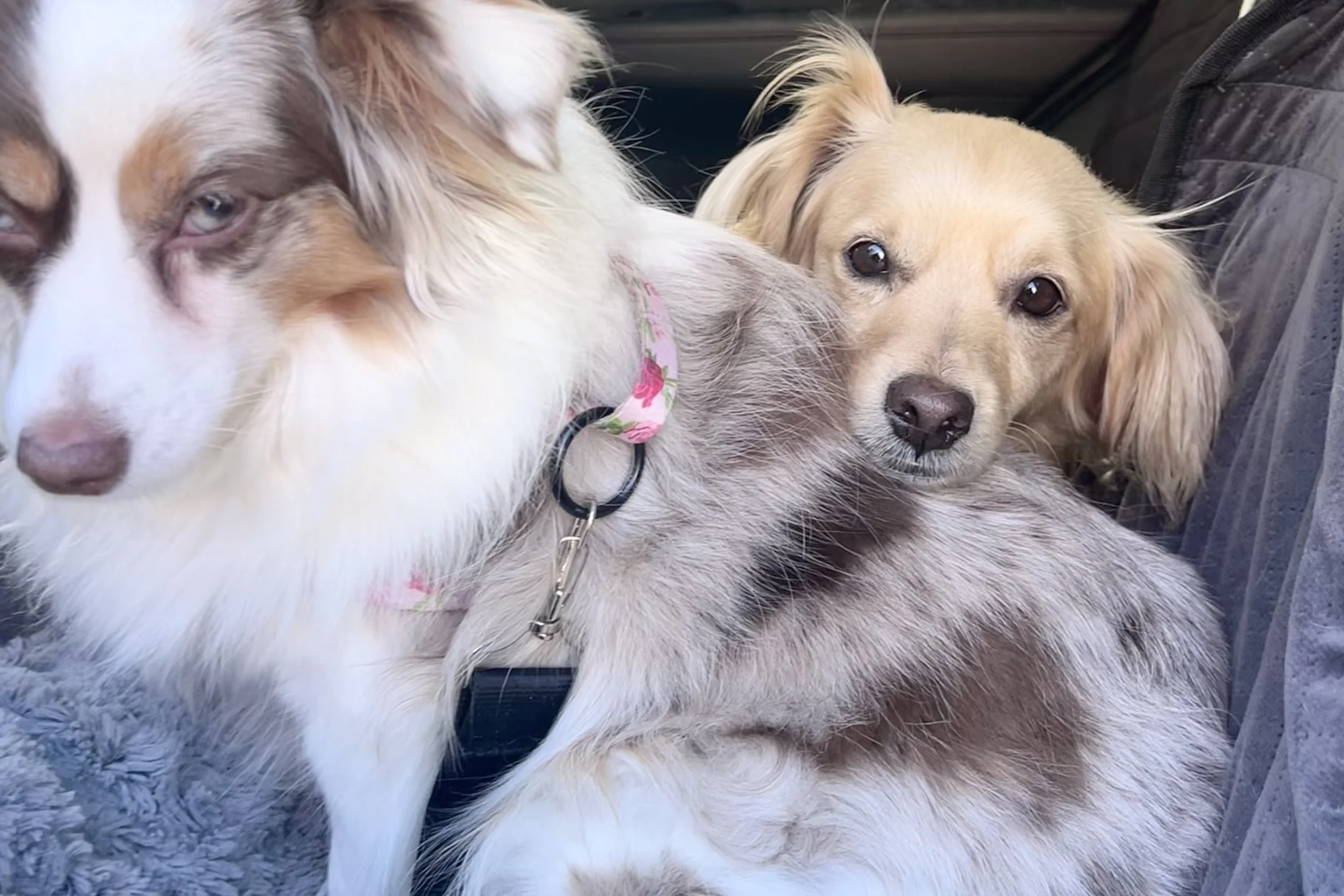
Familiar contact and a contained space help create the first sense of safety.
For some dogs, having a consistent travel bedor soft blanket they already use at home can make that transition noticeably easier. We use one that’s lightweight and easy to bring along, so it feels familiar without adding much bulk.
A favorite long-lasting chew can also help take the edge off that restless, in-between energy during the ride.
These don’t just add comfort — they reduce uncertainty.
Instead of adjusting to a completely new environment, your dog has something recognizable within it.
That anchor can make a real difference in how quickly they begin to settle.
Why Movement Feels Different Than Walking
On a walk, your dog is in control.
They can:
stop
sniff
change direction
adjust pace
In the car, all of that disappears.
The body still feels motion — but without control over it.
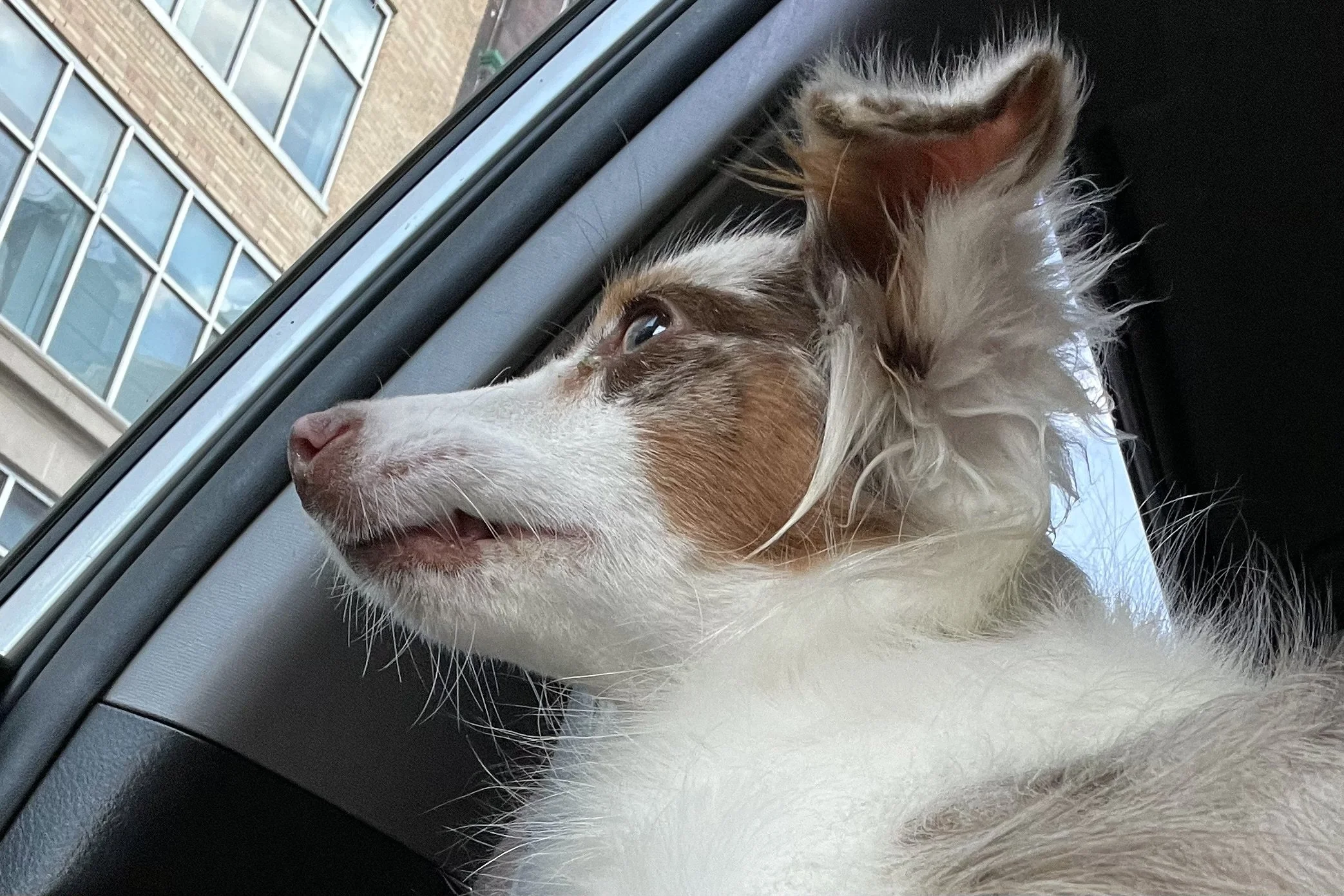
Seeing the world move without being able to engage with it can keep dogs slightly on edge.
For some dogs, especially those sensitive to movement, that disconnect can feel disorienting.
It’s one reason you may see:
stiffness
bracing
hesitation to lie down
Understanding this shift helps explain why even well-behaved dogs can struggle in the car.
How to Help Your Dog Transition Into Rest
Settling doesn’t happen all at once.
It usually follows a progression:
Standing or sitting upright
Slowing movement
Lying down briefly
Fully resting
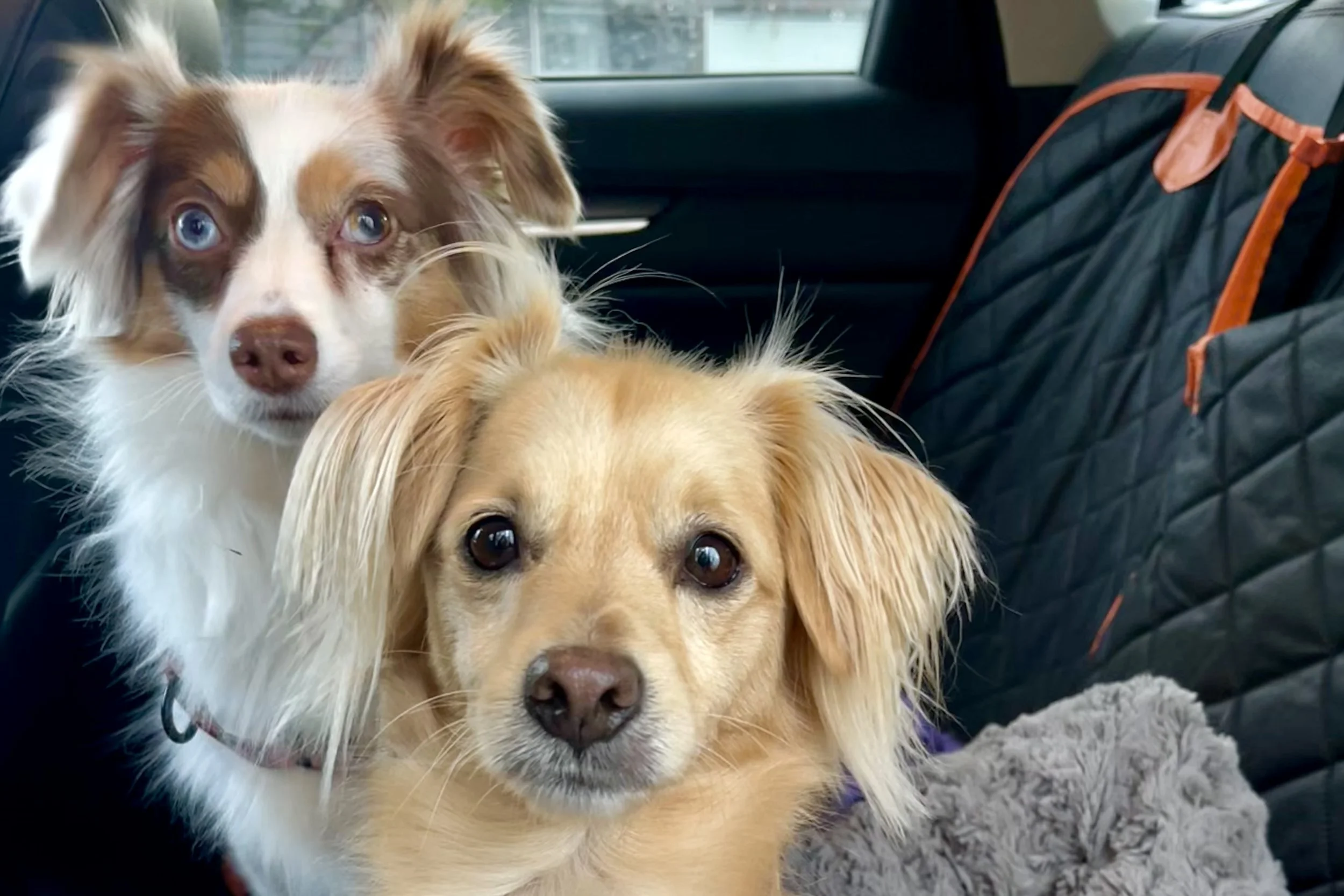
Resting begins here, even if they’re not fully relaxed yet.
Some dogs move through this quickly.
Others take time.
Your role isn’t to force that process — it’s to support it.
That means:
giving them space to adjust
keeping the environment steady
avoiding sudden changes
Over time, that transition becomes easier.
When a Dog Can’t Settle at All
If your dog never reaches that resting phase, it’s worth looking at:
whether the environment is too stimulating
whether conditioning was rushed
whether motion sensitivity is a factor
In those cases, going back to shorter, calmer drives can make a significant difference.
Final Thoughts: When Settling Happens
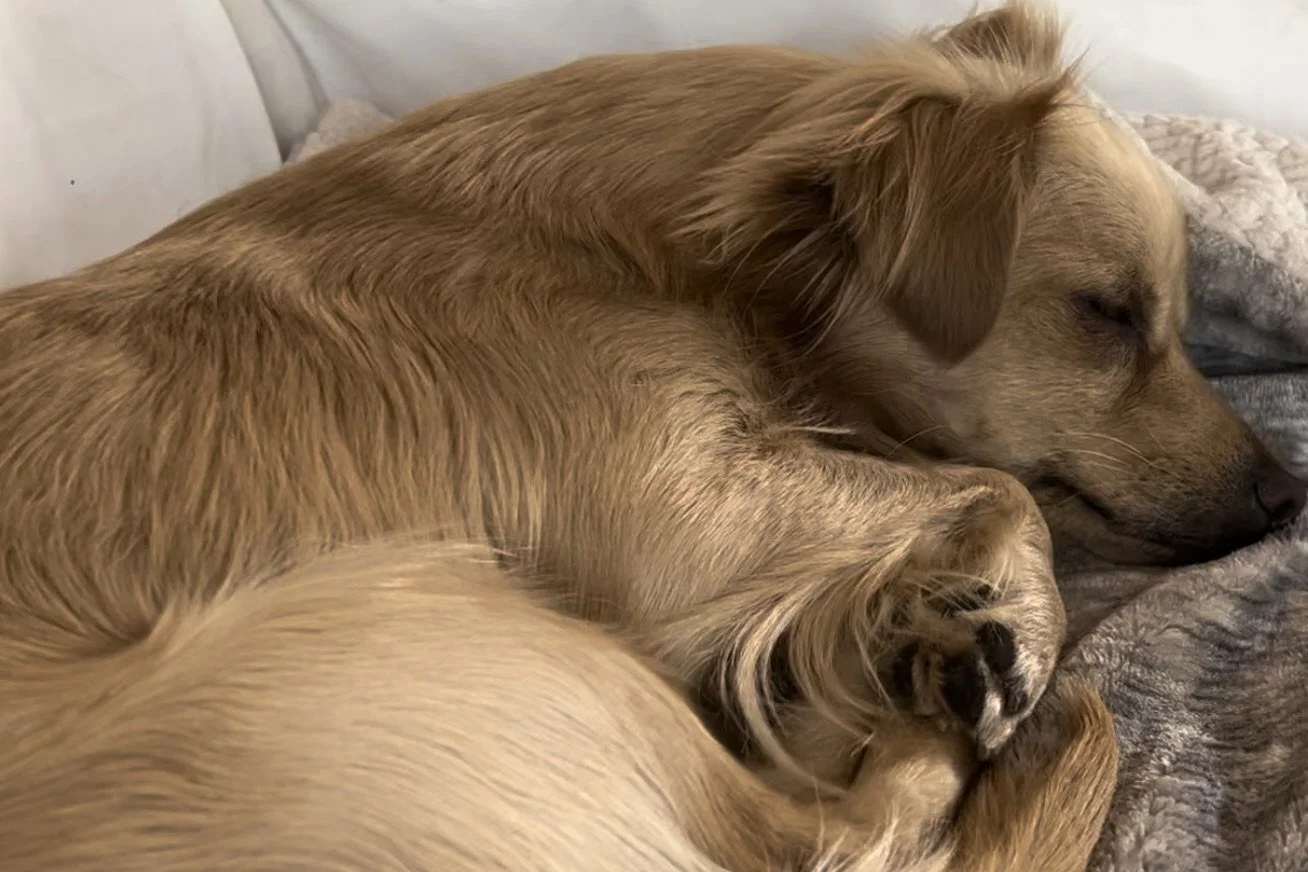
This is the shift—when everything finally slows and the body fully settles.
When that happens, something shifts.
The scanning slows.
The repositioning stops.
They stop trying to figure everything out — and just rest.
And once they reach that point, the car stops feeling like something to manage…
and starts feeling like somewhere they know how to be.
