Outer Banks Winter Travel with Small Dogs
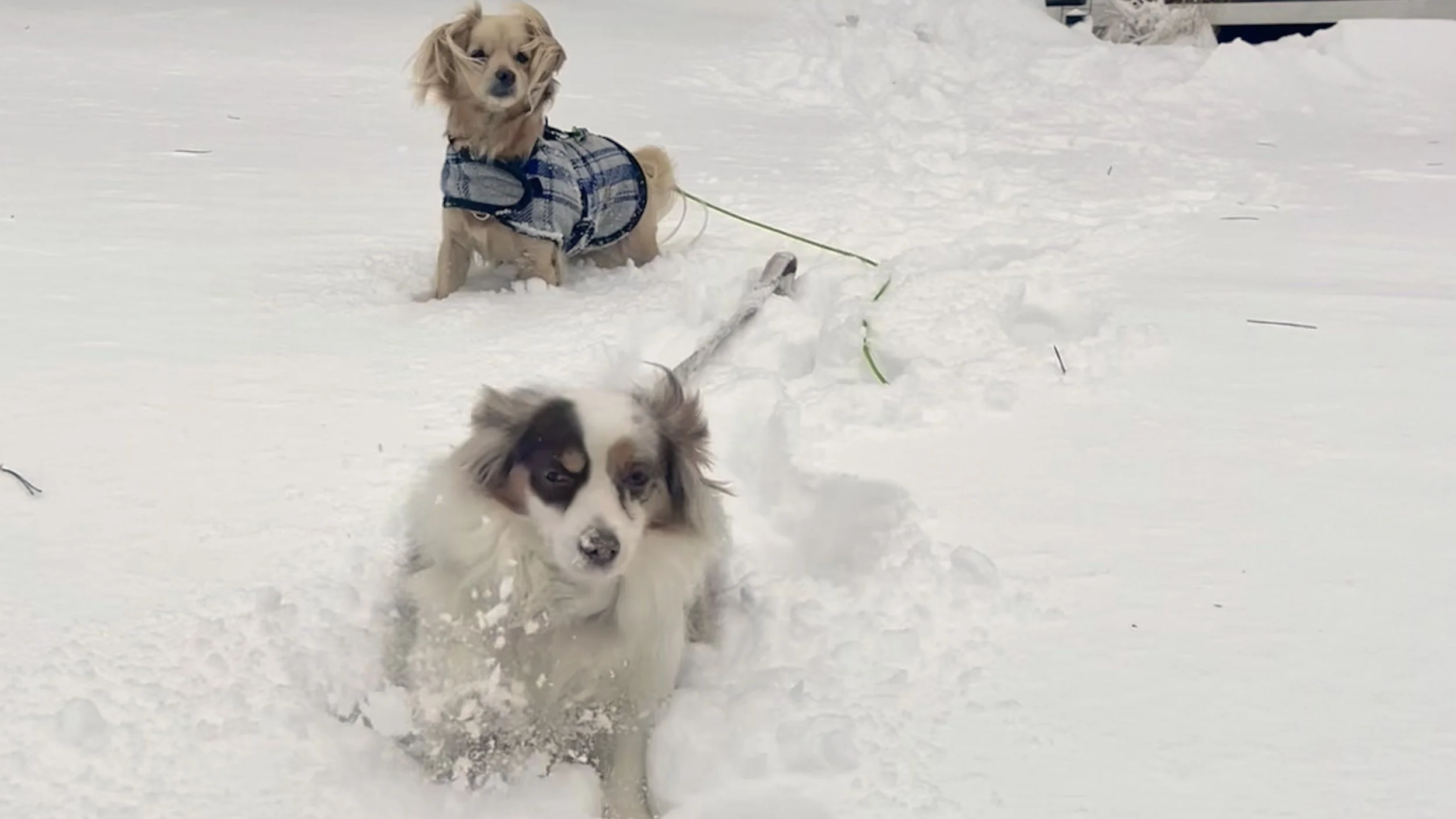
Early winter snow turned a simple stop into a slower, more careful start.
After structuring our days carefully in St. Augustine, the drive north was meant to be simple — one quiet overnight stop before heading home. The Outer Banks felt like a natural extension of that slower coastal rhythm.
Instead, it became a real-time test of how quickly coastal conditions can shift — and what that means when you’re traveling alone with small dogs.
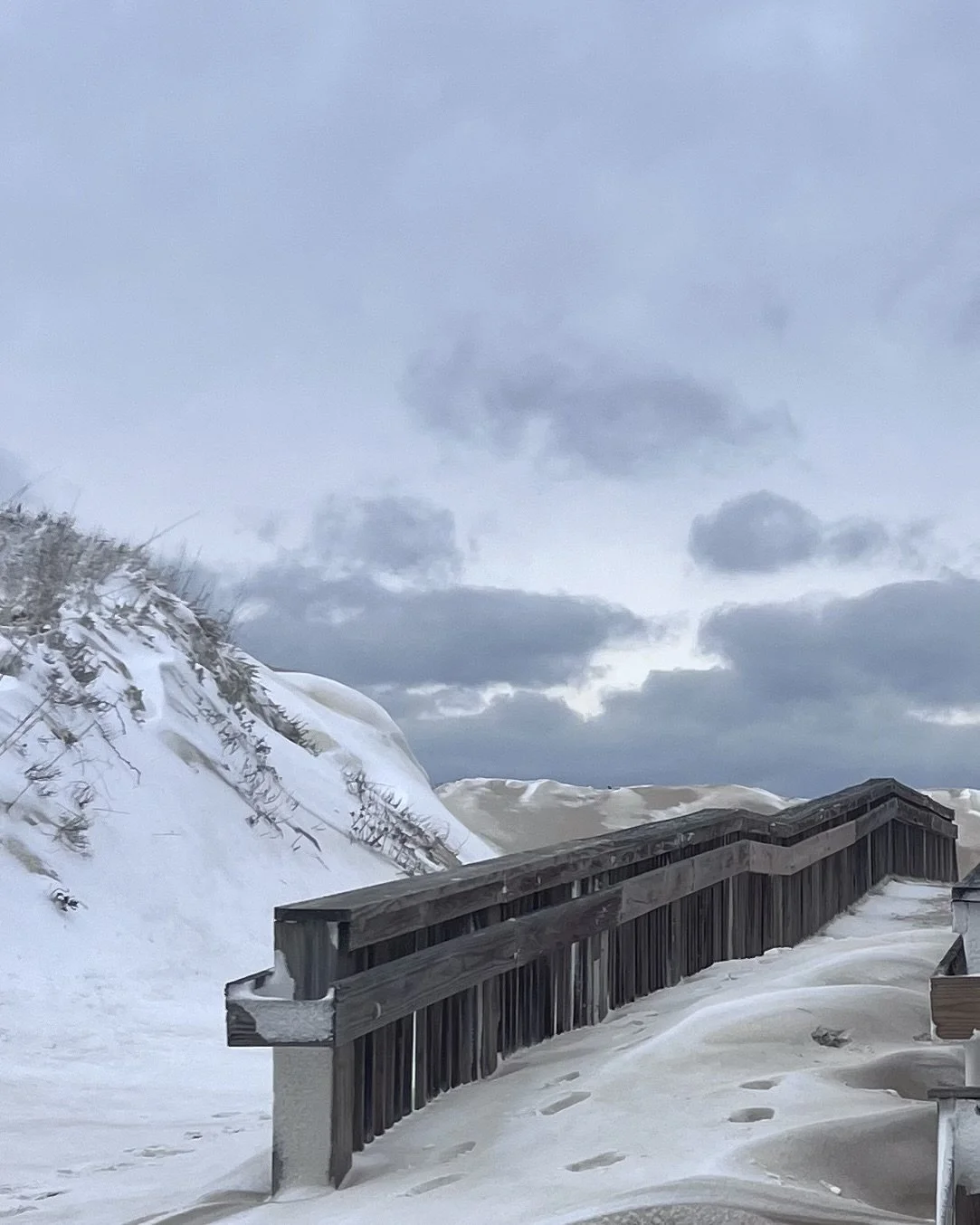
A winter storm moved in faster and stronger than expected. Winds gusted close to 70 miles per hour. Snow covered dunes and boardwalks that, hours earlier, had looked walkable.
What had been planned as a calm buffer stop turned into something else entirely: a pause shaped by wind, closures, and the need to rethink what “manageable” travel actually looks like.
In St. Augustine, stimulation concentrated in predictable ways — something I wrote about in How to Walk Old Town St. Augustine With Dogs: A Calm Route & Pacing Guide. Density built at certain hours and on certain streets, but it was measurable.
The Outer Banks storm was different. The environment itself shifted. Paths disappeared. Closures stacked. Wind reshaped movement entirely.
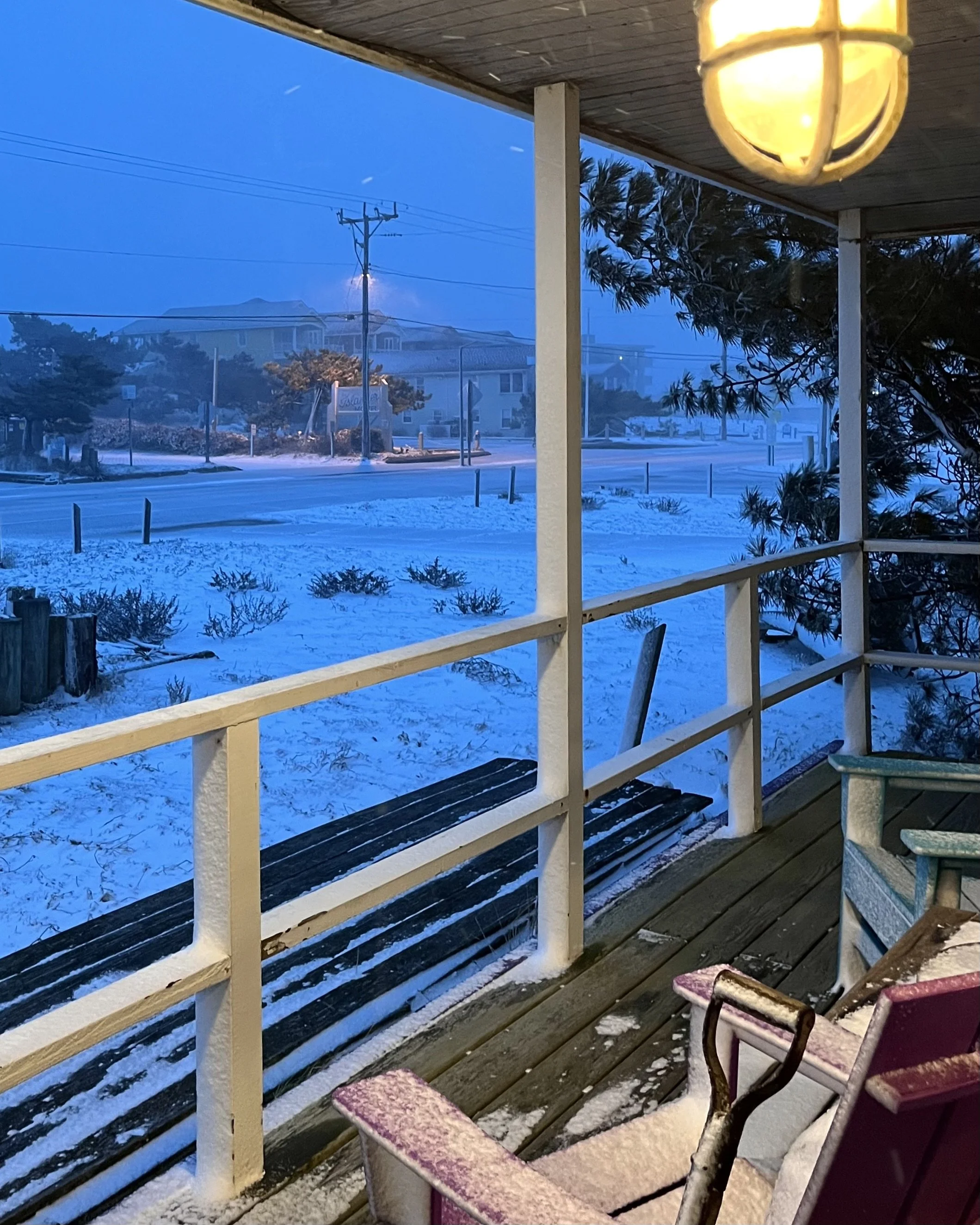
That first night brought sustained wind, rattling porch lights, and very little real rest.
When Arrival Changed the Plan
When I arrived, it was immediately clear this wasn’t a light weather event. Wind and snow made being outside for more than a few minutes unrealistic. Snow piled up quickly, nothing had been cleared, and being outside wasn’t just uncomfortable — it wasn’t safe for people or dogs.
I had packed for long coastal walks, not snowdrifts or indoor pacing. My best footwear was a pair of slip-on sneakers, which made even brief trips outside risky. That reality immediately changed how I managed dog walks, potty breaks, and daily routines.
What Actually Happened When We Arrived
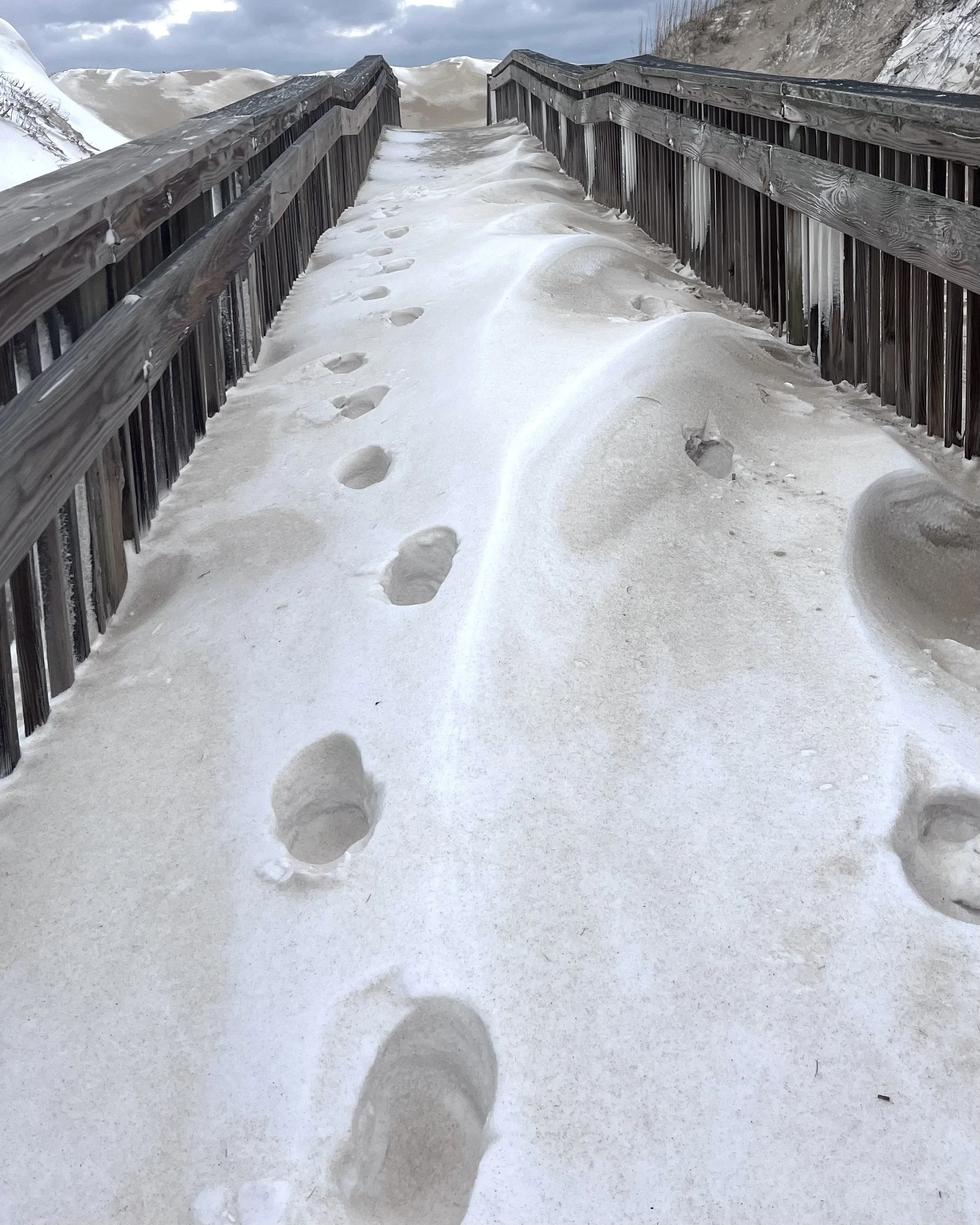
Snow-covered dunes and walkways made it clear this wouldn’t be a typical coastal stop.
Getting In Before Everything Closed
By the time I arrived, the storm was intensifying and places were starting to close for safety. I hadn’t been traveling with groceries or staples, so getting food into the house became the immediate priority. I was lucky to make it into a grocery store just as they were preparing to close — timing that mattered far more than anything else that day when traveling with dogs in bad weather.
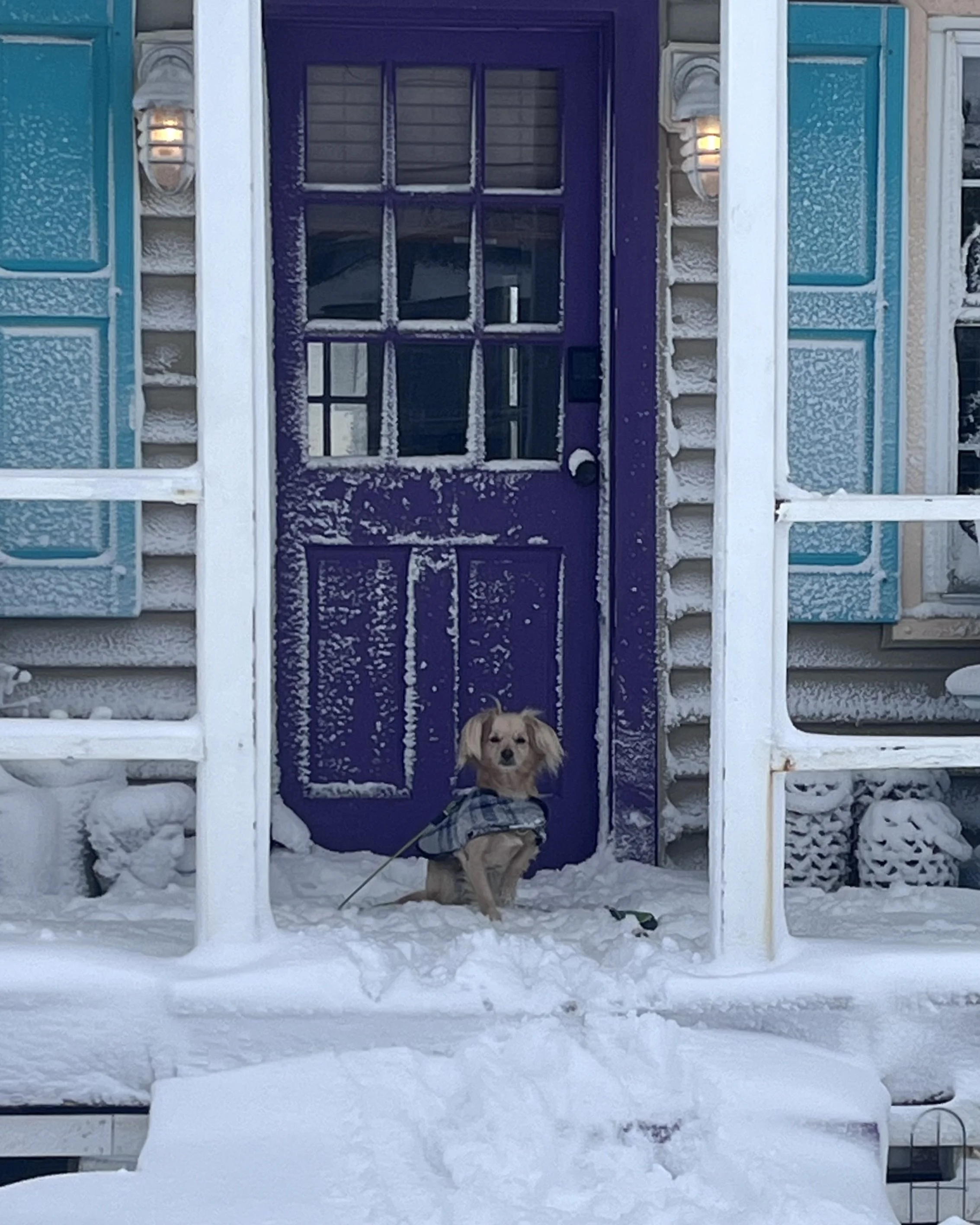
Once everything started closing, staying put became the only real option.
The Next Morning: What Was (and Wasn’t) Open
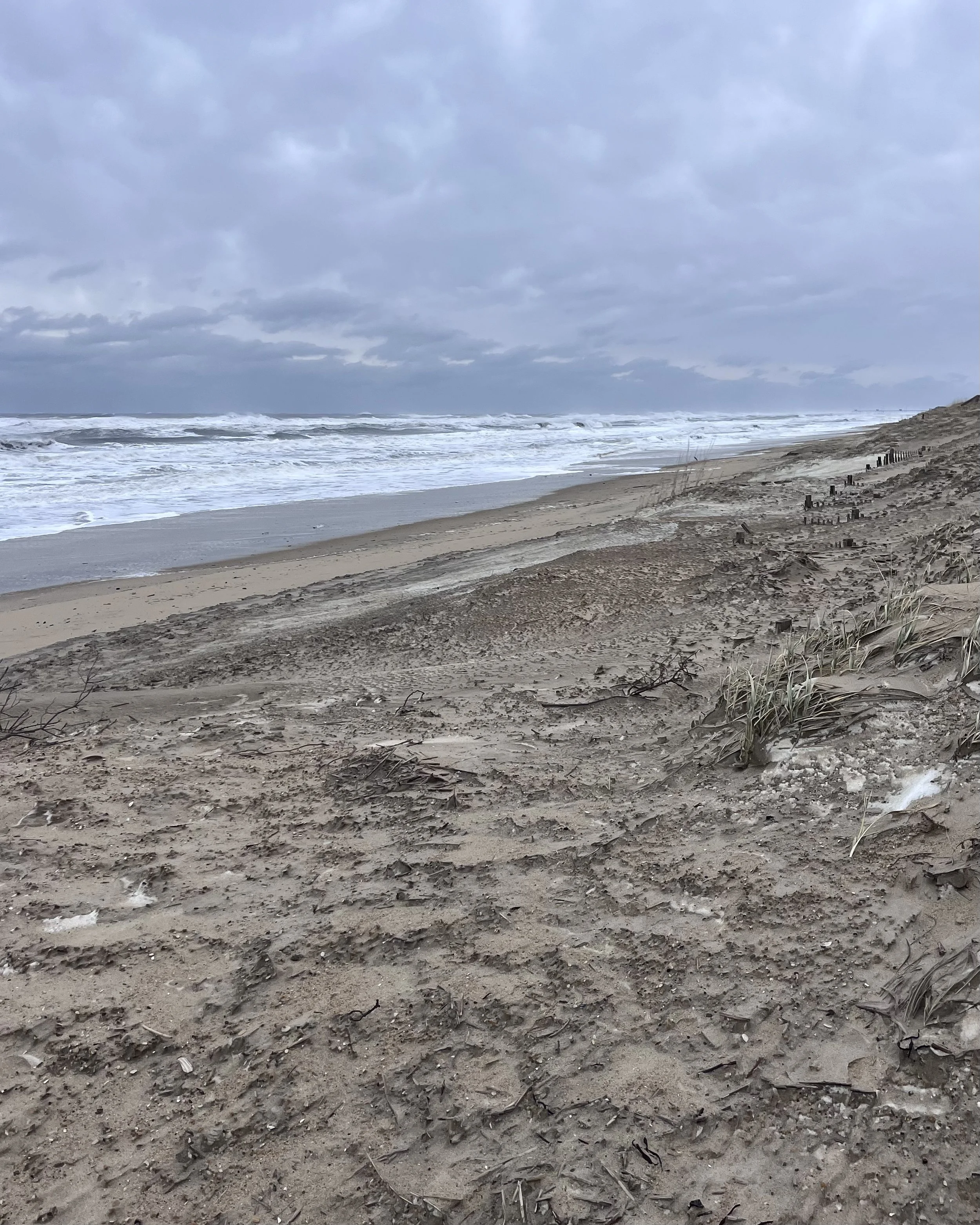
Empty shoreline after the storm — quiet, closed, and still.
The next morning, I assumed I’d be able to step out and grab a coffee nearby, but everything was closed. Grocery stores, drugstores, coffee shops — even some gas stations — weren’t open.
I ventured out slowly on ice-covered roads just to get a sense of the area and eventually found one gas station that was open, where I managed to get a nitro coffee. That small errand ended up being the full extent of going out that day — a reminder of how limited options can be during winter travel with dogs.
Walking the Dogs Without Walks
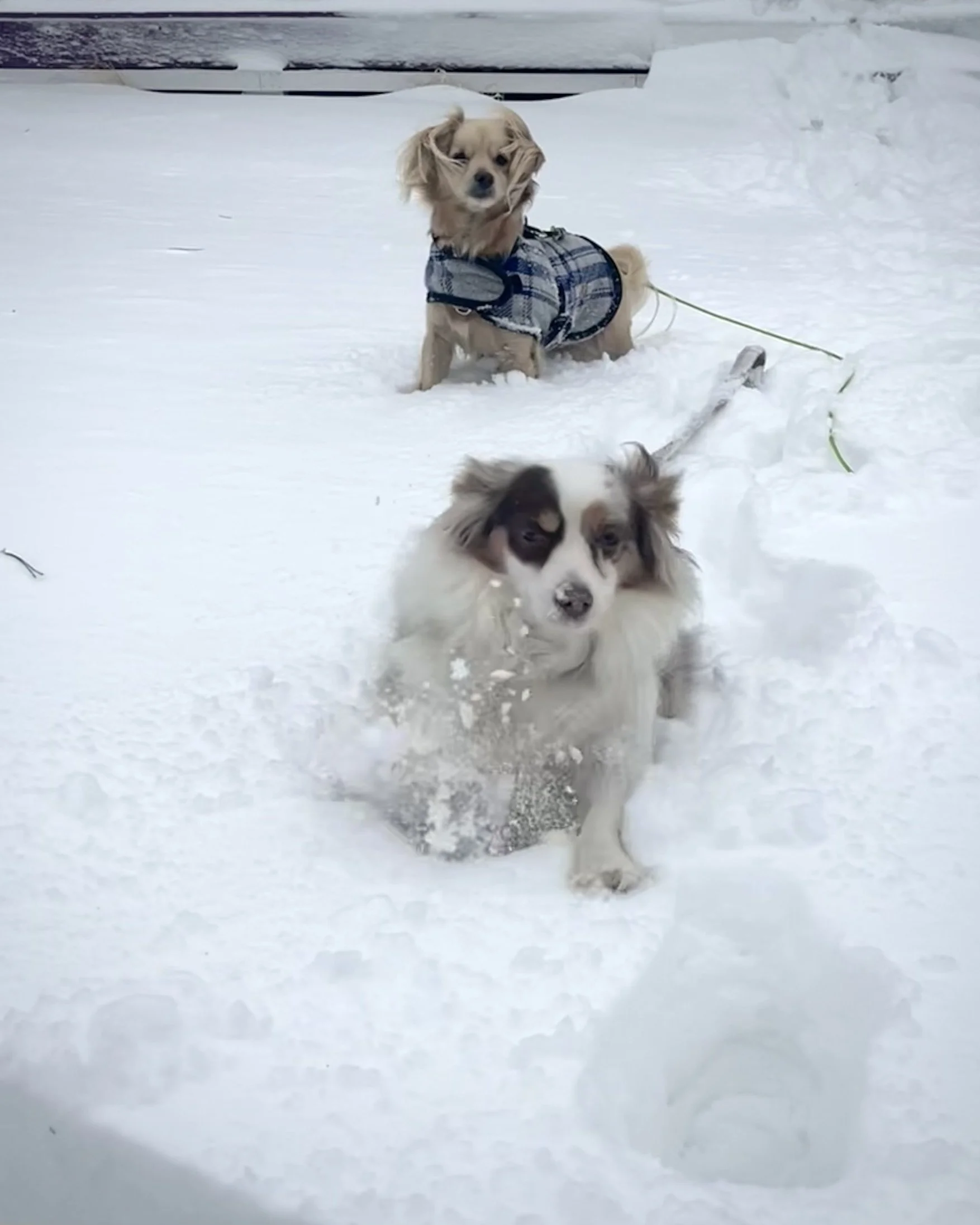
When paths disappear, short leash breaks replace normal walks.
With deep snow, high winds, and no cleared paths, traditional dog walks weren’t an option. The dogs did try walking in the snow — which mostly meant stepping forward and immediately dropping through it — and being cooped up inside more than usual left them a little stir-crazy.
Instead of forcing things, I used a 30-foot leash from the back door so they could take quick potty breaks without prolonged exposure. When traveling with dogs during winter storms, managing energy, expectations, and safety matters more than sticking to normal routines. A much slower rhythm than planned became the priority.
What This Taught Me About Buffer Days in Coastal Travel
Coastal travel carries a level of unpredictability that structured towns don’t. In St. Augustine, stimulation built in measurable ways — certain streets, certain hours, certain density. Here, the environment itself shifted. Wind removed walkability. Snow erased paths. Closures narrowed options quickly.
Buffer days aren’t indulgent when traveling with small dogs. They’re protective. They allow space for the environment to change without forcing movement that isn’t safe or manageable.
This stop reinforced something simple: flexibility isn’t about comfort. It’s about regulation — for the dogs and for me.
Lessons Learned Traveling With Dogs in Winter
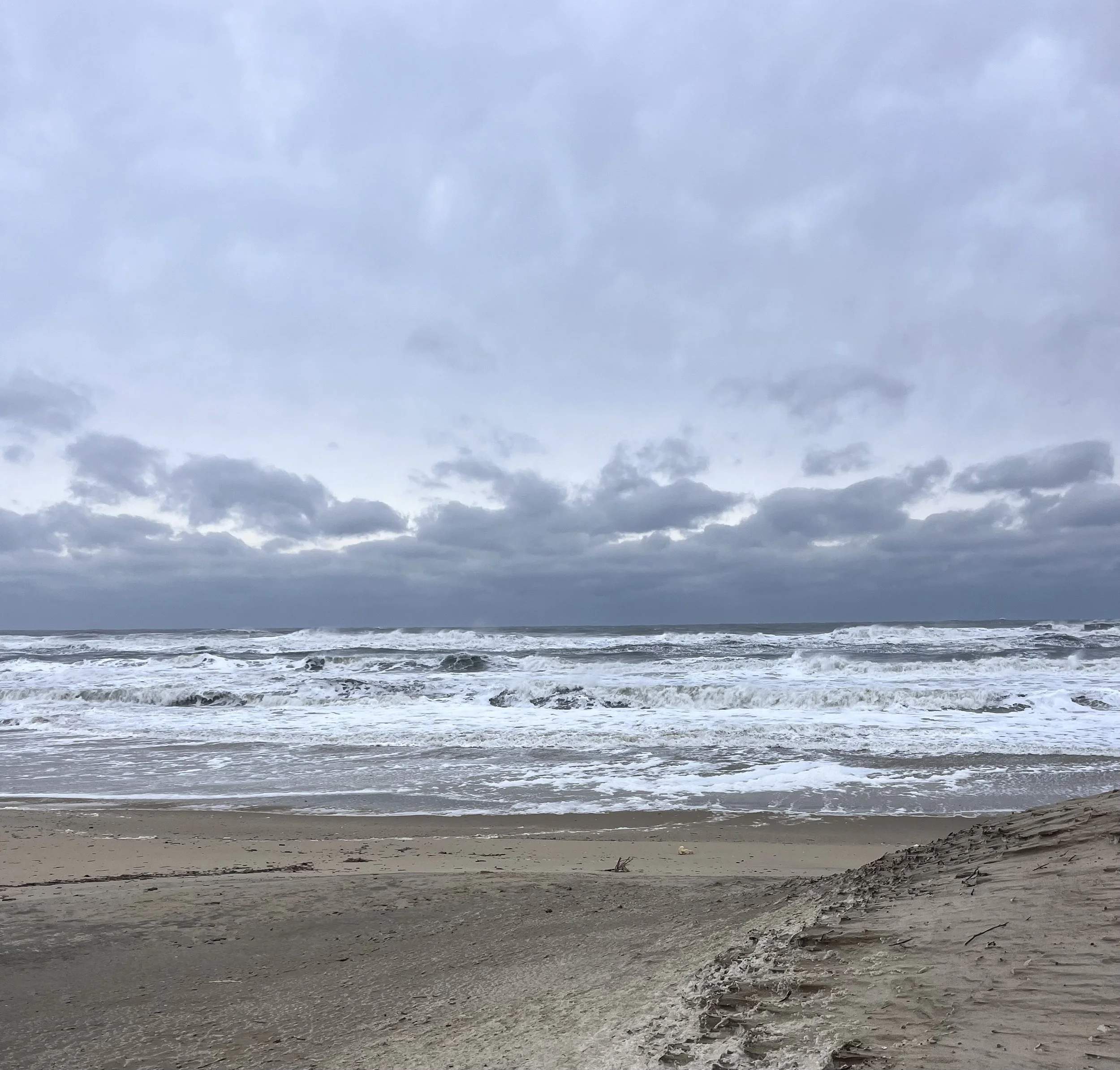
Winter waves breaking along an empty Outer Banks beach.
This wasn’t about sightseeing — it was about how environment shapes regulation. I’ve written about that more directly in Is Cape Charles Good for Small Dogs? A Comfort Breakdown, where calm coastal space creates a very different baseline. The Outer Banks storm was the opposite end of that spectrum — same coastline, entirely different environmental load.
Traveling with dogs in winter weather requires more flexibility than most itineraries allow. A few things this stop reinforced for me:
Build in buffer days whenever possible. Winter storms can turn a quick stop into a longer pause, and having the option to extend a stay is far safer than pushing through bad conditions with dogs.
Assume normal routines may not work. Snow, ice, and wind can make regular dog walks unrealistic. Short, controlled potty breaks and indoor activity may need to replace long walks entirely.
Pack for weather — and closures — you hope you won’t get. Footwear and layers matter, but so do basic food staples. I was underprepared with groceries, and having a few essentials on hand would have made storm-bound days much easier.
Choose accommodations that support staying put. Space, easy outdoor access, and a layout that works when you’re indoors most of the day can make all the difference.
Safety beats momentum. When traveling alone with dogs, slowing down — or stopping altogether — is often the smarter choice.
Some winter trips aren’t about seeing more. They’re about knowing when to pause.
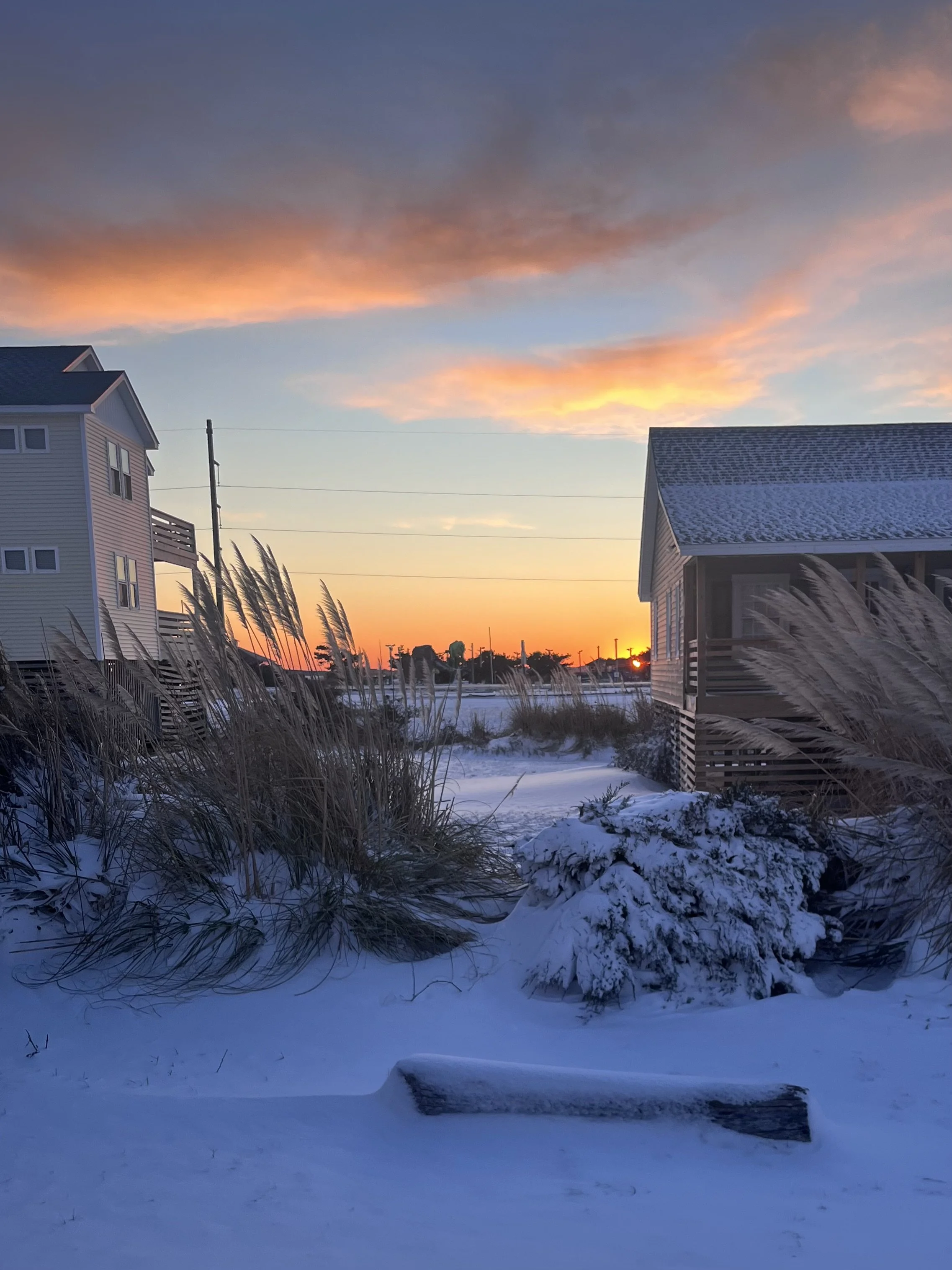
The morning after felt quieter than expected.
Would I Stay in the Outer Banks With Dogs Again?
Winter surf rolling in under a soft, unsettled sky.
Yes — but only with clear expectations.
In normal conditions, the Outer Banks offers space, quiet, and flexibility that can work well when traveling with dogs. During this storm, though, it wasn’t a place for walking, wandering, or exploring — it was a place to pause longer than planned.
What made it workable wasn’t what I could do outside, but what I didn’t have to push through. The house gave us room to wait things out, the layout allowed for controlled potty breaks, and the slower rhythm made it possible to prioritize safety over plans during an unexpected two-night winter stop.
This wouldn’t be the right stop for travelers who need shops, restaurants, or guaranteed walkability regardless of conditions. But for someone willing to build in buffer days — or extend a stay when conditions demand it — and accept that some trips are about staying put rather than seeing more, this dog-friendly coastal stop did exactly what I needed it to do. It absorbed stress instead of adding to it — and when traveling alone with dogs, that matters more than almost anything else.

After the storm, the priority was warmth, rest, and keeping everyone comfortable.
