Is Cape Charles, Virginia Good for Small Dogs? A Comfort Breakdown
Yes — Cape Charles is a genuinely dog-friendly beach town for small dogs, particularly outside peak summer.
The combination of wide shoreline, manageable downtown density, and quiet lodging makes it one of the easier Virginia beach towns for regulation-sensitive dogs.
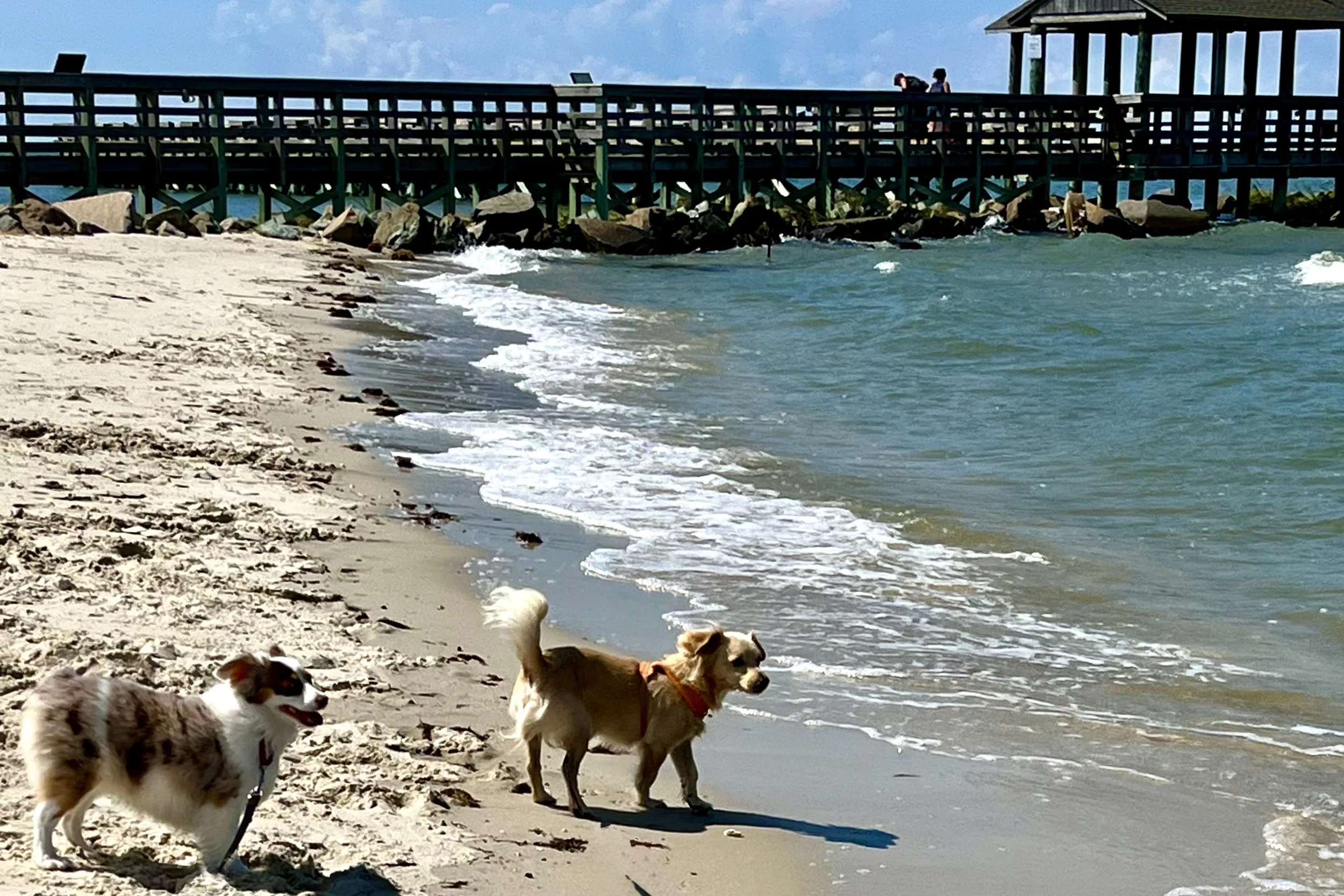
Wide, walkable shoreline near the Cape Charles pier — plenty of room for small dogs to explore without feeling crowded.
What It Actually Felt Like
We chose Cape Charles for the beach.
Everything else — coffee in the morning, grabbing dinner downtown, quiet lodging in our tiny house — fit around that.
If you’re comparing Virginia beach towns, you may also want to read my breakdown of Colonial Beach with small dogs.
Dogs aren’t allowed on the beach before the seasonal cutoff at Labor Day. We timed our September trip specifically so we would have beach access with the dogs.
The shoreline set the tone for the week.
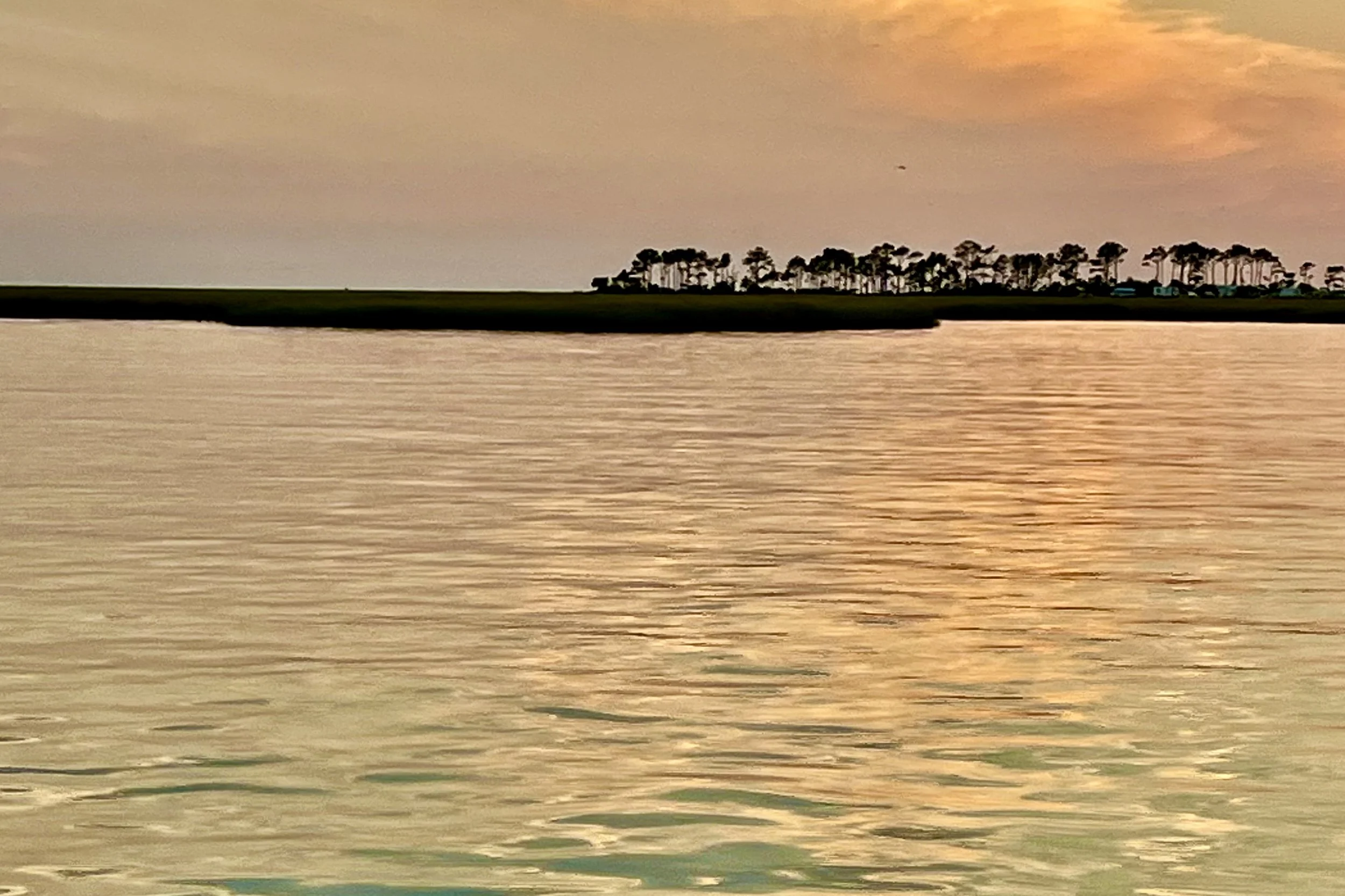
The shoreline set the tone for the week.
The First Few Minutes
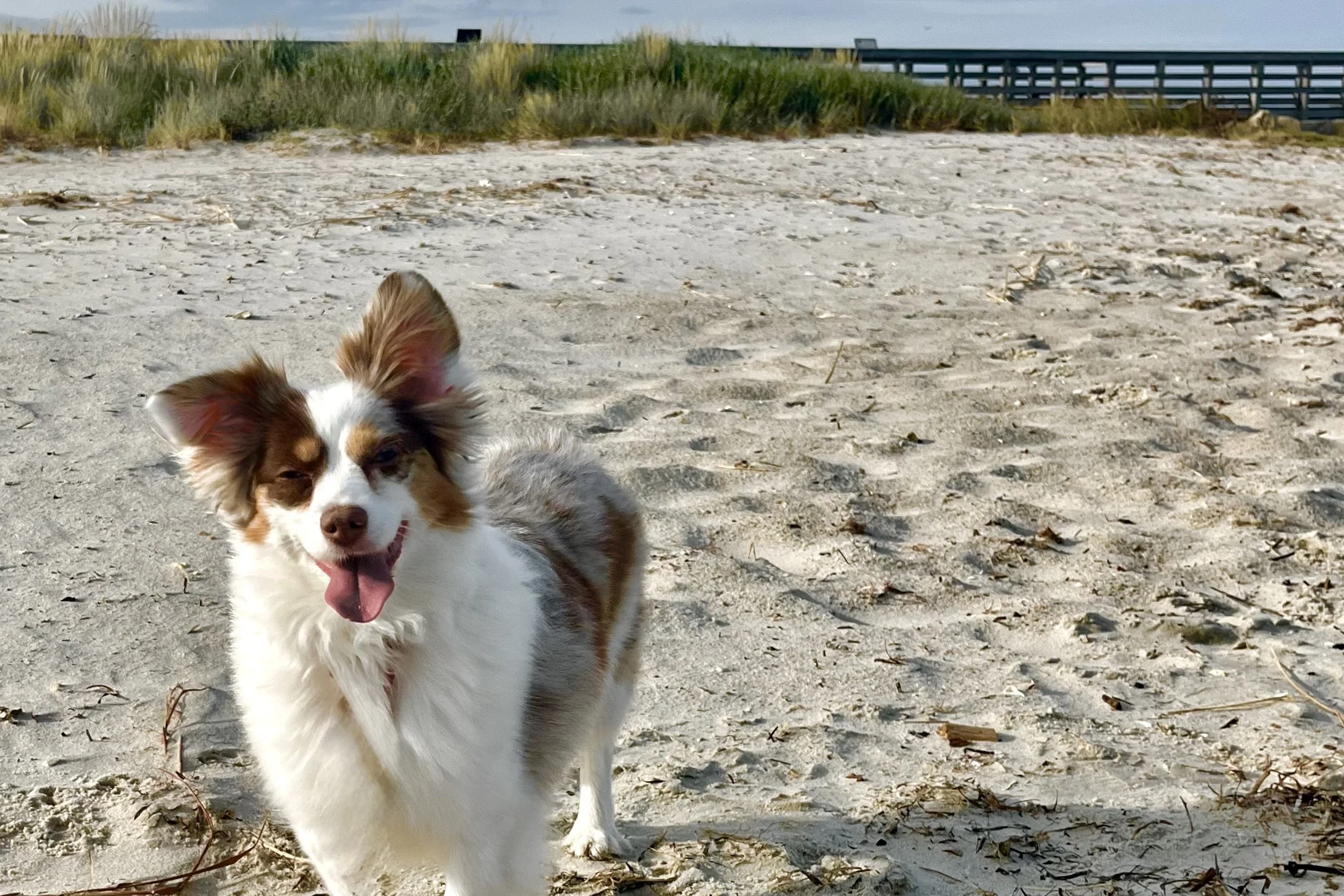
Early shoreline walk after arrival — curious, alert, and settling into the new environment.
When we arrived, the dogs went through their usual new-place adjustment.
Saydie did what Aussies do — she scanned. Head up, taking in the layout.
Archie went straight to the ground, deeply interested in every scent.
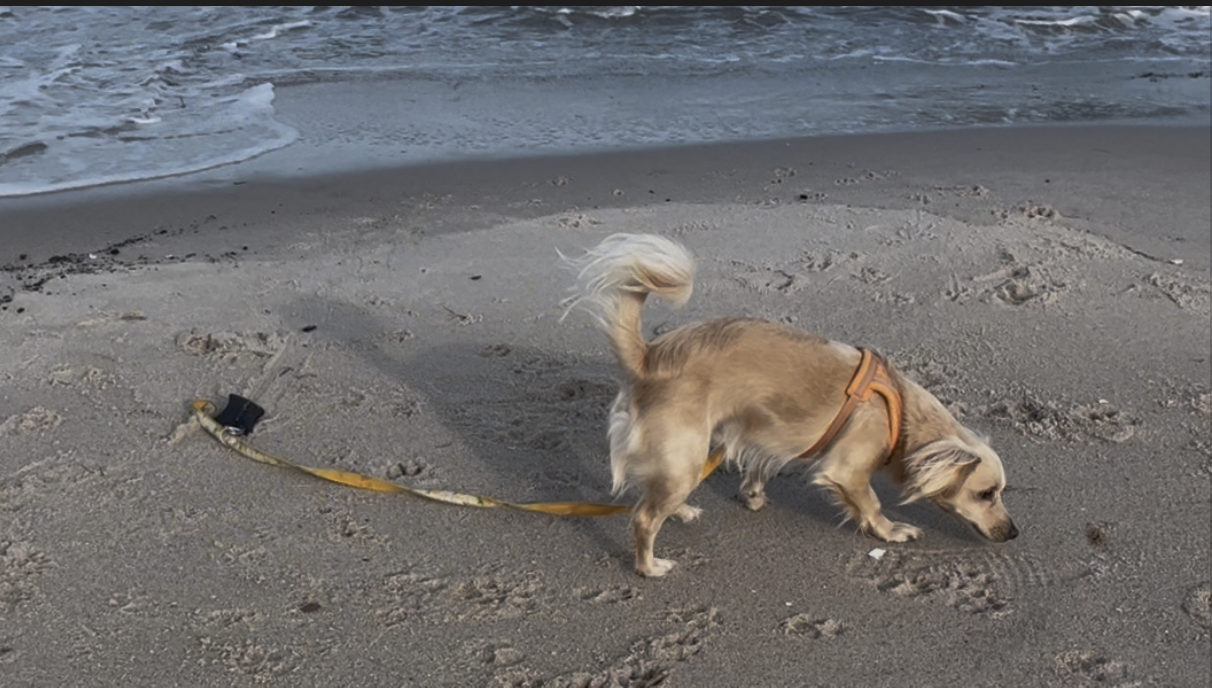
The first few minutes were slow — head down, taking everything in.
A little faster walking.
More looking around.
Taking everything in.
Nothing intense — just orienting.
Within a few minutes, their pace evened out. That early settling usually tells me the environment isn’t overwhelming them. If it were overwhelming, it would have taken longer for them to relax. It didn’t.
The Beach
The beach in Cape Charles faces the Chesapeake Bay, not the open Atlantic. The shoreline is wide. The water feels calmer. The horizon opens up in a way that makes everything feel expansive.
If your dog struggles with tighter boardwalk-style environments or crowded beach entries, the width here makes a noticeable difference.
There were other dogs around, but everyone had space. No tight clusters. No packed setups.
I used 20-foot leashes so they could run safely in and out of the water.
There are restrooms and rinse stations right at the entrance, which makes coming and going simple.
Saydie loves swimming and wind. Archie loves racing the edge of the shoreline. Out there, they were completely themselves — running, splashing, circling back, heading out again.
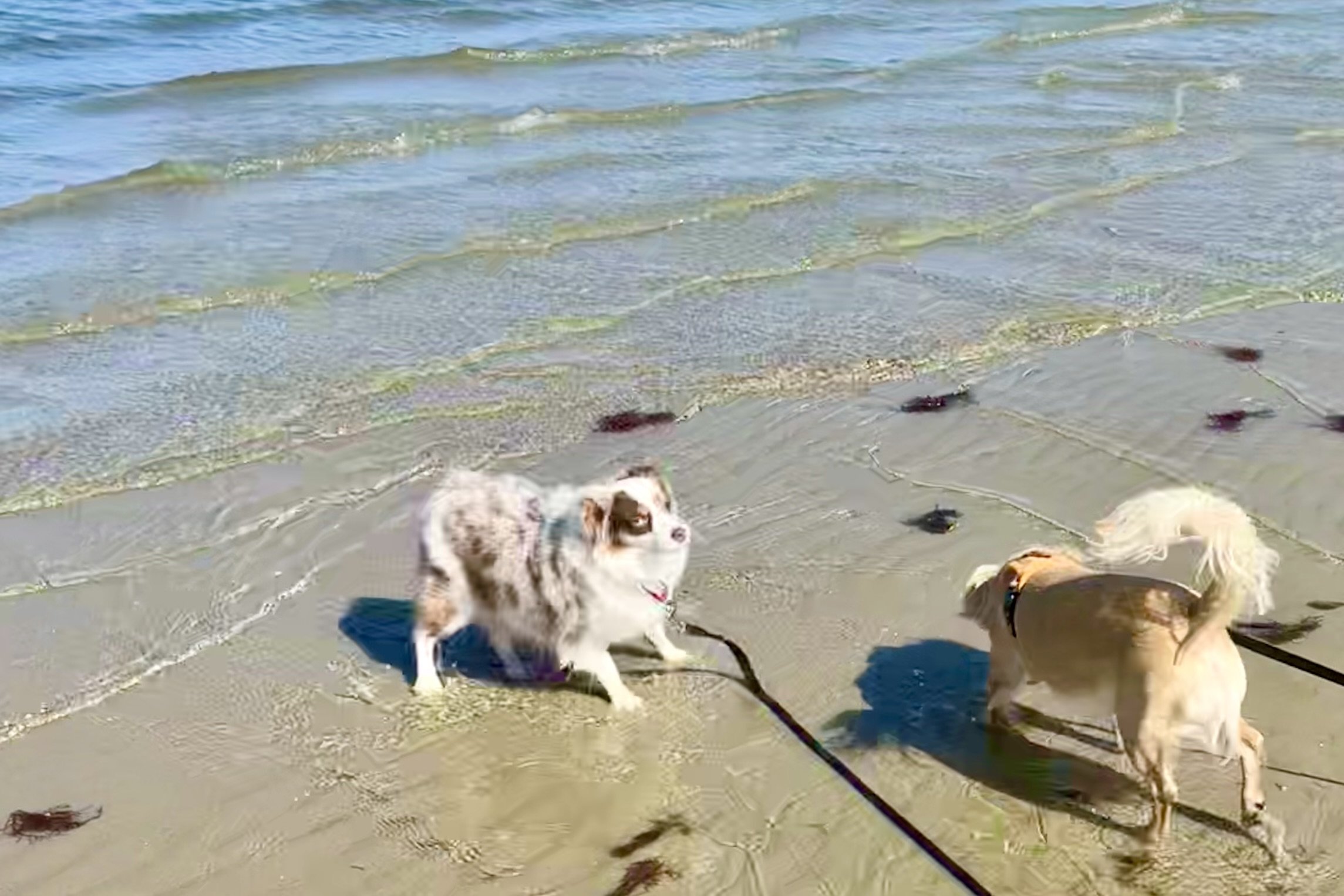
Shallow waves and open shoreline gave them space to explore at their own pace.
It was joy.
The beach wasn’t an activity. It was the anchor.
Downtown
We didn’t spend hours downtown. We went in for coffee most mornings and grabbed dinner once.
Mason Avenue is wide and easy to walk. The sidewalks are mostly generous, with a few narrower stretches that are easy to navigate around.
It felt steady — people moving through, but no rush, no crowding.
Even eating outside, the patio had space between tables. The dogs could lie down comfortably without feeling crowded.
We weren’t managing the environment. It felt manageable on its own.
Being Able to Change Direction
One thing I notice in vacation towns is whether you can leave a situation calmly.
In Cape Charles, you can.
If you want quieter, you turn onto a side street.
If you want open space, you head back toward the beach.
If you’re done for the day, it’s easy to leave.
You’re not funneled into tight stretches with nowhere to go.
That flexibility makes the town feel lighter.
Where They Truly Settled
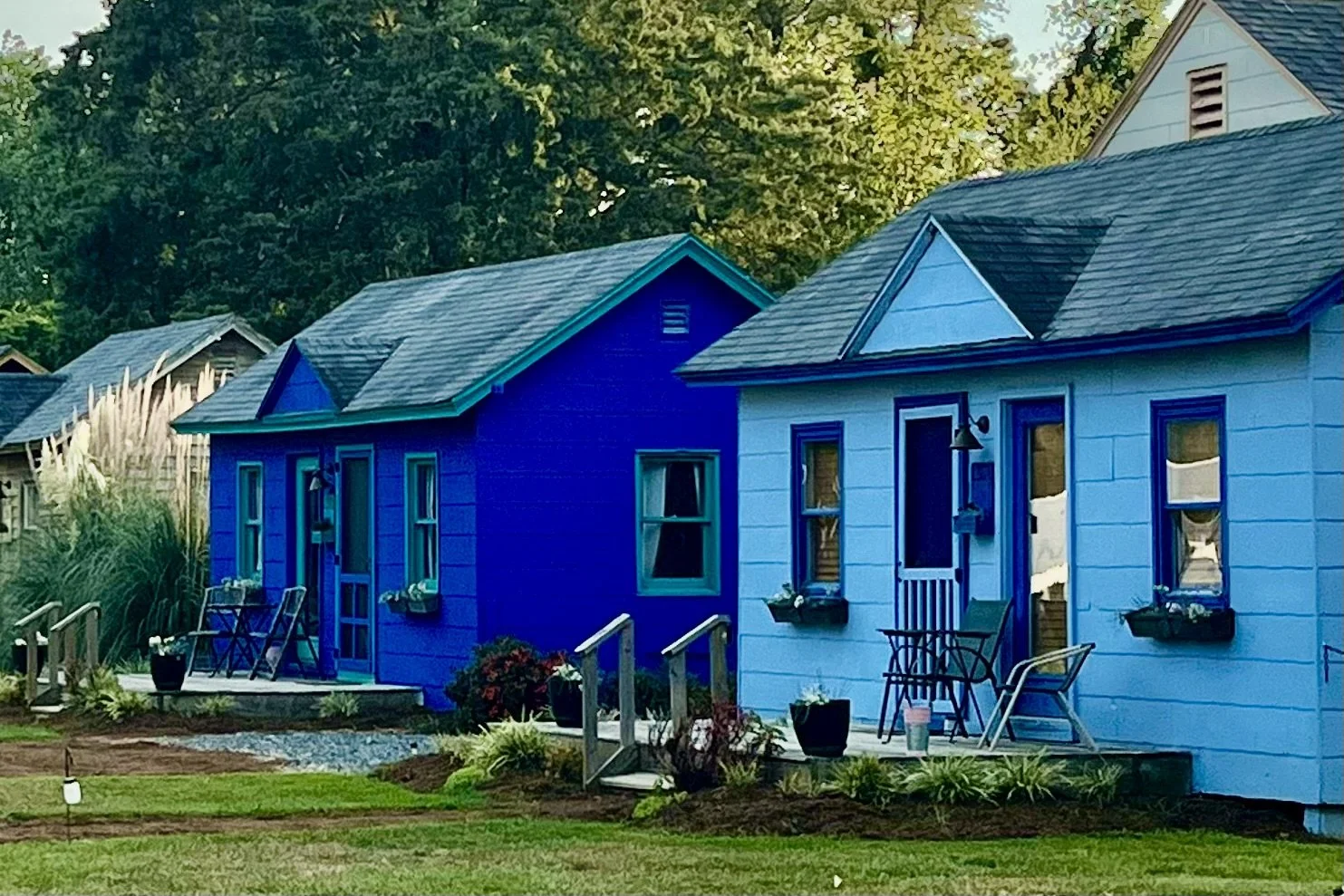
Our tiny cottage in a wooded corner of Cape Charles — simple, quiet, and removed enough from town to fully unwind.
We stayed in a tiny house in a wooded area a short drive from town, part of a small restored cottage community called Cape Charles Tiny Livin’.
The homes were originally 1930s cottages that have been thoughtfully rebuilt into small, simple spaces. It felt tucked away — not isolated, but removed enough from town to fully unwind at night.
Each evening, our host lit a large bonfire in the center of the grounds. Anyone staying there was welcome to join — sit with a glass of wine, toss beanbags, talk for a while, or just listen.
It felt relaxed and easy. Not loud. Not pressured. Just a handful of people enjoying the evening air.
And once inside the cottage, it was completely still.
They slept deeply every night.

Evenings were completely still inside the cotta
If a place is too much, you usually see it by the middle of the trip. Sleep gets lighter. Reactions get quicker.
That didn’t happen here.
The Season Question
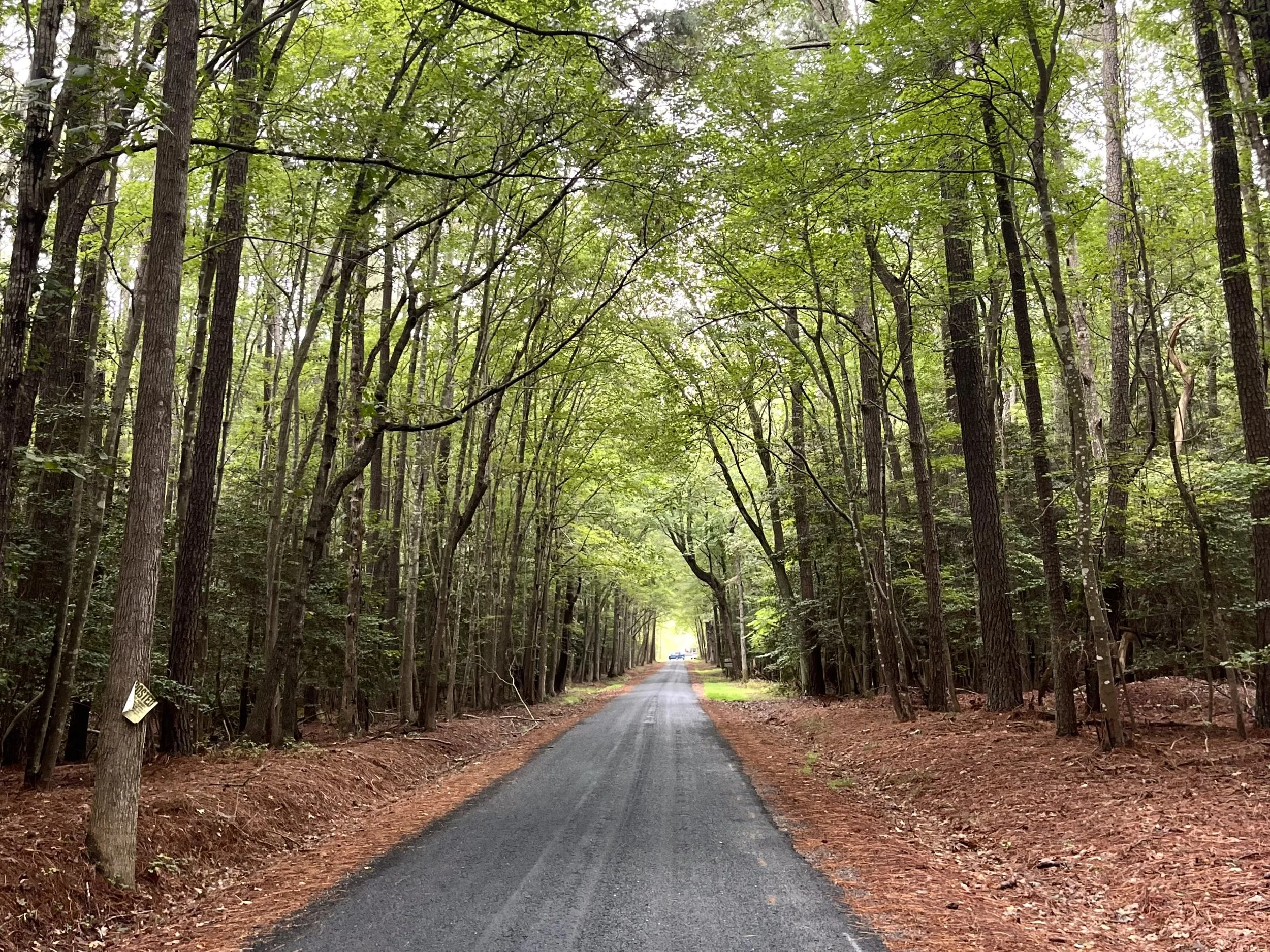
The quiet approach into town set the tone before we ever reached the shoreline.
We visited just after the summer season ended, and it was clearly softer than peak months.
Cape Charles is a true vacation town. In the height of summer, it would likely feel busier — more beachgoers, more cars, more overall movement.
For a very different kind of density experience, see my review of Old Town St. Augustine with small dogs.
The shoreline would still be wide, but the overall feel would likely be more crowded.
And before Labor Day, dogs aren’t allowed on the beach at all — which changes the experience entirely if the shoreline is your main focus.
Timing matters here.
So — Is Cape Charles Good for Small Dogs?
If your dog thrives with:
• Open shoreline
• Room to move
• Easy walking routes
• Quiet lodging
• The ability to change direction
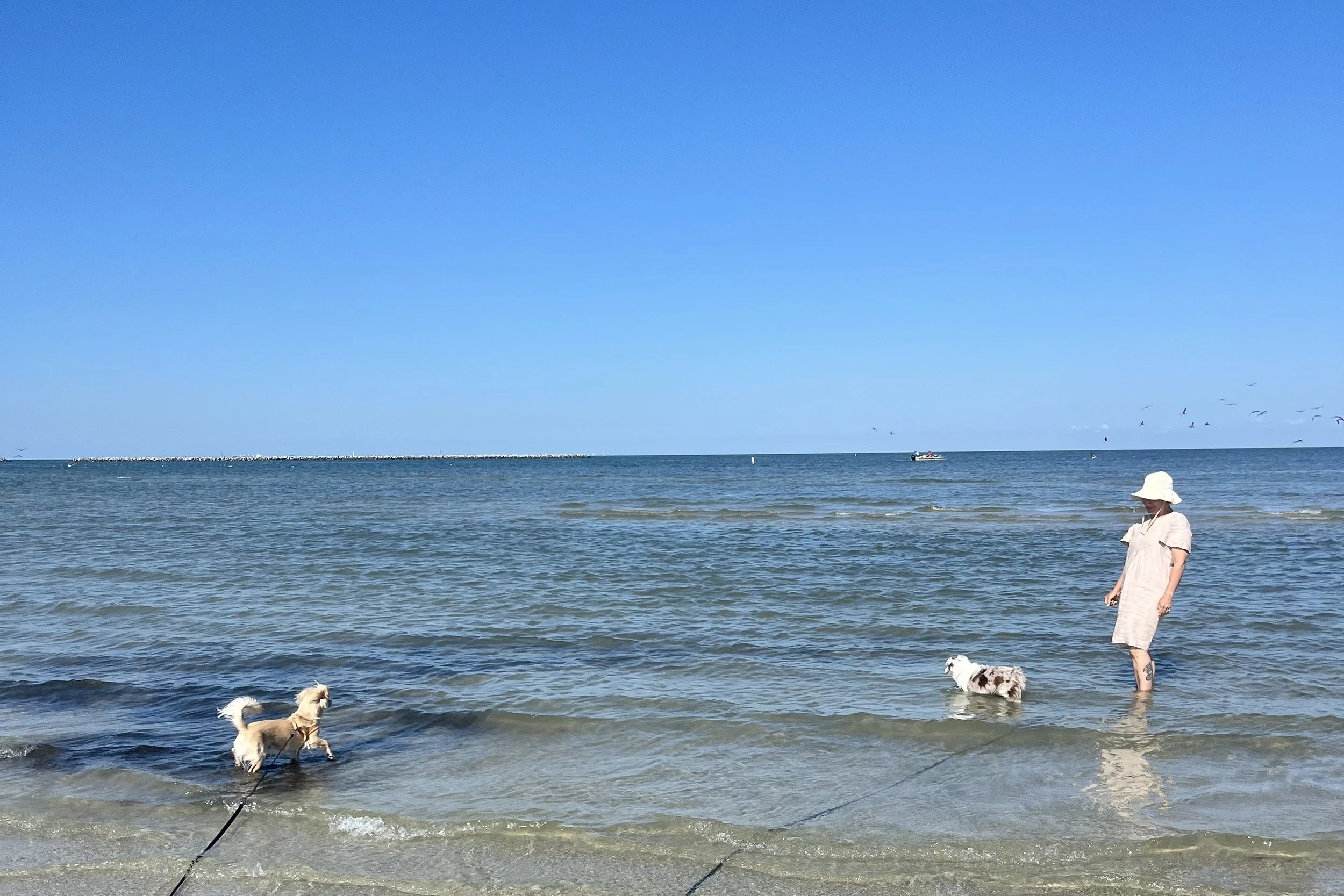
Plenty of space to move, pause, and change direction.
Cape Charles is a strong option — especially outside peak summer.
We went for the beach and built the rest of the week around it. For that kind of trip, it worked beautifully.
It felt spacious.
It felt easy.
It felt joyful.
Small Dog Comfort Index — September Visit
Environmental Space: 9/10
Ease of Walking: 8.5/10
Exit Flexibility: 9/10
Beach Experience (Post-Summer): 10/10
Downtown Density (Shoulder Season): 8/10
Recovery & Sleep Quality: 9/10
Season Sensitivity: High
Overall Feel: 9/10
This review is part of my Small Dog Comfort Index series.
