Pet-Friendly Hotels vs Vacation Rentals

Colorful tiny house vacation rentals with private entrances and quieter surroundings — a relaxed alternative to traditional hotels.
When we first started traveling with our dogs, I thought the biggest decision was simple: hotel or vacation rental.
It turns out that wasn’t the real question.
Choosing between pet-friendly hotels and vacation rentals isn’t just about convenience or price — it’s about fit.
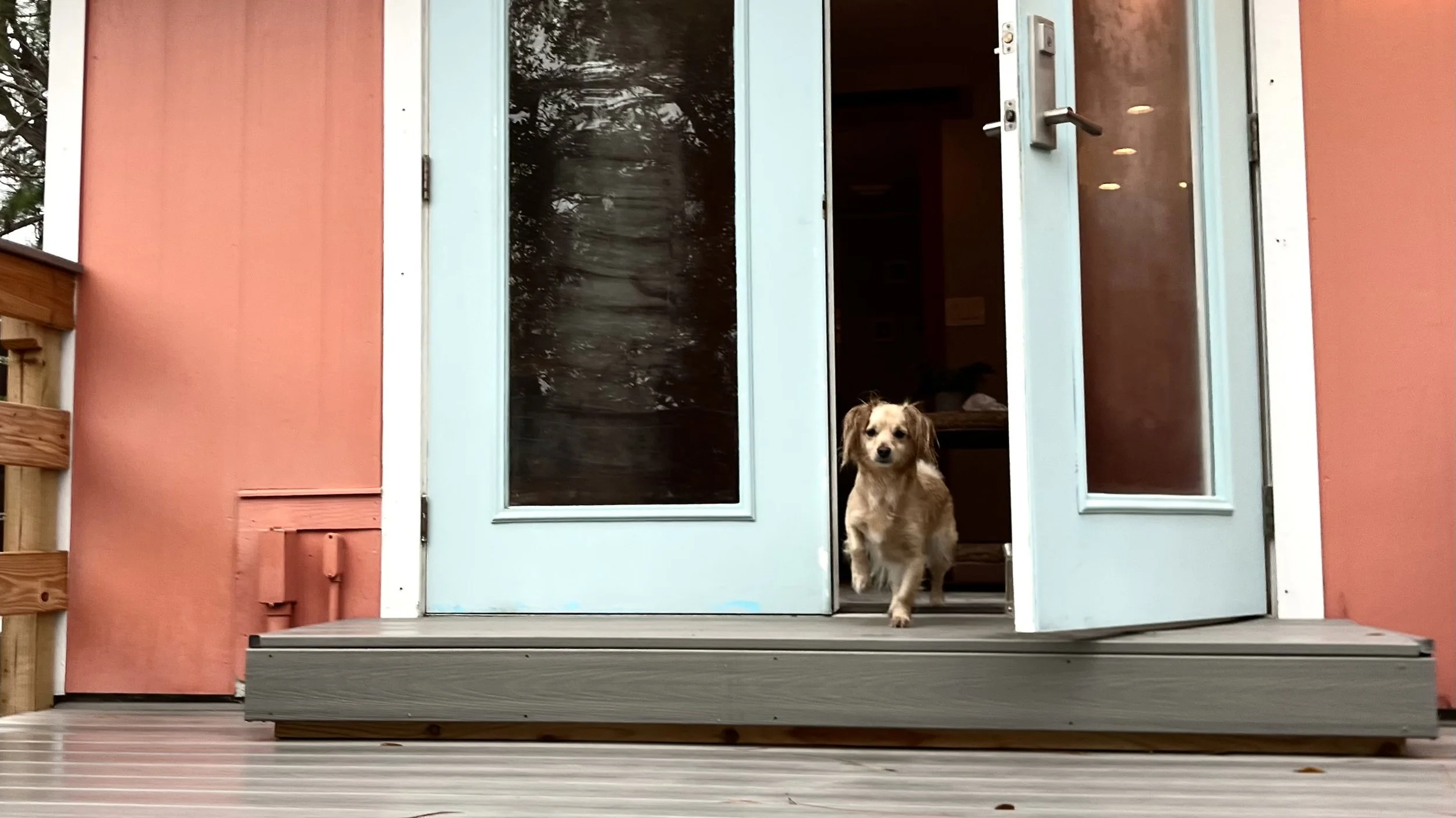
A small dog stepping out of a private guest cottage with easy outdoor access.
The real question is:
Does this place match my dog’s personality and routine?
We travel with two small, four-year-old dogs. They’re curious, sensitive, and a little anxious. They bark at unfamiliar sounds. They’re particular about where they go. And one of them occasionally decides that 1am is a perfectly reasonable time for a potty break.
Over time, I’ve realized that “pet-friendly” is simply a policy. It tells you a dog is allowed — not whether the environment is actually a good fit.
Here’s how I think about choosing dog-friendly accommodations now.
Quick Summary
If you’re short on time, here’s the simplified version of how I think about it:
Hotels = convenience + predictability
Vacation rentals = space + privacy
Best choice depends on dog temperament
Step 1: Know Your Dog’s Personality
Every dog travels differently.
Over time, I’ve learned to pay attention to how my dogs handle new environments:

Arriving at dog-friendly accommodations — but the real question is whether the space truly fits your dog’s needs.
Sensitive to hallway noise and unfamiliar dogs
Slow to settle in high-stimulation settings
Need frequent outdoor access — not just two or three outings a day
Noticeably calmer in quiet, predictable surroundings
For us, stimulation matters more than square footage.
Travel can also be surprisingly tiring for dogs — especially in new environments — which I talk more about in Why Dogs Get More Tired on Trips — and How to Prevent Overexertion.
A beautiful hotel room doesn’t mean much if hallway noise keeps my dogs on edge. Likewise, a smaller rental with a backyard can feel far more relaxed than a large hotel suite without easy outdoor access.
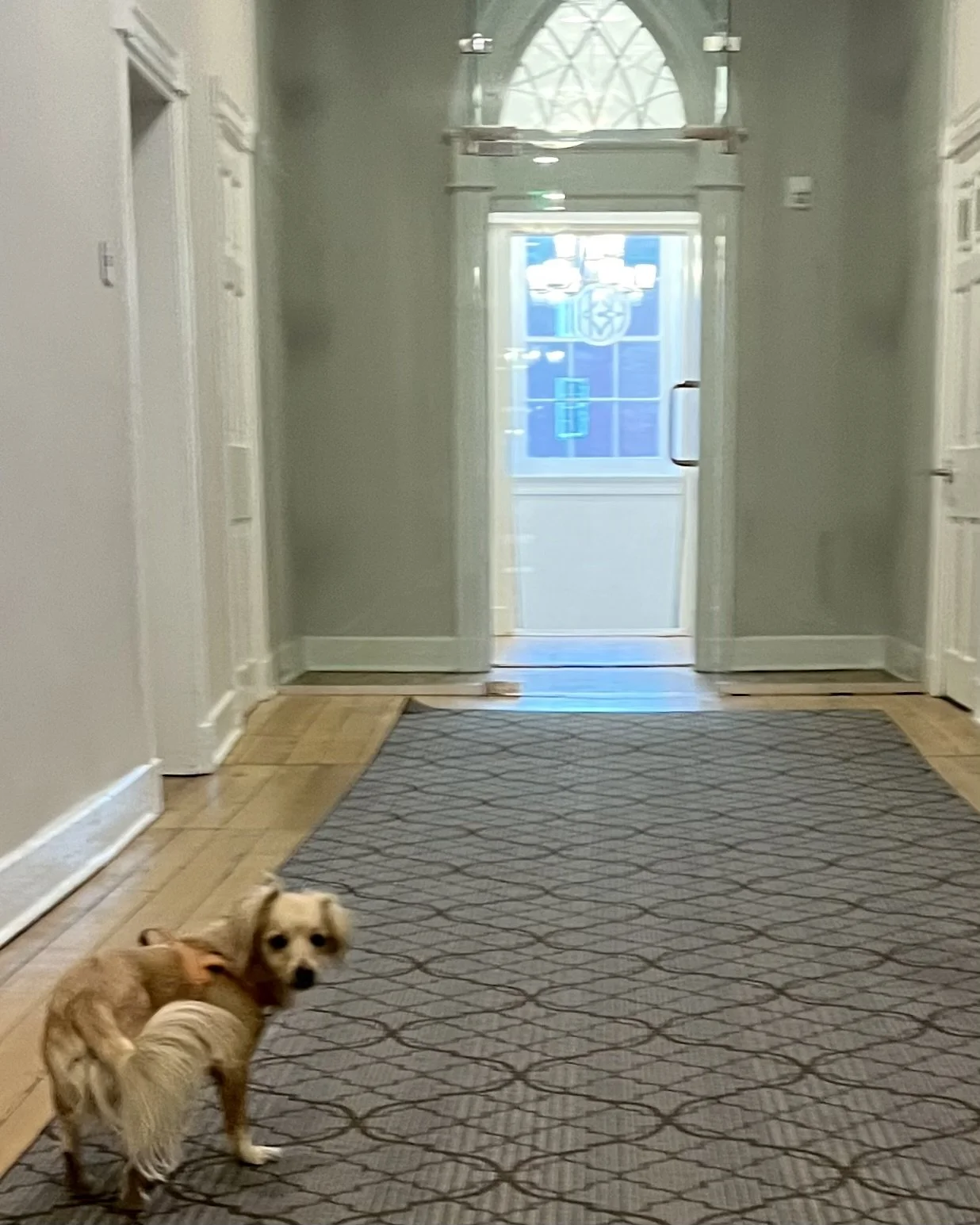
Hotel hallways can mean more noise, more stimulation, and longer walks outside — which doesn’t suit every dog.
Some dogs — especially those used to apartment living — are perfectly comfortable going out two or three times a day on a predictable schedule. Hotels can work very well for them.
My dogs? They need more frequent outings and quieter surroundings.
Knowing that changes everything.
Step 2: Consider Your Dog’s Routine (Especially Potty Needs)
This is the variable I underestimated early on.
My dogs need frequent potty breaks. They’re also particular about where they go. A private backyard isn’t just convenient — it lowers their stress.
In a hotel, outdoor space is usually limited. Often it’s a small grassy patch near the parking lot — sometimes right next to the designated smoking area. That adds noise, movement, and stimulation.
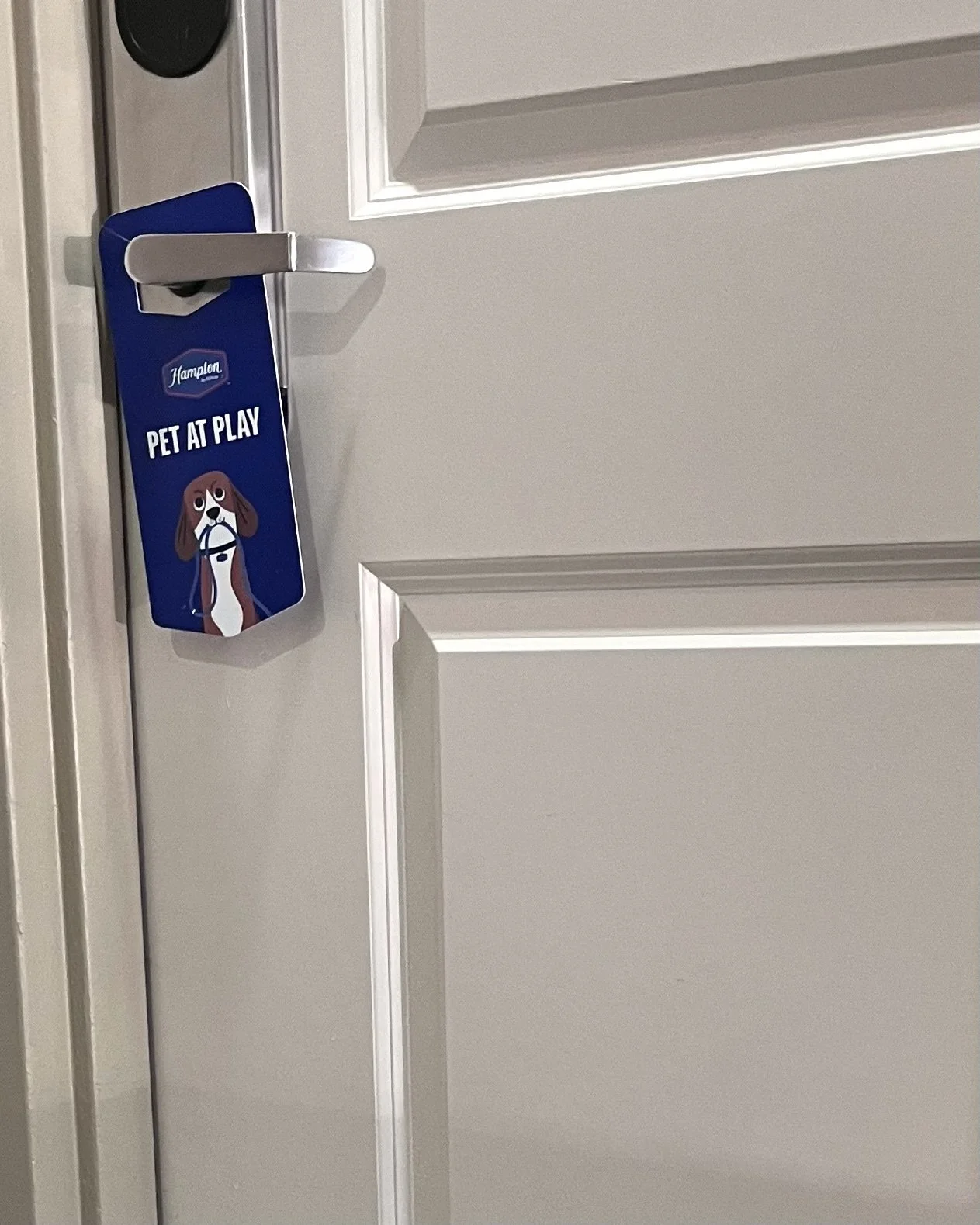
Many hotels now provide pet-specific policies and room signage.
And then there’s the 1am scenario.
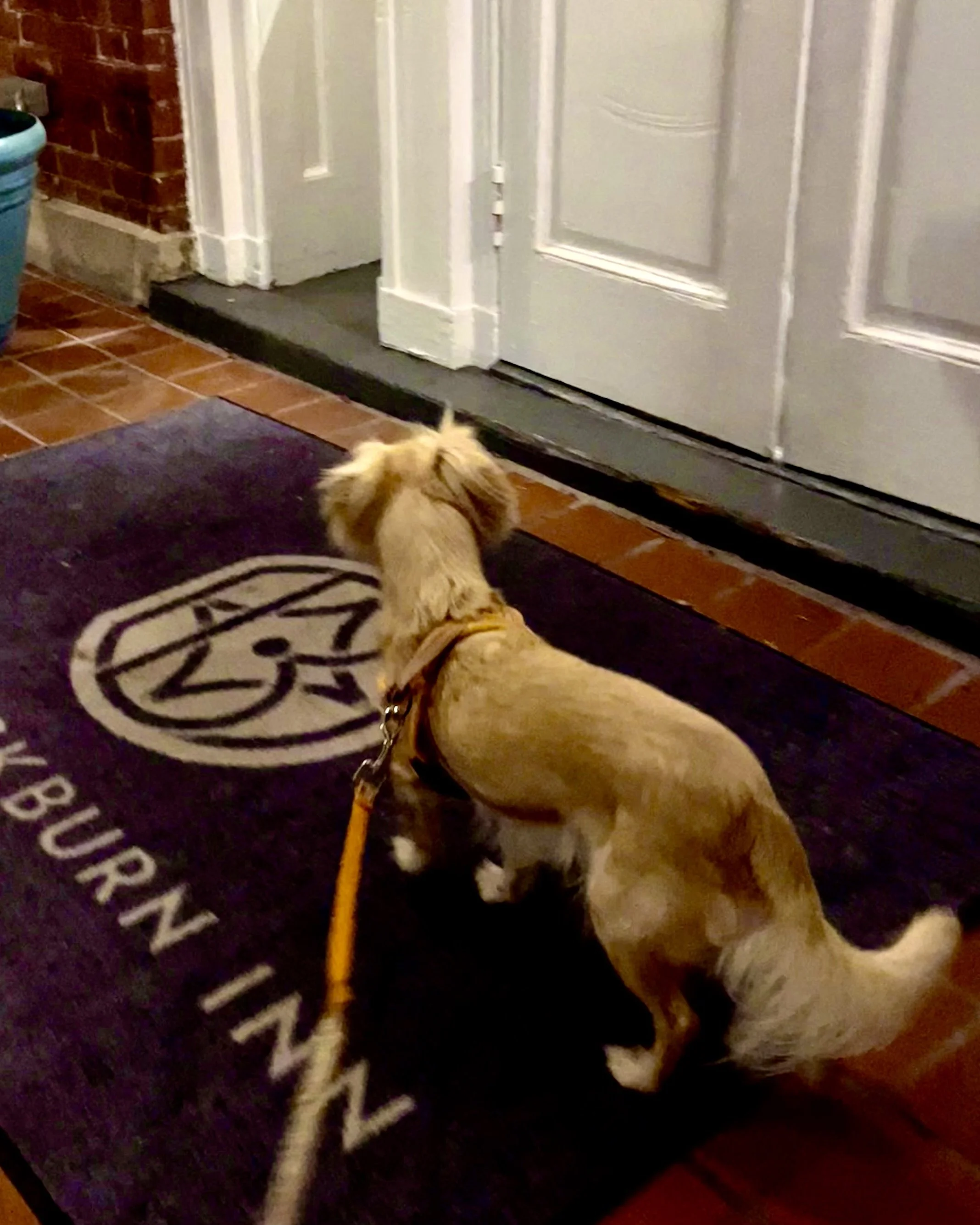
Arriving at a pet-friendly hotel — where dogs are welcome, but the environment may still feel busy or unfamiliar.
When we’re in a hotel and my boy decides he needs to go out in the middle of the night, that means:
Getting dressed
Leashing both dogs
Walking down the hallway or taking the elevator
Heading out to the parking lot grass
In a rental with a backyard?
Open the door. Done.
That difference matters more than I realized.
Step 3: Life Stage Matters (Puppies and Seniors Change the Equation)
Not all dogs are in the same phase of life.
Puppies
If you’re traveling with a puppy:
Flooring matters. Hardwood or tile is much easier if accidents happen.
Carpet and decorative rugs can add stress.
Secure fencing becomes critical.
Busy downtown hotels can be overstimulating.
A rental with easy-to-clean floors and safe outdoor access may make more sense during this stage.
Senior Dogs
Older dogs may need:
Fewer stairs
Elevator access
Shorter walks to grass
Softer sleeping surfaces
Non-slippery floors
A multi-level rental or a hotel room at the end of a long hallway might not be ideal.
Step 4: Evaluate the Environment — Not Just the Label
When looking at pet-friendly hotels or vacation rentals, I now pay attention to:
Private backyard vs shared yard
Detached space vs guest suite attached to a main home
Proximity to neighbors
Number of stairs
Flooring type
Furniture rules (are dogs allowed on couches?)
How close we are to busy downtown areas
Being closer to attractions is convenient — but usually means more stimulation. We noticed this especially when walking through busier areas like Old Town St. Augustine, which I shared more about in Walking Old Town St. Augustine With Dogs: What to Know.

Staying farther out often means quieter evenings and calmer walks.
It’s always a tradeoff.
When a Hotel Makes Sense
Despite everything above, we do use hotels.
For long road trips, a hotel right off the highway is hard to beat. Check-in is easy. We’re not navigating neighborhoods late at night. We can stop, sleep, and leave early.
Hotels also offer:
Predictable layouts
Clear check-in and check-out procedures
No coordinating with a host
24-hour front desks
For a quick overnight stay, convenience can outweigh other factors.
However, pet fees have changed the equation.
It used to be easier to find hotels without a fee. Now it’s common to see $75 or more per stay — sometimes per night — plus tax. On a one-night stop, that can nearly double the cost of the room.
So convenience comes at a price — financially and sometimes mentally.
When a Vacation Rental Makes More Sense
For longer stays, rentals often work better for us.
On longer trips — like our winter visit to St. Augustine — having quieter surroundings and easy outdoor access made a noticeable difference (I shared the full experience in A Dog-Friendly Winter Trip to St. Augustine: Beaches, Trails & Walks).
The biggest reason? Backyard access.
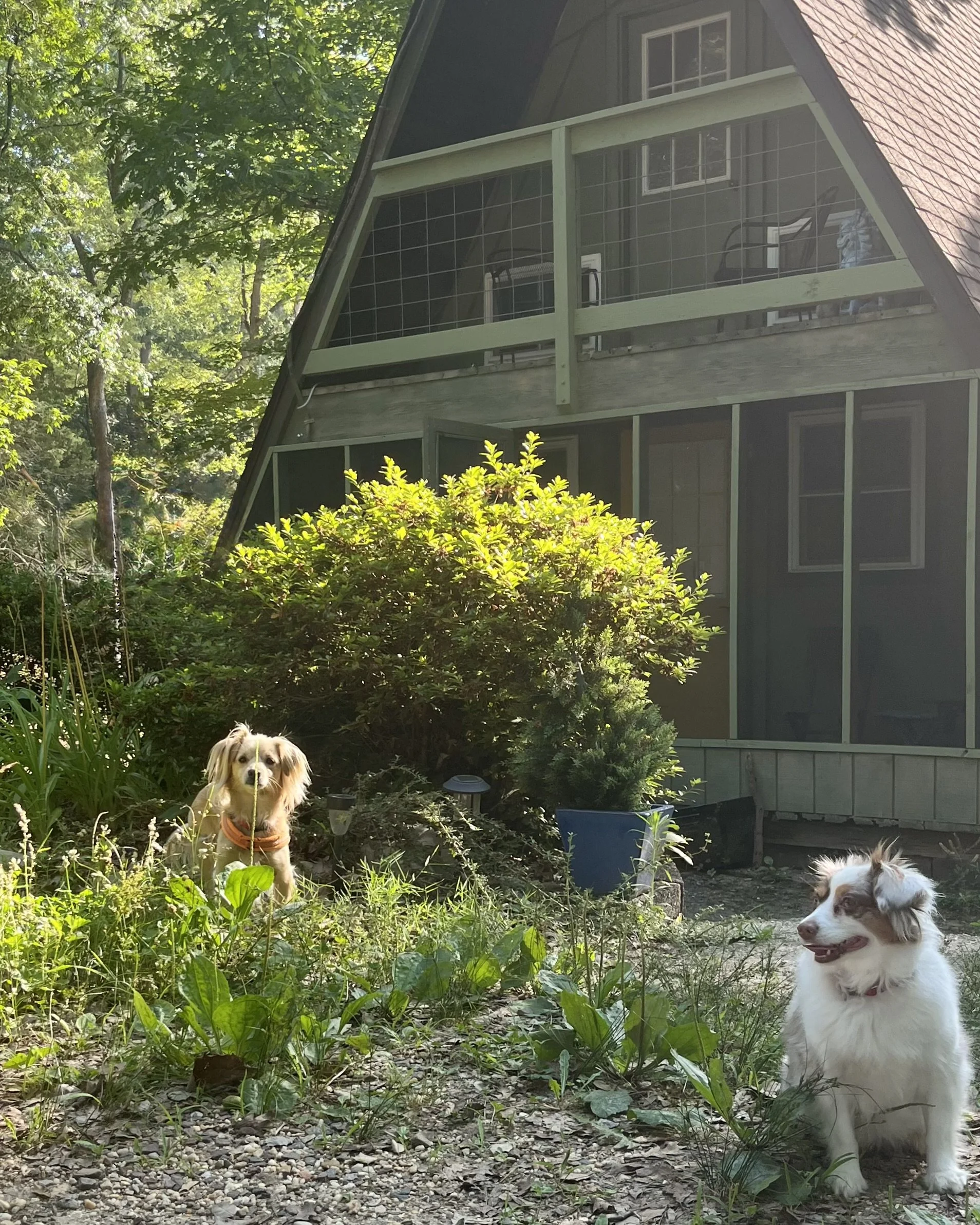
For our dogs, having private outdoor space changes the entire feel of a trip.
Being able to let the dogs outside easily — especially at odd hours — reduces stress for everyone. There’s less hallway noise. Less foot traffic. Less stimulation.
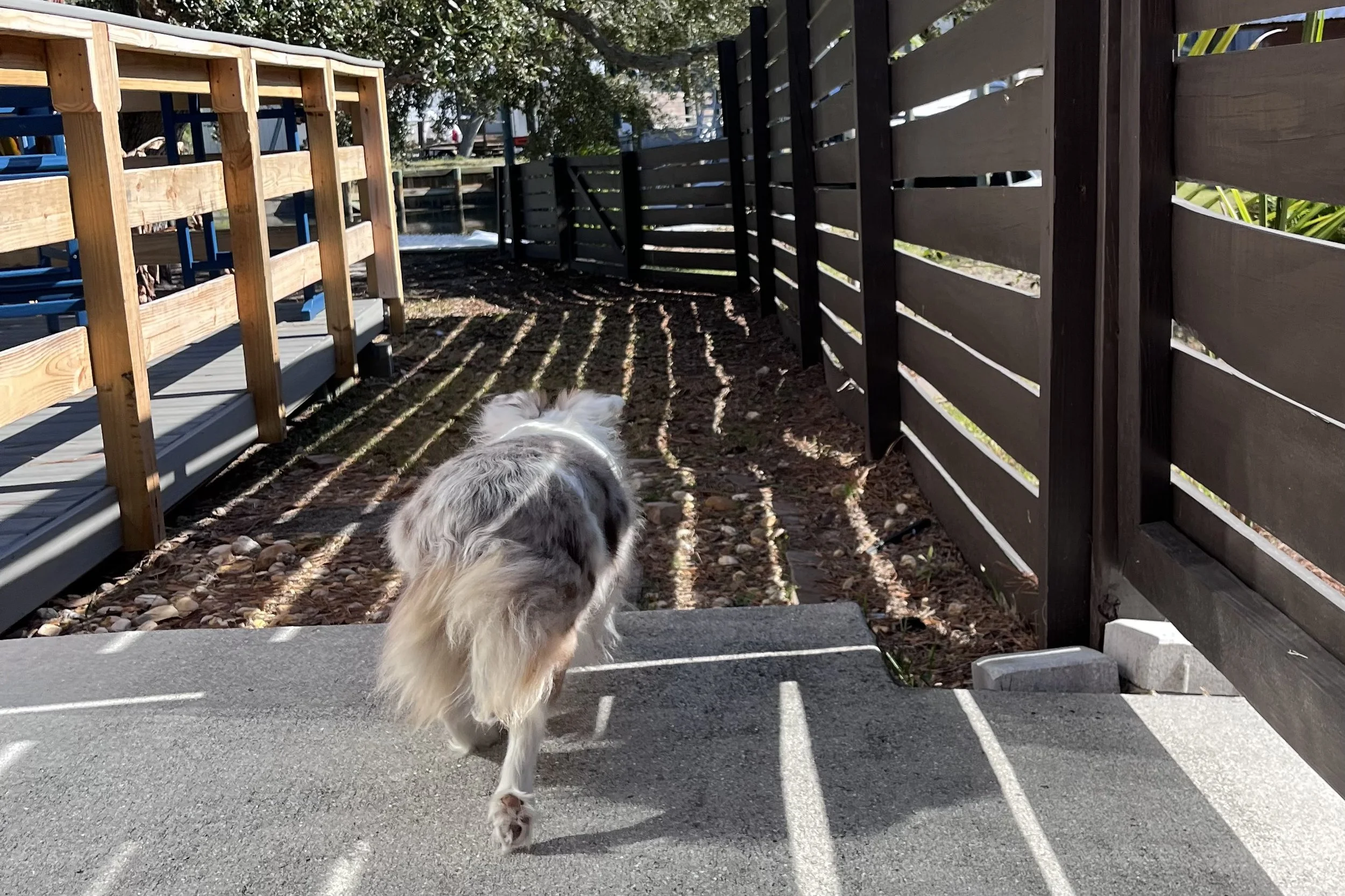
Exploring every corner of the backyard.
That doesn’t mean rentals are perfect. Every property is different. Layout varies. Rules vary. But for anxious, reactive, or frequent-potty dogs, the added privacy can be worth it.
The Real Takeaway: It’s About Compatibility
I don’t think there’s a universal “best” choice between pet-friendly hotels and vacation rentals.
It really depends on your dog.
An easygoing, social dog may thrive in a hotel.
A routine-driven apartment dog may adapt just fine.
A puppy may need easy-clean flooring and secure space.
A senior dog may need minimal stairs.
An anxious or reactive dog may benefit from privacy and outdoor access.

Hotel? Rental? As long as there’s a comfy couch.
The goal isn’t just to find a place that allows dogs.
The goal is to find a place that fits your dog’s temperament, routine, and life stage.
When I approach travel that way, the decision becomes clearer.
And the trip becomes a lot smoother — for all of us.
