Driftwood Beach on Jekyll Island With Dogs: What It’s Really Like
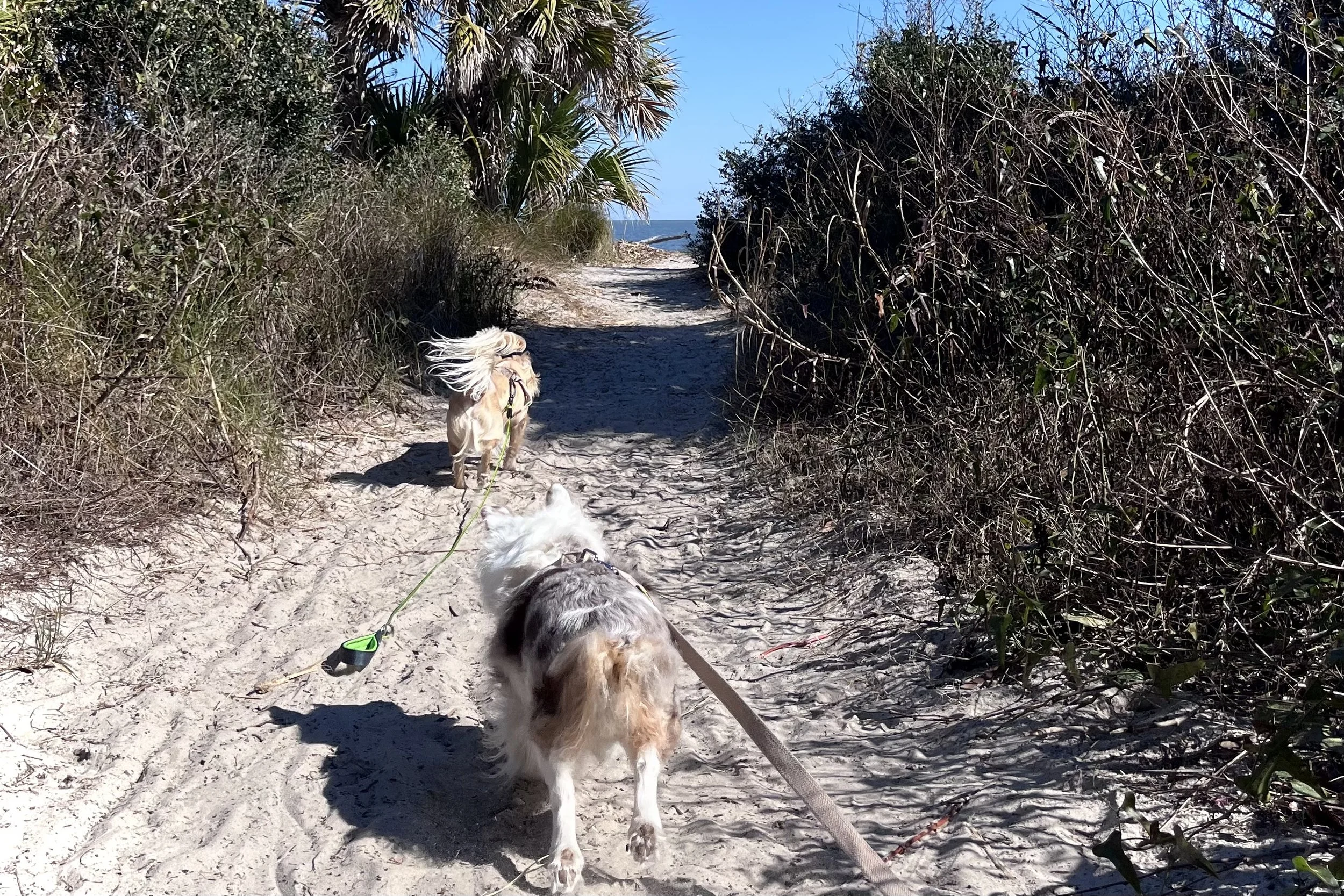
The final sandy path before Driftwood Beach comes into view, with dogs pulling forward toward the shoreline.
Yes — Driftwood Beach on Jekyll Island is dog friendly, but dogs must remain on leash. It’s one of the most visually distinct dog friendly beaches in Georgia, though the terrain makes it better suited for exploratory walks than long-distance shoreline strolling.
Parking is available at the Driftwood Beach access lot off North Beachview Drive, followed by a short sandy path that gradually opens to the shoreline.
This stretch of Jekyll Island unfolds slowly—firm sand near the water, tangled driftwood farther up the shore, and natural pauses built into the terrain. It’s especially well suited for dogs who move in bursts: short runs, frequent stops, and long moments of investigation rather than steady, uninterrupted walking.
Best for: Leashed dogs who enjoy varied terrain and exploring at their own pace
Expect: Stop-and-start walking, wide open stretches, and a quieter, more reflective feel
Why it’s different: The shoreline interrupts momentum and slows the walk naturally
Arrival
Driftwood Beach on Jekyll Island doesn’t reveal itself right away. When it does, it feels different the moment it comes into view. This isn’t a beach meant for towels or umbrellas—it reads more like an outdoor installation. Massive fallen trees lie scattered across the sand, bleached and broken, resting where they landed. The effect is dramatic without being loud, striking without asking for attention.
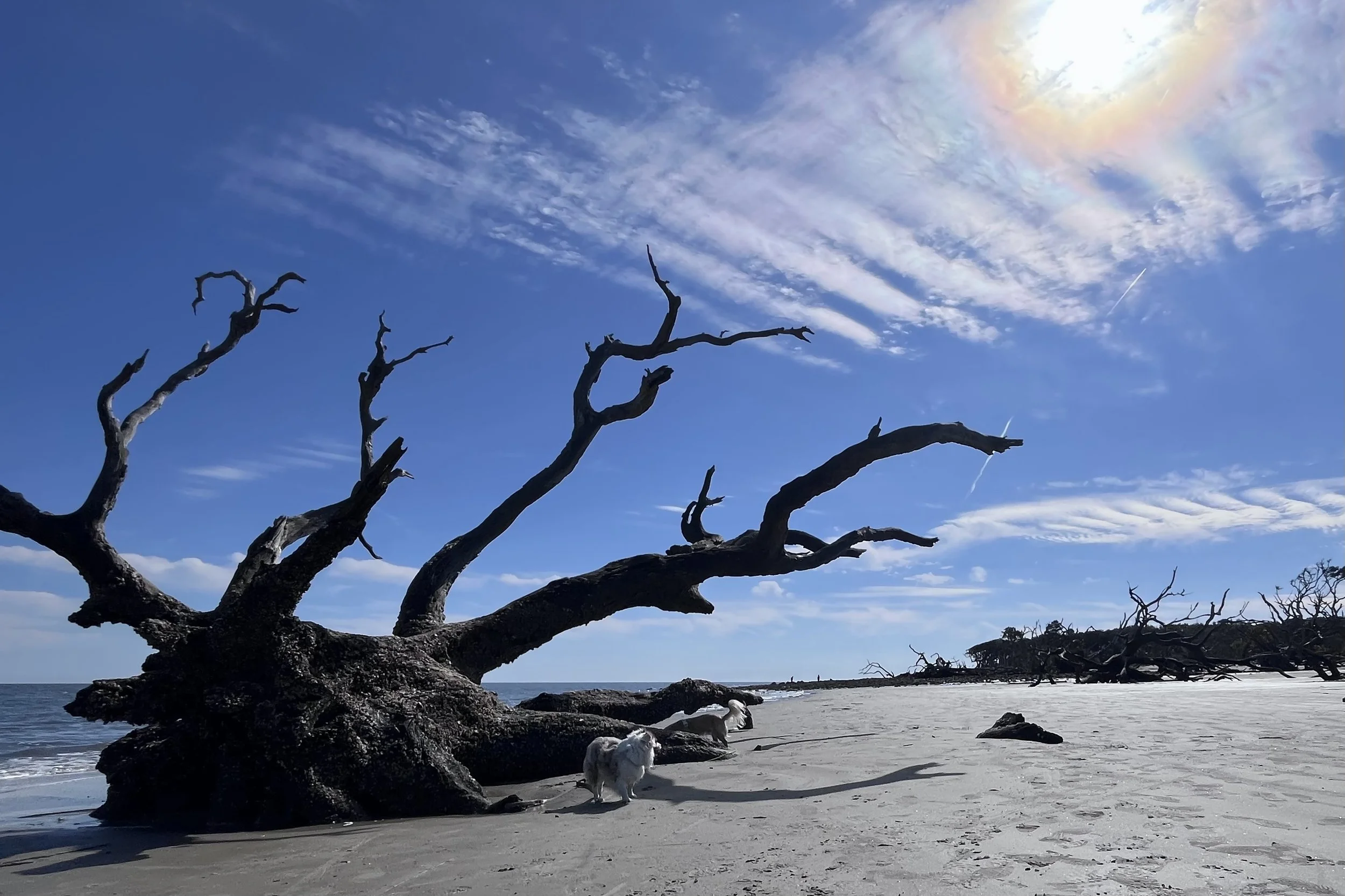
A wide stretch of Driftwood Beach on Jekyll Island, shaped by fallen trees and open shoreline.
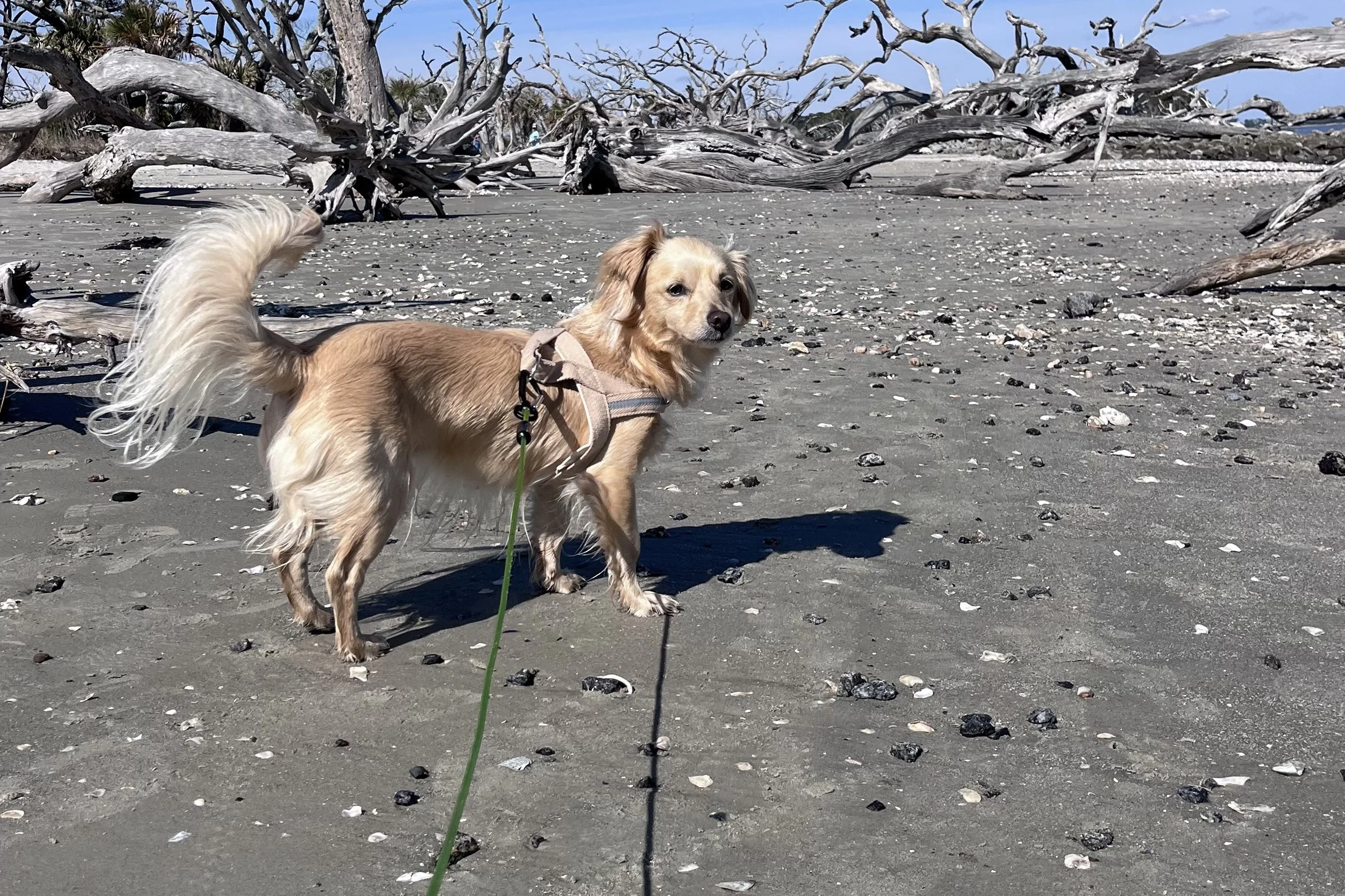
A dog stands among the driftwood on the wide, shell-strewn sand at Driftwood Beach.
The dogs reacted immediately, pulling forward, noses down, stopping and starting as they took it all in—drawn to the water’s edge, the driftwood, the barnacles clinging to old wood. Even with other people nearby, everything stayed quiet. Movement slowed instinctively, as if the beach itself set the tone.

Saydie running across wet sand at Driftwood Beach.
As we walked, the shoreline kept changing. Some sections opened wide and flat, with firm sand near the water and long views down the beach. Others tightened into dense clusters of fallen trees, roots exposed and tangled, forcing small detours. The dogs moved easily between it all—short runs followed by long pauses, noses tracing the edges where sand met wood.
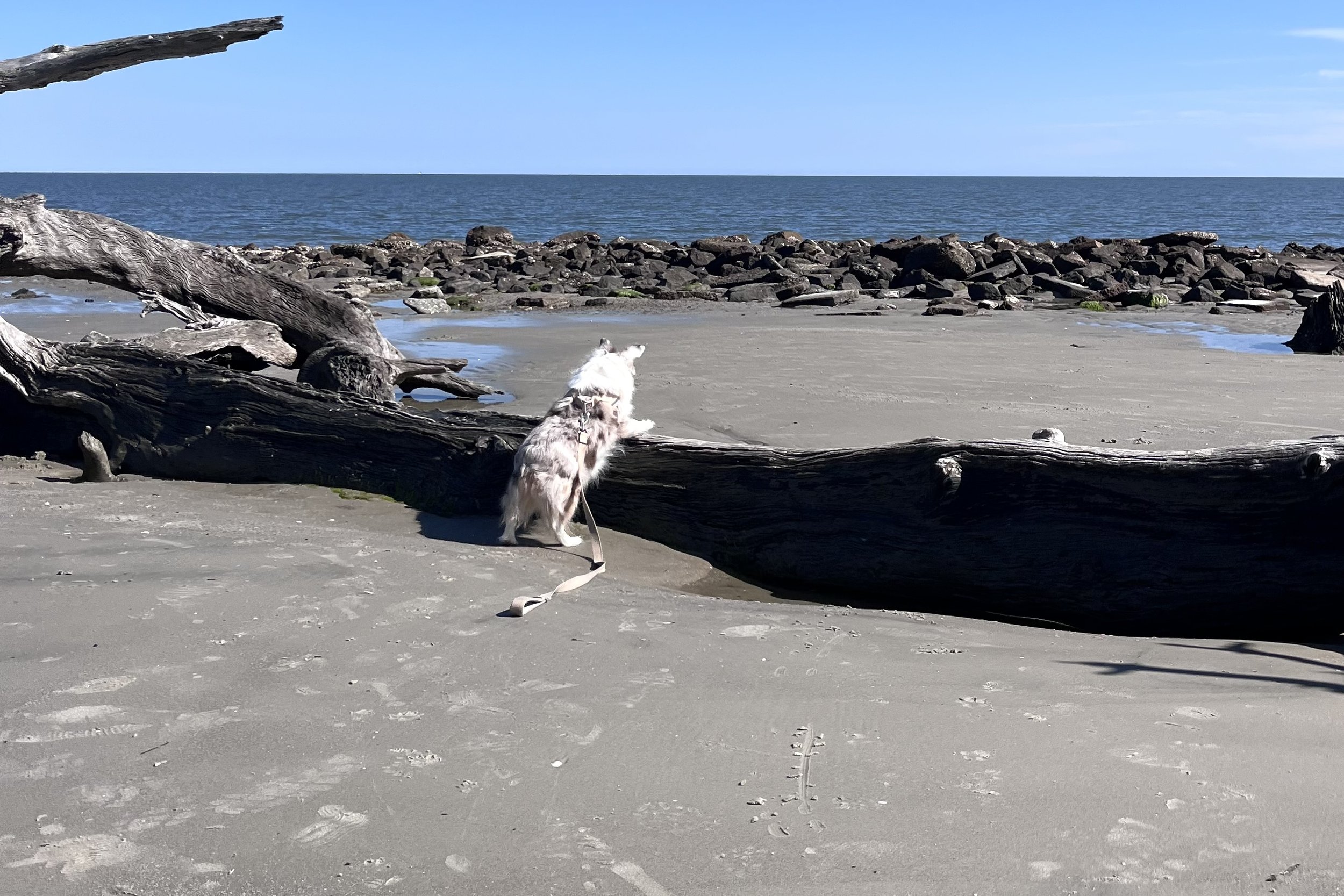
Pausing at the driftwood edge before the open shoreline.
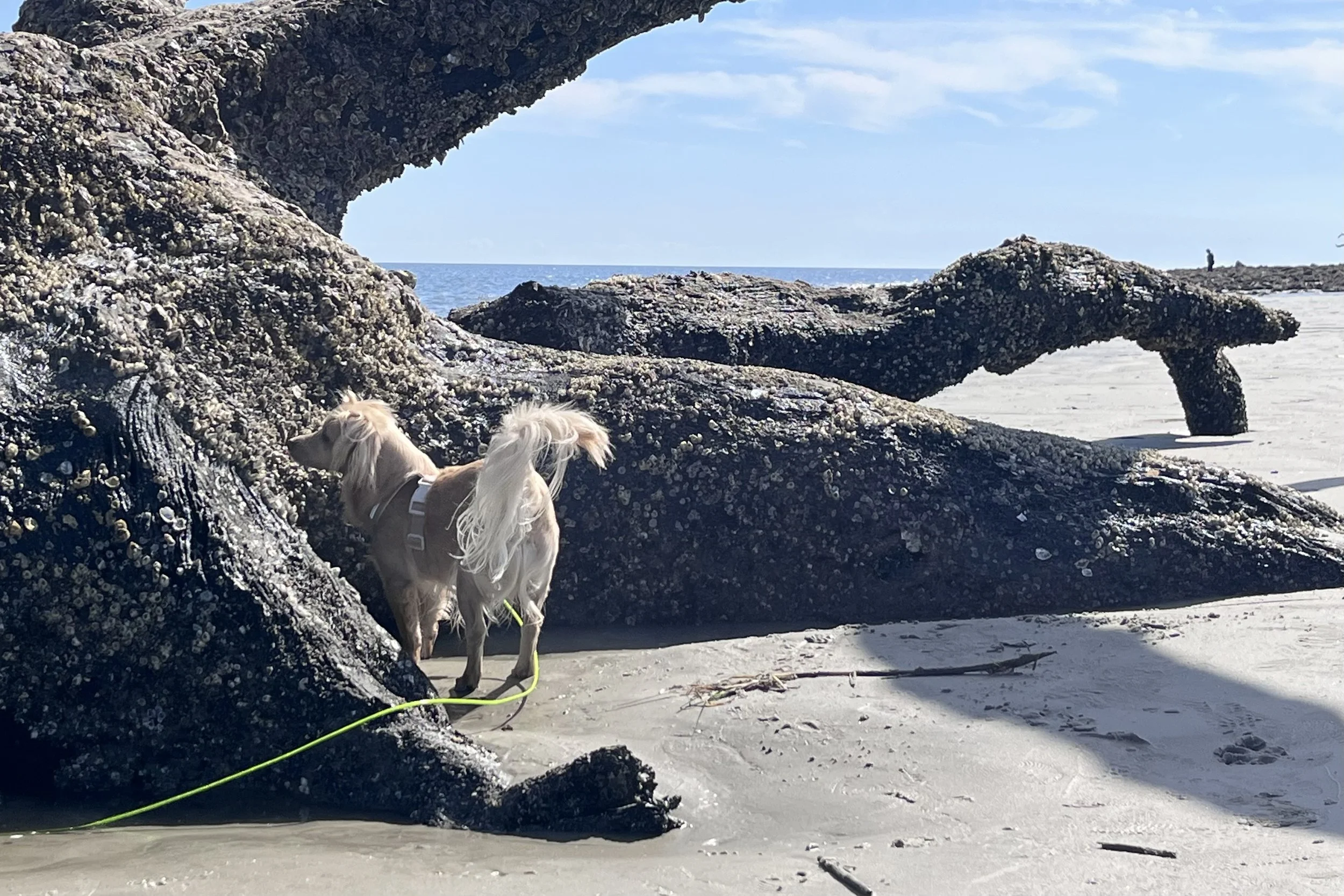
Pausing at the edge of the driftwood before moving on.
The light stayed muted and even, gray and flat in a way that softened everything it touched. The wood looked chalky and pale, the water darker by contrast. Nothing glittered or sparkled. Walking here meant paying attention without needing to comment on it—letting texture, sound, and movement carry the moment. It’s the kind of place that reinforces the value of walks that let dogs set the pace, especially in unfamiliar settings. The terrain is what makes that shift happen.
How the Terrain Sets the Pace
What’s different about walking Driftwood Beach is that the shoreline never settles into one pattern. Just as the dogs pick up speed along the waterline, the driftwood thickens and forces a slower route inland. Firm sand gives way to softer stretches. Clear paths disappear and re-form. This kind of stop-and-start movement helps explain why dogs often get more tired on trips, even when the walk itself isn’t especially long.
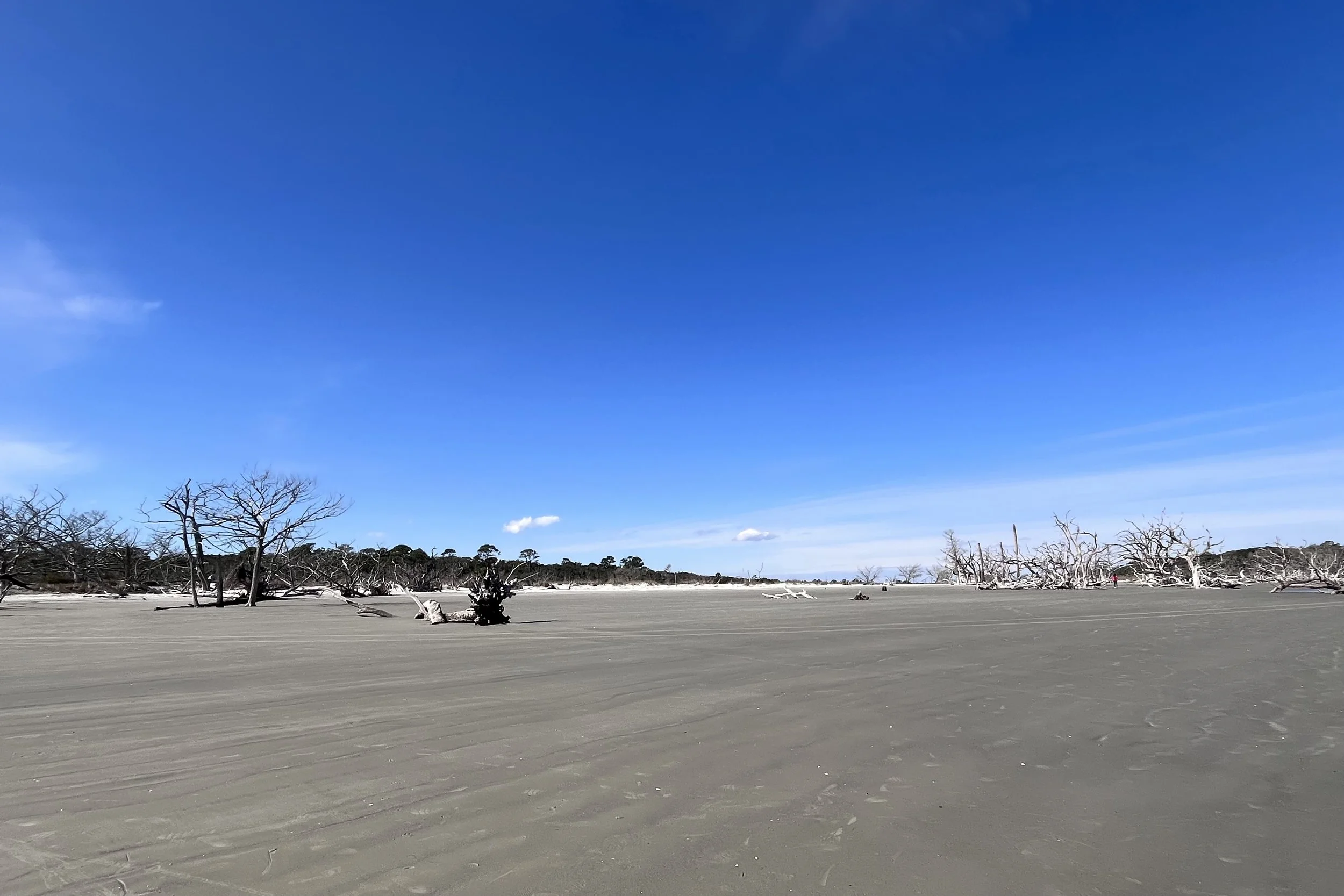
A wide stretch of Driftwood Beach, where the shoreline opens up and the walk slows naturally.
You’re not choosing to stop or slow down; the shoreline interrupts momentum in small, natural ways. The dogs respond to that immediately—running when there’s room, weaving and investigating when there isn’t—so the walk unfolds in short, varied segments instead of one continuous push.
Why Driftwood Beach Feels Different From Other Georgia Beaches
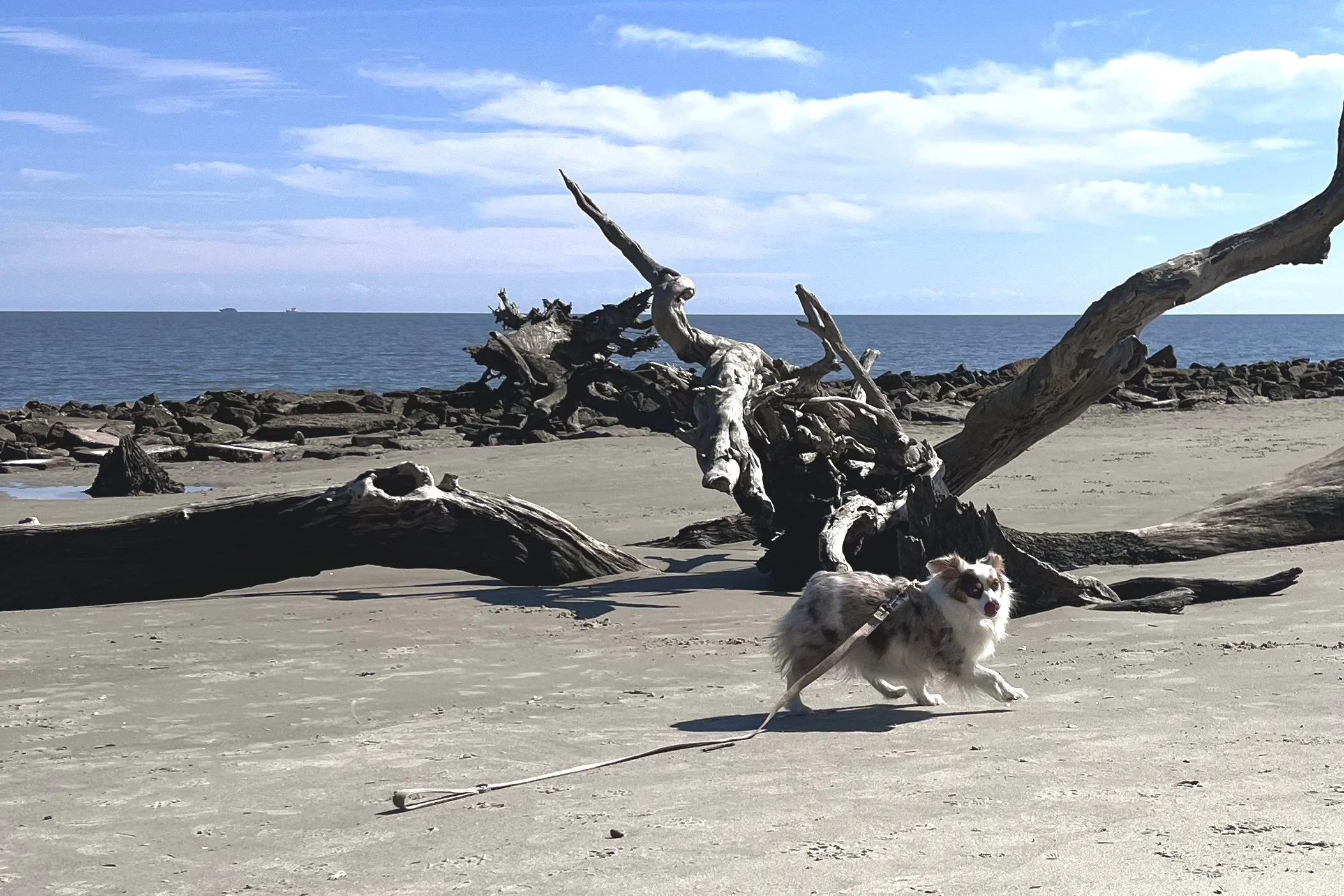
Moving across open sand where the shoreline widens again.
This stop works especially well for people traveling with dogs who prefer a less traditional beach experience on Jekyll Island—more dramatic than relaxing, more reflective than recreational. Driftwood Beach isn’t built around amenities or activities, and it doesn’t reward trying to see everything at once. It feels closer in spirit to an unhurried coastal stop like Cape Charles, where the experience comes from moving slowly rather than filling the day. It suits walkers who are comfortable letting the shoreline set the pace and allowing the walk to unfold on its own terms. If you’re drawn to walks shaped by changing terrain, this experience echoes how different landscapes change the walk in quieter but equally meaningful ways.
