St. Augustine With Small Dogs: How We Structured Our Days for a Calmer Trip

Space changes the way small dogs move.
After walking Old Town, Butler Beach, and the outer preserves during our time in St. Augustine with small dogs, one thing became clear:
St. Augustine isn’t one experience.
It’s layered.
There’s the compact historic core.
There are wide coastal stretches.
There are residential pockets that feel entirely different from downtown.
You could see the shift in their movement from one area to the next.
The difference wasn’t whether dogs were allowed.
It was how we structured the days.
Here’s what worked for us.
The Expansive Areas That Felt Easier
One of the clearest signals of what regulated well?
We went back.
We returned to Guana Tolomato Matanzas National Estuarine Research Reserve more than once — even though it was about a 15–20 minute drive north of Butler Beach along A1A.
It wasn’t the closest option.
We chose to drive there.
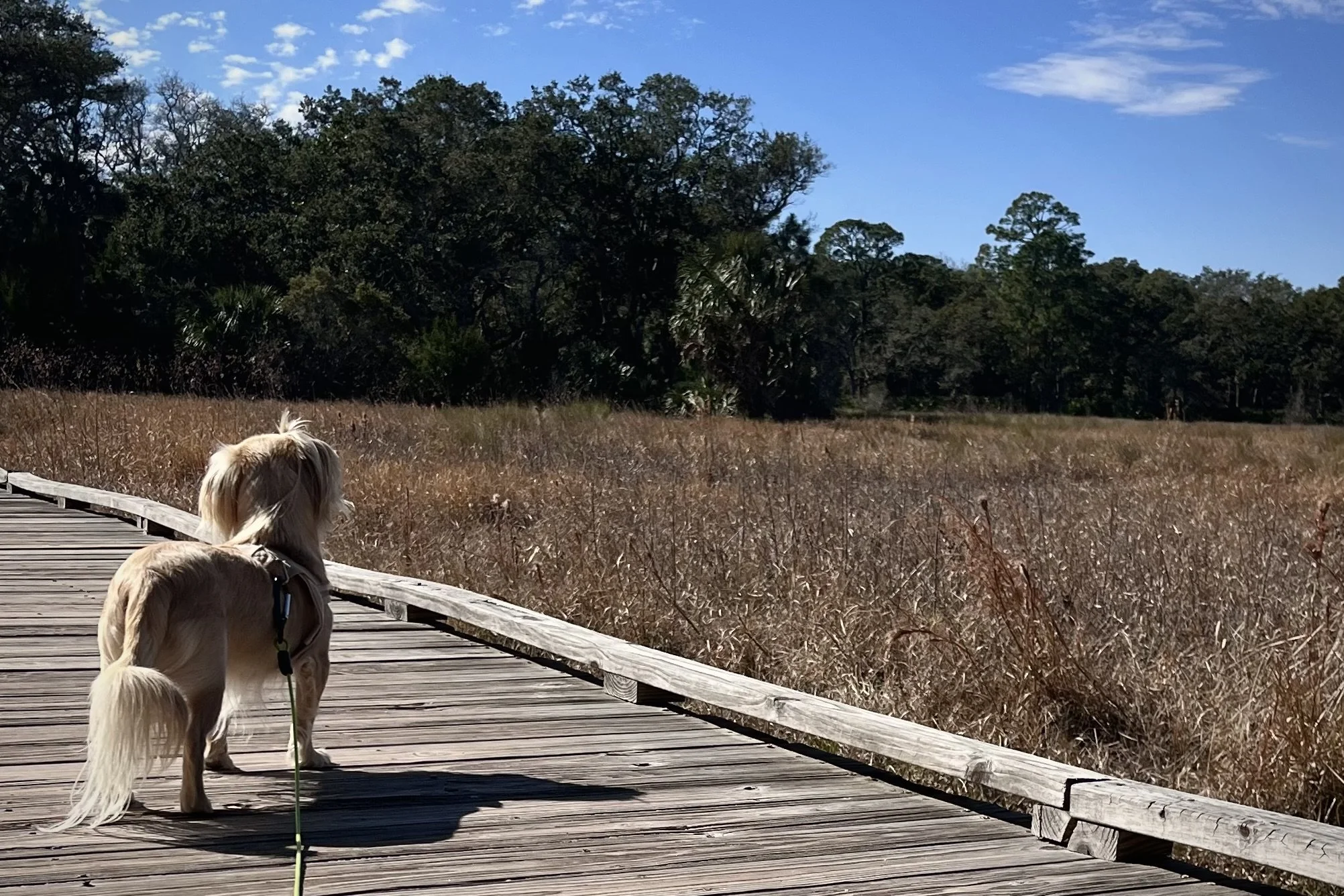
Because it was peaceful.
Wide trails.
Open sky.
Long visual corridors.
Fewer layered variables.
The dogs moved differently there.
Their pacing was steady.
There was less scanning.
More linear walking.
More uninterrupted sniffing.
It felt expansive instead of compressed.
That’s why we repeated it.
Not because it was convenient.
Because it regulated well.
I share other lower-density alternatives in Best Alternatives to Busy Old Town St. Augustine (Where to Walk Dogs Instead).
How We Structured Our Days in St. Augustine
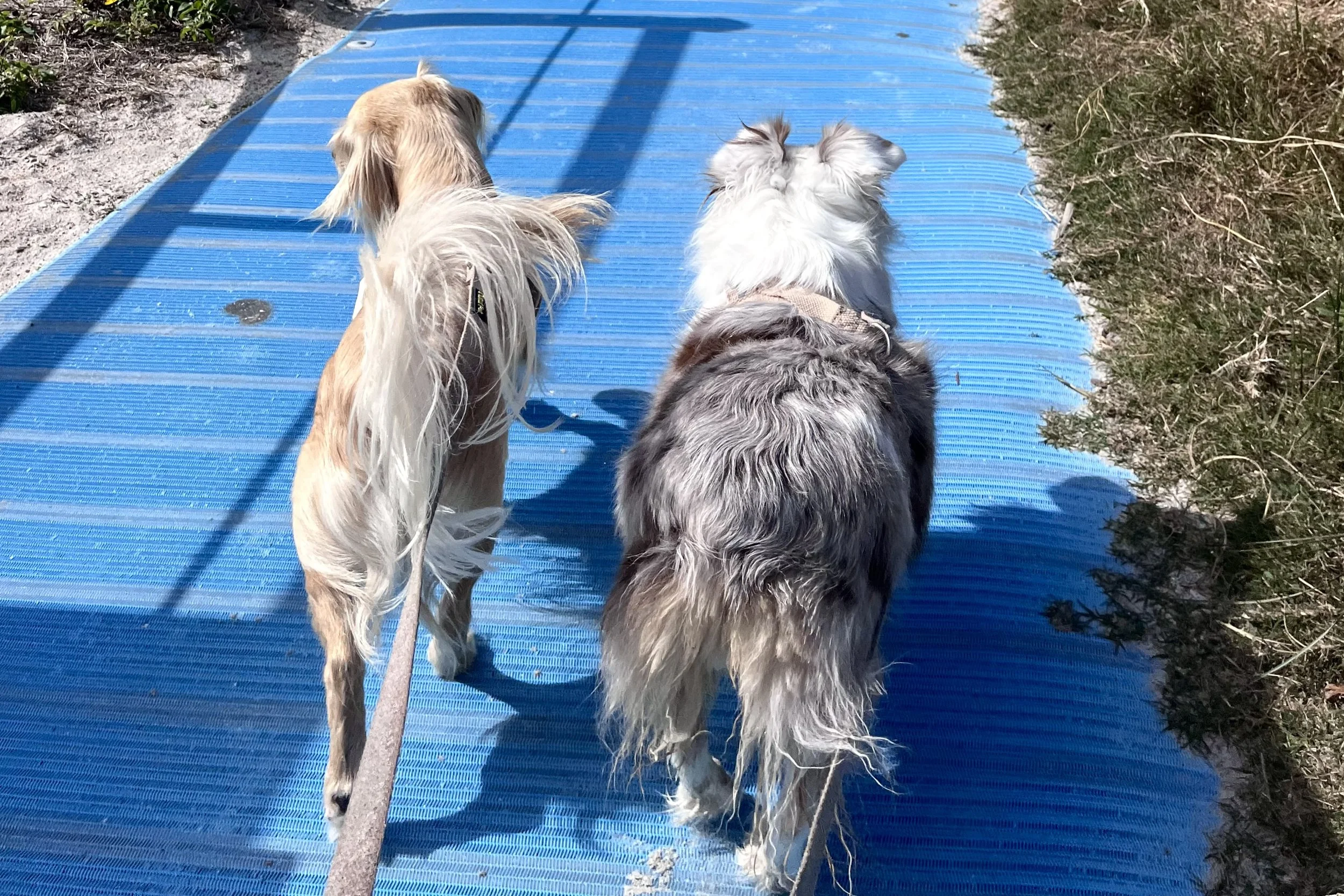
Late-morning outing structured as a single environment before heading home to rest.
We kept stimulating outings contained to late morning through early afternoon.
Around 10 a.m., we’d head out for one primary environment:
Old Town.
A beach.
A park or preserve.
We’d eat lunch while we were already there — and then return home by mid-afternoon.
We didn’t stack activities.
We didn’t add second destinations.
We didn’t stretch it just because we could.
Not all outings felt the same.
Old Town created creative fatigue sooner. The narrow streets, constant proximity, outdoor patios — even stopping for lunch outside added to the stimulation load.
We arrived around 10. We didn’t stay until 3. It was simply a lot.
I describe that density more specifically in Is Old Town St. Augustine Good for Small Dogs?
By contrast, beach mornings or longer hikes felt different.
At Butler Beach, the horizon extended tolerance. Movement stretched out instead of compressing inward.
You can read more about our beach and trail pacing in A Dog-Friendly Winter Trip to St. Augustine: Beaches, Trails & Walks.
And at the reserve, fatigue came later — and softer.
The return home was mostly preventative. But the signal was clear:
As soon as they got in the car, they relaxed and went to sleep.
That told me the window was appropriate.
Not pushed.
Not stacked.
Sunset Was Familiar, Not Novel
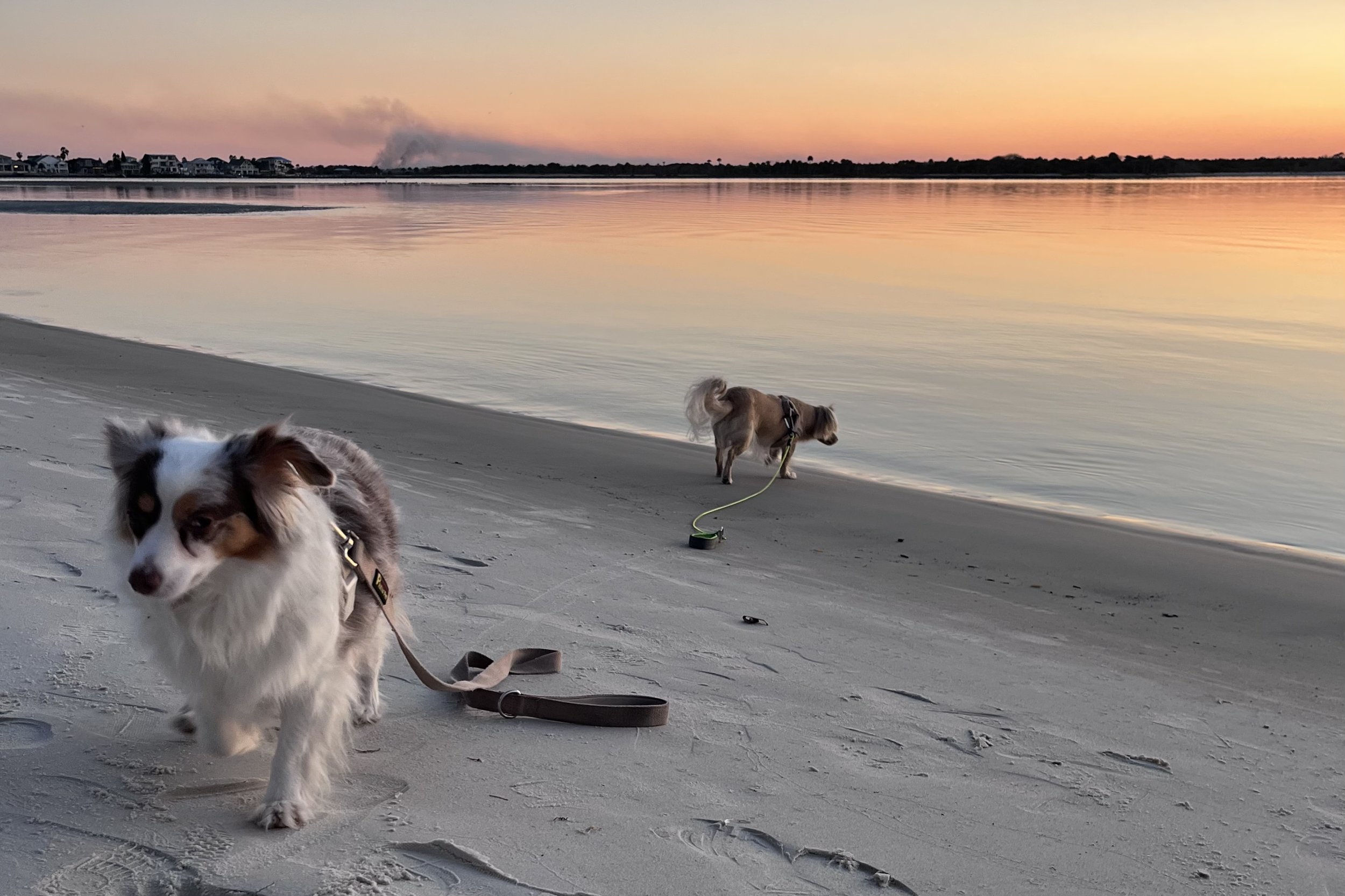
Evening revisit to a familiar shoreline in softer light.
Evenings were different.
After dinner, we’d choose something light:
A sunset walk from the house.
A short drive to a beach.
A repeat environment they already knew.
We were there for two weeks — not a rushed five-day trip.
By the second week, we had a rhythm.
Sunset wasn’t new exposure.
It was revisiting familiar space in softer light, with fewer people.
That familiarity lowered the activation level.
Even when we drove somewhere, it wasn’t ambitious.
It was atmospheric.
The Backyard Changed Everything
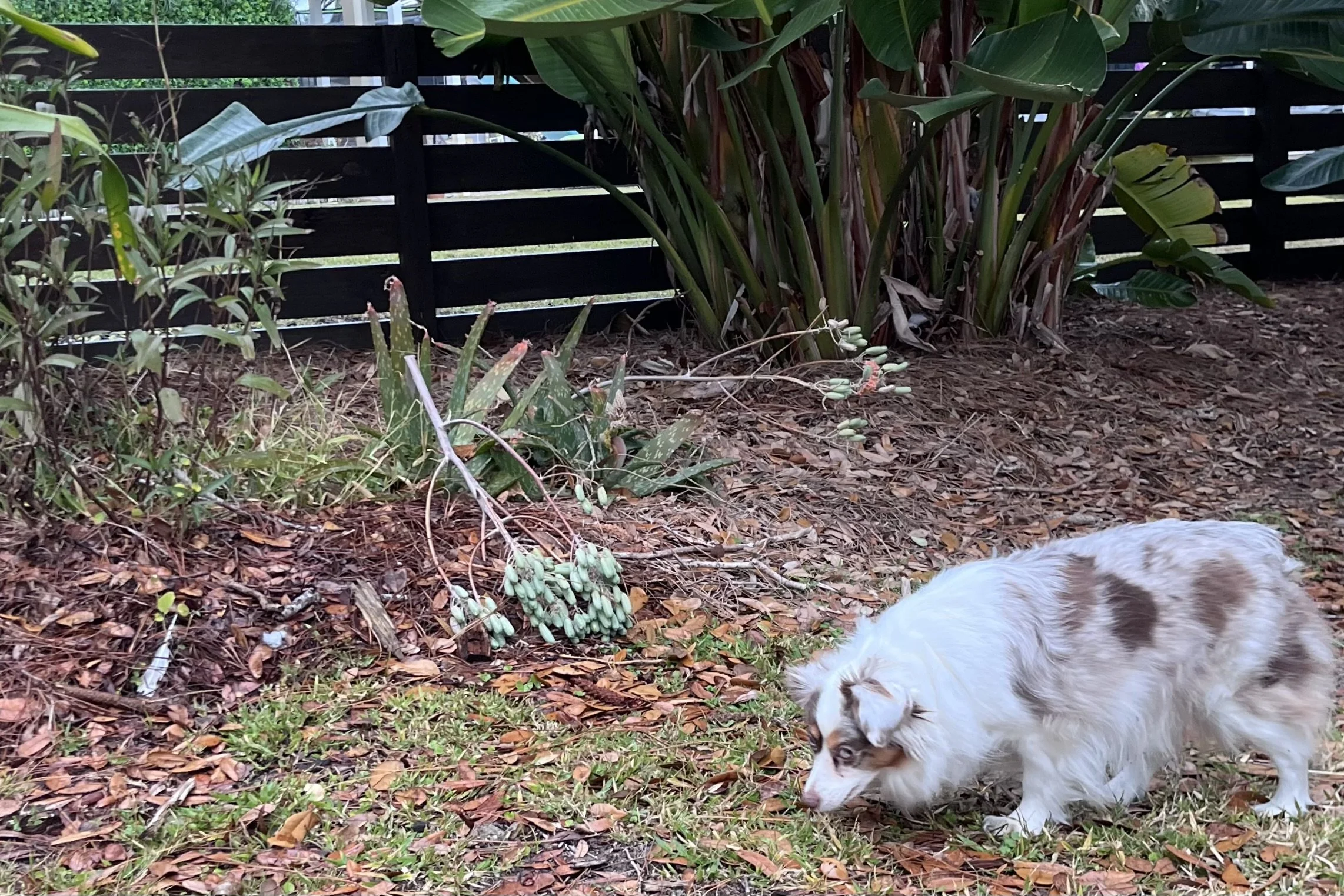
Backyard access allowed independent sniffing and decompression.
Where we were staying mattered more than I expected.
We weren’t returning from stimulation into a closed hotel room.
The door was often open.
There was a backyard with tall palms, water nearby, open sky.
They used it independently.
There was constant sniffing.
Exploration.
Lounging in the sun.
Archie stretched out on the deck in full direct light.
It wasn’t just a place to “go out.”
It was:
Sniff enrichment.
Autonomy.
Environmental choice.
And because the indoor-outdoor space was continuous, I didn’t feel boxed in either.
We weren’t decompressing into confinement.
We were decompressing into trees and air.
That changed the emotional tone of the entire trip.
Why the Two-Week Stay Mattered
There wasn’t pressure to “get it all in.”
If we stayed home one evening, it didn’t feel like lost opportunity.
The trip never became performance-based.
We weren’t chasing experiences.
We were layering them.
That made the rhythm sustainable.
Our first few days unfolded differently — I share that in St. Augustine With Dogs: What Our First Few Days Were Really Like.
The Pattern That Emerged
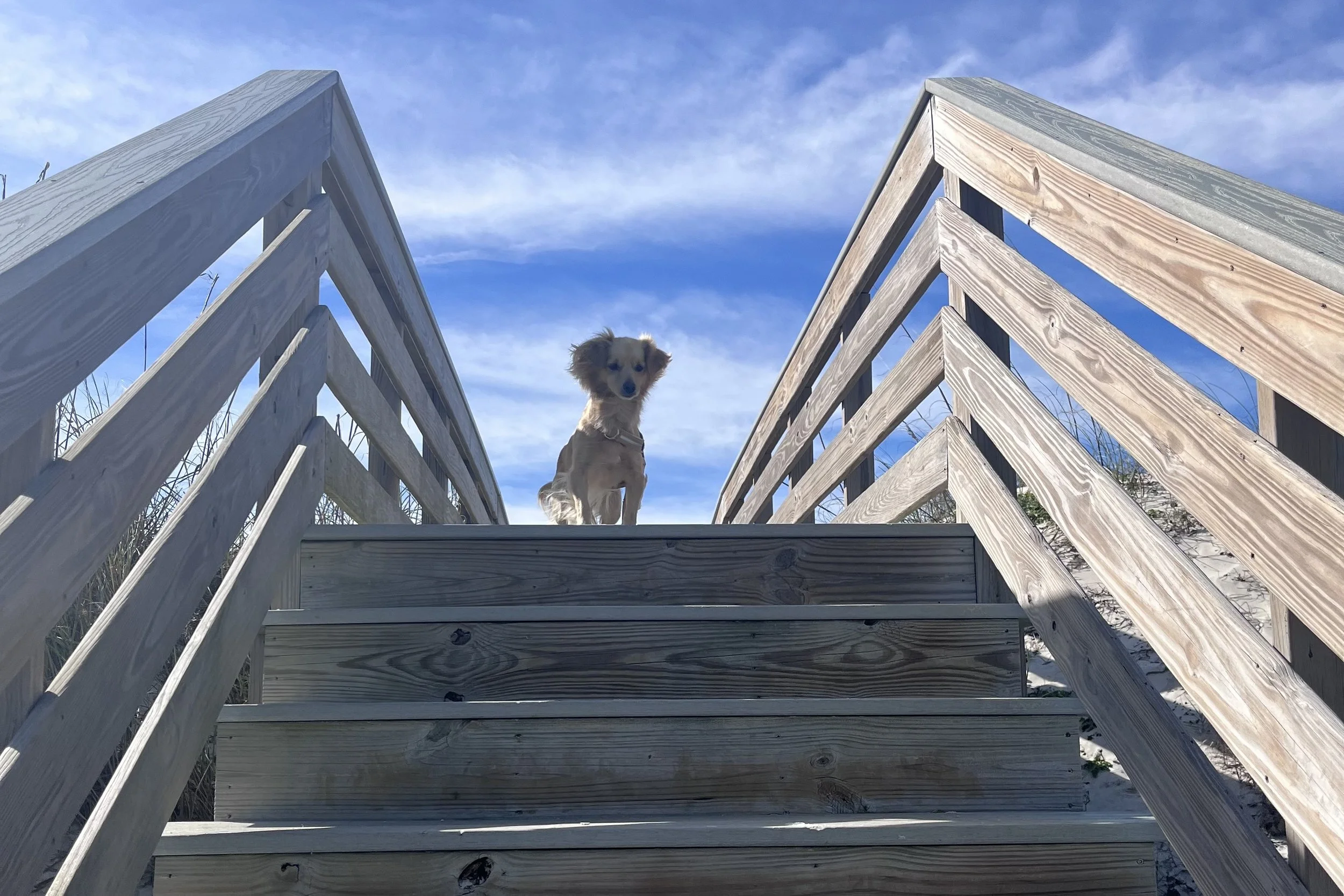
Beach access leading into open space.
St. Augustine isn’t a single experience.
It can feel compressed and stimulating.
Or wide and expansive.
Historic and layered.
Or quiet and horizon-filled.
For us, the difference wasn’t whether dogs were allowed.
It was how we structured the days.
When we layered stimulation.
Where we returned to decompress.
And how the place we were staying supported that rhythm.
The calm didn’t happen by accident.
It happened because we left room for it.
