Summer Hiking With Dogs: How I Choose a Trail
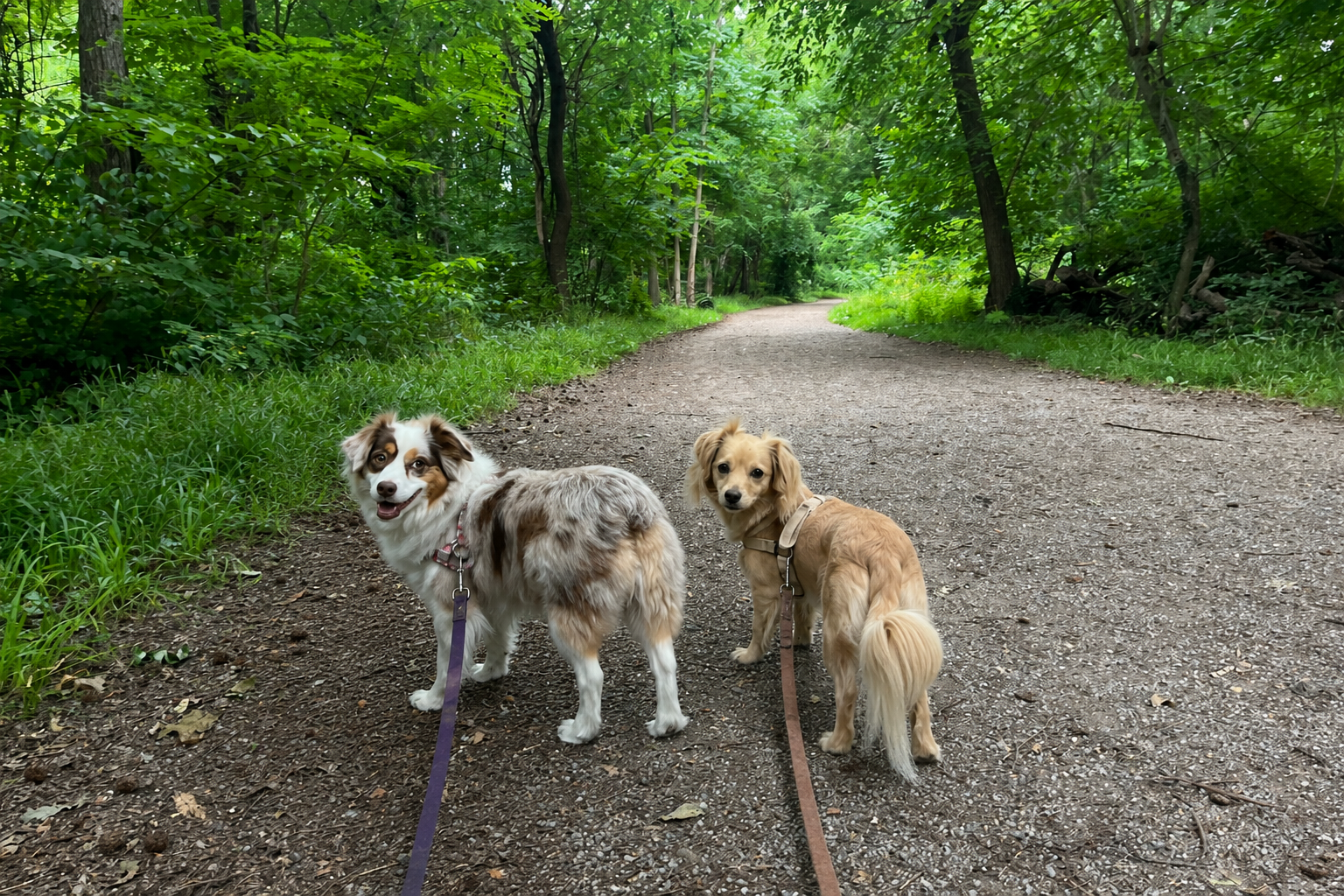
A shady waterfront stop gives Archie and Saydie a cooler place to explore on a warm summer day.
A good summer hike with your dog starts with choosing the right trail.
I don’t simply look for the shortest route or choose any park described as wooded. For Archie and Saydie, a good summer trail needs shade that begins close to the car, continues through most of the route, and follows a natural dirt or gravel surface rather than long stretches of pavement. I also want an easy way to shorten the hike if needed and enough room to pass other dogs comfortably. And if there’s a place where the dogs can safely splash or wade, even better. Watching hot, tired dogs perk up when they reach the water can change the entire outing.
On a warm summer morning, the right wooded trail can be a better place for us to walk than following our usual daily route along sunny brick sidewalks and pavement. Instead of moving in and out of small patches of shade, the dogs can stay beneath the tree canopy for most of the hike, away from direct sun and hot paved surfaces.
But a trail description doesn’t always tell me the things I really want to know: Is the parking lot exposed? Do we have to cross a sunny bridge to reach the woods? Can we actually shorten the loop? And is the stream a place where the dogs can safely wade?
So how do I decide when and where a short summer hike will work for us?
Can You Still Take Your Dog Hiking During Summer?
I don’t stop taking Archie and Saydie into the woods simply because it is summer. For us, the answer is yes—but I just become much more selective about the day, the time, and the trail.
During the first major heatwave of the year, our everyday routine changes quickly. Walks get shorter, we avoid the hottest parts of the day, and much more of our time revolves around keeping the dogs comfortable at home. I wrote more about that transition in The First Hot Week of the Year Feels Different for Dogs.
On summer mornings when it still feels comfortable enough for Archie and Saydie to be outside, a short trail beneath the trees may actually give us better walking conditions than our usual route along sunny brick sidewalks and pavement.

Archie and Saydie on one of our usual neighborhood routes, where brick sidewalks can feel much more exposed as the morning warms up.
Of course, there are also summer days when it’s simply too hot for a hike, even on a shaded trail. On those days, we stay close to home and keep our time outside short.
Quick Guide: What I Look for in a Summer Dog Hike
Shade from the start: Tree cover begins close to the parking area and continues through most of the route.
Natural trail surfaces: Mostly dirt or shaded gravel rather than exposed pavement.
An adjustable route: A short loop, connector, or out-and-back trail with an easy way to return sooner if needed.
Passing space: Good visibility and clear areas where we can step aside with the dogs.
Water access: A place where the dogs can safely splash or wade can make the outing even better.
A quieter time to visit: I avoid peak weekend and holiday crowds whenever possible.
The right leash: Enough space—and permission—to use a longer leash when it suits the trail.
I Look for Shade From Start to Finish
One of the first things I check is how far we’ll need to walk from the car before we reach the shade.
A park may have a heavily wooded trail but still require us to cross a large asphalt parking lot, follow a sunny road, or walk across an exposed bridge before we reach it. I want to know how close we can park, whether the parking area has any shade, and how quickly we can get onto a natural trail surface.
I also look at whether the tree cover continues along the route. A trail may begin beneath the trees but later cross a meadow, open riverbank, boardwalk, bridge, or rocky clearing. I prefer fairly continuous shade and natural surfaces instead of long stretches of asphalt, brick, concrete, or exposed gravel.
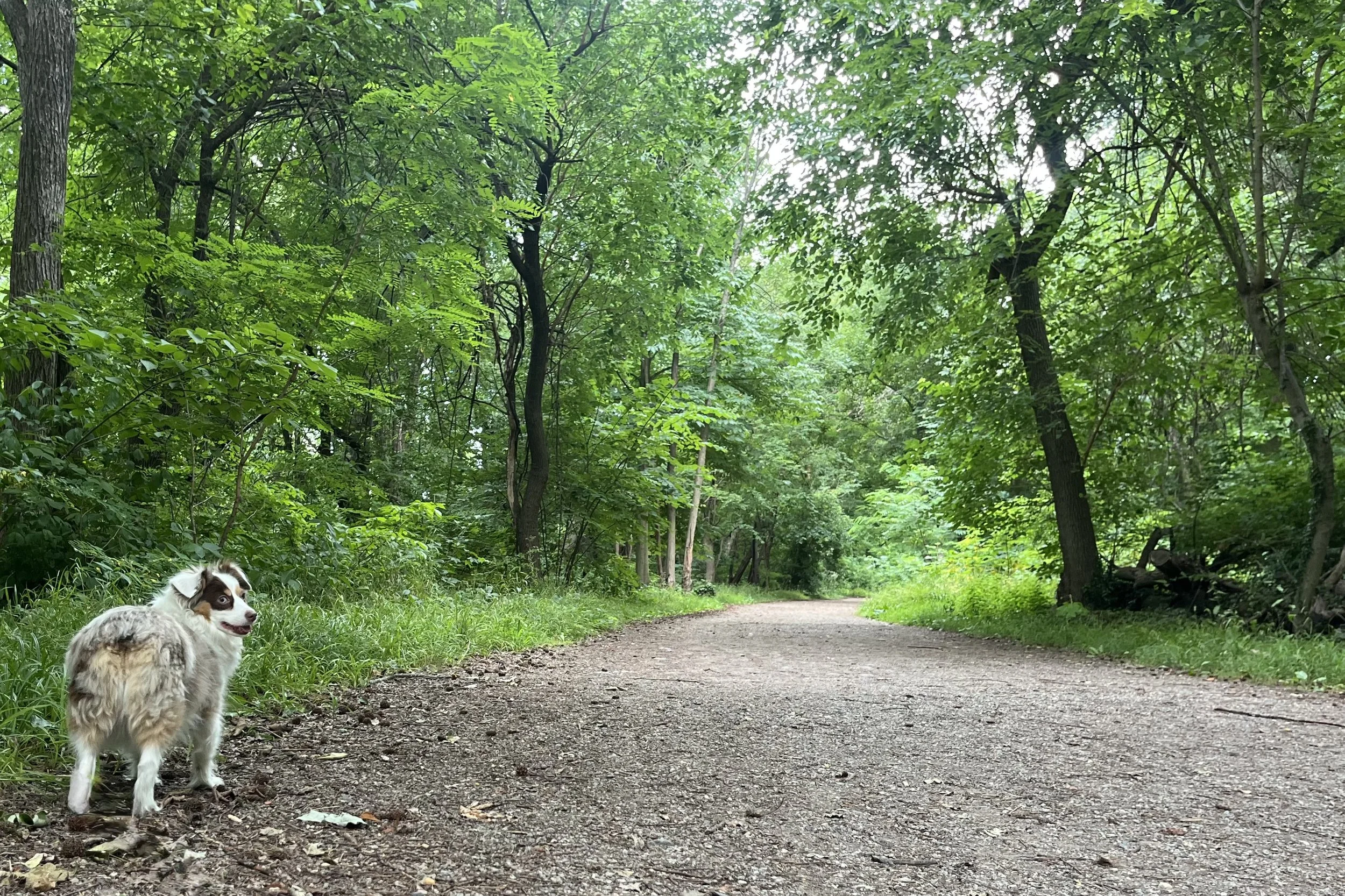
A wide trail beneath a continuous tree canopy offers the shade, visibility, and natural surface I look for during summer.
The return to the car matters too. Even a short paved approach may be much hotter by then, after it has been sitting in the sun and the dogs have already finished their hike. I prefer places where we can stay in the shade for most of the outing and return to the air-conditioned car without crossing another long, exposed stretch.
How Short Should a Summer Dog Hike Be?
A trail’s distance doesn’t always tell me whether it will work well for us in summer. A short trail can still take longer than expected if it is steep, crowded, difficult underfoot, or filled with interesting places where the dogs want to stop.
For us, the best short summer hikes are easy to adjust as we go. A simple out-and-back route works well because I can turn around whenever I want. Short loops with interior connecting paths are also useful because we can take the full route when everyone is comfortable or choose a quicker path back if the day feels warmer than expected.
I check the route ahead of time so I know the quickest way back to the car. That way, we can turn back whenever the weather changes or the dogs seem ready to head home.
A Short Trail Gives Them Plenty to Explore
Distance isn’t what makes a hike worthwhile for Archie and Saydie. A wooded trail gives them new scents, changing terrain, streams, riverbanks, and plenty of places to stop and investigate.
They may cover less ground in 30 minutes than they would on our usual neighborhood walk, but there is much more for them to explore along the way. That means we can keep the hike shorter while still giving them a satisfying outing that feels completely different from their everyday routine.
I Look for Enough Space to Keep the Outing Comfortable
I prefer trails where I can see far enough ahead to notice another dog approaching and where there is enough room for us to move comfortably to the side. Narrow paths, blind turns, and dense vegetation along both edges make passing much harder.
Saydie is uncomfortable when unfamiliar dogs pass too closely, so having a little warning and a clear place to wait can make the encounter much easier. Warm weather can already make a hike more tiring, and I don’t want to add the stress of a tight pass with another dog.
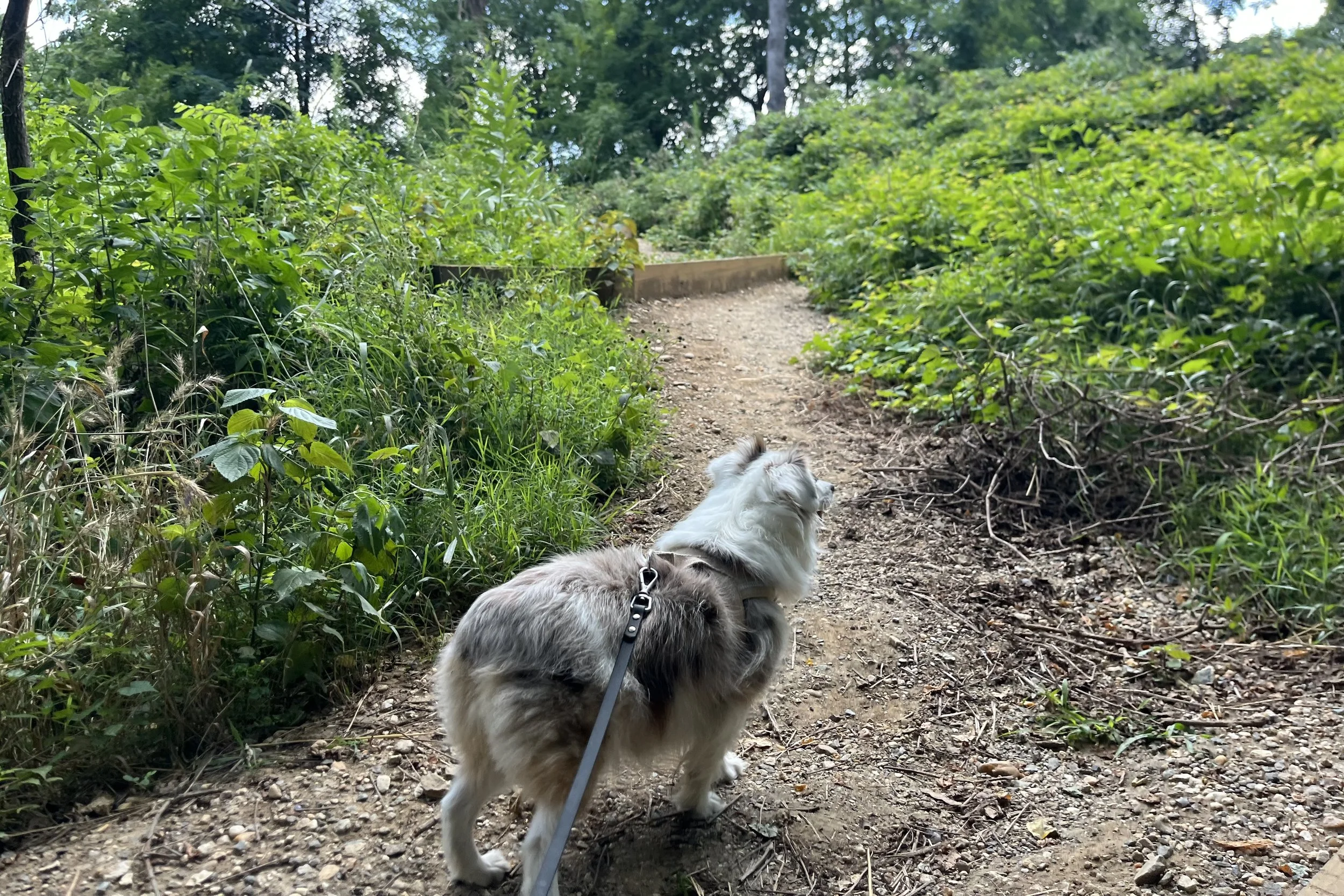
A clear view ahead gives me time to notice another dog approaching and find a comfortable place to wait with Saydie.
I also look for clear trail edges or occasional open areas where we can wait comfortably. I don’t want to pull the dogs into dense undergrowth where I can’t see the ground and they may pick up ticks.
When we visit matters too. Even a wide trail can feel crowded on a Sunday afternoon or a holiday, and I wouldn’t expect that to be especially enjoyable for any of us. Whenever possible, I choose a quieter time when we are less likely to meet a steady stream of people and dogs.
Off-leash activity is another consideration. A shaded stream area may sound ideal, but it may not be comfortable for Saydie if loose dogs regularly run toward us. Before visiting, I check whether the park contains a designated off-leash area and whether we can reach the trails or water without walking directly through it.
Water Can Change the Whole Outing
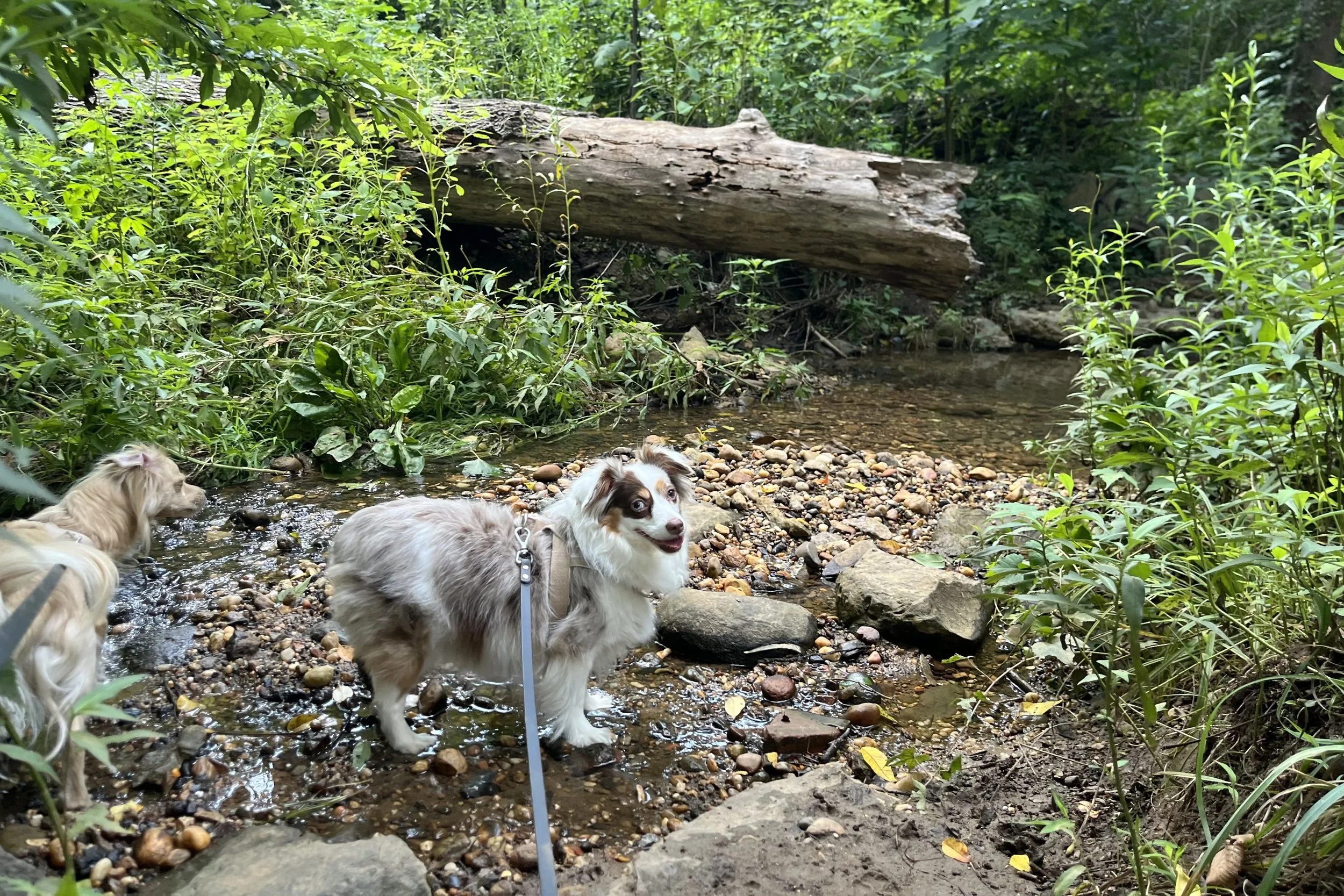
A shallow woodland stream gives Archie and Saydie a chance to explore, wade, and cool off along the way
Water access can completely change a summer hike for Archie and Saydie. They both love getting into the water, and watching them perk up as they splash, wade, and cool off can become the highlight of the entire outing.
The stream also gives both dogs something new to explore without making the hike longer. They can spend time wading, sniffing along the bank, and investigating the area, which helps a shorter outing feel satisfying on its own.
Streamside routes often provide the wooded surroundings and tree cover I look for during summer, but being beside water doesn’t automatically mean the trail is shaded. I still check the route carefully, since the stream may also be difficult to reach or nearly dry when we arrive.
Whether they have been swimming at the beach or wading in a wooded stream, my pups always come back to the car wet and muddy. I keep a quick-drying dog towel in the car—and that’s when I really appreciate my waterproof back-seat cover.
What Should I Check Before Letting My Dog Wade?
Before letting Archie or Saydie into the water, I check whether dogs are permitted and whether any current water advisories have been posted.
I make sure the water is shallow enough for them to wade comfortably, the current is gentle, and there is an easy place for them to get in and out. I’m especially cautious after heavy rain, when a normally calm stream may become deeper and move much faster.
I also pay close attention to slow-moving or stagnant water during hot weather. I keep the dogs out if the water looks discolored, has scum, foam, mats, or a paint-like appearance, smells unusual, or has dead fish or other animals nearby. Because harmful algal blooms cannot always be identified by sight, I check current advisories even when the water appears clear.
No matter how inviting the water looks, I still bring fresh drinking water and our collapsible silicone water bowl. The stream is for splashing and exploring—not the dogs’ drinking supply.
When Should I Use a Longer Leash?
In quiet areas with plenty of room, I like using a waterproof longer leash so Archie and Saydie have more freedom to sniff, explore, or wade without being off leash. Unlike a fabric leash, it doesn’t stay soaked after being pulled through the water.
I keep it shorter on narrow or busy trails and bring the dogs closer whenever another person or dog approaches. A longer leash works best when I can see what is ahead and have enough open space to keep the line out of everyone else’s way.
I also check the park’s current rules before we go because leash-length requirements vary from one park to another. Even when a longer leash is permitted, I only extend it when the trail has enough space to use it comfortably and responsibly.
What Should I Bring on a Short Summer Hike With My Dogs?
I don’t bring a large collection of specialized cooling products. For a short summer hike, I generally bring:
Fresh water and a collapsible bowl
The leash that best fits the trail—our regular everyday leash, a hands-free leash, or a waterproof longer leash
Waste bags
My phone
Extra water and a spare bowl waiting in the car
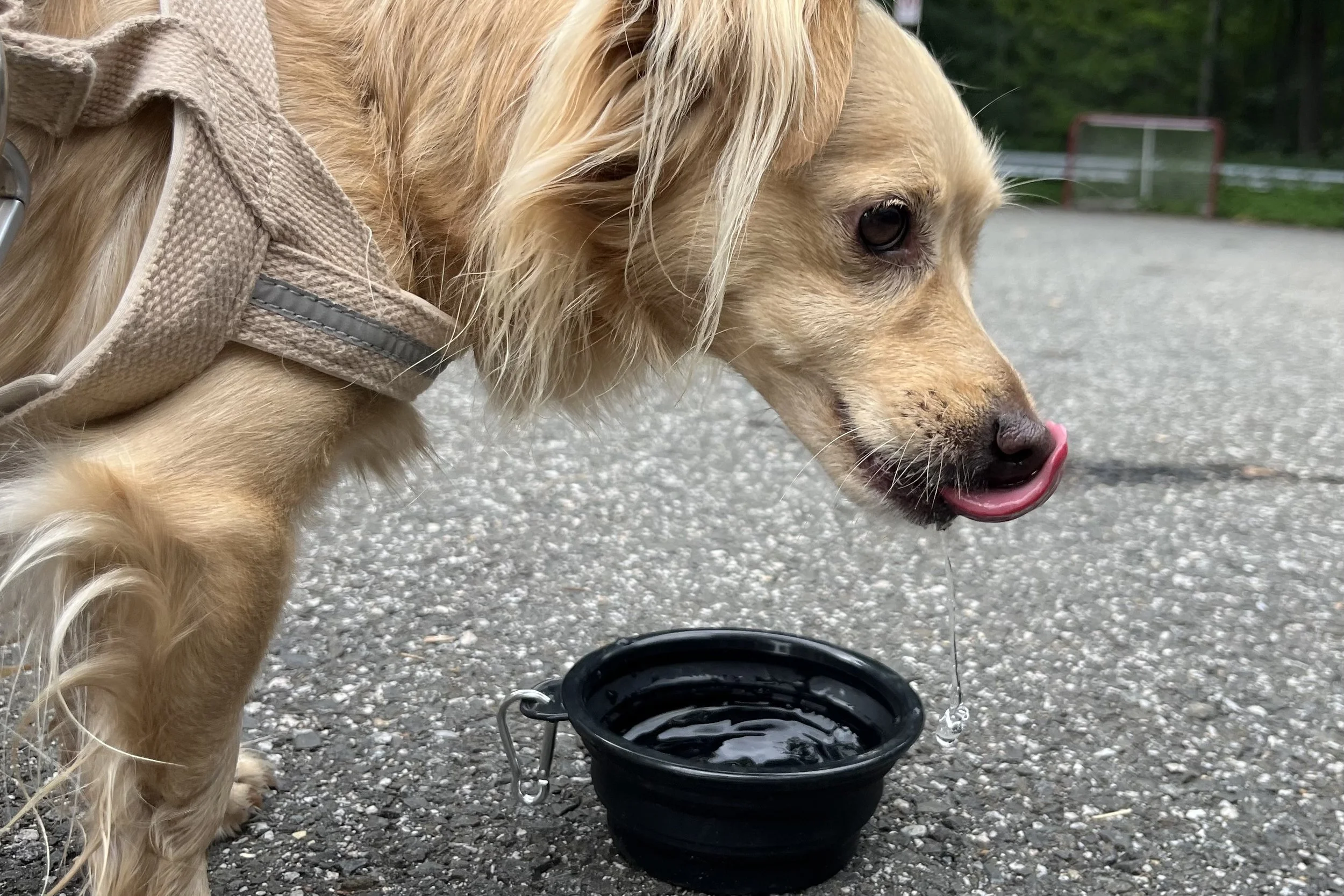
A water break in the car gives Archie and Saydie another chance to cool down before we head home.
On uneven trails, a hands-free leash leaves my hands available for balance and makes it easier to carry water or fill the dogs’ bowl without juggling everything at once.
How Do I Know When My Dog Has Had Enough?
Panting more heavily than usual is often my first clue that one of the dogs has had enough. I also watch for slowing down, lagging behind, stopping more often, or seeming reluctant to continue.
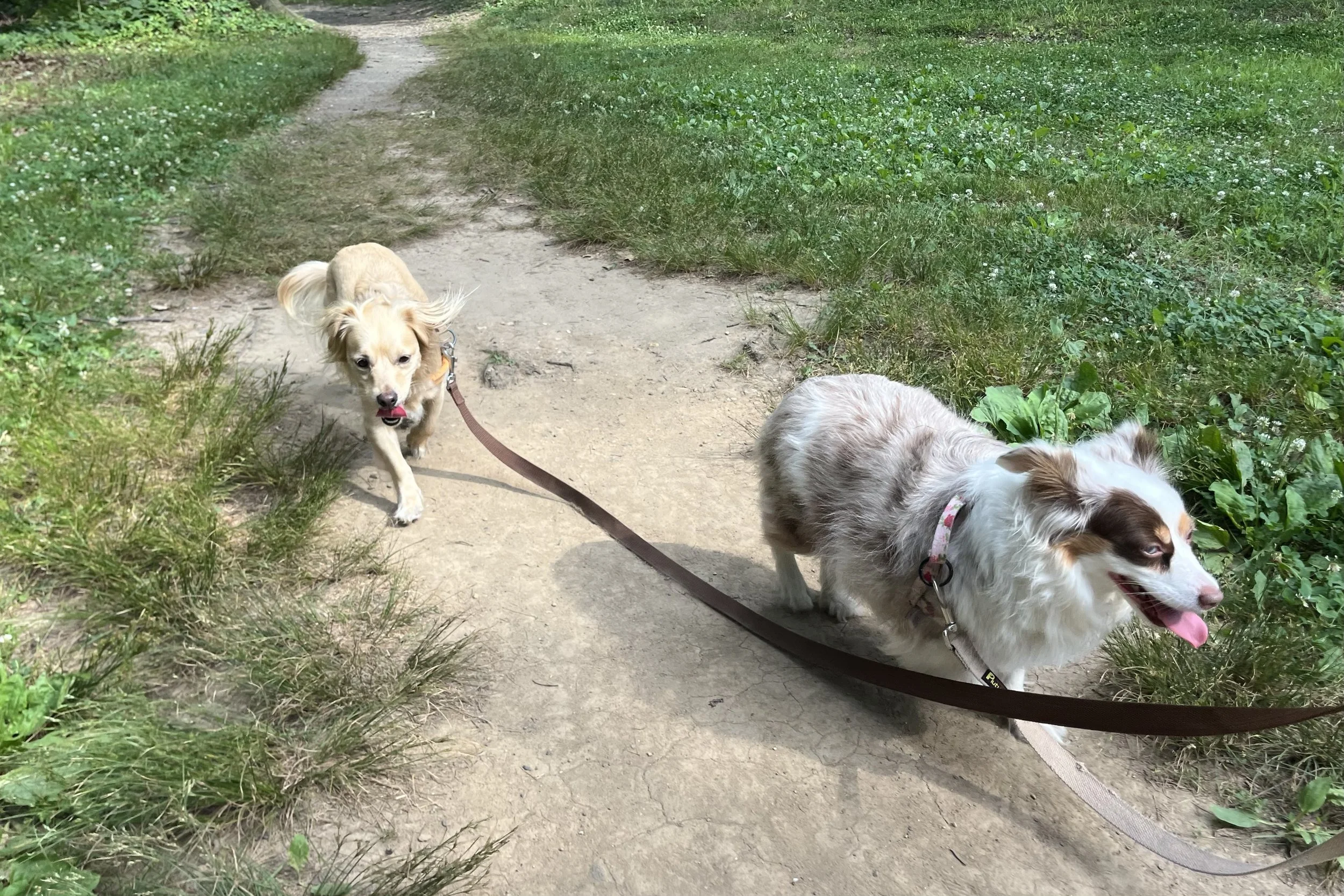
Heavier panting is often my first sign that it’s time to pause, offer water, and begin heading back.
I pay attention to what is different from each dog’s normal behavior. Saydie tends to show the effects of the heat sooner, while Archie may remain eager to continue longer than he should. I don’t wait for either dog to stop walking completely before deciding it’s time to head back.
This is why I check the route before we begin and know the quickest way back to the car. If one of the dogs has had enough, we stop, offer fresh water, and turn back rather than continuing toward a particular viewpoint or finishing the planned loop.
Weakness, confusion, vomiting, difficulty breathing, or collapse are more serious and require urgent veterinary attention.
Some Summer Days Just Aren’t Hiking Days
A shaded trail can be much more comfortable than an exposed neighborhood street, but there are still summer days when even the woods won’t make the outing enjoyable.
If the morning already feels extremely hot or humid, the air quality is poor, or either dog seems uncomfortable before we leave, we stay close to home and keep our time outside short.
Other conditions may lead me to choose a different trail instead. If the park is likely to be packed, storms are expected, there is a water advisory, or the drive feels too long for a short outing, I look for another option.
Shade, dirt trails, and water access can make a big difference, but sometimes the better choice is simply a quick walk close to home and a cooler day indoors.
What Makes a Summer Dog Hike Work for Us
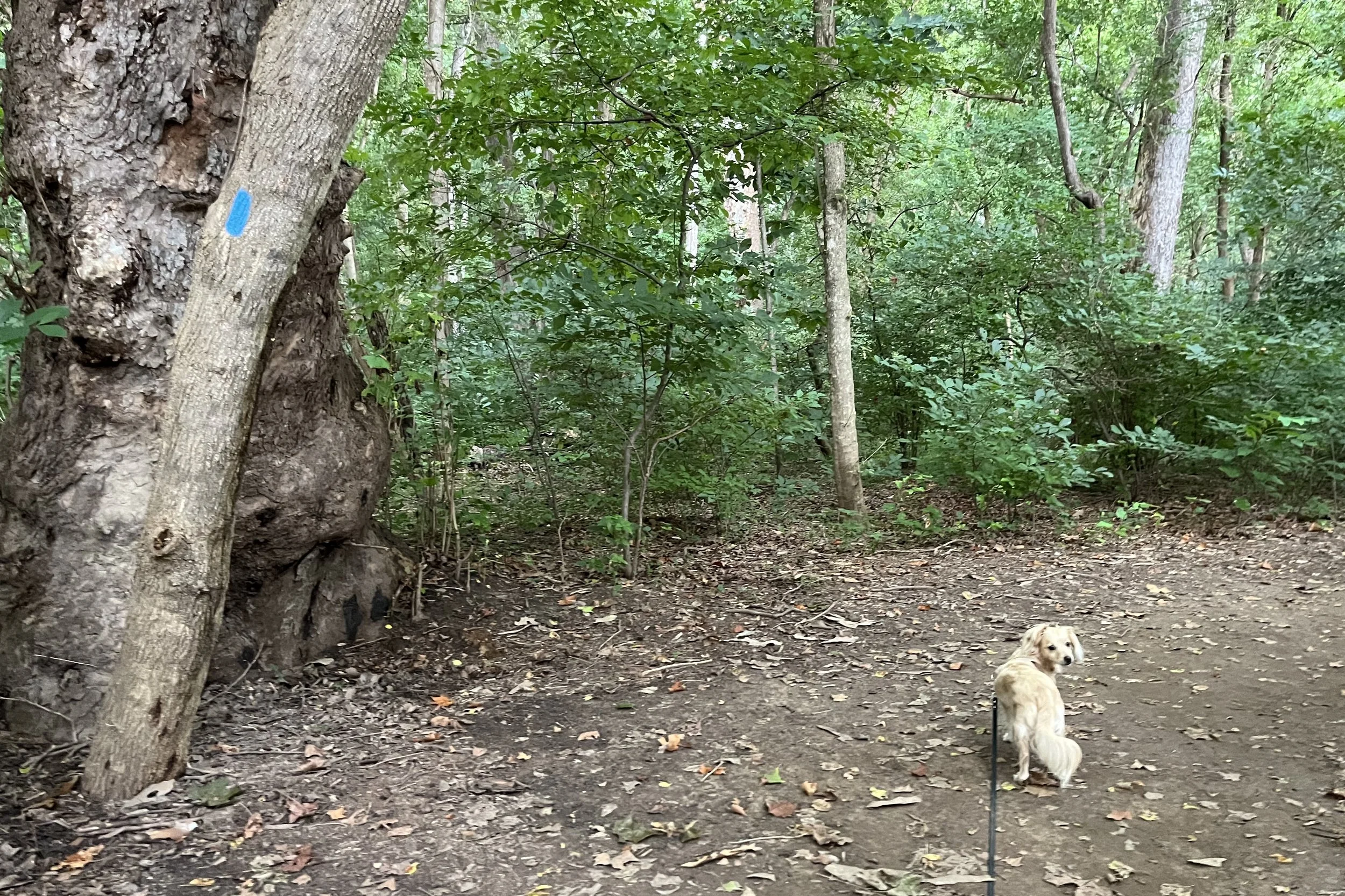
The right summer trail gives us shade, natural ground, and enough flexibility to enjoy the woods at our own pace.
Over time, I’ve learned how much the environment around us can change a walk. Busy streets can become overwhelming, travel can leave dogs more tired than expected, and an unfamiliar place can make a dog hesitate or refuse to continue.
Summer heat is another situation where I adjust the plan to give Archie and Saydie a better walk. It takes a little more thought than stepping outside for our usual daily route, but choosing the right trail can make a big difference.
I look for shade that begins close to the car and continues through most of the route. I want natural trail surfaces, a route we can shorten if needed, enough room to pass other dogs, and plenty for Archie and Saydie to explore along the way.
Water access can make the outing even better, but I check the conditions before letting the dogs wade and always carry fresh drinking water.
The goal isn’t to complete a certain number of miles. It is to choose a trail where a shorter outing feels worthwhile and where I can easily adjust the plan if the weather or the dogs tell me it’s time.
Next, I’m sharing four short, shaded dog hikes near Washington, DC that offer many of the features I look for during summer.
If you shop through one of my affiliate links, I may earn a small commission—at no extra cost to you. Thanks for supporting our adventures!
