6 Quiet Dog Walks Near Washington, DC for Dogs Who Prefer a Calmer Outing
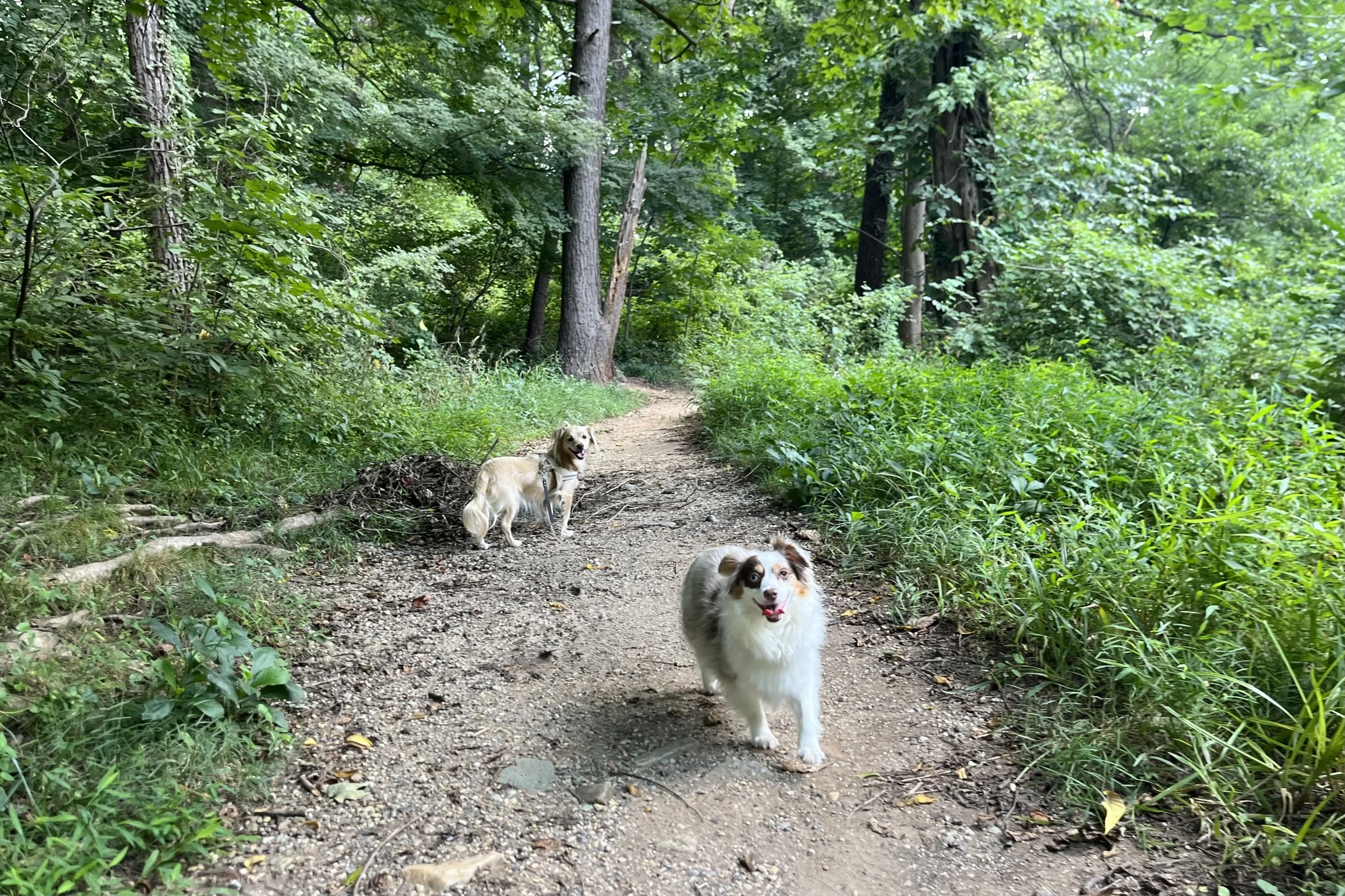
Archie and Saydie exploring one of our favorite quiet wooded trails near Washington, DC.
Sometimes a lively place like National Harbor or Old Town Alexandria is exactly what I have in mind for an outing with Archie and Saydie. We enjoy seeing people out with their dogs, walking through an active area, and stopping somewhere along the way.
Other days, I’m looking for a quieter place where we can walk without so much happening around us.
Saydie has always preferred calmer places to busy, social ones. She is much more comfortable when she has room to explore, other dogs aren’t constantly passing us, and she doesn’t need to keep track of so much activity around her. Archie is generally more adaptable, but he enjoys these quieter outings too.
These six quiet dog walks near Washington, DC give us different kinds of breathing room. Some have wide paths and open space, while others have wooded trails with very few people or dogs around. What they share is enough space—or enough quiet—to make the walk feel manageable for Saydie.
We generally visit these parks on weekdays. Most will naturally be busier on weekends, so the descriptions below reflect the quieter conditions we have personally experienced.
At a Glance
U.S. National Arboretum: The best choice when we want open space and the freedom to change our route as we go.
Dumbarton Oaks Park: A wilder woodland walk with narrow trails, a stream, and very little city noise.
Theodore Roosevelt Island: A mix of smaller shoreline trails, wider wooded paths, river views, and the option to walk farther.
Jones Point Park: An easy waterfront walk that works for a quick visit or a longer stop near the lighthouse at sunset.
Huntley Meadows Park: A wide, shaded woodland path that opens to marsh views along the way.
Mason Neck State Park: A quiet but varied outing with forest trails, Belmont Bay views, and opportunities to watch for birds.
U.S. National Arboretum
The National Arboretum works well when I want plenty of room and the flexibility to explore several different areas. We usually move between the paths around the bonsai area, the azaleas, the Capitol Columns, and the open lawns.
The walking environment changes as we go. We might follow a paved road or wide path for part of the visit and then walk across the grass. That flexibility also makes it easy to change direction or create more distance when another dog is approaching.
Saydie is noticeably more comfortable here. She walks ahead, sniffs, and explores instead of constantly scanning what is happening around her. The open space helps, but so does the fact that much of the Arboretum feels quiet and removed from the busier parts of Washington.
Best for: Dogs who relax when they have open space, wide paths, and room to change direction.
When we like to visit: Late morning on a weekday. That way, we miss the early commute traffic and leave before the afternoon drive home.
Keep in mind: Weekend afternoons can be busy around the Capitol Columns, parking areas, and other popular attractions. Dogs can walk around the bonsai area, but they aren’t allowed inside the museum itself.
Dumbarton Oaks Park
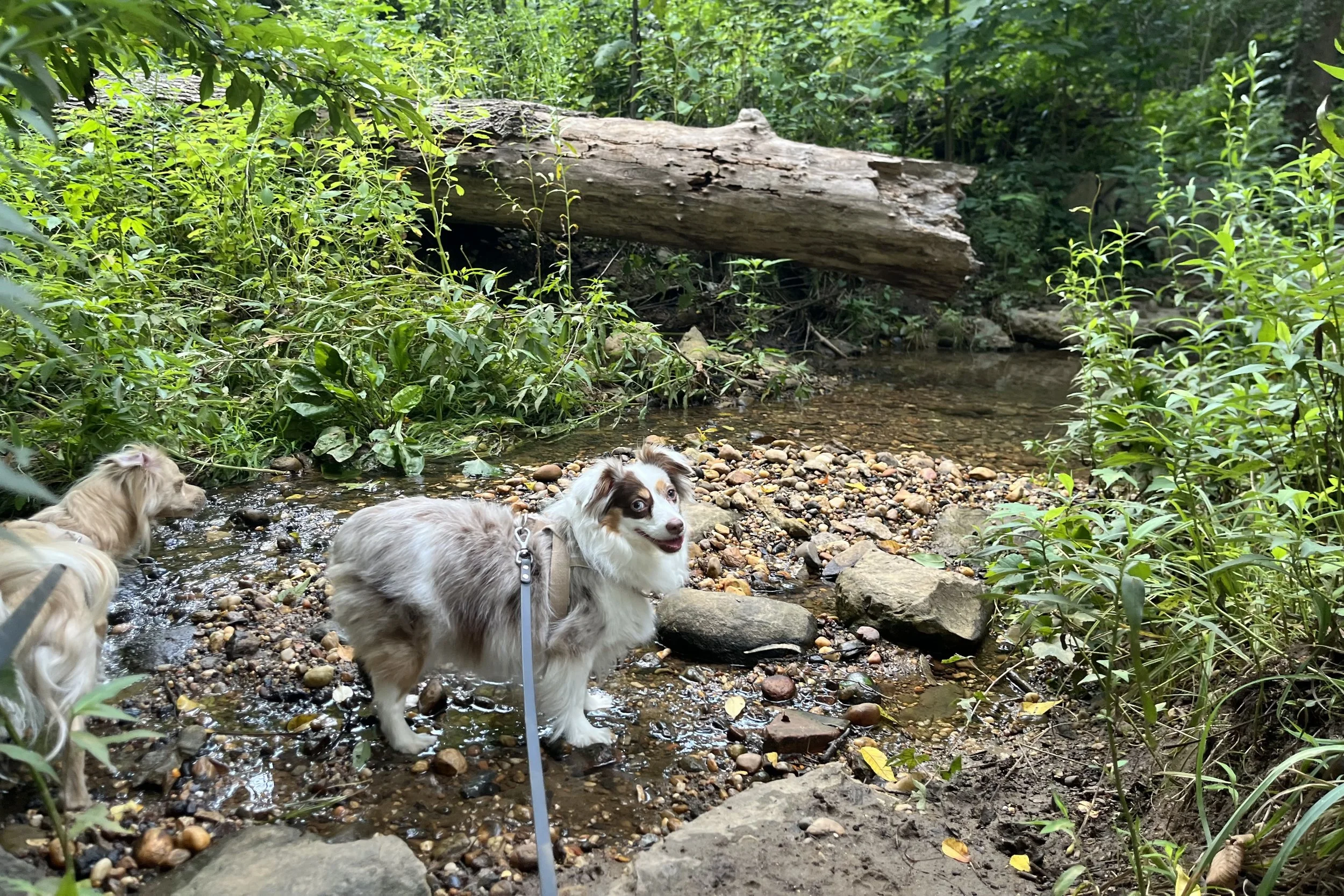
Archie and Saydie exploring along the stream at Dumbarton Oaks Park.
Dumbarton Oaks Park offers a very different kind of quiet from the National Arboretum. The Arboretum is highly landscaped and maintained, while Dumbarton Oaks feels much more wild and untamed. Here, we follow narrow dirt trails through the woods, with a stream running through the park and very little city noise once we are inside.
It was extremely quiet during our weekday visit. We didn’t see any other dogs, so Saydie could explore the woods without being interrupted by close passes. She seemed comfortable in the wooded surroundings rather than more watchful.
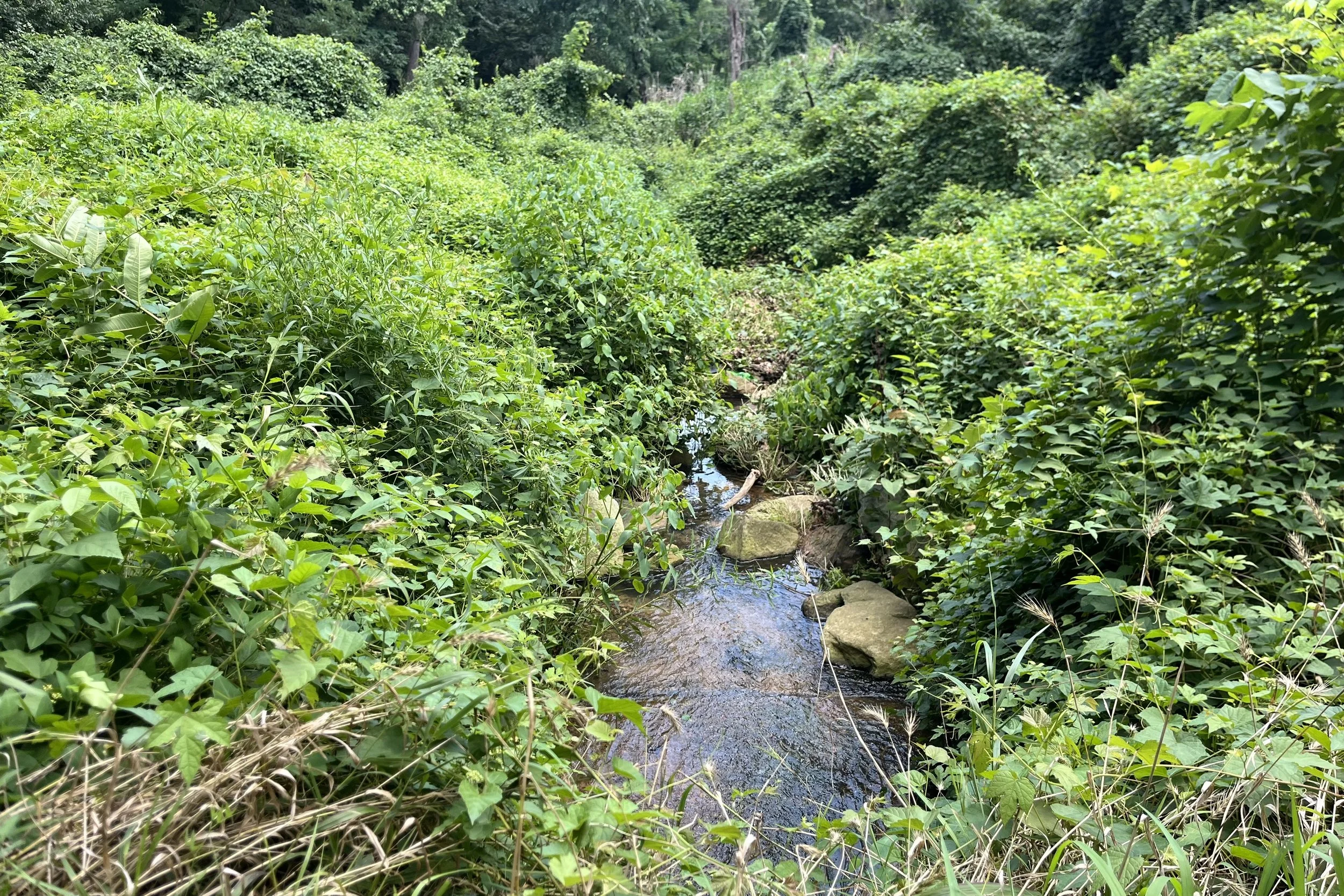
The stream winds through one of the park’s wilder, more overgrown areas.
We prefer entering from Whitehaven Street. We’ve found that end of the park quiet, with easier and more predictable parking. It also lets us begin walking without first navigating a busy area.
Best for: A quiet, untamed woodland walk with narrow trails, a stream, and very little city noise—all without leaving Washington, DC.
When we like to visit: Weekday mornings or late mornings. If we’re driving, we try to leave before the afternoon commute begins around 4 p.m., since getting out of DC can take considerably longer after that.
Keep in mind: The trails are narrow, with limited room to move aside if another dog approaches during a busier time.
Theodore Roosevelt Island
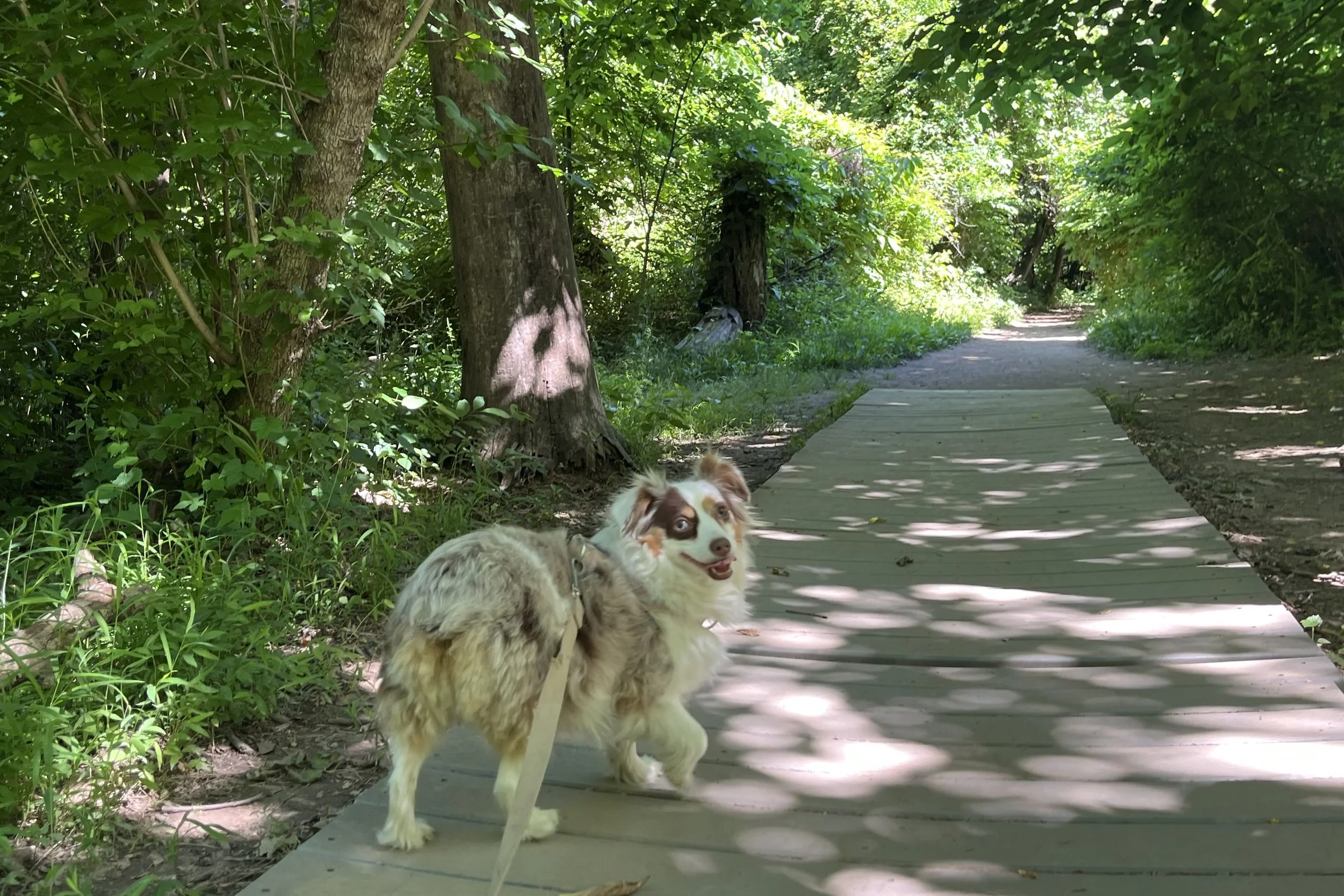
Saydie pausing on a quiet, shaded path during one of our summer walks.
The walk to Theodore Roosevelt Island begins with a wide pedestrian bridge leading onto the island. We can look out over the water from both sides, and the crossing feels like a transition from the city into the woods.
We usually begin on the smaller trails around the shoreline and eventually make our way into the center, where the Theodore Roosevelt Memorial is located. Along the way, we move between wooded paths, wider trails, and views across the river.
The island feels surprisingly separate from the city, even though we can still see Georgetown and Arlington through the trees and across the water. That contrast makes the walk interesting without making it feel busy.
On one visit, we continued farther around the southern part of the island for a longer walk. From there, we could see the Washington Monument in the distance. It gave us a different view and an easy way to add more distance to our usual route.
Saydie notices people here and may watch someone walking farther ahead, but they generally don’t come close enough to make her uncomfortable. We have usually had enough room to turn, change direction, or wait while someone moves farther along the trail.
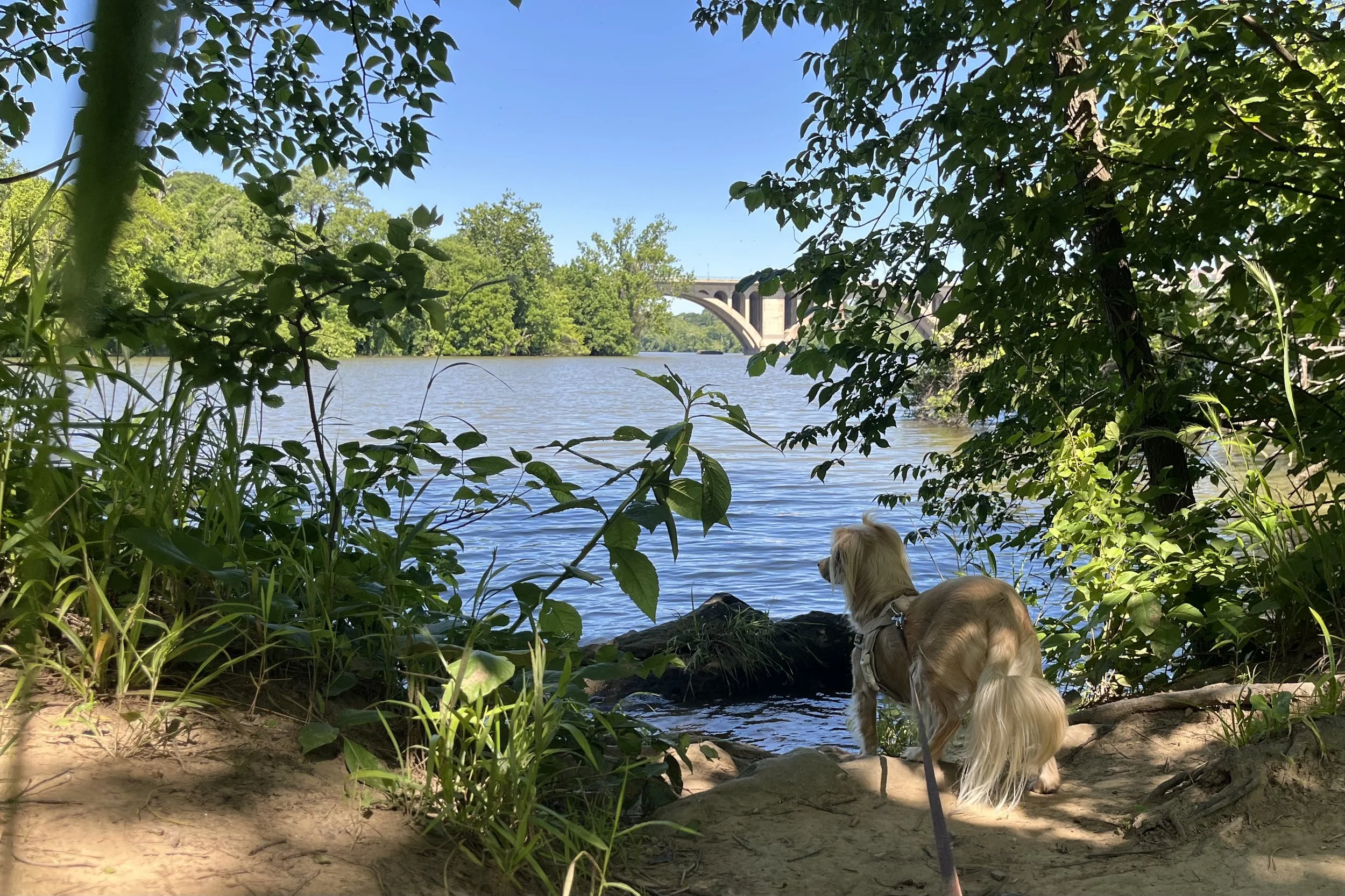
Archie stopping at the shoreline to look across the Potomac toward Key Bridge.
Best for: A varied wooded walk with river views and the option to make the outing longer.
When we like to visit: We generally go on weekdays, when the trails have felt peaceful and easy to manage.
Keep in mind: The smaller trails around the shoreline have less passing room than the wider paths near the memorial, although we have generally been able to turn or create distance when needed.
Jones Point Park
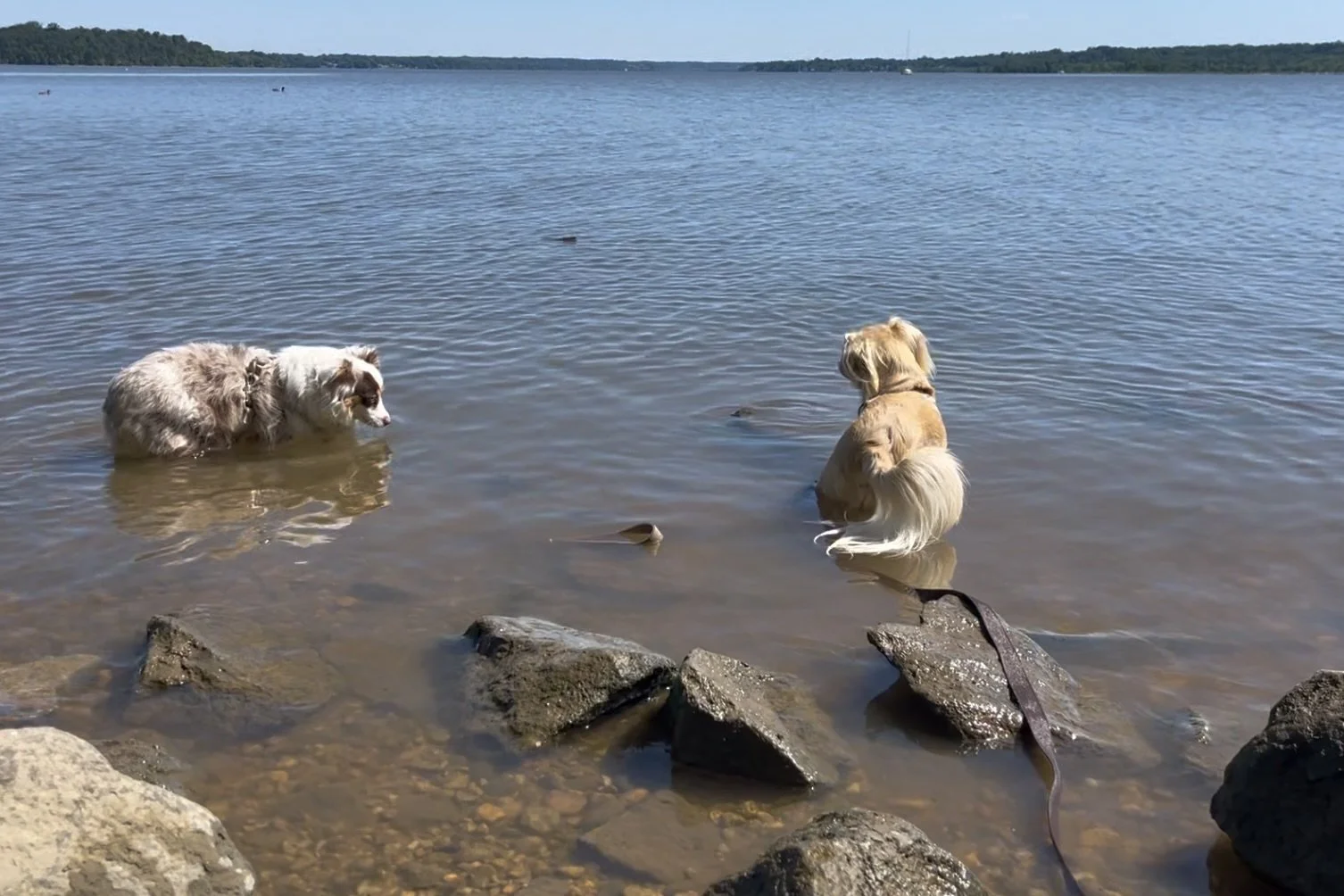
Archie and Saydie cooling down along the quiet shoreline at Jones Point Park.
Jones Point Park may seem like an unusual choice for a quiet-walk article because part of it sits directly beneath the Woodrow Wilson Bridge. That area is loud and open, with the parking lot in view and traffic overhead. But the feeling changes once we move away from the bridge.
We usually begin along the waterfront, where the rocks meet the shoreline. Archie and Saydie like exploring along the edge of the water, and the path gradually becomes more wooded. The wooded paths are especially peaceful and feel much farther from the bridge than they actually are.
The area around the lighthouse is another calm part of the park. The open views across the Potomac make this a peaceful place to stop before continuing the walk.
Jones Point can have walkers, cyclists, families, and people using the recreational areas, but it has never felt overly social or crowded during our visits. Saydie remains aware of people in the distance and the sound of cars overhead, but we generally have enough room to change direction or wait for someone to pass. The wooded paths become narrower in places, although we have still been able to find space when we need it.
One thing I watch for is activity in the large central field. We often see people allowing their dogs to run, chase balls, or play together there. Jones Point does not have an official off-leash area, so I avoid the field when dogs are running loose. Dogs are officially required to remain on a leash no longer than six feet. National Park Service
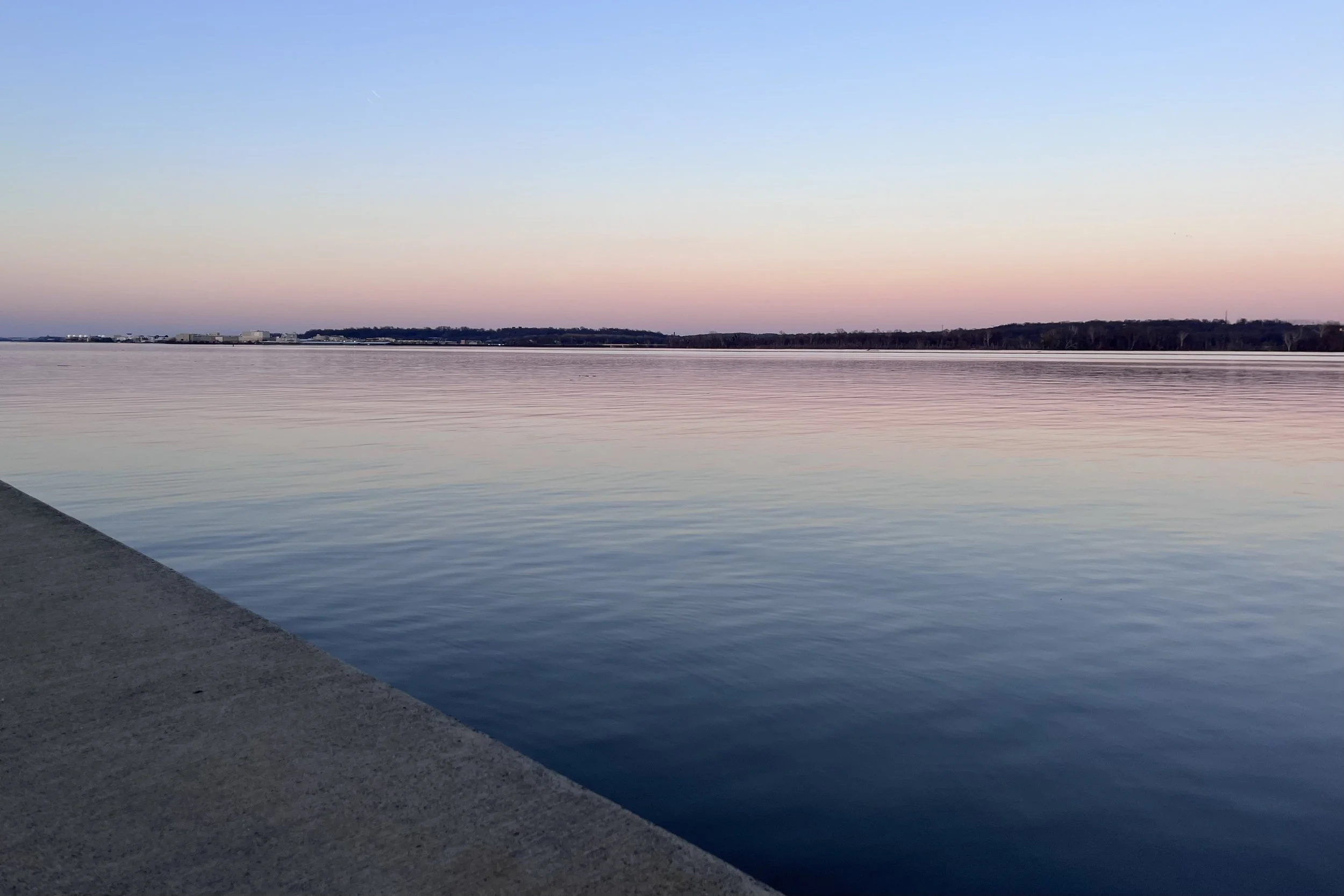
At sunset, the sky and water near the Jones Point lighthouse take on a soft pink color.
Best for: A flexible waterfront walk with wooded paths, shoreline views, and a peaceful place to pause near the lighthouse.
When we like to visit: It works well for a quick walk because the parking is close to the paths and we can be beside the water almost immediately. Sunset is especially beautiful near the lighthouse, when the sky and water turn pink.
Keep in mind: The area directly beneath the bridge is noisy, and off-leash dogs are sometimes present in the central field. The waterfront, wooded paths, and lighthouse area feel much calmer.
Huntley Meadows Park
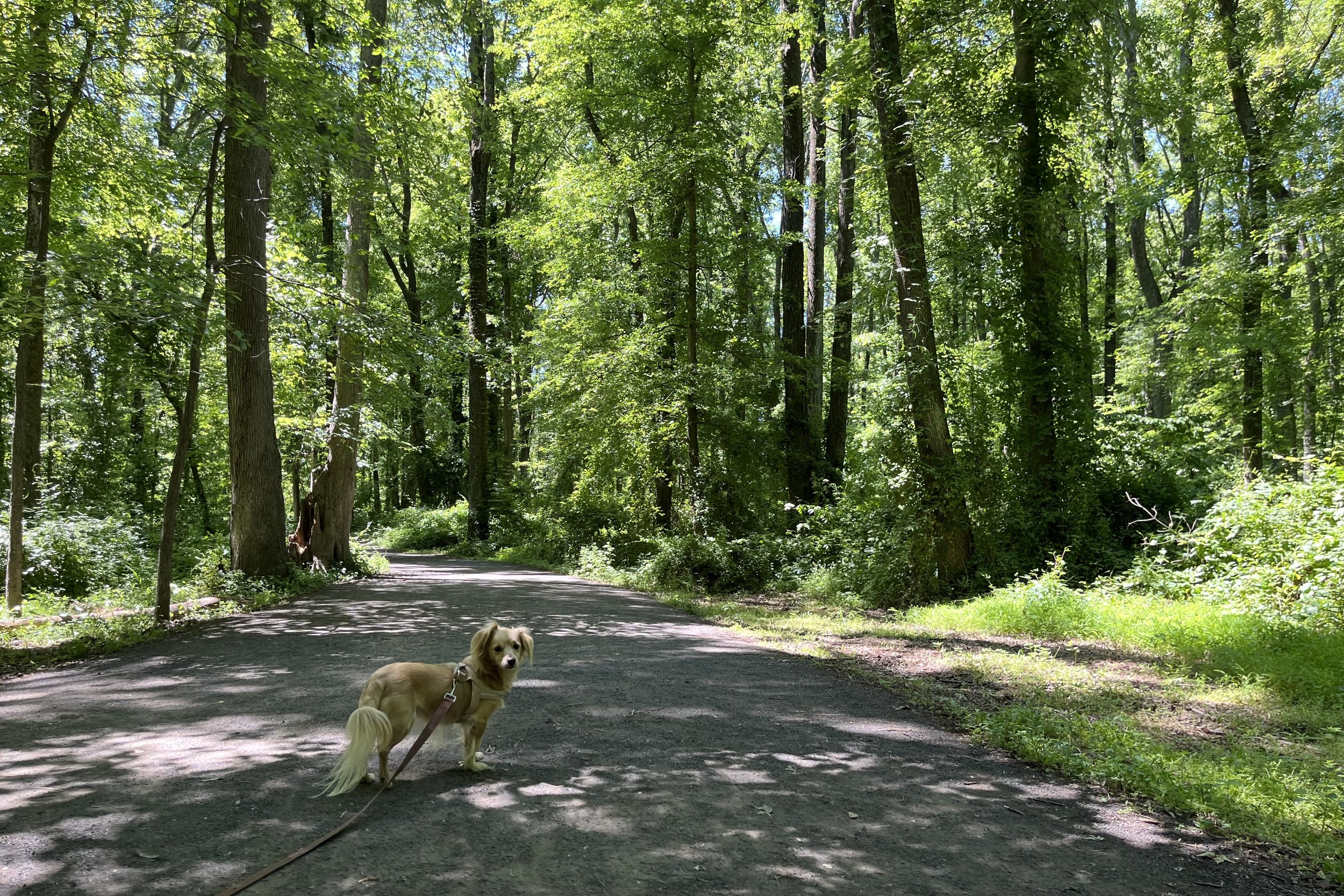
The wide, shaded path gives us plenty of room to walk without feeling crowded.
The dog-friendly walk at Huntley Meadows follows a wide path through the woods, but the scenery doesn’t stay the same for long. As we continue, the trees open up in places and give us broad views across the marsh. The path is well shaded, with benches along the route when we want to stop.
The woods were extremely quiet during our visits. Occasionally, Archie and Saydie would look up when they heard a bird, but otherwise there was very little around them to draw their attention.
We occasionally pass another dog, but the path is wide enough that we can usually create some space and pass comfortably.
Huntley Meadows also has a wetland boardwalk and observation platforms, but dogs aren’t permitted in that part of the park. If you have a chance to return without your dog, it’s another nice way to experience a different side of Huntley Meadows. Fairfax County Park Authority
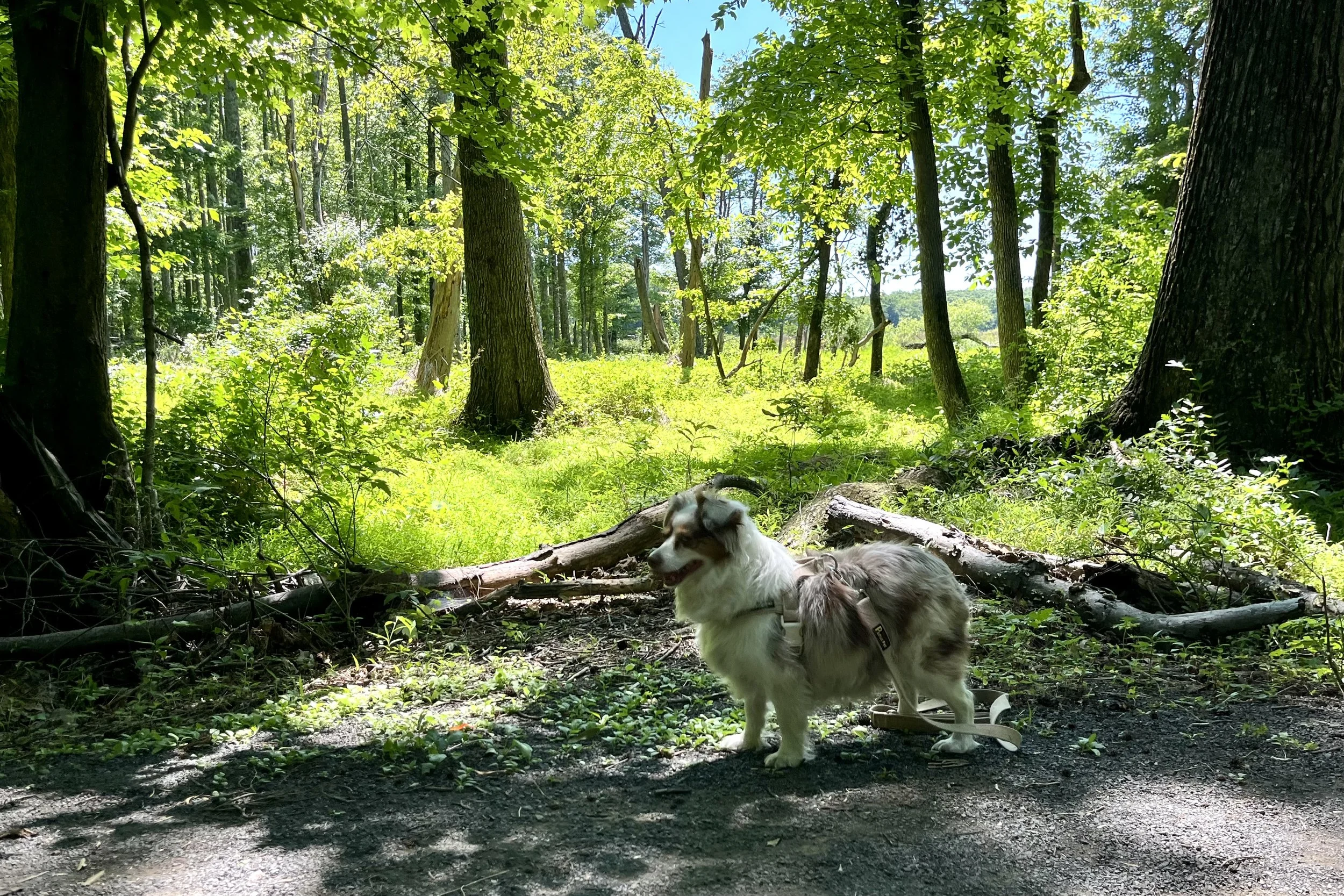
The wooded path opens in places to brighter views across the marsh.
Best for: A shaded woodland walk with marsh views and enough room to pass other dogs comfortably.
When we like to visit: Fall and winter are especially peaceful, but the shade also makes this a good walk during the summer.
Keep in mind: Dogs aren’t permitted on the wetland boardwalk or observation platforms, so we remain on the wide wooded paths when Archie and Saydie are with me.
Mason Neck State Park
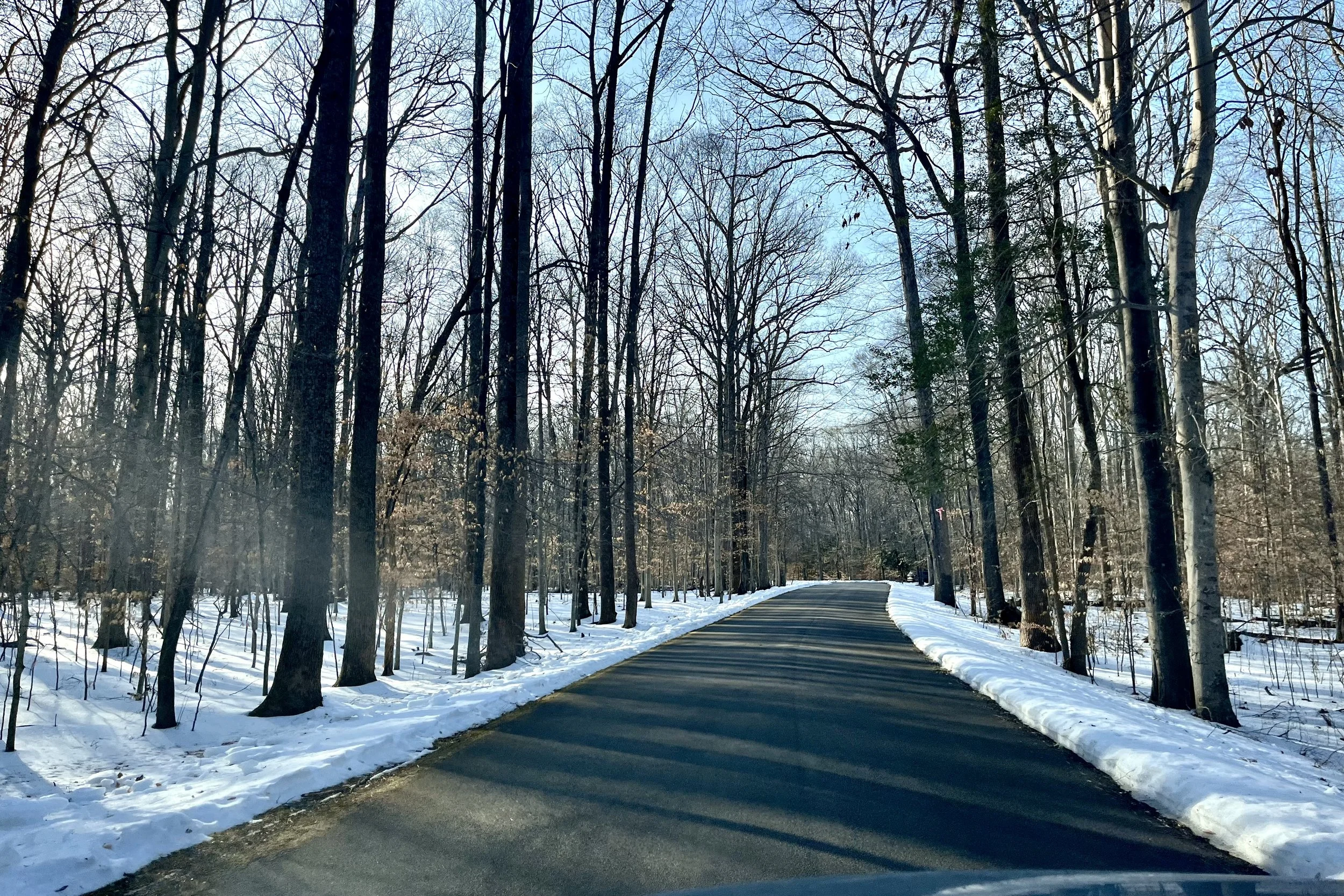
The quiet begins on the long, snow-lined road into Mason Neck State Park.
The peaceful feeling at Mason Neck begins before we even park. The long road into the park runs through the forest, and it was especially beautiful during our winter visit, with snow on the ground and bare trees lining the way.
We parked near the visitor center and explored the winding paths along Belmont Bay. Small lookouts gave us places to stop and watch the water. We saw bald eagles as well as what appeared to be an osprey nest high on a platform near the shoreline.
Mason Neck is large and spread out, with several trails and areas to explore. We encountered very few people or dogs. The waterfront paths were narrow in places, so passing another dog could be difficult on a busier day.
Since we can easily spend a few hours exploring Mason Neck, I bring extra water and a collapsible bowl for Archie and Saydie.
There was a lot for Archie and Saydie to take in when we first arrived, between the waterfront, birds, and changing views. Both dogs enjoyed exploring the waterfront and paths, although Archie was especially interested in stopping at the water’s edge and looking out across the bay. Once we reached the wooded trails, there was less happening around them and they settled into the walk.
Best for: A quiet but varied outing with wooded trails, waterfront views, and plenty for dogs to explore.
When we like to visit: Winter makes the forest especially peaceful and is a good time to watch for bald eagles. For the best chance of seeing both eagles and ospreys, visit between spring and late summer.
Keep in mind: Mason Neck is the only park on this list with a fee. Virginia State Parks currently charges a $10 daily parking fee per vehicle.
How I Choose a Calmer Dog Walk
I don’t measure a good outing by how far we walk or how long we stay. What matters more is whether Archie and Saydie have enough room to explore without constantly having to adjust to everything around them.
Before choosing a place, I think about the width of the paths, how easily we can create distance, and how much activity we are likely to encounter. Sometimes an open park gives us the space we need. Other times, a quiet wooded trail is the better choice.
These quiet dog walks near Washington, DC give us several ways to choose an outing based on what the dogs need that day. For more ideas, take a look at 5 Dog-Friendly Places Near Washington, DC We Keep Coming Back To.
