How to Help a Dog Who Freezes During Walks
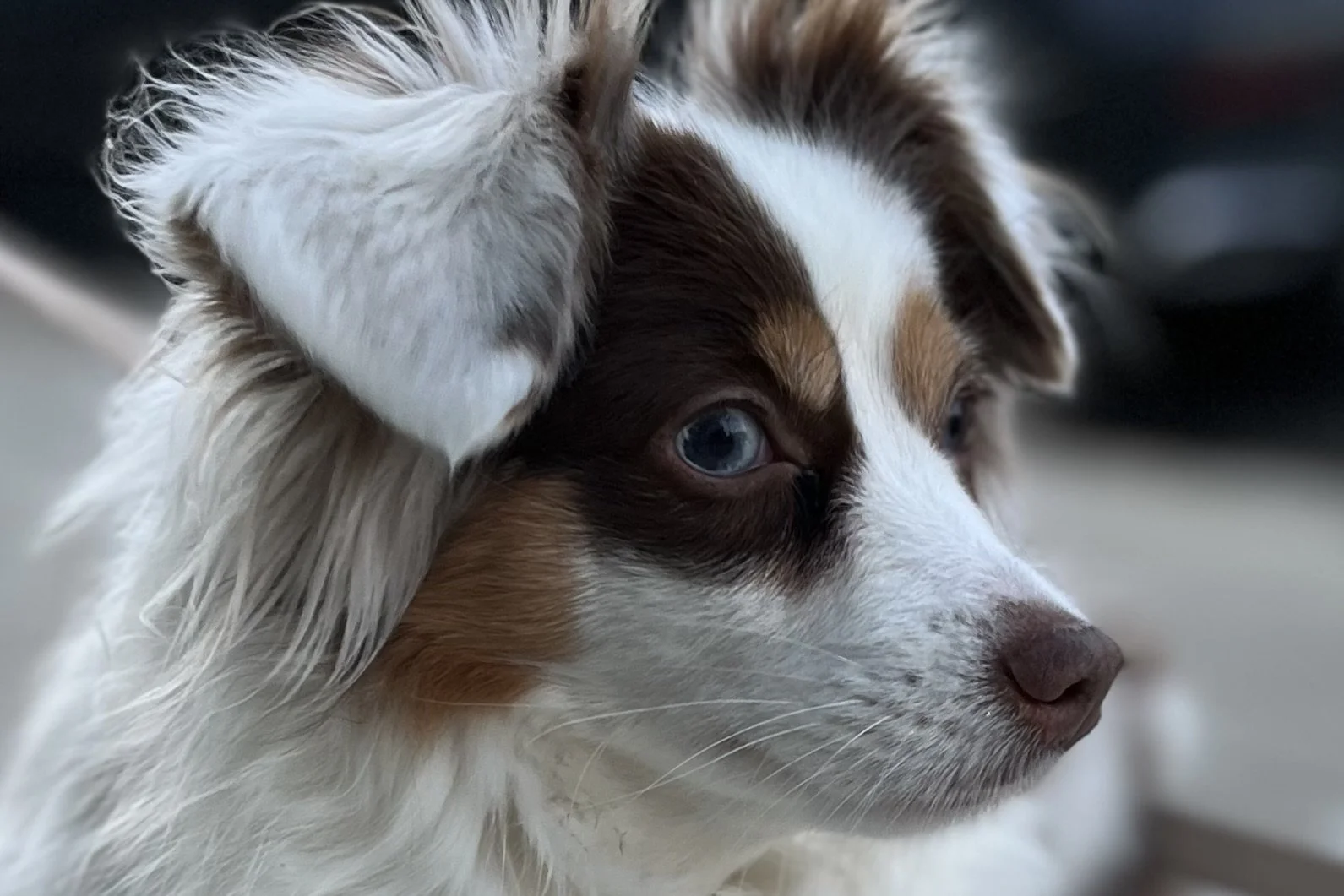
Sadie pauses during a walk, scanning the environment before deciding whether to move forward.
Many dogs pause during walks at some point.
They may stop in the middle of a sidewalk, hesitate at a doorway, or suddenly plant their feet when something in the environment catches their attention.
If you’ve experienced this, it can feel puzzling — especially when a dog who normally enjoys walks refuses to take another step.
In many cases, though, the dog isn’t refusing the walk at all.
They’re simply processing something in their surroundings — a sound, a surface change, movement nearby, or a detail that caught their attention.
This is one of the most common reasons a dog freezes during a walk.
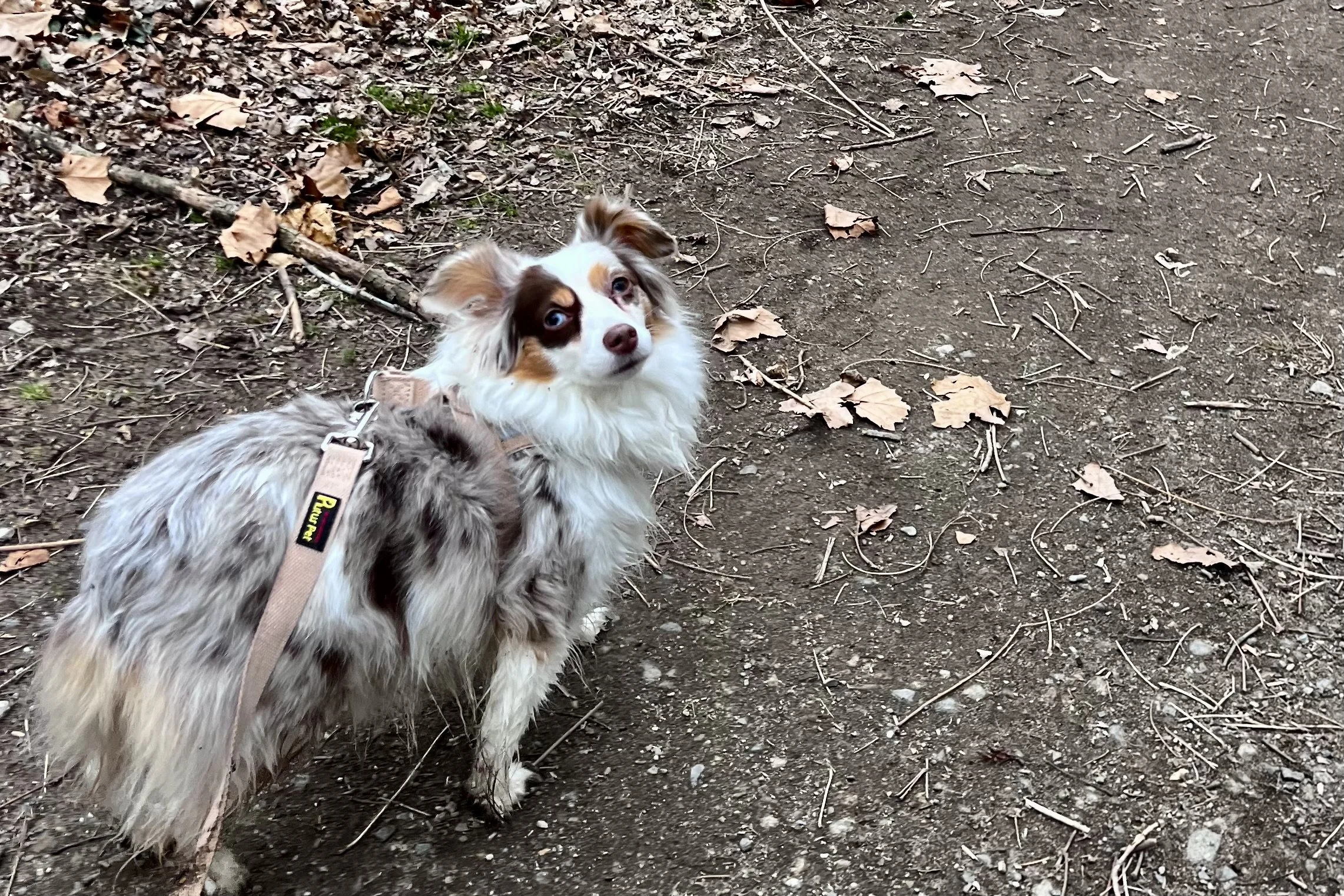
Saydie pauses during a walk and looks back before deciding whether to continue forward.
In Why Dogs Freeze or Refuse to Walk in New Places, I explain several of the most common reasons this happens.
The next question many owners have is simpler: what should you do when it happens?
Most walking pauses resolve easily once you understand how dogs interpret these moments. A calm response and a few small adjustments often help dogs regain confidence and continue walking comfortably.
Give Your Dog a Moment to Observe
Dogs experience walks very differently than humans.
While we tend to focus on where we’re going, dogs are constantly reading details in the environment — scent patterns, movement, surface changes, and sounds.
When several of those things change at once, many dogs simply stop to sort out what they’re encountering.
In these moments, standing still for a few seconds can actually help the dog move forward more easily.
Once they’ve finished observing what caught their attention, many dogs continue walking on their own.
This is also one reason dogs often seem more tired after exploring new places. New environments contain far more information to process, which I talk about more in Why Is My Dog So Tired After Travel?
What Dogs Are Often Doing When They Pause
I’ve started noticing this more clearly during our regular walks.
When I take my dogs downstairs to the sidewalk, sometimes they freeze immediately with no interest in walking yet.
Their heads lift.
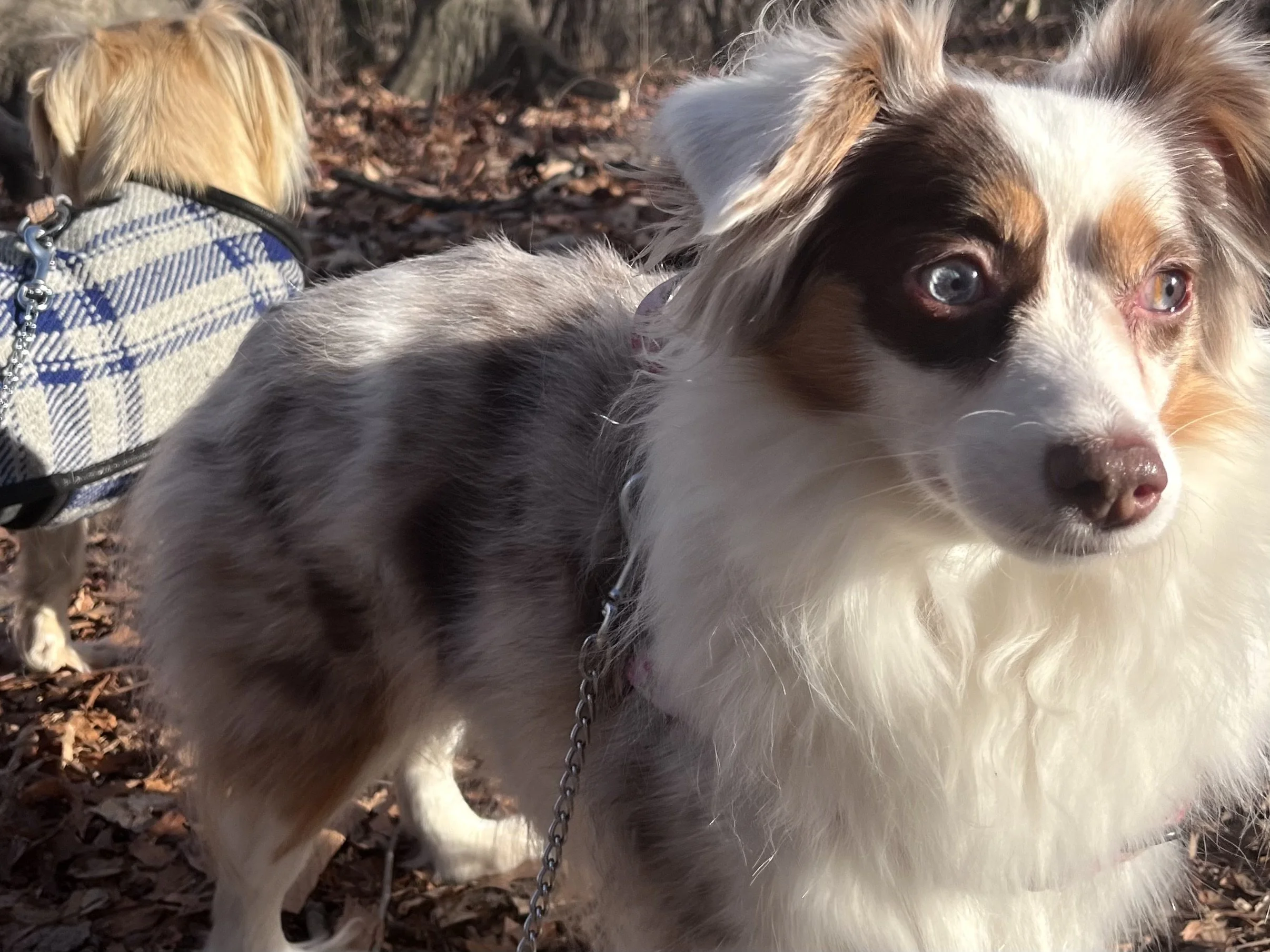
Saydie scans the surroundings while Archie focuses on scent — two different ways dogs process the same environment during a walk.
If you watch closely, you can see what’s happening.
Their noses start working quickly, picking up new scents in the air while they quietly watch what’s happening around them.
Saydie is the big visual scanner. Her head lifts high and stays almost perfectly still while her eyes move, checking everything happening around us.
Archie reacts differently. Instead of scanning the scene, his nose takes over. It works constantly — almost wiggling — as he sorts through the new smells in the air.
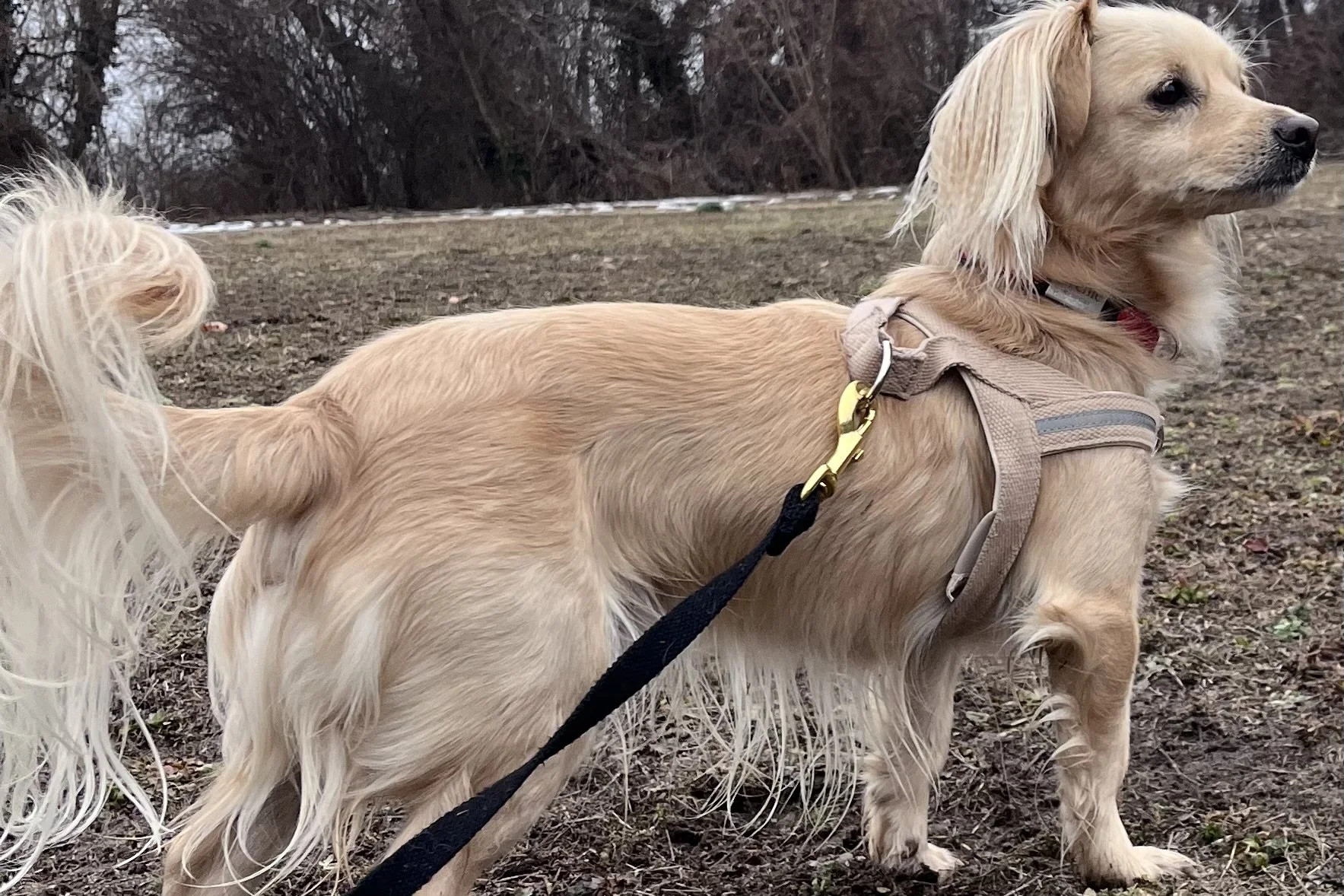
Archie pauses during a walk, sorting through scents in the air before continuing forward.
Because we usually go out several times a day, I’ve started noticing that these pauses sometimes become the entire outing.
We step outside, they stand quietly for a few minutes taking everything in. Sometimes we cross the street and repeat the same thing.
After five or ten minutes they often seem completely satisfied.
Instead of a long walk, the outing becomes a short period of observation.
Once they’ve taken in the scents, sounds, and movement around them, they’re often ready to head back inside.
What To Do When Your Dog Freezes During a Walk
Once you understand why dogs pause during walks, the next step is learning how to respond in the moment.
Most walking freezes don’t require force or correction. In many cases, the most helpful response is simply adjusting how the situation unfolds for the dog.
A few small changes can often help the dog regain confidence and continue walking comfortably.
When a dog freezes during a walk, it often helps to:
• Pause and give the dog a moment to observe. Many dogs simply need a few seconds to process what they’re noticing.
• Keep the leash relaxed. Pulling forward when a dog is uncertain usually increases hesitation rather than resolving it.
• Look for what the dog is reacting to. Changes in surface texture, crowded sidewalks, unfamiliar movement, or sudden sounds are common triggers.
• Adjust the situation slightly. Step to the side, cross the street, or approach the area from a different angle.
• Watch your dog’s body language. Head position, ear movement, posture, and scenting behavior often reveal whether the dog is curious, cautious, or overwhelmed.
• Know when to give the dog an exit. If the environment becomes too stimulating, sometimes the best option is simply moving away from the situation.
Reduce Pressure on the Leash
Adding pressure usually doesn’t help.
When a dog feels uncertain about something in the environment, pulling forward can make them feel as though their concern isn’t being noticed.
Dogs often look to the person holding the leash for reassurance.
Pausing calmly with them instead of pulling ahead signals that you’re aware of what they’re responding to.
That small shift can help many dogs feel comfortable enough to start moving again.
Reading Your Dog’s Limits
One of the most helpful skills during walks is learning to recognize your own dog’s signals.
Dogs often show subtle signs when they are approaching their comfort limit. Their posture may stiffen slightly, their movement slows, or their attention becomes fixed on something in the environment.
For example, my dog Archie is usually very observant and curious during our walks. He notices scents, investigates the ground, and quietly takes in what’s happening around him.
But when he has reached his limit, that behavior changes.
Instead of calmly observing, his tolerance for nearby activity drops. People passing close to us or dogs walking nearby — things he would normally tolerate — suddenly make him much more reactive.
When that shift happens, it’s usually a signal that he has taken in enough stimulation for the moment.
At that point, continuing to push forward rarely helps. Creating a little distance from the situation, choosing a quieter direction, or simply ending the walk often allows the dog to settle again.
Body Language That a Dog May Be Reaching Their Limit
Dogs usually show subtle signals before they become overwhelmed.
Learning to recognize these signs can help you adjust the walk before the dog feels the need to stop completely.
Some common signals include:
• head lifting and scanning repeatedly
• intense scenting behavior
• body posture becoming more rigid
• sudden reactions to small stimuli
• behavior that is unusual for that particular dog
• frequent stopping or hesitation
When several of these signals appear together, it often means the dog is approaching their comfort threshold.
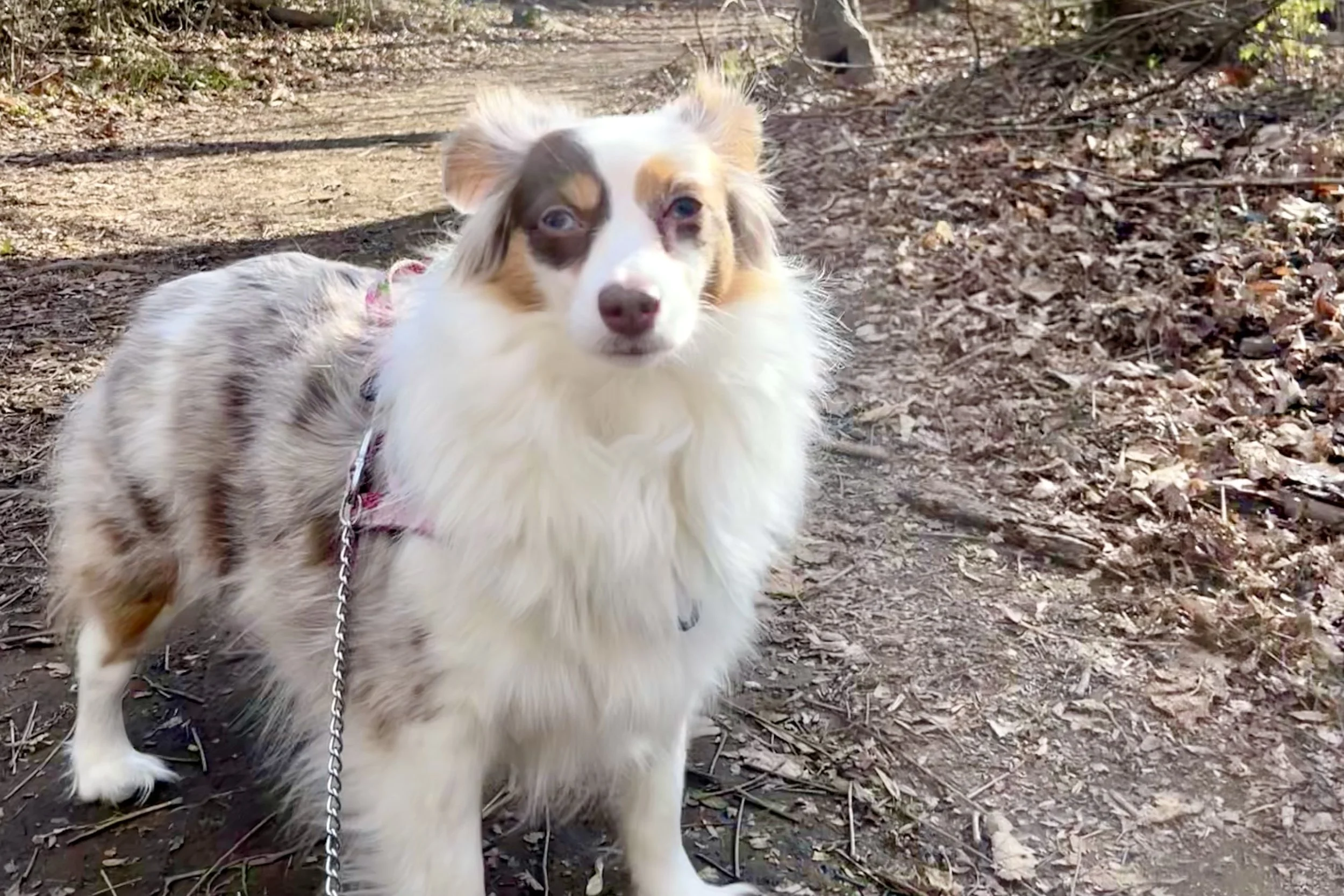
Dogs sometimes pause during walks while deciding whether the environment feels comfortable enough to continue.
At that point, giving the dog a little space, choosing a quieter direction, or ending the walk can prevent the situation from becoming overwhelming.
Busy environments can make these moments more likely. In dense historic areas, for example, sidewalks can compress quickly with pedestrians, strollers, and other dogs. Choosing calmer streets nearby often makes walks much easier, something I discuss more in How to Walk Old Town Alexandria With a Small Dog.
Why Environment Matters for Small Dogs
Many walking hesitations are influenced by the environment itself.
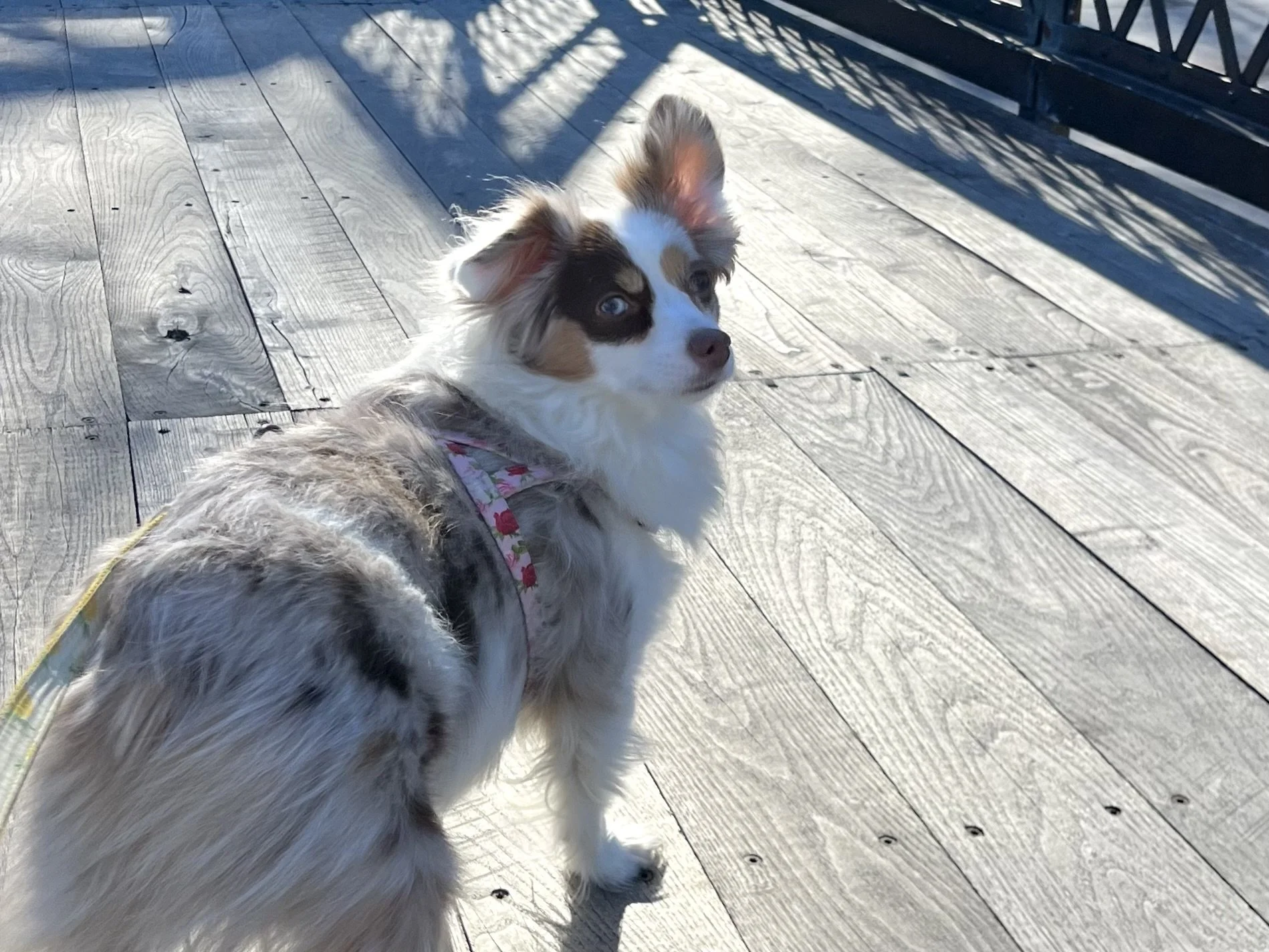
Unfamiliar surfaces, sounds, or structures can cause dogs to pause while they evaluate the space.
Sidewalk width, crowd density, traffic noise, and the number of moving elements around the dog all affect how comfortable a place feels during a walk.
Small dogs often experience these environments more intensely because movement happens closer to their eye level and their physical space can feel more limited when sidewalks become crowded.
Over time, I began noticing that some places consistently felt easier for my dogs to navigate than others.
Quieter streets with more room to move, predictable walking patterns, and easy ways to step away from busy areas tended to produce calmer walks.
This idea eventually became part of what I describe as the Small Dog Comfort Index — a way of thinking about how environments influence a dog’s experience during walks and travel.
Places that offer more space, calmer movement, and simple exit routes often allow dogs to stay relaxed and curious rather than overwhelmed.
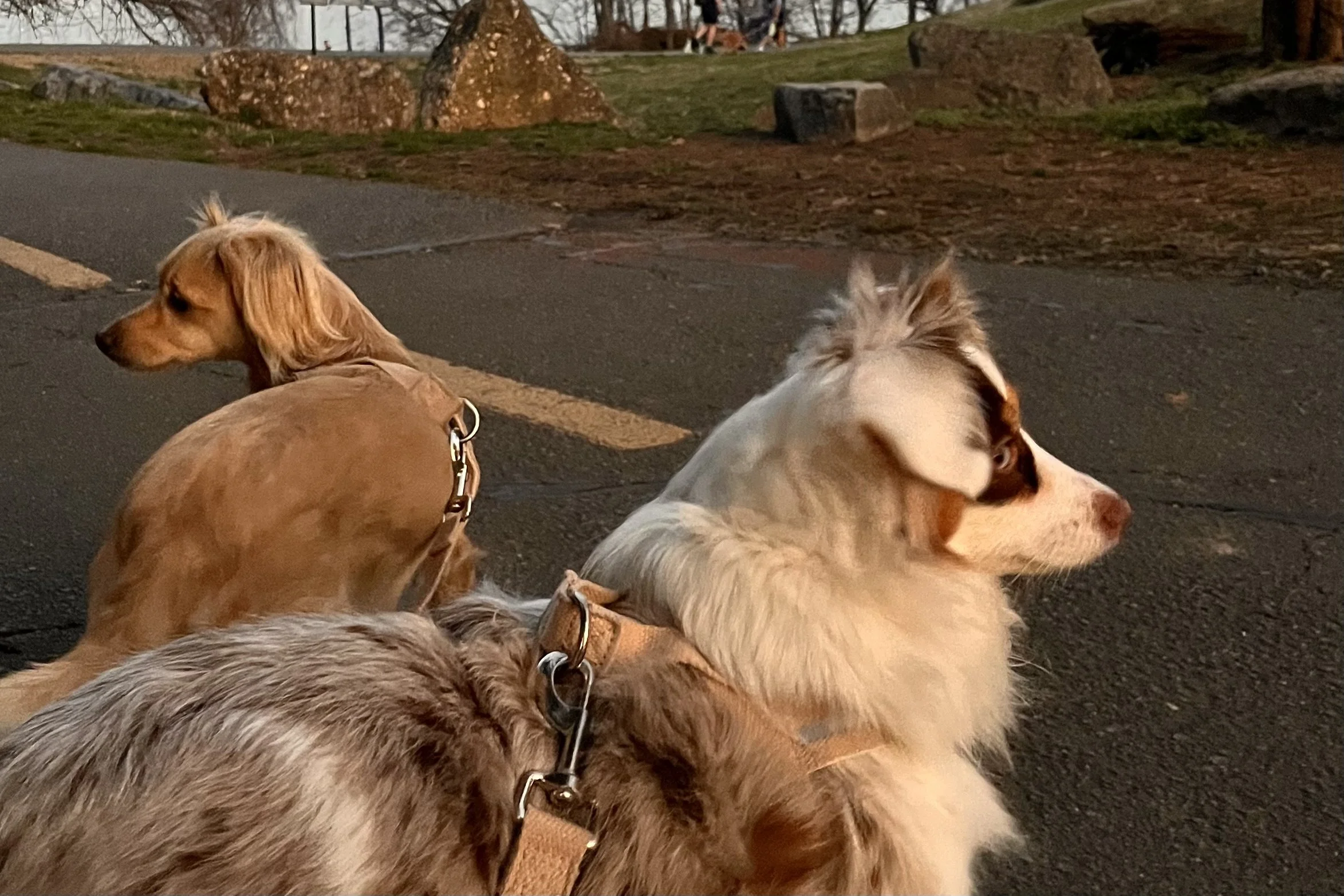
Calmer environments with space to observe often help dogs feel more comfortable continuing their walk.
Most Walking Freezes Are Temporary
When a dog stops during a walk, it can feel frustrating in the moment.
But in many cases, the dog is simply doing what dogs naturally do: interpreting their environment.
They may be evaluating a new surface under their paws, noticing movement nearby, or listening to sounds we barely register.
Once you begin recognizing those small moments, many walking pauses start to make more sense.
Often, once the dog has taken in the information they need, they’re ready to keep moving again.
