Old Town Alexandria Waterfront Walk With Dogs (Start to Finish)
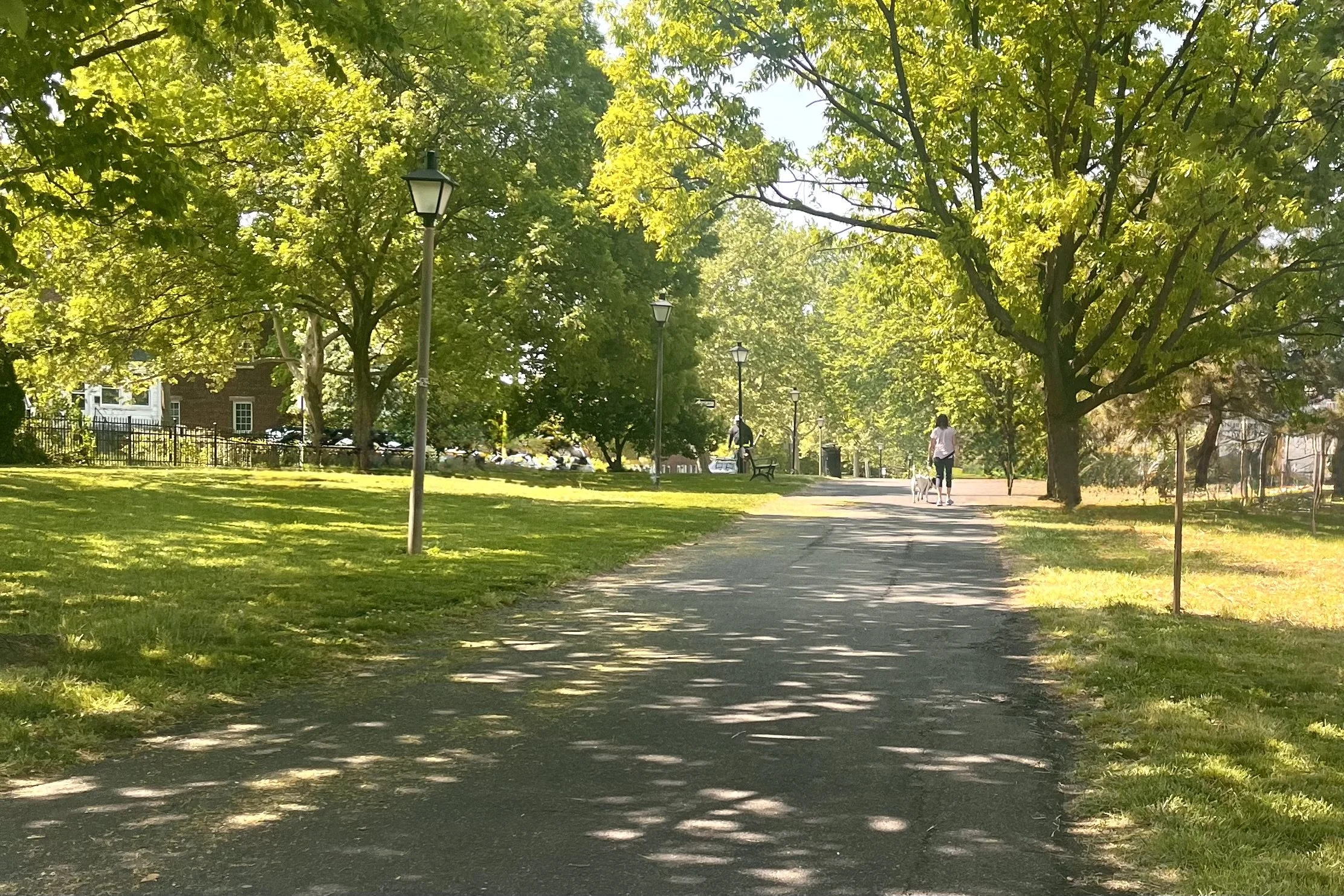
A wide, shaded path where it’s easy for dogs to keep moving forward.
The Old Town Alexandria waterfront looks like one continuous walk—but it doesn’t feel that way once you’re on it with your dog.
Some sections give you space right away. You can keep moving, your dog settles into a steady pace, and the walk feels easy.
A few minutes later, the space can change. Sidewalks narrow, people cluster near the water, and you start adjusting—slowing down, stepping aside, or deciding whether to keep going.
Those shifts happen quickly, and they shape how the walk feels for your dog more than the distance itself.
Knowing where the space opens up and where it tightens helps you decide where to start, how far to go, and when it makes sense to turn around.
If you’re new to the area, this gives more context on how to approach it:
How to Walk Old Town Alexandria With a Small Dog (Without Overwhelm)
Where This Walk Starts and Ends
This walk follows the Potomac River through Old Town Alexandria.
You can start at several points along the waterfront, but starting near Oronoco Bay Park and walking south toward Jones Point Park gives you the clearest sense of how the space changes as you go.
It begins more open, then narrows near the busiest sections, before opening back up again farther south.
You can turn around at any point depending on how your dog is doing—but where you start shapes how the walk feels right from the beginning.
Oronoco Bay to Founders Park: Open and Easy to Settle Into
This stretch gives you the most space at the start—before the waterfront narrows farther south.
Wide paved paths, open sightlines, and grass edges make it easier to keep moving at a steady pace.
Most dogs move forward easily here, with room to set their own pace and less pressure from close foot traffic.
It’s a good place to settle into the walk before it becomes more active.
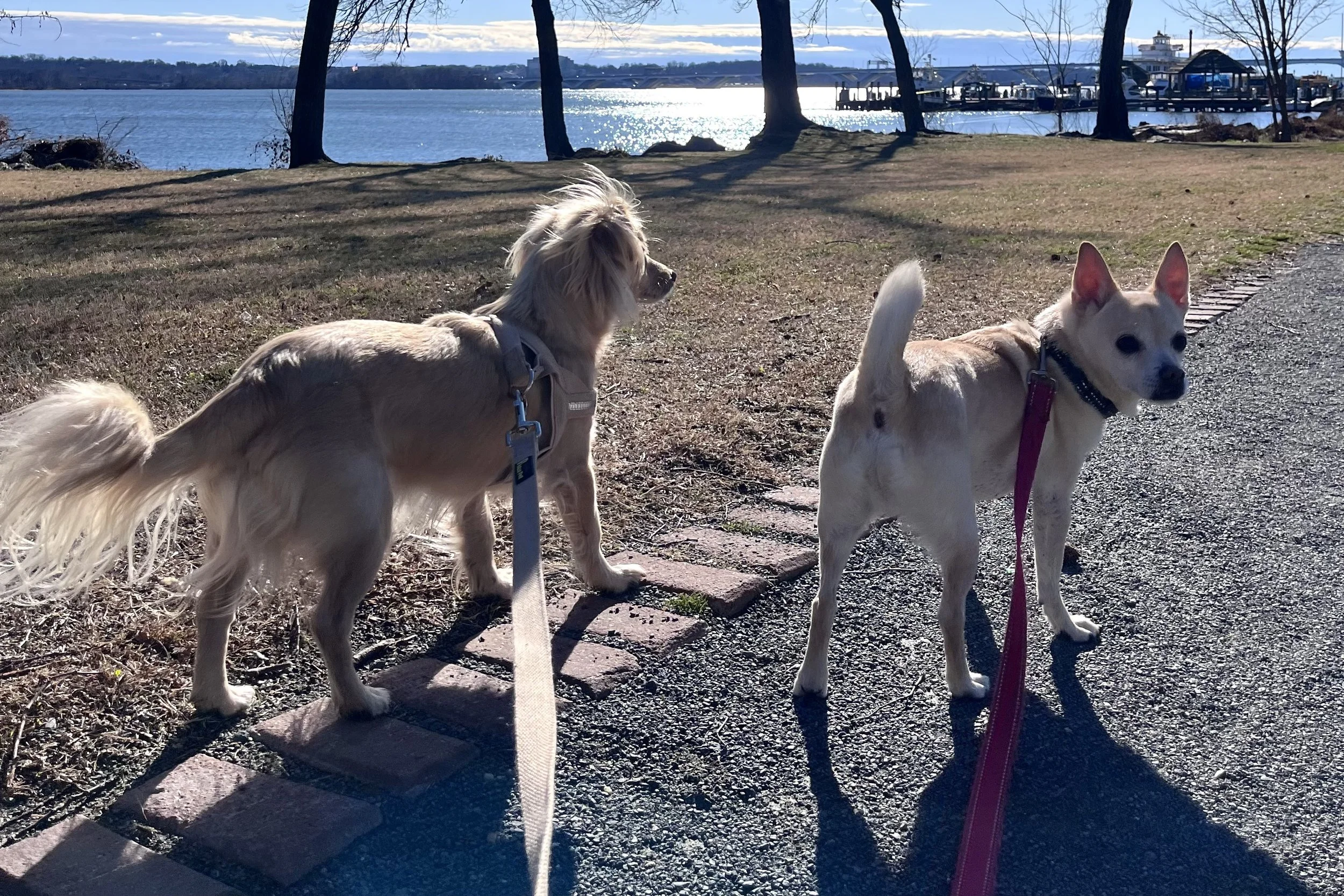
As you get closer to King Street, the path starts to narrow and movement slows a bit.
Founders Park to King Street: Movement Starts to Pick Up
As you continue south, the waterfront becomes more active.
The path narrows in places, foot traffic increases, and people begin crossing between the street and the river.
The pace shifts here—you’ll slow more often, pass closer, and pause briefly as space tightens.
Some dogs continue through easily. Others start watching more of what’s happening around them and move more deliberately.
If you’re trying to keep a steady pace, this is often a natural point to turn around or move through more quickly.
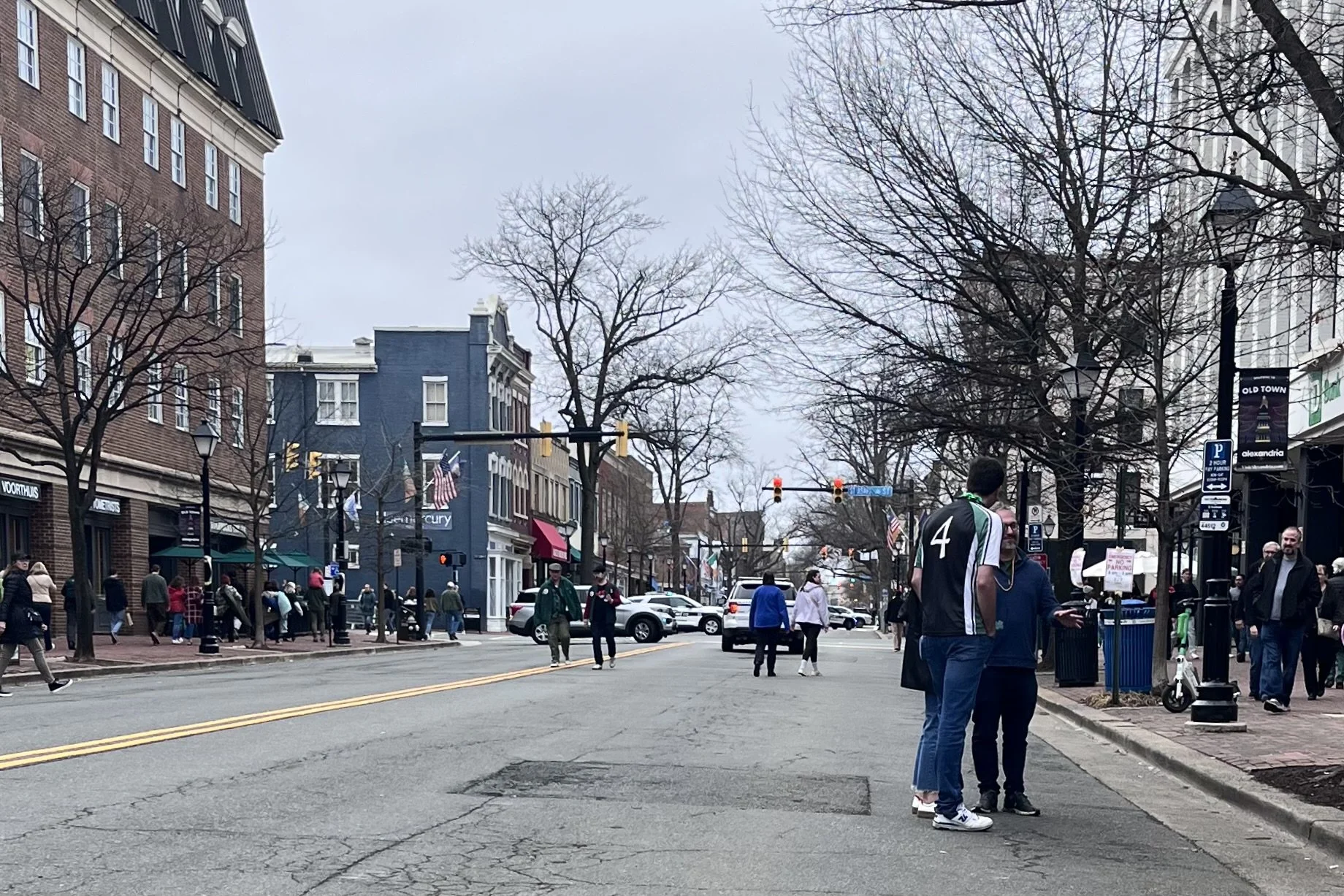
The King Street waterfront is the busiest stretch, with narrower space, more people, and tighter movement.
King Street Waterfront Area: The Most Compressed Section
As you reach the King Street waterfront area, this becomes the most condensed part of the walk.
Sidewalks narrow, outdoor dining fills in along the path, and foot traffic is at its highest—especially near the center of Old Town.
The pace slows here. You’ll pass closer, stop more often, and navigate people crossing between the street and the river.
Some dogs continue through easily. Others start watching more of what’s happening around them and move more deliberately.
This is often the point where it makes sense to turn around or move through more quickly.
If your dog starts hesitating or slowing down here:
Why Dogs Freeze or Refuse to Walk in New Places — What They’re Noticing.
South of King Street to Windmill Hill Park: Space Opens Again
Once you move past the busiest section, the walk opens up again.
The path widens, crossings thin out, and it becomes easier to keep moving without interruption.
Dogs often settle back into a steady rhythm here, with fewer pauses and less need to adjust.
This stretch starts to feel closer to the open, easier start of the walk.
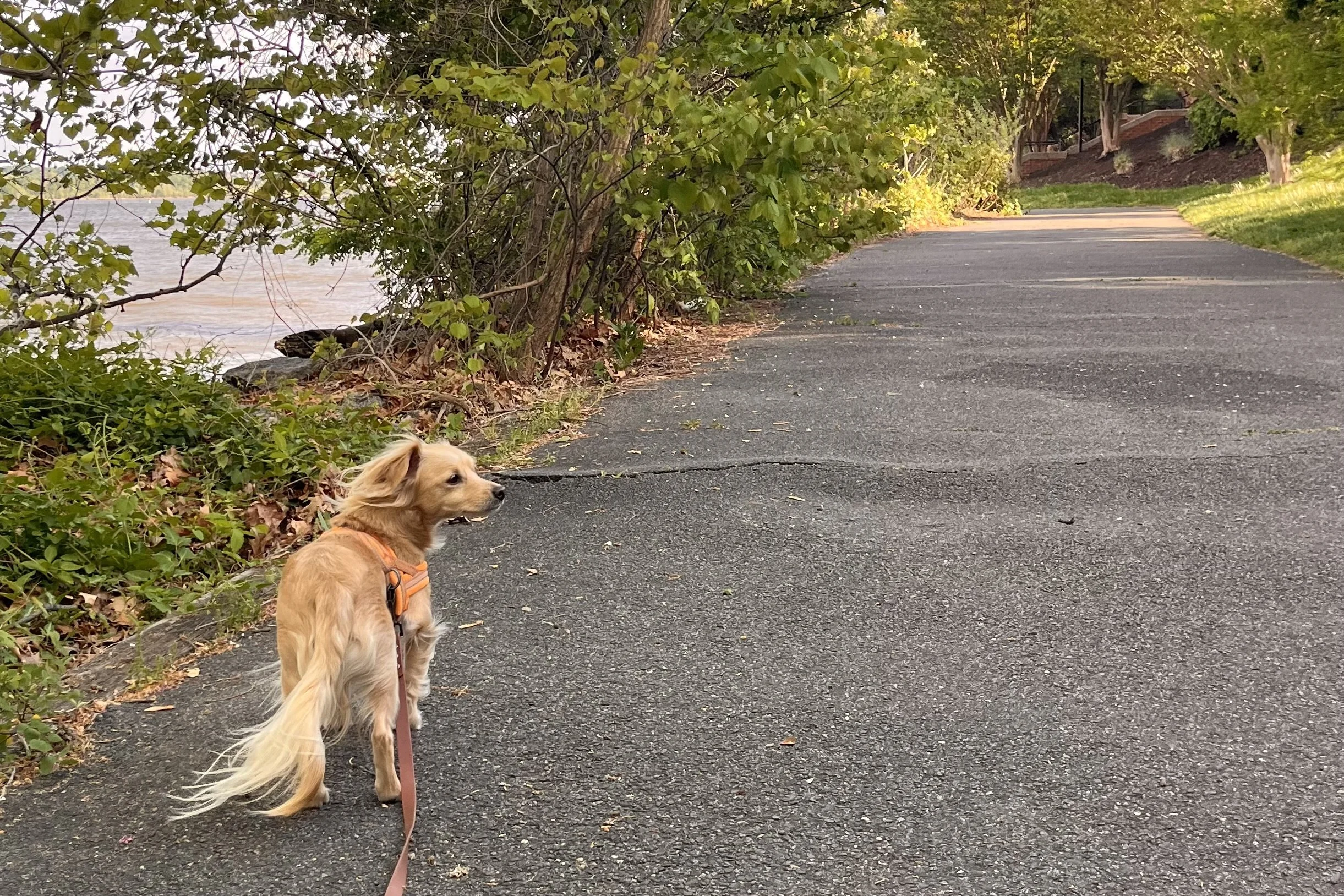
Just past King Street, the space opens back up and it’s easier to keep a steady pace.
Windmill Hill to Jones Point: Quiet, Open, and Easy
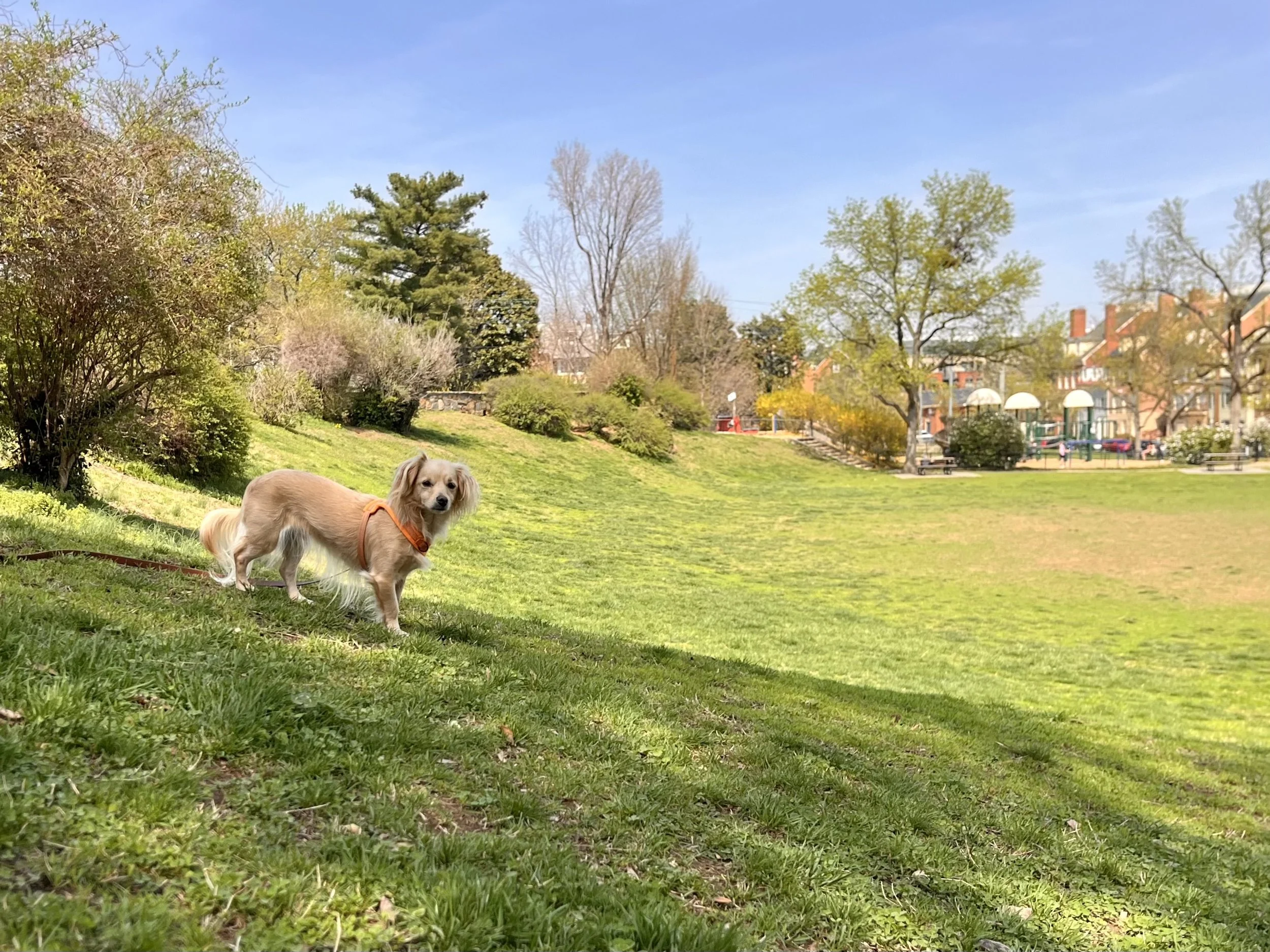
Windmill Hill Park opens into wide grass and river views where dogs can move more freely.
As you continue south past Windmill Hill Park, the waterfront becomes quieter and more open.
The path widens further, with space to move or pause without feeling in the way.
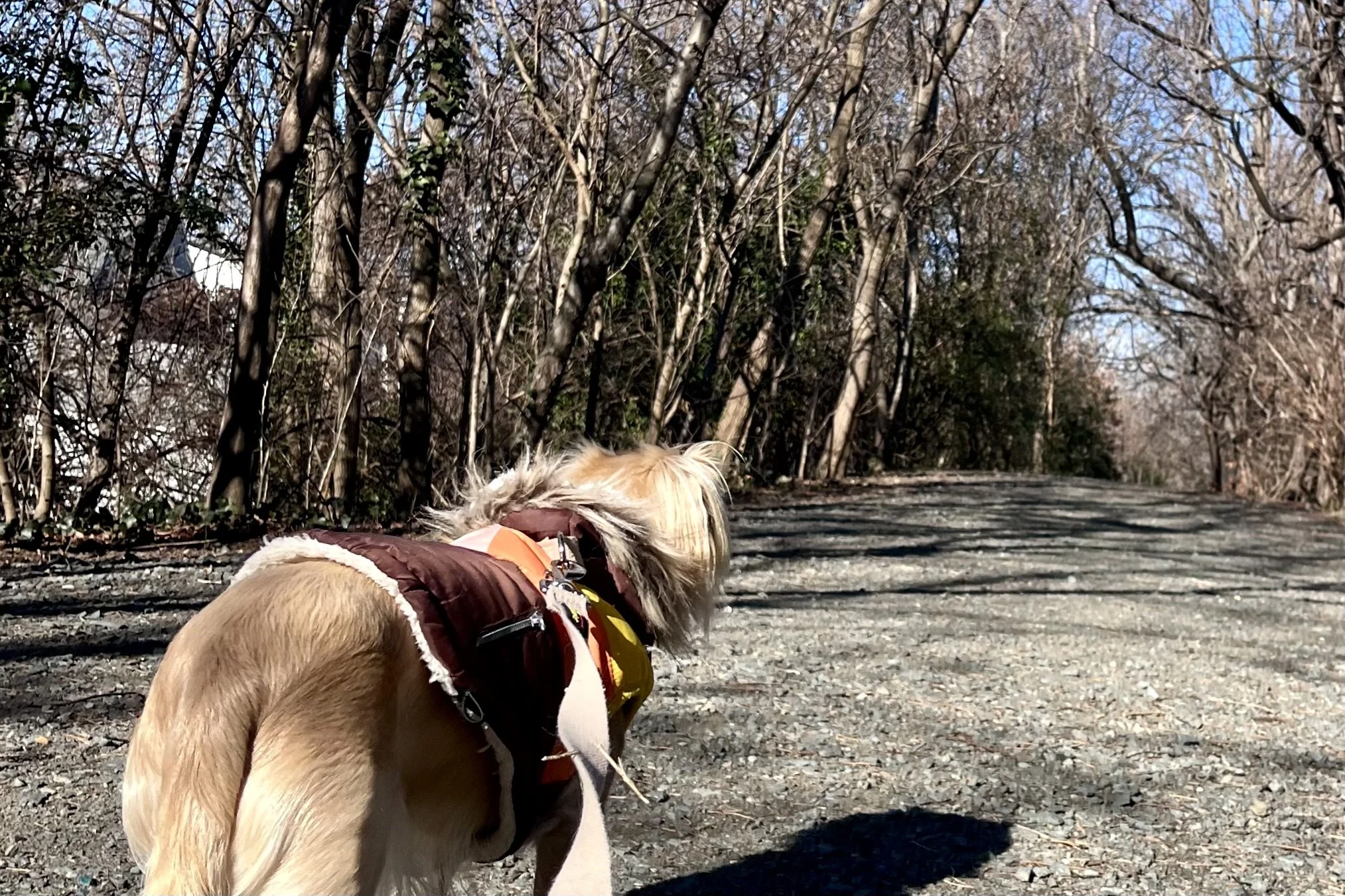
Between Windmill Hill and Jones Point, the path stays wide and quiet with fewer crossings.
Dogs often move more freely here, settling into a steady rhythm as the surroundings simplify.
By the time you reach Jones Point Park, the walk feels spacious and unstructured.
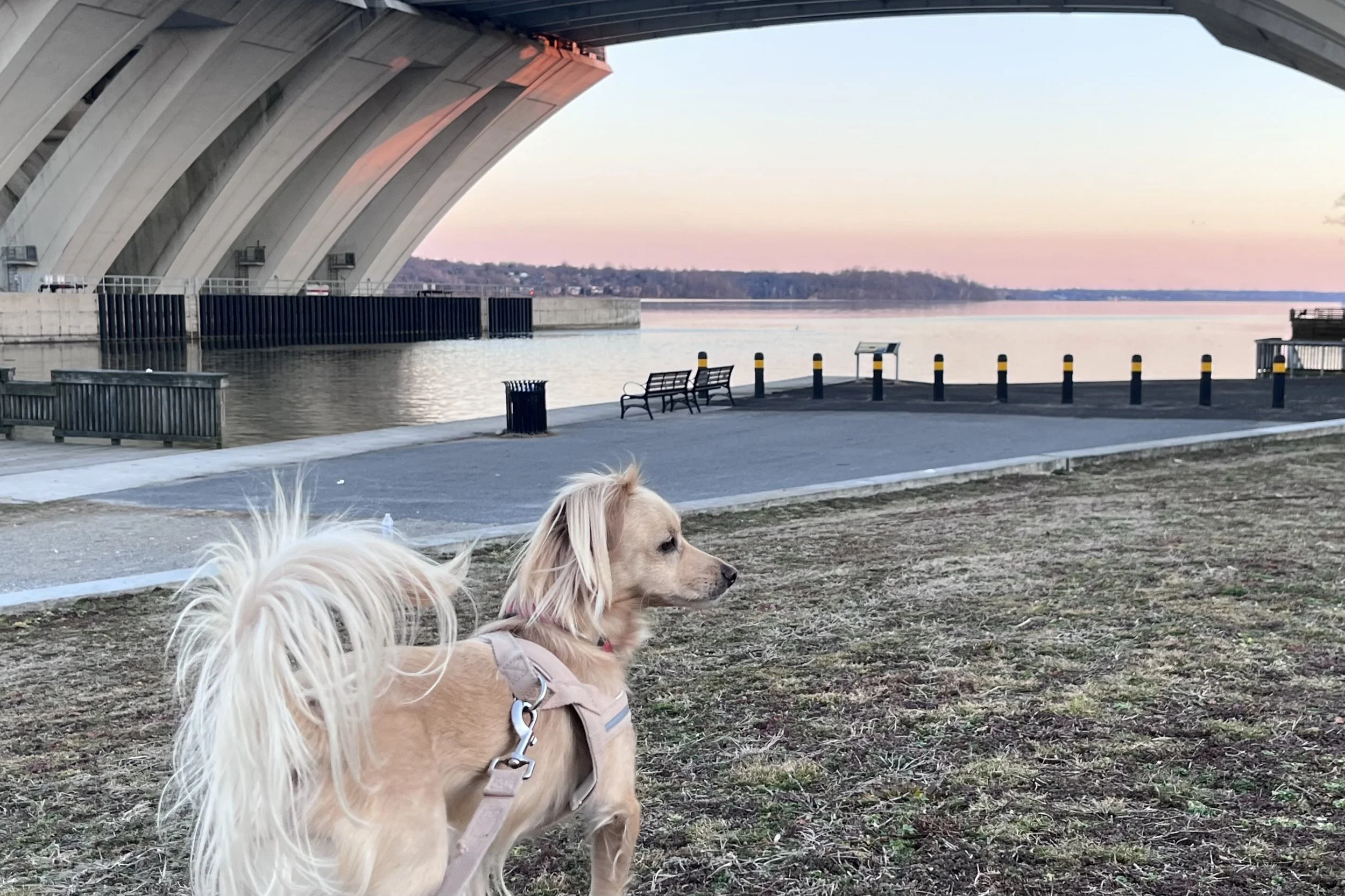
Jones Point Park is the most open stretch, with a more natural feel and plenty of room to keep moving.
How to Choose the Right Length for Your Dog
You don’t need to do the full walk.
Start in a calmer section, see how your dog is moving, and turn before the walk starts to feel harder.
A shorter, easier walk is usually better than pushing through a section that doesn’t feel right.
If your dog seems unusually tired after outings like this:
Why Is My Dog So Tired After Travel? (Is This Normal?
The difference isn’t distance.
It’s how much space there is, how predictable the movement feels, and whether your dog can keep a steady pace.
When those change, the walk changes too.
If you’re picking up food nearby, it’s often easier to walk first and then stop in a quieter section to eat.
I break that down here:
Dog-Friendly Takeout in Old Town Alexandria + Nearby Parks to Eat In.
The Old Town waterfront can be a really enjoyable walk with your dog.
It just isn’t the same the whole way through.
Once you know where it opens up—and where it tightens—you can shape the walk around what actually works for your dog.
