What to Do When You See Another Dog on a Walk (Reactive Dogs)
When I see another dog coming toward us, I make that decision early.
Before we’re too close to adjust.
If you’re walking a reactive dog, this is the part that matters most.
I Decide Early Based on the Space
What I do depends a lot on the space around us.
On a street:
I don’t wait until we’re close to decide
I cross to the other side early if I can
I use what’s there—cars, parked space, wider sidewalks—to give us more room or break the view
On a path or trail:
There’s usually only one way forward
There’s less room to move aside
I’m quicker to turn around or change direction
Some places simply give you fewer options once another dog appears, How to Tell If a Place Will Overwhelm Your Dog (Before You’re There).
Once you’re close, there’s not much to work with.
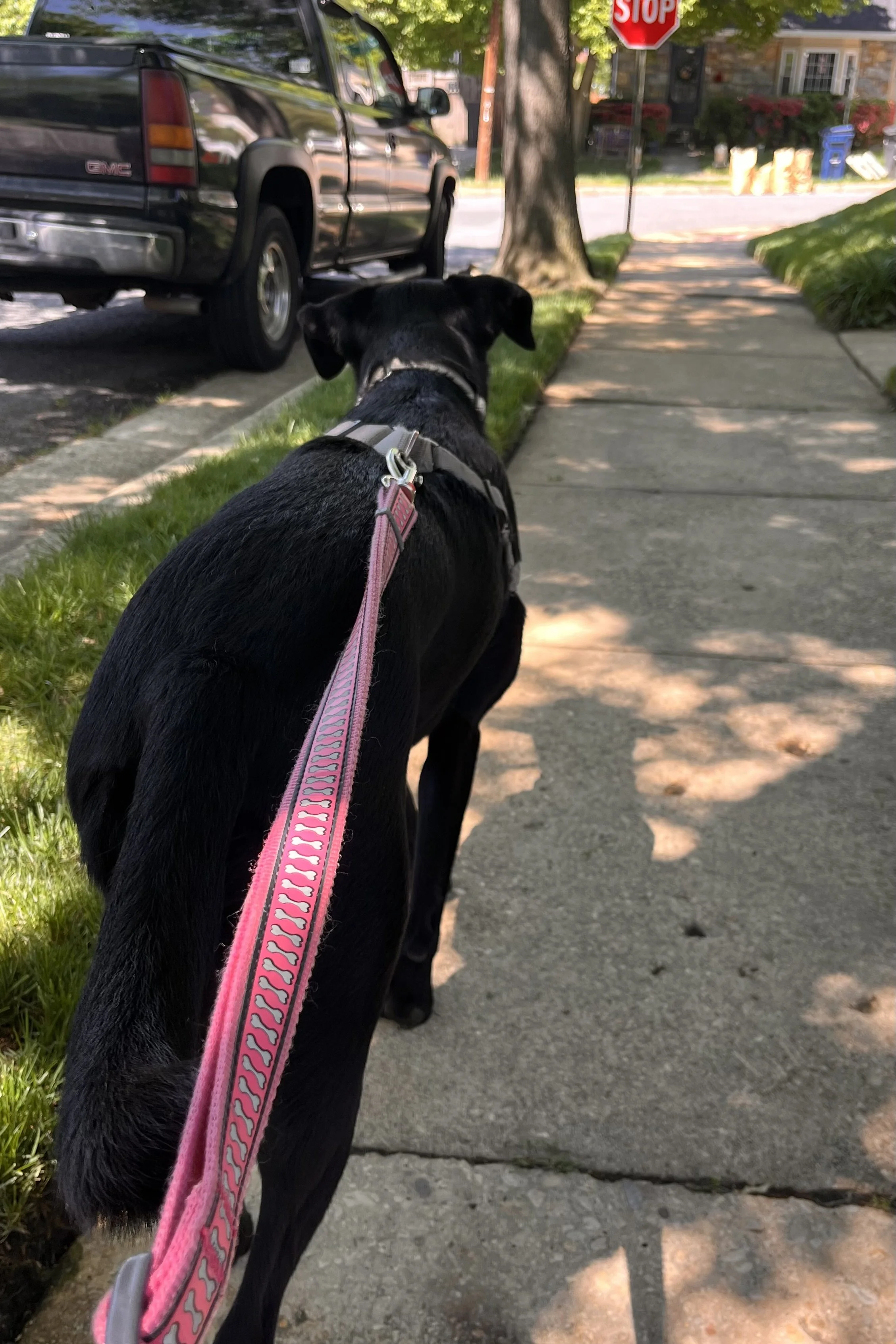
Parked cars and wider residential streets give you more ways to adjust before another dog gets too close.
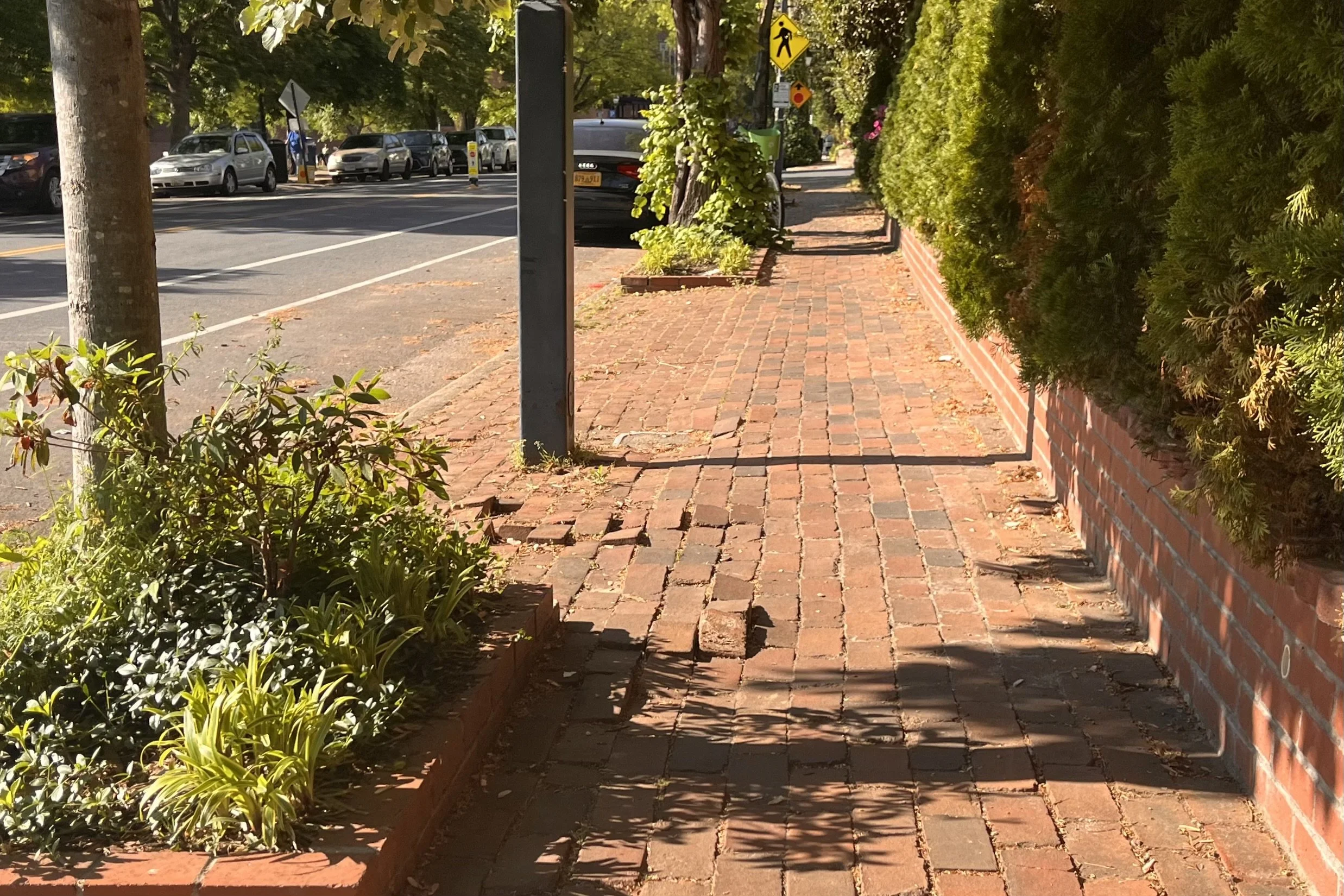
Some sidewalks narrow enough that there’s very little room to move aside or create distance once another dog appears.
I Create Space Instead of Trying to Get Past
If there’s room, I use it.
moving wider before we get close
stepping onto grass or edges
slowing down or letting the other dog go first
I’m not trying to get past—I’m trying to keep it uneventful.
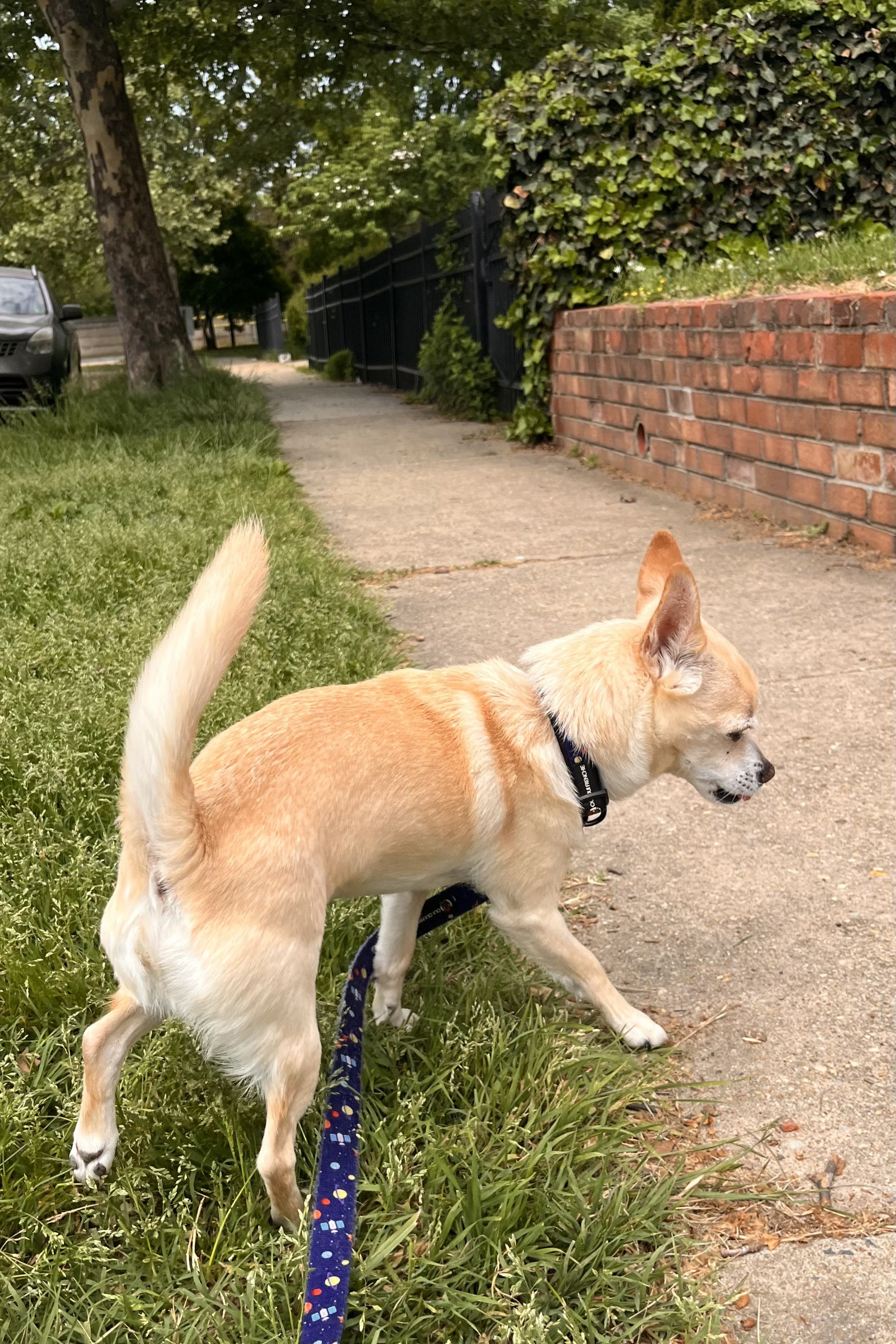
Using the grass edge instead of staying on the sidewalk can create more space before dogs are too close to each other.
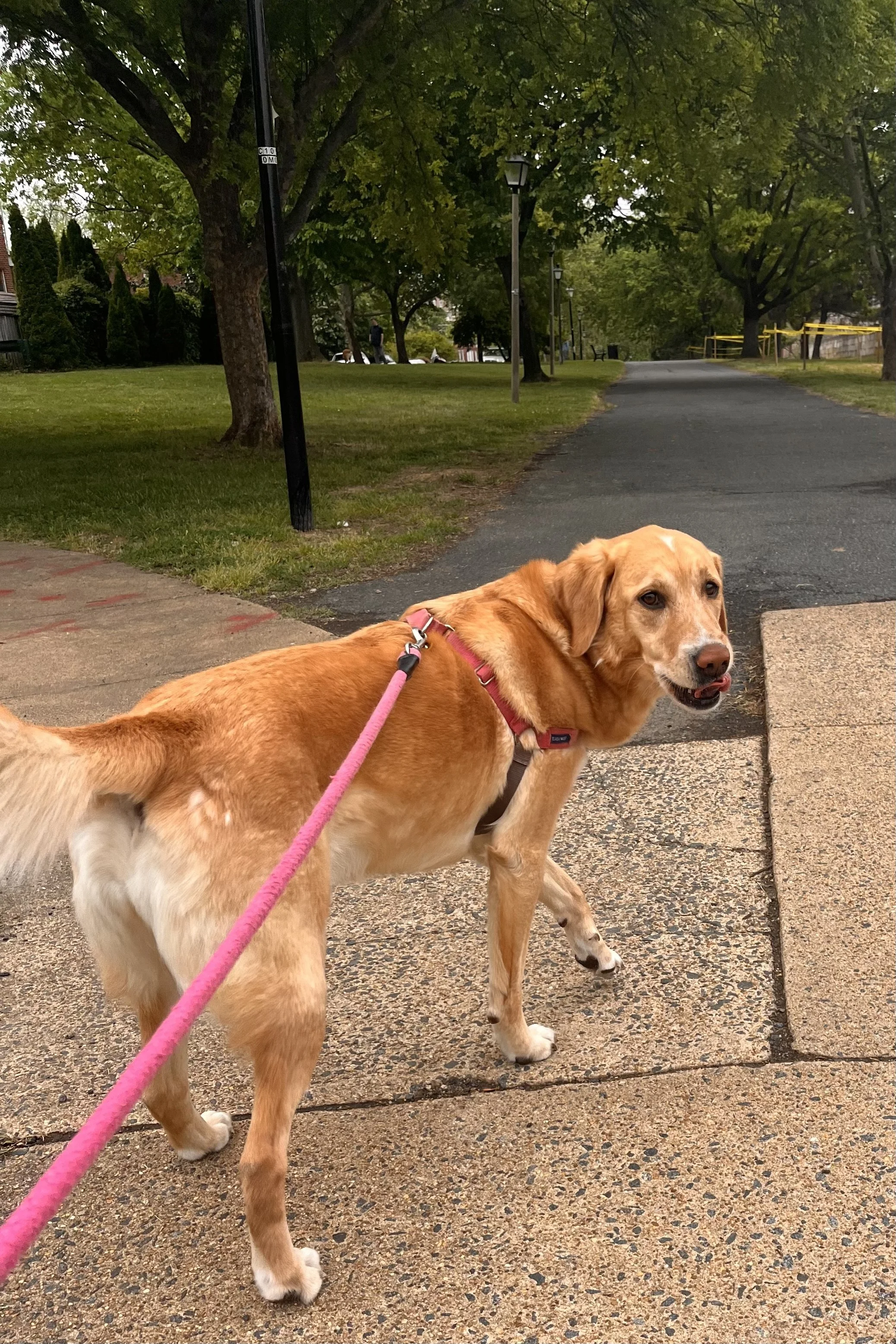
Open paths give you more time and more options before another dog gets too close.
When Space Alone Isn’t Enough
Some dogs react all at once—front legs off the ground, barking, pulling hard on the leash as soon as they see another dog.
In those cases, I use whatever is around me to break the line of sight—stepping behind a parked car, moving around a corner, or using a building or hedge to block the view.
Sometimes once the dog can’t see the trigger anymore, the reaction stops.
Sometimes it’s not about getting farther away—it’s about getting out of view.
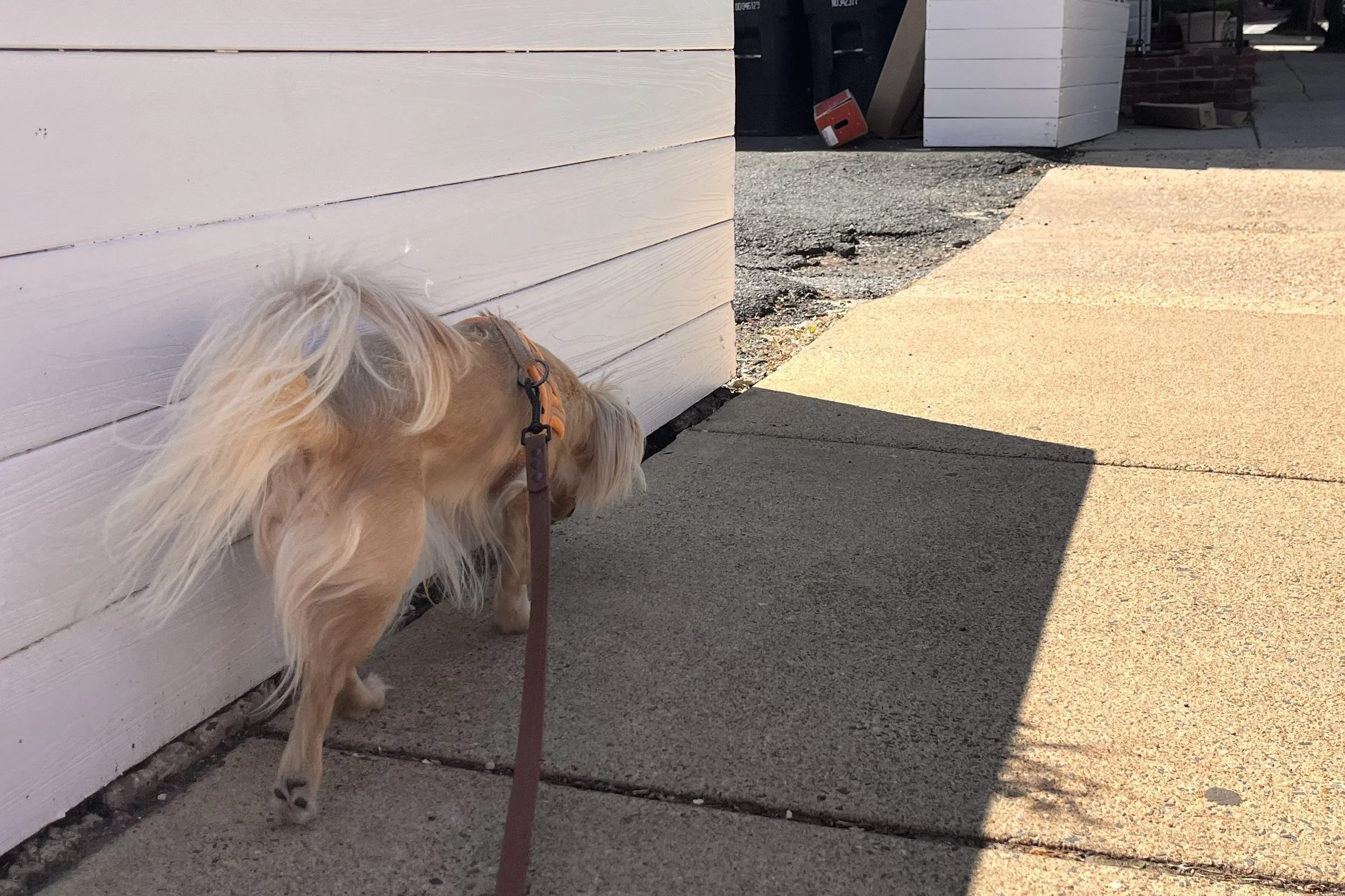
Sometimes I use walls, parked cars, or corners to block what the dog can see before the reaction starts.
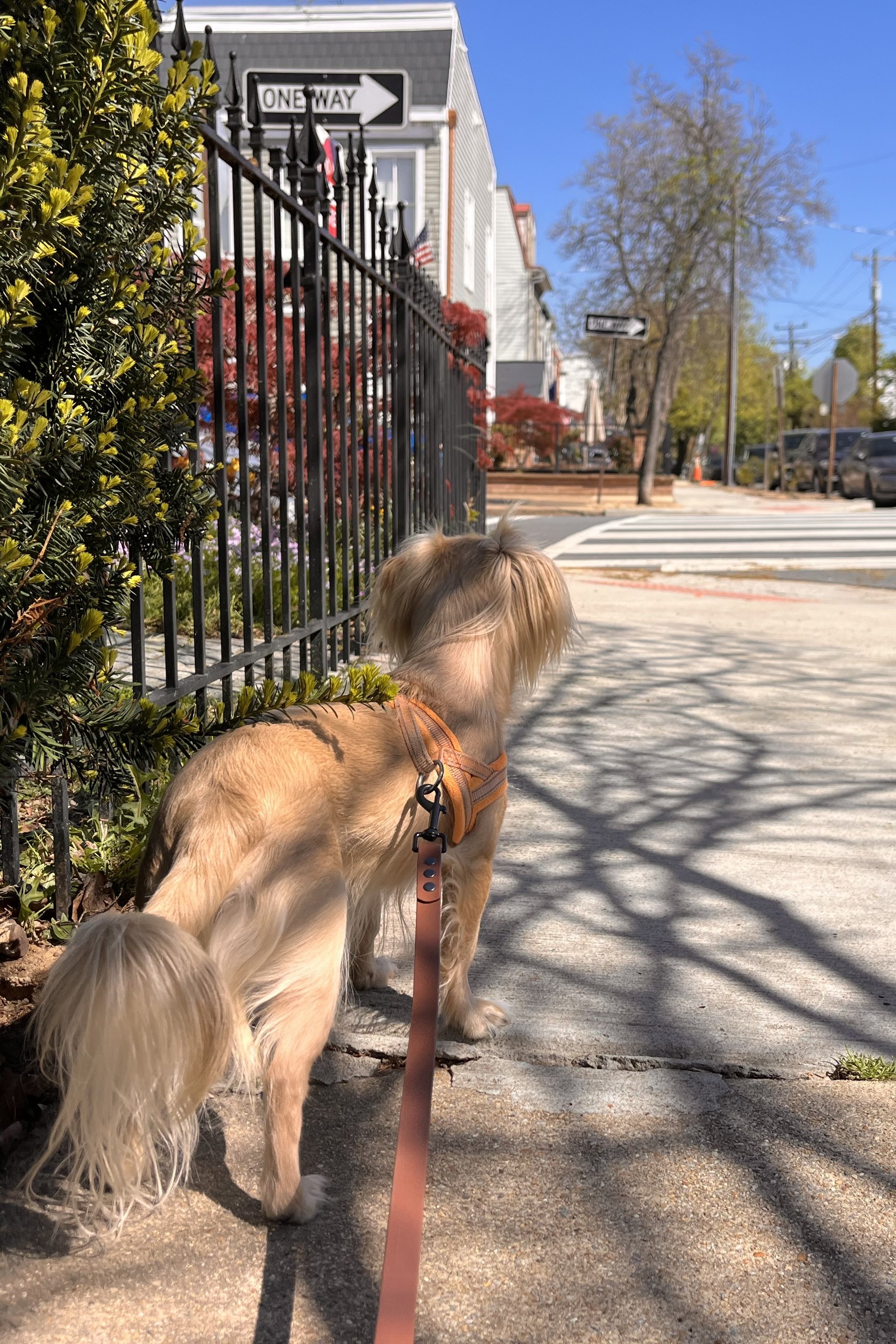
Corners and intersections can change quickly, especially when you can’t fully see what’s coming ahead.
I Don’t Force the Pass
If it doesn’t look like an easy pass, I don’t push through it.
I turn around
I cross earlier than planned
or I just skip it
Not every pass needs to happen.
If the walk starts getting harder to manage, I usually adjust before it escalates further. When a Dog Walk Starts Falling Apart: What to Do Before It Gets Worse.
When Someone Expects the Dogs to Meet
If someone is clearly heading toward us expecting the dogs to meet, I don’t stop for that.
If I can, I create space early and avoid it altogether. But sometimes people ask, or keep coming toward you.
In those moments, I keep it quick:
“Thanks for asking, but they’re not great with other dogs”
“They’re not very social on leash”
If someone keeps pushing, I’m more direct so it’s clear it’s not happening.
I don’t turn it into a conversation—I just say it and keep moving.
If Someone Tries to Pet Them
Same idea.
If I can, I keep walking. If not, I’ll say:
“Thanks for asking, but they’re not great with people”
“Thanks, but they’re a bit anxious with new people”
If someone keeps reaching in, I’m more direct so they back off.
What Makes This Easier
The biggest difference is handling it early.
Once you’re close, your options get smaller. The sooner I adjust, the less I usually have to manage.
The Same Thing Happens With Other Triggers
The same thing comes up with other triggers—trucks, delivery people, the mailman.
If I see it early, I do the same thing: create space, change direction, or use something nearby to break the line of sight before it turns into a moment.
Seeing another dog doesn’t have to turn into anything.
The earlier I adjust and the more space I give us, the more often it stays just part of the walk—not something I have to deal with.
