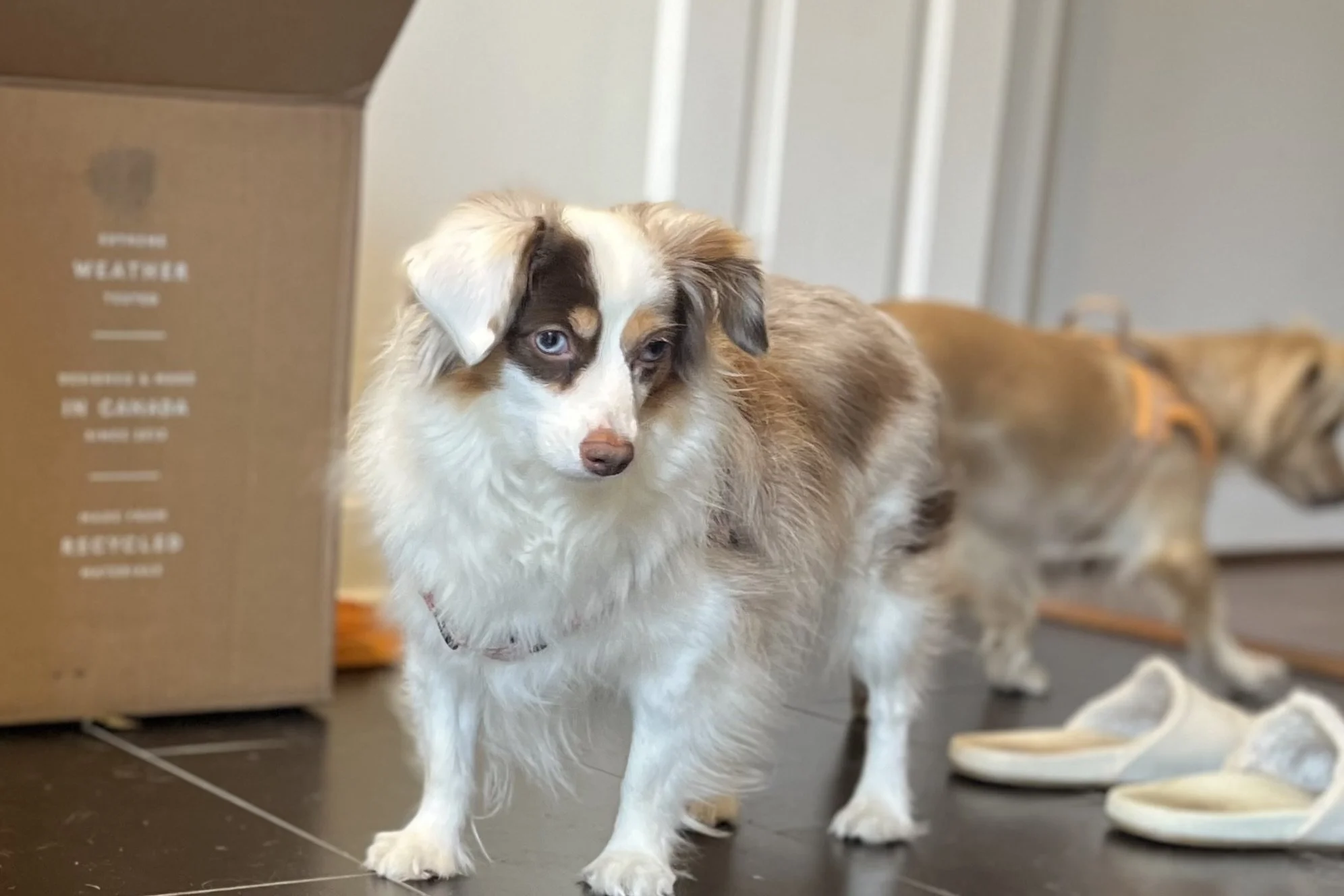
Archie and Saydie were ready to explore. They just didn’t know this time we were staying.
When Archie and Saydie first explored our new house, they had no idea we were moving in. They were doing what they always do in an unfamiliar place: sniffing corners, investigating rooms, and eagerly discovering what was around the next doorway. After staying in so many vacation rentals, exploring somewhere new was nothing unusual for them.
But this time, we weren't packing up and leaving after a few days. I wondered how long it would take before this new place felt like home to them.
Moving changes nearly everything familiar to a dog—their surroundings, walking routes, bathroom spots, and daily routines. And unlike us, they have to figure out what their new lives will look like through experience.
Our first few weeks brought some surprises: 3 a.m. bathroom trips, an unexpected improvement in Saydie's outdoor routine, and new reactions to the dogs next door. Here's what helped us through moving day and what I've learned as Archie and Saydie settle into their new home.
When I began looking for a new home, I considered how a different house and neighborhood might affect Archie and Saydie's daily lives. From the layout of the house to the surrounding streets and walking routes, I explored those decisions in Moving With Dogs: What to Look for in Your Next Home.
Before Moving Day: Give Your Dogs a Break From the Activity
Moving day brings unfamiliar visitors, open doors, furniture being carried through rooms, and constant activity. Saydie tends to be sensitive to unfamiliar situations, while Archie generally enjoys making new friends. But Archie is also likely to wander outside if someone leaves a door open, so I needed a plan to keep both dogs safe.
My cousin helped care for Archie and Saydie during part of moving day. Later, they stayed with me at the new house while the movers finished at our previous home and made their way over.
The timing wasn’t perfect, but Archie and Saydie were out of the way during the busiest parts of the move, which was what mattered most to me.
Options for Keeping Dogs Comfortable During a Move
If you're planning a move, consider arranging for someone familiar to care for your dogs during the busiest hours. A trusted friend, family member, or dog sitter can make a real difference.
If your dogs need to stay in the house, you could set them up in a quiet room with their beds, water, and a few familiar things. An adjustable pet gate or portable exercise pen can help keep them away from the moving activity.
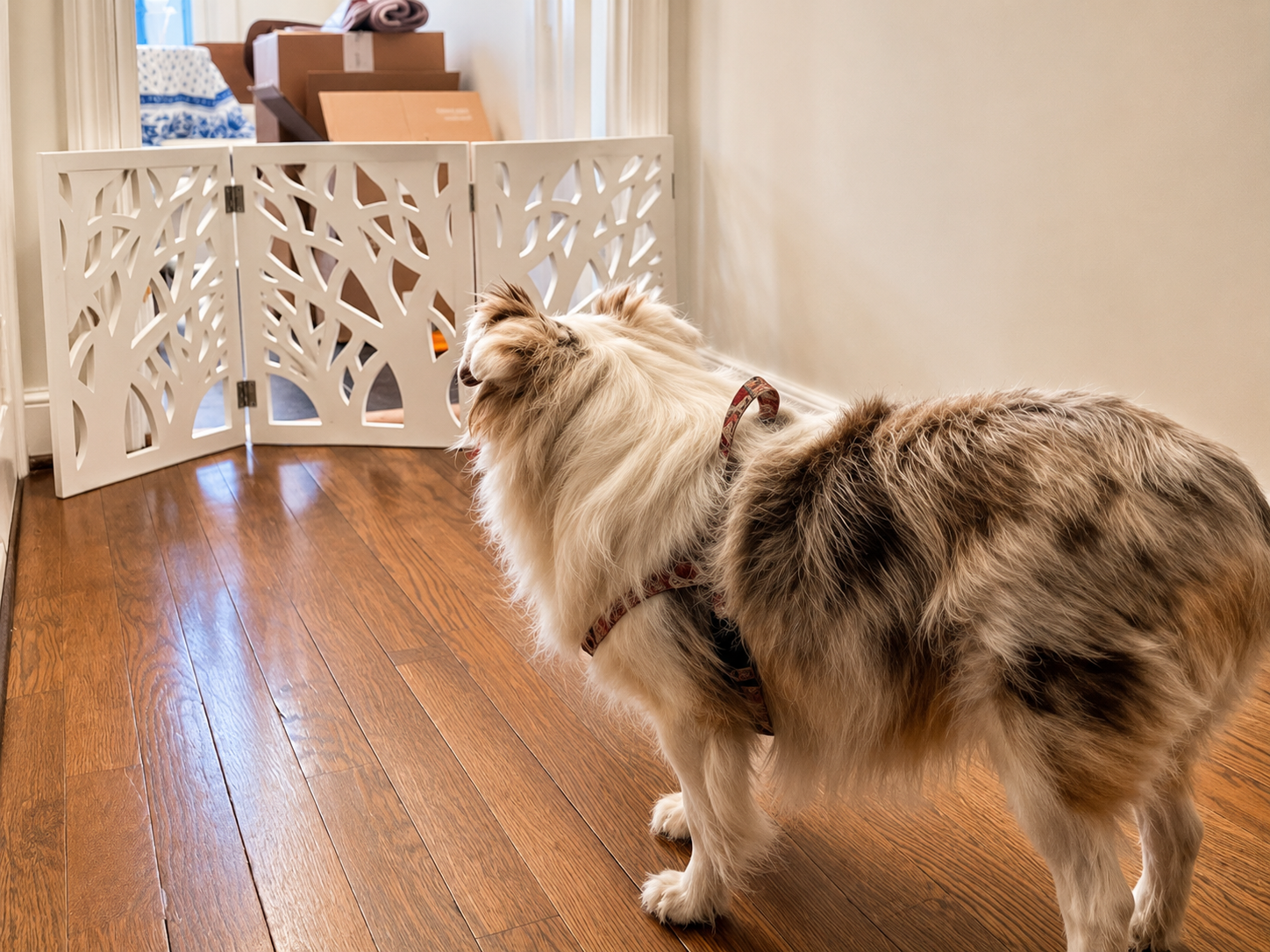
Make sure everyone involved knows where the dogs are, and don't rely on a gate alone if they might jump over it or push through it. With exterior doors opening repeatedly, preventing an accidental escape is especially important.
The goal isn't to make moving day completely normal. It's to give your dogs a safe place away from the busiest activity.
Pack a First-Night Bag for Your Dogs
When I travel, I always keep the things I can’t do without in my carry-on bag, just in case my luggage gets delayed. I took a similar approach when we moved, packing a separate bag with everything Archie and Saydie would need for their first night in the new house.
The last thing you want after a long moving day is to discover that the dog bowls are buried in a box or that you can't find their medication. Before moving day, pack a separate bag with everything your dogs will need for the first night, preferably the next day or two.
My dog moving-day essentials:
Regular food and treats (they love these calming treats with lavender!)
Food and water bowls
Medications and necessary care supplies
Leashes, harnesses, and waste bags
Familiar blankets or bedding
A few favorite toys
Towels and cleanup supplies
An insulated cooler bag and ice packs if your dogs eat refrigerated food
You don't need a special bag for these supplies, but a dedicated dog travel bag can make packing and staying organized much easier. I found two styles worth considering: a sturdy dog travel organizer with compartments for food, bowls, and supplies, and a quilted dog travel tote with a softer, more stylish look. Both could be useful well beyond moving day—for day trips, weekend getaways, and longer road trips. Keeping everything together means there's less to gather each time you head out.
For more ideas about what to bring along, see my Dog Travel Packing List for Better Trips, which covers the essentials I consider when traveling with Archie and Saydie.
Plan Ahead for Refrigerated Dog Food
I normally prepare Archie and Saydie's food myself, so keeping it refrigerated is part of our everyday routine. What I hadn't fully anticipated was being without a refrigerator for our first week in the new house.
I initially bought dry food, then arranged for a small temporary refrigerator while waiting for our regular one to arrive. An insulated cooler bag with ice packs is useful for transporting prepared food on moving day, but you'll still need reliable refrigeration or another suitable feeding plan if your kitchen isn't ready.
Keep your dogs' first-night supplies with you rather than loading them onto the moving truck. Once you arrive, you can feed them, take them outside, and set up a familiar resting place without searching through boxes.
Exploring a New House Without Knowing It's Home
One of my favorite memories from moving day was watching Archie and Saydie explore the new house. Their noses were busy, their curiosity was obvious, and they seemed delighted to have somewhere new to investigate.
What interested me was the difference between what they knew and what I knew. I understood that this was where we would be living. They were simply experiencing a new environment.
Archie and Saydie know when a place becomes familiar, but they certainly didn't know I'd just bought us a new home. And because Archie and Saydie have traveled with me so often, familiar beds and toys aren't necessarily signals that we're staying permanently. We've brought those same belongings into vacation rentals and then packed them up again.
That made me curious about what would eventually distinguish this house from all the other places we've visited. I suspect the answer has less to do with a single moment of recognition and more to do with repeated experiences: the same place to sleep, the same doors leading outside, familiar smells and sounds, and learning what happens where.
A house becomes familiar through living in it.
I've noticed similar things when we travel, which is one reason I developed The Small Dog Comfort Index to help me think about what makes a place comfortable for Archie and Saydie.
Set Up Their Essentials First, Then Discover Your New Routine
While Archie and Saydie were busy exploring, I was thinking about what needed to feel familiar from the first night. Their feeding station was an immediate priority, along with their beds and toys.
A familiar washable dog bed or travel blanket can provide recognizable scents and a comfortable resting place when everything around it is new. A lick mat or interactive food puzzle can also give your dog something enjoyable to do while you're busy getting the house organized.
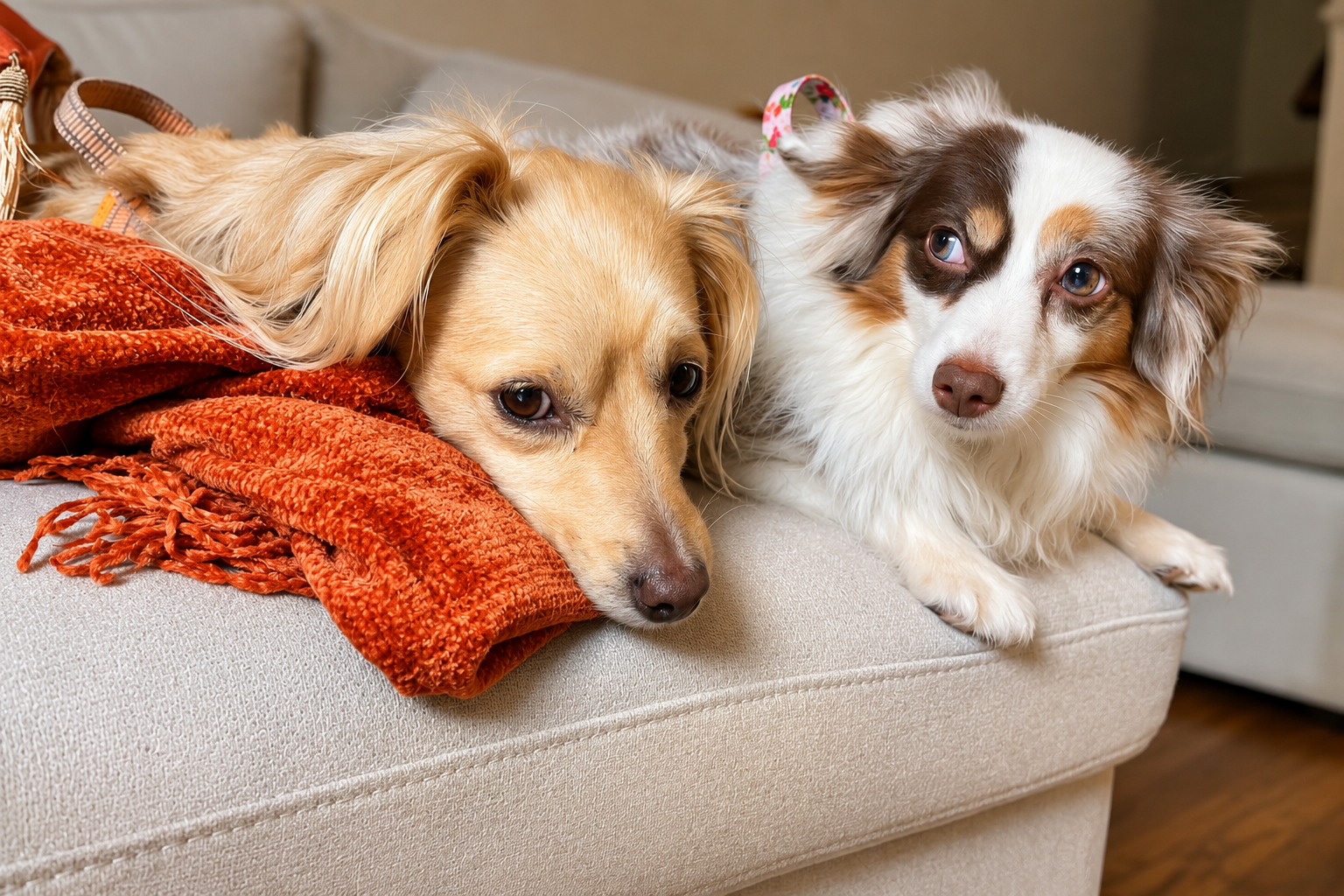
One of the first things I unpacked was their familiar blanket, so they'd have a comfortable place to settle.
But I also discovered that some parts of our new routine couldn't be planned in advance.
Initially, I expected to keep our everyday dog supplies in a cabinet near the front entrance. Once we started living in the house, though, it became apparent that the back door was the more practical entrance for our daily walks.
Now the leashes hang on hooks near that door, where I can reach them as we're heading outside. The cabinet still holds backup supplies, but the things we use every day are where we actually need them.
I thought I had everything figured out before moving in, but it took actually living here to discover which arrangements worked best for us.
Why Bathroom Routines Can Change After a Move
One of the biggest adjustments during our first days was rebuilding our bathroom routine. Both dogs had a few accidents indoors, which wasn't typical for them. Rather than assume they would immediately understand our new schedule, I began taking them outside much more frequently—roughly twice as often as usual.
I also changed our evening routine. Instead of our usual 15-minute walk after dinner, I began taking them out for closer to an hour, giving them more opportunities to explore the neighborhood and relieve themselves before bedtime.
Then came the 3 a.m. wake-ups. For approximately the first ten nights, Archie and Saydie woke me up wanting to go outside. I couldn't explain exactly why their schedule had shifted, but I'd rather take them out than risk an accident indoors. Eventually, the nighttime requests stopped.
Why a Move Can Affect Housetraining
Dogs often rely on predictable schedules, familiar outdoor locations, and repeated routines to anticipate bathroom opportunities. A move changes several of those things at once. The door leading outside may be different, the walking route is unfamiliar, and the usual bathroom spots are gone.
Taking them outside more often gave us a chance to figure out our new routine together. We didn't need those extra walks forever, but they made the first couple of weeks easier. That doesn't mean every dog needs twice as many walks or an hour-long evening outing. Those were simply the adjustments that worked for us during this particular move.
An Unexpected Improvement: Saydie Found Better Bathroom Spots
While our bathroom schedule took some adjustment, the new neighborhood offered Saydie an unexpected advantage.
She's always been particular about where she'll go. If the conditions aren't right, she can spend an entire walk investigating different spots without choosing any of them. I've watched her hold out for remarkably long periods rather than use a location she doesn't like.
Both our previous house and our current house have grassy areas nearby, so I hadn't expected the difference between them to matter very much. But the new neighborhood has wider stretches of grass, more room away from passing dogs and people, and patches of ivy that Saydie seems to particularly enjoy.
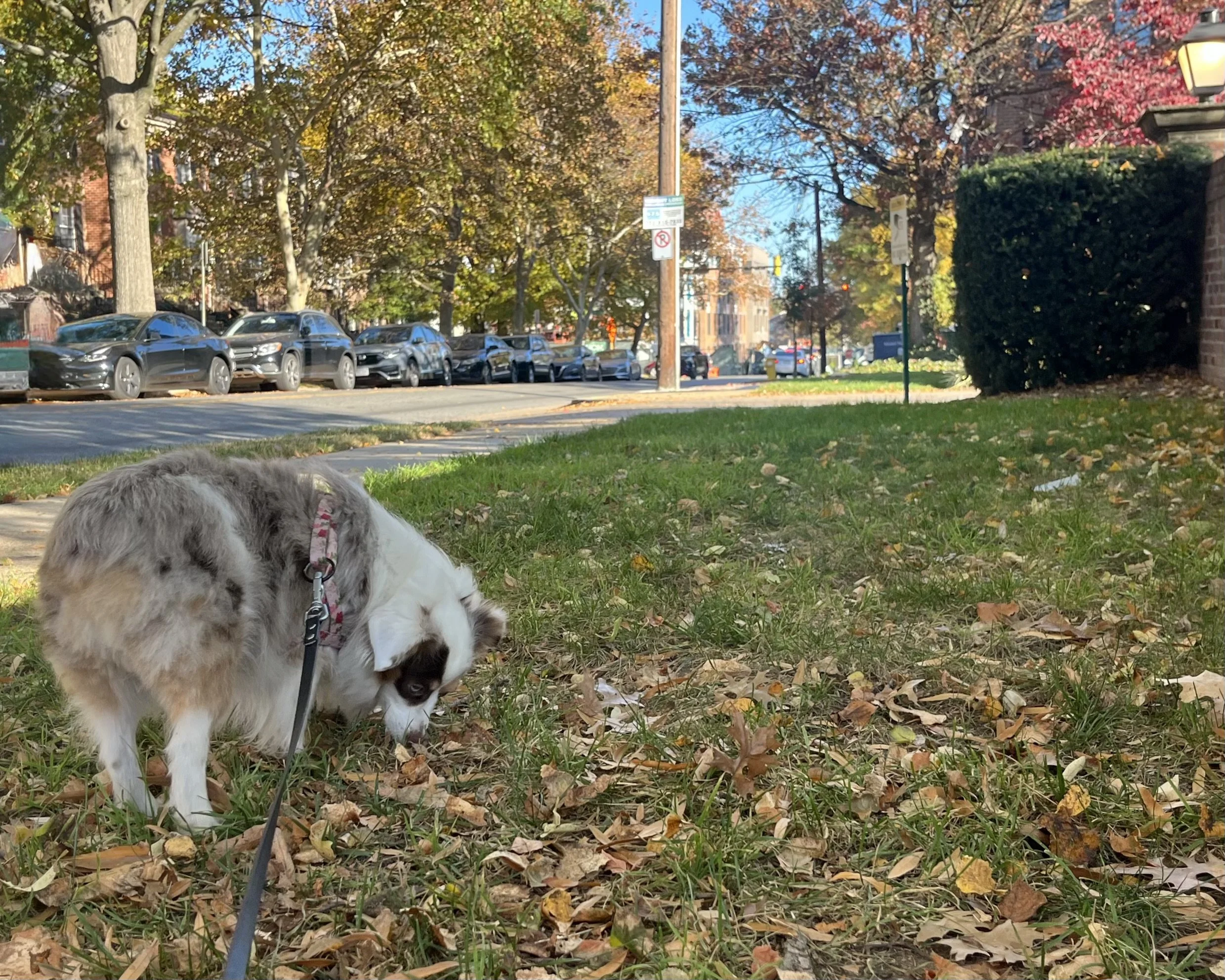
Almost immediately, she found a spot she liked, then another. Now she has several places where she seems comfortable relieving herself, and our walks are often much easier as a result.
I can't say whether it's the extra space, the distance from passersby, the ground cover, or some combination of those things that makes the difference. But the change has been noticeable.
The quality of an outdoor space can matter more to a dog than we realize. A grassy area that looks perfectly adequate to us may feel very different to a small dog depending on its width, surrounding activity, and available room to move. I've noticed similar sensitivities when traveling, particularly when dogs encounter unfamiliar surfaces or surroundings. I explore those reactions in Why Dogs Freeze or Refuse to Walk in New Places.
Sometimes moving doesn't simply require a dog to adjust. It reveals that the new environment suits certain preferences better than the old one did.
Learning the Sounds of a New Home
Our new house is relatively quiet, which has been helpful. But even a quiet house has unfamiliar sounds. Different doors, household systems, neighbors, and outdoor activity all become part of a dog's new surroundings.
Over time, dogs may become less responsive to repeated, harmless sounds. This is known as habituation. But I noticed something interesting with Archie and Saydie: becoming more familiar with their surroundings didn't necessarily make them quieter.
Our neighbors have two little dogs who often bark when they're outside on their patio. During our first three weeks, Archie and Saydie would hear them and become visibly interested. Their ears would perk up, their eyes would widen, and they'd hurry over to investigate, but they didn't bark back.
Then, after we'd been living here for a while, they began responding. I don't know exactly what changed. Perhaps they had become more familiar with the neighboring dogs, or perhaps they were beginning to treat the patio as part of their own territory. Repeated exposure may also have changed their response.
What interested me was the timing. Some unfamiliar sounds may become less important as dogs settle in, while other sounds can begin triggering new behaviors.
I've started paying more attention to those exchanges so that barking back and forth across the patios doesn't become part of our daily routine. I hadn't expected them to start barking back after three quiet weeks. It's been interesting to watch how their reactions have changed as they've become more familiar with the house.
Comfortable Exploring, but Not Yet Comfortable Being Apart
Their responses to the neighborhood were changing, but inside the house, another adjustment was still underway: Archie and Saydie were following me almost everywhere.
They've always enjoyed being near me, but in our previous home, once they were settled, they were perfectly happy to spend time in different rooms. Sometimes one would stay on the couch while I went elsewhere. Sometimes they'd head outside to the terrace and enjoy the sunshine.
In this house, it's different. If I leave the room, they generally come with me. Even when I try to leave them outside on the patio, they bark until I let them back inside.
They're enthusiastic about exploring, but they still seem to prefer having me nearby.
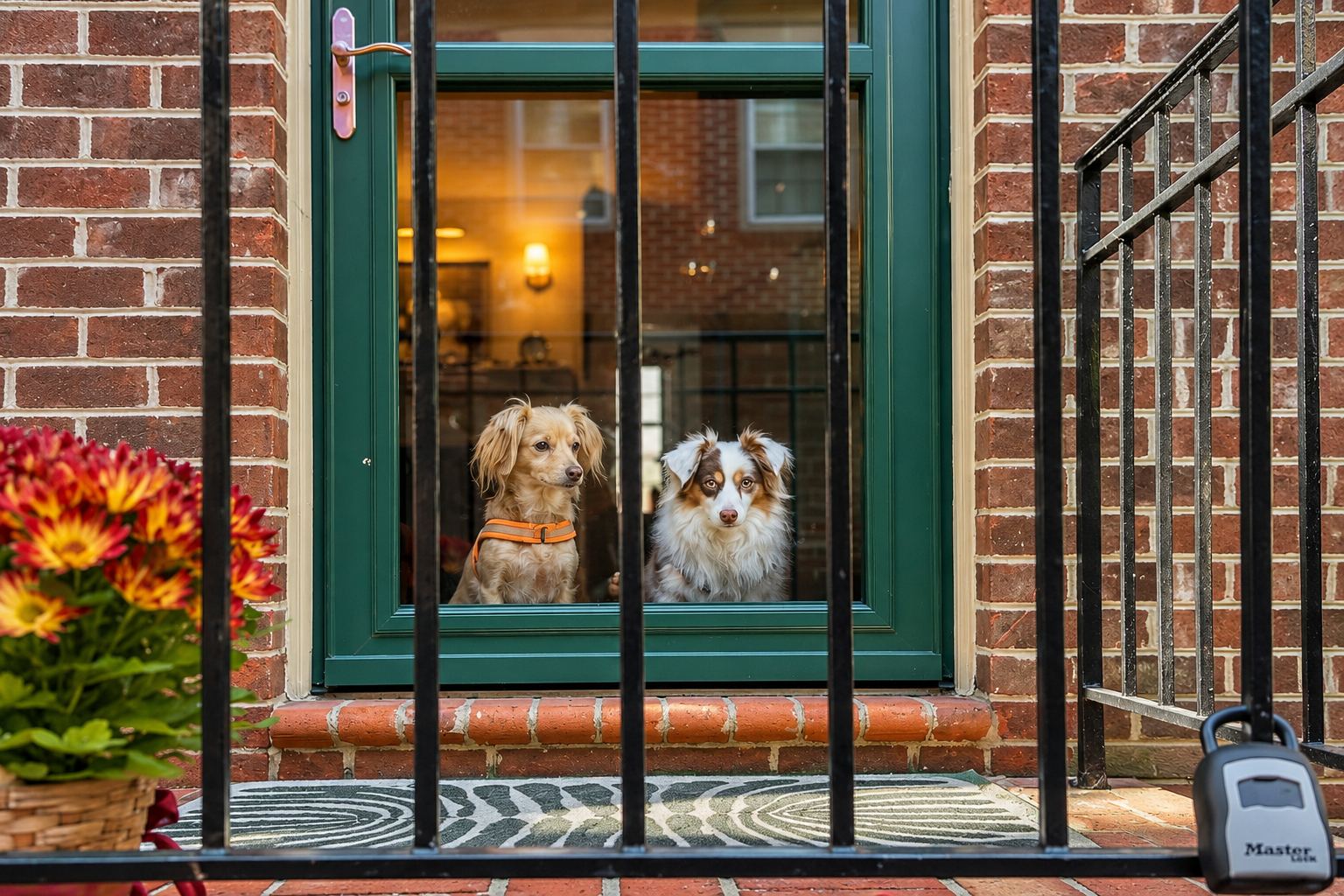
The front door has become one of their favorite places to watch what's happening outside.
A dog can be curious about a new environment without yet feeling as secure in it as they did in a familiar home. Following me doesn't necessarily mean they're experiencing separation anxiety. They may simply be interested in what I'm doing, still learning the layout, or finding reassurance in staying close to something familiar. If your dog is having difficulty relaxing in an unfamiliar environment, I've written more about what can help in Dog Won't Settle in a New Place? What Actually Helps Them Adjust.
For now, I'm allowing them time to develop their own habits. I expect they'll eventually discover favorite places to rest, just as they did in our previous house, but I'm not treating that as something they need to accomplish on a schedule.
What to Watch During Your Dog's First Few Weeks
One thing became clear during our first few weeks: different aspects of adjusting to a new home don't necessarily happen at the same pace.
If you're moving with dogs, a few things are worth observing:
Resting habits: Are they beginning to choose their own comfortable places to relax?
Bathroom routines: Are they finding reliable outdoor locations and developing a predictable schedule?
Independence: Can they comfortably spend time in another room, or do they prefer to remain close to you?
Responses to sounds: Are they becoming less interested in certain noises, or developing new reactions to neighbors and outdoor activity?
Outdoor comfort: Do particular walking routes, surfaces, or locations seem to suit them better?
These aren't milestones every dog needs to reach by a certain date. They're simply ways to understand how your dog is experiencing the new environment.
When Does a New House Become Home to a Dog?
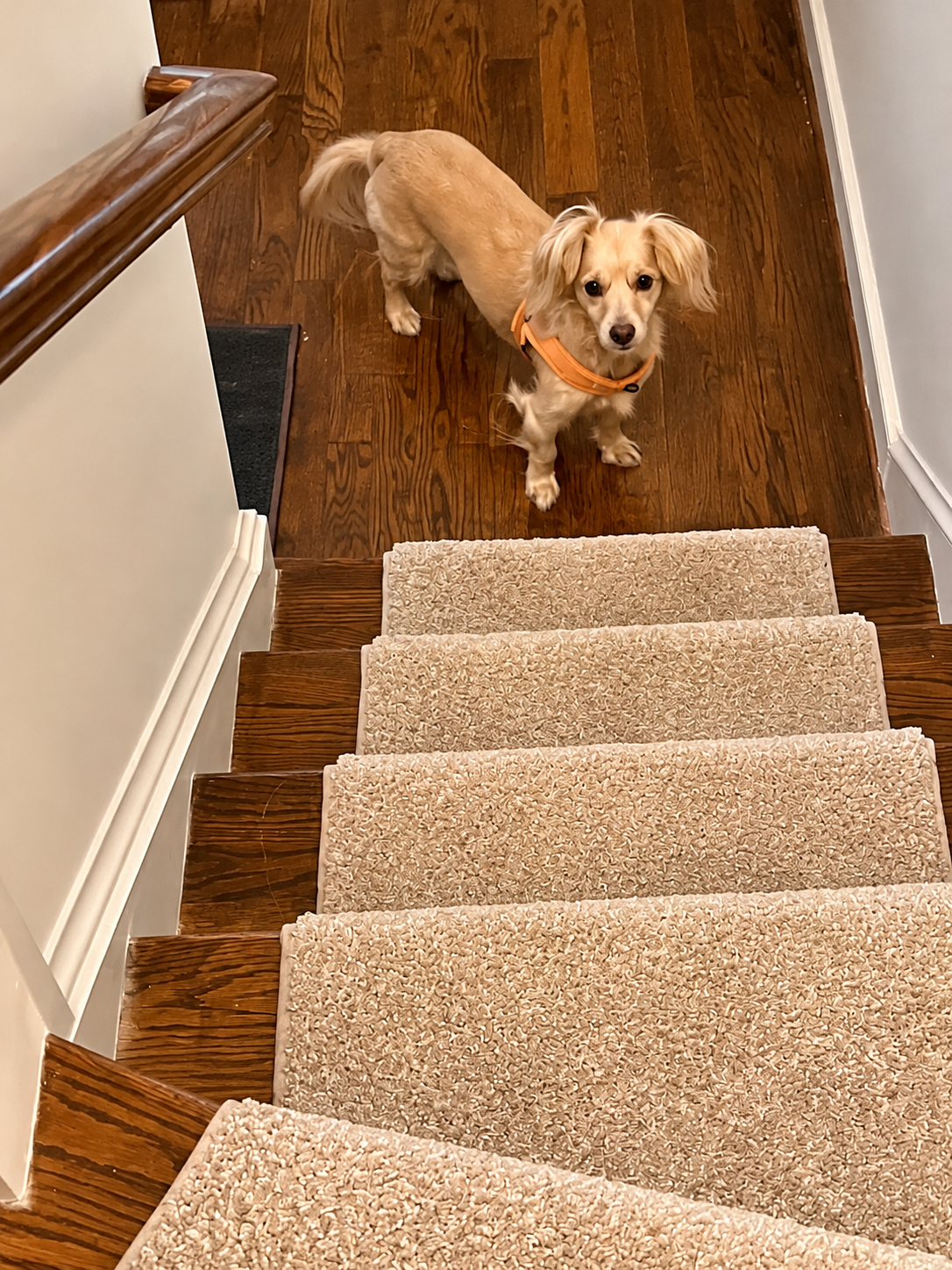
The other day, I was going upstairs to do laundry. Archie and Saydie followed me, as they usually do now, and they were especially excited to explore the top floor, somewhere they don't visit very often.
As we went up the stairs together, I stopped and looked at them. "Hey guys, this is our new house," I said.
Of course, they couldn't understand what I meant in the same way another person would. But I found myself thinking about how much had already changed since moving day.
They know where their beds are. They've learned where we go for walks. Saydie has found her favorite grassy areas, and they're becoming familiar with the neighboring dogs and the sounds of the house.
And they're still discovering things.
In our previous home, they had their own favorite places and didn't feel the need to follow me everywhere. I imagine that one day I'll head upstairs to do laundry and realize neither dog has followed me. Maybe one will be resting on the couch while the other enjoys a sunny spot.
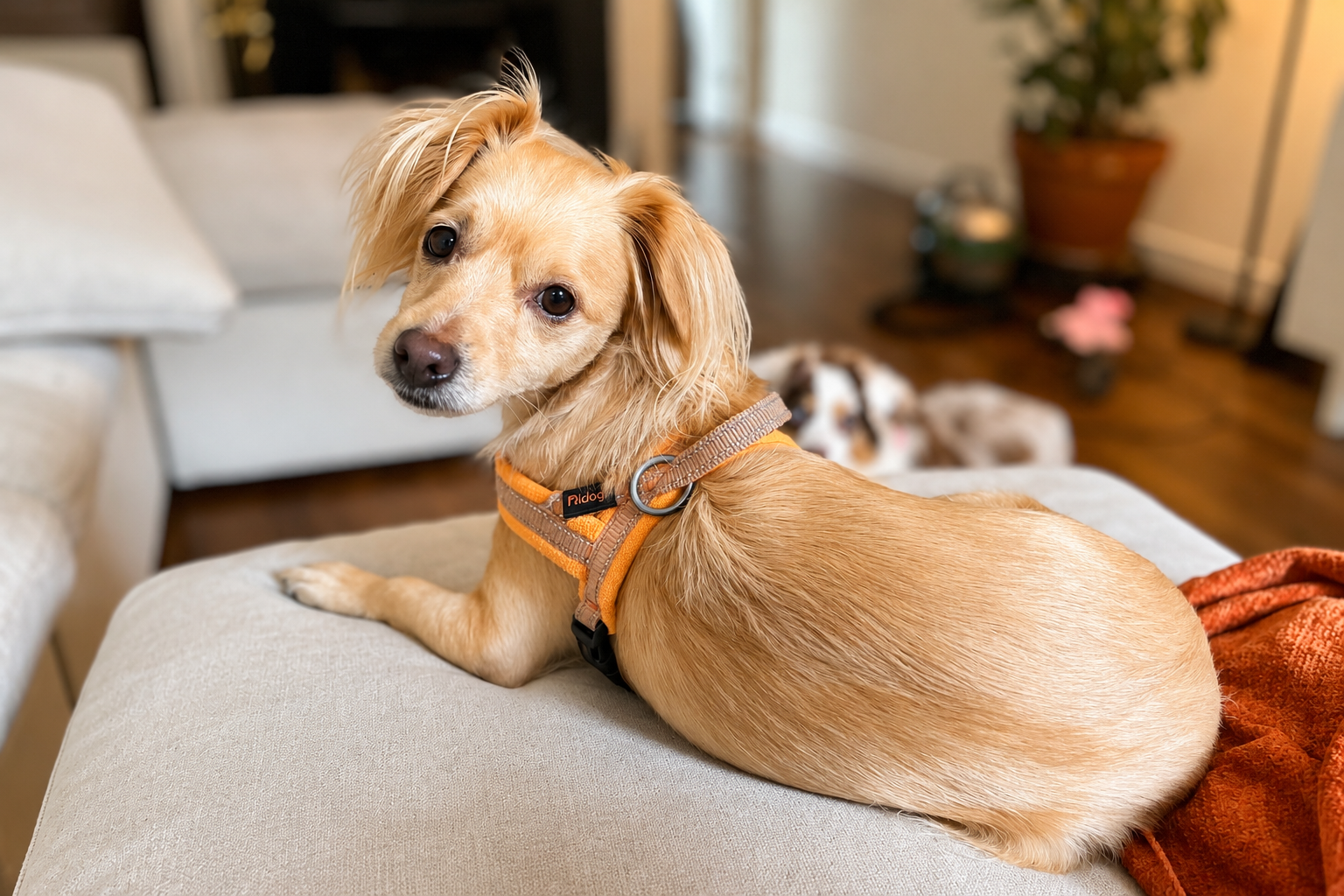
I won't know exactly what that moment means to them, but I suspect it will be one more small indication that this house has become familiar enough for them to feel comfortable making their own choices.
For now, we're still figuring it out together. And perhaps that's what moving with dogs is really about: not expecting them to understand their new home immediately, but giving them the time, space, and familiar routines to discover it for themselves.
A quick note: This post contains affiliate links to products that may make life with dogs a little easier. If you purchase through one of these links, I may earn a small commission at no extra cost to you. It helps support Wandering Pup Travels and keeps us exploring and sharing what we learn along the way.
