
When I started looking for a new home, I had a fairly clear idea of what I wanted to change about where we were living. And because I have two small dogs, Archie and Saydie, their needs were part of that decision.
Having dogs doesn't mean they dictate where you live. But just as a family with young children considers their needs when choosing a home, I think it's reasonable to do the same for our dogs.
We ended up moving from a newer-construction condo building in Old Town Alexandria to a larger, multilevel brick townhouse about a mile away. I was looking for a quieter home, easier access to outdoor space, and a place that would work better for all three of us.
Now that we're settled, I've seen how much difference those decisions have made. A few things have worked out even better than I expected, while others needed some adjustments after moving in.
Check the Pet Rules Before You Get Attached to a Place
If you're renting or looking at a home in a community with an association, make sure you understand the pet rules before getting too far into your search.
A property may allow dogs but still have restrictions on their size, breed, or number. There may also be additional fees, rules about shared outdoor spaces, or limitations on installing fences and making other changes that would help the property work better for your dogs.
It's better to find out about those restrictions early than to discover that a home you really like won't accommodate your dogs.
Consider Noise and Shared Spaces
A quieter home was one of my priorities when I started looking for a new place. Archie and Saydie are sensitive to sounds around them, and I wanted an environment where they wouldn't feel the need to react to so much activity throughout the day.
Our previous condo was in a newer building with a shared interior stairwell. Residents, delivery people, and visitors were frequently coming and going, and the dogs could hear much of that activity even when they couldn't see what was happening. They often responded by barking, which wasn't particularly enjoyable for them, for me, or for our neighbors.
Our new townhouse has shared walls, too, but the brick construction provides much better sound insulation. We also no longer have a communal hallway or stairwell where people are constantly passing our door. The difference has been noticeable, and the quieter environment has been more comfortable for all of us.
If your dogs are sensitive to sounds, pay attention to how a building is constructed and where activity takes place. A newer building isn't necessarily quieter, and shared walls don't always mean you'll hear everything happening next door.
When touring a property, spend a few minutes listening. Can you hear conversations in the hallway, footsteps overhead, doors closing, or traffic outside? If you're considering a condo or apartment, notice how close the front door is to elevators, stairwells, and other common areas.

Walk the Neighborhood Before Making a Decision
One of the nicest surprises about our move has been the neighborhood itself. We only moved about a mile away, and the streets look much the same, so I expected our daily walks to be similar. But the sidewalks are noticeably quieter, there are more grassy areas, and we encounter fewer dogs. For Archie and Saydie, who can be reactive around other dogs, it's made our walks easier and more enjoyable.
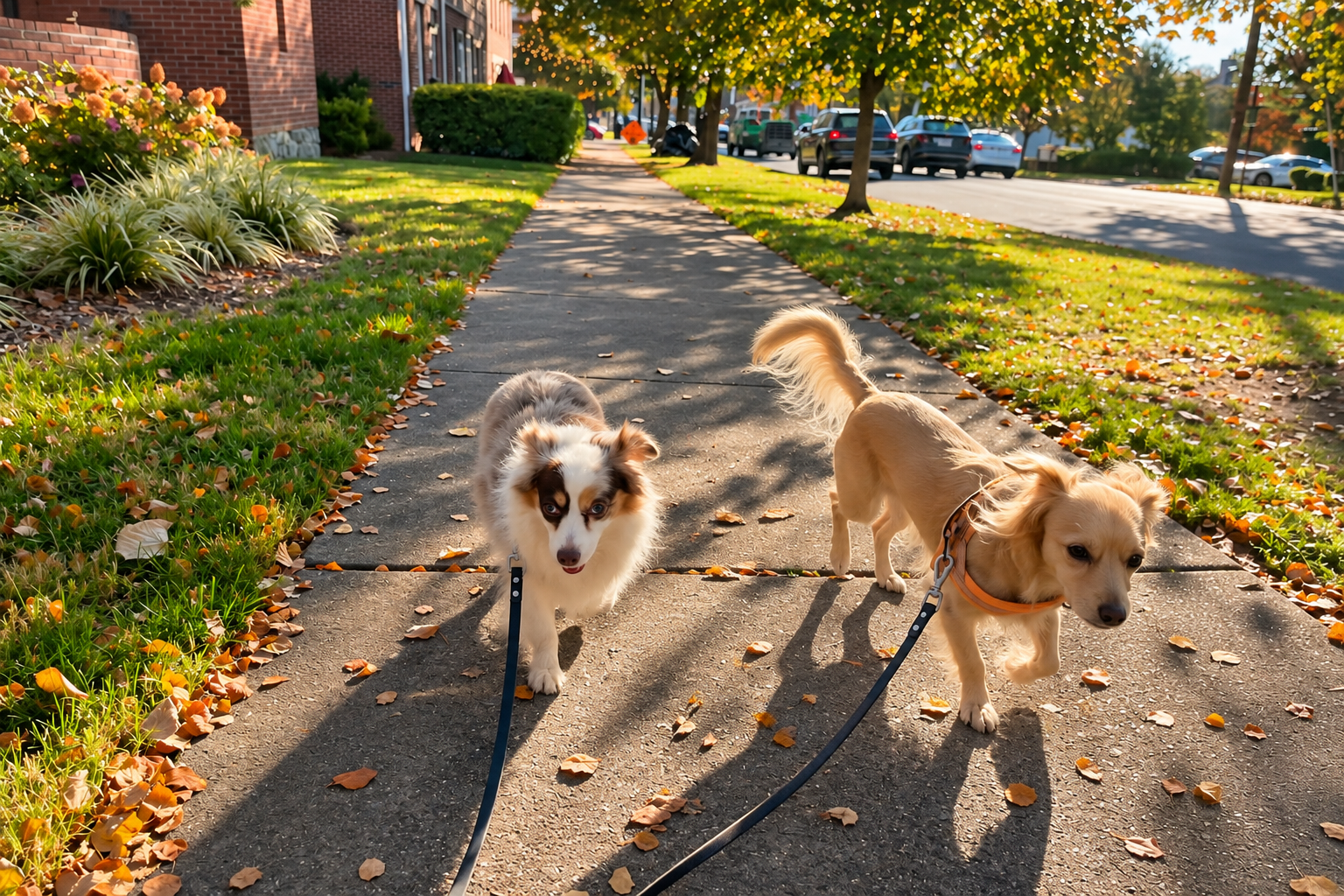
That difference could just as easily have gone the other way. That's why I'd recommend walking around a neighborhood before deciding on a home, particularly if you're choosing between a couple of properties.
Visit on weekdays and weekends, and try different times of day. Pay attention to traffic, the number of dogs out walking, sidewalk conditions, and places to cross safely. You'll get a much better sense of what your daily walks might be like than you would from a single visit to the property.
Consider How You'll Use the Outdoor Space
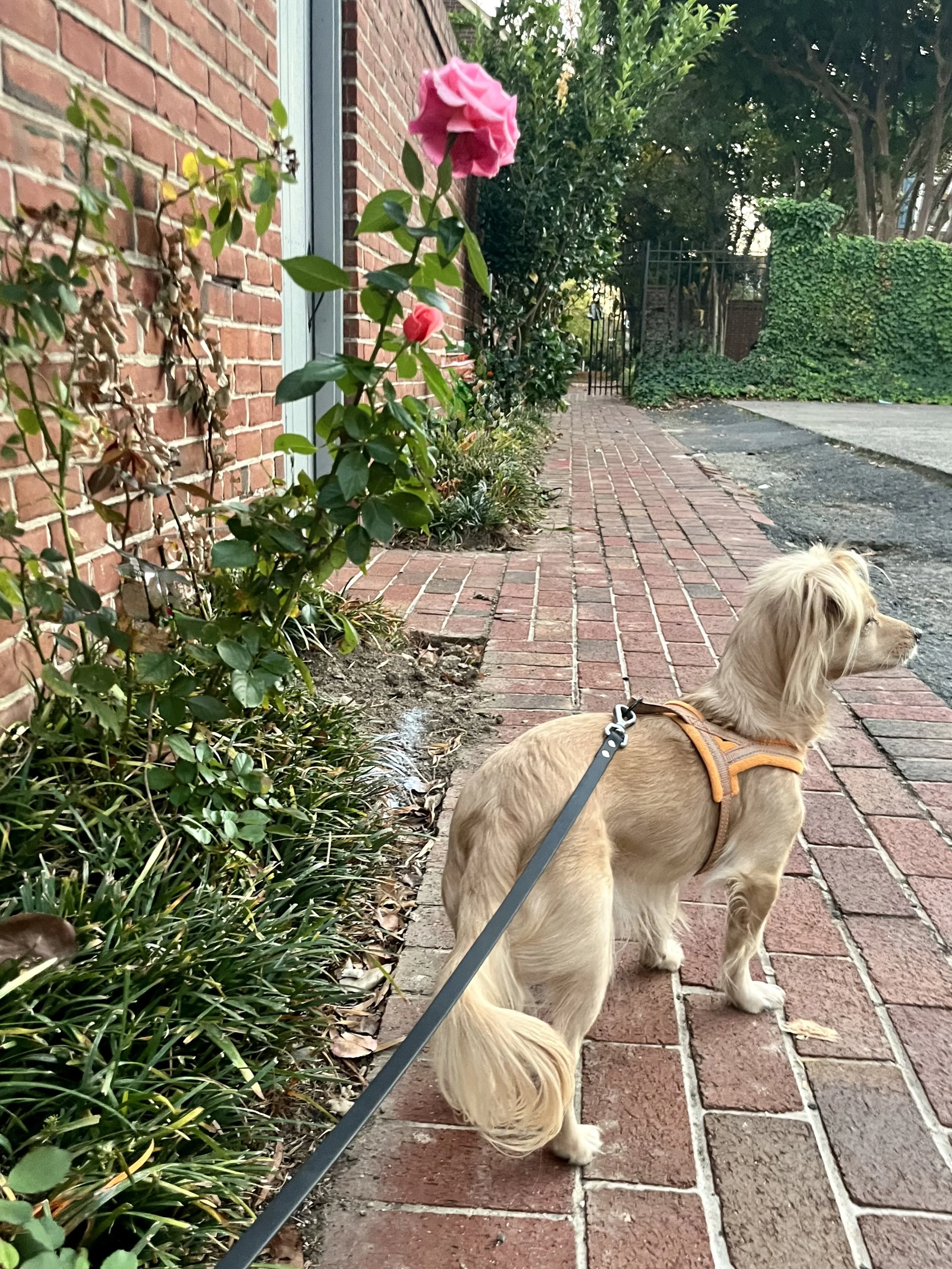
Our previous condo had a large third-floor terrace, so Archie and Saydie weren't lacking outdoor space. Saydie even had her own potty station. But when I started looking for a new home, I knew I wanted a private backyard with direct access from the house.
There are plenty of situations when that makes life easier. Sometimes a dog needs to go outside at three in the morning. Other times it's raining, there's snow on the ground, or you just need a quick bathroom break between regular walks. Having a backyard gives us that option without having to get dressed and head out for a walk every time.
A yard doesn't replace daily walks, but for us, having one has been a significant improvement. Other dogs and households may have different priorities depending on their routines, age, and mobility.
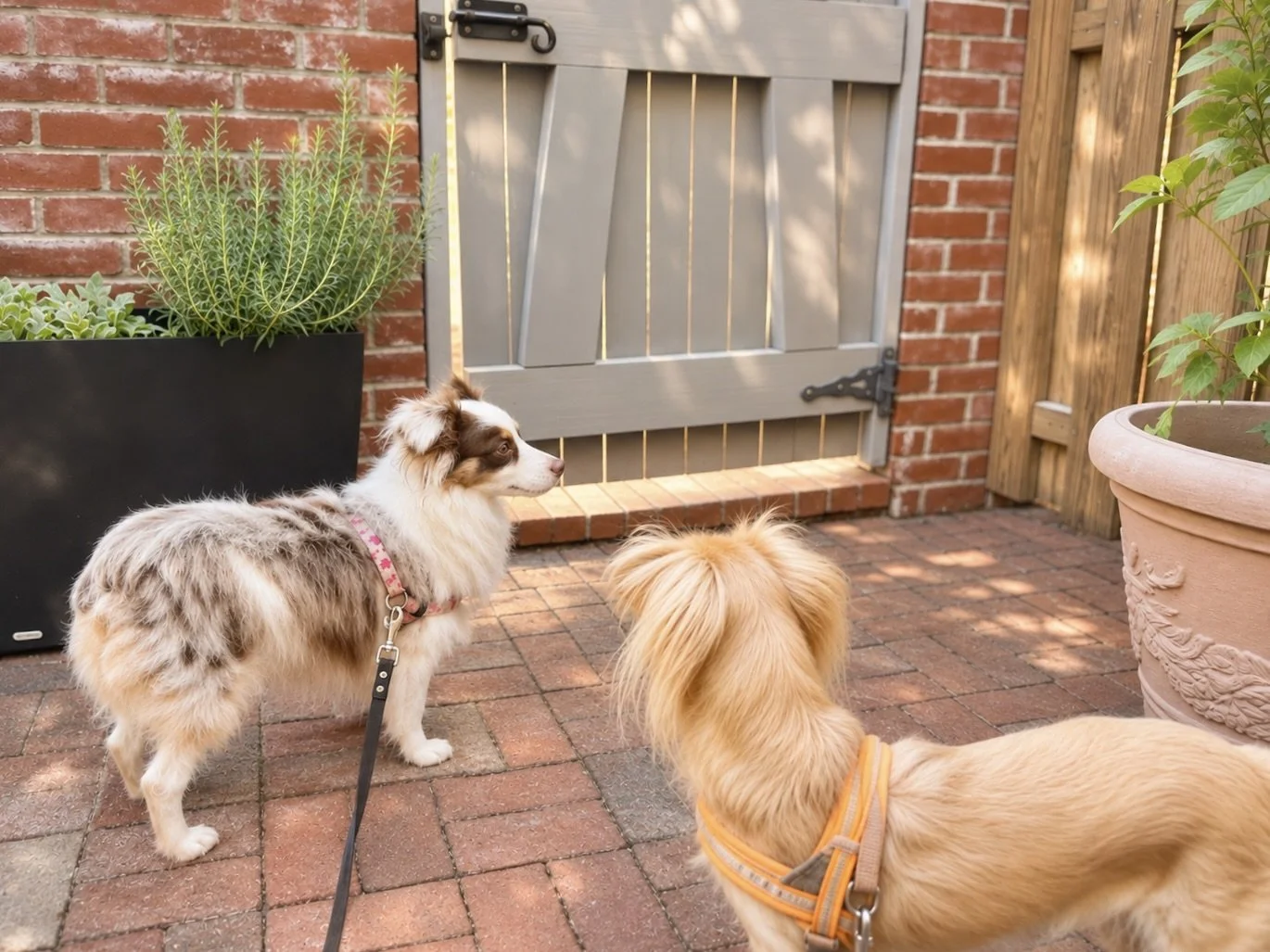
When looking at outdoor space, I'd pay as much attention to how usable it is as to how large it is. A small, secure backyard with shade and easy access may be more practical than a large deck or a yard that's difficult to reach.
It's also worth looking at the condition of fencing and gates, drainage after heavy rain, and whether the landscaping is suitable for dogs.
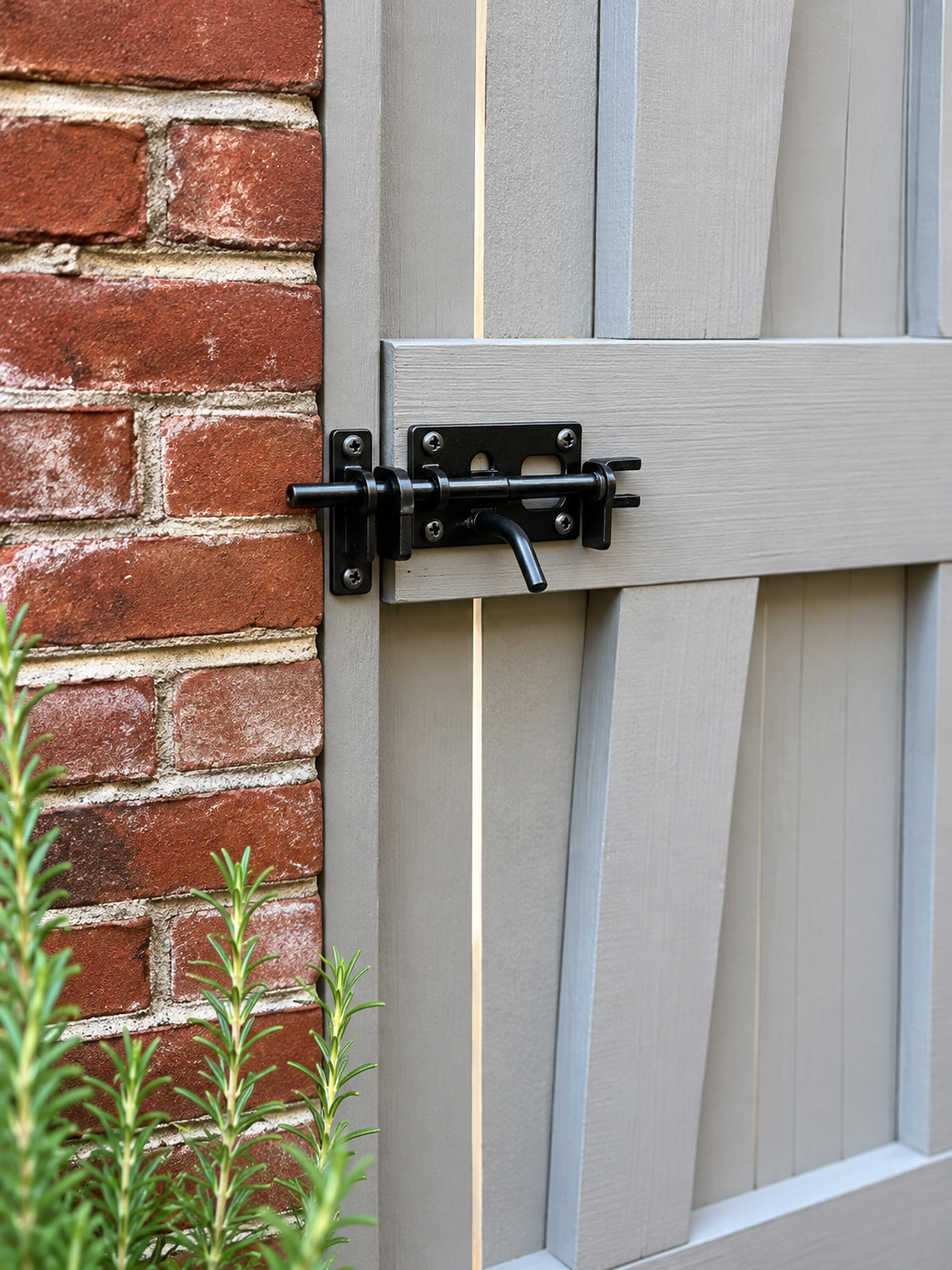
We have extra security for our backyard gate with a latch that can only be released from inside the yard. I also created a designated potty area for Saydie. These were relatively straightforward improvements, but they made the outdoor space work better for us.
Look at Stairs and Flooring
Moving from a single-level condo into a multilevel townhouse was a change for all three of us. I had to think about how comfortable and safe the stairs would be for Archie and Saydie.
Slippery stairs and smooth flooring are worth paying attention to, particularly with small or older dogs. Hardwood, tile, and polished stone can make it difficult for dogs to get traction, especially when they're moving quickly or turning corners.
Fortunately, this is something you can often improve without making major changes to the house. Non-slip stair treads can provide better footing on wooden steps, while washable non-slip runners are useful in hallways and other areas where dogs tend to move around.
I've added rugs in our new home, and they've made the floors more comfortable for Archie and Saydie.
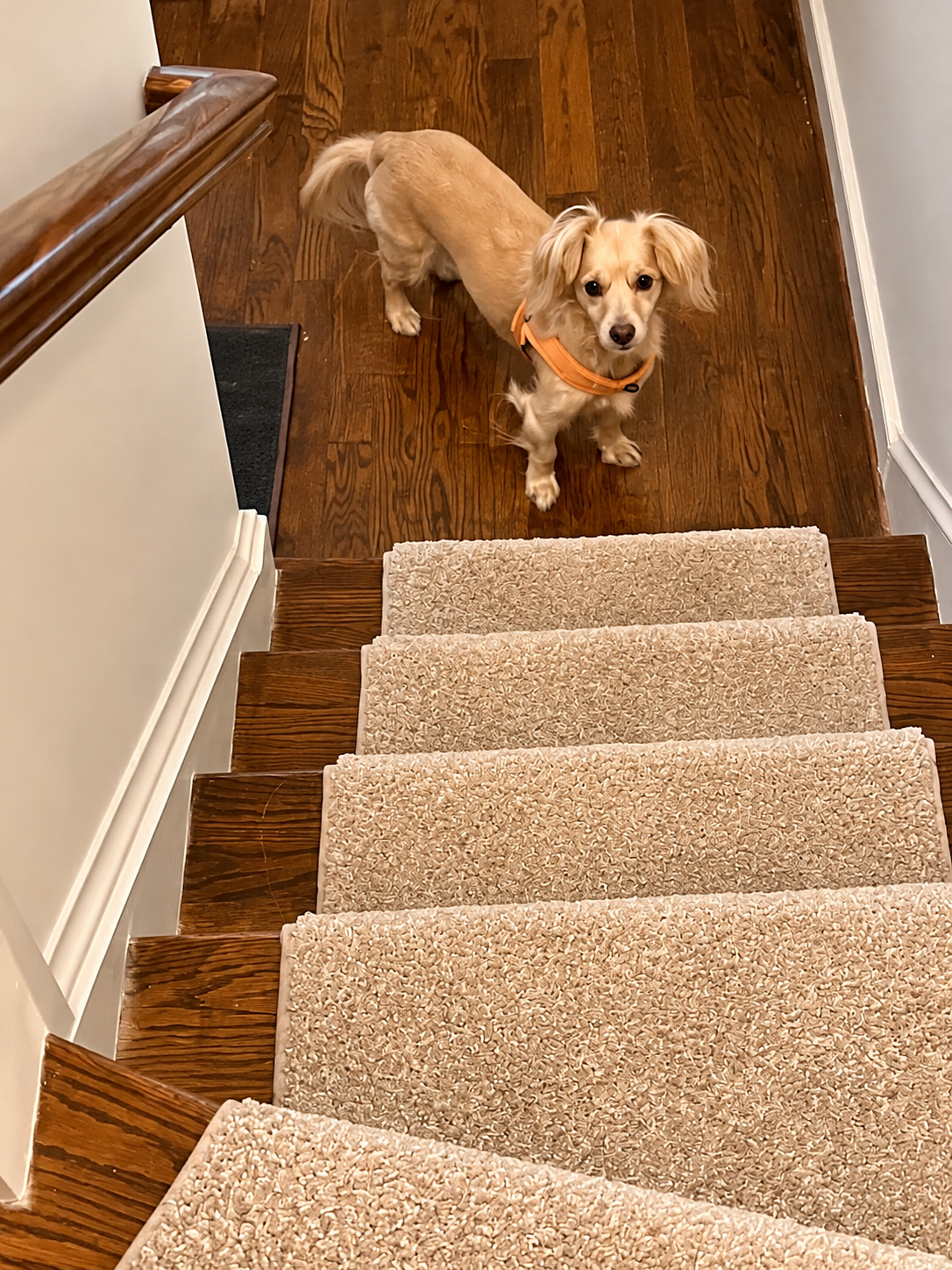
It's also worth thinking about whether the stairs will continue to work for your dogs as they get older. A home with multiple levels can be wonderful, but having a comfortable place for them to spend time on the main floor gives you more flexibility.
Check Doors, Gates, and Escape Risks
When choosing a home with dogs, I pay particular attention to the entrances and how easily a dog could get outside. Some houses naturally offer an extra layer of security, while others require a little more planning.
A friend of mine has a fenced front yard between the house and the street. If a dog manages to slip through the front door, there's still another barrier before reaching the road. That's quite different from a home where the front door opens directly onto a busy sidewalk. A storm door or enclosed entryway can provide a similar extra layer of protection.
That doesn't mean a house without those features is a poor choice. You can make most layouts work with the right precautions, but some make it easier than others.
In our new house, I use both metal and wooden indoor dog gates to separate areas when needed, whether we have visitors, someone working in the house, or simply want to keep the dogs out of a particular room.
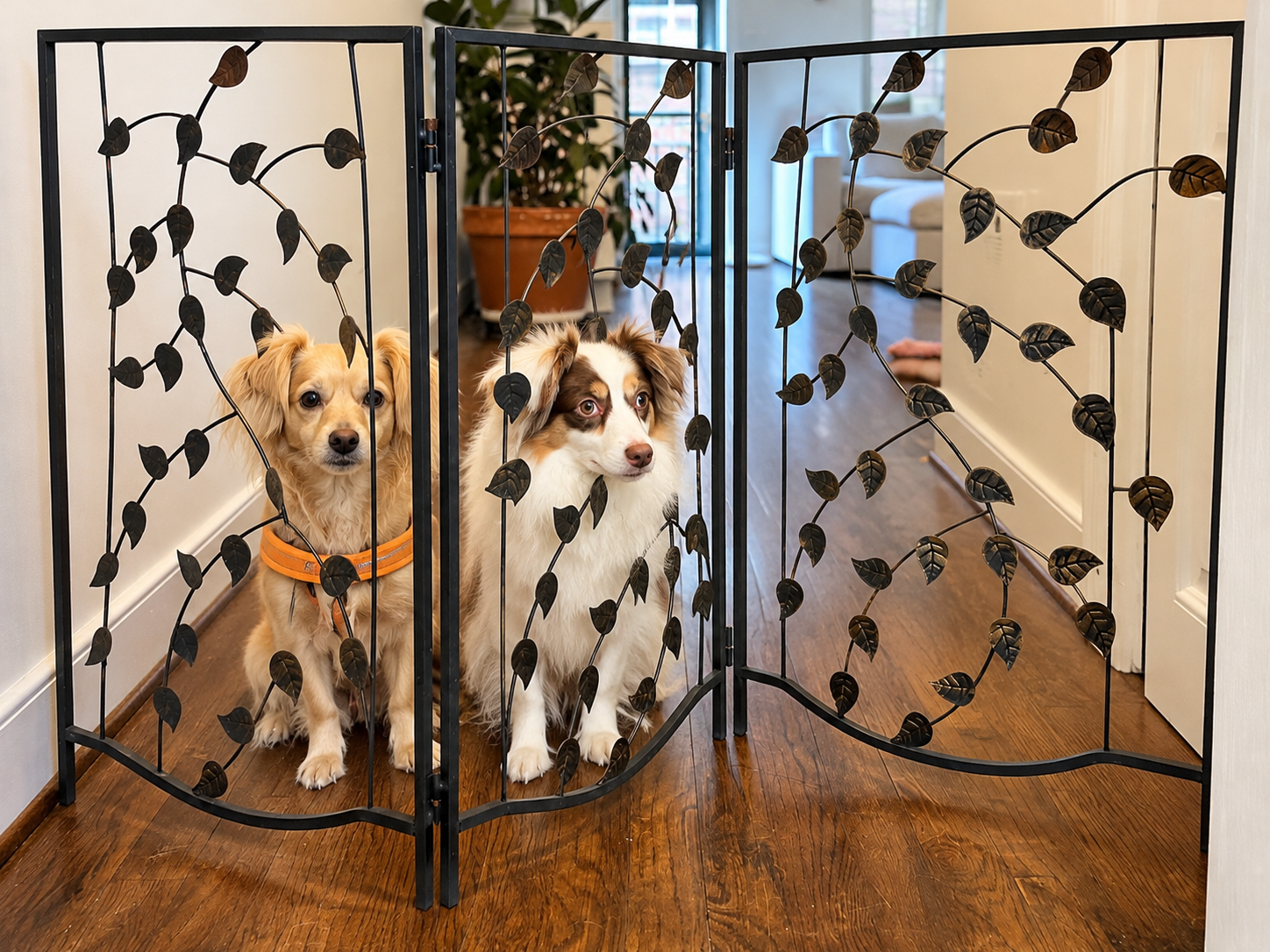
It's worth considering how easily you could create those separate spaces before moving in, rather than figuring it out afterward.
Consider Windows and Street Activity
When you're looking at a home, it's easy to notice the natural light and the view without thinking much about what your dog will see from those same windows.
Some dogs love spending the afternoon lounging by a window, watching people and dogs pass by. For others, that same view can mean hours of barking or difficulty settling down. It really depends on the dog.
When touring a home, consider what your dog will see from the places where they're likely to spend time. A large ground-floor window overlooking a busy sidewalk creates a different experience from one facing a quiet courtyard or garden. Neither is necessarily better, but knowing your dog's habits can help you imagine how the space will work.
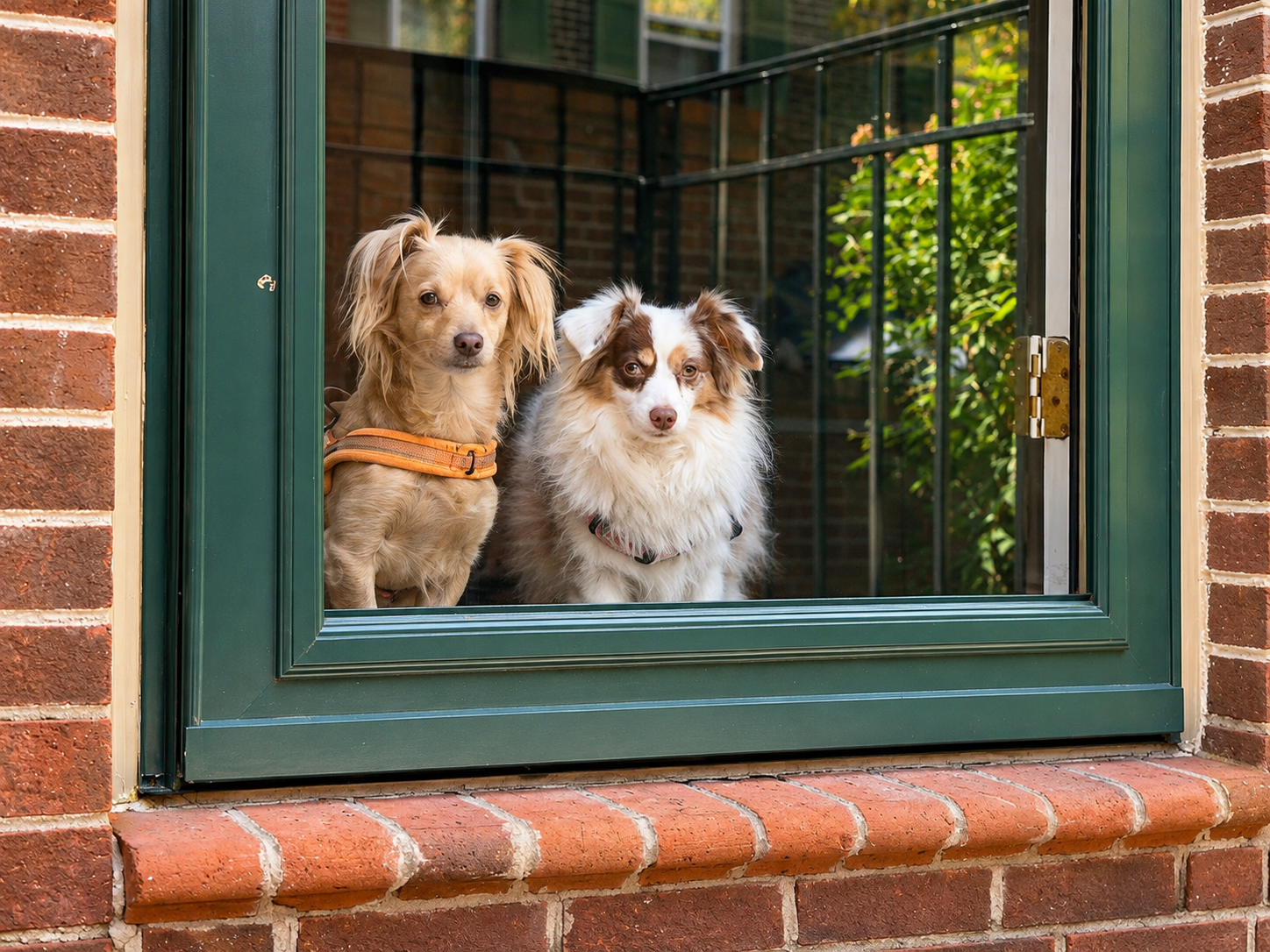
And if the view turns out to be too stimulating, there are usually ways to manage it. Privacy film on the lower portion of a window, curtains, or adjustable shades can reduce some of that activity without sacrificing all the natural light.
It's a small consideration, but one that can make a difference in how comfortably your dog settles into a new home.
Consider Space, Layout, and Quiet Places to Rest
One of the things I liked about moving from a single-level condo into a multilevel townhouse was having more separation between living spaces. Archie and Saydie have enjoyed exploring the different floors, and the layout gives us more flexibility in how we use the house.
But more square footage doesn't necessarily mean a home will work better for your dogs. How the space is arranged can matter just as much.
Open floor plans can be wonderful, but they don't always make it easy to separate dogs from household activity. If you have visitors, contractors working in the house, or a dog that needs some time away from everything, having a room you can close off can be useful. Of course, crates and indoor gates can accomplish much of the same thing, depending on the layout.
It's also worth noticing where your dogs might naturally settle during the day. Some enjoy being right in the middle of family activity, while others prefer a quieter place where they can rest without being disturbed.
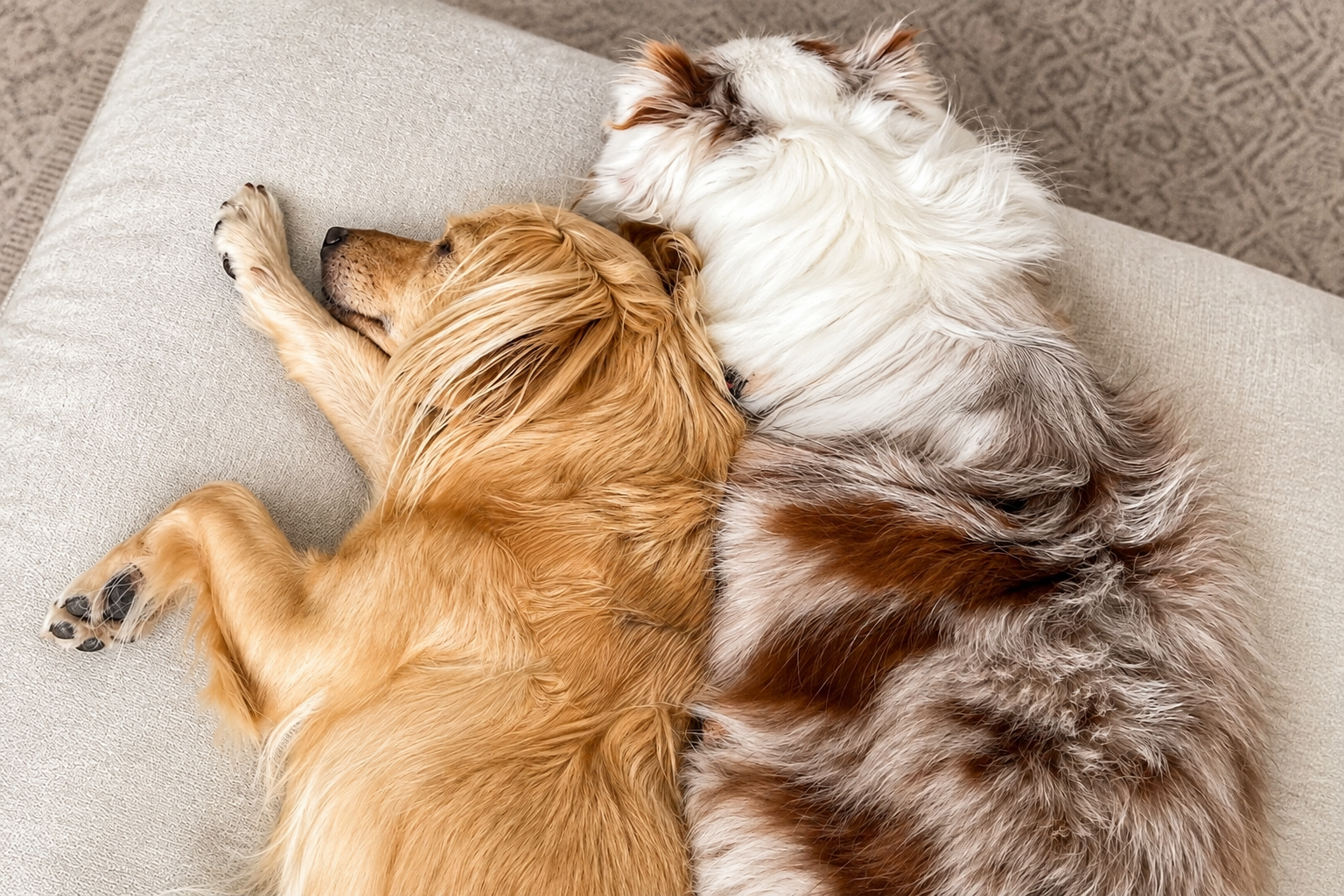
A smaller home with a practical layout may offer just as much flexibility as a larger one. It's less about how much space you have and more about how easily you can use it.
Know What You Can Change—and What You Can't
One of the most useful things I learned while looking for a home was to distinguish between features I could improve after moving in and those I'd be living with every day.
Slippery floors, unsecured entrances, and windows that give dogs a front-row seat to the sidewalk can often be managed with non-slip runners, indoor dog gates, or window coverings. Those are relatively straightforward adjustments.
But you can't easily change the amount of traffic outside, how much noise carries through the building, or what your neighborhood walks will be like.
When comparing homes, I'd give more weight to those things that are difficult to change. A house that needs a few practical adjustments may ultimately be a better fit than one that looks perfect but has an environment that doesn't suit your dogs.
That's how I approached our move. A quieter home, a private backyard, and more comfortable walking routes were priorities from the beginning. The rugs, gates, and other improvements were things I could take care of afterward.
What to Look for When Choosing a Home With Dogs
If you're considering a move, these are a few questions worth thinking through as you compare homes. There aren't necessarily right or wrong answers. Much depends on your dogs, their routines, and what matters most to your household.
The neighborhood and surroundings
What would our everyday walks look like here?
How much activity and noise would our dogs experience?
The house itself
Does the layout give us enough flexibility to manage different activities?
How would the stairs, flooring, and windows work for our dogs?
Is outdoor access convenient for our daily routine?
Safety and practical adjustments
Are there natural barriers around entrances, or could we easily add them?
What improvements would we want to make after moving in?
Are there pet restrictions or association rules we need to know about?
Looking ahead
Would this home still work if our dogs' needs changed as they got older?
Finding a Home That Works for Everyone
Looking back, I'm glad I paid attention to how our new home would work for Archie and Saydie, not just what I wanted in a house. The quieter surroundings, easier neighborhood walks, private backyard, and more flexible layout have all made a difference in our daily routines.
We're still making adjustments as we settle in, and I expect that will continue. But those are mostly things we can change. The features that mattered most to me when choosing the house are the ones that would have been much harder to address afterward.
You don't need to find a perfect home for your dogs. It's about knowing what matters to them, understanding what you can reasonably adapt, and finding a place that works well for everyone.
Next in the series: Moving With Dogs: Preparing for Moving Day and the First Week — what I did to help Archie and Saydie through moving day and settle into our new home.
A quick note: This post contains affiliate links to products that may make life with dogs a little easier. If you purchase through one of these links, I may earn a small commission at no extra cost to you. It helps support Wandering Pup Travels and keeps us exploring and sharing what we learn along the way.
