Why Dogs Struggle to Settle in Hotels
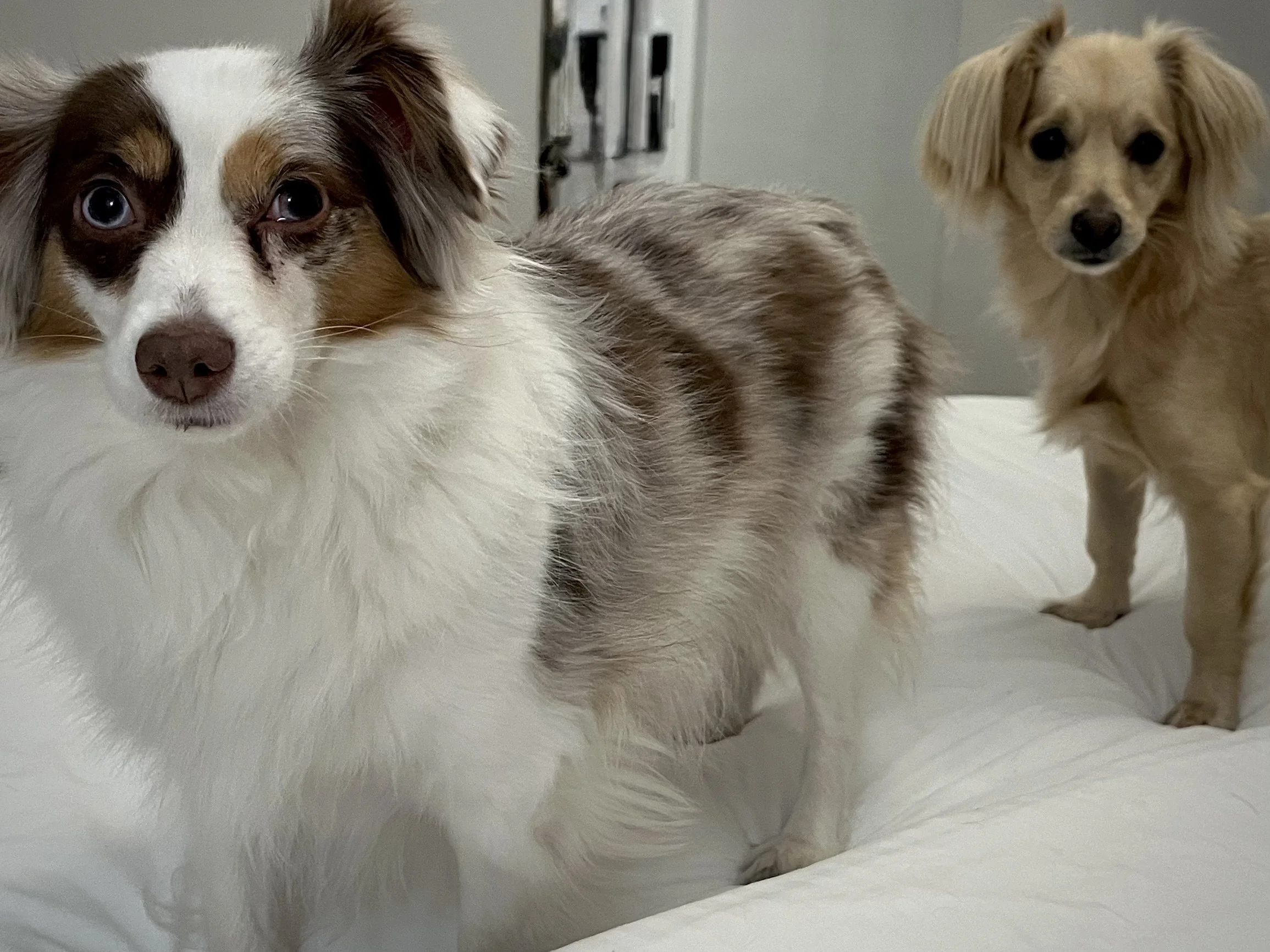
First night in a hotel — alert, tired, and not fully settled yet.
Many dogs struggle to settle during the first night in a hotel or unfamiliar place while traveling.
When I adopted my toy Aussie, she looked terrified.
She hid under the bed. If I stood up — even if I wasn’t moving toward her — she bolted. Her body stayed tense, her eyes wide, and she moved between hiding spots as if the room itself couldn’t be trusted.
It was clearly anxiety.
When I adopted her, the response was extreme. Everything in her world changed at once — place, routine, people, smells, territory. The foundation of her safety disappeared overnight.
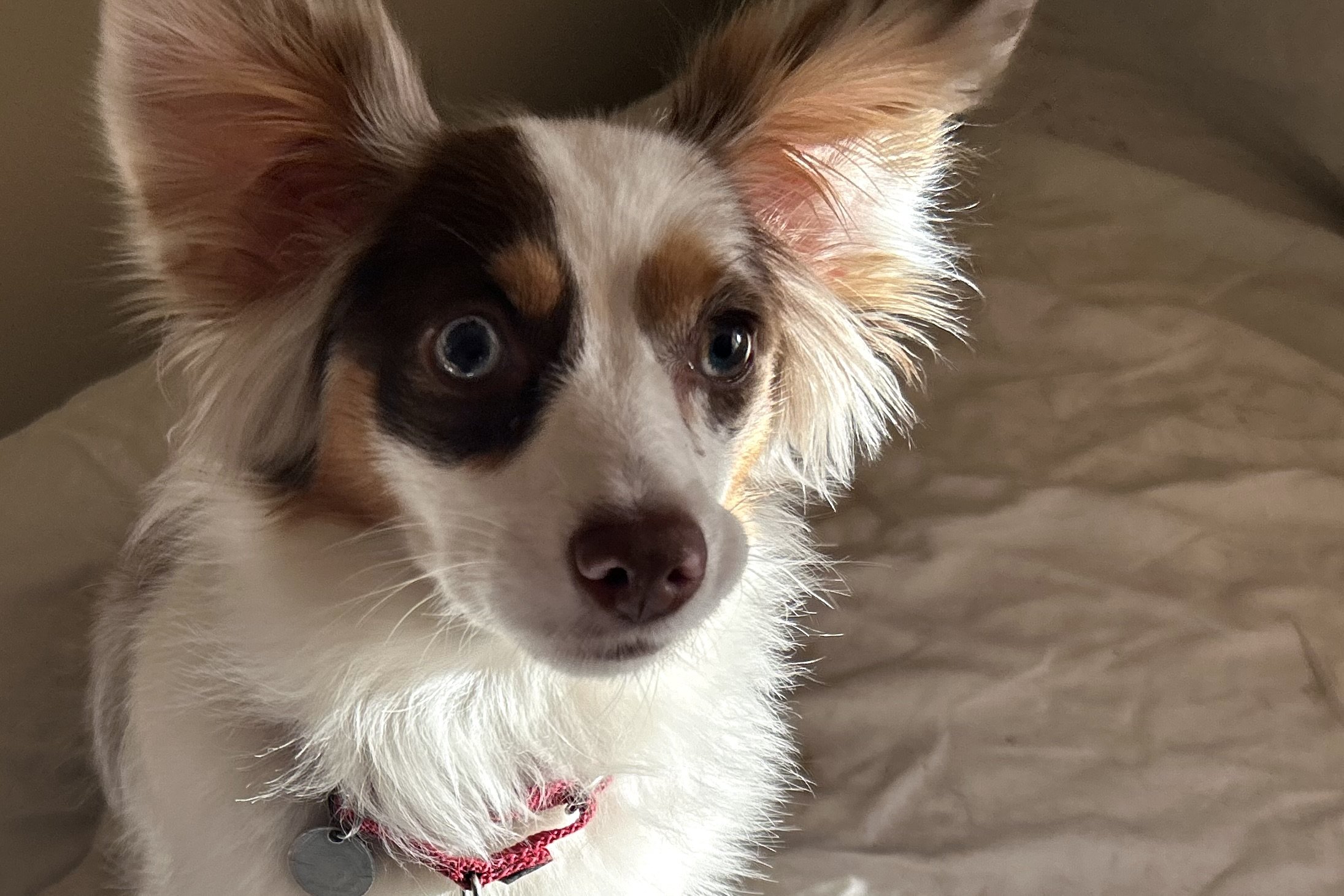
Early days after adoption — hyper-alert, unsure, and scanning every movement.
Over time, once she settled into our home, that level of intensity softened. It wasn’t immediate. It took nearly a year before she truly seemed at ease. But she found her footing.
The intensity was different later, but the underlying pattern was the same — a nervous system reacting to sudden change.
What I began to notice later is that pieces of that same pattern would reappear when familiarity was disrupted again.
Not at the same intensity.
But in recognizable ways.
Travel is a classic example.
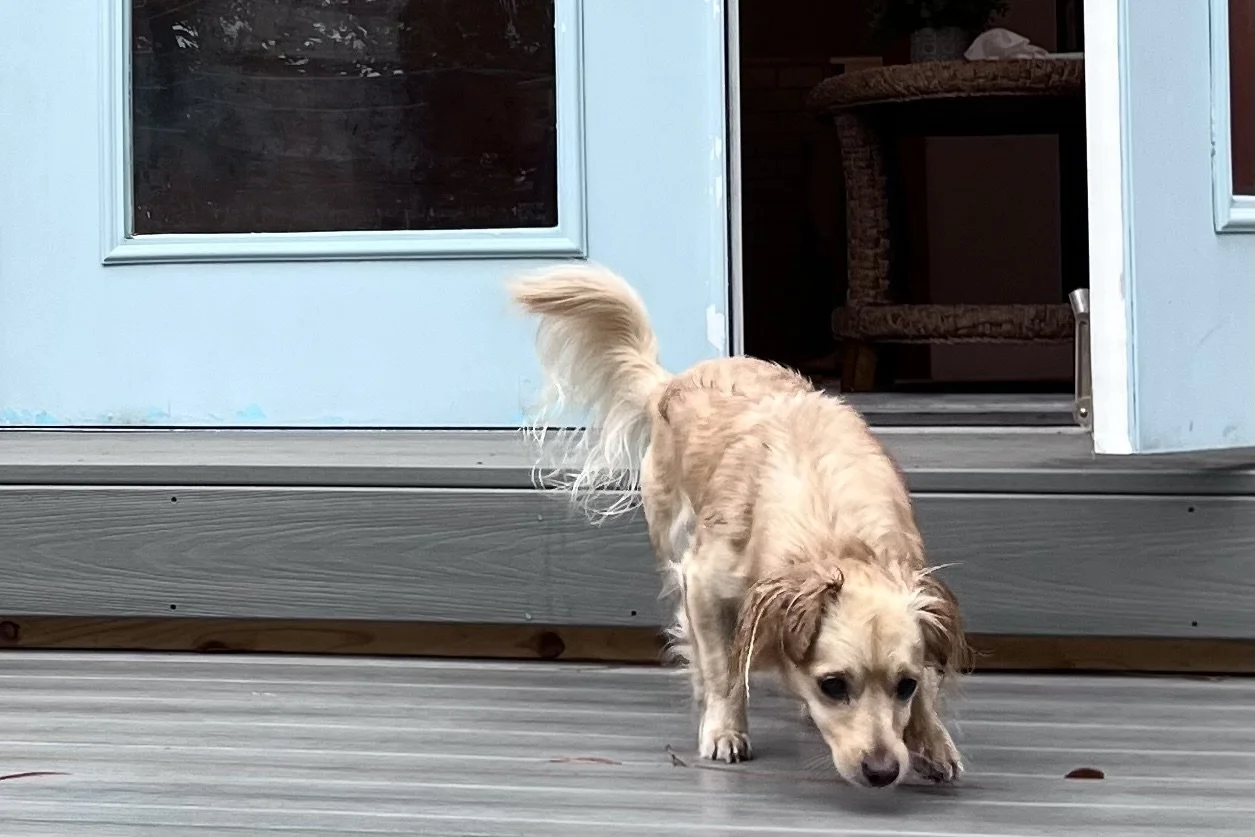
Crossing into a new space — cautious, slow, and still unsure.
Dogs live in a fairly contained world. They know their space. They know their routine. They know who takes care of them. Their sense of safety is built on repetition and predictability.
When you travel, that entire structure shifts at once.
New place.
New smells.
New sounds.
New layout.
Different timing.
The nervous system responds to that shift instantly.
And that stress response shows up in the body.
Why Dogs Struggle to Settle in Hotels
Dogs often struggle to settle in hotel rooms or unfamiliar places because their sense of safety is built on familiarity. New smells, hallway noise, unfamiliar layouts, and disrupted routines can activate a dog’s stress response. Instead of resting, many dogs remain alert — pacing, scanning the room, or waking easily at small sounds until the space begins to feel predictable.
How the Stress Response Shows Up Physically
You may notice:
Tense muscles. If you reach down to pet your dog and their body feels hard or rigid instead of relaxed, that’s information. A tense body often means they’re not at ease.
Wide eyes or a fixed stare. Eyes that look unusually round, bright, or constantly scanning the room can signal heightened alertness.
Shallow or fragmented sleep. They lie down but wake at small sounds and never seem to sink into deeper rest. This can look different from post-trip exhaustion.
Changes in eating or digestion. Some dogs skip meals. Others develop loose stool. Stress often shows up in the gut.
These are signs that the body hasn’t downshifted yet.
How It Shows Up Behaviorally
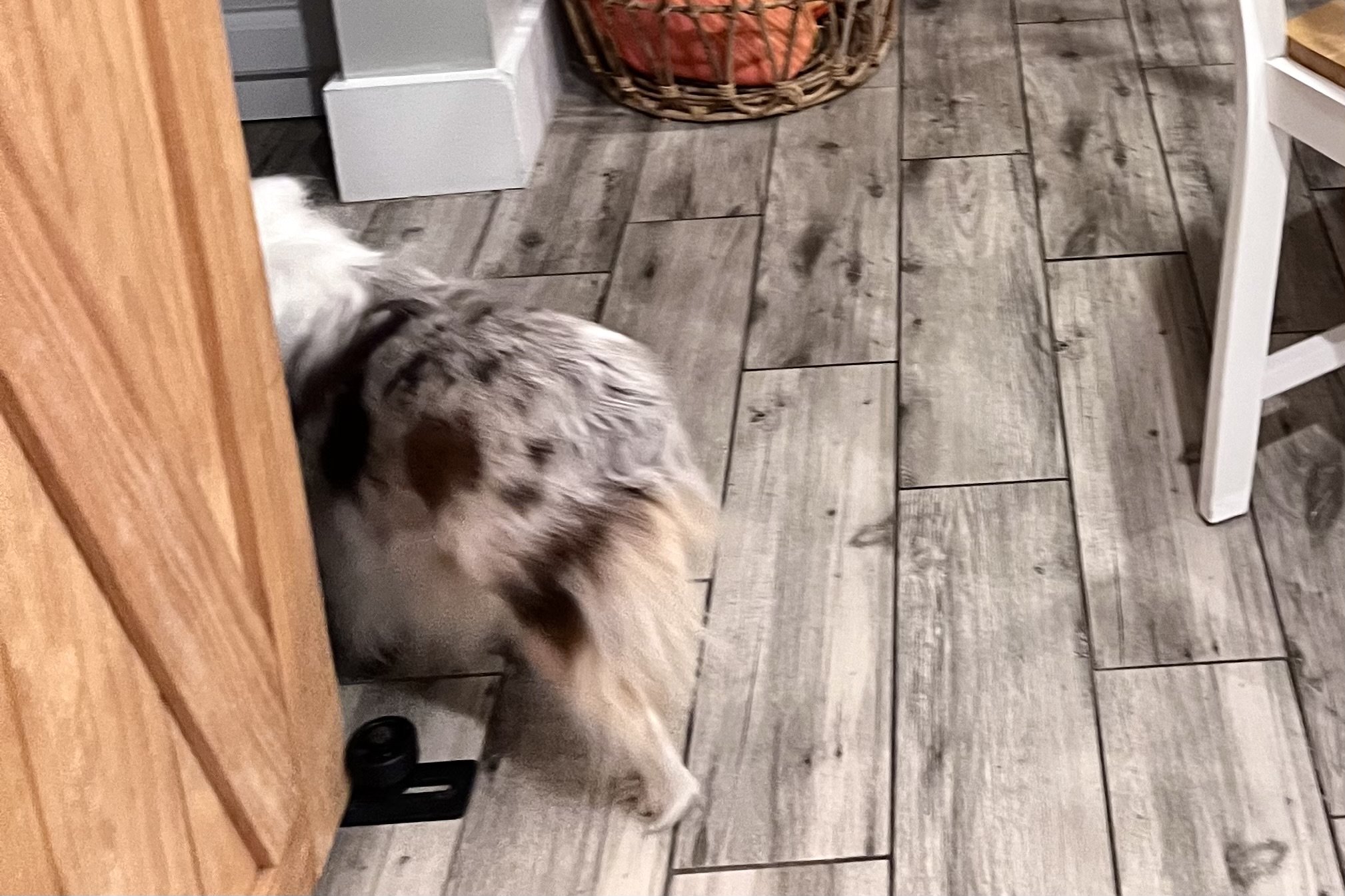
Restless movement in a new space — pacing and scent-checking instead of settling.
Other times, the stress response shows up in what your dog does.
You may see:
Pacing predictable routes around the room
Following you closely from space to space
Clinginess or inability to settle alone
Lip licking or subtle stress signals
Hesitation to go potty outside
Freezing or scanning when they hear hallway noise
These behaviors aren’t random or dramatic. They’re attempts to manage an environment that still feels unfamiliar — a stress response to an upside-down world.
The First Night in a Hotel
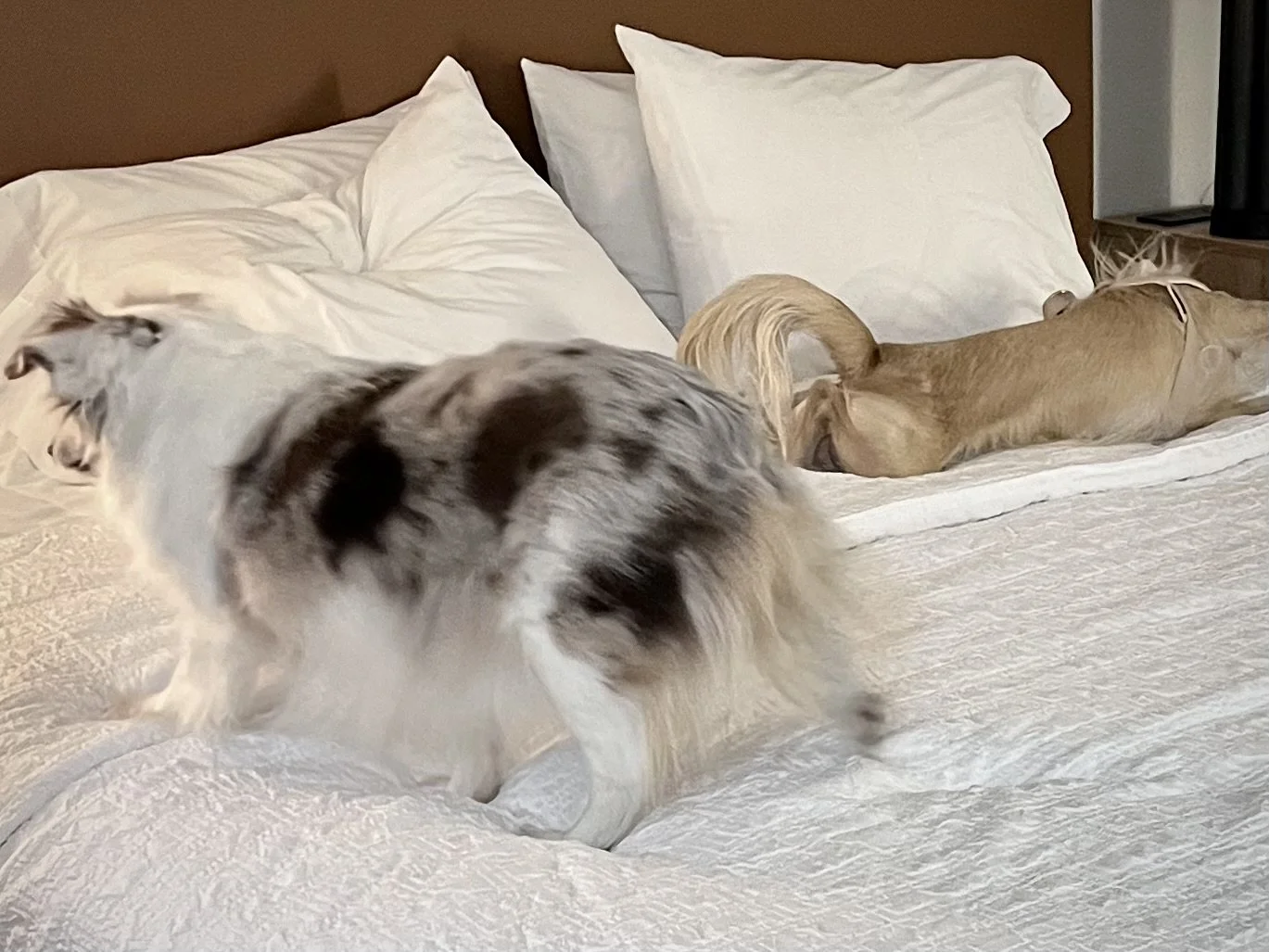
Exhausted from travel — but still unable to settle.
One of the clearest examples for me was a basic chain hotel room — thin carpet, bright overhead lighting, the faint scent of other dogs layered into the floor.
It was around 9:30 at night after a full day of driving. I was unzipping bags and setting out water bowls while my dogs moved continuously across the room, noses down. They were reading everything in that carpet.
The bed was too high for them to jump onto, and we hadn’t brought the doggie stairs we use at home. There was nowhere familiar to land. No established “spot.”
Every time someone walked down the hallway, the sound carried through the door. They would freeze, look toward it, then resume scanning.
They were exhausted.
But they weren’t resting.
Dogs often appear extremely tired after a long travel day, but their nervous system may still be on alert in a new environment — something I talk about more in Why Is My Dog So Tired After Travel?
The Potty Spiral
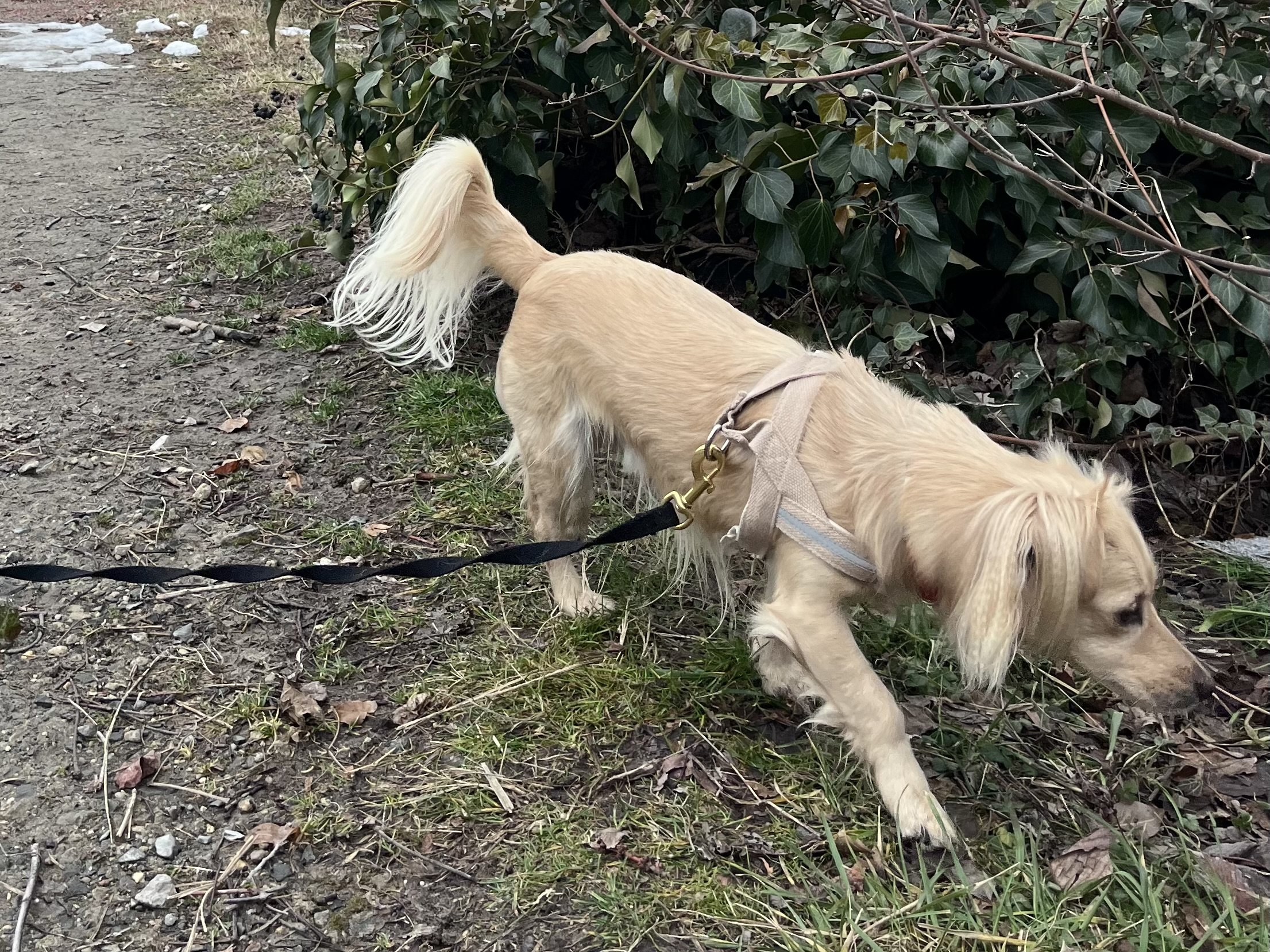
Slow, careful sniffing outside a hotel — reading the environment before feeling safe enough to settle.
We’ve had nights when Saydie hadn’t peed since we left home that morning.
We’re outside near the hotel’s side entrance. Car doors slam. People come and go. There’s constant background noise. She sniffs the same patch of grass, circles once, then lifts her head again.
She clearly needs to go.
But she doesn’t.
She looks back toward the building.
And I’m standing there trying to stay calm for her while feeling that rising concern — what if she’s holding it too long?
Elimination requires vulnerability. A dog has to lower their guard enough to focus on their body. In a brand-new environment, some dogs simply can’t do that yet.
Some dogs show similar hesitation outdoors when the environment feels unfamiliar — something I explore in Why Dogs Freeze or Refuse to Walk in New Places.
Small dogs often show this more visibly. Their size alone can make unfamiliar spaces feel bigger and less secure. Sensitive dogs may hesitate longer before they feel safe enough to relax.
This isn’t defiance.
It’s discomfort.
I’ve Seen This Pattern Outside of Travel
When dogs stay at my house while their owners travel, I often see it on the first night.
One dog in particular didn’t have her usual bedding. The house was quiet. Nothing dramatic was happening. But she couldn’t settle.
You could hear her nails on the floor all night — tip-tap, tip-tap — back and forth across the room. She would lie down briefly, then get up again. Not whining. Not destructive. Just unable to land.
By morning, she was calmer. The house had become predictable. The sounds made sense.
The next time she stayed — with her own bed — she settled much faster.
That pattern is hard to ignore.
What I Used to Get Wrong
What I wish I had known early on is that this response wasn’t permanent.
In those first months, I didn’t know if she would ever feel safe. I worried that she would remain in a constant state of anxiety — always tense, always afraid, even of me.
I didn’t know whether this was a temporary adjustment or simply who she was.
But it changed.
Gradually. Quietly. With repetition and predictability.
Now she shadows me from room to room. She’s deeply attached, affectionate, and secure in ways I couldn’t imagine during those early days. The nervous system that once stayed on constant alert learned that it was safe.
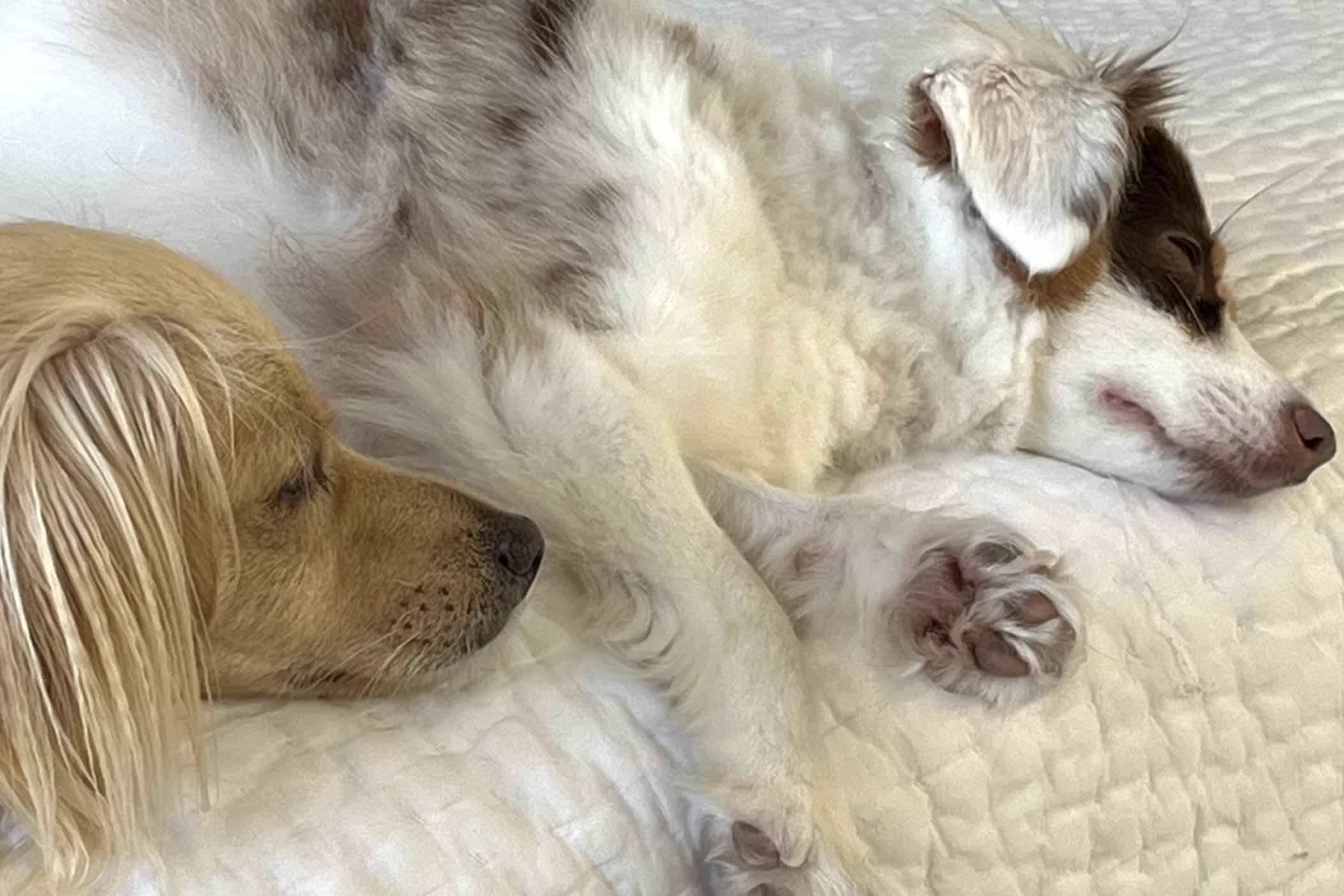
Finally settled — deep sleep returns once the space begins to feel familiar.
Understanding that changed how I approached travel later.
When I began to see familiar signs of stress in new environments, I no longer assumed something was wrong. I recognized a temporary disruption of familiarity — not a permanent flaw.
What Helped Our Dogs Adjust While Traveling
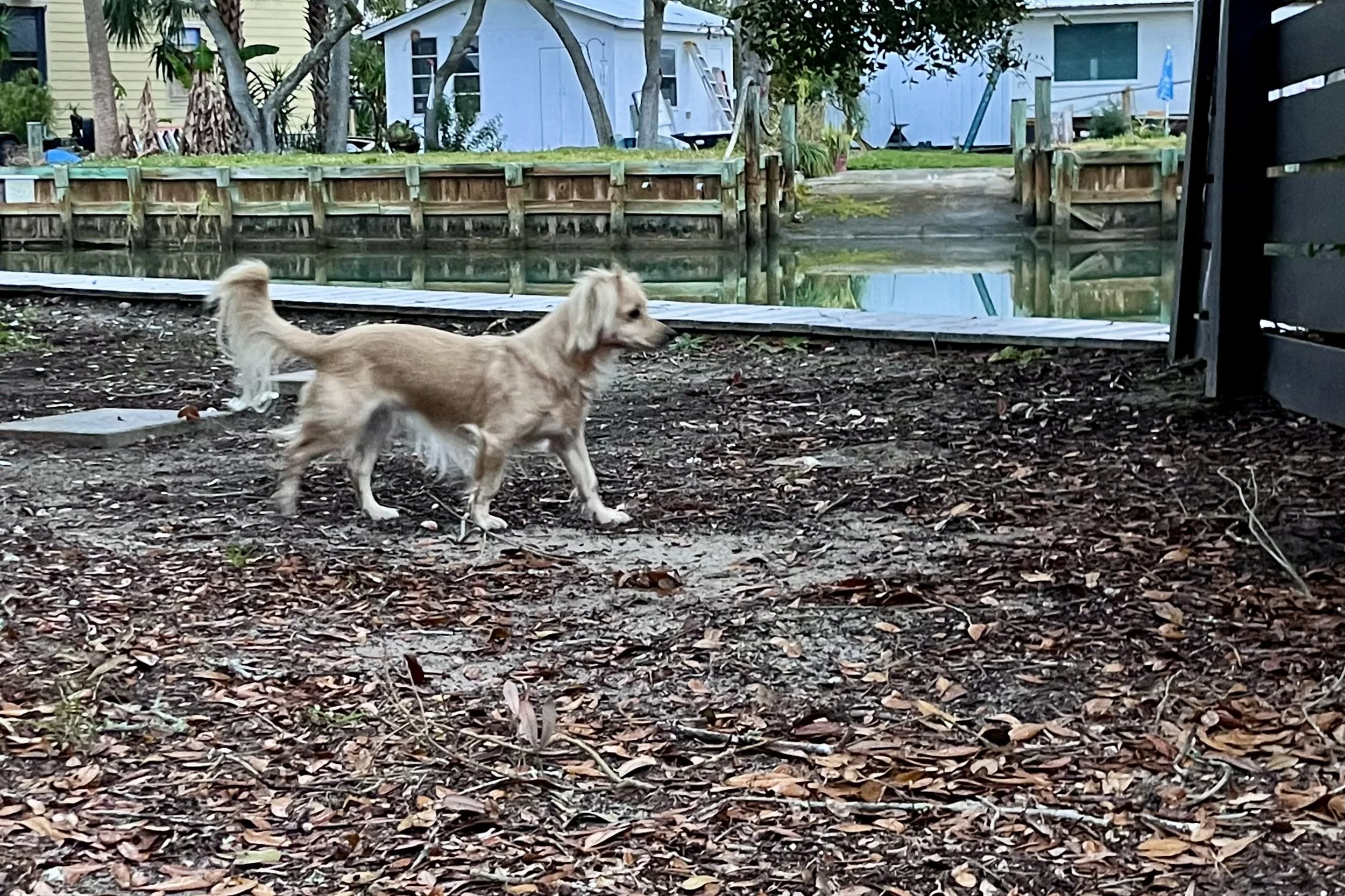
A quiet fenced yard — space to decompress without hallway noise or pressure.
For us, the single biggest shift came from giving them decompression space.
Backyard access changed everything. Choosing the right type of dog-friendly accommodation can make a significant difference.
When we travel now, I also try to bring a few familiar items from home to make the space feel predictable — something I outline in my Dog Travel Packing Guide.
When we stay somewhere with a fenced yard, they can wander and sniff at their own pace. No hallway noise. No shared patch of grass near a parking lot. No pressure to “perform” a walk. Just quiet, repetitive movement that becomes familiar.
The second shift was learning not to overdo it.
Early on, I made the mistake of going out for the entire day and assuming they would simply rest when we returned. They were overstimulated, and the room never had a chance to become neutral.
Now we build in long rest windows. I approach most of our trips this way now. Fewer outings. More repetition. The space itself gets time to feel predictable.
That has mattered more than anything else.
How to Help Your Dog Settle in a Hotel
Helpful things to try include:
• Bring familiar bedding from home
• Keep lighting soft in the evening
• Avoid overstimulating the first evening
• Use calm repetition (same potty spot)
• Allow decompression sniffing time
• Maintain normal feeding routines
When Travel Stress May Be More Than Adjustment
Situational anxiety should soften as familiarity increases.
If you notice any of the following during travel, it’s worth contacting your veterinarian:
Refusal to eat for more than 24 hours
Continuous panic behaviors
Aggression or self-injury
Vomiting, shaking, or signs of medical distress
But most first-night pacing, scanning, and hesitation is adjustment.
Travel Stress Is Often Temporary
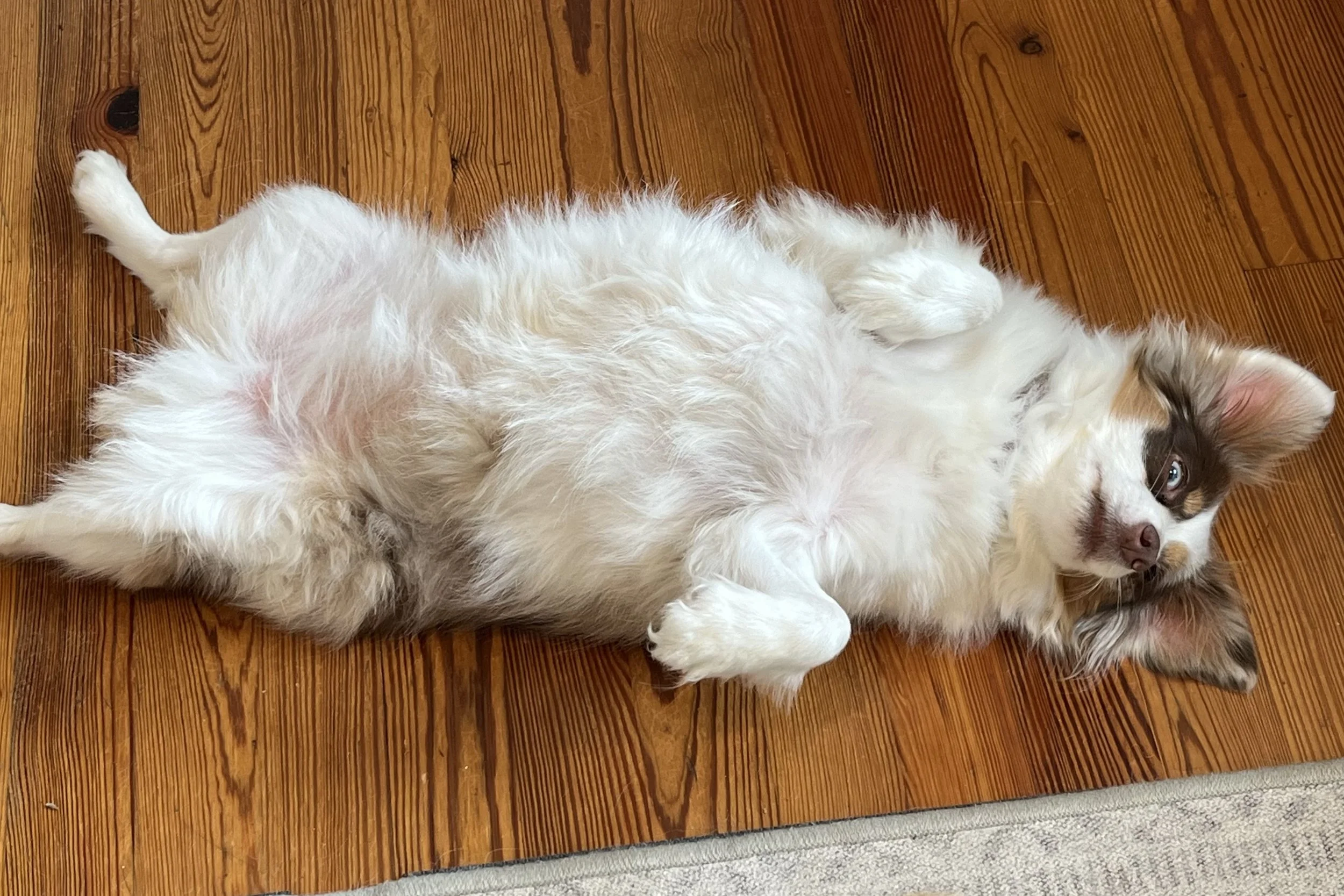
Eventually, the body relaxes.
New environments don’t create anxiety out of nowhere.
They disrupt familiarity.
For some dogs — especially small or sensitive ones — that disruption shows up immediately. Pacing. Hesitation. Alert sleep. Potty refusal.
It can look dramatic.
But it doesn’t mean something is wrong with your dog.
It means their stress response has been activated — and that response settles with predictability, repetition, and time.
The first night in a new place can feel long — especially when you’re tired and your dog won’t settle. Adjustment isn’t instant.
Lower the stimulation. Dim the lights. Add familiar sound. Use steady, reassuring touch if your dog responds to it. Regulate your own energy first.
Then give their nervous system time to catch up.
