Is Old Town St. Augustine Good for Small Dogs?
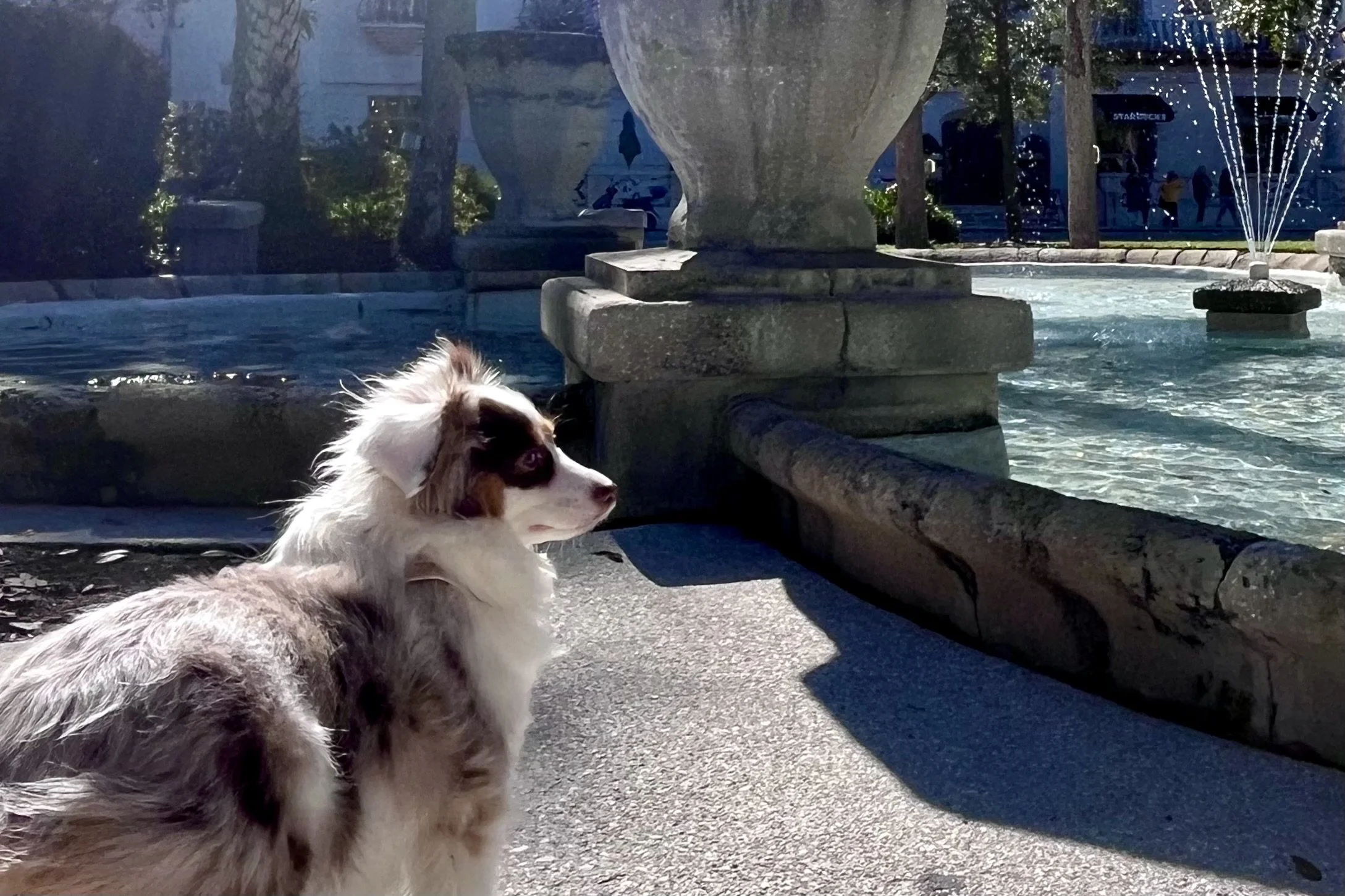
The historic fountains are beautiful — and surprisingly stimulating for curious dogs.
What It Actually Felt Like
St. Augustine includes beaches, residential neighborhoods, and expansive park spaces that give dogs room to move. I explore the broader layout in my complete guide to St. Augustine with dogs.
Areas like Butler Beach, the shoreline near St. Augustine Beach, Fort Matanzas National Monument, and Guana Tolomato Matanzas National Estuarine Research Reserve provide room to move, decompress, and walk without constant proximity.
Even near the St. Augustine Lighthouse, there’s a spacious park across from the grounds that offers breathing room before or after visiting the attraction itself.
Old Town is different.
It’s compact. Historic. Walkable. And at times, dense.
This review is part of my Small Dog Comfort Index series, where I evaluate destinations based not just on whether dogs are “allowed,” but on how the environment actually feels for small or sensitive dogs navigating it.
We visited Old Town the day after we arrived, taking our first day to settle in and let the dogs get comfortable in our new space. The next morning, we drove down and parked near Castillo de San Marcos, the historic waterfront fort, spending about an hour walking the grassy grounds before crossing into the streets of Old Town St. Augustine.
In total, we spent about two hours exploring.
And for us, that was enough.
I’m glad we saw it. It’s beautiful. Visually layered. Deeply historical.
Old Town’s architecture is part of what makes it so visually rich. Spanish colonial buildings sit beside Gilded Age landmarks built during Henry Flagler’s era — most notably the Lightner Museum and the former Hotel Ponce de León, now Flagler College. The scale, arches, courtyards, and ornate details create a dramatic backdrop that feels immersive without being loud.
For humans, it’s mesmerizing.
For small dogs, it can also be visually stimulating in ways that aren’t always obvious at first.
It had been on my must-see list, and I’m genuinely happy we went.
But it wasn’t the kind of place that invited us to linger.
If you’re wondering whether Old Town St. Augustine truly works for small dogs, the answer depends less on policy and more on environment.
Is Old Town St. Augustine good for small dogs?
Yes — but it’s best experienced briefly and intentionally. While dog-friendly in terms of access, the historic district’s narrow streets and steady foot traffic can feel tight for small or sensitive dogs.
Visiting Old Town St. Augustine With Small Dogs: What It Felt Like
The weather in late January was ideal — dry and comfortable. No humidity. No mosquitoes. The climate wasn’t the challenge. I shared more about what winter travel felt like overall in my winter trip review.
Timing Matters More Than Weather
January weather was lovely.
But timing in St. Augustine isn’t just about temperature — it’s about crowd cycles.
Late November through early January is peak season because of the annual Nights of Lights celebration. The historic district glows with white lights, and visitors increase significantly during that period.
Summer brings a different kind of density — heat, humidity, and heavy tourism layered together.
If you’re traveling to Old Town St. Augustine with small or sensitive dogs, aim for:
Late January through early March
Weekday mornings
Arrival before 10am
Old Town doesn’t change.
The volume around it does.
What stood out more was how close everything feels in the historic district.
Near the waterfront fort and along the main pedestrian corridors, the streets narrow quickly. Some sections are car-free, which makes them charming and easy to wander — but it also concentrates foot traffic into tighter spaces.
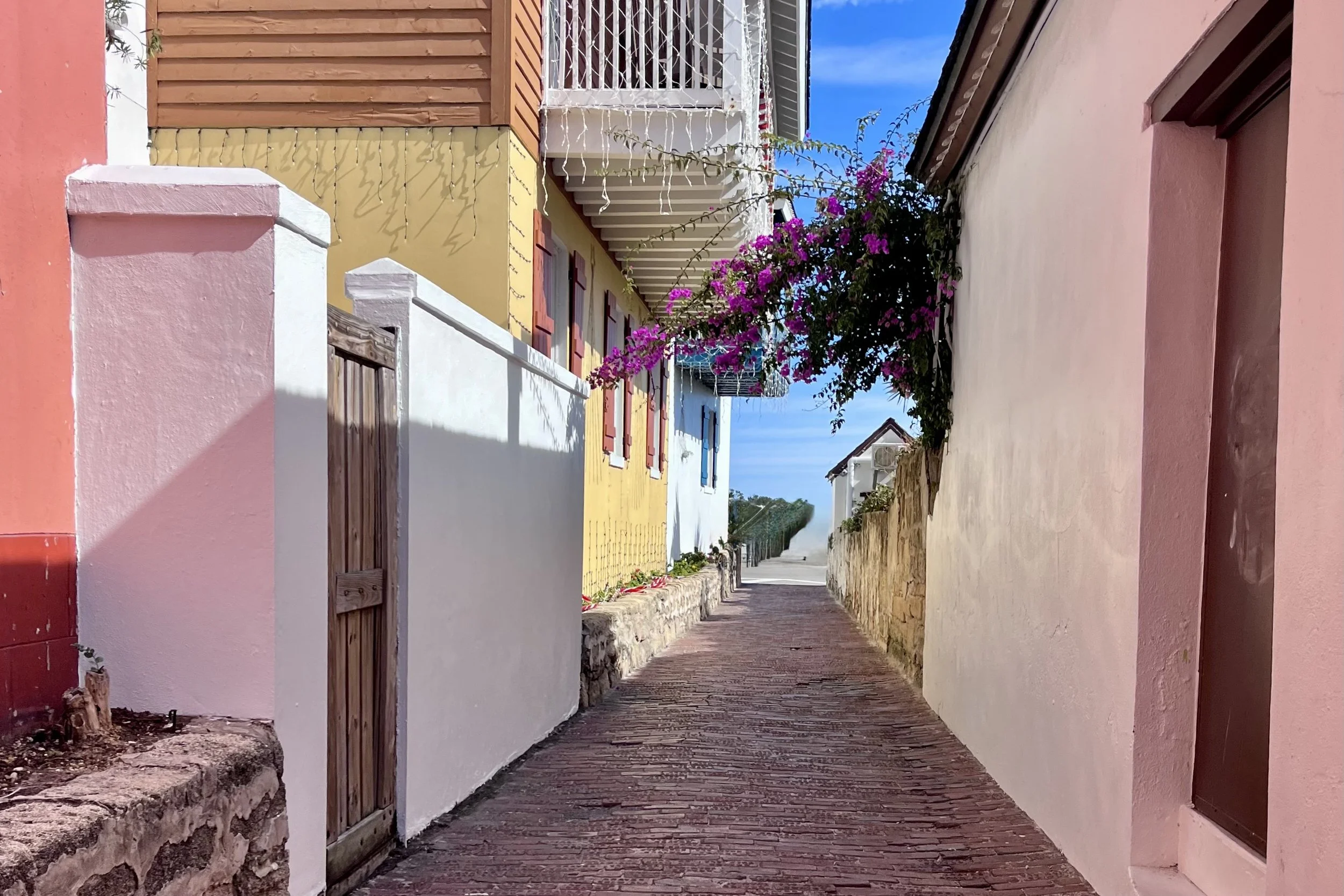
Narrow brick sidewalks and steady foot traffic define Old Town.
Even when we chose a dog-friendly patio for lunch, tables sat directly along the sidewalk. People passed within inches. And people often want to stop and pet my dogs.
That works beautifully for highly social, adaptable dogs.
It requires more management for mine.
My dogs are sensitive, and in tight pedestrian spaces, especially with repeated interaction, reactivity can build quickly — particularly for Saydie. And once she escalates, Archie often follows. Traveling calmly with small dogs often comes down to how well we manage moments like this.
Midday, certain blocks felt steady and visually full. Not chaotic. Just compressed.
Old Town St. Augustine isn’t unfriendly to dogs.
But it offers very little privacy.
And for small, sensitive dogs, that distinction matters.
The historic fountains scattered through Old Town were beautiful — intricate and layered — and visually engaging. They also fascinated my dogs. More than once, they leaned forward as if ready to step directly into the water, just as they had earlier in the week while swimming at Guana Tolomato Matanzas National Estuarine Research Reserve.
It was a reminder that visually stimulating environments don’t just affect people — they pull at dogs’ curiosity too.
That kind of steady environmental stimulation — even when it isn’t chaotic — can be part of why some dogs seem unusually tired after travel days.
The Reset Point: Plaza de la Constitución
There is one place that felt like a reset button — Plaza de la Constitución.
Right in the middle of Old Town St. Augustine, it offers actual open space. Benches. Trees. Room to pause.
After weaving through narrower streets, the Plaza gave us somewhere to regulate inside the density — a place to sit for a few minutes and let the dogs settle before deciding where to go next.
If I were planning it again, I’d treat the Plaza as a built-in rest stop. It may even be a better place to sit with something simple for lunch rather than staying directly on a tight sidewalk patio.
It doesn’t remove the density.
But it softens it.
A Bright Spot: Faux Paws
One of our favorite small moments was stopping into Faux Paws, a local pet boutique tucked along one of the narrow streets.
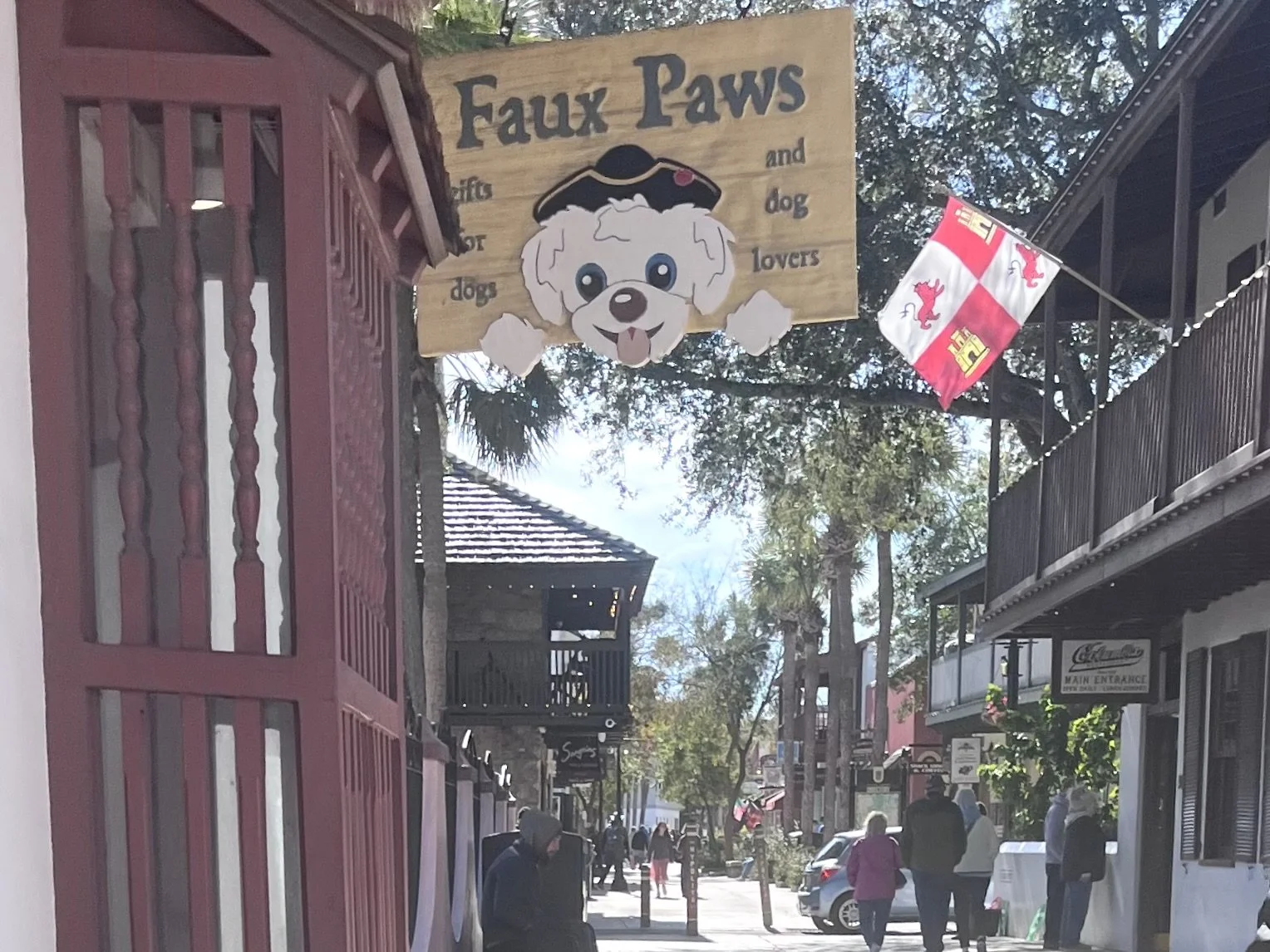
A genuinely welcoming stop inside the historic district.
The woman behind the counter immediately offered treats and asked about the dogs.
It felt genuinely welcoming — not just “dogs allowed,” but dogs expected.
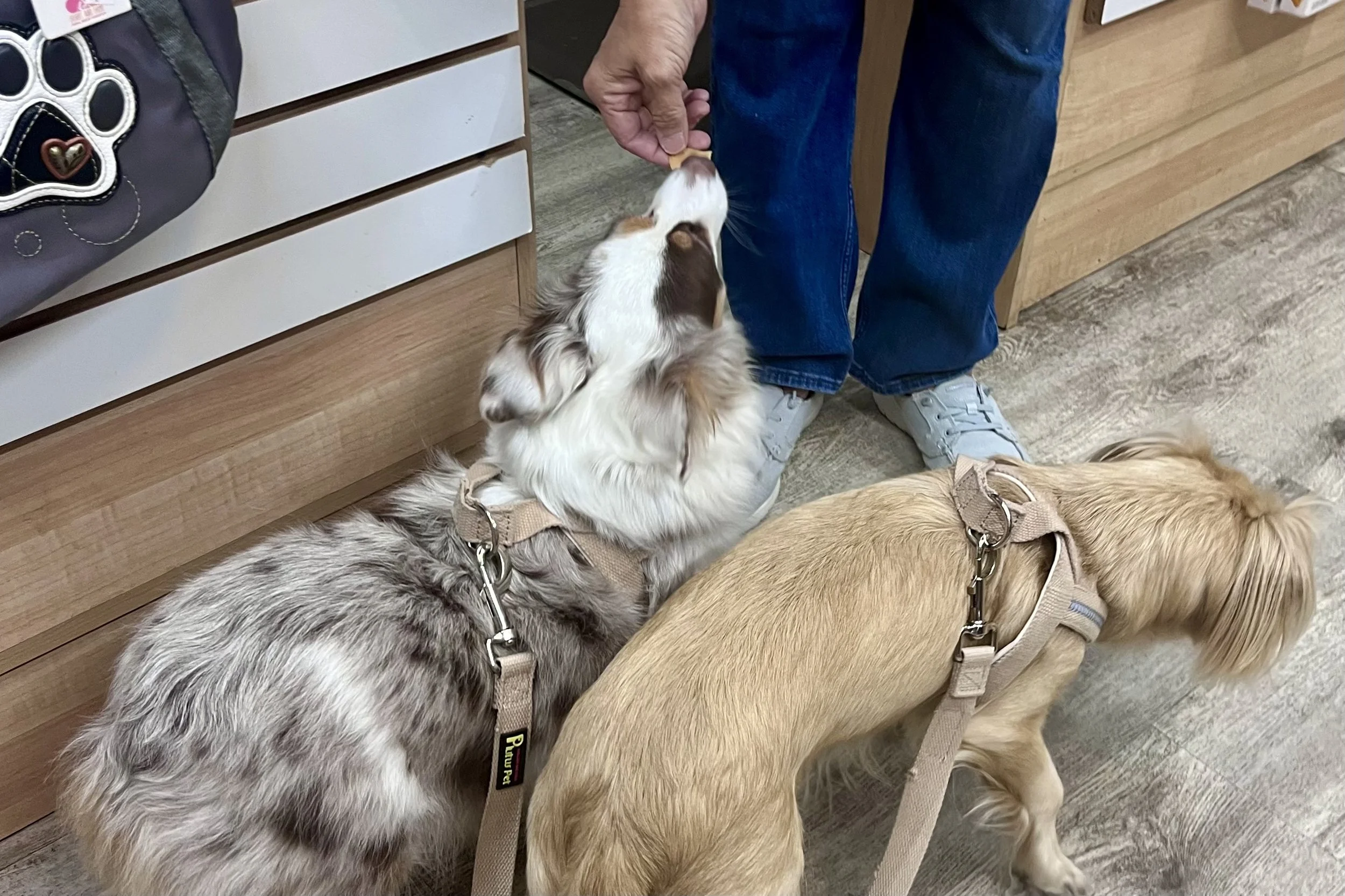
Not just “dog-friendly” — dogs expected.
That kind of interaction changes the tone of a place. Even in tighter pedestrian areas, there were pockets of warmth.
Old Town has that charm woven into it.
The Fort: Windy, Grassy Fields and Room to Move
The area around the waterfront fort felt entirely different.
Wide open green space. Ocean breeze. Room to move without constant proximity.
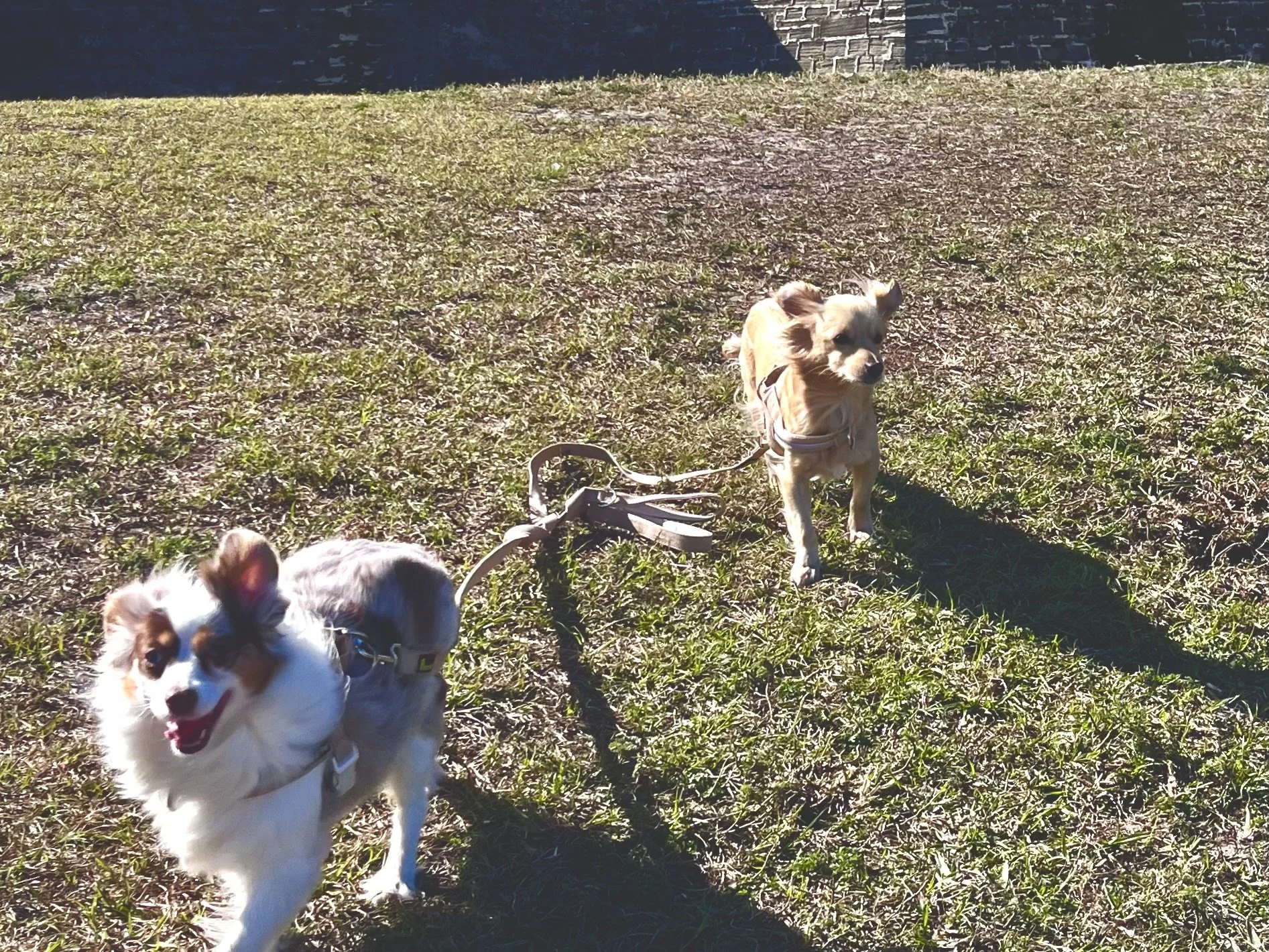
The fort grounds offered space to reset after the density of town.
The dogs could stretch out, sniff the grass, and reset before we headed back into tighter streets.
If your small dog needs visible space between experiences, starting at the fort — and ending there again — works well.
If you’re looking for a slower, step-by-step outline of how we structured our afternoon walking Old Town St. Augustine with dogs, I shared that here.
What We Didn’t Do (But Noticed)
We noticed the Ripley’s Red Train Tour moving through town, and it is dog-friendly for leashed dogs.
We didn’t try it — my dogs wouldn’t have enjoyed that level of movement and stimulation — but for confident dogs comfortable around people, it could be a thoughtful way to see Old Town St. Augustine without constant sidewalk compression.
Parking in the historic district can be challenging, and it isn’t particularly car-friendly once you’re in it. The train allows you to understand the layout, hear historical context, and reduce repetitive navigation stress.
If your dog settles easily in busy environments, that could be a comfortable alternative.
Outside Historic Old Town
Old Town is not the entirety of St. Augustine.
We didn’t return to Historic Old Town after that first afternoon. The only time we went back to that area was another day to visit Ponce de Leon's Fountain of Youth Archaeological Park just north of it.
Outside the historic core, the experience shifted.
Residential areas like Butler Beach and the surrounding St. Augustine Beach neighborhoods offered far more breathing room. Fort Matanzas National Monument provided a blend of history and open coastal space. Guana Tolomato Matanzas National Estuarine Research Reserve offered long, low-stimulation shoreline walks that allowed the dogs to decompress fully.
As a whole, St. Augustine provides options.
Old Town just requires intention.
For travelers building a calm, small-dog-focused St. Augustine itinerary, pairing one structured Old Town visit with open coastal days creates the most balanced experience.
So — Is Old Town St. Augustine Good for Small Dogs?
Yes — with limits.
Old Town St. Augustine is worth seeing. It’s beautiful. It’s historically rich. And it absolutely welcomes dogs.
Access isn’t the issue. Environmental compression is.
But for small or sensitive dogs, it may be best experienced briefly — with built-in pauses, early timing, and realistic expectations about proximity.
Old Town St. Augustine scores moderately for small, sensitive dogs unless carefully timed and intentionally structured.
If you’re deciding between Old Town and St. Augustine Beach for a small-dog-focused trip, the beach and park areas offer significantly higher regulation potential.
For us, one afternoon was right.
We saw it.
We appreciated it.
And then we moved toward the parts of town that offered more space.
That felt like the right balance.
Small Dog Comfort Index: Old Town St. Augustine
Overall Score: 6.5 / 10
(Midday Visit, Late January, Post-Holiday)
Beautiful. Worth seeing. Best in small doses for sensitive dogs.
1️⃣ Space to Decompress
6/10
Plaza de la Constitución and the fort grounds help. Core pedestrian streets feel tight.
2️⃣ Crowd Density
5/10 (Midday)
Steady foot traffic near the fort and main corridors. Time of year makes a significant difference.
3️⃣ Noise Level
7/10
Manageable in winter. No heavy traffic noise, but constant movement.
4️⃣ Patio Exposure
5/10
Dog-friendly patios exist, but tables sit directly on narrow sidewalks.
5️⃣ Walking Flow
6/10
Car-free streets help. Density compresses flow.
6️⃣ Environmental Stimulation
5/10
Shops, smells, fountains, people, movement — visually rich.
7️⃣ Recovery Options Nearby
8/10
The fort grounds provide a strong reset zone.
