Why Theodore Roosevelt Island Is Perfect for a Winter Dog Walk

Saydie pausing along the boardwalk trails on Theodore Roosevelt Island.
If you’re looking for a quiet place to walk your dog in Washington, DC, Theodore Roosevelt Island offers wide wooded trails, river views, and a calmer pace than most city parks.
What made Theodore Roosevelt Island appealing right away was how easy it was to arrive without much planning. Parking was simple, and the footbridge onto the island begins right at the lot, so there was no searching around to get started.
If you're exploring other quieter places nearby, I’ve also outlined several calmer routes in Scenic, Easy Dog Walks in Old Town Alexandria.
Walking Theodore Roosevelt Island With Dogs
Quick Guide: Walking Dogs on Theodore Roosevelt Island
• Dogs allowed: Yes (leashed)
• Trail type: Flat gravel and wooded paths
• Length: About 2 miles of looping trails
• Parking: Free parking lot near the footbridge
• Best time: Early morning or winter months for fewer crowds
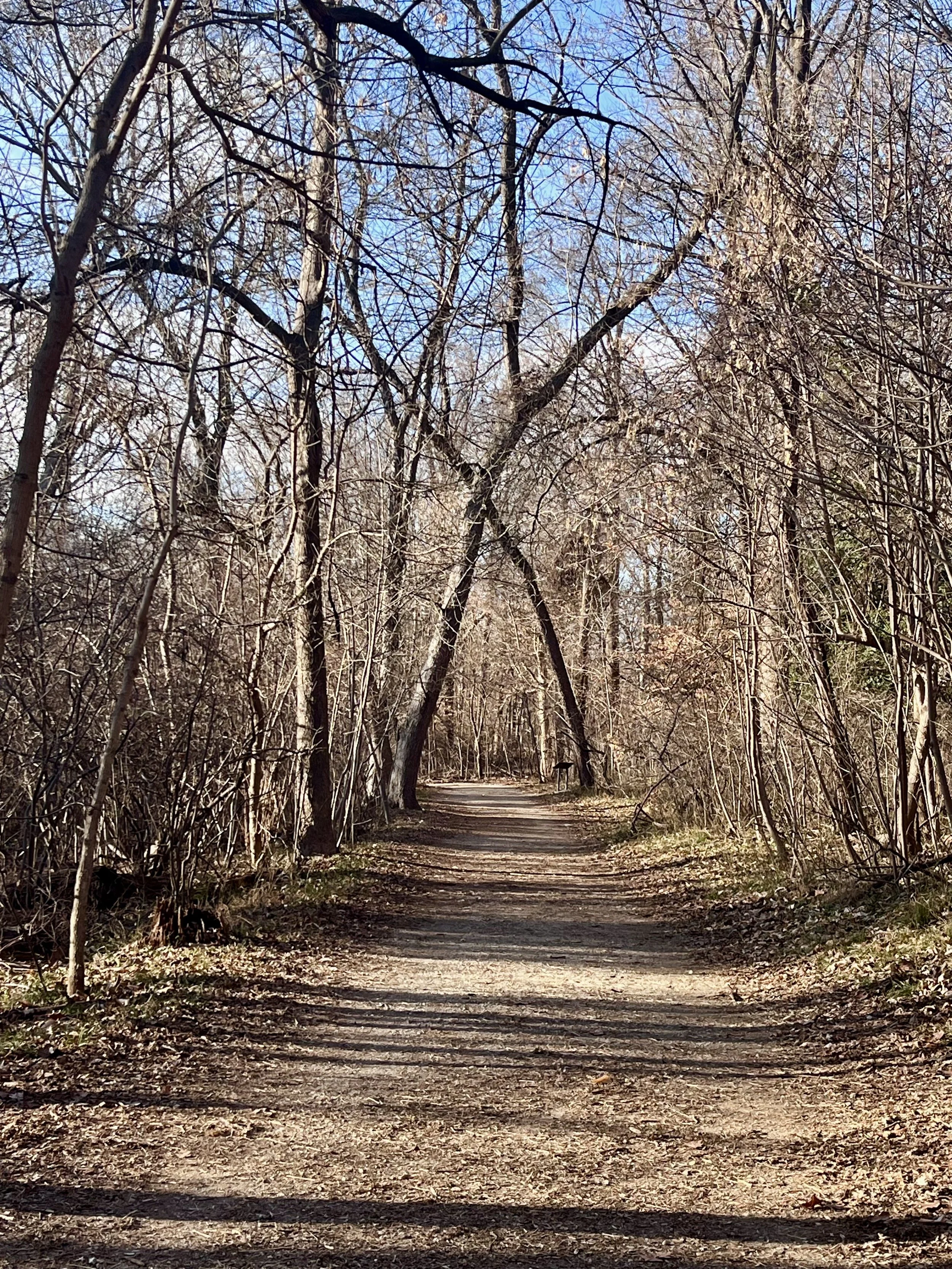
A quiet stretch of trail on Theodore Roosevelt Island.
Just after crossing the bridge, there’s a trail map posted at the entrance, which makes it easy to get oriented if you want to.
Honestly, though, even without making a plan, the paths loop around the island in a way that makes it hard to get lost and easy to settle into whatever kind of walk works for you on that day.

Near the footbridge leading onto Theodore Roosevelt Island.
What the Trails Feel Like
Once we crossed the footbridge onto Theodore Roosevelt Island, the shift was immediate. The sound of traffic faded, replaced by birds and the movement of the river.
Even with the city close by, the island felt quiet and wooded, with the trail drawing us forward. Both Saydie and Archie slowed their pace and became noticeably interested in all the new smells along the path.
Winter walks tend to work better for our dogs, with fewer crowds and a calmer pace overall. We saw the same thing in Cape Charles, where visiting after Labor Day aligned with the season when dogs are allowed on the beach and the town feels noticeably quieter.

Archie pausing along the wooded trail.
As we continued on, the way the trails are laid out gives you options without requiring decisions. The main paths are wide and flat, gravel underfoot but easy to walk, and they carry you comfortably through the center of the island.
If you take the smaller paths closer to the water, the experience changes. They narrow, become a little less predictable, and move more slowly, with fallen trees and uneven spots along the way. We moved between both, choosing what felt right in the moment, and it was easy to adjust as we went.

Exploring the island trails together, with the footbridge just visible through the trees.
Those narrower paths follow the edge of the island, staying close to the water and eventually looping around as well. We followed them down to the river’s edge, where Saydie and Archie were immediately interested, stepping carefully onto the shoreline and into the shallows, taking their time exploring and getting their feet wet.
It felt a little more intimate down there — quieter, slower, and shaped by the river itself. Even as we stood there, wrapped in trees and birdsong, you could still see Arlington.
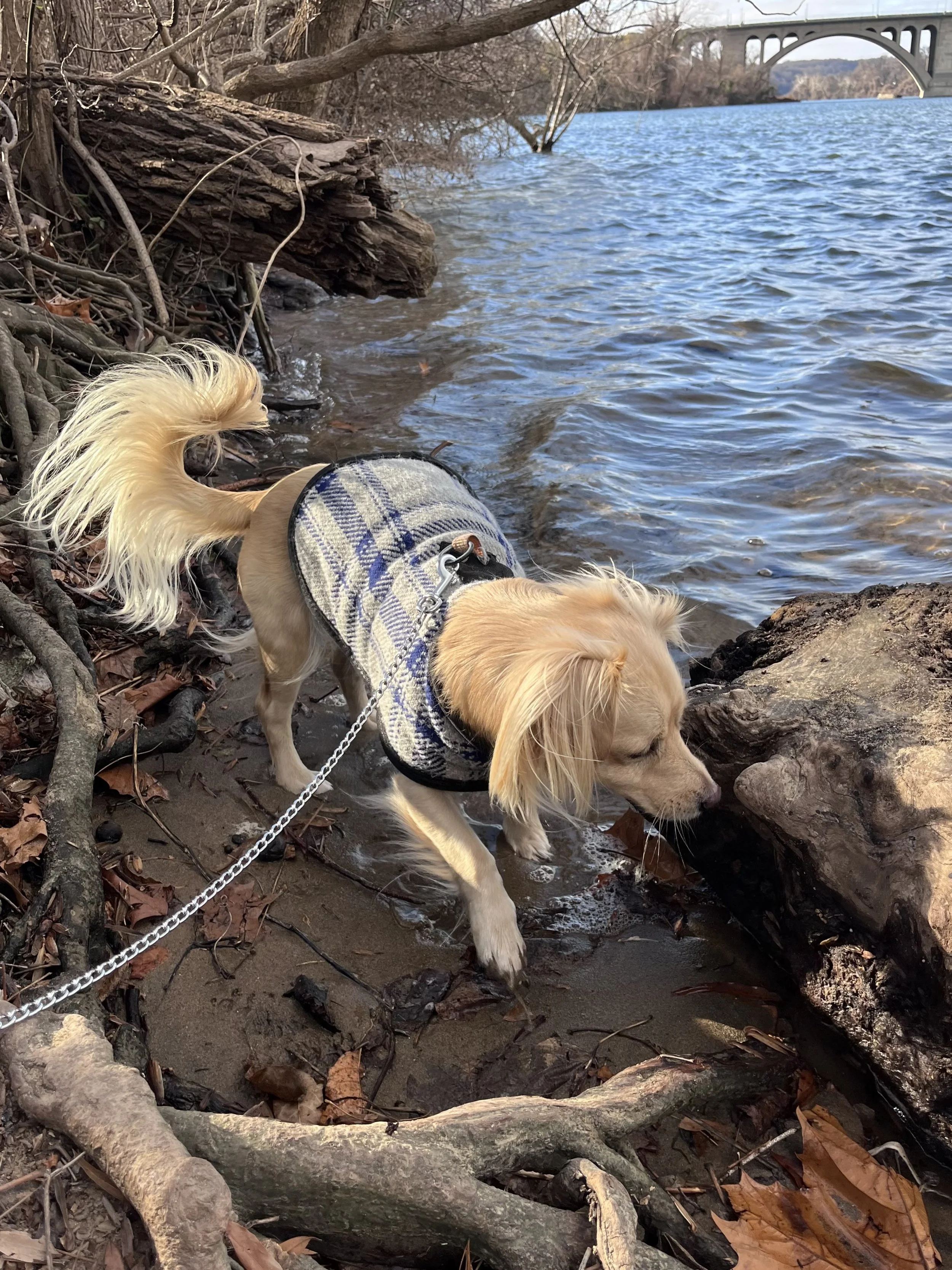
Archie exploring the river’s edge on Theodore Roosevelt Island.
As we continued along the paths, the island’s history revealed itself in small, unassuming ways. Interpretive markers appear along the trails, offering glimpses into the many lives and uses that have shaped the island over time — from its earliest Indigenous presence to Union soldiers, the first Black soldiers and freed people, and later periods tied to the Mason family and more formal gatherings.
The history here is something you encounter as you walk, layered into the landscape rather than set apart from it, adding depth without pulling you out of the experience.

Archie pausing along the gravel trail.
The Memorial and Central Clearing
As the paths come back toward the center of the island, you reach the memorial area. The stone features and the statue are set among the trees rather than standing apart from them.
There are benches and open spots where people naturally stop for a bit — to sit, look around, or take a break before continuing on. It felt like part of the walk rather than a separate stop, easy to spend time there without feeling rushed.

Taking in the river along the island’s edge.
By the time we looped back toward the outer trails, it was clear this was a place I’d want to return to. It works just as well for a longer visit — wandering for a few hours, stopping to sit or picnic — as it does for a shorter, refreshing walk when you don’t have much time.
Walking there also made me curious about how the island would change with the seasons: fall color along the paths, summer greenery closing in, or snow softening everything in winter.
Visiting during the colder months had its own reward, with clearer views across the river toward Arlington and the DC skyline, reminding you where you are even while the island feels removed.

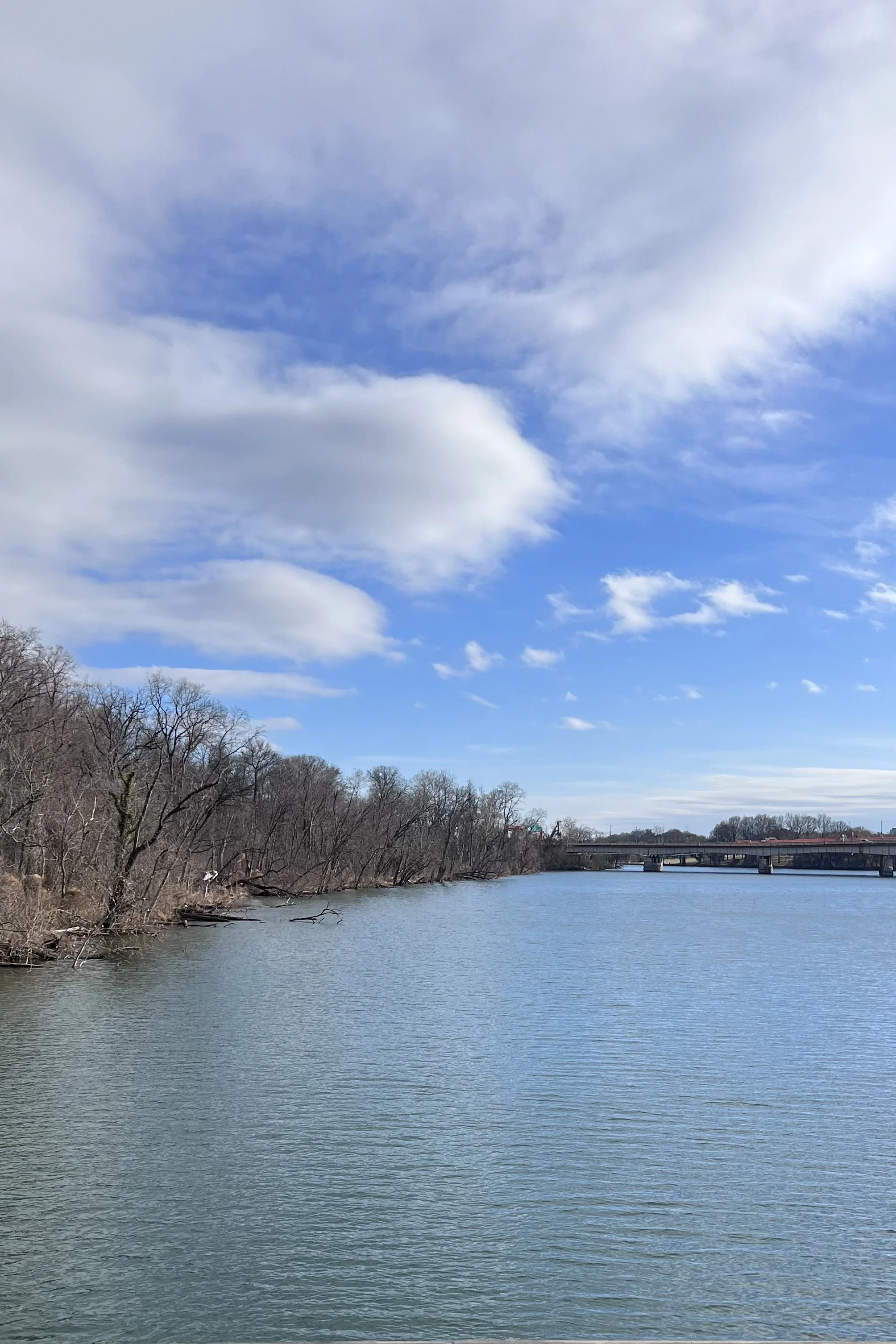

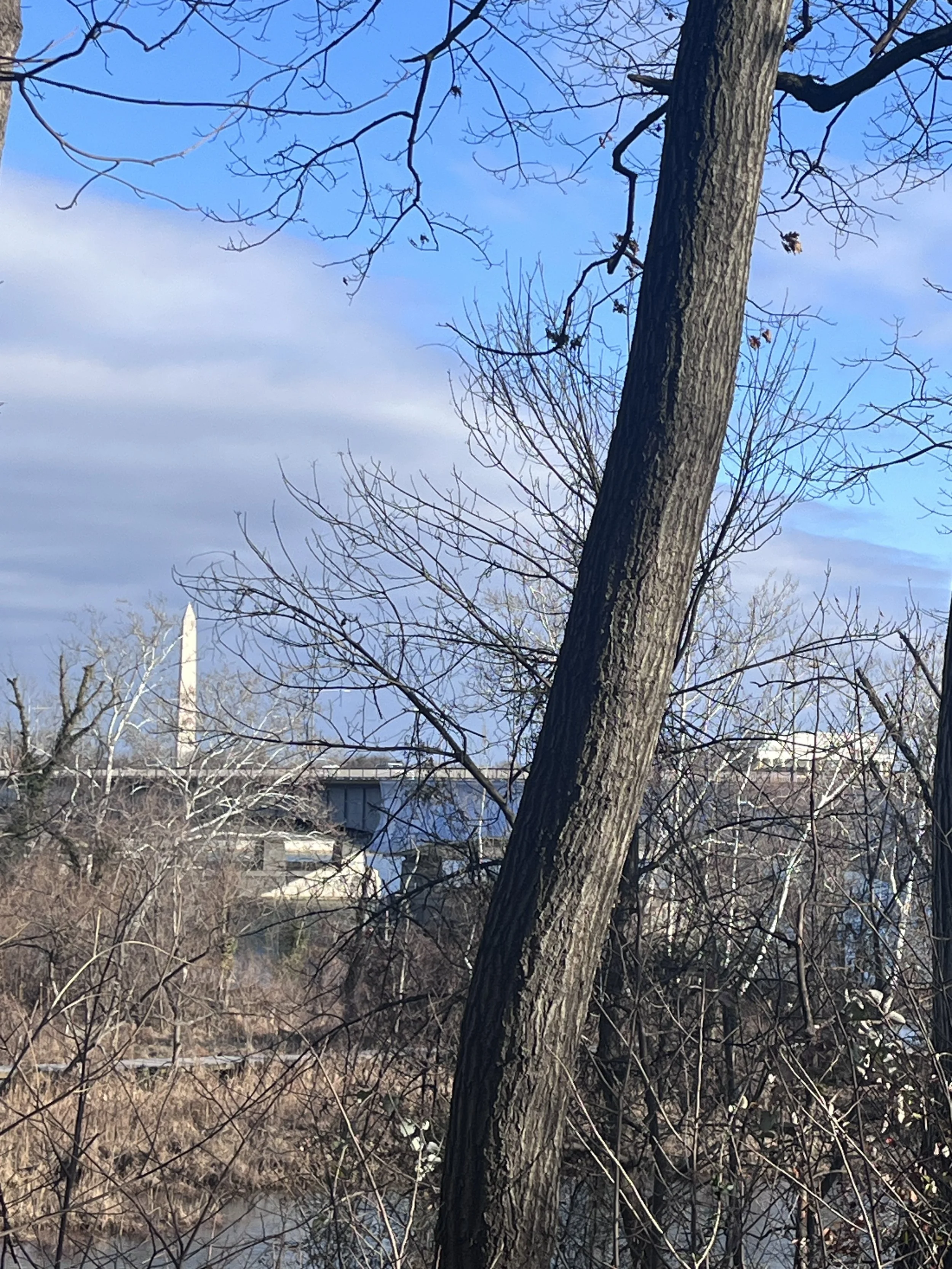
Glimpses of the city through the trees on Theodore Roosevelt Island.
If you’re looking for another quiet stretch to walk with dogs, Along the River at Jones Point Park is a little closer and offers a similar sense of space along the Potomac.
Places like Theodore Roosevelt Island feel especially valuable because they’re easy to return to. There’s no pressure to see or do everything, no sense that you need to plan the visit around a single moment.
You can wander, pause, turn back early, or stay longer than expected. It’s close enough to feel familiar, but distinct enough to feel like a reset — the kind of place that fits naturally into everyday life rather than standing apart from it.
For small dogs, Theodore Roosevelt Island works especially well because the trails are wide, quiet, and separated from traffic. The slower pace allows dogs to explore without the constant stimulation of sidewalks or crowds.
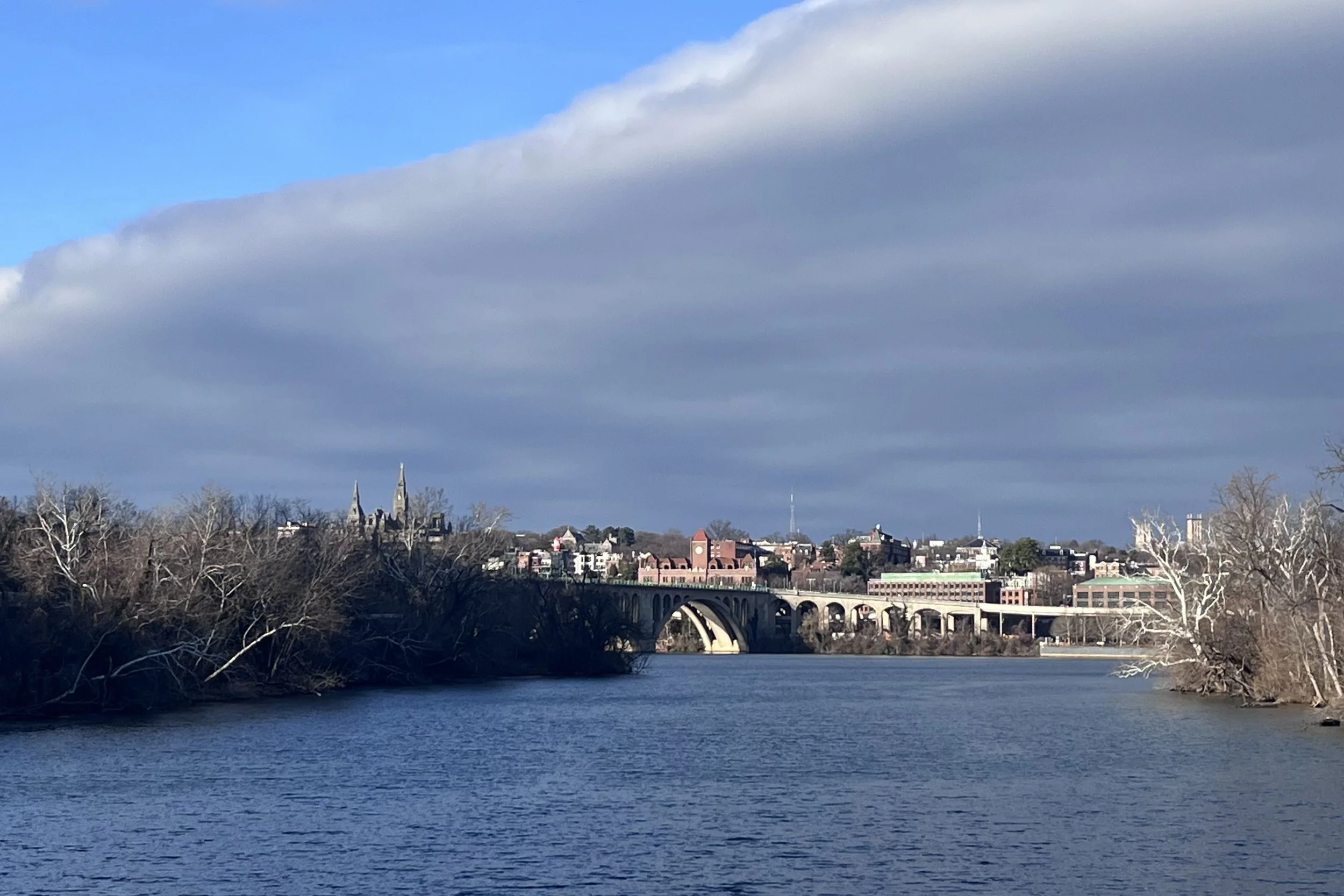
Looking across the river toward Georgetown.
