Why Does My Dog Pant in the Car? Anxiety, Excitement & Motion Sickness
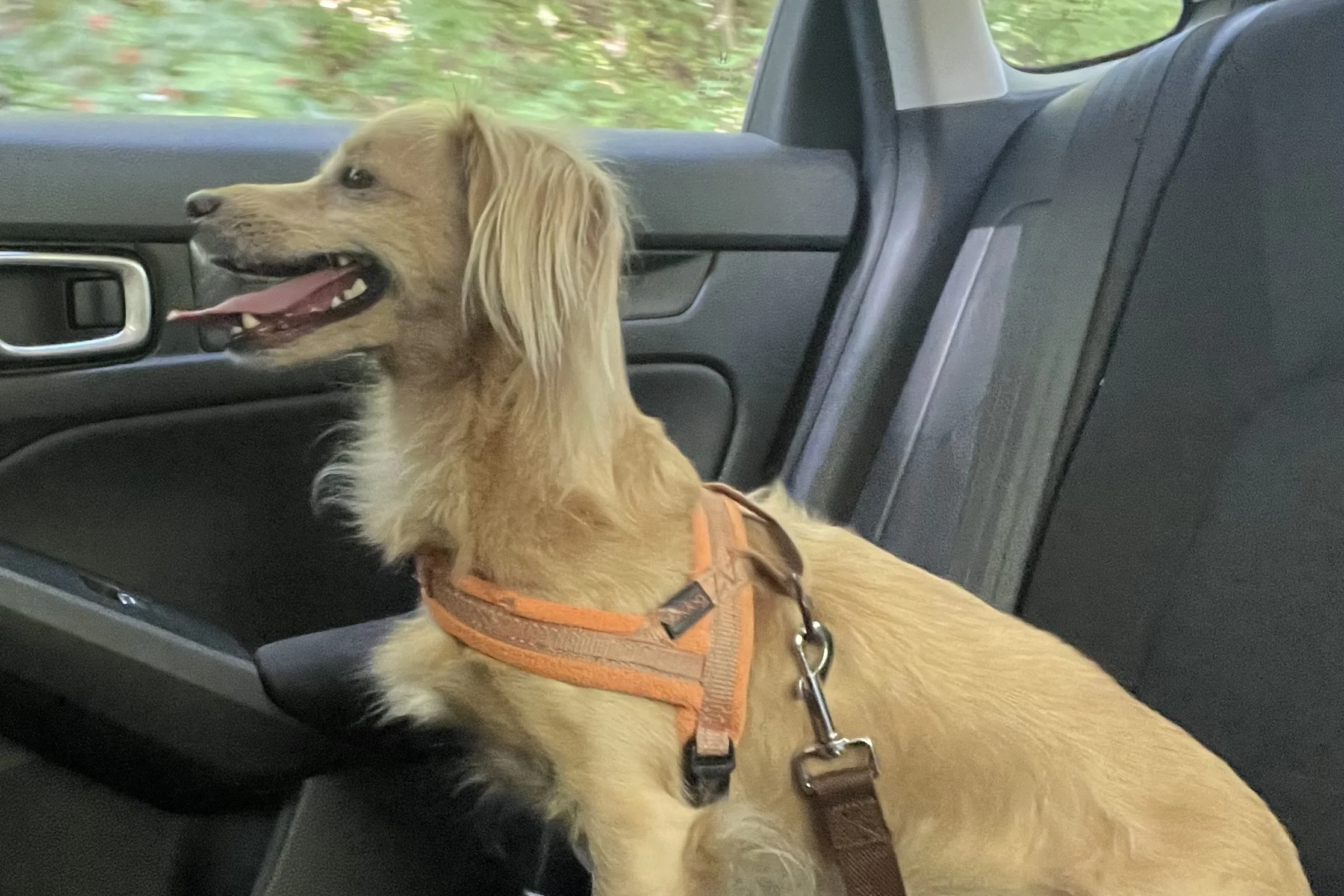
Archie often pants while sitting up and watching what's happening around him during car rides.
When your dog starts panting in the car even though they aren't hot, it isn't always easy to tell what's going on. Panting can be related to anxiety, excitement, overstimulation, or even motion sickness — and sometimes those can look surprisingly similar.
I've seen just how different those experiences can be with my own dogs. Saydie settles into the car almost immediately, curling up and usually falling asleep. Archie rarely does. Once the car starts moving, he's more likely to be up looking out the side window or peering between the front seats, often panting and watching everything around him.
Watching Archie has made me realize that the panting itself only tells me so much. What gives me a better sense of how he's feeling is everything happening along with it — whether he can settle, what he's watching, what the rest of his body is doing, and when the panting starts.
Why Is My Dog Panting in the Car When It's Not Hot?
Once I've ruled out heat, I start looking at what else might be behind the panting. Sometimes the answer is fairly clear, but other times there may be more than one thing going on.
I've learned not to read too much into panting on its own. Instead, I take it as a sign to look a little closer at what else my dog is doing. A dog who's standing and watching everything out the windows gives me a different picture than one who's panting after running around. Drooling or repeated lip licking might make me wonder about nausea, while panting that begins before the car even moves could point more toward anticipation or anxiety.
Even the timing can be helpful. I pay attention to whether the panting starts as soon as we get into the car, once we begin moving, or later in the ride. None of those things gives me a definite answer on its own, but together they give me a much better idea of what might be going on.
When Panting in the Car Is Related to Anxiety
For some dogs, simply being in the car can be stressful. It's a change from their normal environment, and once the car starts moving, they're surrounded by unfamiliar sounds, sights and movement. They may also have trouble finding a comfortable, stable position as the car turns, accelerates and stops.
Previous experiences with motion sickness can also create negative associations with the car. If getting in the car always ends with a trip to the veterinarian, for example, the car itself may start to take on some of that anxiety. Previous experiences with motion sickness can create negative associations with the car, too.
Eventually, those associations can start before the car is even moving. A dog may become uneasy as soon as they get in because they've learned what tends to happen next.
Panting Doesn't Tell the Whole Story
Panting can be surprisingly easy to misread because the same behavior can show up in very different situations. Archie is a great example. He may pant when he's uneasy about getting into the car, but he also pants when he spots a squirrel and gets excited watching it, or when he hears me pick up the leashes and realizes it's time for a walk.
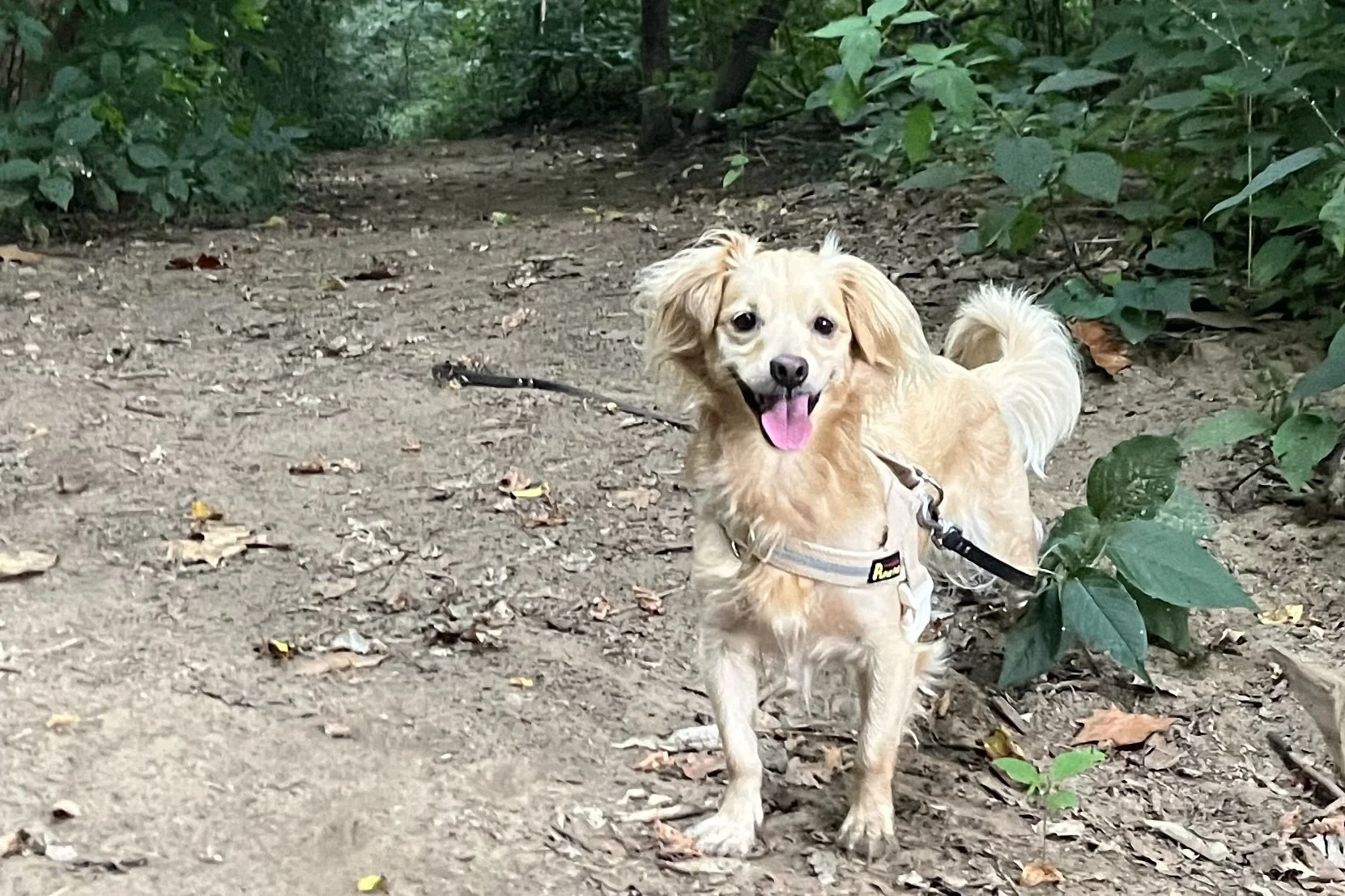
Panting can happen in very different situations, which is why I look at the whole picture.
That's why the panting alone doesn't tell me very much. What happens around it often tells me much more.
I've seen this with Archie at the dog park. He'll walk in calmly and immediately become interested in sniffing and exploring the new surroundings, usually making his way around the edges of the park. But when another dog approaches and tries to interact with him, he starts panting and licking his lips. Rather than greeting the dog, he'll quietly curve around them and continue on his way.
Once the other dog has passed, Archie goes right back to sniffing and exploring. He seems perfectly happy being there; he just isn't particularly interested in interacting with the other dogs. The panting could look like excitement on its own, but the lip licking and the way he avoids the interaction give me more context.
I use the same approach when he's panting in the car. I pay attention to whether he's able to settle or keeps changing positions, whether he's casually looking around or intensely scanning, and whether I notice other behaviors such as lip licking or drooling. Those details can help me decide whether I'm seeing excitement or overstimulation, anxiety, or possible motion sickness.
Could Panting in the Car Be Motion Sickness?
Vomiting is one of the more obvious signs of motion sickness, but it isn't the only one. Dogs can also show less obvious signs of nausea, including excessive drooling, lip licking, restlessness, whining and panting.
That's something I pay particular attention to with Archie because he has gotten carsick before. If he's panting and I also start noticing repeated lip licking or drooling, I'm more likely to wonder whether he's feeling nauseated rather than looking at the panting as anxiety alone. And because he has gotten sick in the car a few times, having a waterproof car seat cover as part of our backseat setup has definitely come in handy.
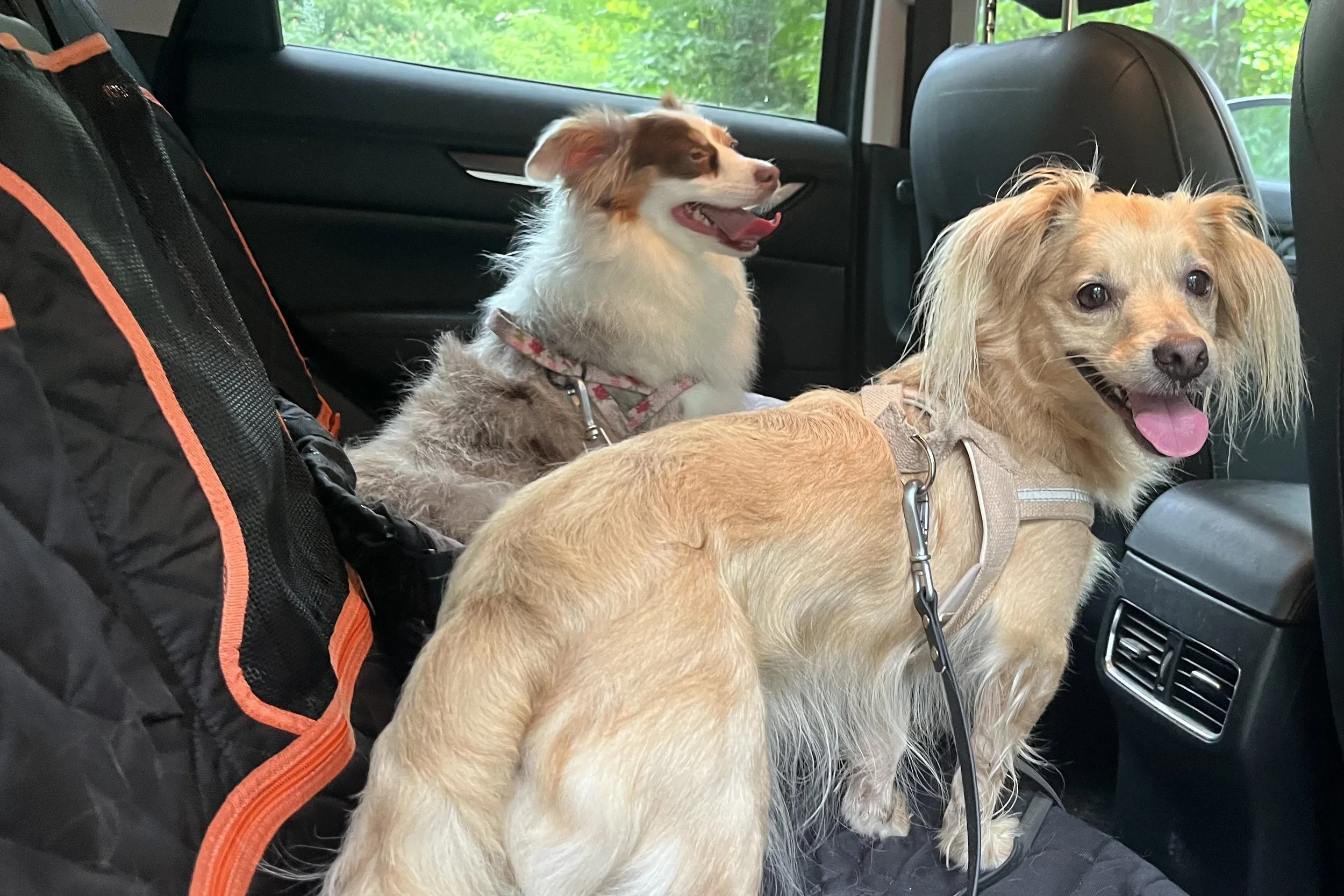
The panting itself only tells me so much — I look at what else each dog is doing.
It gets a little more complicated because the two can overlap. A dog who repeatedly feels sick during car rides can begin to associate the car with that uncomfortable feeling. Eventually, the car itself may make them uneasy before they've even started moving.
That's why I don't think of anxiety and motion sickness as two completely separate possibilities. Sometimes what looks like anxiety about riding in the car may have started with a dog who simply learned that car rides tend to make them feel sick.
Why Does My Dog Pant Before the Car Starts Moving?
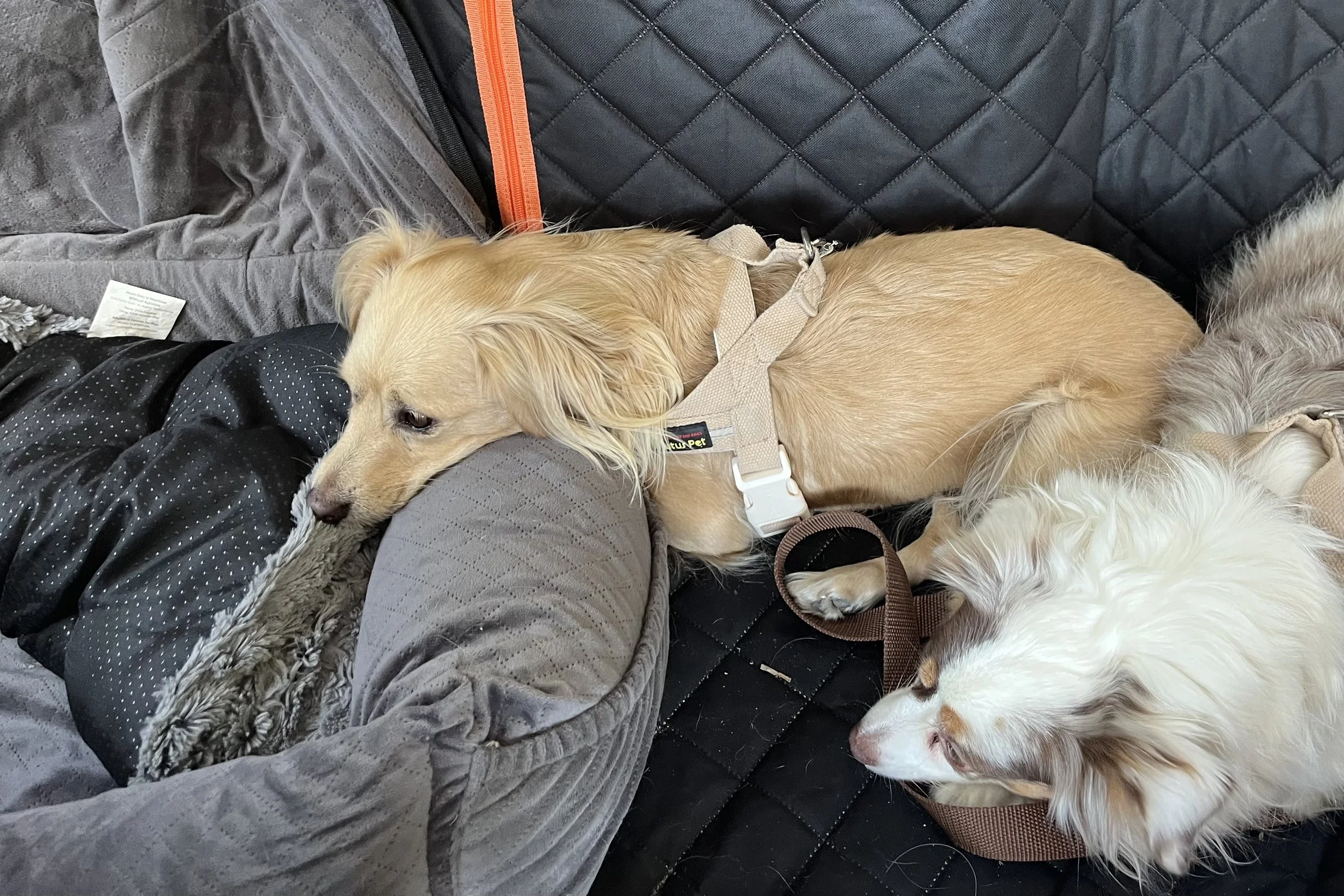
Before the car moves, I pay attention to whether my dogs are able to settle.
If a dog begins panting as soon as they get into a parked car, I pay attention to that timing. The car isn't moving yet, so motion isn't causing the panting at that point. Instead, there may already be an association with being in the car. Maybe car rides mean going to the vet. Maybe they've felt sick during previous rides. Or there may be a little of both going on.
This is one reason I like making some car rides very uneventful. They don't all need to be long drives or trips to important destinations. Sometimes we simply get in the car for a short ride, while other times we're headed somewhere my dogs enjoy. Over time, those ordinary little trips have helped make riding in the car feel like a more normal part of their routine.
A Stable Place to Ride Can Make a Difference
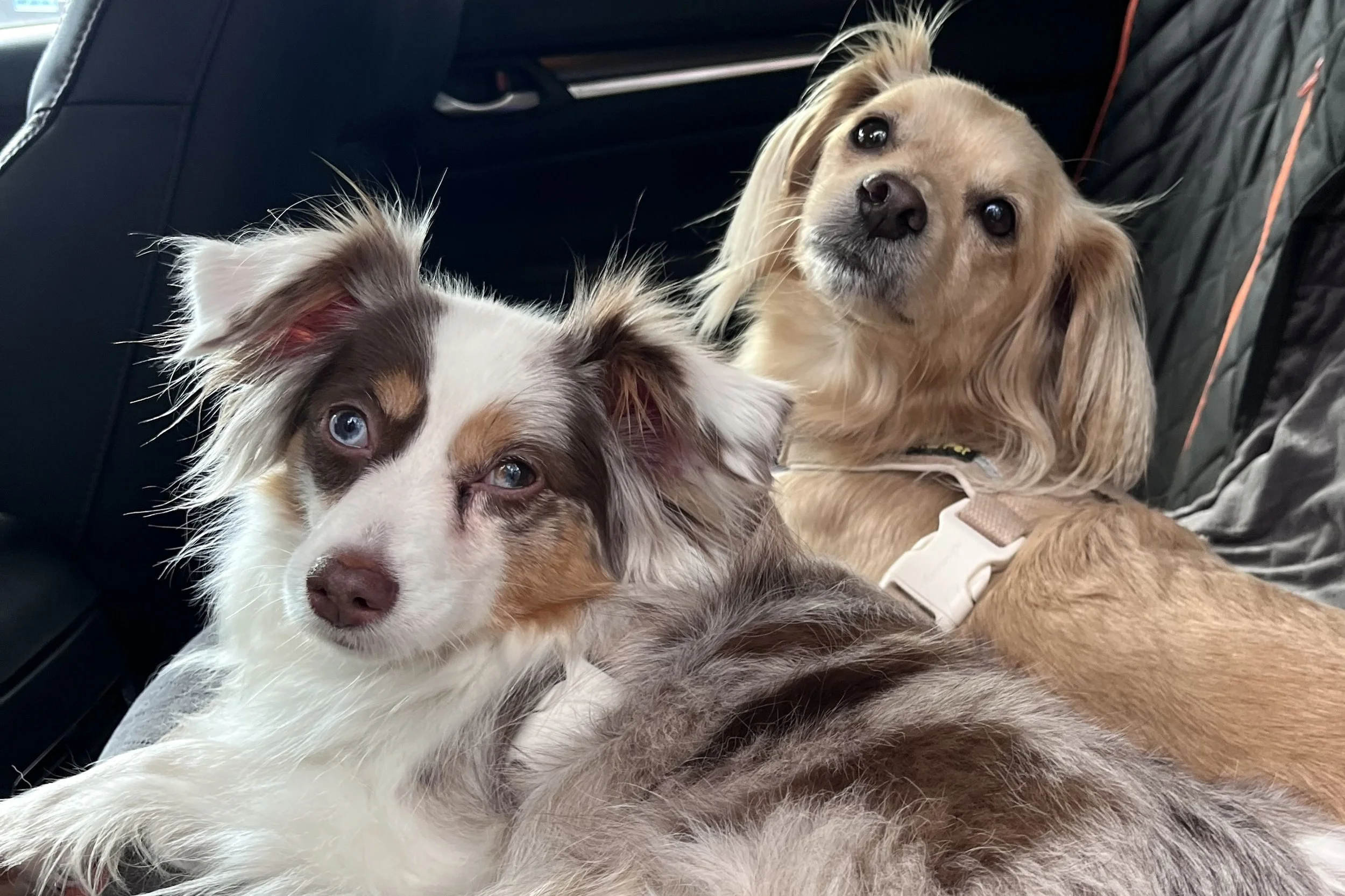
Saydie settles in almost immediately, while Archie usually takes a little longer to get comfortable.
There's another part of riding in the car that I think is easy to overlook: dogs have to continually adjust to the movement of the vehicle. Every turn, acceleration and stop can shift their balance, which may make it harder to relax and settle.
I've noticed a big difference between my own dogs here. Saydie takes advantage of her comfortable, stable place to settle almost immediately, curling up and usually falling asleep. Archie is much more interested in what's happening around him and is more likely to sit up, look out the side window or peek between the front seats. Even so, I want him to have a secure place where he can lie down when he's ready.
A stable setup doesn't necessarily explain why a dog is panting, but it can reduce how much they need to brace and adjust as the car moves. For Archie, especially, I've found that giving him a consistent place to ride makes it easier for him to settle.
What Happens When the Car Stops?
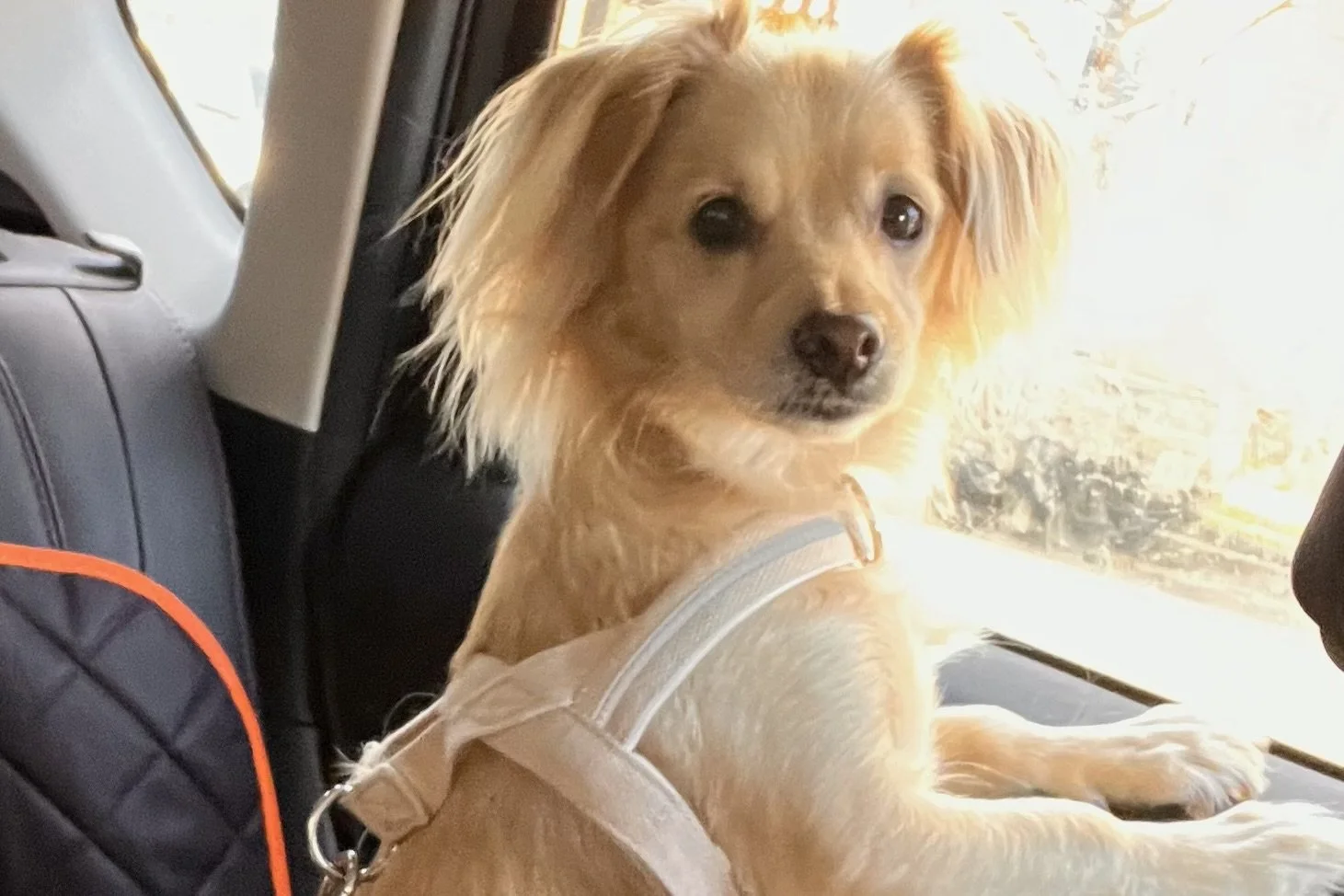
Archie likes to sit up and watch what’s happening around him during car rides.
With Archie, the panting usually stops when the car does, but that doesn't necessarily mean he's completely settled. After a ride where he's been particularly alert or uneasy, it can still take him a little while to fully relax once we're out of the car. Usually, once he's had a chance to sniff around and get his bearings, I can see him begin to settle and go back to behaving like himself.
I've found that what happens after the ride can be just as useful as what I notice while we're driving. In Archie's case, his panting stopping when the car stops tells me something, while the fact that he needs a little more time to relax tells me something else. It's another good reminder that panting is only one part of the picture.
What Has Helped My Dogs in the Car
One of the biggest things I've learned is that I can't expect every dog to experience the car the same way. Saydie has always found it easy to settle, while Archie needs a little more help. Instead of expecting him to behave like she does, I focus on making the ride as comfortable and predictable as I can.
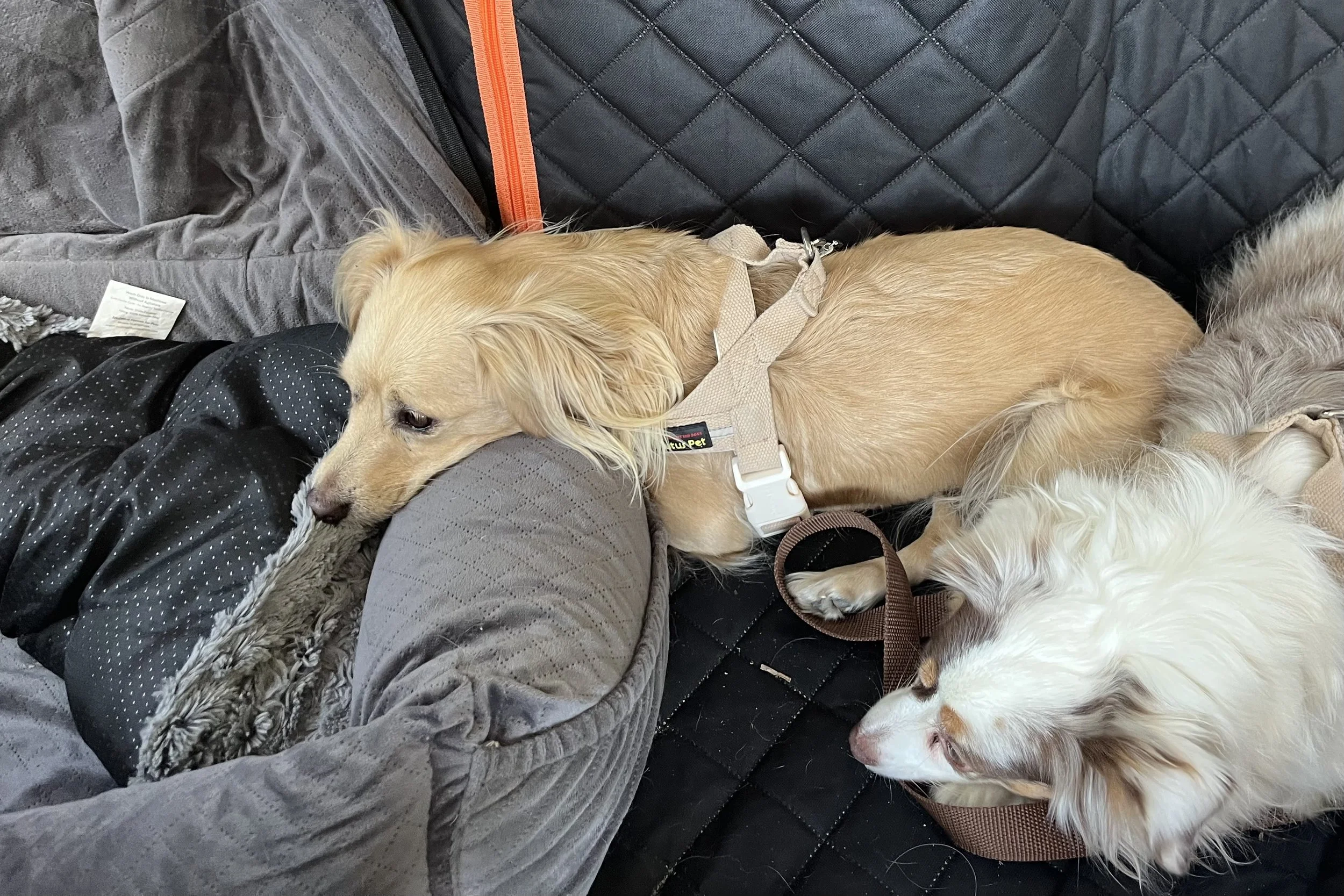
A comfortable backseat setup gives both dogs a place to lie down when they're ready to settle.
These are the things I've found most helpful:
Give them a stable place to ride. Both dogs have a defined place in the car where they can settle. Saydie takes advantage of hers almost immediately, while Archie may take longer to get comfortable.
Keep the car comfortably cool. If Archie is panting, I don't want heat to be another factor I have to consider. I also sometimes crack a window for a little fresh air.
Take short, uneventful rides. Some of our car trips don't amount to much at all, and that's intentional. A quick ride with nothing particularly exciting or stressful at the end has helped make getting in the car feel more routine.
Mix in places they enjoy. I don't want the car to become something that only predicts the vet or another potentially stressful destination. Familiar parks and other places my dogs enjoy are part of our car routine, too.
Let them ride in their own way. Saydie curls up almost immediately, while Archie often wants to look out the windows and see what's happening around him. As long as he's secure, I don't expect him to ride exactly the way she does.
When Panting in the Car Is Worth Discussing With Your Vet
Occasional panting in an otherwise comfortable dog is very different from excessive or unexplained panting or a dog who appears genuinely distressed.
I'd talk to my veterinarian if the panting were new or suddenly much worse, if my dog had difficulty breathing, repeatedly vomited, seemed unusually lethargic or unwell, or became so distressed in the car that normal travel was difficult.
I'd also bring it up if I suspected motion sickness. There are ways veterinarians can help dogs who become nauseated during car rides, and addressing the physical discomfort may also prevent the dog from developing an even stronger negative association with the car.
The Panting Is Only One Part of the Picture
I've become much less interested in trying to decide whether panting means a dog is simply "happy" or "anxious." Archie has shown me too many variations for it to be that straightforward, from panting when something excites him to panting during a car ride when he's having a harder time settling.
Now, the panting gets my attention, but I don't stop there. I notice when it starts, what else is happening at the same time, and what changes when the ride is over. Those details have helped me understand Archie much better than the panting ever could on its own.
And sometimes the contrast is sitting right beside him: Saydie, curled up and sound asleep on the very same ride.
