How I Set Up My Home for a Dog Sitter: 10 Ways to Make It Safer and Easier
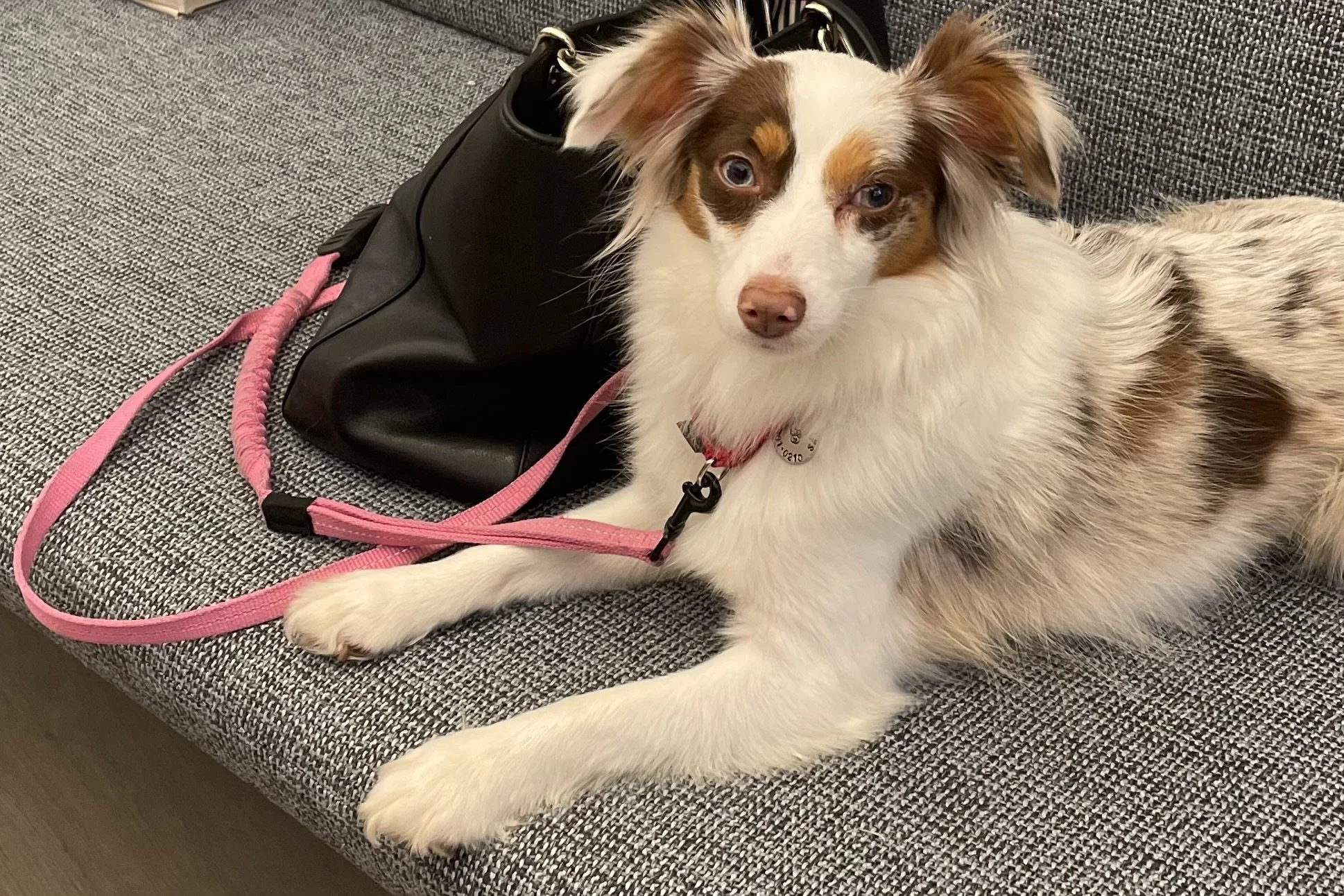
When I leave Archie and Saydie with a sitter, I want the house to be easy to use and their routine to feel familiar..
As a dog walker, I know how much difference a little preparation makes. I’ve visited homes where everything I needed was easy to find—and others where I’ve had to search for a leash, figure out which towel I could use on a wet dog or worry about a dog getting too close to the door as I came and went.
Those details matter when you’re responsible for someone else’s dogs. Here’s how I set up my home so my sitter can follow the dogs’ normal routine and handle the little things that come up.
1. Use a Pet Gate to Create a Safe Zone
I use a white wooden freestanding pet gate that I can move around the house wherever I need it. I like that it doesn't have to be attached to the walls, and the wood blends in with the room a little more than a typical metal pet gate.
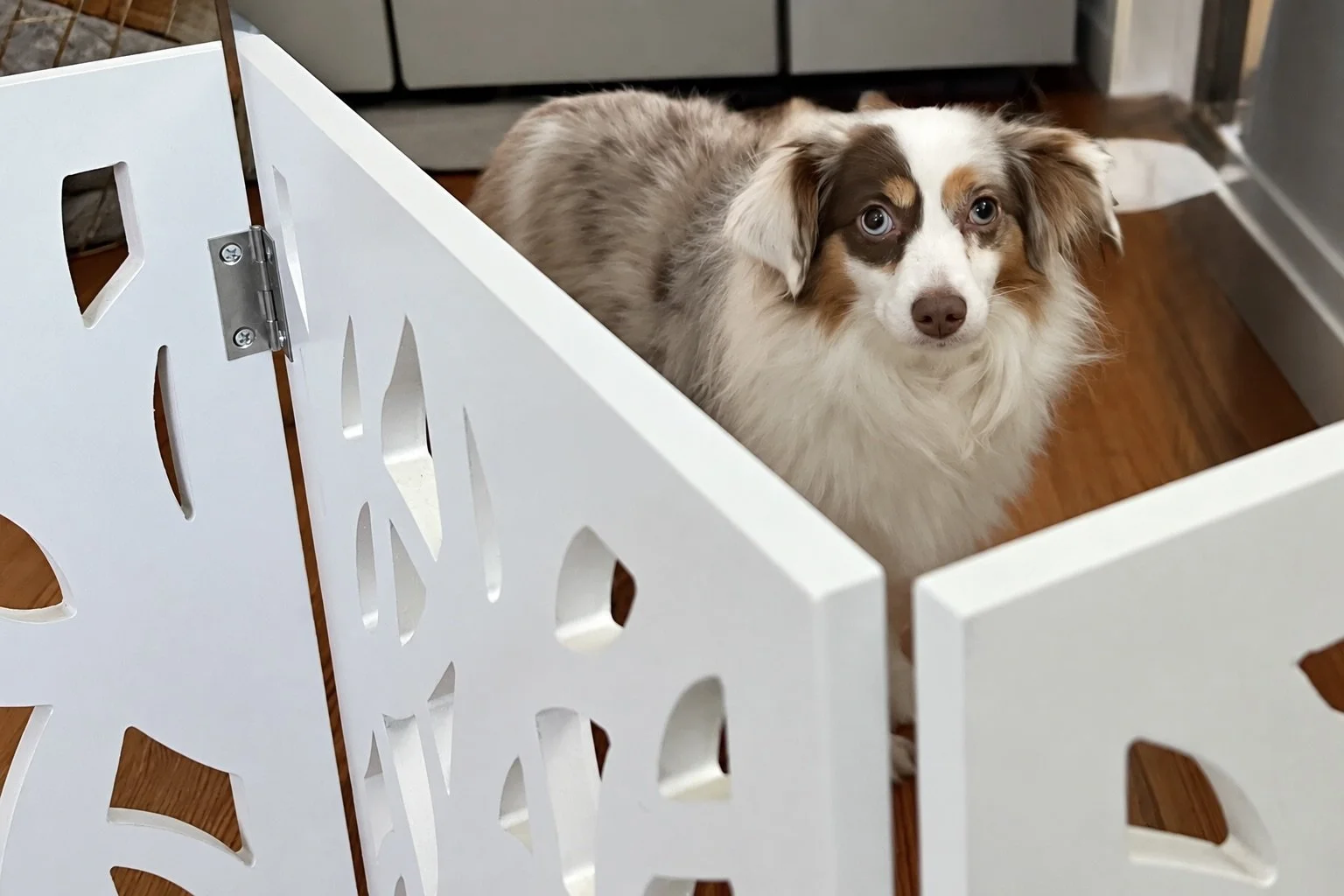
Saydie behind the freestanding gate I use to give my sitter room to come and go.
When I'm away, I use it to keep my dogs in a room away from the front door. It gives my sitter a little more room to come and go without worrying about one of them slipping past her. It also keeps them farther away from the activity and outside sounds near the front door that can trigger them.
A gate is useful at other times, too—when the sitter is bringing in bags, accepting a delivery, preparing food or simply needs the dogs safely out of the way for a few minutes. It can also be helpful during potty training if you want to keep a dog in an area with easy-to-clean floors.
The right gate really depends on your dog. A freestanding one works for my small dogs because they don't try to get around it. A dog that jumps, pushes against barriers or is determined to get through may need a taller or wall-mounted gate instead.
Whatever style you choose, make sure your dog is already used to it before you leave. Your trip isn't the time for your sitter to discover that your dog can jump over the gate—or knock it down.
2. Make Sure Doors and Gates Are Secure
You know which doors need an extra pull and which gates don’t always latch the first time. Your dog sitter doesn’t. Before I leave, I make sure there aren't any little quirks around the doors or gates that could make it easier for one of my dogs to get out.
One easy precaution is a small Dogs in Yard — Please Keep Gate Closed sign. A delivery person, maintenance worker or other visitor may not know there are dogs inside or that they could be let into the yard. A sign is a simple reminder to make sure the gate is securely closed behind them.
If you have a fenced yard or patio, check the outdoor gate, too. A simple carabiner or secondary gate latch can give you a little extra security, especially if the regular latch doesn't always catch or the gate can easily be opened from the outside.
In an apartment or condo, the concern may be the space between your front door and the outdoors. If your dog tends to rush the door, the indoor pet gate I mentioned above can give your sitter a buffer when she's coming and going.
The important thing is to think about your home from your sitter's perspective. You may automatically double-check a certain gate or know that a door needs an extra pull to close. If there are little things like that you do without thinking about them, make sure your sitter knows about them, too.
3. Use a Pet Camera to Check In When You're Away
I’ve used a Nest camera for years not only for home security but also to check on my dogs when no one is home. Mine faces the front door, although it also catches part of the living area, so I always make sure my sitter knows exactly where it is and what the camera can see.
When the dogs are home alone, I can quickly check whether they’re settled or whether something at the front door has gotten their attention. I like being able to take a quick look rather than wondering what they're doing.
I'm also planning to try a Furbo pet camera. I'm curious about the features designed specifically for dogs, especially being able to toss them a treat remotely. I can see that being fun with a dog who gets excited about treats.
If you use a camera while a sitter is staying in your home, make sure they know where it is, what it can see and when it will be on. They should know where they have privacy.
4. Set Up an Easy Feeding Station
I keep everything my sitter needs for meals together so she isn't searching through cabinets for food, bowls, supplements or anything else at feeding time.
My dogs eat homemade food, and I measure their portions in grams, so I leave a digital kitchen scale out with their food. Whatever your dog eats, make sure your sitter has everything needed to prepare it and knows which food and bowl belong to each dog. If your dogs need to eat separately, make that part of the setup, too.
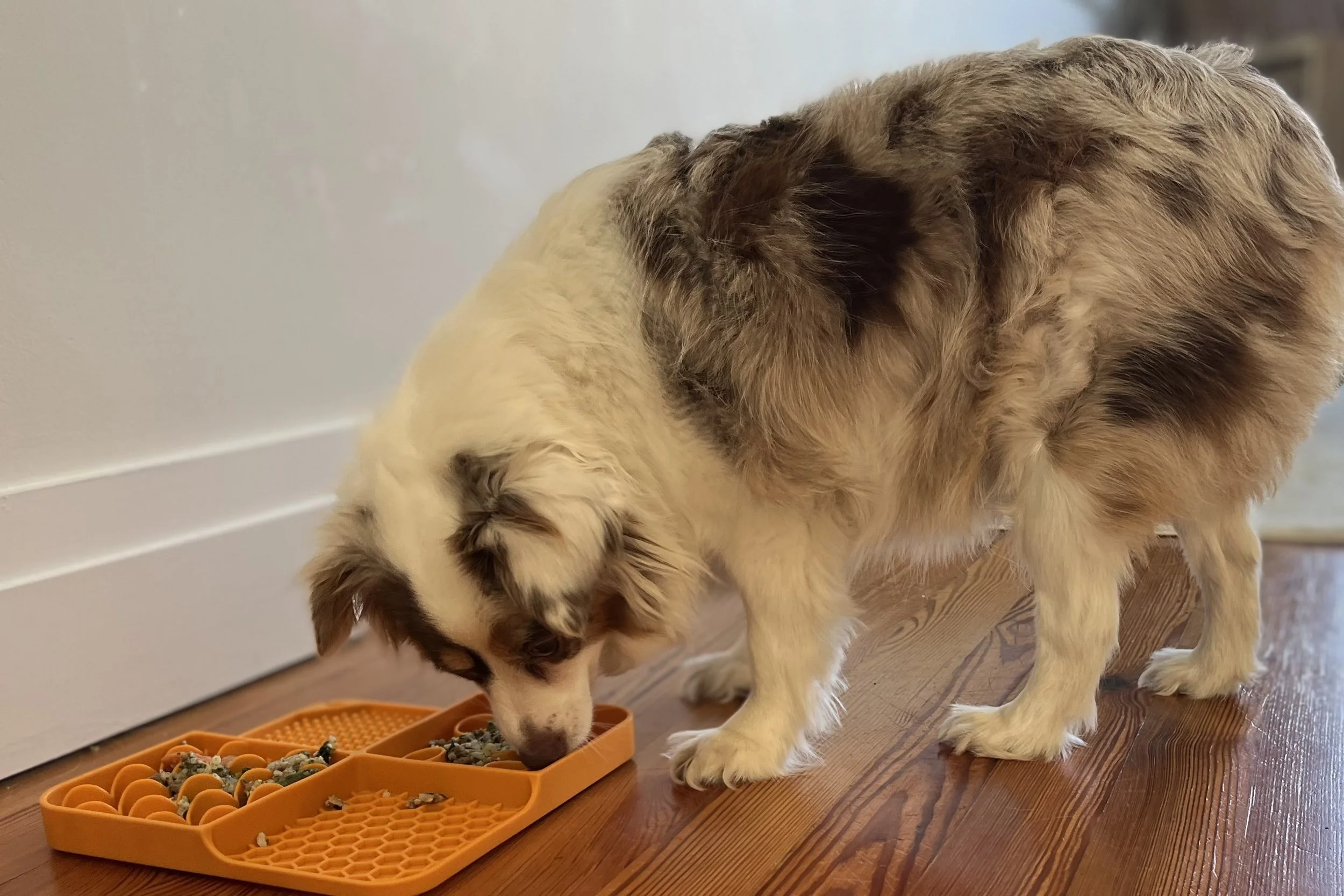
Saydie eats from a lick mat, so I make sure my sitter knows where to find it and how we use it.
A waterproof feeding mat under the bowls helps catch spilled food and water and makes cleanup easier. I also recently added a water dispenser. I still want my sitter checking and refreshing their water, but I like having a larger backup supply in case a bowl gets knocked over or emptied.
I leave a few treats nearby, too, especially ones I already know agree with my dogs. I often use single-ingredient freeze-dried treats, so there's no question about which treats are okay to give them.
The amounts, feeding schedule and other details go in my What to Leave for a Dog Sitter: Information and Instructions Checklist. Here, I'm simply trying to make sure everything my sitter needs at mealtime is right there and easy to use.
5. Keep All Your Dog-Walking Gear in One Place
I keep our everyday walking supplies in a drawer right by the front door. That way, my sitter isn't searching through closets for a leash or realizing once the dogs are ready to go that she can't find the poop bags.
Underneath the drawer, I have a basket with things we don't need for every walk, including raincoats, additional leashes in different lengths and a few longer-lasting treats, like yak cheese chews.
I leave shorter leashes for my sitter because they keep the dogs closer to her and make it easier to keep an eye on what's happening around them. Saydie can be reactive to other dogs and startled by unexpected things on a walk, so I don't want my sitter trying to manage her on a long leash.
I also use a simple one-buckle harness that slips over the dog's head and buckles under the belly. There aren't multiple straps and clips to figure out, which makes it easier for someone else to put on correctly. Whatever harness you use, make sure your sitter knows how it fits and that your dog can't back out of it.
I keep poop bags with the leashes and, depending on where you live, a flashlight can be worth leaving by the door, too. I've lived in and walked dogs in neighborhoods that weren't well lit at night, where a flashlight was a must-have.
The idea is to have everything your sitter needs for a normal walk right there, using the same gear your dogs already know and are comfortable with.
6. Make Wet Dogs and Messes Easy to Handle
As a dog walker, I've come back from a rainy walk with a wet or muddy dog and had no idea which towels I was supposed to use. I certainly didn't want to grab someone's good bathroom towels. That's why I leave out a couple of towels that are specifically for the dogs when I'm away.
A dog shammy or quick-dry towel is especially handy for wet paws and coats, and some dogs love a good shammy rub after a rainy walk.
I also keep basic cleanup supplies somewhere obvious. Paper towels and a pet spray cleaner with enzymes mean my sitter can deal with an accident, vomit or muddy paw prints without having to search through my cleaning supplies.
For accidents on rugs or upholstered furniture, I keep a Little Green Machine handy. Hard floors are easy to wipe clean, but if something happens on fabric, it's nice to be able to clean the spot right away.
If you have a rug or surface that needs a particular cleaner, make sure your sitter knows that, too. I don't expect a sitter to know the quirks of everything in my house—I just want to make it easy for her to handle the normal messes that come with taking care of dogs.
7. Double-Check Your Dog's ID and Microchip
Before I travel, I do a quick check of my dogs' identification. I make sure their ID tags are still attached and readable and that the contact information connected to their microchips is up to date.
I recently learned firsthand why this matters. The registry my dogs' microchips were registered with went out of business, so I had to make sure their chips were registered elsewhere with my current contact information.
You can also add a GPS dog tracker or an AirTag collar, which now has a version designed for pets, as another layer of protection. An AirTag isn’t the same as a GPS tracker, but it’s an easy way to add an extra precaution.”
Before you leave, make sure your sitter knows what identification or tracker your dog is wearing and has your current contact information.
8. Make Your Dogs' Favorite Spots Easy to Clean
My dogs are allowed on the furniture, so I keep small washable blankets on the areas of the couch where they like to lie. They catch dog hair, dirty paws and the occasional small mess, and I can just throw them in the wash instead of cleaning the upholstery. I also keep a washable bed in one of Archie’s favorite spots.
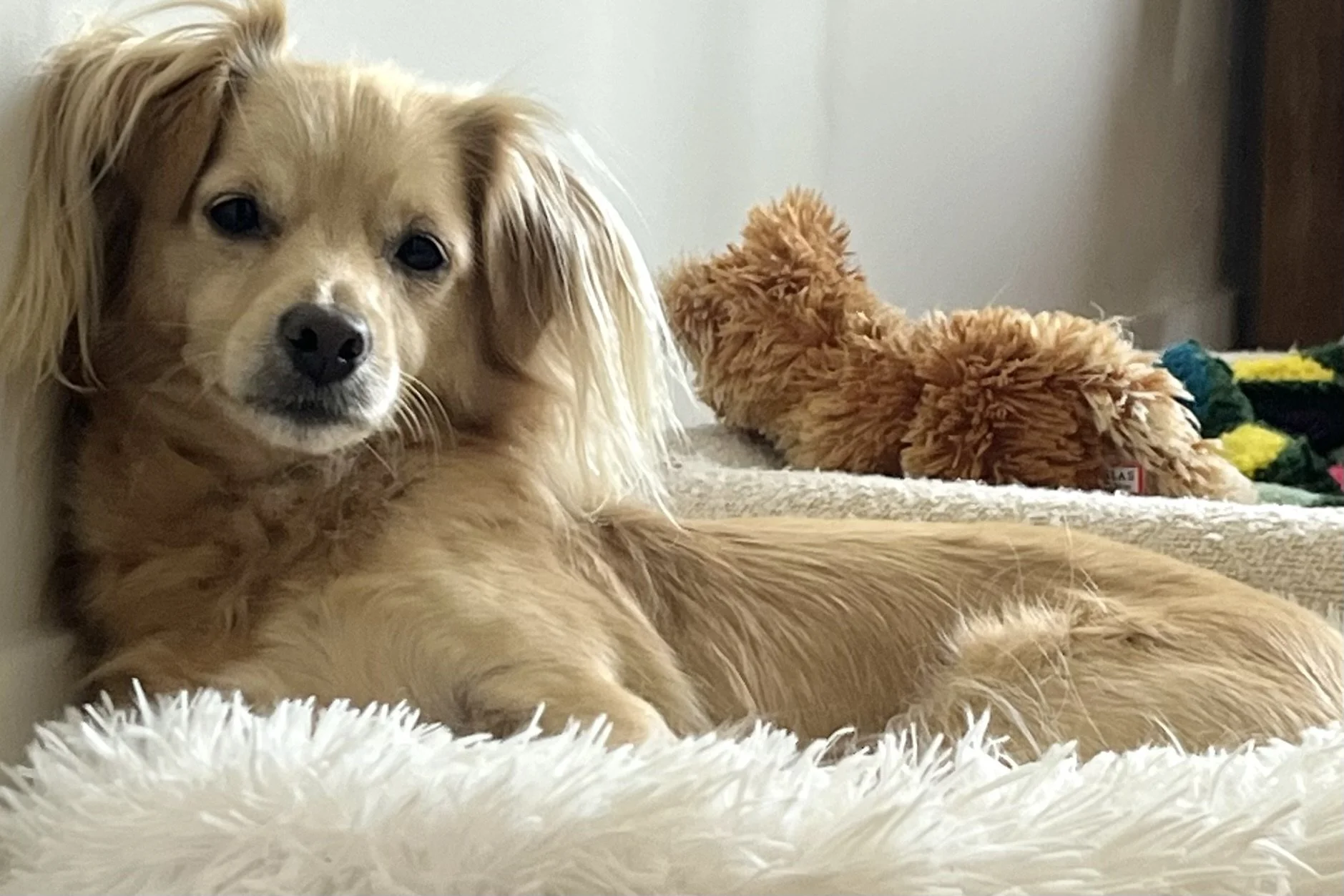
Archie in one of his favorite spots—a washable bed that’s easy for my sitter to keep clean.
This is especially helpful when I'm away. If something happens, I'd much rather have my sitter toss a blanket in the washing machine than worry about cleaning the couch or pulling out the Little Green Machine.
I keep an extra blanket or two nearby, too, so there's always a clean one to put back on the couch.
9. Make the House Easy for Your Sitter to Use
If your sitter is staying at your house, think about the things you use every day without giving them a second thought. I leave my Wi-Fi name and password, along with simple instructions for anything that might not be obvious, like the TV and remotes or the thermostat.
I also make sure my sitter knows how to get into the house and has a backup in case something goes wrong. Depending on your setup, that might be an extra key, a keypad lock or a lockbox. I leave information about parking, trash and recycling, along with any little quirks around the house that are useful to know.
For an overnight stay, I make sure they know where they'll sleep, which bathroom to use and where to find clean towels and linens.
I don't think a sitter needs a manual for the house. I just want them to be comfortable and have enough information that they don't have to text me from hundreds of miles away to ask how to turn something on.
10. Don’t Advertise That You’re Away
I learned this one while walking a dog for someone who was traveling. A neighbor called out to me from across the street, “When are they going to be back home?”
The neighbor was probably just being friendly and curious, but it made me stop and think. I really shouldn't be telling someone else how long the owner is going to be away—or giving out details about their travel plans.
Now I think it's worth mentioning this to your sitter before you leave. Ask them not to share your travel dates, where you've gone or when you're expected home with neighbors, delivery people or anyone else who asks.
They don't need to make it awkward. A simple, “You’d have to check with the owner about that” is enough.
Final Thoughts
You don’t need to change your whole house for a dog sitter. Walk through a typical visit in your mind: coming in, feeding the dogs, taking them out and cleaning up afterward. If there’s anything your sitter would have to search for or guess about, make it easy to find or explain it before you go.
A little preparation helps your sitter feel more confident and lets your dogs stick to the routine they know.
