Dog Sitter Instructions: What to Leave for Your Sitter (With Checklist)
A dog sitter needs more than a feeding schedule and a spare key. They need to know what’s normal for your dog: the habits that might look worrying to someone new, what helps when plans don’t go smoothly, and when to contact you.
Saydie and Archie come along on many of my trips, but some trips are just for humans. When they need to stay home, I choose a sitter I trust and prepare a mini guide to my pups—their routines, their quirks, and the things that help them feel comfortable. I also let the sitter know how often I’d like updates and photos. Here are the seven things I include.
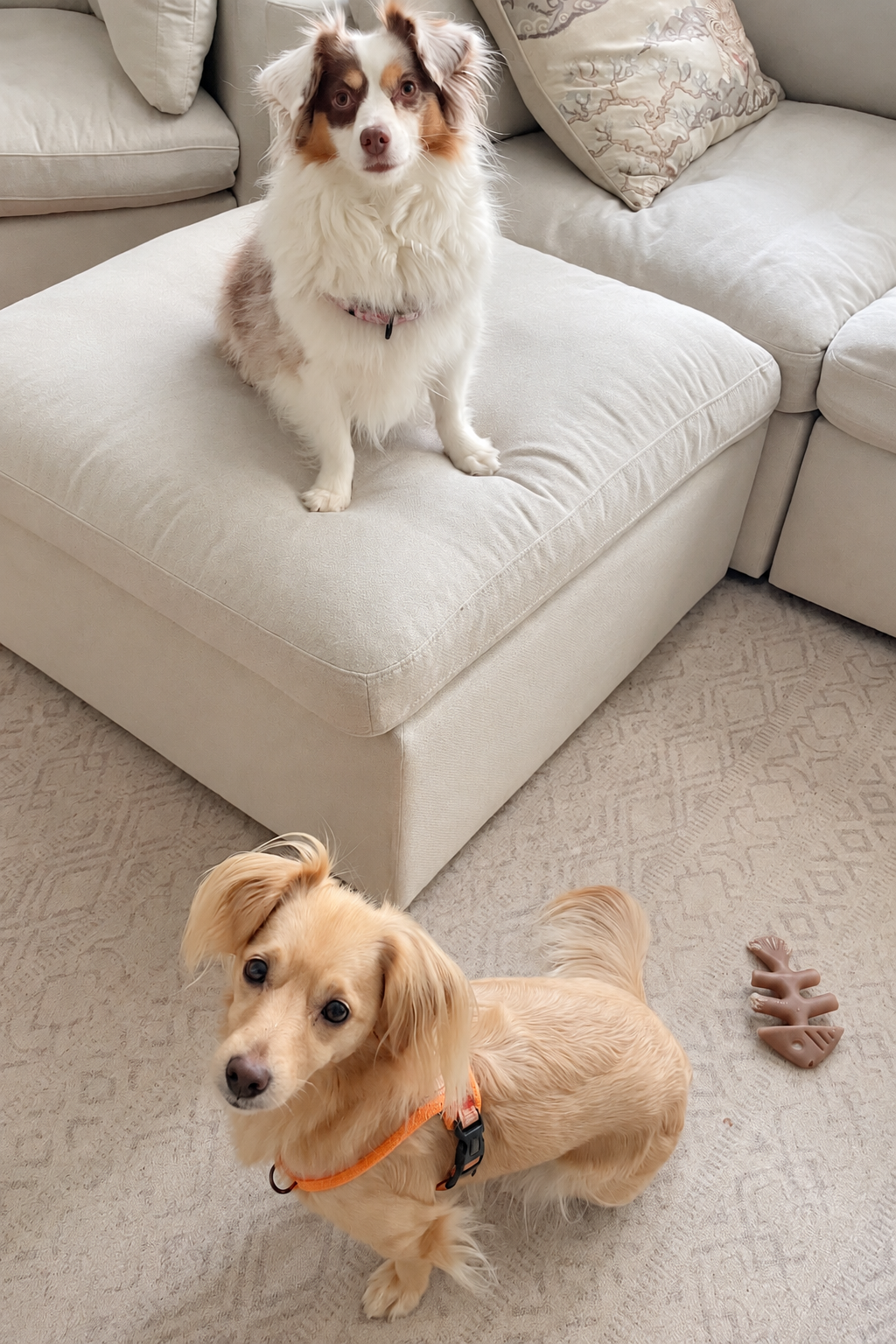
Saydie and Archie at home, ready to keep their familiar routines while I’m away.
What to Leave for Your Dog Sitter
Meals and Treats — What and when to feed each dog, how to serve it, approved treats, food sensitivities, what to do with a skipped meal, and where backup food is kept. Include medication instructions here if your dog takes any.
Walks and Bathroom Breaks — Usual times, routes, equipment, bathroom habits, and what to do if the dog doesn’t go.
Sleep and Everyday Habits — Where the dog sleeps, bedtime routines, and commands or cues the sitter should keep using throughout the day.
What’s Normal for Your Dog—and How to Handle It — What’s normal for your dog, what makes them uneasy, what helps, and when a behavior warrants a check-in.
Supplies and Home Access — Where to find everything the sitter needs and how to enter and secure the home.
Visit Dates and Updates — The exact first and last visits, when you expect to be home, and how often you’d like messages and photos.
Contacts and Emergencies — How to reach you and a local backup, veterinary information, and which situations need an immediate call.
1. Meals and Treats
Tell your sitter exactly how meals work for each dog:
When and how much: Meal times and portions for each dog.
Where and how: Where the food is kept, any preparation needed, and whether to use a regular bowl, slow feeder, or lick mat.
Eating together or separately: Whether your dogs respect each other’s food or need separate feeding spaces.
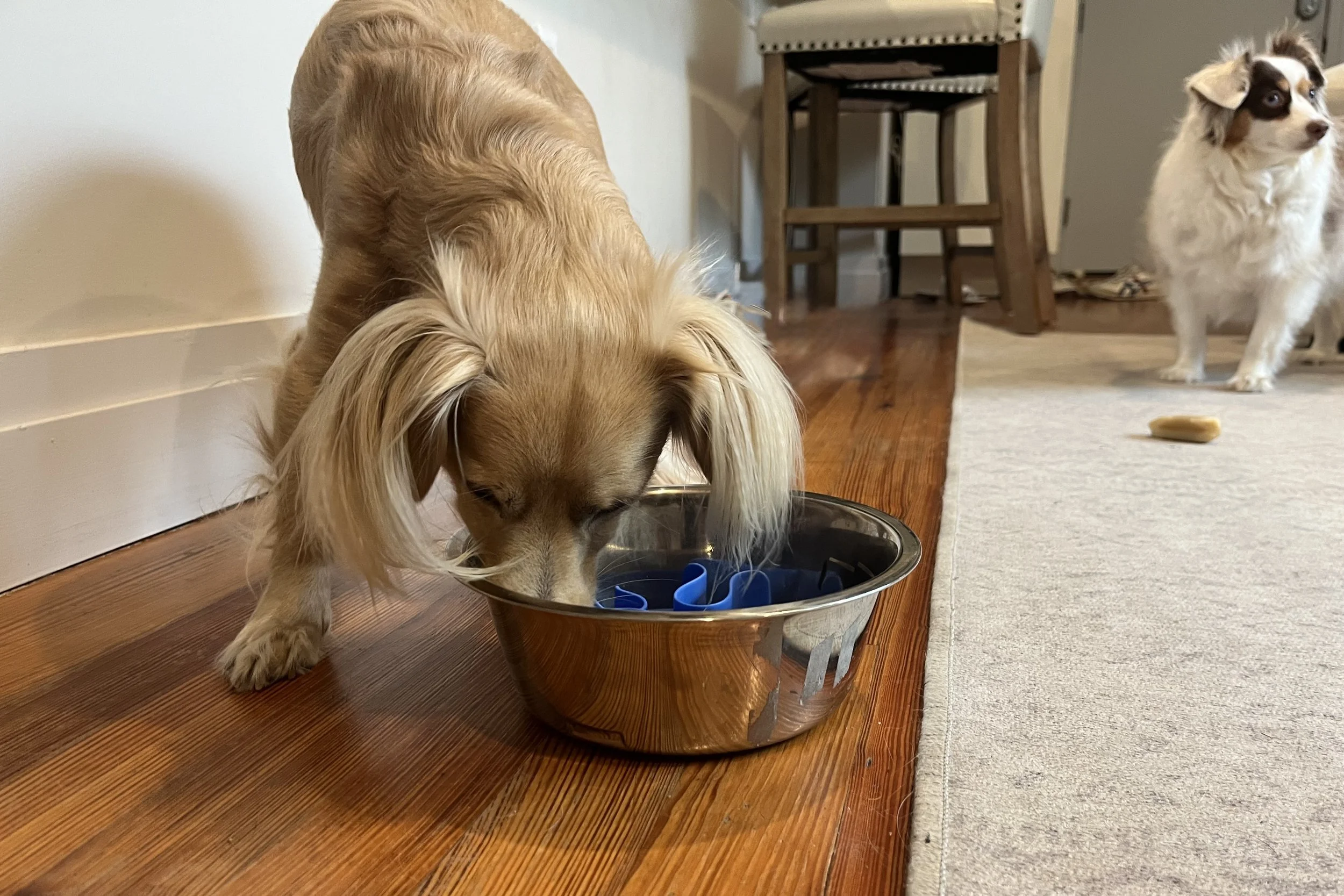
Archie eating from his slow feeder while Saydie waits nearby.
If you prepare meals ahead of time, you can portion them into containers labeled with each dog’s name and mealtime. I make the dog’s food in each so I leave a digital food scale and write down the amount. each dog is fed. For my dogs, a slow feeder or lick mat slows down mealtime and gives them a familiar activity, which can help them settle while I’m away. I’d show the sitter how I use it so her meals feel the same while I’m away.
List any food sensitivities, approved treats, and treats to avoid. Archie doesn’t do well with changes to his food or rich treats, so I ask his sitter to stick with what I’ve left for him. Include any favorite chews and say whether your dog can have them throughout the day or only at certain times.
Tell the sitter what to do if a dog skips a meal and where to find backup food. I ask mine to refrigerate uneaten food and offer it at the next mealtime. One missed meal can happen with my dogs, but I also tell the sitter when I’d want to hear about further missed meals.
If your dog takes medication, write down the name, dose, time, and how you give it. Include where it’s kept and what the sitter should do if a dose is refused or spit out. A medication organizer may help them track which doses have been given.
2. Walks and Bathroom Breaks
Write down how many times your dog needs to go out each day, when those outings should happen, and roughly how long each one should last. Make clear which are quick bathroom breaks and when your dog gets a longer walk. If you use a backyard, include when the sitter should let your dog out—for example, once more before bed—and whether they should stay outside with them.
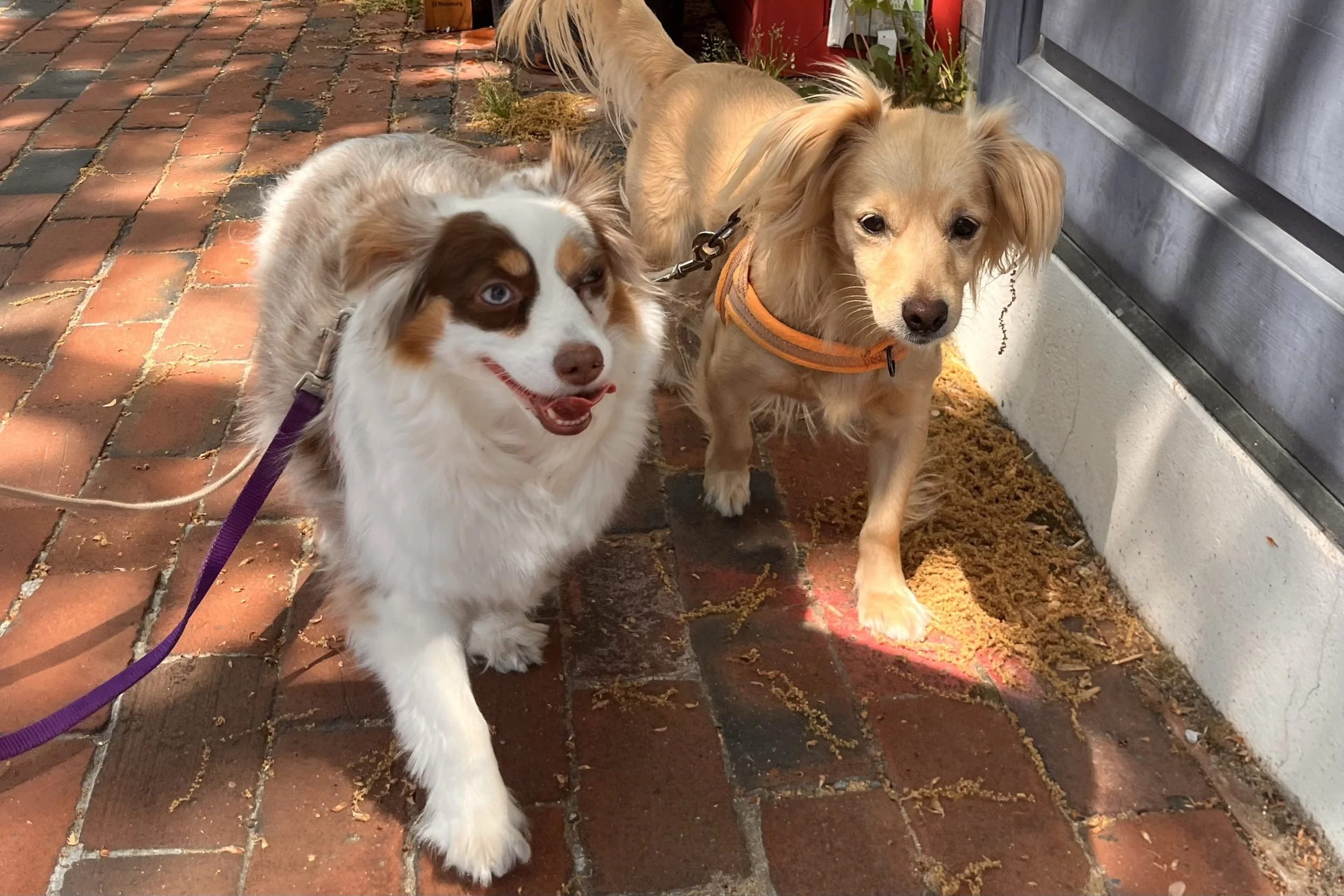
Saydie and Archie, leashes on and ready for a walk.
Specify which harness and leash to use and any routine you follow before opening the door. I leave my shorter leashes for the sitter so she can keep Saydie and Archie close, especially when passing other dogs or crossing the street. Include preferred routes, places to avoid, and how you’d like the sitter to handle passing dogs, people, or other distractions. I ask sitters to give Saydie space from other dogs rather than stopping for greetings. For evening walks, leave a flashlight somewhere obvious, such as by the front door. Whether your sitter needs one may depend on your neighborhood, but in our last neighborhood, it was a must-have after dark.
Bathroom habits deserve their own note. Where does your dog prefer to go? Do they need time to sniff or a quieter spot? Saydie may not go if an area is busy, so I’d rather the sitter try a calmer place than assume something is wrong right away. I also tell them when I’d want an update if she still hasn’t gone.
3. Sleep and Everyday Habits
Tell your sitter where your dog sleeps and what the bedtime routine looks like. Do they sleep in a crate, on their own bed, or in a particular room? Leave their usual bed or blanket where they expect to find it, and note anything else that helps them settle. Include whether they need a final bathroom break before bed.

Saydie asleep in one of her favorite spots at home.
Write down the commands and cues your dog knows, including the exact words you use and when you use them. These might help on a walk, but they can also be everyday habits: waiting at the door, sitting before coming inside, or waiting for a release word before eating. Keeping those routines familiar helps your dog know what to expect and lets the sitter maintain the habits you’ve taught them.
4. What’s Normal for Your Dog—and How to Handle It
A sitter may notice something that looks unusual but is normal for your dog. Explain what they might see, what usually helps, and when you’d want them to contact you.
Be especially clear about handling boundaries. Archie should never be touched or picked up while he’s sleeping. If the sitter needs him to move, I ask them to let him wake up, put on his leash, and lead him where he needs to go. That’s something a sitter couldn’t know just by meeting him.
Tell your sitter what your dog may react to, both at home and outside. Another dog approaching, a squirrel darting across the sidewalk, or an unexpected sound can catch someone by surprise. Describe what the reaction looks like for your dog—whether they bark, pull, freeze, hide, or try to retreat—and what helps them feel comfortable again.
Finally, make the difference between “this is normal for my dog” and “please let me know” clear. That gives the sitter room to handle familiar quirks without wondering whether every unusual moment is an emergency.
5. Supplies and Home Access
Keep the things your sitter will use every day in one easy-to-find place. Show them where to find food, treats, medications, leashes, harnesses, poop bags, and cleaning supplies. If something is kept elsewhere, such as backup food, include its location in your mini guide.
Leave out a couple of towels that are okay to use on the dogs. As a dog sitter, I’ve come back from a rainy walk wanting to dry a dog off but not knowing which towels I could use. Setting some aside means the sitter won’t have to guess or reach for the good bathroom towels. And if your dog loves a good rub with a shammy, leave that out for the sitter, too.
Show the sitter how to get into your home and secure it when they leave. Explain how any keys, codes, doors, or gates work, especially if there’s a latch that’s easy to miss. Let them know which areas your dog can access and which doors or gates need to stay closed.
A walkthrough together can catch details that are hard to explain in writing. Afterward, the sitter should be able to arrive, find what they need, and leave knowing your dog and home are secure.
6. Visit Dates and Updates
Give your sitter the exact date and time of the first visit and the last visit, along with when you expect to leave and return home. Don’t leave the end of the schedule open to interpretation. If you’re returning Tuesday, for example, make it clear whether the sitter still needs to come on Tuesday morning. If your return is delayed, tell the sitter how you’ll let them know and arrange any additional visits.
Agree on updates before the trip. Some owners want a message after morning, midday, and evening visits; others are happy with one check-in at night. Let the sitter know if you’d like photos and whether you want a message after every visit or just a daily summary.
Also tell the sitter what you’d like to hear about right away, even if it isn’t time for a scheduled update. They should feel comfortable checking in when something seems unusual or they’re unsure what you’d prefer.
If you’d like a record of each day, leave a notebook and ask your sitter to use one page per day to note visit times, meals, walks, bathroom breaks, medication, and anything unusual. If you prefer to see those details while you’re away, ask the sitter to include them in the text updates you’ve agreed on.
7. Contacts and Emergencies
Give your sitter the best way to reach you while you’re away, plus the name and number of someone nearby who can help if you’re unavailable. Include your regular veterinarian’s contact information and the emergency veterinary clinic you’d want them to use.
Explain which situations call for a message and which need an immediate phone call. Tell the sitter what to do if they can’t reach you, including whether they should contact your local backup or take your dog to the emergency clinic. The more clearly you explain what’s normal for your dog, the easier it is for the sitter to recognize a change that needs your attention.
If your dog has a medical condition or takes medication, include any relevant instructions from your veterinarian. Let the sitter know where to find those instructions and any information they would need for a veterinary visit.
The best instructions answer questions before your sitter has to ask. They help your sitter feel prepared and give your dog the familiar routine they need for a calm, comfortable stay.
Use the worksheet below to put your dog’s details in one place.
Dog Sitter Information Worksheet
Dog’s name(s): ______________________________
Dates you’ll be away: ______________________________
1. Meals and Treats
Meal times and portions: ______________________________
Food preparation and how to serve it: ______________________________
Can the dogs eat together, or should they be separated? ______________________________
Approved treats and chews; when they may be given: ______________________________
Food sensitivities or things to avoid: ______________________________
What to do if a meal is skipped: ______________________________
Where to find food and backup food: ______________________________
Medication, if any—dose, time, how to give it, and what to do if refused: ______________________________
2. Walks and Bathroom Breaks
Times and length of outings: ______________________________
Which outings are walks or quick bathroom breaks: ______________________________
Harness, leash, routes, and places to avoid: ______________________________
Bathroom habits and what to do if my dog doesn’t go: ______________________________
Backyard breaks, including the last trip before bed; should the sitter stay outside? ______________________________
3. Sleep and Everyday Habits
Where my dog sleeps and bedtime routine: ______________________________
Commands and cues to keep using: ______________________________
4. What’s Normal for My Dog—and How to Handle It
Behaviors or triggers the sitter might notice: ______________________________
What usually helps: ______________________________
Handling boundaries: ______________________________
What’s normal, and what change should prompt a message or call? ______________________________
5. Supplies and Home Access
Where to find everyday supplies, dog towels, and cleaning supplies: ______________________________
How to enter and secure the home: ______________________________
Doors, gates, or areas that must stay closed: ______________________________
6. Visit Dates and Updates
I leave—date and time: ______________________________
First sitter visit—date and time: ______________________________
Last sitter visit—date and time: ______________________________
I expect to return—date and time: ______________________________
When I’d like updates and whether I’d like photos: ______________________________
7. Contacts and Emergencies
Best way to reach me: ______________________________
Local backup contact and phone number: ______________________________
Regular veterinarian and phone number: ______________________________
Emergency veterinary clinic and phone number: ______________________________
Which situations need an immediate call? ______________________________
What to do if I can’t be reached: ______________________________
