A Dog-Friendly Winter Trip to St. Augustine: Beaches, Trails & Walks
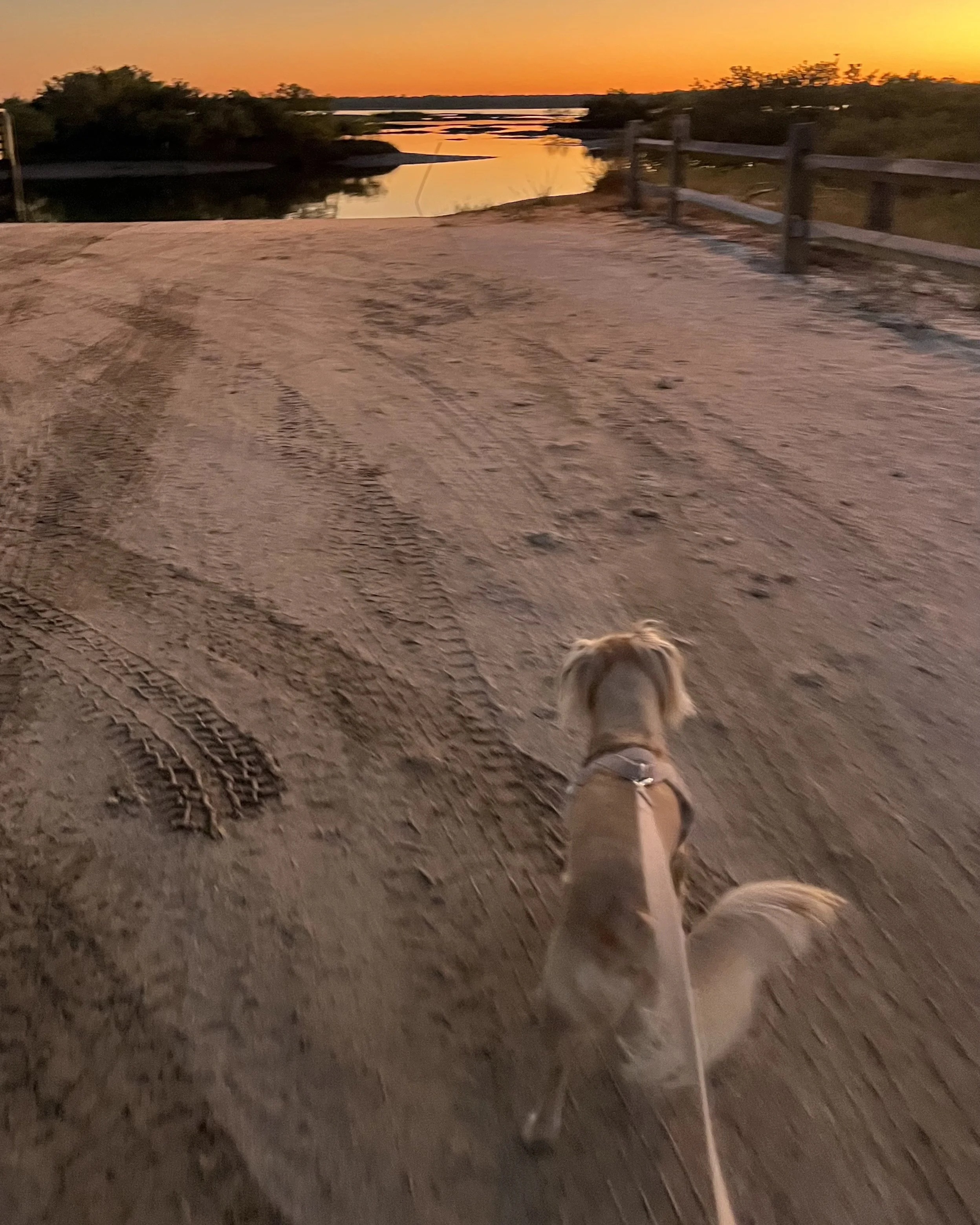
End-of-day light along the sand and marsh near Butler Beach.
January turned out to be an unexpectedly good time to visit St. Augustine. Mild temperatures, mosquito-free days, and uncrowded beaches set the tone. From coastal preserves to historic parks and wide-open shoreline access, the area offers an easy rhythm for exploring outdoors — without planning around weather or crowds .
Being outdoors shaped much of our time here — those first days are covered in Our First Few Days in St. Augustine, Florida (With Dogs).
Quick Summary: Dog-Friendly Beaches & Parks in St. Augustine
Butler Beach – quiet, year-round dog access
Vilano Beach – scenic, closer to town
Matanzas Inlet – dramatic ocean + calm river side
Fort Matanzas – boardwalk + history
Guana Tolomato – forest-to-shore trail
Washington Oaks – shaded Old Florida landscape
I Didn’t Expect St. Augustine to Be This Dog-Friendly
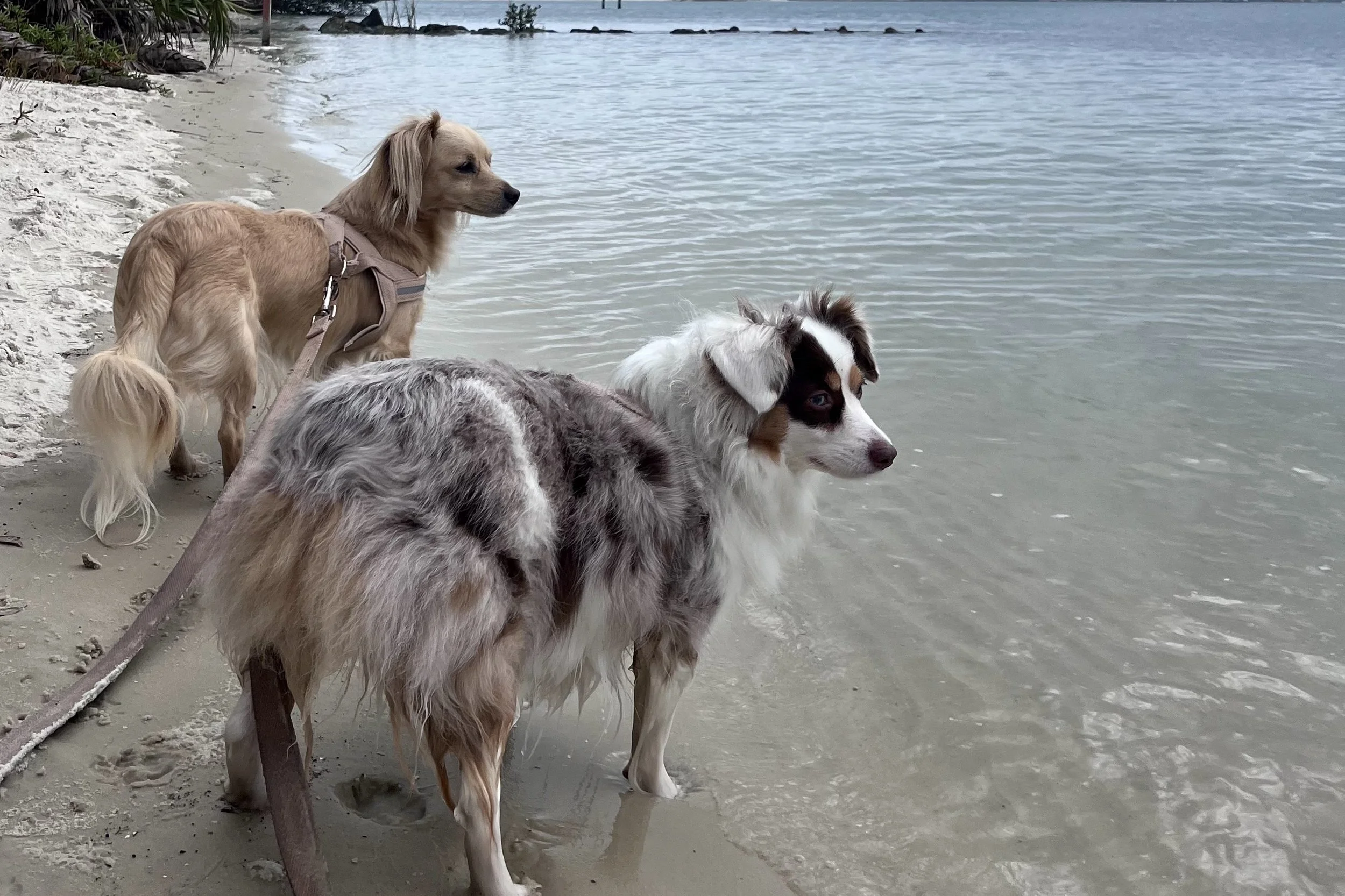
Dogs exploring the shoreline near Butler Beach.
I kept waiting to see a sign that said no. “Dogs not allowed beyond this point.” Or at least a list of rules I’d somehow missed. Instead, I found myself saying more than once, “Wait… dogs are allowed here too?” I expected far more restrictions.
There is one clear exception — Anastasia State Park — where dogs aren’t allowed on the beach, consistent with Florida state park rules. What stood out wasn’t the restriction itself, but how many other dog-friendly beaches are available, offering the same quality of shoreline and sense of space.
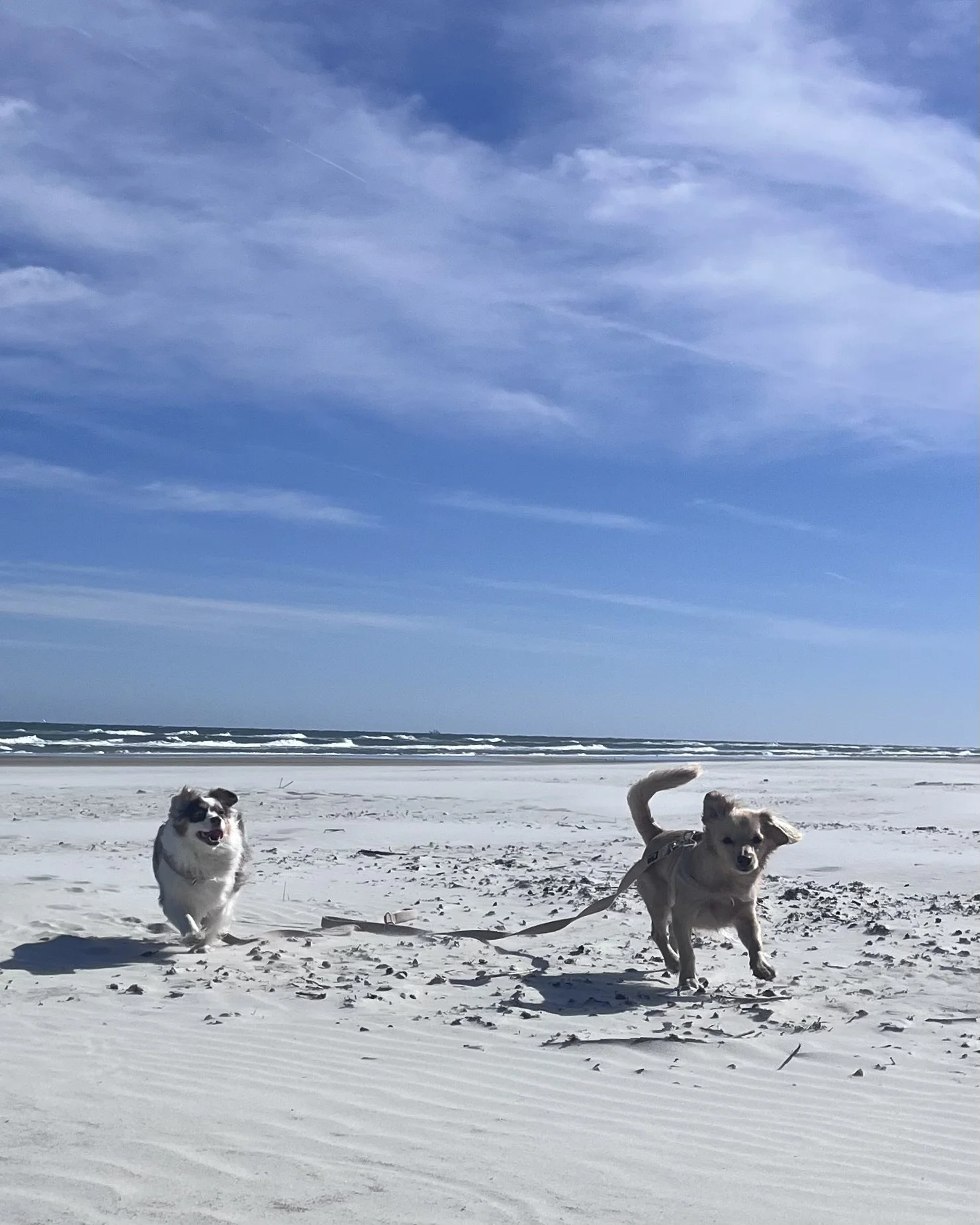
Running along the shoreline at Butler Beach.
What surprised me most wasn’t just the access — it was the beaches themselves. Bright sand, open sky, and almost no one around. The kind of beach where you can actually see how expansive it is.
On one stretch, the beach was so empty that I was able to let go of the leashes and watch pure joy unfold — my dogs sprinting toward a flock of seagulls, ears up, eyes wide. On another day, the river was calm and clean enough that both dogs walked right in without hesitation, and Saydie immediately broke into her doggie paddle.
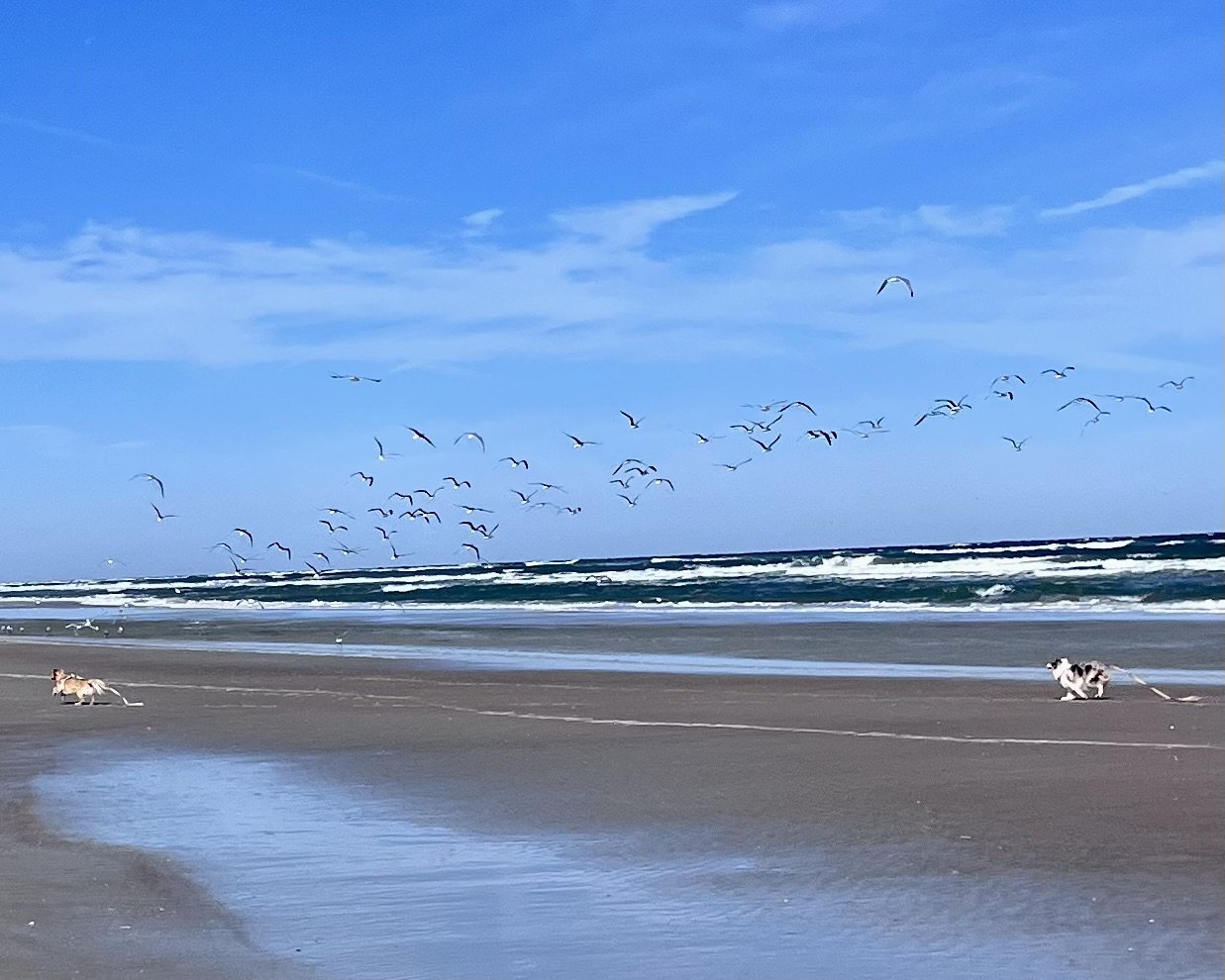
A breezy morning along the Butler Beach shoreline.
In many beach towns, “dog-friendly” comes with an asterisk:
limited access points
winter-only rules
early-morning or evening windows
designated dog sections
That’s what I’ve always known, especially growing up in New Jersey and spending time in New York, where beach access depends on timing, season, and enforcement.
St. Augustine isn’t like that.
Here, dogs are welcome on the beaches year-round. No seasonal bans. No time-of-day restrictions. Just one clear rule: dogs are leashed, and they belong.
That simplicity felt unexpectedly freeing — and something I was genuinely grateful for.
It confirmed what we’d been feeling — the beaches and open spaces suited us better than Old Town, which I wrote about in Walking Old Town St. Augustine With Dogs: A Slow Afternoon.
If you’re deciding whether Old Town is manageable with a small dog, I break down the comfort factors here.
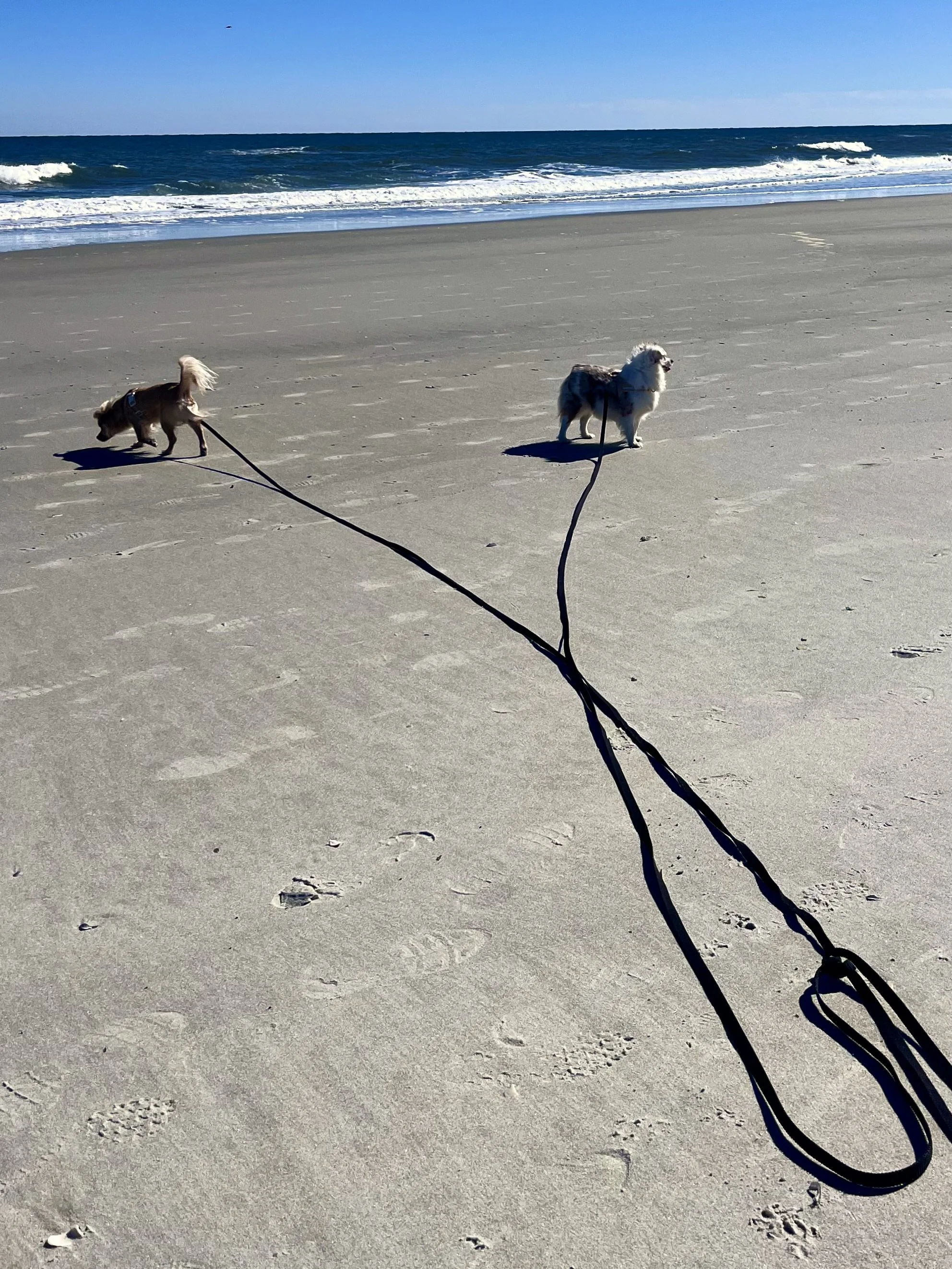
Wide, open sand at Butler Beach.
Butler Beach: A Quiet, Dog-Friendly Beach in St. Augustine
Butler Beach stood out for how calm and quiet it was, with long stretches of empty shoreline. The sand is bright and clean, and access felt easy and low-key.
It was quiet enough that the dogs could move easily along the shoreline — birds at the waterline, shifting tides, and wide-open space — without the usual distractions of crowds or noise.
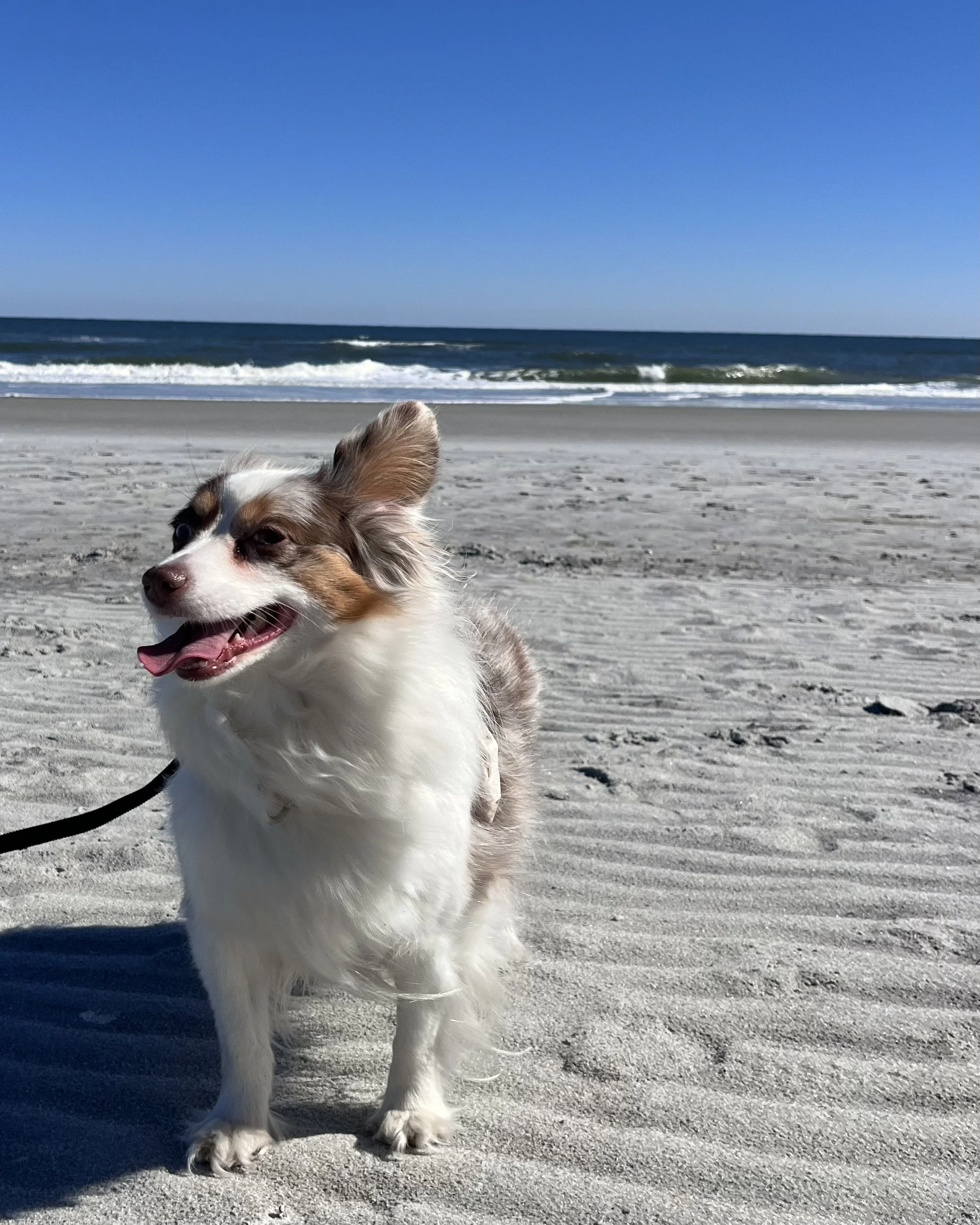
A breezy walk.
To catch the sunset, we crossed to the other side of the island.
The Butler Beach boat ramp area turned out to be an especially good spot toward the end of the day. The water is calmer there, and it’s an easy place to pause and watch the light change. It felt local, unhurried, and unrushed.
For a full breakdown of how Butler Beach compares to other quieter options, see my guide to the best alternatives to busy Old Town St. Augustine.
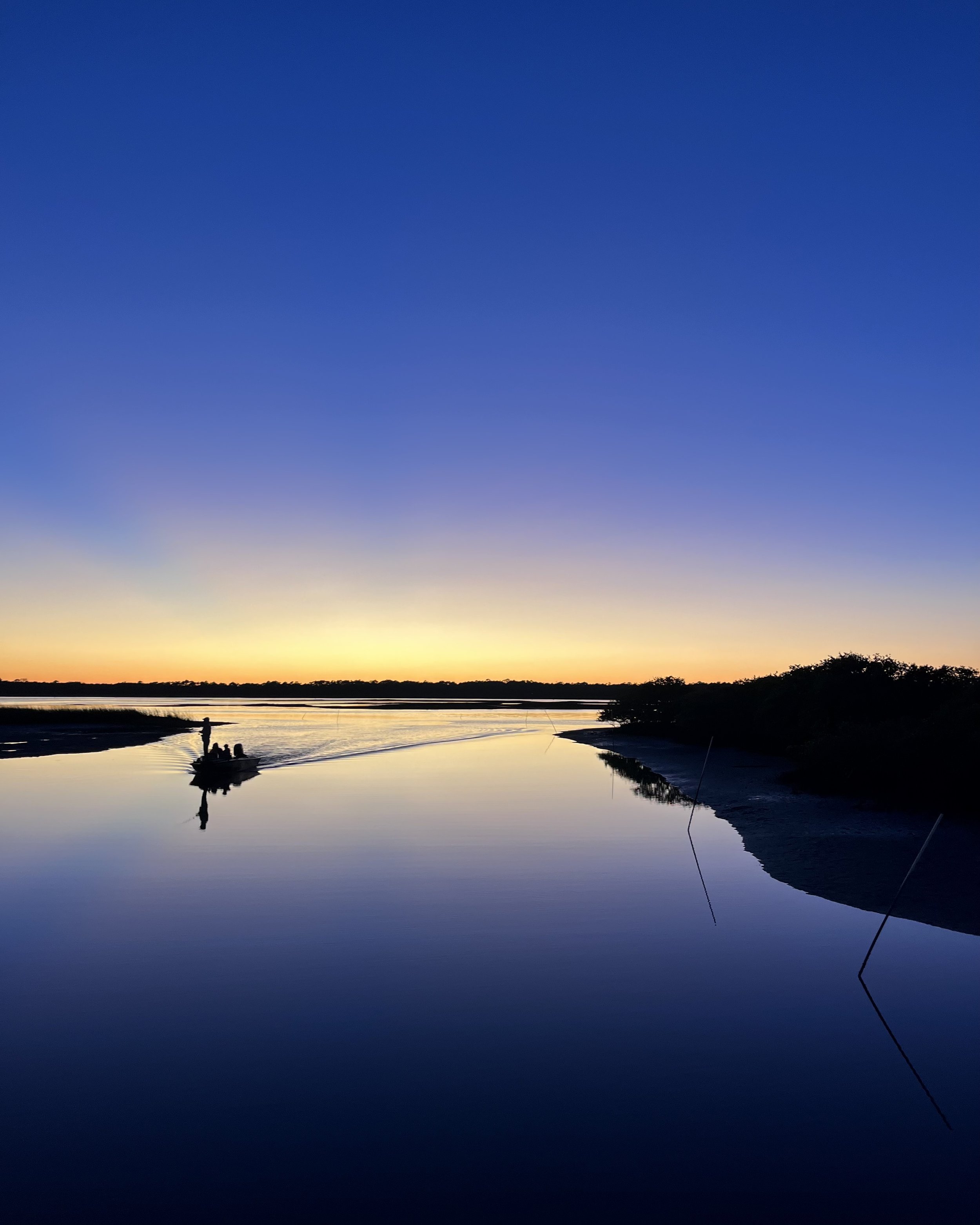
Dusk along the marsh near Butler Beach.
Vilano Beach (Scenic and Close to Town)
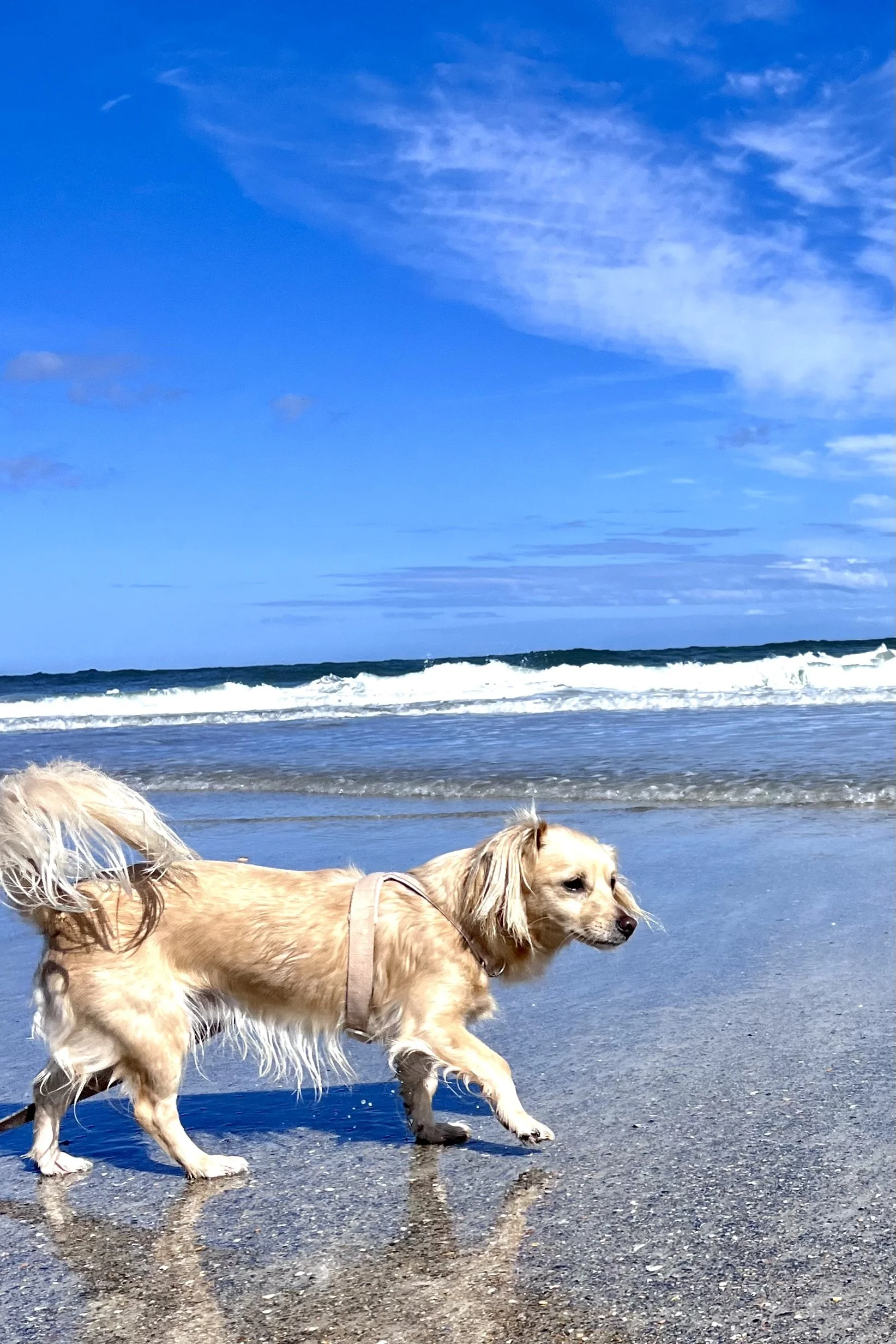
Walking along the shoreline at Vilano Beach.
Vilano Beach felt different from Butler Beach right away. Closer to St. Augustine, it feels more connected to town, bringing a bit more activity without feeling crowded.
The shoreline is broader but more compact, with visible coquina rock mixed into the sand. That gives Vilano a slightly darker, more textured look compared to Butler Beach’s lighter, creamier sand — especially noticeable near the waterline.
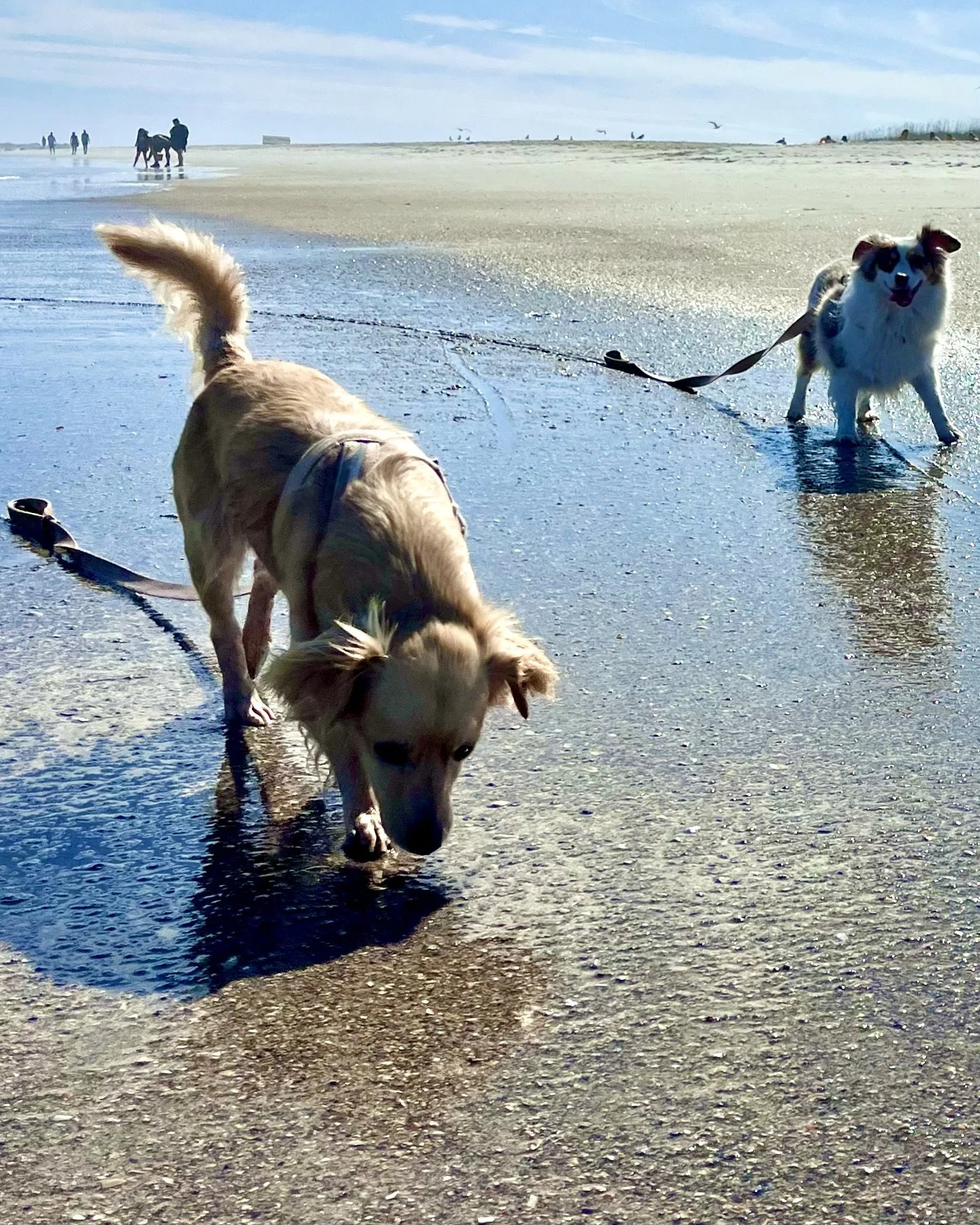
Dogs walking along the wet sand
While Butler Beach stood out for being quiet because it was empty, Vilano stood out for being visually striking. Nearby homes and access points add a sense of place, and there’s more going on — people walking, fishing, or heading to nearby food spots — without the beach feeling overrun.
Vilano balances openness with proximity: calm, scenic, and close to town without sacrificing space.
Matanzas Inlet (Powerful Ocean, Calm River)
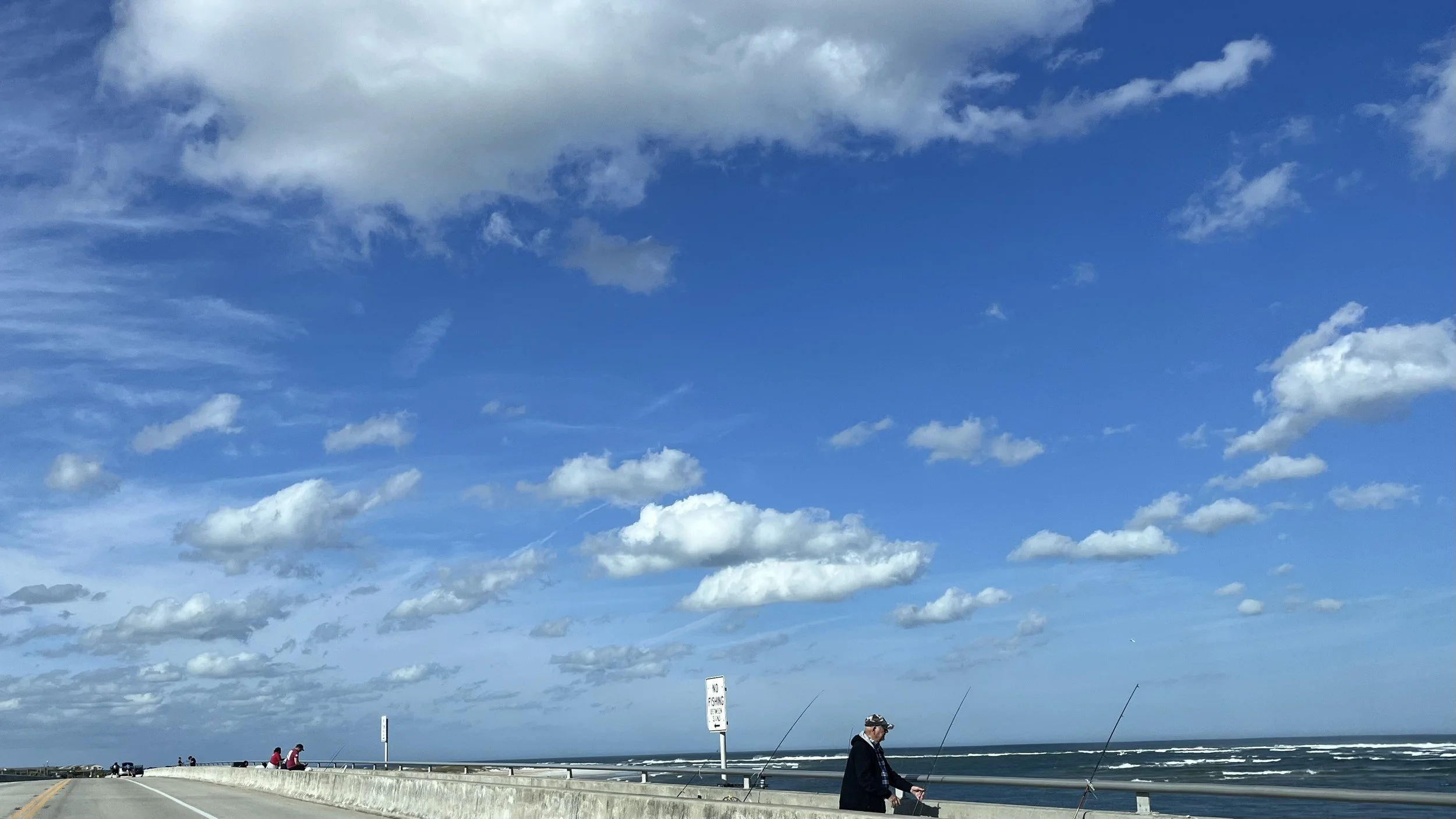
Bridge fishing and open ocean views.
We drove down to Matanzas Inlet, crossing the bridge where locals were fishing, and parked in a small lot overlooking the ocean. From there, we walked back toward the bridge — about a five-minute walk — to take in the additional views along the inlet.
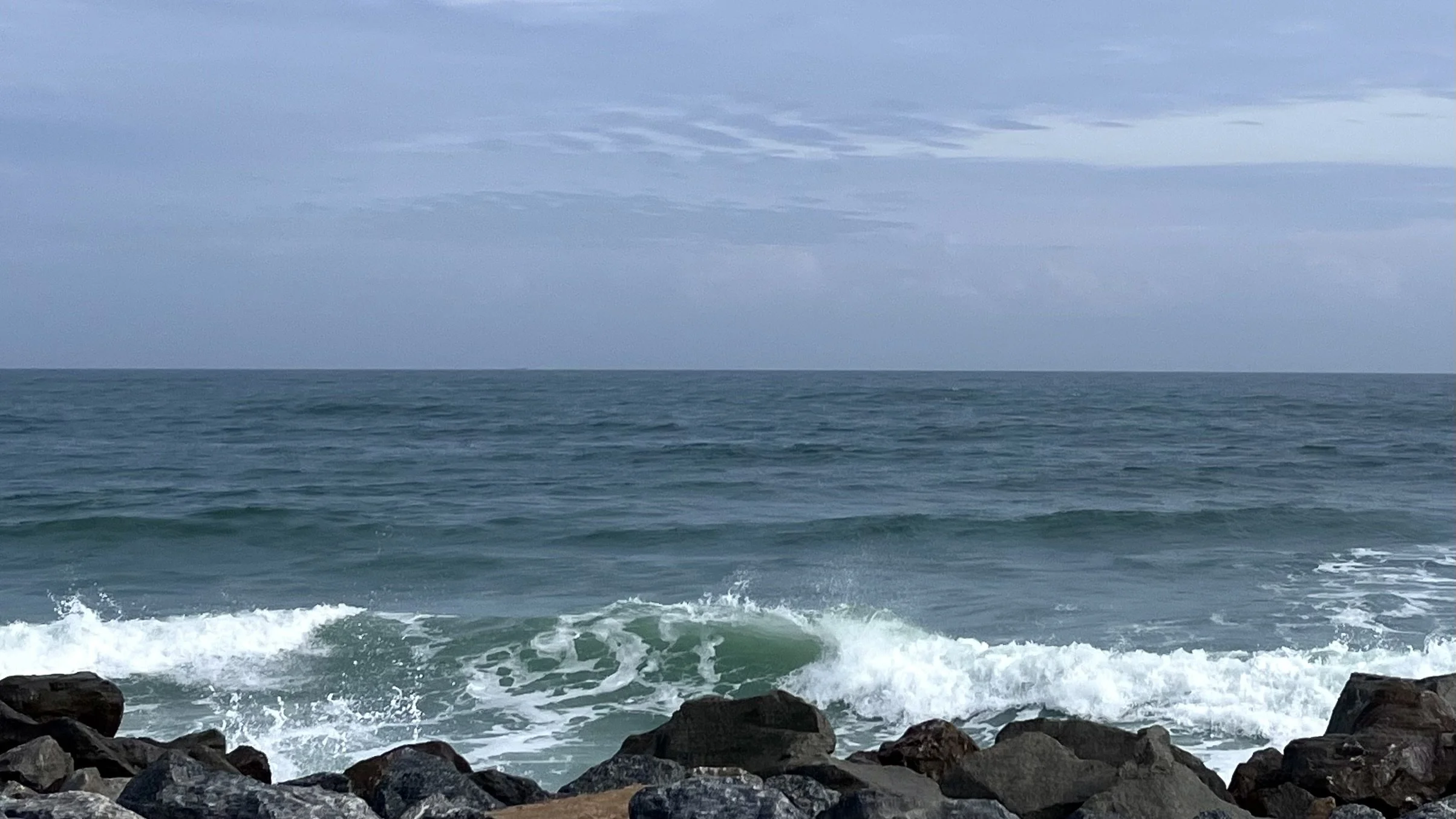
The shoreline at Matanzas Inlet.
What we noticed immediately was the force and power of the ocean.
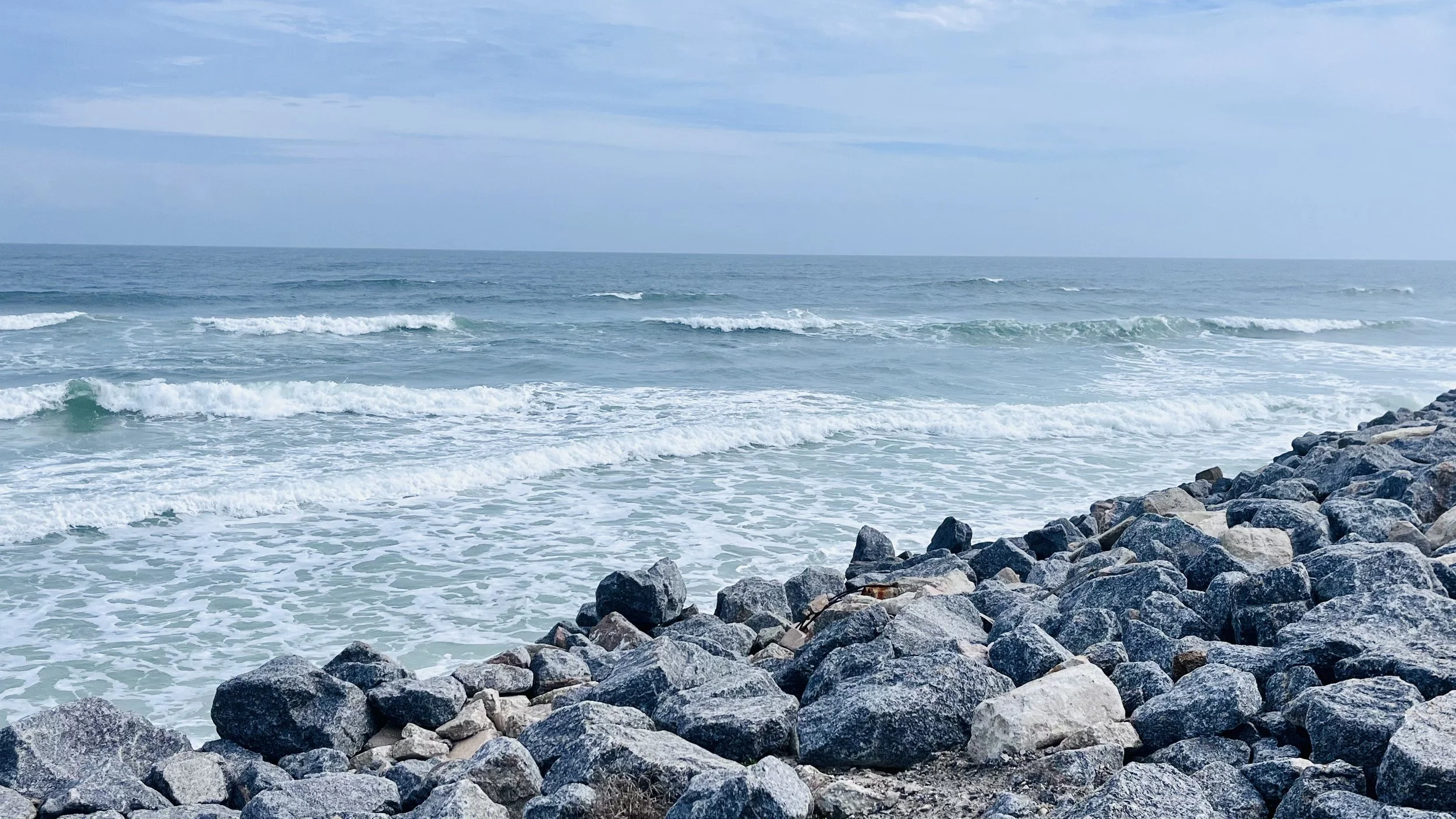
A rougher stretch of shoreline.
The ocean side is dramatic and powerful. Waves crash hard along the shoreline, and the water is rougher, with strong currents and a rugged, rock-lined edge.

Exploring the inlet on foot at Matanzas Inlet.
Wind, waves, and the rugged shoreline define this side of the inlet.
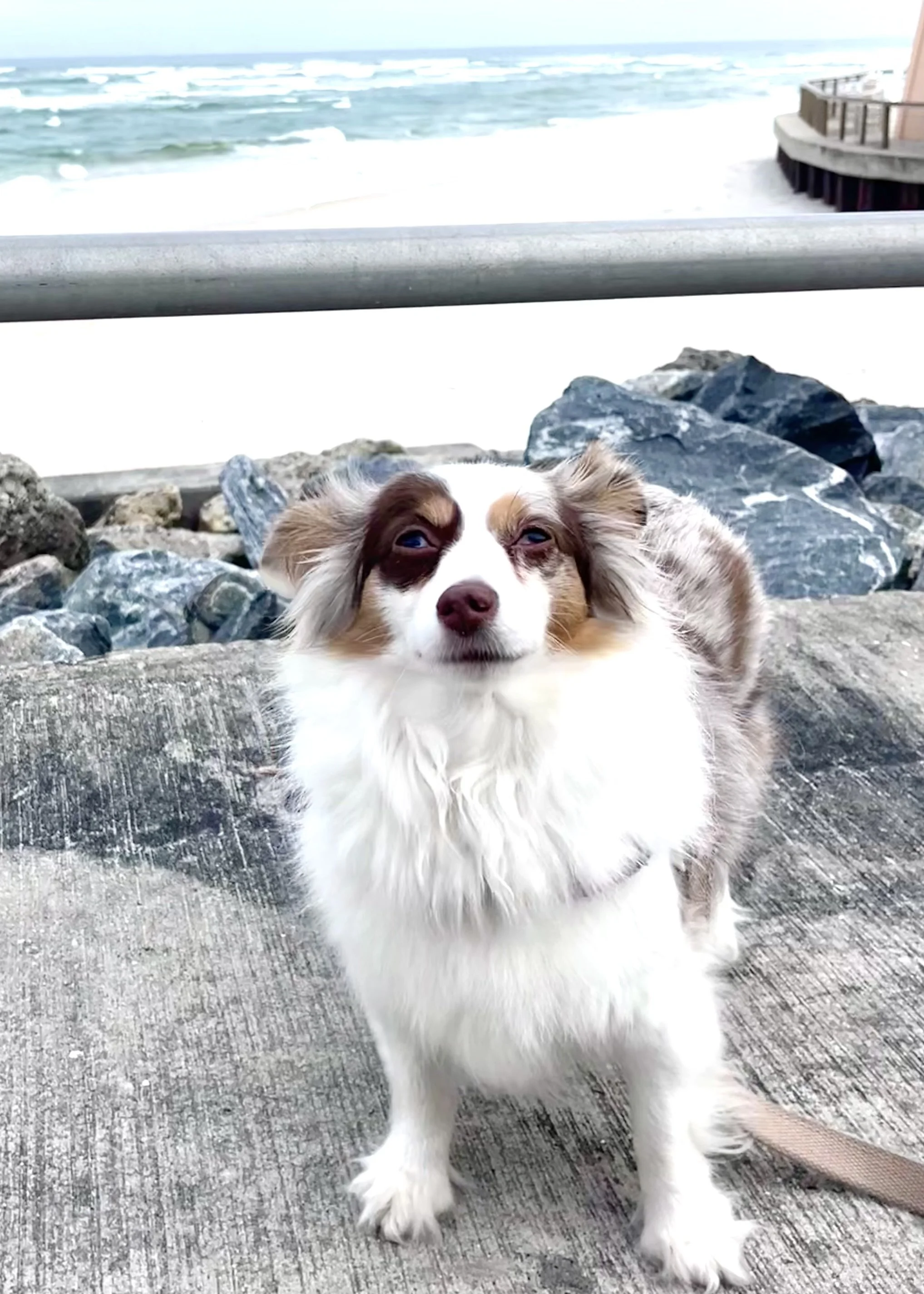
Wind, waves, and the rugged shoreline.
In contrast, the river side of the inlet is calmer and shallower. That side allows for quieter walks along lighter sand, offering a completely different experience within the same landscape.
Fort Matanzas National Monument (History and Calm Water)
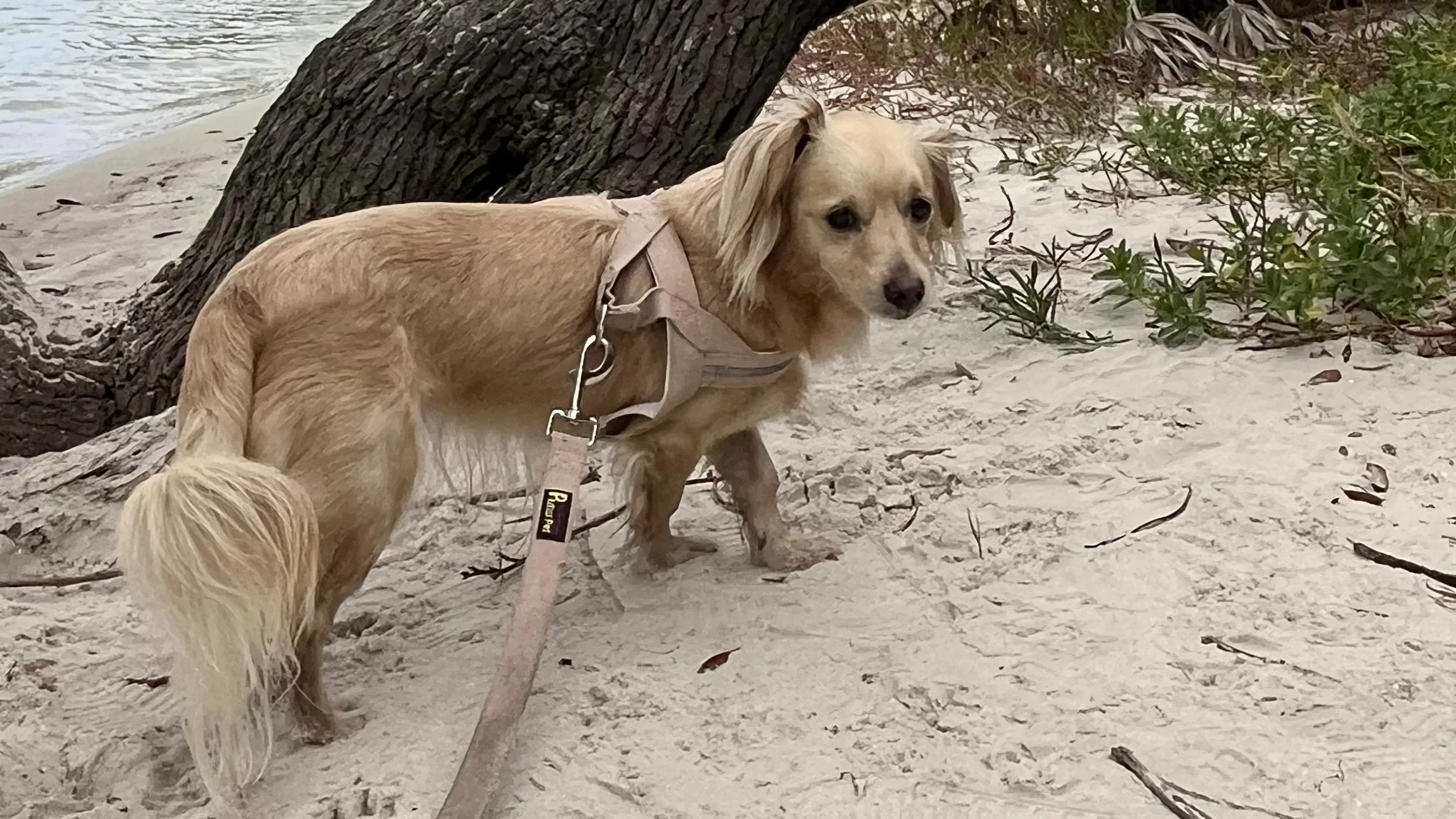
Exploring the sandy edges near the inlet.
Just north of Matanzas Inlet, Fort Matanzas National Monument provided a quieter pause and a sense of history along the coast.
A flat boardwalk leads through the coastal landscape, making for an easy, pleasant walk before reaching the water.
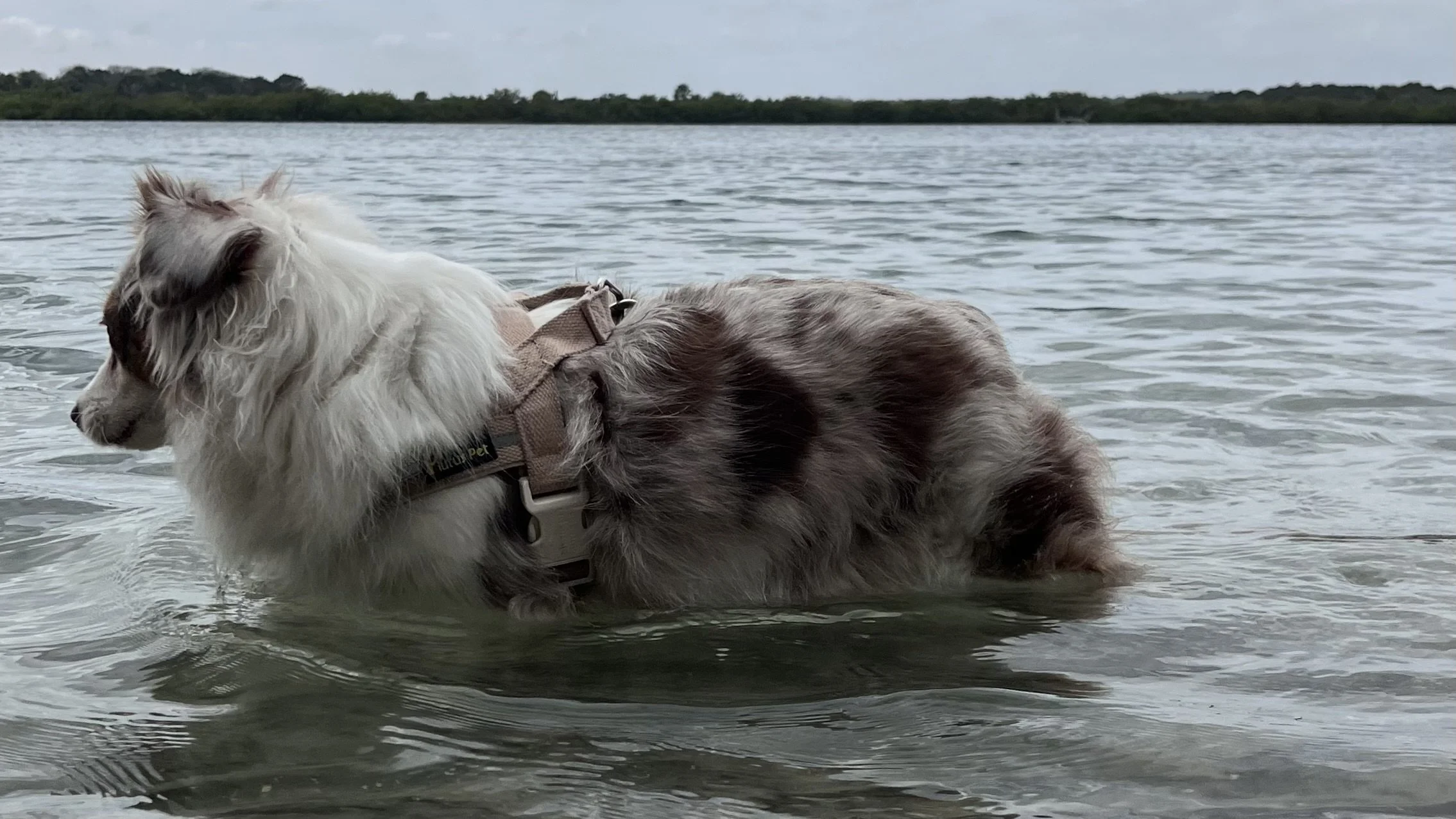
Wading in the calm water at Matanzas Inlet.
The shoreline here is quieter and more contained, better suited for slow walks than watching heavy wave action.
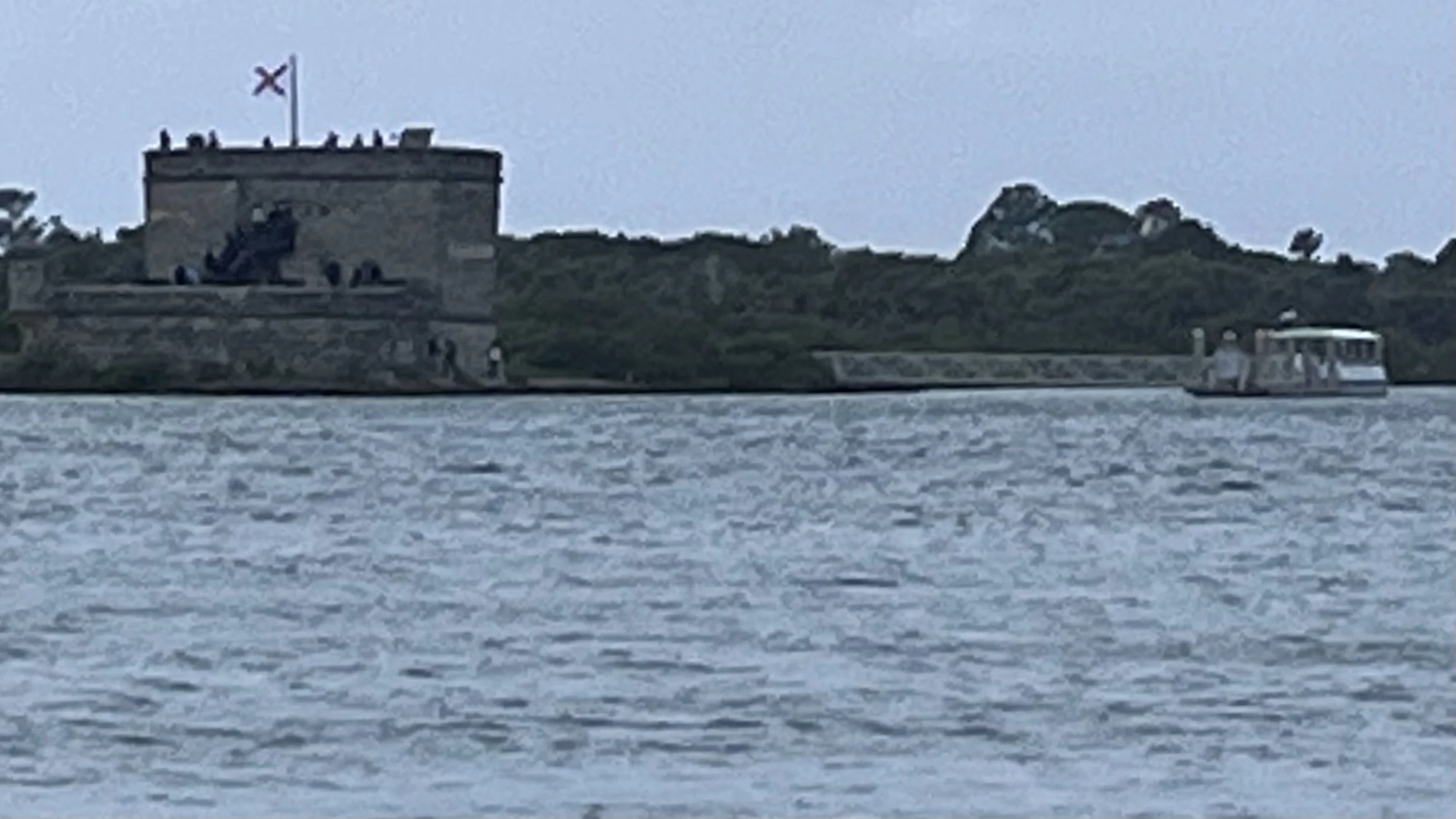
Fort Matanzas across the inlet.
From the water, the fort is visible across the river — a reminder of how closely this area connects to the early history of St. Augustine. The mix of boardwalk, water views, and history made this stop feel relaxed and meaningful without requiring much time or effort.
Guana Tolomato Matanzas Reserve (Forest-to-Shoreline Walk)
Guana Tolomato Matanzas National Estuarine Research Reserve offered one of the most varied outdoor walks of the trip.
The trail moves through maritime forest, transitions into coastal scrub, and eventually opens onto the shoreline.
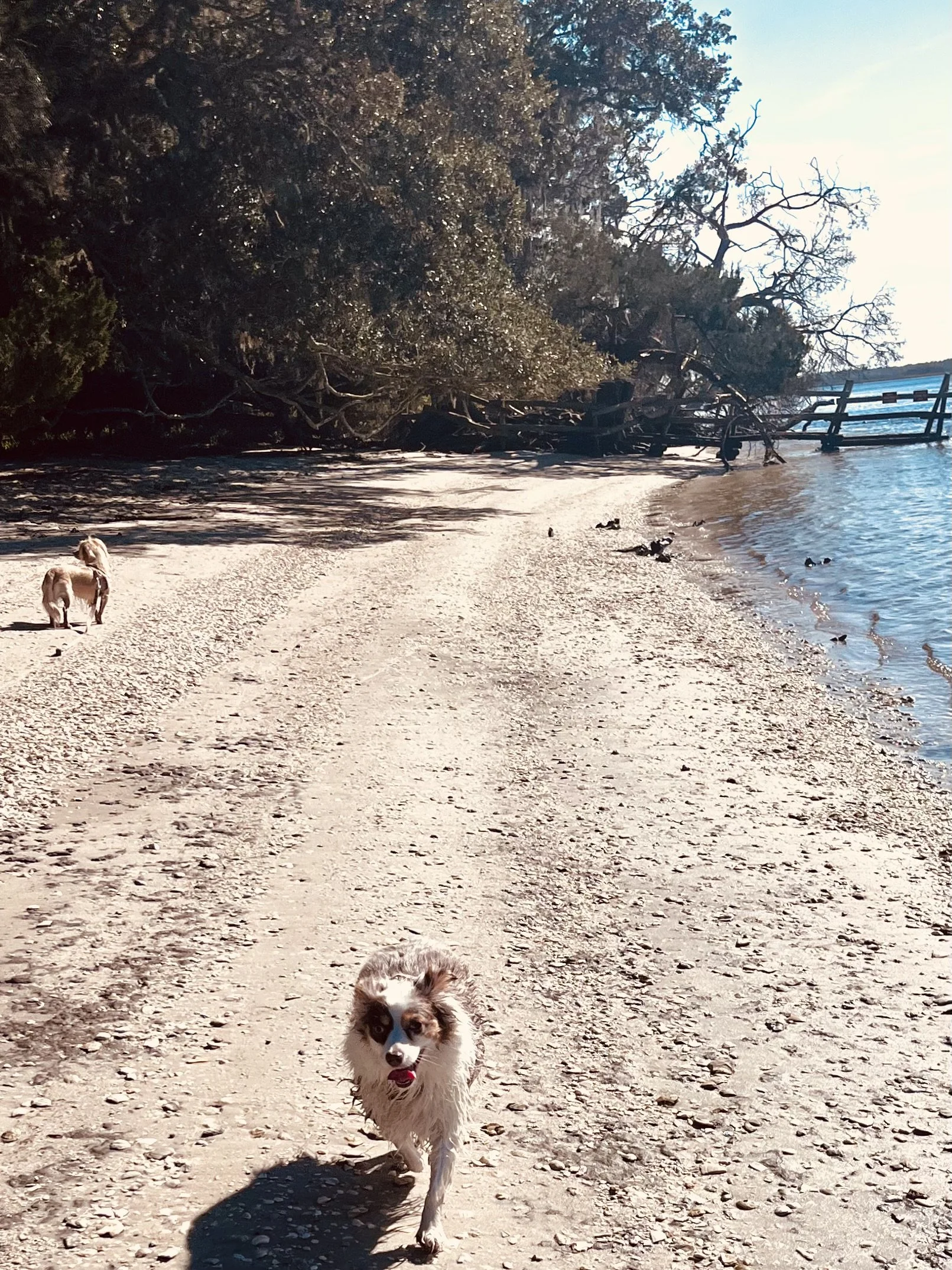
Running along the coquina sand.
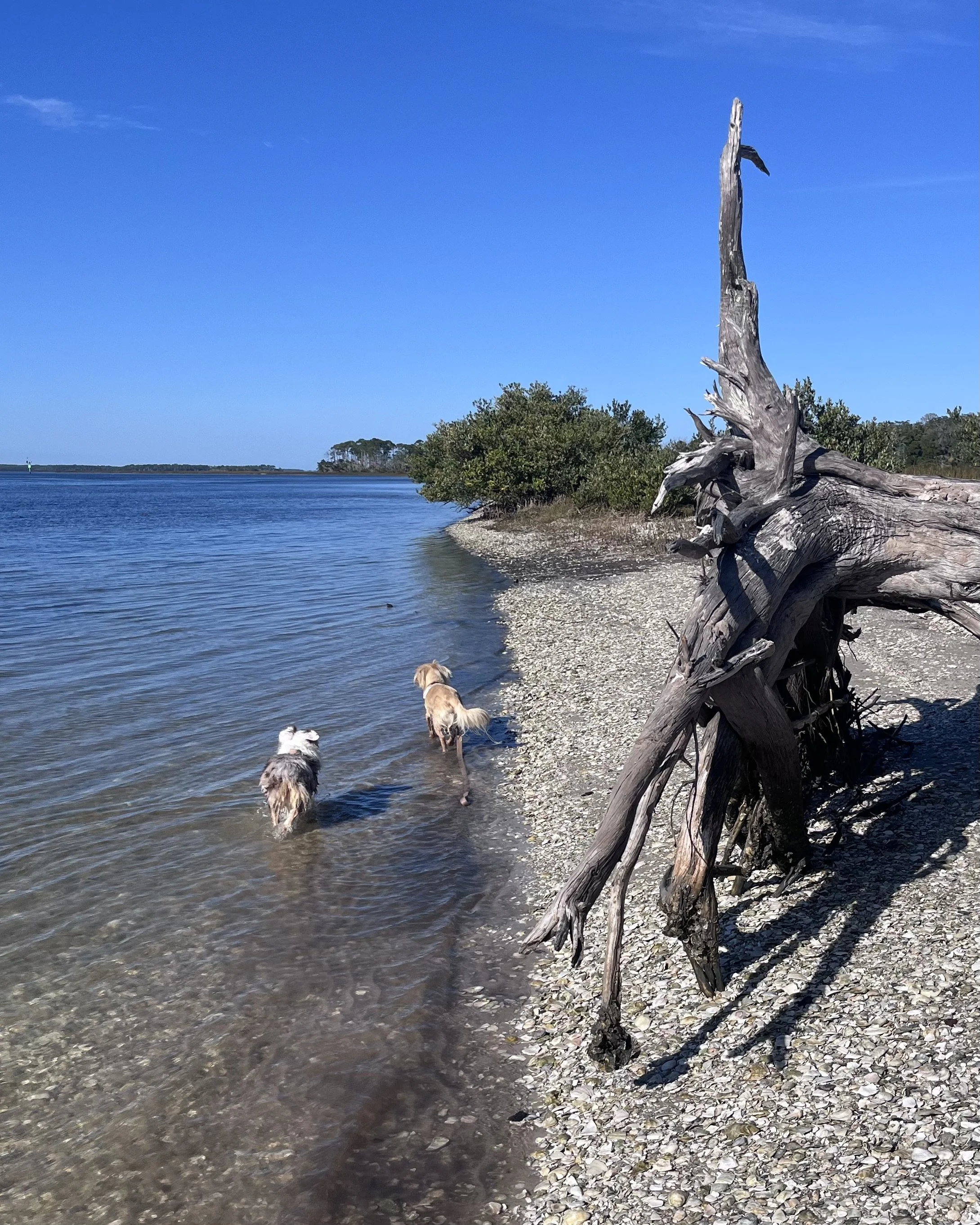
Along the shell-covered shore.
The trail is well-marked and about a mile long, easy to walk at a relaxed pace. Forested sections feel enclosed and shaded, while scrub areas open up with more light and lower vegetation.
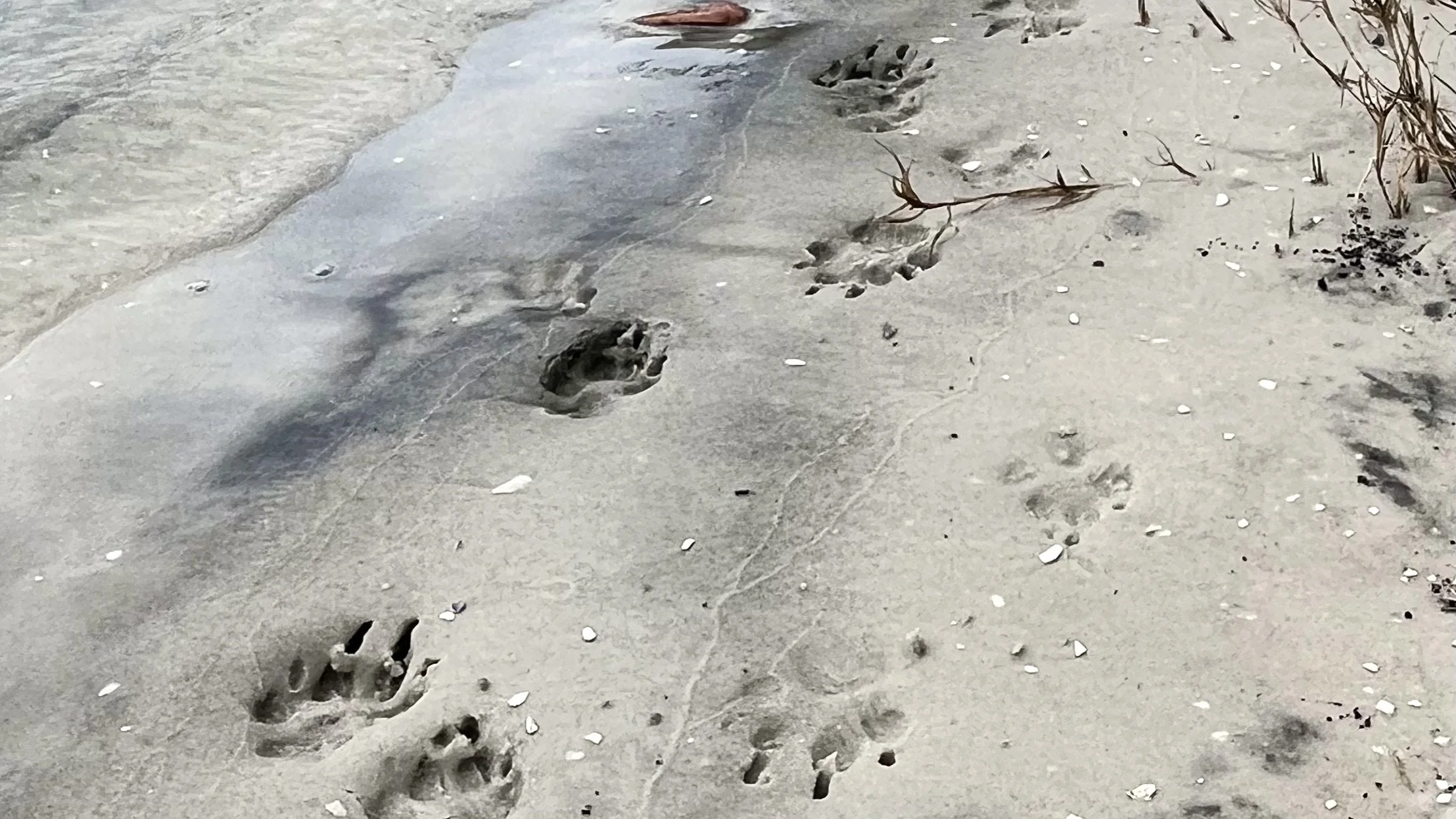
Paw prints along the water’s edge.
At the end, the trail reaches a quiet, undeveloped beach where coquina rock meets the water. With very few people around, it felt more natural and untouched than beaches closer to town — and the dogs clearly enjoyed the water here.
Guana Tolomato stood out not for one feature, but for how much it offers in a short walk: forest, open land, and shoreline in one continuous experience.
Washington Oaks Gardens State Park (Old Florida Landscape)
Washington Oaks Gardens State Park feels distinctly different from the coastal stops before it.
The grounds are dense and shaded, with massive live oaks draped in Spanish moss.
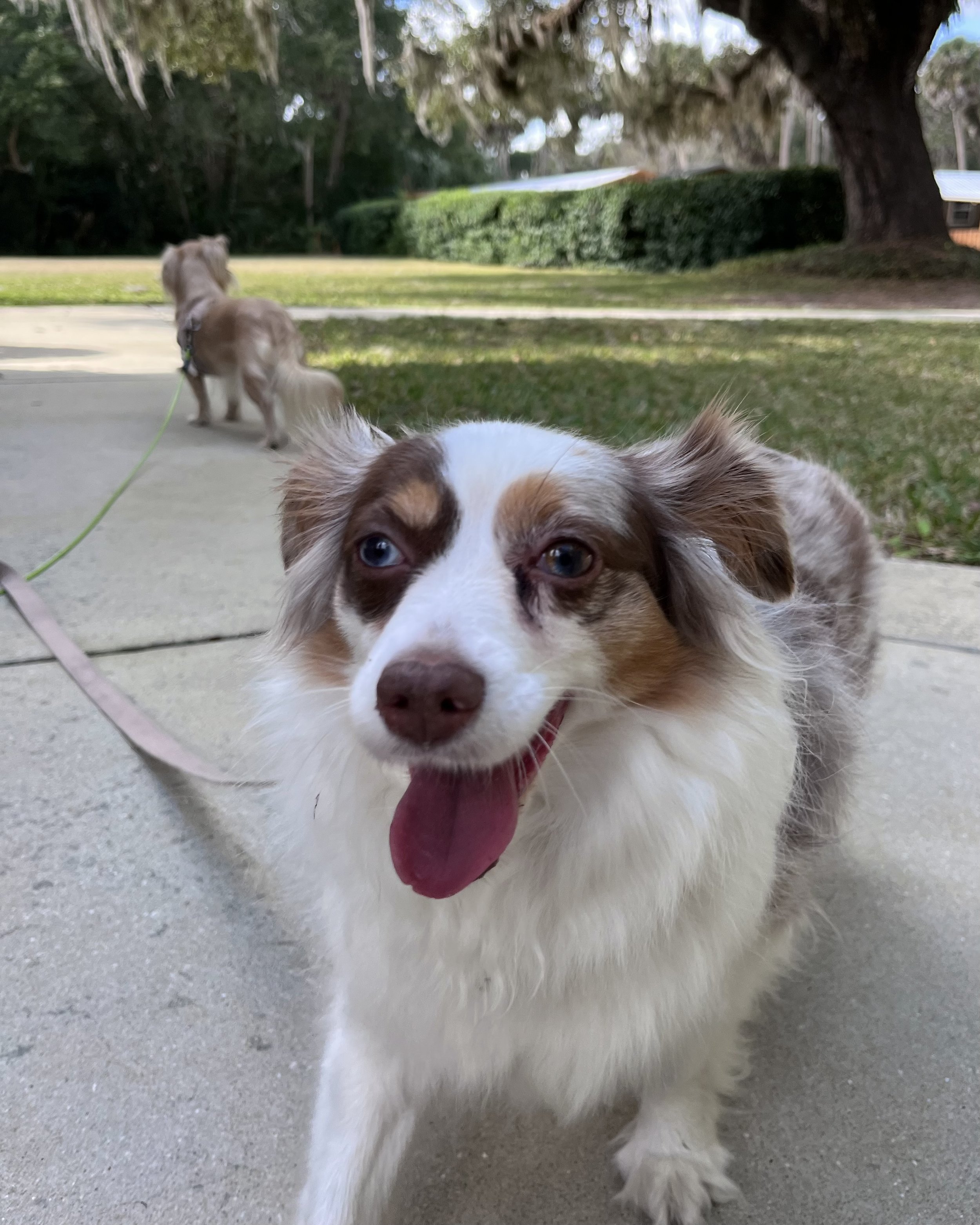
Happy pause during a walk.

Coastal trail through palms near Washington Oaks Gardens State Park.
As you walk the paths, the vegetation closes in. Palmettos, vines, and low shrubs fill the space beneath the canopy, and the light shifts constantly. The effect is lush and immersive — more “Old Florida” forest than beach landscape.
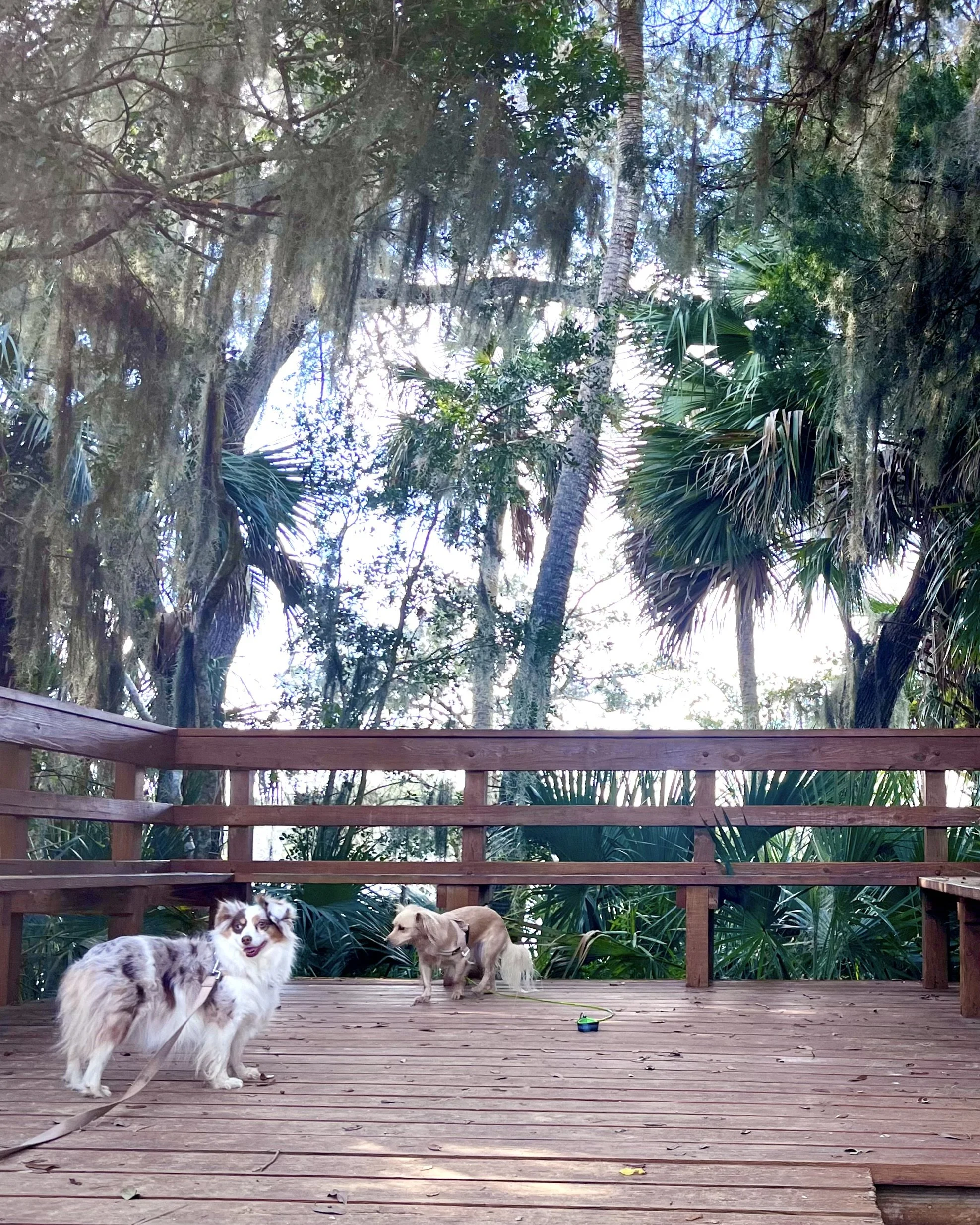
A shaded boardwalk, surrounded by palms and live oaks just off the sand.
Along the water, the scenery changes again. Coquina rock lines the shoreline, creating a rugged, dramatic contrast with the ocean.
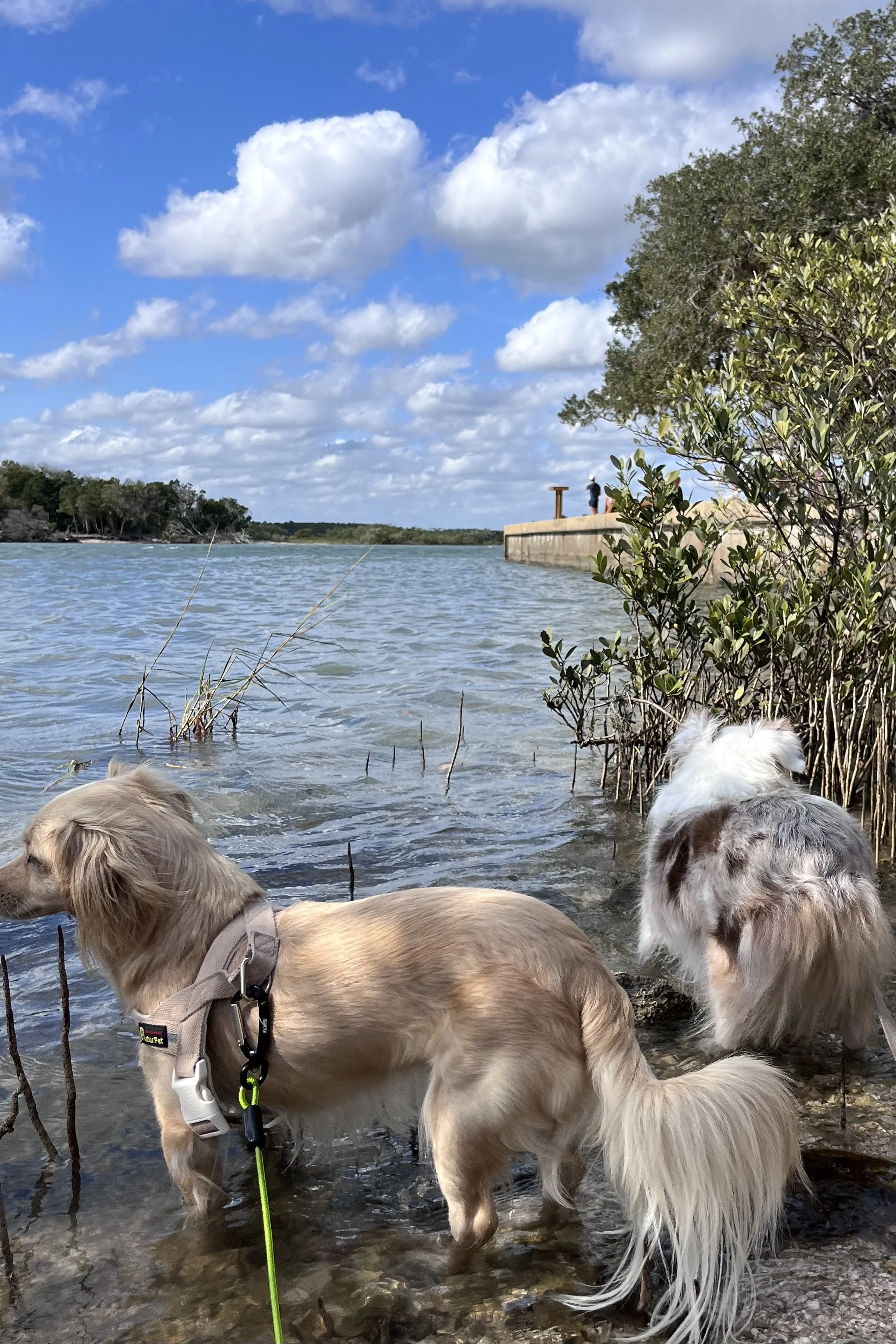
Watching the water from the shoreline.
Washington Oaks stood out for its variety in a compact space: shaded forest paths, formal garden areas, and rocky shoreline all within one park. It felt quieter, cooler, and more enclosed — a clear shift from the wide-open beaches elsewhere along the coast.
Closing: Why January Works in St. Augustine
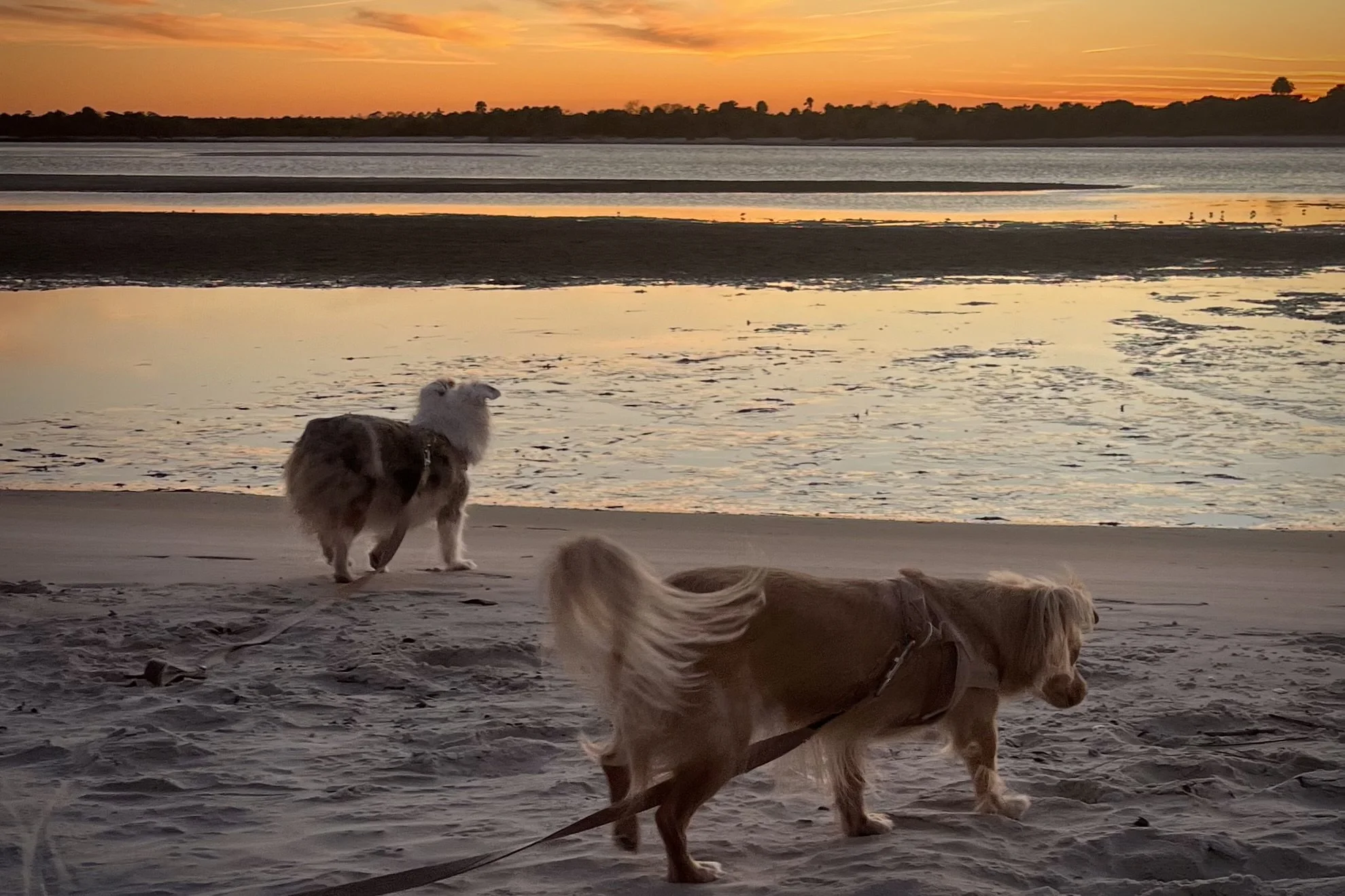
Evening walk along the shore.
January proved to be an ideal time to visit St. Augustine. Mild weather, empty beaches, and generous dog-friendly access made it easy to spend long days outdoors without overthinking logistics. Moving between beaches, inlets, parks, and shaded trails felt natural and unrushed. It was the kind of trip where plans stayed loose, days unfolded easily, and being outside — especially with dogs — felt like the whole point.
If you’re planning your first visit, start with my complete guide to St. Augustine with small dogs to see how these areas fit together.
