Fort Washington Park With Dogs: Exploring Historic Grounds Above the Potomac
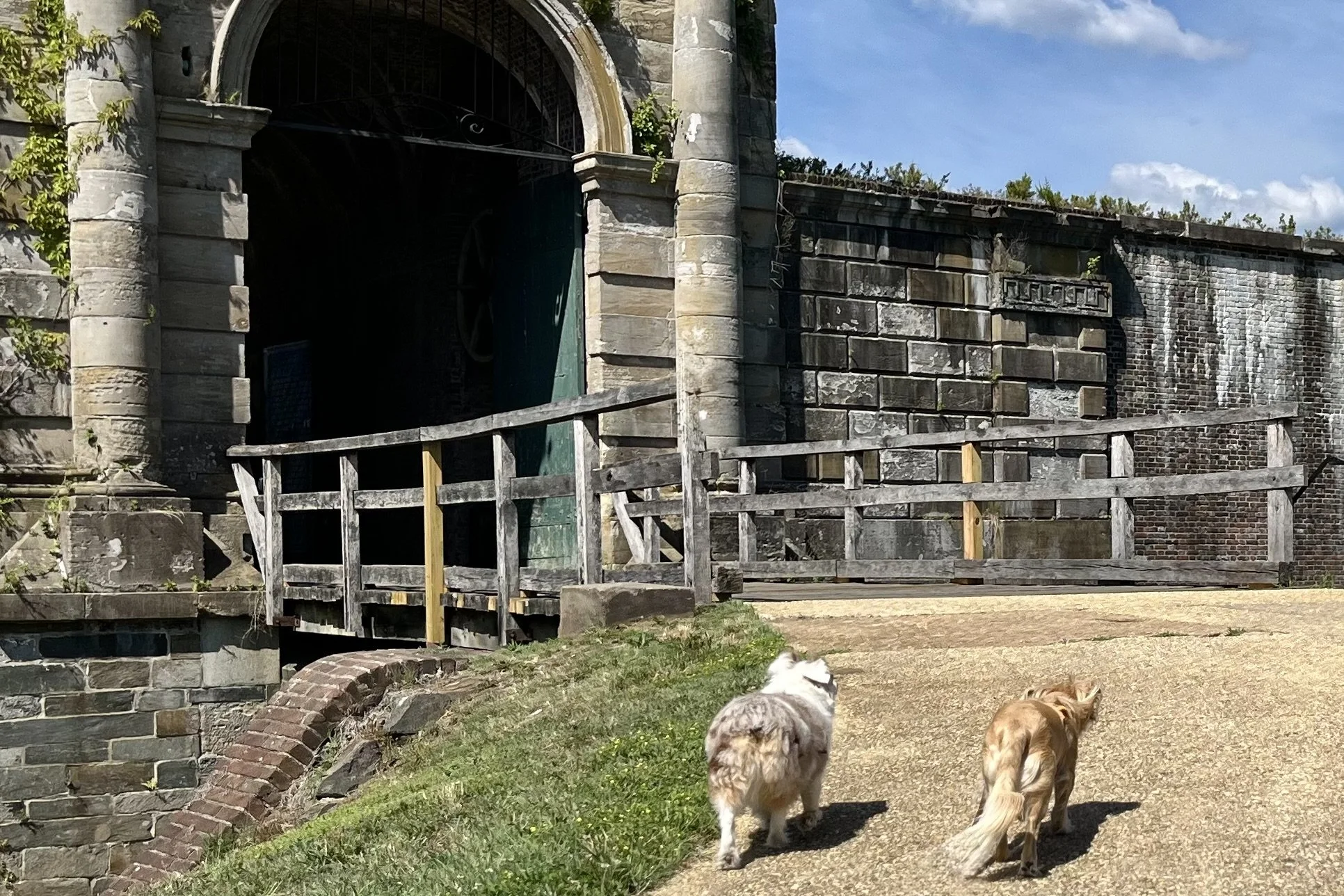
The fort entrance quickly became the focal point of our visit as we made our way across the bridge.
Fort Washington doesn't immediately announce itself. After parking, we started walking uphill through the grounds, and it wasn't until the fort came into view that we realized how much there was to explore. The brick walls rise above the Potomac, and as we approached the main gate, our attention shifted from the views to the architecture itself.
We visited on a hot Saturday and spent about two hours exploring the grounds with Archie and Saydie. What stood out most wasn't a single overlook or historic feature, but the way the different parts of the park fit together. There were elevated river views, open lawns, historic structures, and enough room to spend time wandering without feeling rushed.
For visitors looking for a dog-friendly outing near Alexandria or Washington, DC, Fort Washington offers a combination of history, scenery, and space that feels different from many other Potomac destinations.
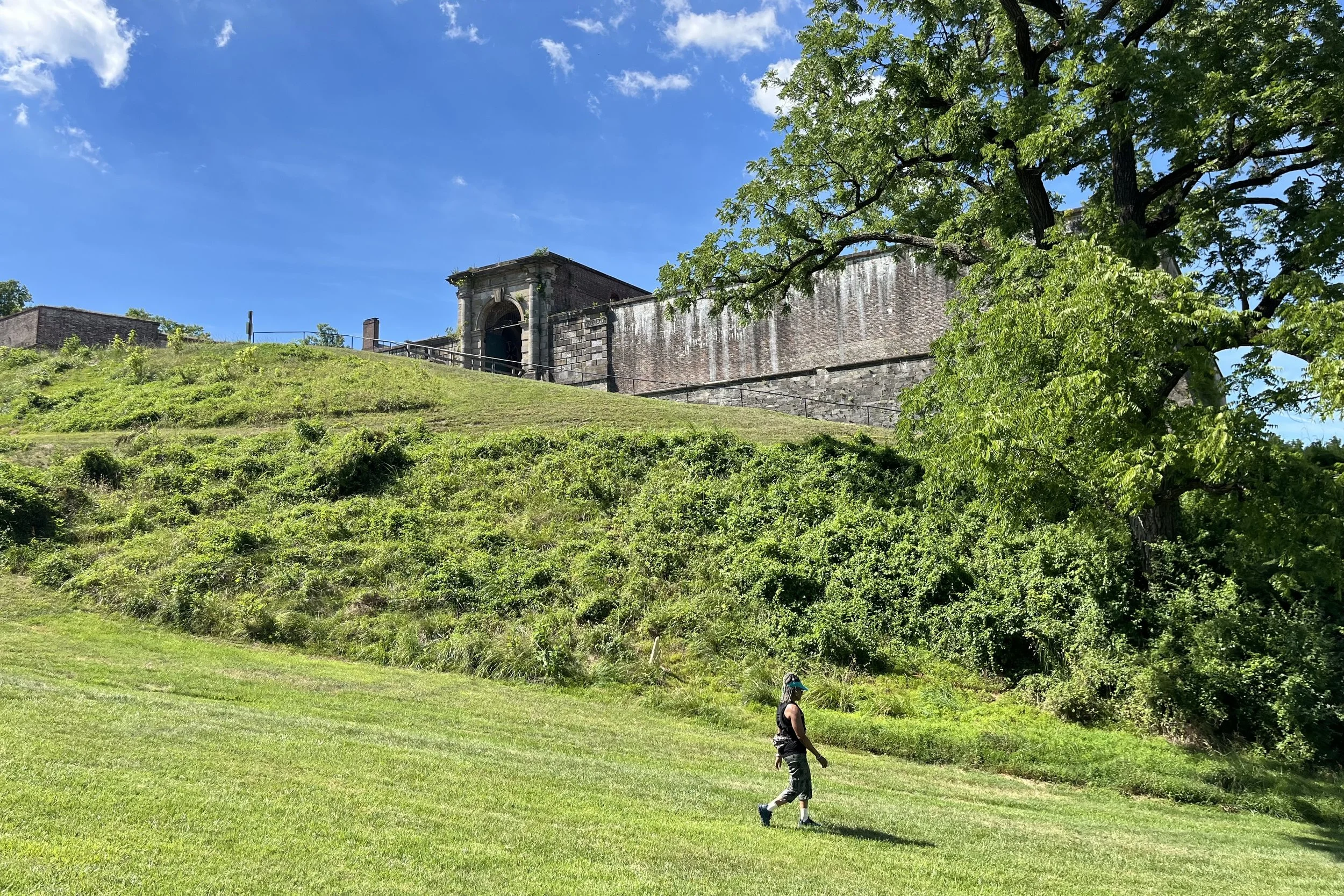
From the lower grounds, it wasn't immediately obvious how large the fort was until we started making our way uphill.
Walking Up to the Fort
One of the most memorable parts of the visit was the approach itself.
From the parking area, Fort Washington looked relatively modest. As we started walking uphill, more of the brick walls and historic structures came into view, and it became clear there was much more here than we initially realized.
The walk toward the fort gradually builds. The elevated position becomes more obvious as you climb, and so do the views across the Potomac. Unlike some historic sites where the main attraction is visible immediately, Fort Washington reveals itself piece by piece.
By the time we reached the main gate, it felt less like we were arriving at a single building and more like we were entering an entire historic complex.
The climb is noticeable, especially on a hot day, but it contributes to the experience. The changing perspective makes the fort feel connected to the landscape around it rather than separated from it.
Inside the walls, the fort opened into multiple courtyards, buildings, overlooks, and pathways. Each section seemed to lead to something else worth exploring, and we kept finding reasons to continue walking farther.
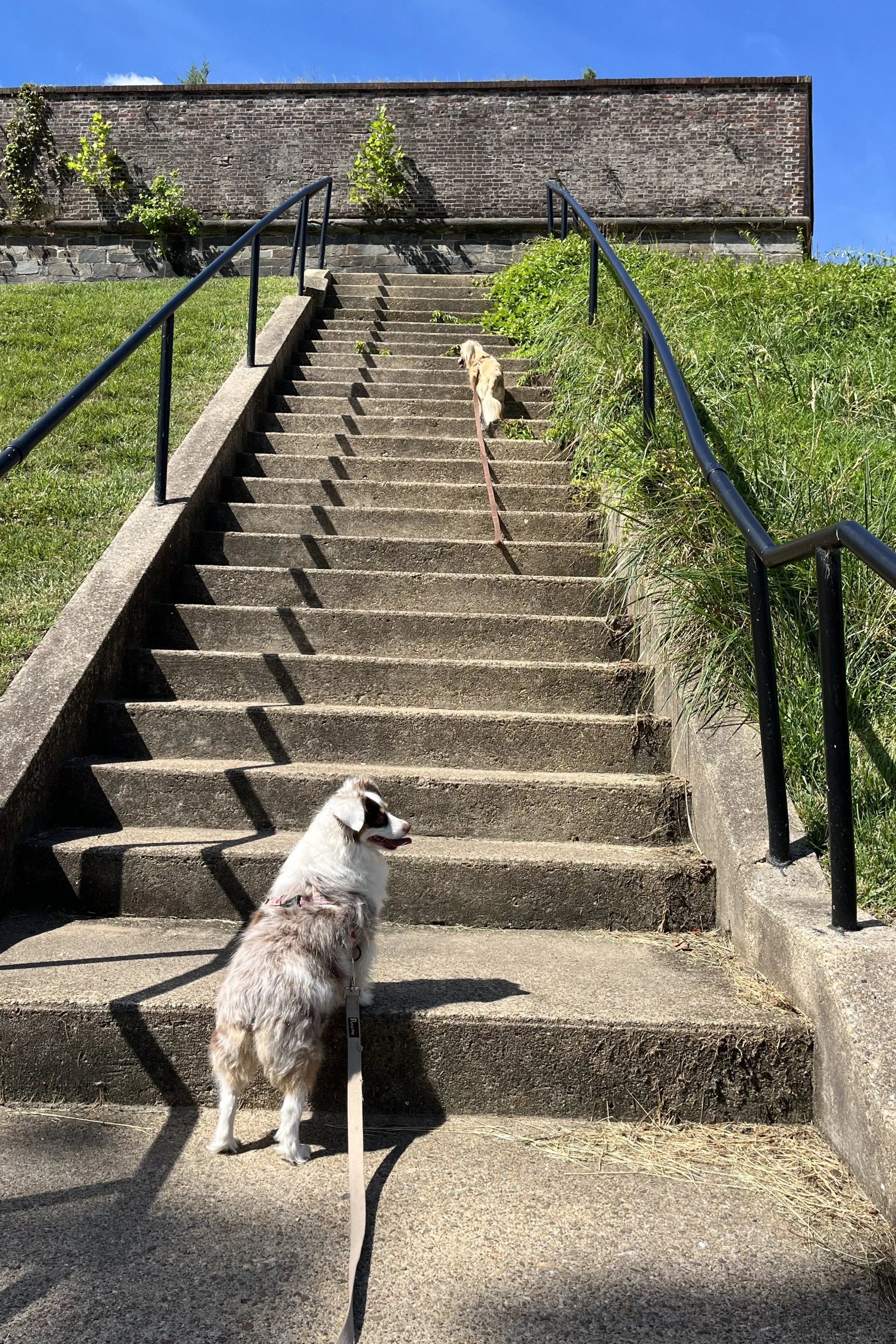
Archie tackled the staircase without hesitation, while Saydie paused halfway through to check her surroundings before continuing.
Partway up the hill, a long set of stone steps leads toward the fort. Archie immediately charged ahead, eager to see what was at the top. Saydie followed close behind but paused several times to glance back and make sure I was coming. Watching the two of them approach the climb so differently became one of my favorite moments of the visit.
Exploring the Historic Grounds
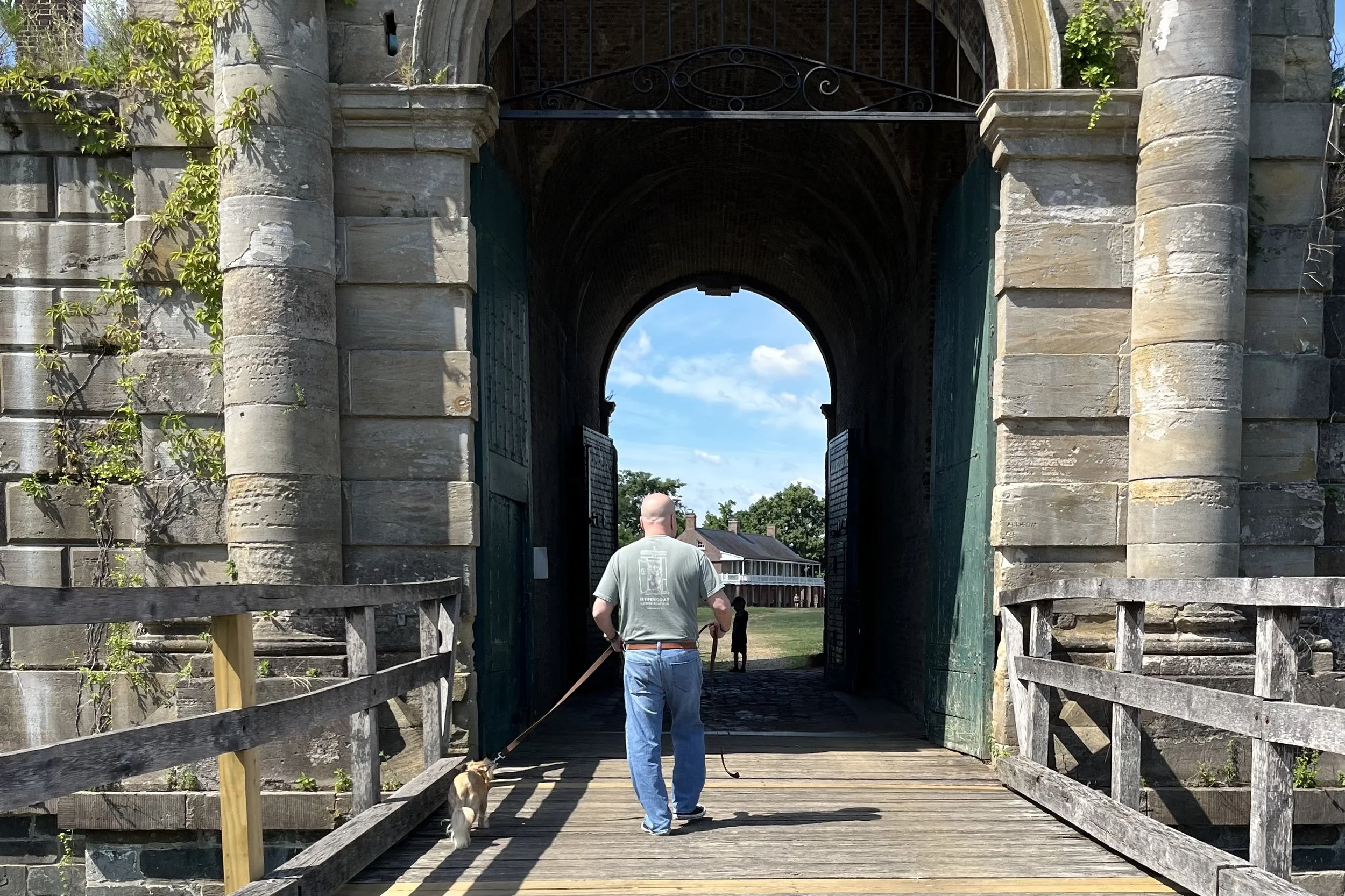
Crossing the wooden bridge and passing through the main gate felt like entering a completely different part of the fort.
We expected to spend a few minutes looking around before moving on. Instead, we kept finding another staircase, courtyard, doorway, or overlook worth exploring.
Walking through the main gate immediately draws your focus toward the architecture. The brick walls, arched openings, courtyard, and historic buildings create an environment that feels remarkably intact.
What stood out to me wasn't the military history as much as the physical details. The gate, the brickwork, the layout of the fort, the old engineering features, and the way the structures fit together made it easy to imagine how the site once functioned.
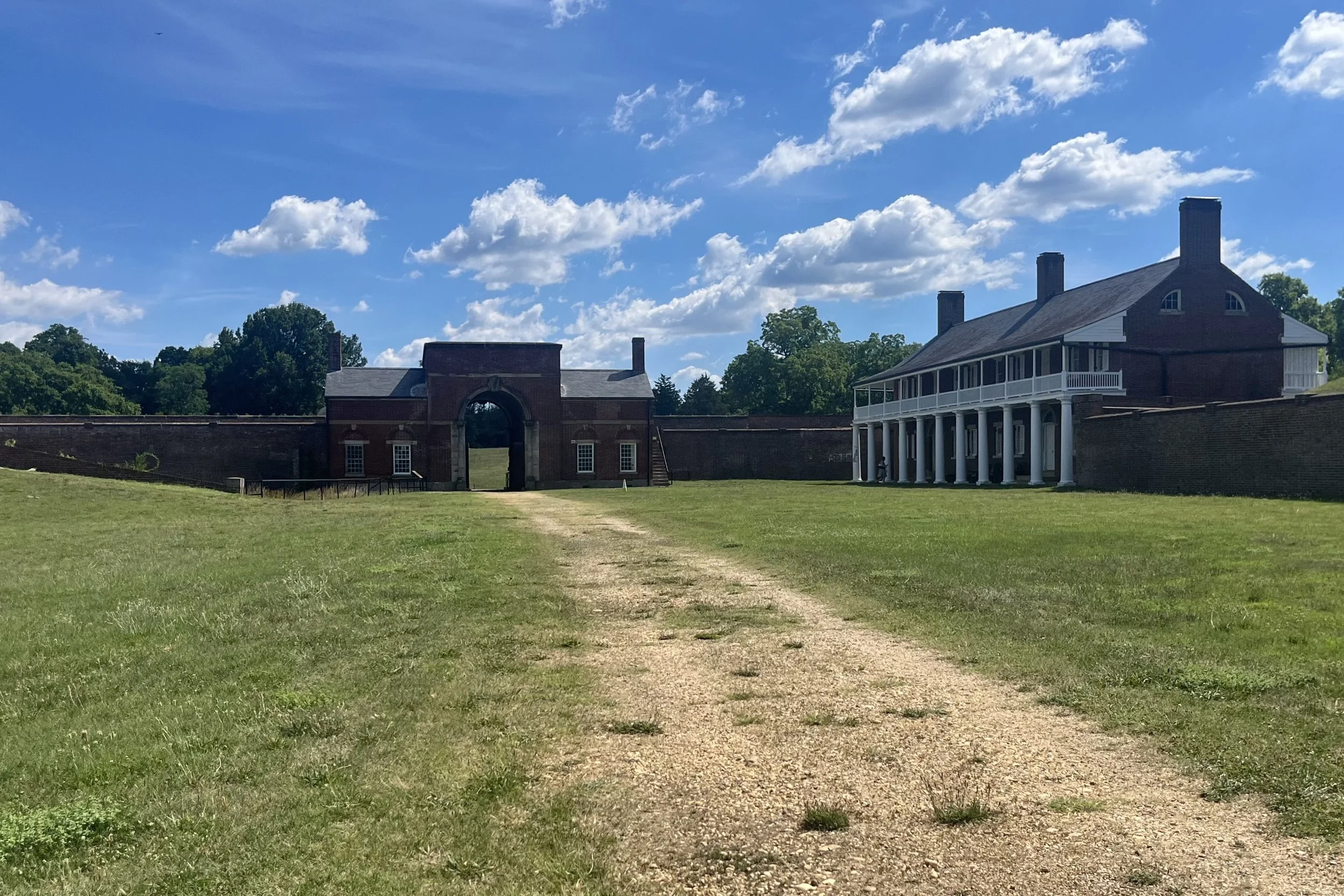
After entering through the main gate, we were surprised by how much open space was hidden inside the fort walls.
The courtyard became a natural place to slow down and look around. From there, we wandered between different sections of the fort, stopping frequently to examine architectural details and views we hadn't noticed at first glance.
While the cannons are one of the park's most recognizable features, I found myself paying more attention to the buildings, walls, and gateways than the military displays themselves.
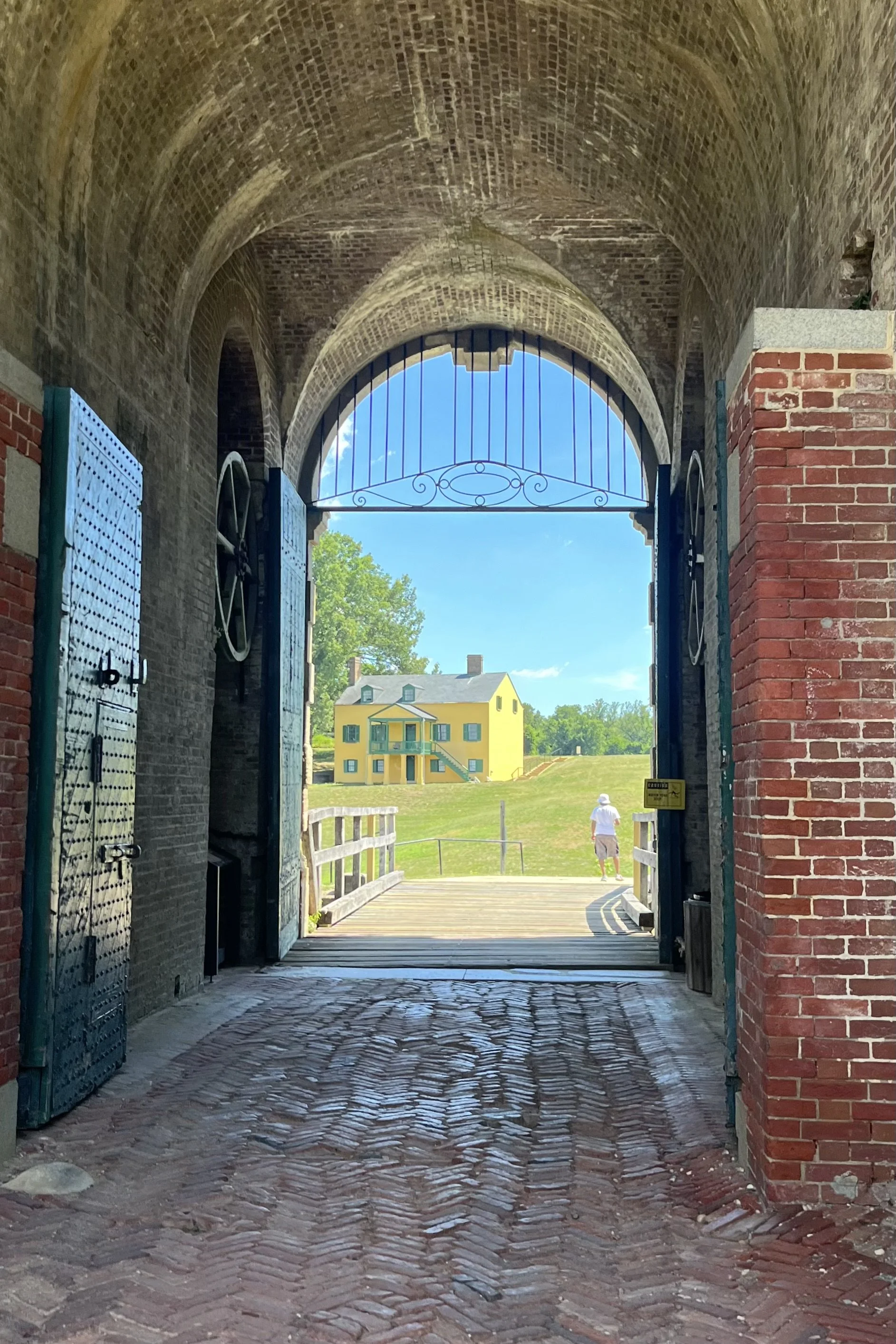
Looking through one of Fort Washington's brick gate passages toward the historic buildings inside the fort.
One of my favorite surprises had nothing to do with the fort. Along one section of the grounds, we came across rows of raspberry bushes covered with ripe berries.
It was one of those small discoveries that made the afternoon feel less like visiting a historic site and more like wandering through a place with surprises around each corner.
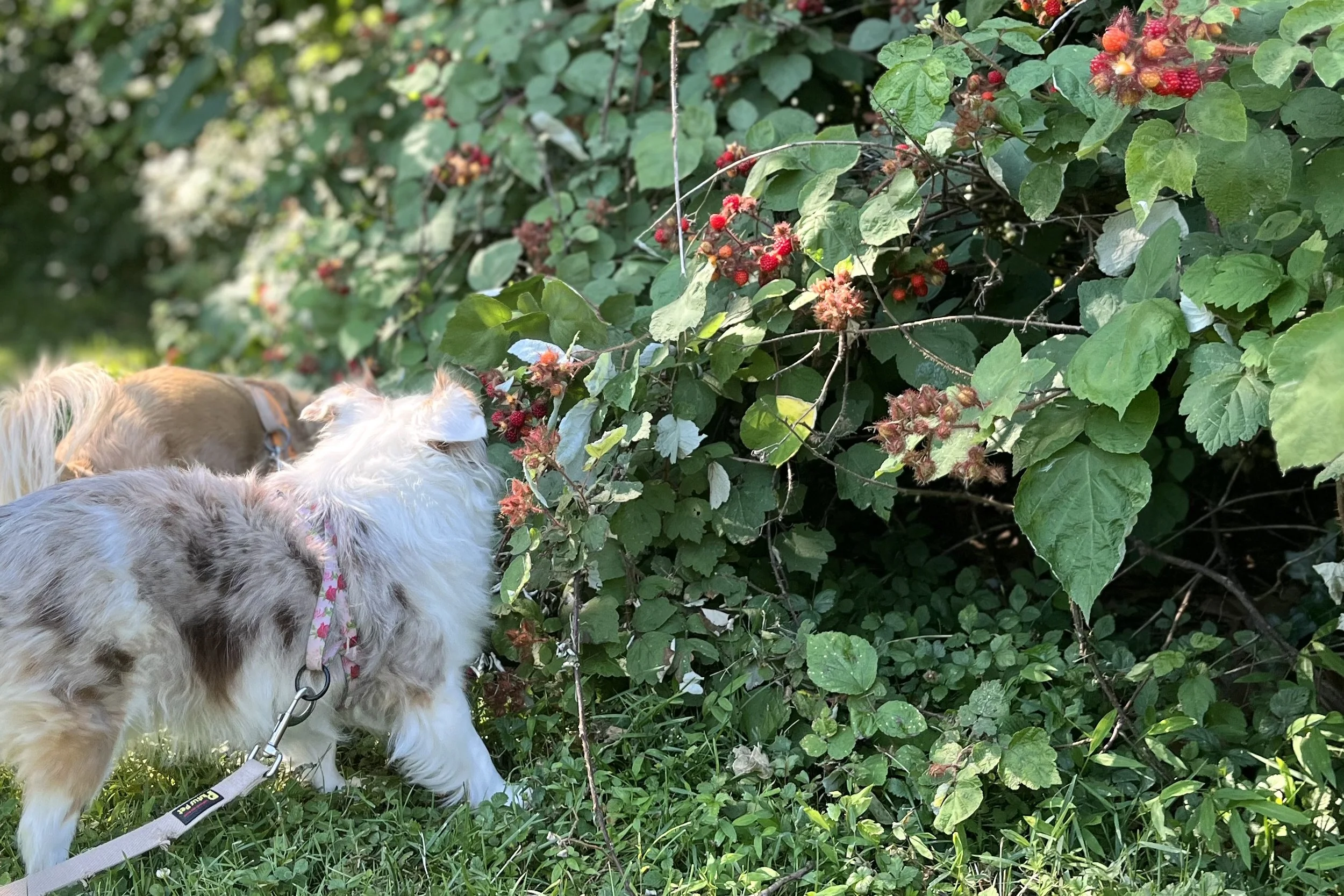
We found several raspberry bushes growing near the fort grounds, adding an unexpected touch of color along the walk.
What It Was Like With Dogs
Fort Washington worked particularly well for Archie and Saydie.
Throughout most of the visit, there was plenty of room to walk, stop, and look around without constantly managing foot traffic. That extra space meant we rarely needed to shorten leashes or step aside for passing groups.
Archie spent much of the visit stopping at overlooks and watching activity below, while Saydie seemed more interested in investigating entrances, walls, and gateways. The open layout gave both dogs plenty of room to move at their own pace without feeling crowded or pressured by the environment.
One thing that stood out was how much space there was throughout the grounds. At one point another visitor was exploring with a small French Bulldog nearby, but there was enough room that everyone could enjoy the area comfortably without feeling crowded. For dogs that appreciate a little breathing room, the open layout works surprisingly well.
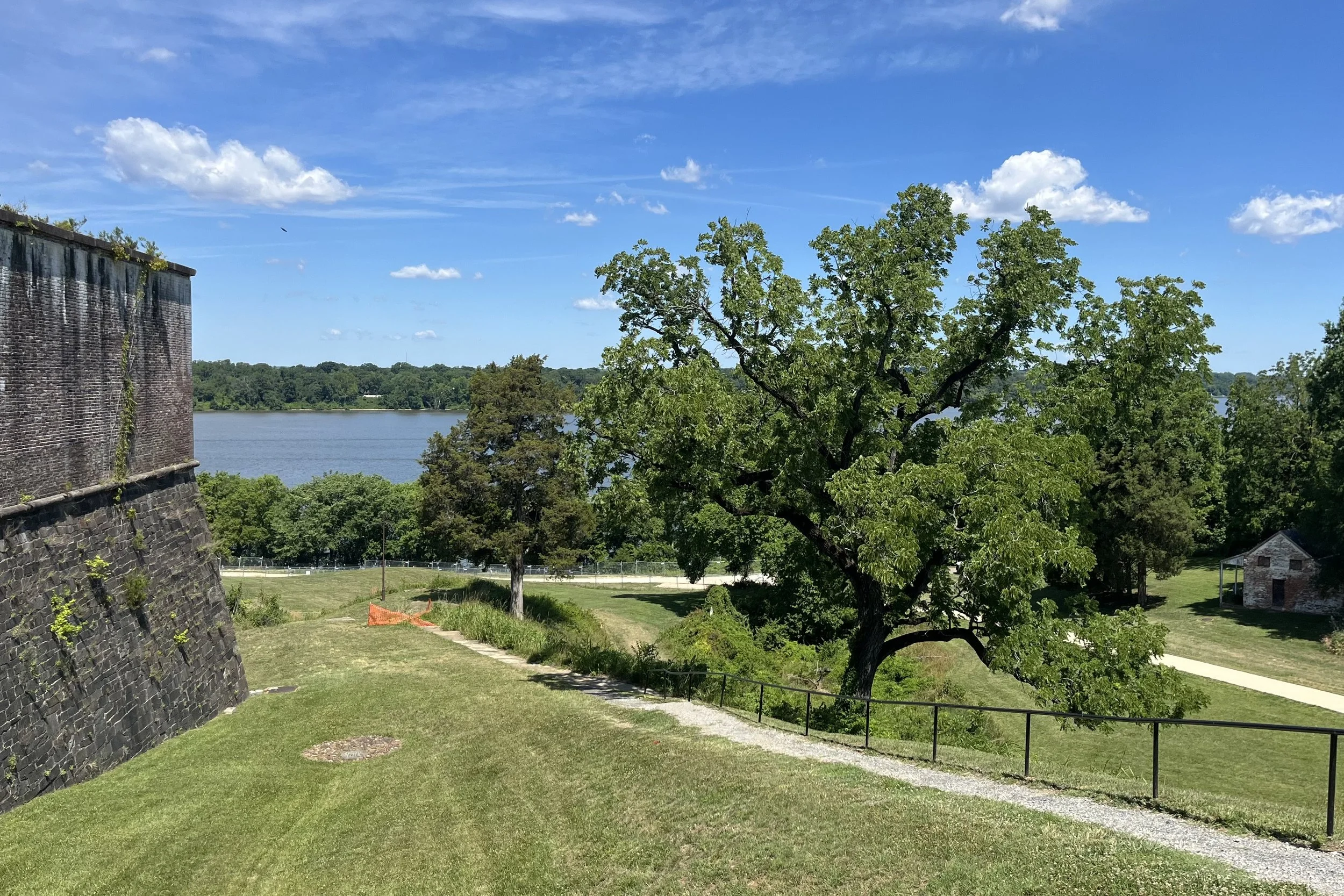
One of the overlooks at Fort Washington Park, with views across the Potomac and the fort grounds below.
The park also differs from Jones Point Park with dogs. Jones Point feels more like a traditional nature walk, with wooded trails and a stronger sense of being immersed in the landscape. Fort Washington feels more structured. Most of the primary walking routes are paved, the grounds are more open, and the experience revolves around moving between historic features and viewpoints.
Unlike Jones Point Park, where the river is the main focus of the walk, Fort Washington feels centered around the fort itself. The views are still there, but they appear between courtyards, walls, gateways, and open lawns rather than along a continuous waterfront path.
For dogs that enjoy exploring new environments without navigating constant crowds, Fort Washington strikes a nice balance.
Potomac Views and Places to Pause
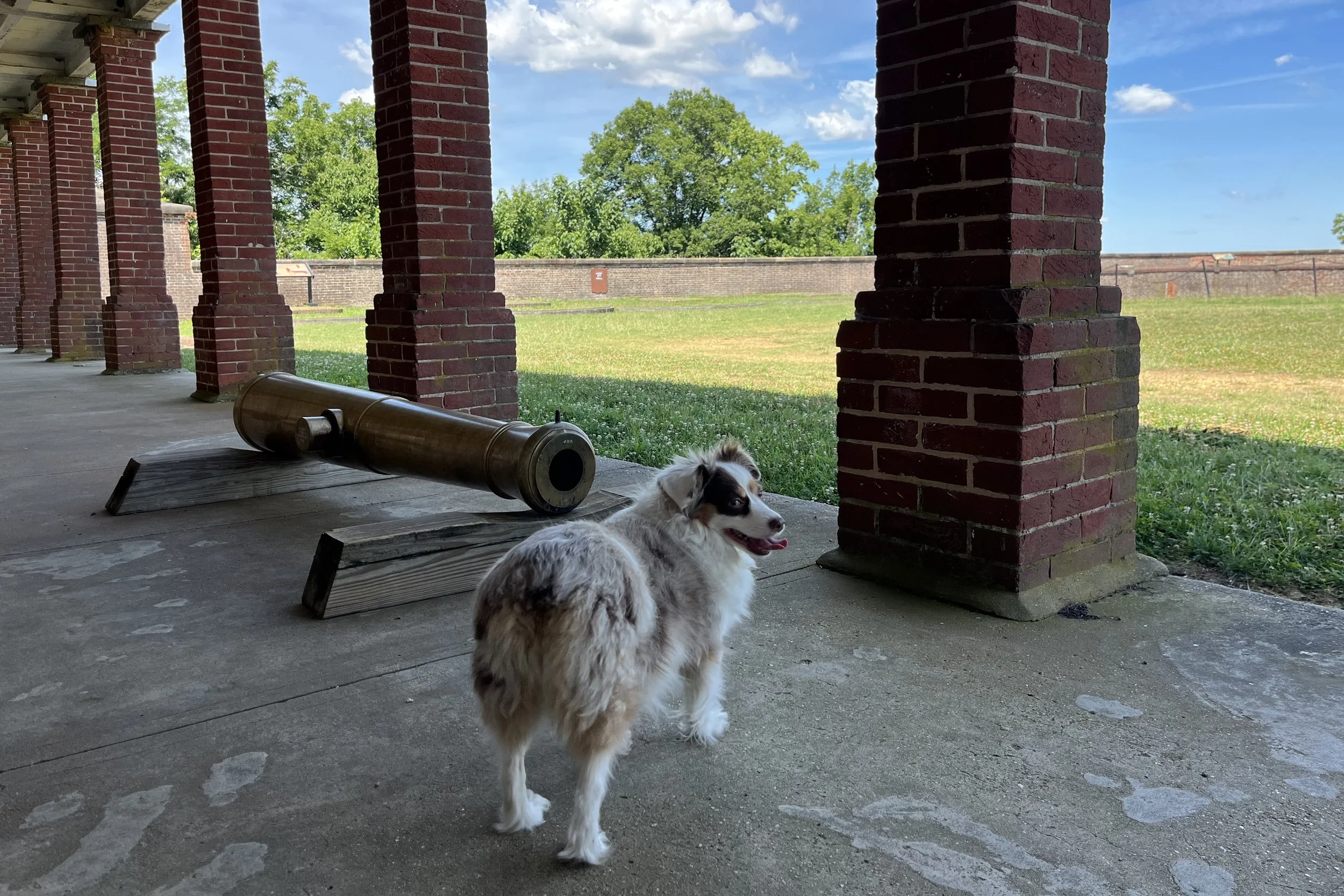
The covered porch offered shade, river breezes, and a few historic details to explore.
The views became a natural part of the day rather than a separate destination.
Several areas around the fort overlook the Potomac, and the elevated position creates a perspective that's different from many waterfront walks. Instead of standing beside the river, you're often looking out across it from above.
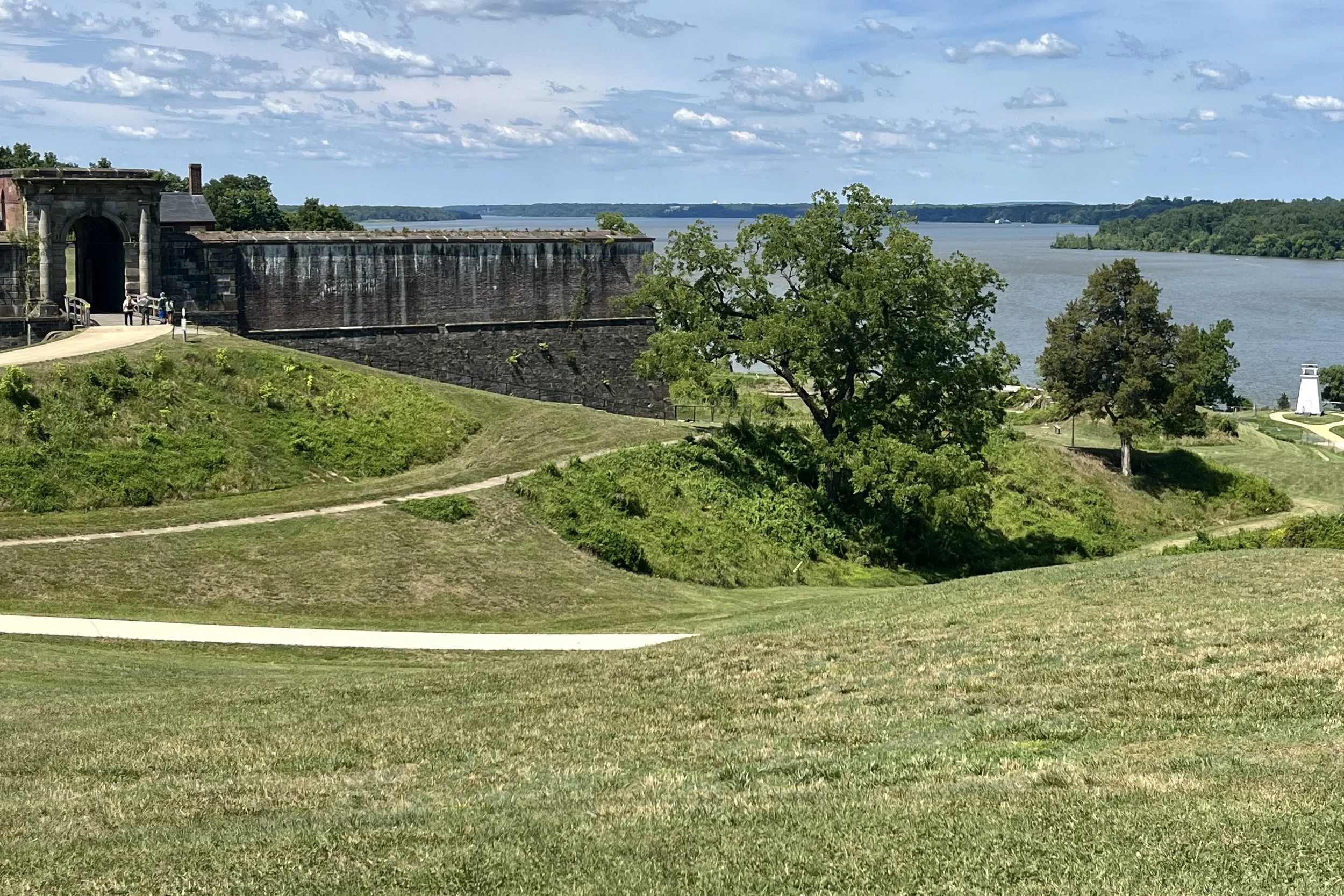
The overlook behind the fort offers wide views across the Potomac River.
We brought sandwiches, fruit, and water and ended up stopping for lunch near one of the overlooks. Between the shade, the breeze, and the views across the river, it was easy to linger longer than planned.
The overlooks also help connect the fort to its original purpose. Looking out across the water, it's easier to understand why this location was chosen and how important the river would have been to the site's history.

The shaded porch offered a welcome break from the afternoon sun.
Planning Your Visit
A few things stood out that would have made the day easier if we'd known them beforehand.
Parking was plentiful during our visit, even on a Saturday.
Most of the main routes are paved and easy to walk, though several sections involve fairly steep hills. Comfortable shoes are helpful, especially if you plan to explore multiple areas of the park.
Shade is available around portions of the fort and several seating areas, but some of the open grounds receive full sun. During warmer months, bringing water for both you and your dog is essential.
If you're looking for additional warm-weather destinations, these dog walks near Alexandria that work well in summer offer more shade and shorter walking options during hot weather.
Visits like this are also a good reminder that hot weather affects dogs differently during outings, especially when there are hills, open lawns, and extended periods in the sun.
We spent about two hours exploring on a very warm day and felt like we had seen the highlights without rushing. In cooler weather, I could easily see spending between two and four hours here, particularly if you enjoy combining walking, photography, history, and a picnic lunch.
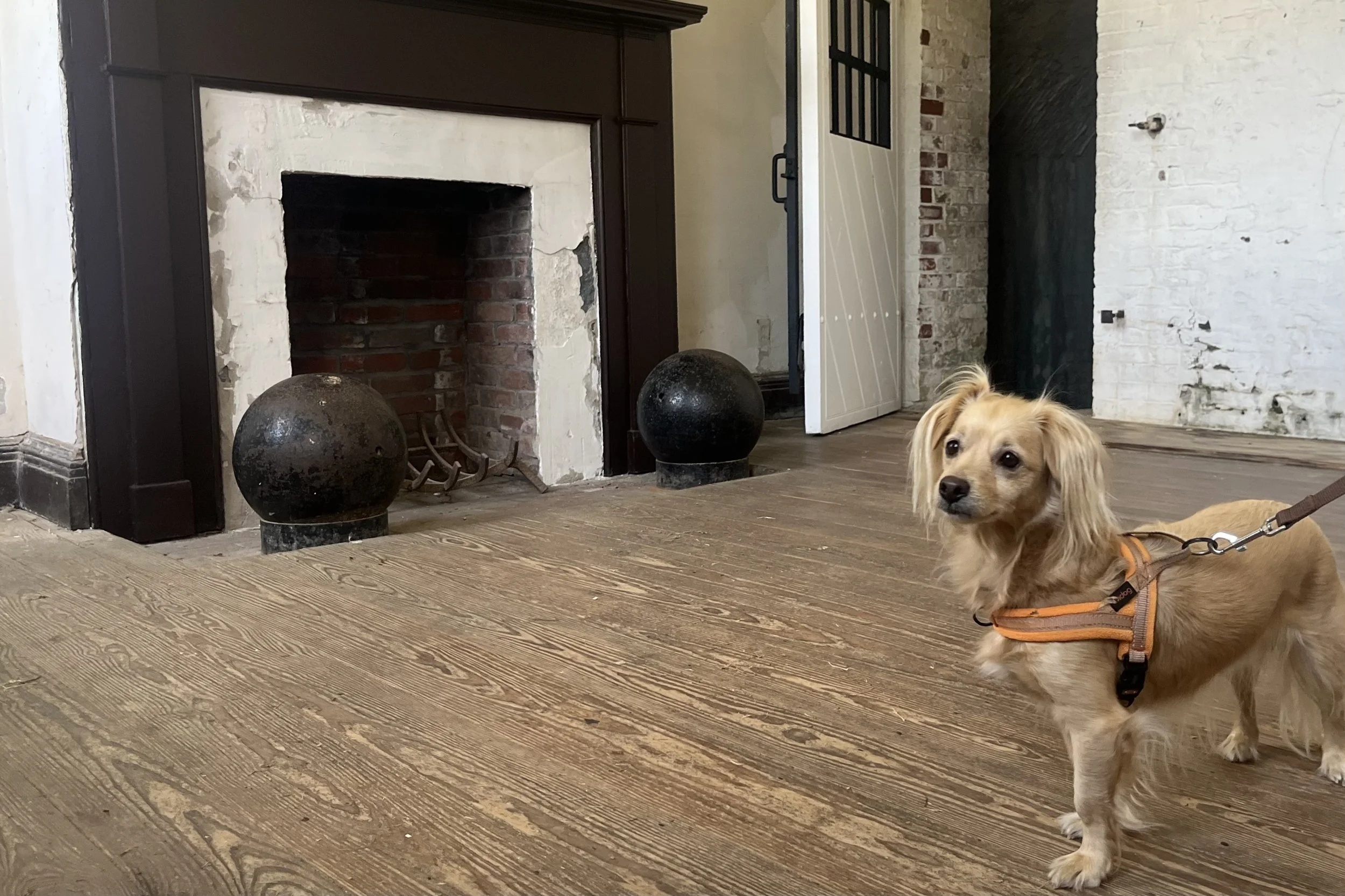
One of the sheltered areas inside the fort where visitors can take a break from the sun.
Final Thoughts
Fort Washington Park offers more than a quick visit to a historic fort.
The architecture is certainly the centerpiece, but the elevated views, open grounds, and opportunity to spend time exploring the landscape around the fort are what make the experience memorable.
Looking back, what stayed with me wasn't a single overlook or historic feature. It was the experience of gradually discovering the fort. Every time we thought we'd seen the main attraction, another courtyard, wall, viewpoint, or architectural detail pulled us farther into the grounds.
By the time we headed home, both dogs were tired from the afternoon. Saydie curled up and immediately fell asleep, while Archie settled into his usual spot by the window, watching the scenery all the way back toward Alexandria.
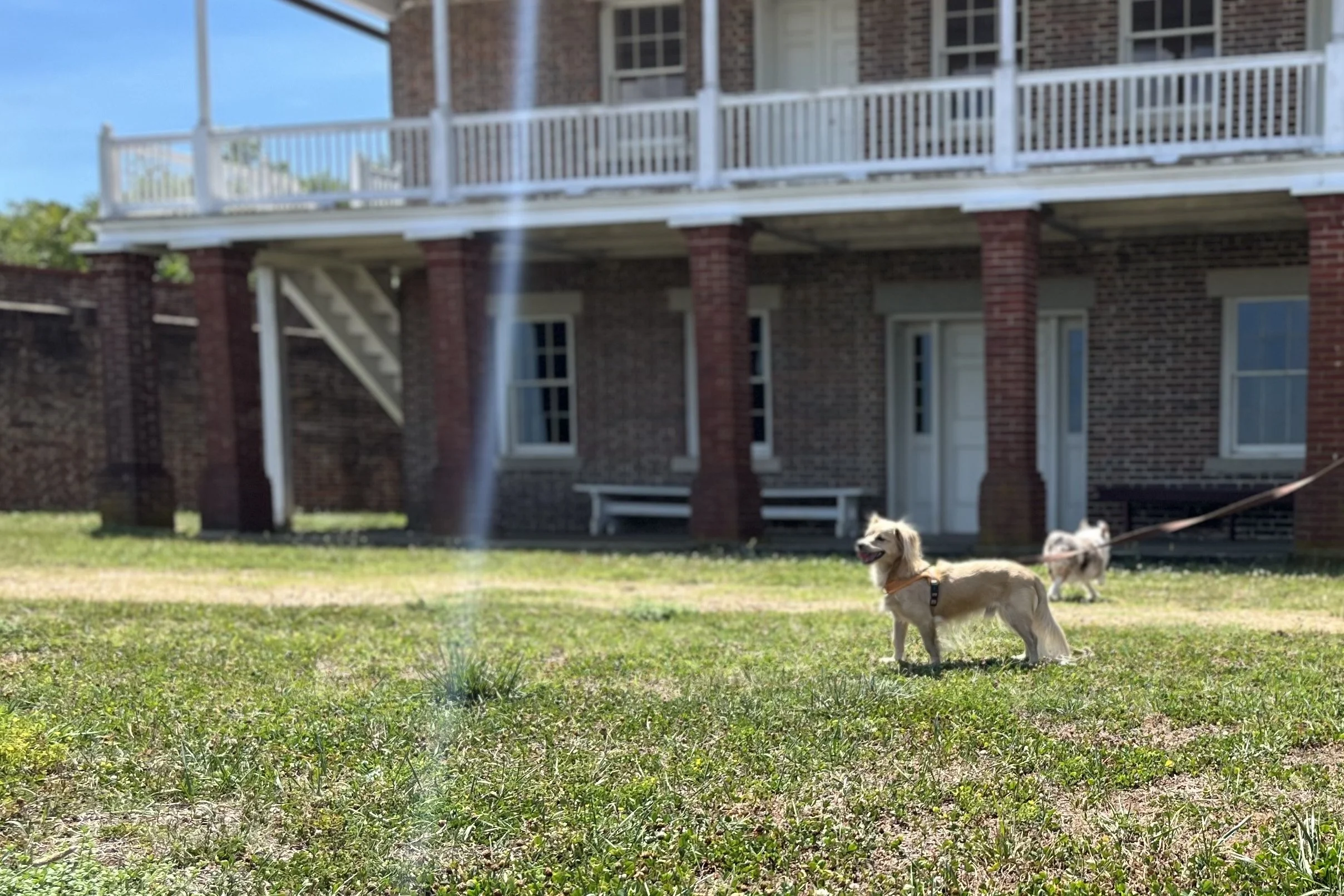
After exploring the fort, Archie paused on the lawn near the historic officers' quarters.
Fort Washington is one of those places where history, open space, and river views come together in a way that encourages you to slow down and spend time exploring.
Here at Wandering Pup Travels, I share dog-friendly walks, day trips, seasonal outings, and practical travel tips for small dogs throughout the Mid-Atlantic and beyond.
Join the Wandering Pup Travels newsletter for new guides, local discoveries, and ideas for your next outing with your dog.
